Home » public policy » Recent Articles:

Stop the Cap!’s Rebuttal to Verizon: Fire Island Doesn’t Want Voice Link

Last week, Verizon’s Tom Maguire responded to some of our earlier coverage about Verizon’s decision to abandon landline service on portions of Fire Island devastated by last fall’s Hurricane Sandy. We have received several complaints from readers about our decision to grant space to Verizon to present their views without reciprocation. While we understand those concerns, Stop the Cap! believes readers deserve both sides of a discussion that AT&T and Verizon will soon seek to have with customers across many of their rural service areas. For that reason, we invited Verizon’s participation. This is our response:

Phillip "Since when do regulated utilities get to dictate the quality of service customers receive?" Dampier

Phillip Dampier

Raise your hand if you want Verizon’s Voice Link to replace your traditional telephone service and lose your only wired broadband connection.

Almost no one has. Despite the arguments from Verizon Communications and AT&T that wireless is the answer to troublesome copper wiring and maintaining rural telephone service, dozens of Fire Island, N.Y. customers have been sufficiently provoked to file comments with state regulators, making it clear they want no part of the loss of their landline and its accompanying, affordable broadband service. In more than 135 public comments with the Public Service Commission at press time, Stop the Cap! could only find one comment from a Fire Island resident who had no issues with Verizon’s wireless landline replacement. He was upset Verizon had not wired a nearby yacht club for broadband service.

Both AT&T and Verizon have publicly advocated that rural customers would be better served moving from traditional wired landline service to their respective wireless 4G LTE networks. AT&T characterizes it as “an upgrade” that switches customers to an “all IP” 21st century network. Verizon has been less bold in its public policy statements, framing its position mostly in economic terms  — does it make sense to invest large sums to upgrade or repair damaged infrastructure that serves a relatively small number of customers?

Until recently, customers have been free to make the choice between a landline and wireless service themselves. Now, the residents of Fire Island and some barrier islands off the coast of New Jersey have a very different choice: They can accept Verizon’s Voice Link landline replacement, sign up for cell service that has proved troublesome in both areas, or give up phone service altogether. Verizon has made it clear it is not prepared to replace the destroyed infrastructure on portions of the islands, it will not invest in major upkeep and repairs to network facilities that may have been compromised but are still functioning for now, and will likely never offer its fiber FiOS network in the affected areas.

Stop the Cap! has expressed repeated concern that the decision to abandon wired infrastructure in favor of wireless is based primarily on profit motives, is short-sighted, and represents a downgrade in the quality of an important, regulated utility service, particularly in rural and out-of-the-way places that have few, if any alternatives. Fire Island is shaping up to argue our case, based on the testimony of those actually living and working on the island.

Customers Don’t Want the ‘Solution’ Verizon is Offering

Voice Link is not proving a welcome permanent resident on Fire Island for many customers.

The reasons are clear: inadequate wireless service is common on the island, Voice Link does not perform or sound as good as the landline it replaces, and Verizon’s wireless broadband alternative will cost many residents their unlimited-use DSL service in favor of a wireless capped option that could cost more than $100 a month.
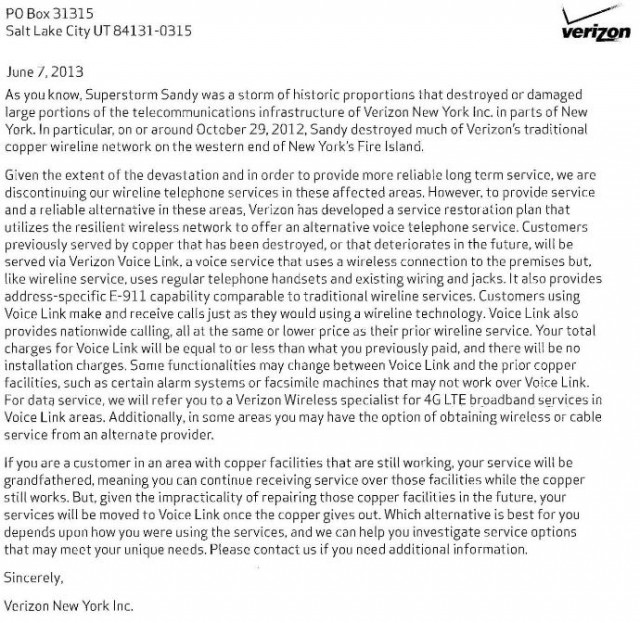
Letter to affected Verizon customers on Fire Island.

Letter to affected Verizon customers on Fire Island.

Verizon’s strongest argument is that landline service has fallen out of favor in the United States, with customers increasingly disconnecting home phones in favor of cell phones. If Verizon’s statistics are correct, 80 percent of the voice traffic on the island is already handled by Verizon Wireless. (Verizon does not specify if that traffic comes from permanent residents or temporary visitors, a point of contention with residents.)
verizonMaguire was very careful to limit Verizon’s advocacy of Voice Link in terms of its capacity to handle voice calls. That is because Voice Link is currently incompatible with a whole range of important services that have worked fine with traditional landlines for years.

Maguire’s words are important: “Verizon’s commitment is to provide our customers with voice service,” — the kind you had in the late 70s. Voice Link fails faxing, home medical monitoring, home alarm systems, dial-up service, credit card transactions, and home satellite equipment that connects to the telephone network.

Voice Link is no upgrade for Fire Island. It represents turning back the clock, especially for broadband customers.

Maguire claimed in his editorial the company was only considering Voice Link for the universe of customers where the copper network was not supporting their requirements, with the exception of Sandy-impacted Fire Island and some New Jersey barrier islands. But that does not tell the whole story. In a filing with the New York State Public Service Commission, Verizon makes it clear it intends to introduce the same solution in other parts of New York:

It also seeks to deploy Voice Link in other parts of the State, both as an optional service in areas where the company also offers tariffed wireline local exchange service, and (subject to the Commission’s approval) as a sole service offering in particular locations and circumstances.

While Verizon has sought to appease regulators by volunteering to offer an equal level of service for the same or less money, there are questions about whether a regulator has any oversight authority over Voice Link.

“It is a remarkable concept in utility regulation that a regulated utility may determine that costs are unreasonable and as a result choose to provide alternative, and potentially unregulated service to affected customers,” said Louis Barash of Ocean Beach. “Verizon proposes to permit the PSC to regulate that activity, but it is not clear that the Commission has such authority. And it certainly isn’t clear that the Commission would have any authority to reverse its decision, or otherwise to sanction the company, if Verizon failed to comply with its undertakings.”

Broadband & Competition Matters: Forcing Customers Off Unlimited DSL in Favor of Near-Exclusive, Usage-Capped, Verizon Wireless Broadband

Offering broadband is a vital part of any telephone company’s strategy to add and keep customers. Yet Verizon’s DSL customers on the western half of Fire Island will have their broadband service canceled unless wired service (copper or fiber) is available. Verizon’s only alternative is a usage-capped, prohibitively expensive Verizon Wireless mobile data plan that may or may not perform well on the signal-challenged island. There is literally nowhere else for customers to go.

Verizon’s own statistics confirm none of its wireless competitors handle significant traffic on and off the island.

Maguire: “A multimillion dollar investment with no guarantee that residents of the island will even subscribe to our services makes no economic sense. In fact, that’s probably why Verizon is the sole provider on the island. None of the companies we compete with in other parts of New York offer services on the island.”

Maguire’s evidence:

“The company discovered that 80 percent of the voice traffic was already wireless.  If other wireless providers were factored in, it is likely that the percentage is closer to 90 percent.”

That means Verizon’s wireless competitors collectively have a traffic share of less than 10%.

Verizon’s Plan & Public Safety
no serviceResidents advise visitors they better have Verizon Wireless and a robust phone that works well in challenging reception areas if they expect to use it while on the island. AT&T, Sprint, and T-Mobile customers are often out of luck. That poses an immediate and direct threat to public safety, according to public safety officials.

“The cellphone service on Fire Island progressively gets worse every year as more and more people are bringing smartphones out there,” explained Dominic Bertucci, chief of the Kismet Fire Department. “There are some days where you can barely get a signal.”

The Brookhaven Town Fire Chiefs Council, which represents the leadership of 39 fire departments and fire companies in the region is vehemently opposed to Voice Link and considers it a safety menace, especially during frequent summer power outages when the island’s population is at its peak.

“Without a copper wire phone service, a service that still functions even during a power failure, how can we insure that the residents can call for help?” asks president John Cronin. “How will they call for the lifesaving services that are provided by the fire and EMS units of Fire Island? The corporate desire for greater profit cannot be made at the expense of the safety of the residents of Fire Island.”

“Wireless service is not reliable,” adds Fair Harbor resident Meredith Davis. “Imagine being in an emergency and having ‘spotty’ reception which happens out there all the time on cell phones. That is not safe and not okay.”
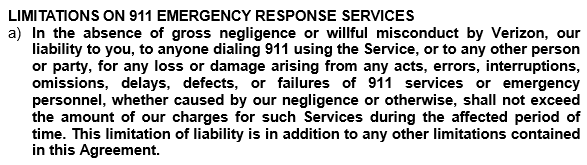
Verizon disclaims legal responsibility for failed 911 calls in its Voice Link terms and conditions.

Verizon disclaims legal responsibility for failed wireless 911 calls in its terms and conditions. The most Verizon owes you is a refund of a portion of your monthly service charges.

“If you are unfamiliar with Fire Island, there is very little medical service and the only way off the island is a scheduled ferry service or, for some people who have permits and trucks, a very long drive,” explains lifelong Fire Island resident Nora Olsen. “When someone needs to be rushed to the hospital, they are evacuated by helicopter, which makes timely emergency calls of the essence to save lives. So you can imagine how important it is to have reliable phone service. It should be up to the individual to decide if they want to switch to a wireless service. They should not be forced into it by Verizon. The people who are most likely to want to stick with the phone service they have been used to all their life — senior citizens — are the most likely to need to use the phone to call for help.”

A number of residents also claim Verizon has overblown the real extent of damage on the island and is not operating in good faith.

“In the larger communities of Ocean Beach and Seaview, I have met no one yet that has their connectivity lost,” said resident Karen Warren. “So for Verizon to assert that the infrastructure is largely destroyed and to repair it would be an enormous expense is simply not true. To add insult to injury, before coming out and finding out that our lines were in fact intact, Verizon offered to ‘replace’ our existing DSL data service with LTE Jetpak wireless broadband. The performance and reliability with only a single device connected was horrendous.”

“[Verizon is] pushing us toward a higher-cost and lower-value solution,” Warren concluded.

Getting specific information about the current state of Verizon’s network on Fire Island and repair/replacement costs are hard to come by. Verizon filed an application with the PSC declaring much of the information confidential or a trade secret, refusing to share it with the public. The company was concerned some might access the Public Service Commission website, find the case number about Fire Island, navigate to the specific Verizon filing containing information about their infrastructure… and then vandalize it.
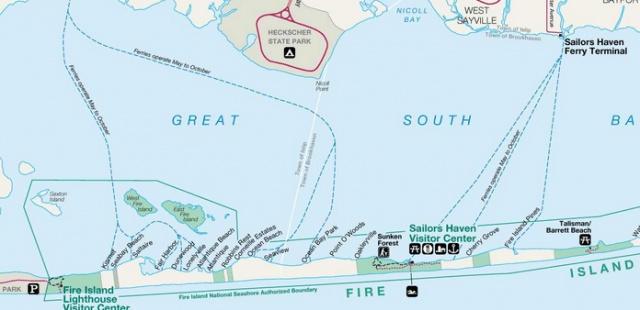
The worst affected communities on Fire Island.

The worst affected communities on Fire Island.

Barash suspects Verizon might be hiding something, especially considering the company requested to bypass usual waiting periods and public notification requirements:

Verizon asserts that it would cost “$4.8 million for a voice-only digital loop carrier system comparable to the networking serving the eastern part of the island.” It is by no means clear, however, that such a system is the minimum required to restore/repair the western part of the system to the service it had pre-storm. Certainly Verizon’s application makes no representation to that effect. This estimate apparently contemplates an entire new system for the western portion of Fire Island, notwithstanding that a meaningful percentage of the copper wire system is still operational.

Moreover, Verizon’s position on the required scope of repairs has been a constantly shifting target. Verizon apparently advised Commission Staff, and Staff repeated at the April 18 Commission Hearing, that the western Fire Island telephone system was “damaged beyond repair by the storm.” Verizon apparently has abandoned that claim; this application indeed is premised on the assumption that the system can be repaired. Furthermore, in its first (May 3) submission to the Commission, Verizon stated that “five of the six cables that run between Fire Island and the mainland – the five that serve the western portion of the Island – were also badly damaged by the storm.” Just a week later, it has abandoned that claim as well, and instead in its amended Certification asserts “Five of the six cables that run throughout Fire Island were badly damaged by the storm.” It is hard to accept at face value Verizon’s estimated repair costs when even at this late date it does not seem to have a handle on exactly the damage that needs repair.

A full Hearing, with notice to affected customers, is necessary to develop facts sufficient to make such determinations and to be reasonably certain the Commission is acting based on reasonably verifiable facts.

Residents deserve a full voice and full disclosure in discussions that will directly impact their vital telecommunications services for years to come. Verizon’s corporate officials will not have to live with the results. Neither will the staff at the PSC.

Stop the Cap! has chosen to directly participate in the New York State Public Service Commission regulatory process and has filed two formal comments thus far. The first outlines Verizon’s greater strategy to abandon landline service in rural areas outlined by Verizon CEO Lowell McAdam in 2012. We also provided the Commission the prices Verizon Wireless intends to charge Verizon DSL customers switching to wireless broadband service. The second objects to Verizon’s excessive request for secrecy and exposes cell coverage issues on Fire Island.
Our Response to Public Knowledge’s Harold Feld Regarding Tom Wheeler

Phillip "Friends Can Agree to Disagee" Dampier

Phillip “Friends Can Agree to Disagree” Dampier

Are we being unnecessarily pessimistic and cynical when we oppose the likely nomination of Thomas Wheeler to replace Julius Genachowski as the chairman of the Federal Communications Commission?

Some of our colleagues in the consumer-focused public policy arena suspect we might be.

Stop the Cap! is very skeptical that appointing a former cable and wireless industry lobbyist with 30+ years of experience is the best choice for consumers at the FCC.

Our friend Harold Feld from Public Knowledge, which has announced cautious support for Wheeler’s appointment, has a more optimistic view about his potential:

I understand where my friends are coming from when they look at Wheeler’s resume and think “oh God, another Washington insider, why can’t we ever get a real progressive!” But I cannot agree with Senator Rockefeller’s statement that “a lobbyist, is a lobbyist,” or the view of some that the taint of industry clings insidiously forever and corrodes the soul. It’s been ten years since Wheeler left CTIA, longer than that since he left NTCA. Had he really been interested in advancing the agendas of these industries, he was in an excellent position to do so when he headed up the Obama transition team. He did not. Indeed, Susan Crawford and Kevin Werbach, long-time stalwarts of the public interest who worked for Wheeler on the transition team, have joined other public interest luminaries as Wheelers strongest public supporters. Had Wheeler been working behind the scenes in the transition to promote the incumbents, I expect Susan and Kevin would have known.

I also recognize that support from public interest friends is also not conclusive. But it should surely weigh in the evaluation of Wheeler as much as any blog post. And I recognize I’m also a “Washington insider” and as likely to be led astray by my personal friendships and the whole “Washington Bubble” culture as any other human being. That’s why I’m glad people in the community are asking the right questions and putting Wheeler on notice that, like any Chairman, he needs to prove himself as a champion of the public interest. We at PK have also made it clear we expect Wheeler to not just talk a good game, but to get his hands dirty and make tough decisions that will piss off incumbents. And when we disagree, as we expect we will, have no doubt we will make our displeasure known.

Harold specifically commented on our piece reviewing Wheeler’s personal blog, in which Wheeler fell all over himself praising AT&T’s chief lobbyist Jim Cicconi, and seemed resigned to approving a proposed AT&T/T-Mobile merger with some preconditions:

It is certainly true that behavioral conditions often fall short, are short lived, and that companies generally find ways to work around them (and the FCC’s track record for enforcement is pathetic). Indeed, we at PK made these arguments in the context of the AT&T/T-Mobile merger for why no set of merger remedies could adequately address the harms such a merger would cause. But there is a huge difference between my belief that Wheeler was wrong about the best strategy to advance the public interest and accepting that he was motivated by a covert desire to support consolidation and deregulation.

It is more than likely we will have to do business with Tom Wheeler, and we can certainly understand efforts to paint a more optimistic and hopeful picture of the likely new chairman. But we would be dishonest if we said we have high hopes Wheeler will think first about ordinary Americans before steering the country’s telecommunications future. We have learned from the past.

Remember Your History: Catering to Big Special Interests is Bipartisan

cable ratesHaving covered the telecommunications industry since the 1980s when Dr. John Malone of Tele-Communications, Inc., was the American consumers’ worst nightmare, confronting today’s increasingly consolidated and expensive telecommunications marketplace is a case of “Back to the Future.” The deregulation and industry consolidation abuses in the 1980s riled up both Republicans and Democrats — wherever constituents flooded offices with complaints about the local cable monopoly. The “problem politicians” that reflexively defended the abusers were just as bipartisan. Sen. Tim Wirth (D-Colo.) primarily represented the interests of the cable companies that were headquartered in his state. Current Senate Majority Leader Harry Reid (D-Nev.) also defended the cable companies. Sen. John Danforth (R-Mo.) was outraged at the abuses cable operators like TCI heaped on Missouri consumers and not only introduced legislation to stop the abuse in 1992, he also was instrumental in overriding a presidential veto of the measure.

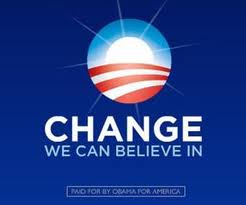
The first mistake one can make in this fight is characterizing this as “progressive” vs. “conservative.” Real conservatives want all-out competition to manage winners and losers. Progressives want to make sure in the absence of that competition, someone — anyone can act to check the power of concentrated markets that suppress competition, raise prices, and deliver less than compelling service. Five years ago, Barack Obama promised change and a D.C. reset that would have ended “politics as usual.”

The art of the possible — changing the perception that consumer interests take a back seat to the whims of professional lobbyists at the FCC has proved less than successful after four years with Julius Genachowski. President Obama is not completely responsible, but it would be dishonest not to hold him to a promise he would deliver “change we can believe in.”

Instead, at the FCC, we got “change we think we might be able to get away with, maybe, or not.”

Julius Genachowski remained silent on the AT&T/T-Mobile merger until the Department of Justice provided him with political cover to oppose it. He caved on strongly enforcing Net Neutrality, refused to make important regulatory declarations that would have satisfied federal courts the FCC has a right to oversee broadband policy, and near the end of his tenure, hobnobbed with the cable industry and declared his support for usage billing and capped Internet.

Where Does Mr. Wheeler Stand?

(Image: MuniNetworks)

(Image: MuniNetworks)

So we must ask ourselves, where does Mr. Wheeler, a man who spent most of his career as a consummate cable and wireless industry lobbyist, fall on these issues?

The best place those of us who have not shared lunch with him can make that determination is in his personal blog. Harold wants us to downplay some of Wheeler’s words written during his six years of blogging:

But in the ten years I’ve been blogging, I know that I’ve said many things that do not necessary reflect what I would have done if I had been the ultimate decisionmaker – as I have said on more than one occasion (noting that actual decisionmakers are not advocates). Certainly anyone who reads ten years worth of Tales of the Sausage Factory (has it really been ten years?) will have an excellent sense of my overall priorities and approach. But I can’t swear that all approximately 500 or so blog posts could hold up today as being either accurate predictions (like Wheeler, I too was a big believer in WiMax) or final expressions of what I would have done as Chair of the FCC.

We certainly agree that Wheeler’s predictions of industry trends like WiMAX, in hindsight, are not deal breakers (although they should serve as reminders that one should avoid picking too many winners and losers). But at the same time, Wheeler’s words on policy matters in nearly 60 articles since 2007 should not be ignored, rationalized away, or dismissed either. In some sense, this is comparable to the vetting process for an appointee to the Supreme Court. To get a feel for the philosophy of an individual, both the White House and Congress pour over one’s writings and public opinions. Being asked to accept someone who can reshape public policy for years based on the personal recommendation of others only goes so far.

Many of Wheeler’s views are profoundly concerning, because they seem to betray a telecom industry conventional wisdom about the state of technology, wireless spectrum, regulation, and competition. His familiarity and comfort working within the paradigm of big cable and wireless is strongly contrasted with his suspicions and surprise regarding interlopers like Google and Apple — dubbed by Wheeler as part of a “Silicon Mafia.” We sense Wheeler seems most comfortable expecting to oversee business as usual, while advocating and accommodating some minor innovation here and there.

What is almost completely absent in most of Wheeler’s writings is the perspective of, or concern for ordinary consumers. What would Mr. and Mrs. Joe Average think about yet another consolidating merger between AT&T and one of its smaller competitors? What impact would another cable merger have on the bills paid by ordinary people in Colorado, Nebraska, or Pennsylvania? Is it good for consumers to advocate eliminating wireless network redundancy, as Wheeler does, after major events from 9/11 to Hurricane Sandy to the recent Boston Marathon attack all reveal wireless networks are susceptible to call volume clogging and extended service outages?

Tom Wheeler is a long admirer of AT&T's top-lobbyist Jim Cicconi.

Tom Wheeler is an admirer of AT&T’s top-lobbyist Jim Cicconi.

More importantly, we are disturbed by Wheeler’s perspective about wired infrastructure that could have a major impact on the near future of rural telecommunications. Wheeler comes dangerously close to AT&T’s sentiments about its yesteryear rural landline network and its wish to switch those customers to wireless (with all the added costs, usage caps, and coverage issues). We cannot help but notice Wheeler frames the general issue much like AT&T does: an “evolution” that represents “weaning ourselves” from “the old wireline.” Ask yourself if AT&T is more or less comfortable knowing Mr. Wheeler’s attitudes about its wired telephone network. AT&T considers it an outdated money-loser and a nuisance in its rural service areas. Wireless is a license to print money, just as soon as the FCC and state regulators give the green light to go ahead. Is Wheeler to be the deciding vote?

We Don’t Believe Wheeler is an ‘Industry Plant’

Harold writes:

But while it is important to ask the right questions and give no one a free pass, it is equally important to evaluate the answers and the evidence fairly and accept their logical conclusions. The evidence that Wheeler would have approved the AT&T/T-Mobile merger had he actually been Chairman (rather than playing pundit) is pretty weak. To take that a step further and say that Wheeler’s justification for approving the merger as a means of reregulating the wireless industry was mere sham to hide his true sympathies seems to me exceedingly unjustified.

That mischaracterizes our sentiments about Mr. Wheeler. We do not believe he is some secret industry plant that is itching to deregulate the agency into a stupor. Nor do we believe a theoretical vote in favor of the AT&T/T-Mobile merger is evidence he is in AT&T’s back pocket specifically. Let us be clear: he served as a professional lobbyist for these companies for nearly 30 years. His job was to absorb and reflect the views of the nation’s biggest cable and phone companies both to politicians and regulators. Some remain friends and colleagues.

It is a safe bet most of the industry will welcome and celebrate Wheeler’s appointment. Many know him personally. Many others will feel safe that he is a reachable industry insider already familiar with the issues that concern them. This is what makes the D.C. revolving door so insidious. When you move from the regulated to the regulator (and back again), the only real outsiders are average consumers.

Here is an example of Wheeler admiring AT&T’s prowess in the early days of its attempted merger with T-Mobile. Notice how he characterizes the deal’s opponents:

“The most important times in any merger approval process are the first two weeks when the acquiring company gets to define the discussion and the last four weeks when the concerns raised by others and the analysis by the government congeals to define the issues to be negotiated in the final outcome. AT&T shot out of the blocks brilliantly, framing their action in terms of the spectrum shortage and President Obama’s desire to provide wireless broadband to rural areas. Over the coming months those who were caught by surprise, as well as those who would use the review process to gain their own advantages, will have organized to present their messages.”

Wheeler shows no evidence of being the FCC’s version of a game-changer like Elizabeth Warren. Instead, he’s an avowed admirer of AT&T’s top lobbyist Jim Cicconi. What will that difference mean? The New York Times, reporting more broadly on the problem of D.C.’s revolving door, provides some valuable clues:

Government officials and lobbyists agree that former agency officials have a much easier time getting phone calls or e-mail messages returned from their old colleagues, and that access often extends to greater credibility in arguing their clients’ positions.

One corporate lobbyist who worked as a regulator, asked whether he believed he had an inside edge in lobbying his ex-colleagues, said: “The answer is yes, it does. If it didn’t, I wouldn’t be able to justify getting out of bed in the morning and charging the outrageous fees that we charge our clients, which they willingly pay.”

The lobbyist, who spoke on condition of anonymity because of concerns about alienating government officials, added that “you have to work at an agency to understand the culture and the pressure points, and it helps to know the senior staff.”

Not quite

Not quite

The most likely outcome of a Wheeler nomination is that he will be quickly approved, maintain the agency’s relatively low profile, and avoid rocking the boat too much. Even he doubts the power of the FCC to effect regulatory change unless those regulated volunteer to submit to more regulation. That means more quid pro quo agreements attached to mergers, acquisitions, and other deals the industry brings the FCC for approval. But as this quote illustrates, the industry remains in the driving seat:

“[…] Jim Cicconi sits astride a process that could determine the future of wireless policy, first for AT&T and then by extension for everyone else. Quite possibly the result of this merger decision will be far wider than the merger itself. At the end of the day we may be talking about a new era of wireless policy based on the Cicconi Commitment.”

Wheeler argued that the inability of the FCC to muster the political will to deal effectively with net neutrality and other broadband regulation made a consent decree around AT&T/T-Mobile the best way to update consumer protection rather than leave these services essentially unregulated.

Wheeler’s recognition of the inability of the FCC to get virtually anything done comes with no assurance he will do any better. Harold himself admits that the FCC’s track record of enforcement is “pathetic.” Has Wheeler written on his blog that he would seek to change that?

Wheeler’s reflections on the failed T-Mobile/AT&T merger present a clear sign he considers it a missed opportunity, with the usual voluntary divestiture of certain assets here and there with time limited pre-conditions that carry all the impact of one of those class action settlements that nets consumers a coupon or a $2 refund. Everybody but consumers walk away winners.

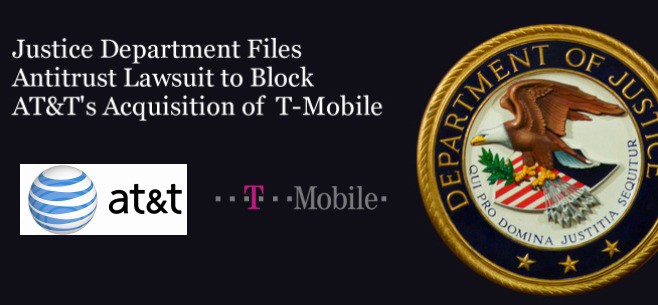
The Justice Department’s antitrust division, in contrast, illustrated the usefulness of a backbone when it quickly declared the merger proposal monstrously anti-consumer and anti-competitive and announced it would sue to stop it. Deal over and dead. When is the last time the FCC issued such a clear-cut, high-profile decision all on its own? Why is it so hard for the FCC to see the same anti-competitive nightmare so visible at the Department of Justice? Public Knowledge and other consumer groups saw the dangers from day one. Does Mr. Wheeler agree with the Justice Department or does he think he can do business with that shrewd AT&T lobbyist Jim Cicconi to get such deals approved the ‘right way?’

Our view remains the country and the Obama Administration could do far better choosing someone to lead the FCC that has not made a career lobbying for big cable and phone companies. If we want to solve America’s rural broadband problems, enforce fair billing practices and Net Neutrality, find new creative ways to utilize and distribute wireless spectrum, and promote competition while restricting industry consolidation, would we do better choosing an ex-industry lobbyist or an engineer, network planner, professional regulator, or an antitrust attorney?

President Obama went with the ex-lobbyist.

Change We Can Believe In? Cable/Wireless Industry Lobbyist Will Now Head FCC

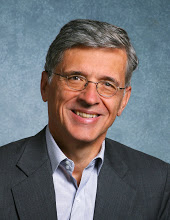
Wheeler

Wheeler

President Barack Obama will shortly nominate a former top cable and wireless industry lobbyist as his choice to represent the interests of the American people at the Federal Communications Commission.

Thomas Wheeler, who has been a telecom industry insider for at least 30 years and today serves as a venture capitalist, will have enormous influence over how the FCC manages the public airwaves, broadband, and wireless spectrum.

The Wall Street Journal reports this afternoon that President Obama may make a formal announcement as early as this Wednesday, with current FCC commissioner Mignon Clyburn serving as interim chair until Wheeler is seated.

Wheeler is expected to take a more industry-friendly attitude at the FCC. As Stop the Cap! noted after reviewing several years of Wheeler’s personal blog, the future FCC chairman would have approved the merger of AT&T and T-Mobile, considers Google, Apple and other technology companies challenging telecom public policy part of a “Silicon Valley mafia,” and praised AT&T’s chief lobbyist as a visionary that could define the wireless industry’s future.

Wheeler’s regulatory philosophy offers that mergers and acquisitions present an opportunity for regulators to impose certain temporary conditions on deals, offering the best opportunity to influence a short-term regulatory outcome. But such preconditions are often mild, quickly expire, and are predictable for the companies involved. When Comcast sought merger approval for its deal with NBCUniversal, one concession was to sell discounted Internet access for poor families — a service Comcast had earlier plans to offer but withheld as a bargaining chip during merger approval talks.

“Future FCC Chairman” Tom Wheeler’s Fruit Doesn’t Fall Far from Big Telecom’s Tree

Wheeler

Wheeler

Note to Readers: Tom Wheeler’s blog (mobilemusings.net) was taken offline in late November, 2014. You might still find it archived at archive.org. Because the blog has been taken down, we have removed all of the original links that were originally contained in this piece.

Tom Wheeler has had a blog.

The presumptive leading candidate for America’s next chairman of the Federal Communications Commission also has a major conflict of interest problem, with at least 30 years of working directly for the business interests of the cable and telephone companies he may soon be asked to oversee in the public interest. Wheeler is the former president of the National Cable & Telecommunications Association (NCTA) — the nation’s largest cable industry lobbying group and past CEO of the Cellular Telecommunications & Internet Association (CTIA) — the AT&T and Verizon-dominated wireless trade association. Today Wheeler serves as a managing director at Core Capital Partners, a Washington, D.C.-based venture capital firm that invests in these and other industries.

In more than 60 articles in the last six years, Wheeler has written of his trials and tribulations with federal regulators who simply refuse to see telecom industry wisdom on spectrum management, the legacy telephone network, obstinate broadcasters, outdated regulations, mergers and acquisitions, and the amazing story of private Wall Street investment and its wisdom to naturally shape America’s telecommunications landscape by “letting the marketplace work” unfettered by oversight and consumer protection laws.

Almost entirely absent in Wheeler’s writings is any interest in the plight of ordinary consumers that do business, often unhappily, with the companies Wheeler used to represent. America’s love of many-things Apple and Google, two runaway success stories heavily invested in the digital economy and well-regarded by more than a few consumers, are scorned by Wheeler as part of the “Silicon Valley mafia.”

Wheeler is the consummate Washington beltway insider, a lifelong lobbyist well-positioned to walk through the perpetually revolving door between the public and private sector. Even worse, he has maintained warm regards for not one, but two telecom industry lobbying giants — the cable and wireless industry trade associations that have daily business before the FCC. Whether Wheeler can stand up to his former best friends is open for debate. Wheeler wrote in one blog entry he remains in awe of AT&T’s chief lobbyist, Jim Ciccioni, who he called “one of the smartest and shrewdest policy mavens in the capital.”

Wheeler’s blog makes it clear he would have supported the 2011 attempted merger between AT&T and T-Mobile, with a few temporary token pre-conditions. He heaped scorn on antitrust regulators for missing an opportunity the merger approval could have had on reshaping the American wireless marketplace. Less is more in Wheeler World.

D.C.'s perpetually revolving door keeps on spinning.

D.C.’s perpetually revolving door keeps on spinning.

Like outgoing FCC chairman Julius Genachowski, Wheeler is a longtime Obama loyalist and was involved in Obama’s 2008 election campaign.

Wheeler relays to C-SPAN’s Brian Lamb in a 2009 interview that who you know in Washington can mean a lot. After Obama entered the 2008 race, Wheeler connected to Obama through a friend — Peter Rouse, who had recently accepted the position of Obama’s chief of staff.

“I picked up the phone one day and there was a message from Barack Obama that he wanted to talk about some issues related to technology,” Wheeler described. “Things began to develop. We got really interested in the potential of this person and the opportunity that he represented for a transformational moment in American history, and we decided that Iowa was the place.”

Wheeler and his wife Carol (employed by the National Association of Broadcasters, itself a lobbying group) had the financial resources in place to put their D.C. jobs on hold and spend six weeks in the Region 2 Obama election office in Ames, Iowa.

After Obama won the election, Lamb predicted Wheeler might find himself at the FCC. Instead, Obama’s college friend and money-bundler Julius Genachowski won the position.

Wheeler’s chances of succeeding Genachowski improved dramatically in mid-April after receiving the written support of several public policy advocates. One of them was Susan Crawford, whose recent book, Captive Audience: The Telecom Industry and Monopoly in the New Guilded Age, railed against many of the policies supported by the largest telecommunications companies Wheeler professionally represented in his roles at the NCTA and CTIA. Some consumer groups wrote President Obama directly, strongly recommended a change from the ‘business as usual’ revolving door:

During his election campaign, President Obama pledged “to tell the corporate lobbyists that their days of setting the agenda in Washington are over.” Yet the president is reportedly considering a candidate for the next FCC chair who was the head of not one but two major industry lobbying groups. After decades of industry-backed chairmen, we need a strong consumer advocate and public interest representative at the helm. It’s time to end regulatory capture at the FCC and restore balance to government oversight.

Those consumer groups have plenty to worry about if Tom Wheeler becomes the next head of the FCC. Stop the Cap! has found several quotes from his blog which paint a picture of a potential FCC chairman devoted to industry interests:

Close Wireless Retail Stores to Save Money and Kill Jobs: “Sprint announced plans to close eight percent of its over 1,500 company-owned retail outlets. Why stop there? Why does it make sense for wireless carriers to operate more stores than Sears and Macy’s combined?”

Wireless network redundancy is a waste of money — an interesting sentiment in light of major wireless network failures during Hurricane Sandy and insufficient capacity during the terrorist attack on the Boston Marathon last week: “The history of the U.S. wireless industry is a network-centric history that wasted untold billions of dollars building duplicative networks and advertising ‘mine is better than yours.’”

The failed merger of AT&T and T-Mobile represented a missed opportunity in Wheeler's view.

The failed merger of AT&T and T-Mobile represented a missed opportunity in Wheeler’s view.

WiMAX is King of the World?: “Back in the mid-1990s new digital technology called Personal Communications Service (PCS) was forecast to be the death knell of the cellular industry. It seemed all anyone could talk about was the “smaller, cheaper, lighter” handsets that would perform feats beyond the capabilities of analog cellular. Now in the mid-2000s the differentiator is speed and throughput and WiMAX is the new hot technology.”

Who needs free over the air television when only 10-15 percent of the country watches?: “What is the purpose of continuing the local TV broadcasting model when between 85 and 90 percent of American homes are connected to cable or satellite services?”

AT&T and Verizon will save us from the Great Recession, except for the fact they laid off “redundant” workers: “In the midst of the first shrinking of global economic growth in almost 70 years, the wireless industry represents what must be the largest non-governmental stimulus program in the world. Wireless is an economic recovery triple play.”

Those mooching broadcasters got their spectrum for free when Verizon and AT&T had to pay real money: “The setting for these theatrics is the digital conversion for which broadcasters lobbied so hard for. Yes, they won new spectrum – which they got for free while all other were paying billions – but getting what they asked for also brought something no one ever imagined. Broadcasting ceased to be broadcasting. Going digital meant that what used to be about moving atoms is now about moving bits.”

We need to verify broadcasters use their spectrum the way we define it or we might take it away: “But threatening a shootout at the OK Corral in order to ‘hang on to every last hertz of spectrum’ is an invitation to irrelevance and proof that the spectrum needs to be assigned to parties that think digitally and see themselves as a part of the solution to the spectrum crisis. Opportunity is knocking for the broadcasters; we’ll see if anyone is at home.”

Cicconi

Cicconi

Reduced quality of service is worth it, even if it means shutting down wired telephone service or increasing interference for wireless users: “It is time to abandon the concept of perfection in spectrum allocation. The rules for 21st century spectrum allocation need to evolve from the avoidance of interference to interference tolerance. We’ve seen this evolution in the wired network; it’s now time to bring the chaotic efficiency of Internet Protocol to wireless spectrum policy. What the FCC’s TAC is proposing is that we officially wean ourselves from the old wireline switched circuit world to embrace the reality of IP and its benefits. It’s time to start down the same road with spectrum allocation.”

Did you know your mobile bill is lower than ever and sending data wirelessly costs next to nothing? How much is your limited data plan costing you again?: “As wireless rates have plunged for both voice and data such regulation has less impact than it did in the wireline era anyway. When each connection required an analog circuit, the cost of such a connection, and the return on that investment was a more logical nexus than today’s digital networks where the incremental cost of a packet of information approaches zero.”

AT&T’s propaganda supporting its attempted merger with T-Mobile was brilliant. Those pesky consumer groups and their meddling, truth-telling agenda ruined everything. When Americans think of rural wireless broadband, the first company that comes to mind is T-Mobile, right?: “The most important times in any merger approval process are the first two weeks when the acquiring company gets to define the discussion and the last four weeks when the concerns raised by others and the analysis by the government congeals to define the issues to be negotiated in the final outcome. AT&T shot out of the blocks brilliantly, framing their action in terms of the spectrum shortage and President Obama’s desire to provide wireless broadband to rural areas. Over the coming months those who were caught by surprise, as well as those who would use the review process to gain their own advantages, will have organized to present their messages.”

Wheeler sends a Hallmark card to AT&T’s most powerful lobbyist: “AT&T’s recent negotiations with the FCC on the Net Neutrality/Open Internet issue provide an insight into how the company deals with such a complex issue. Jim Cicconi, AT&T’s Senior Executive Vice President, is one of the smartest and shrewdest policy mavens in the capital.”

What do they know about it?

What do they know about it?

AT&T’s Jim Cicconi is the go-to-guy for determining future wireless policy, not the FCC: “Randall Stephenson may be channeling Theodore Vail, but Jim Cicconi sits astride a process that could determine the future of wireless policy, first for AT&T and then by extension for everyone else. Quite possibly the result of this merger decision will be far wider than the merger itself. At the end of the day we may be talking about a new era of wireless policy based on the Cicconi Commitment.”

The Justice Department just proved it does not understand regulatory concepts governing relentless corporate telecom mergers because it decided Americans should have at least four wireless companies to choose from, not three: “Thus, the long-term impact of the Justice Department’s decision would appear to be the growing irrelevance of traditional telecommunications regulatory concepts on mobile broadband providers.”

Wheeler lacks the realization wireless providers are moving to usage pricing for fun and profit, not because of spectrum shortages: “Having walked away from taking the easy money, will the Congress remain as committed as they were to selling spectrum? What will be the light at the end of the tunnel for wireless carriers who see their spectrum capacity being consumed by huge increases in demand? Will the resulting shortage mean that usage based mobile pricing becomes a demand dampening and profit increasing tool?”

We don’t need free over the air television. Just tell free viewers to subscribe to cable like everyone else: “I’ve been mystified why broadcasters have declared jihad against the voluntary spectrum auction. Getting big dollars for an asset for which you paid nothing while still being able to run your traditional business over cable (the vast majority of its reach anyway) and maintain a broadcast signal at another point on the dial seems a pretty good business proposition – unless you really are serious about providing new and innovative services and need all that spectrum.”

You don’t deserve free Internet access either, because it hurts the corporate business plans of other providers: “Competition among networks for customers has put the consumer in the enviable position of being told they won’t have to pay for access to Internet services. “Free It,” the advertisements of British network operator “3” proclaim to promote their unlimited data plan, for instance. The policies that created wireless network competition have trapped operators between holding market share and giving away capacity for ever-increasing data demands. So long as there is one carrier willing to offer its capacity at a low price (or for free), the other carriers must play along thus bringing those who run networks to loggerheads with those who use the networks.”

(Image courtesy: FCC.com)

(Image courtesy: FCC.com)

Google and Apple are privacy invaders that collect your personal data as part of a great Silicon Valley mafia: “If wireless carriers are truly going to become “operators” participating in the broader ecosystem their focus needs to shift from running networks to managing the information created by the 21st Century’s digital networks. The Silicon Valley mafia hijacked that information, but they could quite possibly be in the process of blowing their escape with the goods by exposing what they were really up to.”

We need a “voluntary” auction of the public airwaves with a subjective standard for what represents their “best use” (ie. the way the wireless industry defines it): “For almost four decades I have listened to businesspeople tell government policy makers to “let the marketplace work.” There is no more effective marketplace than a voluntary auction where everyone is free to decide whether to sell, how much to sell, and at what price to sell. The marketplace for wireless spectrum has spoken through its explosion; now it’s time for the marketplace to be able to decide the best use of spectrum. There is no doubt that some broadcasters will opt to use their spectrum in innovative ways [my firm, Core Capital Partners, has invested in such a belief]. Bully for the broadcast entrepreneurs! The FCC should be encouraging and rewarding of entrepreneurial initiative. Just as clearly, however, some broadcasters will choose other options. It is essential that we get on with offering that option quickly so we can nip the spectrum crunch in the bud, spur innovation, stimulate investment, create jobs, and continue American leadership in wireless services.”

Coming Clean: Wheeler ran astroturf operations that pretended to represent the interests of consumers but actually were little more than corporate sock-puppetry: “In the early days of cable television a cabal of Hollywood and broadcast interests combined to convince the Federal government to deny cable its competitive advantage of more channel choices for consumers. Corporate lobbyists told Congressmen and Senators how cable would mean the end of “free TV” unless it was stopped or controlled. Then these same groups recruited real people – the so-called “grassroots” – to back up their claims. Such lobbyist-organized grassroots efforts were the Standard Operating Procedure (SOP) of political organizing – I know because I used to do it.”

The alliance between Verizon and a cabal of cable companies selling each others’ products is pro-competition: “A TV subscription service like the one Apple is proposing is the heart of what cable is all about. And whatever Google is doing, they aren’t in every TV just for the heck of it. The Mongols of Silicon Valley have been behaving just like their 13th and 14th century predecessors. Using new technology to their advantage, the Mongols of the Middle Ages sent invasions in every direction. Soon they had the largest contiguous empire the world has ever seen.  Sound familiar? It may be a case of “my enemy’s enemy is my friend,” but a cable-wireless alliance is an exceedingly logical response to the impending attack. Cable operators have program distribution rights (or leveraged access to them) and Verizon has the high-speed wireless network to deliver to the growing number of mobile devices. Both these players can help each other confront the coming onslaught.”

The National Farmers Union Gets Snookered by AT&T’s Lobbying Crew

United to grow AT&T's revenue at the expense of rural America.

United to grow AT&T’s revenue at the expense of rural America.

The National Farmers Union has a long tradition of protecting rural farmers and defending the rural economy, but has been completely taken in by AT&T’s proposal to abandon rural wired service.

In addition to AT&T appearing in fine print as a sponsor of the National Farmers Union’s 111th Anniversary Convention, the phone company won prominent placement at the group’s annual convention to deliver a speech about AT&T’s lobbying agenda on rural broadband courtesy of Ramona Carlow, AT&T’s vice president of public policy.

AT&T sends its lobbying forces to rural agriculture events with scare stories about impending wireless shortages and doom if the Federal Communications Commission does not hand over more spectrum. In an interview with Beth Canuteson, AT&T regional vice president of external affairs, she tells Brownfield – Ag News for America AT&T will run out of spectrum in seven years. (June 26, 2012) (6 minutes)
You must remain on this page to hear the clip, or you can download the clip and listen later.

The National Farmers Union joined several other rural farm groups in comments (never mentioned on the organization’s website) to the Federal Communications Commission applauding AT&T’s plan to abandon its rural “TDM” landline network:

The United States is poised for a historic transition in communications. Completing the transformation from legacy TDM-based network technology designed in the 20th century to the all-IP networks of the 21st century will allow every computer, laptop, smartphone, machine and tablet to communicate with each another and work seamlessly around the clock. These devices, connected with each other and with a host of other machines ranging from cars to thermostats via these IP-enabled networks, are changing almost every aspect of our lives in areas well beyond traditional communications. If the FCC grants AT&T’s Petition, the full build out of 21st century IP-based networks can being to spur growth, create jobs, and stimulate new opportunity across America, but especially in rural communities that are often handicapped by distance and other opportunity-limiting barriers.

chart_momentum

AT&T has the money to upgrade its rural wireline networks.

Unfortunately for the rural farm members of the National Farmers Union, the future proposed by AT&T isn’t as rosy as the NFU would have you believe:

  1. AT&T has neglected its rural landline network for years. Whether the technology is wired or wireless, the bean counters at AT&T are clear: there is no Return on Investment formula that works for the company at the current low prices charged for traditional rural landline and DSL service. AT&T has poured billions into a half-measure upgrade, a fiber-copper wire compromise called U-verse, but only in urban areas where it can justify that  investment to hungry shareholders. AT&T has no plans to deploy U-verse in rural areas. Instead, Wall Street’s economic expectation is that fixed wireless is the best solution for rural areas, because it delivers dramatically higher prices that accelerate return on investment and future enhanced earnings;
  2. AT&T continues to be America’s lowest-rated wireless carrier — worst for dropped calls and worst for customer service. If you live in a rural area, you already know what AT&T wireless cell service is like. Do you want to depend on that network for all of your telecommunications needs, including emergency calls to 911?
  3. AT&T’s DSL service starts at $15 a month on commonly available pricing promotions and has a barely enforced usage cap of 150GB a month. AT&T’s wireless smartphone plans start at $20 a month with a usage cap of 200MB a month. A 5GB plan costs $50 a month. On AT&T’s heavily marketed Family Share plan, 1GB of usage costs $40 a month. A typical broadband customer using between 15-20GB a month, now considered the national average, would pay $15 a month for AT&T’s DSL or $200 a month on AT&T’s wireless network, based on a plan designed to avoid overlimit fees;¹
  4. AT&T’s plan also includes fringe benefits for itself: a transition to technology not subject to consumer protection and oversight laws, rate regulation, quality of service guarantees, and “carrier of last resort” obligations. In short, it means AT&T is not responsible if your wireless reception is unsuitable for voice or data use.
chart_cash_generation

AT&T’s cash on hand. Q.: Where will they spend it, on their networks or on their shareholders? A.: “AT&T generated best-ever cash from operations and free cash flow in 2012, which let us return a record $23 billion in cash to shareholders, including dividends and share buybacks.” — AT&T 2012 Annual Report.

The National Farmers Union needs to consider whether AT&T’s proposal meets the terms the organization lays out in its own policy statement on rural telecommunications:

We support:

a) Efforts to ensure competitively priced, high-speed broadband access to the Internet for rural America, which should remain free of censorship and not interfere with other frequencies;

b) Collaborative efforts and public/private initiatives that leverage internet-based technology and use the internet to improve communications, reduce costs, increase access and grow farm business for producers and their cooperatives; and

c) Legislative action and efforts by the administration to encourage robust broadband and wireless deployment in rural America to drive economic development, better serve farmers and ranchers and to prevent a digital divide between rural and urban citizens.

The answer to the previous question.

Strong earnings growth.

Let’s consider how AT&T will manage with these tests:

  • Wireless competition in rural America exists even less than in urban America. For most, there are one or two choices, typically AT&T and Verizon Wireless, which charge nearly identical, expensive prices;
  • AT&T and its various front groups like the American Legislative Exchange Council (ALEC) lobby state lawmakers to prohibit public initiatives that would enhance rural broadband, particularly community-owned broadband networks. Advocating for AT&T’s imposed rural solution is a far cry from the NFU’s past. In 1934, President Franklin D. Roosevelt requested the group lead the charge for rural utilities cooperatives, owned and operated by the communities they served. In 2013, the group seems satisfied with whatever scraps AT&T is willing to throw the way of rural America;
  • A digital divide can exist in many ways. The NFU proposes to cut the digital divide by introducing a pricing divide. Can most rural Americans afford $200 a month for AT&T’s wireless service, assuming they can get a good signal? AT&T returned $23 billion in excess cash to shareholders in 2o12². Imagine what half of that would offer rural America if the company chose to upgrade its existing landline network for the same 21st century service it proposes to offer urban customers.

¹-AT&T’s Mobile Share with Unlimited Talk & Text 20GB package, not including a $30 additional device fee for each smartphone on the account.

²- AT&T Annual Report 2012.

Search This Site:

Contributions:

Recent Comments:

Your Account:

Stop the Cap!