Home » Providers » Recent Articles:

Following Up: Cable Companies Get Bad PR for Cable Box Fees After Tornado; Change Policies

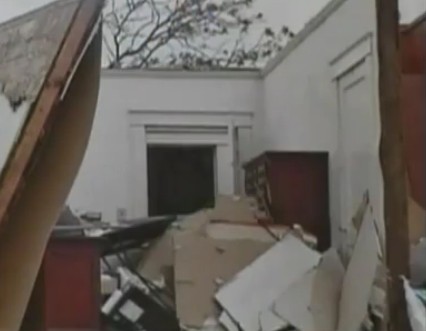
Storm Damage (WBRC)

A firestorm of criticism over reports of Alabama cable companies trying to charge customers for equipment lost or destroyed during April’s devastating tornadoes has forced some companies to rethink their policies, at least for this storm.

As Stop the Cap! reported earlier this week, some Alabama customers of Charter Cable and Bright House Networks were asked to pay the full value of cable boxes lost, damaged, or destroyed by the massive storms that struck last month.  Some customers complained about fees in excess of $200 for the set top boxes.  Fees for lost, stolen or damaged equipment are common at cable companies and customers are routinely asked to file insurance claims to cover the loss or damage.

But when tornadoes devastated several Alabama communities, several upset customers began taking their stories to the media, and now those policies are changing, at least for this storm.

Customers of Charter Cable have shared their stories with reporters at local newspapers and television stations, and a few are sharing them with Stop the Cap! Kelly, who requested we not publish her last name for privacy reasons, lost her home last month and is now living in Georgia.  When she called to suspend service shortly after the storm, she was told she would either have to pay for her cable box or make an insurance claim on behalf of Charter Cable.

But Charter Cable tells Stop the Cap! that policy has now been changed.

“Charter will not charge customers for missing, destroyed, or damaged equipment as a result of the recent tornadoes,” said Dylan Hall, one of Charter’s communications specialists. “We adjusted our policy shortly after the tornado in response to the large-scale and catastrophic nature of this storm. This was the right thing to do for our customers. We understand that this is a difficult time for many in Alabama.”

After Kelly reached out to Charter once again earlier today, the company not only waived the box fee, it also credited her account for an entire month of service, resulting in a substantial refund she says will be a big help for her family.

“I greatly appreciate your website bringing this more attention,” Kelly says.  “Earlier today, one of your readers who claims to work for Charter said I was making the story up, and it felt like being abused all over again.”

But after Kelly called Charter directly, things had changed.

“It was like a whole different company, and the representative I spoke with apologized at least six times and felt very bad about everything,” Kelly reports.  “I want to go back to Alabama in the summer, and the fewer bad memories I have of the last several weeks, the better.  This helps.”

Hall believes customers like Kelly likely encountered the lost or damaged cable box fee because they called right after the storm, before the company adjusted its policy.

“Unfortunately, some time elapsed before our Care agents got word to adapt our equipment policy, as we have in the past during other disastrous storms,” Hall says. “So customers who called immediately following the storm were misinformed. The policy changed to reflect the need and Care agents conveyed that to customers. Our employees continued to delivered water, tarps and other supplies to storm victims and help the Red Cross out with financial aid. The policy was changed because it was the right thing to do.”

Bright House Networks has also changed their policies in light of the horrific storm damage.

Karen Broach, regional vice president of operations for Bright House, reports the cable company has sent crews to assess damage and has automatically suspended billing for all customers it can identify were blown out of their homes by the storm:

  • Bright House Networks has proactively credited accounts of customers who experienced a loss of service(s) due to the storms.
  • Bright House Networks took the initiative and completed a detailed walk out of the area to identify all known destroyed homes and we suspended their billing.
  • This is important for two reasons, one is financial and the second is customer convenience.  For example, if a customer subscribes to Bright House Networks Home Phone or High Speed Internet Service, this will preserve the customer’s phone number and email address so they can transfer it to their new residence.
  • Suspended customer bills include suspension of equipment charges so customers can make contact with us at a time convenient to them to address their individual needs.
  • Bright House Networks will not charge customers for equipment damaged or lost as a result of the storm.
  • Bright House Networks never charges a disconnect fee – no matter what the reason.

Bright House customers with questions or problems can call 1-866-876-1872.

Comcast, which delivers cable service in certain parts of Tuscaloosa and Huntsville, normally requires a police report or copy of an insurance claim for lost, stolen, or damaged cable boxes.  But they too have changed their minds after noting the extent of storm damage.

Comcast has notified customers in the Tuscaloosa and Huntsville areas of the following policies:

  • For consumers displaced from their homes due to the storms, their service may be placed on a temporary six-month “hold” status at no cost, which enables those with voice and data services to save their telephone numbers and email addresses.
  • Equipment (such as converter boxes and cable modems) that was damaged by the storm may be exchanged at the local Comcast offices at no charge. Consumers should notify Comcast if equipment was lost in the storm and cannot be recovered.  Although routine policy requires that a police report or insurance claim be filed on lost equipment, that requirement is waived for six months due to the extreme nature of the extensive storm damage. Customers will not be charged for the exchange or replacement of equipment under these circumstances.
  • Customers who lost service will be automatically credited for that period of time.  It is not necessary to notify Comcast for this credit, which will appear automatically on customers’ next bills.  Customers who still do not have service after their power was restored should contact Comcast.

Stop the Cap! notes these are ongoing issues with some cable companies, and we’ve covered similar stories in other states where customers faced demands for payment of cable equipment lost in fires.  We continue to urge cable companies to abandon lost/damaged box fees for incidents involving natural disasters or fires that are not the fault of customers.  It’s good public relations and it is the right thing to do.

[flv width=”480″ height=”380″]http://www.phillipdampier.com/video/WBRC Birmingham Charter Cable Boxes 5-17-11.flv[/flv]

WBRC-TV in Birmingham shares the story of Cleon Spain, a Charter customer who was requested to pay more than $200 for his lost cable box before Charter changed its policies.  (2 minutes)

Organized Labor Assisting Group Pushing for Verizon FiOS Expansion in Buffalo

Phillip Dampier May 19, 2011 Broadband Speed, Verizon, Video 2 Comments

Buffalo’s communications labor unions are behind an organized effort to push Verizon Communications to expand its fiber-to-the-home service to the city of Buffalo, despite the fact the telecom company has a moratorium on service expansion beyond its existing commitments.

Buffalo AFL-CIO Central Labor Council President Michael Hoffert and CWA (Communications Workers of America) Local 1122 President James Wagner teamed up with the city’s elected officials and community advocates to pressure the phone company to expand service beyond several suburbs that currently get the service.

A professionally designed website, DontBypassBuffalo.com, is the home of the campaign, collecting signatures from interested residents and sharing late-breaking developments.

Verizon has a moratorium on further expansion of its fiber to the home service.

“Verizon’s FiOS service is a cutting-edge technology that brings ultra-fast internet and superior video programming over fiber optic cables that run directly into customers’ homes,” reads a statement from the coalition. “While Verizon is deploying FiOS throughout many of the suburbs of Buffalo, they are not building FiOS in the City of Buffalo.  The residents of Amherst, Tonawanda, Kenmore, Orchard Park, Hamburg, West Seneca and Lackawanna, where Verizon has built FiOS, are, taken as a whole, more affluent and less diverse than Buffalo residents.  The deployment of broadband technologies is a key to economic redevelopment in the City, especially since health care and higher education, both very dependent on cutting edge technologies, are leading employers in our area.  If Verizon continues to bypass Buffalo, residential consumers, children, and area businesses won’t be able to thrive in the 21st century economy.”

The union shares an interest in bringing the advanced service to more residents across Erie County as it collectively represents some of the Verizon employees who will service the fiber network.  Three western New York chapters of the CWA – Locals 1122, 1115 and 1177 – represent nearly 750 Verizon Workers across Erie, Genesee and Niagara counties, as well as across the Southern Tier, including field technicians, central office technicians and clerical staff.

Curry (WIVB-TV)

Verizon stalled new rollouts of its fiber optic network more than a year ago, and has consistently said it would only expand service in areas where it already has signed agreements with local communities.  In many regions, Verizon has completed agreements with towns and villages before reaching accommodations with larger urban areas.  Buffalo is not alone in protesting for improved broadband service.  Washington, D.C., Baltimore and Boston have also complained about being bypassed.

Last week, Coalition Director Janique Curry stepped up the pressure on the phone company at a press conference in front of Verizon’s Elmwood Avenue headquarters.

“Verizon’s lack of commitment to the minority population in the city of Buffalo is unacceptable,” Curry said.  “This community deserves an equal opportunity as our neighbors in the suburbs experience.”

Verizon’s FiOS network in New York State currently serves parts of metropolitan New York City and suburban areas around Albany, Syracuse, and Buffalo.

[flv width=”640″ height=”500″]http://www.phillipdampier.com/video/DontBypassBuffalo Apr-May 2011.flv[/flv]

Here are three reports on the protests: WIVB-TV and WKBW-TV’s coverage of the protest in April, and WIVB’s most recent story covering last week’s return to Verizon headquarters to apply additional pressure on the company.  (3 minutes)

Phoenix’s Fox Morning News Team Perplexed by Cell Phone Survey Results

[flv width=”360″ height=”290″]http://www.phillipdampier.com/video/KSAZ Phoenix ATT Customer Satisfaction 5-17-11.mp4[/flv]

The morning news team at Fox affiliate KSAZ-TV in Phoenix were slightly in over-their-heads trying to cover the results of a satisfaction survey about cell phone companies.  Poor Kristin Anderson was coping with a personal AT&T crisis all her own — she lost her cell phone.  Her luck didn’t get much better when she tried to explore the survey’s results from the University of Michigan.  Instead of a slide ranking the winners and losers, viewers got a pop quiz question asking which country in the news is run by President Bashar al-Assad.  While you might have wanted to answer the Republic of AT&T, the correct answer is Syria.  AT&T scored rock-bottom in the survey with T-Mobile not far behind.  Among the major carriers, Verizon and Sprint tied for first place.  When asked which carrier scored the highest overall, the morning anchor team guessed Cricket.  Yes, Cricket.  (The correct answer turned out to be Tracphone, which is a prepaid reseller using other carriers’ networks.)  (4 minutes)

Updated: Charter Cable Tells Tornado Victims to ‘Look Around the Neighborhood’ for Cable Boxes or Else

Phillip Dampier May 18, 2011 Charter Spectrum, Consumer News 32 Comments

“If your house was destroyed, and you have looked around the neighborhood for our cable box and cannot find it, you owe us $212 and you need to either pay us or make an insurance claim on our behalf.”

Those were the exact words of a Charter Cable representative talking to a storm victim who lost her home, possessions, and yes, Charter Cable’s set top box.  Stop the Cap! reader Jake from Alabama shared the story of his friend Kelly — a single mother with three kids who lived in Jefferson County, until last month’s tornado flattened her home and scattered everything the family owned for miles around.  Kelly is now living with her parents in Georgia and trying to sort through insurance claims, school for her children, her future career, and the cable company.

“She told me everyone was wonderful, offering food, aid, temporary shelter, and even assistance with insurance claims,” Jake writes.  “Everyone but Charter Cable, who immediately demanded payment for equipment that could have blown into the next county.”

Kelly told Jake the other utilities were glad to help suspend service to her now non-existent home.  The phone company is even forwarding phone calls to her Alabama phone number, which now connects to her cell phone.  Nobody asked for a penny, and all expressed sorrow for the loss.  Charter Cable expressed an interest in Kelly’s credit card number to pay for her lost cable box.

“She told me the woman at Charter demanded to know if she was not prepared to pay today, when would she file her insurance claim so the company can get paid,” Jake says.  “Even worse, if she didn’t pay, they would assess late fees and turn her over to a collection agency.”

Cable companies demanding payment for lost or destroyed cable equipment is nothing new.  Stop the Cap! has documented instances where operators demand payment for cable boxes destroyed in fires, even when the customer lacks insurance.

“It’s become a hot topic in Birmingham and storm-damaged areas because relief workers are hearing horror stories from customers, some injured, who are told to start combing through adjacent yards to look for their lost cable equipment,” Jake says.

Bright House Networks, which also provides service in some storm-damaged areas, has been particularly nasty.

Jake notes one local talk show featured a caller who shared the story of a Bright House representative who told the customer she would wait on the phone while she searched the backyard for Bright House’s DVR box.

“It was disgusting, and Bright House told a Birmingham newspaper it was their policy to demand homeowners file insurance claims on the cable company’s behalf so they can get paid full value for their damaged, usually previously used, cable equipment,” Jake says.

In fact, that is Bright House Networks’ policy, notes the Birmingham News:

Bright House Networks, whose service area includes hard-hit Pratt City, also expects its customers to file claims under homeowners’ or renters’ insurance to pay for lost or destroyed cable boxes. “That’s how we normally handle it,” spokesman Robert L. Smith said.

If storm victims don’t have insurance, he said, decisions will have to be made on a case-by-case basis.

“For those who have lost everything, talking to a cable company is probably the last thing on their minds,” Smith said. “We’re not going to pressure someone for a set-top box.”

But in fact cable companies have pressured customers into paying for lost equipment and told they’ll get their money back from the final insurance settlement.

“The problem here isn’t so much that Charter and Bright House want to get paid for destroyed equipment, it’s how zealous they are about getting paid right now, even as people are still wrapping their hands around the cards dealt to them by the massive tornado damage,” Jake says.

The News notes not every cable company is out for customers’ credit card numbers:

Among other television services, AT&T’s U-verse customers who lost their leased equipment in the storm can have it replaced at no charge, company spokeswoman Sue Sperry said.

DirecTV waives replacement costs for equipment damaged in storms if customers continue services, spokeswoman Vanessa Dunham said. If service can’t be restored because of damage to the home, DirecTV offers to cancel the account and waive fees for not returning equipment, she said.

[Update 5/20: Charter Communications sent a statement saying, in part: Charter will not charge customers for missing, destroyed, or damaged equipment as a result of the recent tornadoes. We adjusted our policy shortly after the tornado in response to the large-scale and catastrophic nature of this storm.  We have now confirmed the company is now crediting customers for lost or damaged equipment.]

Michigan Residents Protest Deregulation Bill That Could End Landlines; “Get a Cell Phone,” Says AT&T

When Stop the Cap! reader Nancy learned earlier this year AT&T was pushing yet another deregulation bill in the Michigan legislature allowing the company to abandon landline service if and when it chooses, she called AT&T and her state representatives to protest.

“When I called AT&T, the representative literally told me if the company ever did decide to stop offering basic phone service in Michigan, I should just ‘get a cell phone,'” Nancy reports.  “Naturally they tried to sell me one of theirs and I replied I was not likely to be loyal to a company that was willing to abandon me and hundreds of thousands of other rural customers.”

As in Wisconsin, AT&T’s lobbying efforts follow the same basic playbook: use friendly legislators and dollar-a-holler groups financed in part by AT&T to push deregulation as “improving competition” and making the state “business friendly.”  But as Nancy learned from experiences in Wisconsin, those are empty promises when rates go up.

“These same people pushed to deregulate cable in Wisconsin so they could offer AT&T’s cable TV service, promising lower prices if we had AT&T competing against Time Warner Cable,” Nancy remembers.  “Time Warner and AT&T raised their rates for both services, instead.”

Nancy has a good memory.  So do we.  Yet again, AT&T’s chief Astroturfer is Thad Nation, this time under the name of the Midwest Consumers for Choice and Competition.  While consumers get ignored, Nation gets time to testify before the House Energy and Technology Committee.

Nation, who runs a lobbying firm, told legislators companies like AT&T should not have to invest in old copper-lines that consumers don’t care about.  He claims it prevents AT&T and other companies from investing in broadband and wireless.

The only thing missing from this group are actual consumers. Instead, their "partners" include: AT&T, groups funded by AT&T, and several chapters of the Chamber of Commerce.

In reality, legislation pushed by AT&T will allow them and other phone companies to abandon providing even basic landline service in the rural areas they no longer care about. There is no evidence (and no regulation) AT&T will invest in either broadband or improved wireless service in rural areas where the company is unlikely to quickly recoup its investment.

Our friends at the Michigan Telephone Blog pointed us to a piece in the Huron Daily Tribune, a newspaper at ground zero for rural Michigan’s potential loss of landline service should the deregulation bill pass.

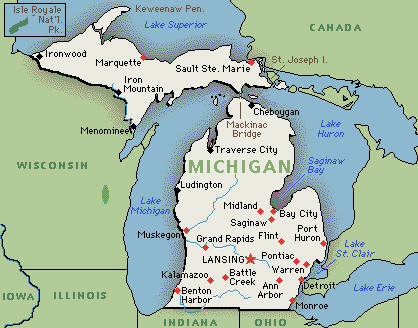
Located in Michigan’s “thumb” — the northeastern part of the state separated by Saginaw Bay, Tribune reporters drilled down into the implications for the loss of traditional landline service in this largely-rural area of Michigan.

Huron County Commissioner John Bodis, who chairs the Legislative Committee, said he’s aware of the bill and foresees some issues with it, particularly in regard to the provision allowing phone companies to discontinue landline service in an area where Voice over Internet Protocol (VoIP) or cell phone service is available.

“If it’s not mandated, they’re not going to do it,” he said. “So, I’m hoping the Senate version will tweak that a little bit and hold their feet to the fire, but I don’t know.”

In its May Capitol Currents, the Michigan Township Association reported its concerns center around residents losing their land-line phone services when other options are not adequate (i.e. poor cell phone coverage because of hills, trees, etc.).

In written testimony to the House Energy and Technology Committee, Brian Groom, president of the International Brotherhood of Electrical Workers, Local 1106, stated over the past decade, the Michigan Legislature has gradually removed telecommunications providers from the oversight of the MPSC, and HB 4314 would complete that process by eliminating the last vestige of regulation — the Primary Basic Local Exchange Service.

“This service, as currently mandated in state statute, requires residential service providers to offer — at the very least — a basic calling plan to customers in their service territory,” Groom stated. “In 2005, when (M)PSC regulation of larger calling plans was eliminated, proponents argued that the public would continue to be protected by the existence of a Primary Basic Local Exchange Service requirement.”

“This means telecommunication companies providing basic local exchange or toll service will be able to discontinue or deny service to any customer who has access to ‘a comparable voice service.’ Nothing in the bill ensures that such service would be affordable, reliable or of a minimum quality,” Grooms continued. “For customers living in remote areas which are of a higher cost to serve via landlines, this legislation could result in them having to depend on higher cost and less reliable forms of telecommunication services. This bill would create a telecommunications environment where large areas of the state have no access at all to traditional landline telephone service.”

AT&T told Stop the Cap! reader Nancy even if the company disconnected the landlines of rural Michigan, those customers could always buy cell phones instead.

“That means people like me and my friends in places like Bad Axe, Elmwood, and Minden City — communities few people outside of Michigan would have heard of, get disconnected because they are too rural to get much attention from these companies,” Nancy says.

Frontier Communications, which provides service in some areas of the state, claims monopolies don’t exist in the phone business:

In written testimony, Bob Stewart, Frontier Communications state director of governmental affairs for Michigan and Indiana, indicated the current atmosphere is no conducive toward monopolies.

“The telecommunications industry in Michigan has moved to a highly competitive environment where monopoly powers even in rural areas do not exist,” he stated. “Unneeded and outdated regulations in the Michigan Telecommunications Act are cleaned up by HB 4314. Michigan needs to celebrate the success of the MTA by declaring victory; not over regulating simply for the sake of regulation.”

But many rural Michigan residents far from cable television and strong signal cell phone service would beg to differ.

“The further inland you head on the ‘thumb,’ the worse things get,” Nancy reports.  “Much of this is farm country and they can’t even get DSL service, and cell reception might be barely adequate outside, but walk inside and your signal is gone.”

Despite consumers like Nancy getting upset when they learn the long term implications of these bills, without a public outcry it is easy for legislators to vote with AT&T.  In the House, HB 4314 passed 102-6.  The six standouts that stood up for consumers?

Reps. Vicki Barnett (D-Farmington Hills, Jeff Irwin (D-Ann Arbor), Steven Lindberg (D-Marquette), Lesia Liss (D-Warren), Edward McBroom (R-Vulcan) and Phil Potvin (R-Cadillac).

Search This Site:

Contributions:

Recent Comments:

Your Account:

Stop the Cap!