Home » Providers » Recent Articles:

MetroPCS’ Nasty Terms of Use: ‘We May Not Provide You a Meaningful Data Experience’

Phillip Dampier May 25, 2011 Consumer News, Data Caps, MetroPCS, Net Neutrality, Online Video, Wireless Broadband Comments Off on MetroPCS’ Nasty Terms of Use: ‘We May Not Provide You a Meaningful Data Experience’

Unlimiting the ways a cell phone company can limit your service.

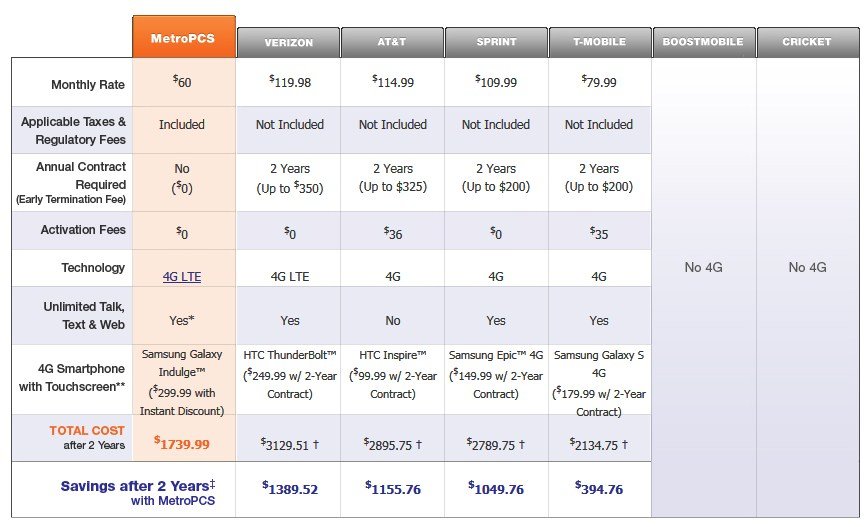
MetroPCS pitches its 4G/LTE plans to customers looking to save money over the bigger players in the marketplace.  The upstart provider, based in Richardson, Texas, serves just over a dozen major metropolitan areas with no-contract plans that deliver lower prices in return for smaller coverage areas.  As larger providers heavily sell their “next generation 4G” networks, MetroPCS has also been promoting their own “unlimited talk, text, and web” 4G/LTE plan that offers an “unlimited” experience for $60 a month.  But there is a catch, only revealed when customers click the fine print link that opens the Terms of Use.  The document is a poster child for Net Neutrality, because it allows the company to block, throttle, prioritize, alter, or inspect any web content.

Here is what MetroPCS advertises:
Here is a selection of the Terms and Conditions which tarnish a great sounding deal (underlining ours):

You acknowledge and agree that the Internet contains Data Content which, without alteration, will or may not be available, or may not be providable to you in a way to allow a meaningful experience, on a wireless handset.

You acknowledge and agree that such alteration that MetroPCS may or will perform on your behalf as your agent may include our use of Data Content traffic management or shaping techniques such as, but not limited to delaying or controlling the speeds at which Data Content is delivered, reformatting the Data Content, compressing the Data Content, prioritizing traffic on MetroPCS’ network, and placing restrictions on the amount of Data Content made available based on the Agreement. You further acknowledge that MetroPCS may not be able to alter such Data Content for you merely by reference to the Internet address and therefore acknowledge and agree that MetroPCS may examine, including, but not limited to Shallow (or Stateful) Packet Inspection and Deep Packet Inspection, the Data Content requested by you while using the MetroWEB Service to determine how best to alter such Data Content prior to providing it to you.

If we notice excessive data traffic coming from your phone, we reserve the right to suspend, reduce the speed of, or terminate your MetroWEB Service. In addition, to provide a good experience for the majority of our customers and minimize capacity issues and degradation in network performance, we may take measures including temporarily reducing data throughput for a subset of customers who use a disproportionate amount of bandwidth; if your web and data Service Plan usage is predominantly off-portal or otherwise not provided by MetroPCS during a billing cycle, we may reduce your data speed, without notice, for the remainder of that billing cycle. We may also suspend, terminate, or restrict your data session, or MetroWEB Service if you use MetroWEB Service in a manner that interferes with other customers’ service, our ability to allocate network capacity among customers, or that otherwise may degrade service quality for other customers.

MetroPCS also wants customers to know their service is not intended as a home broadband replacement, and states it is only to be used for basic web services, including e-mail and web browsing and downloading of legitimate audio content.  Video streaming is naughty.

AT&T Systematically Rigging Data Meters to Overcharge Customers, Says New Investigative Report

Phillip Dampier May 24, 2011 AT&T, Consumer News, Data Caps, Video, Wireless Broadband 10 Comments

[flv width=”596″ height=”356″]http://www.phillipdampier.com/video/NBC ATT Internet Overcharging 5-24-11.flv[/flv]

A new consumer investigation by NBC’s Today Show found that AT&T may be systematically overcharging customers for their broadband usage, fleecing customers for countless sums in overlimit fees.  With no government oversight to guarantee usage measurements are accurate and fairly measure usage, customers have to take AT&T’s “word” for the accuracy of their billing, and now that the company has extended Internet Overcharging to its DSL and U-verse customers, AT&T could earn millions in ill-gotten gains if the claims of overestimated usage are true.  AT&T responded, claiming consumers have a misunderstanding of how data is consumed and billed.  NBC quotes AT&T as saying most customers who exceed their limits do not incur fees, which will come as quite a surprise to customers who are routinely billed $15 or more for excessive use charges on wireless plans.  Thanks to Stop the Cap! reader Scott for sharing the news.  (4 minutes)

AT&T Action Plan: Strategies to Avoid Being Overcharged by AT&T’s Overlimit Fees

Stop the Cap! reader Cal believes AT&T cannot be reasoned with about Internet Overcharging until you threaten to cancel.

While a significant number of customers have already pulled the plug on AT&T DSL and U-verse service over their recently-introduced Internet Overcharging schemes, some are telling Stop the Cap! they have no plans to actually disconnect service until AT&T threatens to charge them overlimit fees.

For some AT&T customers, there is no suitable alternative to the phone company.  Rural customers without a cable provider, or those who are faced with two bad choices — AT&T or Charter Communications — say they are going to test AT&T’s resolve to actually overbill them.

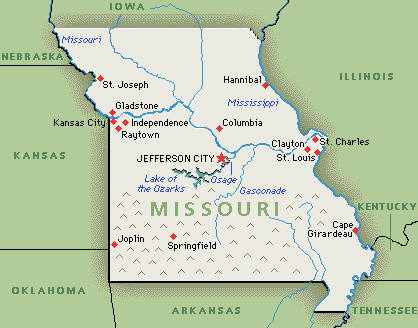
Cal is an AT&T customer is Missouri.  His alternative?  Charter Cable, which has an Internet Overcharging scheme of its own and delivers what he calls “third world service” in his community.  Given a choice, he intends to stay with AT&T as long as possible, pulling the plug only after his third warning of exceeding the phone company’s new broadband usage limits.  He thinks AT&T’s customer service won’t ultimately let it come to that.

“My sister works for an AT&T call center where she lives, and there was some training on the subject of handling the company’s usage caps,” Cal reports. “Get the right representative or supervisor and they can make virtually anything go away with a few keystrokes, especially if you are prepared to cancel your service over the issue.  While they may not cancel the caps, they very well may credit back any overcharges.”

Cal says his family does not intend to change their usage habits one bit.  He’ll change providers before he rations his Internet usage.

“I maintain control over our Internet access here, they don’t and sure as hell won’t,” he said.  “We do not do illegal downloads and we don’t allow torrenting or anything else that can get my kids into trouble, but we do use a Roku box and watch Netflix instead of buying pay movie channels with programming not suitable for my family to watch.”

Cal says his five children are home-schooled, which makes daily Internet access an essential part of the education process.  Many companies that provide home-schooling materials increasingly require a broadband connection.  While not as bandwidth hungry as Netflix video streaming, with five children in the home, usage adds up fast.

“It is not hard to do 260GB of usage a month, which puts us just over their U-verse limit, and I’ll be damned if I am going to pay AT&T another $10 for 10GB over,” Cal says.  “This is another reason why the Obama Administration is no better than the last one — they are all masters of big corporations who will rob us blind and use the money to pay off Congress to look the other way.”

Cal used to be a Charter Cable customer, but left when that company implemented its own Internet Overcharging scheme.

“I told Charter with their lousy service they were lucky I was a customer, but after putting usage limits on, I left,” he reports.

Cal’s neighbor thinks he has an even better way to battle AT&T.

“My neighbor will cancel service under his name and sign up under his wife’s and bounce between them whenever AT&T threatens to send him a bigger bill; he has already been doing that for years back and forth between AT&T and Charter on new customer deals,” Cal says.

Cal, and many other readers touching base with us, believe AT&T is not very responsive to customer complaints unless customers threaten to cancel service, and they believe AT&T will only change its mind when shareholders see the usage limits as counterproductive.

“AT&T can buy enough people in Washington to make street protests irrelevant, but their shareholders sure won’t like it when they see customers and revenue dropping,” Cal notes.  “If you can’t get cable, you are stuck with AT&T, so you have to keep the pressure on — file complaints with the Better Business Bureau, the FCC, and Congress.  Make them spend more money defending their policy than they earn from its proceeds.”

AT&T Lobbying Blitz: Company Spent $6.8 Million in 1st Quarter Pushing T-Mobile Merger

AT&T, one of the country’s most profligate spenders on public policy lobbying, has pulled out all the stops pushing for Washington approval of its proposed merger with T-Mobile.

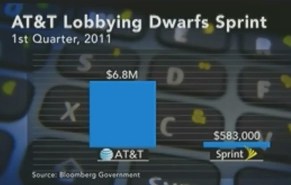
Bloomberg Government reports AT&T spent $6.8 million during the first quarter of 2011, more than 11 times more than its rival Sprint, which opposes the merger deal.  In fact, AT&T was the nation’s second biggest spender in lobbying dollars, just behind defense contractor Honeywell, which is trying to avoid Pentagon spending cuts.

Sprint’s much smaller lobbying effort had to make do with a budget of just $583,000 during the same period to push back against the telecom giant.

Also raising questions are reports from Bloomberg that AT&T CEO Randall Stephenson direct dialed Federal Communications Commission Chairman Julius Genachowski the weekend before the deal went public.  At the same time, former FCC Chairman Richard Wiley, today a lobbyist for T-Mobile, spoke directly with four of the five FCC Commissioners to directly lobby for the merger’s approval.

Sprint has been trying to beef up its own lobbying star power, recently adding Eddie Fritz, former head of the National Association of Broadcasters as one of their lobbyists.  Sprint has also hired several former high-level Congressional staffers and mid-level employees at the Justice Department, expected to help Team Sprint know how to apply the right pressure to the right people inside the FCC and Justice Department to reject the deal.  The merger hinges on the approval of both agencies.

Left off the speed dial — consumers, who cannot pick up the phone and reach FCC Chairman Genachowski while lounging in his backyard or enjoy lucrative employment opportunities open to government workers in the private lobbying sector.

[flv width=”360″ height=”290″]http://www.phillipdampier.com/video/Bloomberg ATT Lobbying 5-24-11.mp4[/flv]

Bloomberg News breaks down AT&T’s lobbying and strategy for getting its merger deal with T-Mobile approved in Washington.  (2 minutes)

Virginia Says Goodbye to Verizon White Pages; Yellow Pages ‘Dead Tree Format’ Lives On

Phillip Dampier May 20, 2011 Consumer News, Verizon, Video 1 Comment

Verizon customers in Virginia are saying goodbye to automatic delivery of the printed edition of the White Pages after the State Corporation Commission gave the okay to end decades of directory deliveries on doorsteps across the state.

The gradual end of automatic telephone directory delivery has been ongoing throughout the United States as customers increasingly look online for telephone listings.  The directory also isn’t what it used to be as Americans increasingly turn off landlines and turn on cell phones, which go unlisted by default.

Verizon says the printed phone book wastes energy, trees, and money when customers immediately discard them in the nearest recycling bin.  But the company does plan to continue offering free printed copies on request.

While residential directories gradually disappear, the Yellow Pages, filled with business listings, will continue to grace doorsteps for years to come.  They represent an enormous moneymaker for phone companies and directory publishers, so opting out of the bulkier business pages is going to require more effort.

Unfortunately for consumers, while telephone companies realize significant savings not having to print and distribute the phone books, they have no plans to pass those savings on to you in the form of reduced rates.

[flv width=”480″ height=”290″]http://www.phillipdampier.com/video/WTVR Richmond Goodbye White Pages 5-6-11.mp4[/flv]

WTVR-TV has some fun with the imminent demise of Verizon’s Richmond White Pages.  (2 minutes)

Search This Site:

Contributions:

Recent Comments:

Your Account:

Stop the Cap!