Home » Providers » Recent Articles:

West Virginia Upset With Current State of Broadband; Companies Losing Business Over Lack of Service

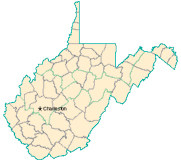
At least 41 percent of West Virginian economic development professionals responding in a new survey rate their area’s existing broadband service as “not very good,” a result that could have profound implications for high tech economic development in the state because of poor quality business broadband service.

Some of the results of the survey, conducted by Internet Service Provider Citynet:

  • 77% said government involvement in steering broadband policy was “very important.”
  • 78% believe modern, reasonably priced broadband Internet infrastructure is “extremely important” or “very important” in competing against other locations for jobs.
  • On a 10-point scale, broadband Internet infrastructure (8.56) rates as slightly more important than road improvements (8.26) and water infrastructure (8.26).

“Seventy-eight percent of respondents say it has been their experience that businesses considering locating in their areas place high priority on access to affordable, high-speed Internet when evaluating site selections,” said Jim Martin, president and chief executive officer of Citynet. “And 66 percent say cost and capacity of broadband service are factors more than half of the time when discussing new business prospects.”

Some participants in the survey said they are losing business prospects in part due to the lack of broadband capacity, its speed or cost. Most of the professionals said they were “very familiar” or “somewhat familiar” with broadband expansion programs, such as middle-mile infrastructure, being implemented in adjoining states.

In West Virginia, most broadband expansion is being done by “last-mile” service provider Frontier Communications, which took over most of the state’s landlines from Verizon.  For most homes and businesses outside of areas where cable companies compete, Frontier provides DSL broadband service ranging from 1-3Mbps in smaller communities, perhaps 7Mbps or slightly better in larger cities.

West Virginia has proved to be one of the least impressive states for broadband owing to its terrain and large number of rural communities, providing few incentives for robust competition.  That has meant slow speed service at high prices.

Survey respondents were less than impressed:

  • “I have a project pending [and] will probably lose it based on costs of broadband.”
  • “The lack of high speed service in the rural areas totally extinguishes the possibility of new small business start-ups.”
  • “Prospects don’t look here because of the lack of high speed, affordable, reliable broadband…. Current speeds of up to 3 mb while may be suitable for residential use are not suitable for business.”
  • “Not only do too many areas still not have broadband, but too many places where people live do not have it and that affects the quality of life issue when attracting a prospect to live, work and play in WV.”
  • “We were looking at a possible location of a data center and the lack of affordable, large capacity broadband was a deciding factor in them not locating in WV.”
  • “We need the middle-mile and trunk-line services in West Virginia to remain competitive for many of today’s industries. What good is it if we get high-speed to every place in West Virginia, when we can only reach each other and do not have the facilities to get out of the state and into the major lines?”
  • “[We] lost a company that looked at an existing building located in an area that doesn’t have high-speed access. They ended up locating in another area.”
  • “You are not in the game without it.”
  • “What are we waiting for?”

Citynet has a dog in this fight.  Martin has tangled with Frontier Communications in the past year over broadband stimulus funding and where taxpayer dollars are being spent in the state.  While Frontier has touted “fiber projects” in West Virginia, those are primarily directed at increasing capacity for Frontier’s middle-mile network between its telephone exchanges, in hopes of expanding DSL further out into rural areas.  The company is also trying to address congestion issues that have grown since buying out Verizon’s landline-based broadband business.

Martin has criticized state officials for supporting Frontier’s efforts because the company will end up owning and controlling the network built, in part, from taxpayer dollars.

Stop the Cap! hears regularly from ordinary consumers in the state who are dissatisfied with their broadband choices, especially when they come from just a single provider — Frontier.  Slow speeds, poor service, and repeated service outages have been documented here and by the state’s local media.  Some outages are attributable to Verizon’s poor quality infrastructure (now owned by Frontier), others to Frontier’s unwillingness to replace that infrastructure — instead choosing to repair it, even if further outages occur later.

Media Treats Sanford Bernstein’s Craig Moffett as ‘Independent Analyst’ on Broadband; He’s Not

Phillip 'Not Picking Up What Moffett Puts Down' Dampier

Tech, business, and even a few mainstream media outlets have been booking Sanford Bernstein’s Craig Moffett as an independent observer of all-things-broadband, without revealing he literally has a vested interest in boosting profits for the telecommunications industry.

The latest of Moffett’s heavily-slanted ideas appeared over the weekend on ZDNet, where Larry Dignan’s Between the Lines column used one of Bernstein’s “research notes” to provoke readers into a discussion about Internet Overcharging:

Metered broadband access is inevitable and may even be good for adoption of speedy Internet access.

That’s the argument from Bernstein analyst Craig Moffett in a research note. Moffett sets the scene:

  • The FCC’s open Internet push allows for metered broadband.
  • AT&T has introduced usage caps across its wireline business. DSL customers are limited to 150 GB of monthly consumption. U-Verse subscribers get 250 GB, or the same as Comcast. Users will be charged an extra $10 a month if they exceed the cap and it’s $10 per 50 GB after that.
  • AT&T has already introduced tiered wireless plans.
  • Time Warner Cable has a few usage based pricing pilots underway.

Moffett

Nowhere in Dignan’s column does he disclose Moffett is a paid Wall Street analyst working for the interests of investor clients of Sanford Bernstein who want to maximize the value of their telecommunications stocks.  Moffett’s long history of statements about industry pricing reflect those interests, which are often very different from those of most consumers.  Moffett’s world view: anything that brings in more revenue is good for shareholders (rate hikes, metered billing), anything that drives down shareholder value is not (infrastructure upgrades, pricing cuts, customer defections).

On that basis, Moffett has been called a “cable stock fluffer” by our friends at Broadband Reports for his relentlessly pro-cable industry commentary, even while ridiculing transformational projects like Verizon’s FiOS fiber to the home network for being “too expensive” and not delivering enough return on shareholder investment.  Consumer Reports delivers the opposite view: high marks for Verizon FiOS, mediocre to lousy marks for most of the nation’s cable operators.

While there is nothing inherently wrong with Moffett doing his job on behalf of his paying clients, using his views outside of that context — particularly when those interests go undisclosed — is journalistic malpractice.

Oh, and Time Warner Cable abandoned their usage-based pricing pilots in 2009 after customers declared war on the cable company.  Those darn customers, ruining the industry’s plans!

The rest of Moffett’s research note doesn’t get much better in the “true facts”-department:

The goal of moving to usage based pricing is not to undermine competition from Netflix (or anyone else… although it certainly wouldn’t be good news for Internet video). And it is most decidedly not to simply “raise prices for broadband” as Public Knowledge or New America would have it (although it might well do precisely that, too). Instead, it is nothing less than to re-align the entire business model of today’s infrastructure providers with the next generation of communications… so that broadband providers might stop fighting against the tide and embrace it instead.

With usage based pricing, broadband providers, and Cable operators in particular, can create an “iso-profit” curve, where the amount they make from a physical connection is about the same whether someone uses that connection for linear video or, alternatively, web video. The goal is not to stifle competition, but instead to create indifference not just to the end state of video by-pass, but indeed for all points along the way. The adoption of usage based pricing would be transformational to the debate for Cable operators, inasmuch as it would essentially indemnify them against all potential outcomes.

Moffett represents his interests, not yours.

Yet some of Moffett’s earlier statements would seem to argue with himself.

For instance, back in March Moffett was making plenty of noise about AT&T’s caps precisely targeting video providers like Netflix:

Moffett believes usage caps have everything to do with stopping the torrent of online video.  He notes AT&T’s caps are set high enough to target AT&T customers who use their connections to watch a considerable amount of video programming online.

“Only video can drive that kind of usage,” Moffett writes.

Moffett has repeatedly predicted any challenge to pay television models from online video will be met with pricing plans that eliminate or reduce the threat:

“[I]f consumption patterns change such that web video begins to substitute for linear video, then the terrestrial broadband operators will simply adopt pricing plans that preserve the economics of their physical infrastructure,” Moffett said. “Of course, any move to preserve their own economics has far-ranging implications. Any move towards usage-based pricing doesn’t just affect the returns of the operators, it also affects the demand of end users (the ‘feedback loop’).”

The only thing usage-based pricing indemnifies is the industry’s confrontation with revenue-eroding cable-TV cord-cutting.  And Moffett knows this, although he would probably give rave reviews to bringing similar usage-based-billing to cable television packages, which would charge you for every show you watched on top of your monthly bill.

These pricing models, already firmly rooted in Canada, have done nothing to bring the “next generation of communications” to our neighbors to the north.  Indeed, Canada’s ranking in broadband continues its decline as large cable and phone companies pocket the profits instead of committing to wholesale upgrades of their networks to deliver the kind of service increasingly common in Europe and Asia.

But the real laugh out loud moment comes last: Moffett’s prediction that AT&T’s usage pricing will increase broadband adoption.  Perhaps that’s true if you prefer telecommunications companies abuse you, but as we’ve documented over the past three years, these pricing schemes never save anyone money — they just increase the price of your service while decreasing the value of it.

T-Mobile Innovation: Free Wi-Fi Calling for Monthly Plan Customers; Would AT&T Ever Offer This?

Phillip Dampier May 16, 2011 Consumer News, T-Mobile, Video Comments Off on T-Mobile Innovation: Free Wi-Fi Calling for Monthly Plan Customers; Would AT&T Ever Offer This?

T-Mobile has announced it is giving some of its smartphone customers unlimited free calling, when you are within range of a Wi-Fi signal.

This new feature is available on Even More and Even More Plus postpaid rate plans for customers with Wi-Fi Calling-capable phones. Wi-Fi Calling is based on the Smart Wi-Fi application that comes pre-loaded onto many of T-Mobile’s latest smartphones.  It comes from Kineto Wireless, which provides a similar app for Orange UK and Rogers Wireless customers in Canada.

When enabled, T-Mobile customers will see a blue ‘talk bubble’ icon in the status bar.  Once active and running, all voice calls made on your phone while within range of a connected Wi-Fi signal are reportedly not counted against your plan minutes.

Judging from anecdotal reports across the web, T-Mobile customers have been able to add the free calling feature to their accounts as of last Friday.  The fastest route to a quick activation is calling T-Mobile customer service.  Those subscribed to a Family Plan must activate the feature individually for each smartphone on the account.

Wi-Fi Calling is primarily pitched as providing a solid signal where none exists, a helpful feature for T-Mobile customers who find reception less than robust indoors.  Offloading wireless traffic to Wi-Fi benefits T-Mobile as well, reducing demand on its cell towers.

The technology differs from femtocells — small devices that connect with your broadband connection and deliver a 3G wireless signal in your home or office.  Because the Smart Wi-Fi app that powers Wi-Fi Calling is software-based, there is no hardware expense and little customer configuration required.  But Wi-Fi Calling is more restrictive.  A femtocell delivers a 3G signal to any nearby device registered to access it; Wi-Fi Calling only works with phones pre-equipped with the feature.

T-Mobile is also reportedly readying its own femtocell solution for low signal areas.  Their Cel-Fi Microcell is undergoing focus group testing at a price point of a $50 refundable deposit, and a monthly cost of $1.99.

T-Mobile’s website has created some confusion over their Wi-Fi Calling by delivering contradictory information to what customer service representatives are telling customers.  Customer service and an internal company memo suggest the use of the feature does not count against plan minutes, but their website says the opposite.

T-Mobile’s latest innovation begs the question: Would AT&T  — potential future owner of T-Mobile — ever offer Wi-Fi Calling to its customers for free, with no deduction of plan minutes when used?

AT&T femtocell users find the company does deduct plan minutes, unless customers pay for a $19.99/month add-on plan for an unlimited calling option.

[flv width=”640″ height=”380″]http://www.phillipdampier.com/video/Smart Wi-Fi.flv[/flv]

Kineto Wireless produced this video explaining how Smart Wi-Fi Calling works, and we’ve included a second video from the company explaining how to access the application from a T-Mobile smartphone.  (6 minutes)

National Media Calling Out FCC Commissioner’s Departure to Become Top Comcast Lobbyist

Phillip Dampier May 11, 2011 Comcast/Xfinity, Public Policy & Gov't 1 Comment

Meredith Attwell-Baker sure is.

The exit of Meredith Attwell Baker from her role as a Republican commissioner on the Federal Communications Commission to take a position as a top lobbyist at Comcast is raising eyebrows in Washington and anger in the rest of the country.

Comcast confirmed late today Baker will serve as their new senior vice president of government affairs, a title that can be considerably shortened to “lobbyist.”

The short span between March, when Baker was browbeating regulators over “taking too long” to review the Comcast-NBC merger she supported, and today’s announcement has surprised even some Washington insiders.

Often, those looking for a better paycheck in the private sector will start by working for a D.C. lobbying firm before directly accepting employment with a company whose multi-billion dollar merger deal they affirmed months earlier in their role as a regulator.

Tim Karr at Free Press called today’s announcement more food for the cynics:

With behavior like this it’s little wonder that American people are so nauseated by business as usual in Washington. Inside the Beltway the complete capture of government by industry barely raises any eyebrows. Outside of Washington, people of every political stripe have expressed near unanimous contempt for a system of government that favors powerful corporations at the expense of the many.

An opinion piece in the Los Angeles Times noted Baker’s move raises uncomfortable questions about how legislators and regulators make their decisions. “Are they acting in their constituents’ best interests, or are they burnishing their prospects for a high-paying job on K Street after they leave government?”

The New York Times expanded on Baker’s strong sentiment for the merger:

“The NBC/Comcast merger took too long, in my view,” Ms. Baker said on March 2 in a speech to a communications industry group. Noting that that time was similar to the length of other major merger reviews at the commission, she asked whether those reviews were preventing companies from trying to grow through acquisition.

“My concern is that you might walk away,” she told the communications executives, “and how many other consumer-enhancing and job-creating deals are not getting done today.”

Politico reported that Comcast’s gain was probably a loss for consumers:

“Sometimes the revolving door between government and private industry spins quickly and sometimes it’s on a rocket sled,” Dave Levinthal, communication’s director for the Center for Responsive Politics, told POLITICO. “This transition is as quick as it can possibly get.”

While Baker is not allowed to be an official lobbyist, Levinthal noted that she has many ways to be influential and lobby for her new company in a broader sense.

“It’s a big boon for Comcast,” he said. “They are getting somebody who has unbelievable government experience and know-how” in the communications space. Consumers, he noted, can’t afford to hire someone of a similar stature to advocate for them.

Comcast denied it approached Baker for a job until after their merger deal was approved.  That defense only strengthens suspicions Baker’s vote made her an even more attractive candidate for the cable company, but most pundits guess she would have supported Comcast even without a job offer. Judging from the comment sections of most major media stories covering today’s events, consumers are unhappy. Some called Baker an opportunist, while others used the occasion to bash Republicans for their reflexive support of big cable and phone companies paying off with jobs at the companies they strongly supported while in government positions.

Considering a few former Democratic commissioners have also made a living working for the interests of big cable and phone companies, calling today’s events an exclusively Republican travesty would be wrong.

Baker will report to Kyle McSlarrow, who recently left the National Cable and Telecommunications Association, the cable industry’s top lobbying group, for his own new career at Comcast.

Wisconsin Republicans Rushing AT&T’s Deregulation Wishlist Into Law Before Recall Votes

Phillip Dampier May 11, 2011 Astroturf, AT&T, Competition, Editorial & Site News, Public Policy & Gov't, Rural Broadband, Wireless Broadband Comments Off on Wisconsin Republicans Rushing AT&T’s Deregulation Wishlist Into Law Before Recall Votes

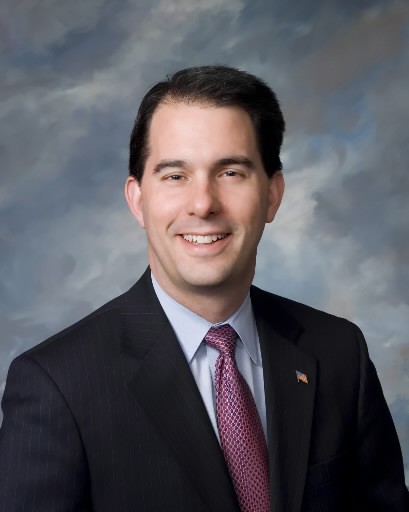
Governor Walker

You have to hand it to Wisconsin Gov. Scott Walker.  He wants to push through his legislative agenda come hell or high water.  After creating a national controversy about his battles with the state’s public unions, Walker and his Republican colleagues are in a hurry to ram through their laundry list of legislative initiatives before Wisconsin voters have a chance to potentially recall a number of them.

Among Gov. Walker’s favorites — a telecommunications deregulation bill ghost-written by AT&T.  If such legislation seems familiar to you, it is.  It’s largely the same bill written by and for telecommunications companies that withered in the Democratic-controlled legislature last year.  Now the Republicans hold the majority, and they see measures to strip out rate protection for basic landline service, investigations of consumer complaints, and holding low-rated companies’ feet to the fire as “anti-business and anti-competitive.”

Somehow, bill proponents claim, all of this deregulation will inspire AT&T and other companies to wire rural Wisconsin for broadband service, which would be a remarkable feat considering they’ve not done so in other states where they’ve passed nearly-identical deregulation bills several years ago.  In fact, the bill eliminates any state oversight of broadband matters period, end of story.

Perhaps AT&T’s goodwill will bring broadband to the rural masses.  What are the chances?  Not good, considering the proposed legislation also allows AT&T the right to abandon providing basic telephone service in the same rural areas still waiting for broadband.  Your chances of getting DSL from AT&T are markedly diminished if the company decides to disconnect your phone line, permanently.

“What’s in it for the citizens of Wisconsin?” asked Rob Boelk, president of one Wisconsin chapter of the Communications Workers of America that represents AT&T workers. “If you want to give away the farm, what will you get in return?”

Why campaign contribution checks, of course.

AT&T and other telecommunications companies have donated heavily to legislators in the state, particularly those sponsoring their legislative wishlists.  Walker has made serving the interests of AT&T and the Wisconsin State Telecommunications Association one of his top priorities this spring.

AT&T is delighted.  In fact, they are so confident in their friendship with Walker and the Republican-controlled legislature, they are willing to throw their usual deregulation allies overboard in the bill.  Verizon and Sprint are fiercely opposing AT&T’s bill, despite promoting it in prior years.  At issue are new provisions requiring wireless and VoIP providers to pay higher government fees and also pay access charges for using other companies’ broadband networks (AT&T’s) to complete calls.

At a recent hearing, telecom company executives told members of the state Senate’s Information Technology Committee Senate Bill 13‘s deregulation would bring competitive balance in the industry, wider broadband access and create tens of thousands of jobs.

They didn’t bring any evidence to back up those claims, but bill sponsor Rich Zipperer, (R-Pewaukee) was ready to deliver AT&T’s talking points anyway.  He’s a helper.

“Today’s smart phone world is governed by rotary phone regulations,” Zipperer said. “We have to ensure our telecommunications infrastructure can keep up with market demands.”

Evidently that means upgrading wireless networks, something AT&T is preoccupied with these days judging from their television ads, while ignoring Wisconsin’s rural consumers.

In fact, when similar bills passed in other AT&T states, basic telephone service rates began increasing, sometimes repeatedly.  AT&T wants to push customers into pre-packaged bundles of services, so most of the savings go to those who take all of their telecommunications business to AT&T.  But if all you want (or can afford) is a basic telephone line, price increases are in your future.

The dollar-a-holler groups are out and about

Zipperer called copper wire landlines “ancient technology,” a relevant point if AT&T was delivering something better to every Wisconsin resident.  They are not.  Instead, while their landline network languishes in rural areas, the company is investing in U-verse upgrades in larger cities, setting up the potential for telecommunications have’s and have-no-longer’s.

Some of the accompanying documentation supporting the deregulation bill is also suspect.

We were particularly struck with broadband map data provided by bill proponents showing a bountiful supply of competitive choice for broadband service in Wisconsin. Ironically, their bill also bans the state from getting involved in broadband mapping in the future.  Those who control the maps control the debate over broadband availability.  As usual, provider-influenced maps promise service where none exists or comes with strings attached.

Providers equate wireless broadband as identical to DSL, fiber, and cable Internet service.  Because of that, customers even in “one-bar” towns can “enjoy” wireless broadband from AT&T and Verizon (as long as they keep it under 2-5GB a month with AT&T or under 10GB on Verizon’s mobile broadband plans.)  Sprint, which barely covers rural and suburban Wisconsin, is also considered a player.  So is T-Mobile, despite the fact AT&T wants to buy it.  For most of Wisconsin, the broadband reality is far different.  AT&T is the dominant provider of DSL and U-verse service, Time Warner Cable delivers most of the cable broadband.  In rural areas, a handful of Wireless ISPs deliver service to some areas, but many others have no access at all.

Robust competition?  No.  Will this bill change that?  No.

Wired Wisconsin is wired into AT&T's cash machine.

Deregulation only enhances the trend of landline providers like AT&T allowing their aging landline networks to go to pot.  Providing DSL or wireless broadband to rural Wisconsin requires the same return on investment with this bill as it does without, and these companies have refused to deliver either, using that reasoning, for years.

Despite common sense reality, the dollar-a-holler groups are working overtime with AT&T to push this bill.  Take “Wired Wisconsin,” a group particularly ‘burdened’ with its corporate sponsors (namely AT&T).  Wired Wisconsin is all for the deregulation bill, which they like to call “modernized telecom rules.”  The group’s leader Thad Nation, is a lobbyist who has run several campaigns promoting AT&T’s agenda, including the ironically-named Midwest Consumers for Choice and Competition, TV4Us and Technology for Ohio’s Tomorrow, all creatures of AT&T.

Nation’s lobbying firm explains how it works:

Getting government officials or bodies to do what you want isn’t easy. Government is inherently a slow, bureaucratic entity. When you want elected or appointed officials to change policy, you need a comprehensive plan – and the resources, relationships and quick-thinking to implement that plan.

We come to you with decades of experience in advocacy, moving legislators and engaging state agency leaders to action. Let us help you build and drive an aggressive advocacy agenda.

It’s a tough job, and Nation can be glad he isn’t doing it alone.  The Discovery Institute, which has turned pay-for-play research into an art form, was linked by Wired Wisconsin to “negate the myths and false assumptions” deregulation will bring.  They quote from Connected Nation, another industry connected group.  The only false assumption is that these people do this work for free and their results represent actual independent analysis.

Even if one were to believe AT&T’s claims, fact-checking them is just a few states away, in places like Arkansas, Kansas, or Texas.  None of them are bastions of rural broadband.  They weren’t before AT&T’s lobbying circus came to town and they still aren’t after they left.

Search This Site:

Contributions:

Recent Comments:

Your Account:

Stop the Cap!