Home » rate hike » Recent Articles:

DirecTV Now Becomes AT&T TV Now, With AT&T TV Coming Later This Summer

Phillip Dampier July 30, 2019 AT&T, Consumer News, DirecTV, DirecTV Now, Online Video 1 Comment

DirecTV Now customers will soon be introduced to AT&T TV Now as the streaming service rebrands with new apps and prepares for the launch of WarnerMedia’s HBO Max streaming service early next year.

The streaming service, originally branded as part of the DirecTV platform, has suffered major subscriber losses (168,000 in the last three months alone) after reducing the size of its TV packages and raising prices twice in the last year. To date, more than 26% of DirecTV Now’s subscriber base has defected to other streaming services, with no end to those losses in sight. AT&T’s DirecTV satellite and U-verse TV have also turned in stunning reductions in the number of subscribers, losing at least two million customers in the last year, with 778,000 departing during the second quarter of 2019.

AT&T has stopped offering deep promotional discounts to most customers threatening to cancel over rate hikes, and subscribers are making good on their threats to leave. The company is also embroiled in two major retransmission consent disputes that have left customers in several cities facing a blackout of as many as three network affiliated local TV stations. With higher prices for fewer channels, and plenty of alternatives, customers are turning to other providers.

AT&T’s 2015 purchase of DirecTV, in retrospect, appears to have been a major business mistake, according to some Wall Street analysts. Originally intended to help AT&T manage the spiraling costs of video for its U-verse TV service by winning more generous volume discounts from programmers, the DirecTV acquisition came just before the phenomenon of cord-cutting took off, leaving all of AT&T’s video services vulnerable to customer losses. DirecTV Now initially benefited from cord-cutters attracted to its generous package of channels at a low price, but an executive decision to reduce the channel lineup while raising prices drove off what executives characterized as ‘undesirable customers only looking for deals.’
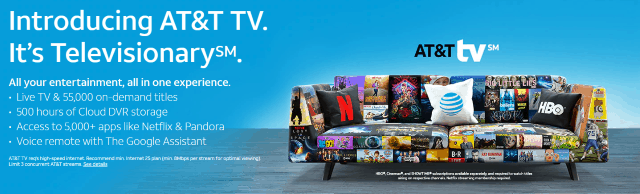
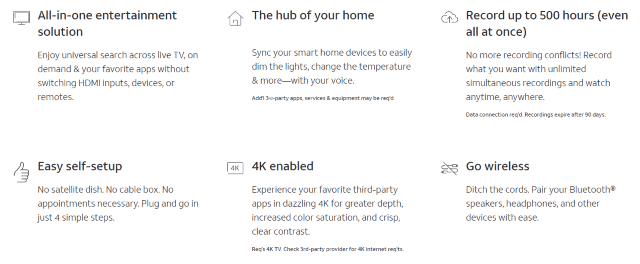
AT&T has also been experimenting with a separate streaming service that will likely eventually replace the satellite-based DirecTV. Beta testers have been providing feedback to AT&T about a new set top streaming box intended to work with this service, now to be called AT&T TV. AT&T is also reducing the number of apps required to access its myriad of video services. AT&T TV and AT&T TV Now customers will download the same app, only the channel lineups will be different. The company is targeting AT&T TV Now on cord-cutters looking for a cheaper and smaller video package, while AT&T TV will include a range of packages likely identical or very similar to DirecTV’s current satellite lineup.

If AT&T TV is successful, AT&T can cut costs incurred installing and maintaining satellite dishes and also eventually decommission DirecTV’s satellite fleet. Rural satellite TV customers without access to broadband may be in a difficult position if that happens, and the country has still not resolved the rural broadband challenge.

Even with these changes, AT&T customers are faced with a large menu of potentially confusing video options. AT&T sells traditional live cable TV services through AT&T TV, AT&T TV Now, DirecTV, and U-verse. It also offers a stripped down WatchTV package offering 35 channels for $15 a month or less. Premium customers still trying to tell the difference between HBO Go and HBO Now will soon also contend with HBO Max. Cinemax has its own similar offerings for cable TV customers and direct to consumer subscribers.
Life With 3 “Competing” Canadian Carriers: Bell Raising Its Device Connection Fee to $40

Phillip Dampier June 26, 2019 Bell (Canada), Canada, Competition, Consumer News, Wireless Broadband Comments Off on Life With 3 “Competing” Canadian Carriers: Bell Raising Its Device Connection Fee to $40

Bell (Canada) will charge its wireless customers $40 to connect a new phone-enabled device to its network, effective July 4.

Canadian wireless companies have been competing recently to see how high they can raise connection fees on their customers. In 2018, most carriers charged less than $30 to connect new devices. But in April 2018 Bell raised its fee to $30 — just the latest in a series of rate hikes. Last October, it raised the price to $35 and will now charge $40 as of next month.

To “compete,” Canada’s other large cell phone companies followed suit — both Rogers and Telus raised their prices to $35 and analysts expect them to match Bell’s new $40 fee soon. Two years ago, Bell charged $15.

Canada has three large national carriers and is home to some of the most expensive cellular plans in the industrialized world. If the Department of Justice grants the pending merger between T-Mobile and Sprint, the United States will also soon have three large national carriers, with a strong likelihood that substantial price increases and reduced value mobile plans littered with fees and surcharges will soon follow.

Take It Or Leave It Pricing: No, You May Not Have a Better Deal!

GIVE us more money and TAKE what we offer you.

Bloomberg News is reporting what many of you already know — it is getting tougher to get a better deal from your cable or phone company.

As Stop the Cap! has documented since the completion of the Time Warner Cable/Bright House/Charter Spectrum merger in 2016, companies are pulling back on promotions, taking advantage of a lack of competition and offering best pricing only to new customers.

Charter Spectrum and Cable One (soon to be Sparklight) are the most notorious for implementing “take it or leave it” pricing. In fact, one of Charter CEO Thomas Rutledge’s chief complaints about Time Warner Cable was its “Turkish Bazaar” mentality about pricing. Rutledge claimed Time Warner Cable had as many as 90,000 different promotions running at the same time, typically targeted on what other companies were theoretically providing service and how serious the representative felt you were about canceling service. Time Warner Cable had basic retention plans available for regular representatives to offer, better plans for retention specialists to pitch, and the best plans of all to customers complaining on the “executive customer service” line or after filing complaints with the Better Business Bureau. There were plans for complaining over the phone and different plans for complaining at the cable store. Rutledge was horrified, because customers were now well-trained on how to extract a better deal every year when promotions ran out.

Last month, Rutledge said he was indifferent about cash-strapped consumers that cannot afford a runaway cable TV bill on a retired/fixed income or the urban poor who can’t imagine paying $65 a month for basic broadband service. To those customers, pointing to the exit is now perfectly acceptable. In fact, companies make more profit than ever when you drop cable television service and upgrade your broadband connection to a faster speed. That is because there is up to a 90% margin on internet service — provisioned over a network paid off decades ago and designed for much less space efficient analog television. Charging you $20 more for faster internet service is nearly 100% profit and costs most companies next to nothing to offer, and Time Warner Cable executives once laughed off the financial impact of so-called “heavy users,” calling data transport costs mere “rounding errors.” 

Even with a much tougher attitude about discounting service, Charter and Comcast are still adding new broadband customers every month, usually at the expense of phone companies still peddling DSL. So if you cancel, there are probably two new customers ready to replace you, at least for now.

Cable One redefines rapacious pricing. The company specializes in markets where the incumbent phone company is likely to offer low-speed DSL, if anything at all. As a result, they have a comfortable monopoly in many areas and price their service accordingly. Cable One’s basic 200 Mbps plan, with a 600 GB data cap, costs $65 a month, not including the $10.50/mo modem fee, and $2.75 monthly internet service surcharge. To ditch the cap, you will pay another $40 a month — $118.25 total for unlimited internet.

In fact, Cable One charges so much money for internet, they even have Wall Street concerned they are overcharging!

When Joshua May tried calling Spectrum to deal with the 29% more it wanted (around $40 a month) after his promotion expired, the customer service representative told him to go pound salt.

“I expected they’d at least offer free HBO or Showtime,” May, 34, of Springfield, Ohio, told Bloomberg News. “They did nothing.”

He did something. He cut the cord. The representative could have cared less.

The product mix cable and phone companies offer has not really changed, but the era of shoving a triple play bundle of internet, TV, and phone service sure has. Charter and Comcast now treat cable television as a nice extra, not the start of a bundle offer. Broadband is the key item, and the most profitable element, of today’s cable package. Beleaguered phone service gets no respect either. Time Warner Cable used to sell its triple play bundle including a phone line for less money than their double play bundle that omitted it. Today, it’s a simple $9.99/mo extra, given as much attention as a menu offering premium movie channels.

Comcast differs from Charter by offering a plethora of options to their customers. If you don’t want to spend a lot for high speed internet, spend a little less for low speed internet. Their television packages also vary in price and channel selection, often maddeningly including a “must-have” channel in a higher-priced package. Like Spectrum, their phone line is now an afterthought.

AT&T and Verizon have their own approaches to deal with reluctant customers. Verizon FiOS customers face steep price hikes when their promotions expire, but the opportunity to score a better deal is still there, if Verizon is in the mood that quarter. Verizon remains sensitive about their subscriber numbers and growth, so when a quarter looks like it will be difficult, the promotions turn up. AT&T prefers to play a shell game with their customers. Most recently, the company has given a cold shoulder to its U-verse product, treating it like yesterday’s news and best forgotten. AT&T literally markets its own customers to abandon U-verse in favor of AT&T Fiber. Verizon and AT&T treat their DSL customers like they are doing them a favor just by offering any service. All the best deals go to their fiber customers.

AT&T Randall Stephenson is a recent convert to the “who cares about video customers” movement. Services like DirecTV Now were originally channel-rich bargains, but now they are a place for rate hikes and channel deletions. Over a half-million streaming customers have already canceled after the most recent price hikes, but Stephenson claims he does not mind, because those bargain-chasers are low-quality customers worthy of purging. AT&T’s dream customer is one who appreciates whatever AT&T gives them and does not mind a parade of rate hikes.

Comcast’s chief financial officer Mike Cavanagh said it more succinctly: seeking subscribers that “really value video and our bundle despite the increases in prices,” and has “the wallet for a fuller video experience.”

Customers who decide to take their business to a streaming competitor are already learning the industry still has the last laugh. As package prices head north of $50/month, that is not too far off from the pricing offered by cable and phone companies for base video packages. In fact, Spectrum has begun undercutting most streaming providers, offering $15-25 packages of local and/or popular cable channels with a Cloud DVR option for around $5 more a month.

YouTube TV Follows Others, Raises Subscription Price to $49.99 a Month

Phillip Dampier April 10, 2019 Competition, Consumer News, Online Video, YouTube TV 3 Comments

YouTube TV is raising rates 25-43%, depending on your existing package.


Effective today, the company is raising the price of its YouTube TV package to $49.99 a month and is notifying customers it is ending grandfathered pricing arrangements that allowed some customers to pay as low as $35 a month for service.

The price change comes at a time when many of YouTube TV’s competitors have announced or implemented rate increases to cover the rising costs of programming. To reduce the sting, YouTube TV will coincide its rate hike with the addition of eight new channels from Discovery: Animal Planet, Discovery Channel, HGTV, Food Network, ID, MotorTrend, TLC, and the Travel Channel beginning today.

All existing customers will be billed at the new $49.99 rate beginning May 13. New signups will be billed the higher rate immediately. Customers billed by Apple will be penalized the most, with a new rate of $54.99/mo.

The company argues its new package price is still a good value because it now includes more than 70 channels, including robust carriage of local stations in more than 90% of the country. YouTube TV also offers unlimited cloud DVR service and up the three simultaneous streams.

Comcast Gives Up on Rescuing Cord Cutting TV Customers; No More Deals

Phillip Dampier March 12, 2019 Comcast/Xfinity, Competition, Consumer News 3 Comments

Watson

Unhappy about your cable TV bill? Don’t bother complaining to Comcast, because the cable company is ready to tell you to take your business elsewhere.

New competition usually means those already in the business freshen their game, get creative, cut prices, or out-compete the competition with a better product. But Comcast plans to lose its restless cable television customers if they complain about the company’s prices for cable TV.

Dave Watson, president and CEO of Comcast Cable, told investors at the Deutsche Bank 2019 Media, Internet & Telecom Conference in Palm Beach the company is done handing out retention deals with cut-rate pricing to keep cable TV customers from leaving.

“[Comcast is] simply not going to chase unprofitable video relationships,” Watson said, noting with the growing number of new streaming video competitors, more and more customers are calling looking for better deals and threatening to cut the cord. Watson says Comcast is prepared to let them.

“Because of consumer choice, because of all this competition, we’re just not going to chase video [customers],” Watson repeated.

Comcast’s new “we don’t negotiate” attitude with its customers isn’t groundbreaking in the industry. Satellite providers and some cable companies like Charter/Spectrum have largely stopped negotiating with customers as well.

Some cable operators have intentionally avoided significant video price hikes in recent years, already sensitive to the cord-cutting calls that increase after each rate hike announcement. Others hide rate increases in surcharges, often for local TV stations or regional sports channels. For some companies, giving customers a better deal may even make their video pricing unprofitable.

To compensate for tightening margins on cable television, most providers have been significantly increasing broadband pricing in recent years, knowing broadband is one service customers are least likely to drop as a result of rate increases.

Search This Site:

Contributions:

Recent Comments:

Your Account:

Stop the Cap!