Home » landline networks » Recent Articles:

Frontier Urgently Trying to Restructure $17 Billion Debt as Chapter 11 Looms

Frontier Communications is preparing a detailed plan for bondholders explaining how the company hopes to cut its $17 billion in debt before it faces the possibility of bankruptcy.

The Wall Street Journal reports Frontier is ready to begin formal negotiations with those holding its debt to create a new payback plan before it faces the first of several repayment deadlines for bonds running into the billions, starting in 2022. But the strategy is risky because if any of the company’s major bondholders disagree, it could put Frontier on a fast track to Chapter 11 bankruptcy reorganization.

Frontier’s debt problems are a consequence of its decision to expand its wireline footprint through acquisitions of castoff copper landline networks being sold primarily by Verizon Communications and AT&T. Critics have repeatedly called out Frontier for bungling network transitions with extended service outages, billing problems, and other customer service-related failures that left customers and some state regulators frustrated and alienated. The company is still facing regulatory review in states like Connecticut, where it failed to properly manage a customer cutover from AT&T’s systems to its own, and in Utah, West Virginia, California, and Florida where similar cutovers from Verizon Communications left more than a few customers without service and months of billing problems.

As a result, Frontier lost many of the customers it acquired, with many unwilling to consider doing business with the phone company ever again.

Although Frontier’s latest acquisitions of Verizon landline customers in California, Texas, and Florida included large Verizon FiOS fiber to the home territories, Frontier customers continue to disconnect service at a greater pace than the phone company’s chief cable competitors — Comcast and Charter Spectrum. Customer defections are even worse in large sections of Frontier’s stagnant “legacy” markets — service areas that have been managed by Frontier or its predecessor Citizens Communications for decades. That is because almost all of those legacy markets are still serviced by decades-old copper wire networks, many capable only of providing low speed DSL internet access.

Frontier’s large debt load is cited as the principal reason the company cannot embark on upgrade efforts to replace existing copper wiring with optical fiber. In fact, virtually all of Frontier’s fiber service areas have been acquired from AT&T or Verizon. Frontier executives have attempted to placate shareholders by promising to aggressively manage costs. But promises of dramatic savings have proved elusive and frequent media reports have emerged covering extensive service outages, poor network maintenance, ongoing billing and customer service issues, and inadequate staffing to address a growing number of service outages and problems. In several states, repeated 911 outages have triggered regulator investigations with the prospect of stiff fines.

Three Frontier insiders have privately shared their insights with Stop the Cap! about ongoing frustrations with the company and the most recent developments.

“Upper management has no comprehension that in many of our markets, customers have choices and they abandon us when all we can sell is DSL service at speeds often less than 12 Mbps,” one senior regional executive told us. “Our retention efforts are so poor these days, representatives are not really expected to rescue accounts because in most cases there is no legitimate reason to do business with us. In some states where there are high mandated surcharges, we cost more than our cable competitors.”

Another mid-level executive in one of Frontier’s largest legacy markets — Rochester, N.Y., said morale is low and a growing number of colleagues believe the days to bankruptcy are short.
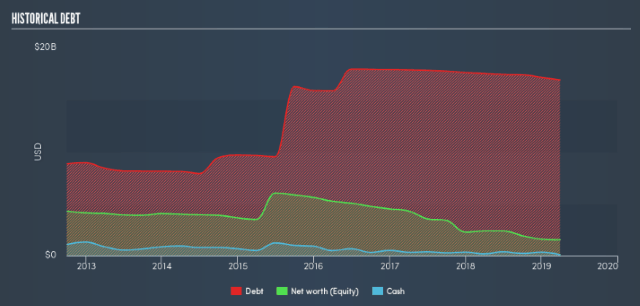
Frontier Communications debt load.

“Our loyal customers are literally dying off, as their adult children disconnect decades-old landline accounts,” said an executive who wished to remain anonymous because they were not authorized to speak with the media. “The customer numbers have been ugly for a long time and are getting worse. Our recently retired customers who have had DSL and voice service with us since the 1990s are disconnecting because some have gone with Spectrum and others are moving out of the area. Some of these customers hate Spectrum and won’t do business with them no matter the price, but we are losing their business anyway when they move out of state.”

The Rochester executive noted Frontier has an impossible job trying to sell its internet and voice products against Charter Spectrum.

“Their offers are $40 a month for 100 Mbps internet and $10 for unlimited local and long-distance calls,” the executive noted. “Ours costs nearly $30 just for the phone line after taxes and fees, and how can you sell someone DSL that delivers less than 6 Mbps to many parts of a market still served by copper trunk lines to a central office several miles away? They also find out they have to lease our modem at an additional fee and there are other fees in the contract many customers have learned to look for. Answer: you can’t.”

A Frontier executive in Ohio shared a similar story.

“We hold our own in our rural markets where we can offer a customer better than dial-up internet, and our service is very good if you live in an area where we expanded broadband thanks to FCC subsidies. Some of these new areas are even served by fiber,” the executive explained. “The problem with this is fewer people live in rural areas and these places cost a lot more to maintain when we dispatch service crews or have to run new cable. For Frontier to be truly successful, we have to get better internet service into our larger older markets, but that means pulling copper off poles and putting up fiber and there is just no interest from the higher ups to spend the money to do this. So instead the company bought new territories to keep revenue numbers up, but we are also quickly losing many of those customers to cable too. I really don’t know what we will do when wireless companies offer 5G internet.”

Some Frontier bondholders recognize Frontier must reduce its debt to have the financial resources to expand fiber service. Others want the company to shed its legacy copper service areas (while keeping FiOS/U-verse enabled markets) either to regional companies willing to invest in upgrades or to hedge funds that would likely ring whatever remaining value still exists out of these abandoned service areas. Some suspect these hedge funds would also load up the spinoff companies with even greater debt to facilitate dividend payouts and other investor-friendly rewards.

It will be up to state and federal regulators to protect Frontier’s customers as the two emerging groups of conflicting bondholders angle to protect their investments, perhaps at the risk of reliable phone and internet service.

The Wall Street Journal:

One, including Elliott Management and Franklin Resources, pushed for an exchange of their bonds at a discount to their face value for new secured debt that would be paid before unsecured debt in a potential bankruptcy.

Still, bondholders including GoldenTree Asset Management have warned the company against doing such a swap since 2018, arguing it violated the terms of their bonds.

The company this week reached out to Houlihan Lokey, which represents a group of bondholders that includes GoldenTree—as well as JPMorgan Chase & Co., Oaktree Capital Management and Brigade Capital Management—to sign up to view a confidential restructuring proposal, a person familiar with the matter said. That group has yet to gather enough holders to form a majority, people familiar with the matter said.

Wall Street Hates CenturyLink’s Dividend Cut; Company Punished for Upgrade Spending

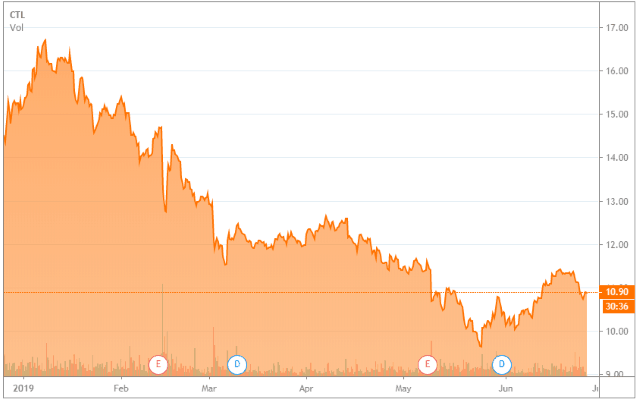
CenturyLink’s stock is being pummeled after the company announced a cut in divided payouts to shareholders earlier this year, preferring to keep the money in-house to reduce debt and increase spending on necessary broadband upgrades.

Last fall, CenturyLink stock was trading for over $23 a share. By January, rumors that CenturyLink was going to cut its dividend put the stock on a downward trajectory, falling to an all-time-low below $11 this month. Company officials argued that with tightening credit opportunities and increasing interest rates, the company needed to devote money normally paid back to shareholders towards paying down its $35.5 billion long-term debt and provide better service to its customers.

A half billion dollars of that money will also be spent on upgrading CenturyLink’s broadband service, particularly in rural areas where the company is receiving Connect America Fund (CAF) dollars from the federal government.

“Our plan for 2019 includes investing to improve the trajectory of the business increasing CapEx by roughly $500 million,” Jeff Storey, president and CEO of CenturyLink said on a January analyst conference call. “As I mentioned earlier those investments include expanding the fiber network, adding new buildings throughout our footprint, enhancing our enterprise product portfolio, continuing our investments in CAF-II, and transforming our customer and employee experience.”

Investors were not impressed with those plans, and CenturyLink’s share price cratered.
Independent phone companies have traditionally attracted investors with handsome dividend payouts, but the realities of their aging infrastructure and the inability to compete effectively with cable companies on lucrative broadband services have left companies like CenturyLink, Windstream, and Frontier Communications in a quandary. Shareholders do not perceive value investing in fiber optic network upgrades and punish companies that announce dramatic increases in network investments. Customers left on slow-speed ADSL networks are increasingly dissatisfied with their internet experience and seek alternative providers — usually the local cable company. As Frontier Communications has discovered, attempting to win back ex-customers has been exceedingly difficult, often only possible with lucrative promotional offers that undercut the cable company. But such offers attract customers with above-average price sensitivity, making it difficult to extract increased revenue from them going forward.

CenturyLink’s stock price has dropped to an all-time low over the last six months.

Investors are also increasingly concerned about the financial viability of investor-owned phone companies that are stuck between leveraging their old networks and facing down shareholders when upgrades become essential. AT&T and Verizon have wireless units responsible for much of the revenue earned by those two Baby Bells. Traditional phone companies have had less luck trying to sell ancillary support services like Frontier’s “Peace of Mind” technical support service, or bundling satellite TV service into packages.

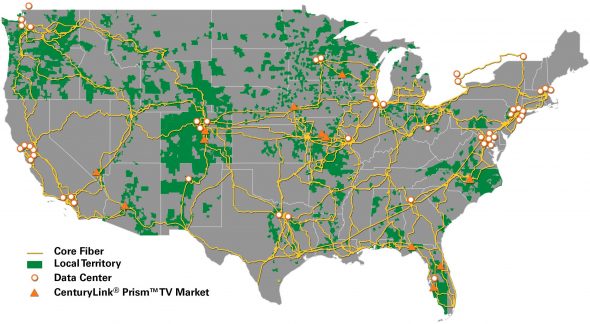
CenturyLink’s Local Service Territory (Source: CenturyLink)

CenturyLink is increasingly depending on its enterprise and wholesale businesses to earn revenue. That fact has prompted some shareholders to ask why the company hasn’t spun off or sold off its traditional landline network and consumer businesses, which currently account for only 25% of its revenue. In May, CenturyLink seemed determined to placate those investors with an announcement it was exploring “strategic options” for its consumer business. Investors theorize that CenturyLink could “unlock value” from its legacy landline networks in such a sale or spinoff that would benefit shareholder value. It would also be much cheaper than investing in that network to upgrade it.

The chorus for a sale increased after Frontier Communications announced it was spinning off its landline territories in the Pacific Northwest to a company specializing in upgrading legacy networks to support better broadband. Frontier, mired in debt and facing a concerning due date for some of its bonds, made the sale to give a boost to its balance sheet. Frontier had also been facing increasing scrutiny about a potential Chapter 11 bankruptcy filing. Windstream declared bankruptcy earlier this year, reminding investors that a trip to bankruptcy court could quickly wipe out all shareholder value.

MoffettNathanson, a Wall Street analyst firm that specializes in telecommunications, finds little to like about CenturyLink shedding its own landline operations. Frontier’s sale benefited from the fact a significant part of its Pacific Northwest territory was built from an acquisition from Verizon, which had already installed its FiOS fiber to the home network in parts of Washington and Oregon. About 30% of the territory Frontier is selling is fiber-enabled. In comparison, CenturyLink has installed fiber to the home service in only about 10% of its territory, dramatically reducing any potential sale price. Much of CenturyLink’s core fiber network powers its enterprise and wholesale operations — businesses CenturyLink would likely keep for itself.

MoffettNathanson also sees little value from the proposition a buyer could leverage CenturyLink’s network to provide backhaul fiber capacity for future 5G services, because CenturyLink provides service mostly in smaller communities likely to be bypassed by 5G, at least for the near term.

Wall Street’s idea of a win-win strategy for CenturyLink is to keep its consumer business and expand its broadband service footprint and capability, if the federal government offers to cover much of the cost through more rounds of CAF subsidies. Taxpayers would subsidize broadband expansion while CenturyLink and shareholders share all the profits.

Frontier Bails on Idaho, Montana, Oregon and Washington in $1.35 Billion Cash Deal

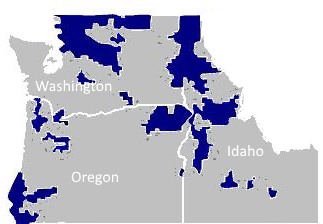
Frontier Communications is selling its wireline and fiber assets in Idaho, Montana, Oregon and Washington in a $1.35 billion all-cash deal with two private investment firms.

Frontier will continue operating its FiOS and traditional landline networks in the four states until the transaction closes with regulator approval.

The buyers are WaveDivision Capital, a private investment firm run by the founder of Wave Broadband, an independent broadband provider serving the Pacific Northwest and Searchlight Capital Partners, a Wall Street investment firm seeking to “accelerate value creation” for its investors. The new owners plan to launch a new company to service existing Frontier customers and will honor existing contracts and service commitments.

“The sale of these properties reduces Frontier’s debt and strengthens liquidity,” said Dan McCarthy, Frontier’s president and CEO, in a statement. “We are pleased to have a buyer with extensive experience building and operating advanced fiber-based communications assets in these regions. We will be working very closely with the new owners to ensure a smooth, successful transition for our customers and the communities we serve.”

About 150,000 fiber, 150,000 copper and 35,000 fiber video customers are impacted by the sale in the four affected states. Frontier’s service area in the region is made up of large former Verizon service areas, many upgraded to fiber-to-the-home service, and a significant number of rural telephone exchanges operating with traditional copper wire networks. WaveDivision Capital claims it wants to invest in Frontier’s existing network to upgrade service and potentially retire additional copper infrastructure in favor of fiber.

Frontier service areas in Oregon, Washington, and Idaho.

“We are excited to transition these operations to a local ownership team and to invest in building out the network of next generation fiber throughout our region,” said Steve Weed, CEO of WaveDivision Capital, and founder and former CEO of Wave Broadband. “We are big believers in the Northwest’s future growth opportunities and that future runs on broadband. As the former leaders of another successful Northwest internet provider, Wave Broadband, we know what it takes to bring fiber and other advanced services to residential and business customers, give them choices, and keep them happy.”

Frontier, which has been struggling with a tremendous debt load and underinvestment in its network, sees the sale as a way to improve its balance sheet and cut both debt and expenses. The Pacific Northwest is a difficult region to serve because it is sparsely populated and can be a high cost area because of difficult terrain or long distances between customers. Although Frontier had committed to spending on upgrading its fiber customers, it promised little for its copper wireline customers still relying on low-speed DSL. Weed says his company hopes to change that.

“Our plan is to invest further in our markets, specifically by extending fiber to more homes and businesses, to bring them the high speeds they want,” Weed said in a statement.

Frontier’s Montana operations are in the northwest corner of the state, near the Kootenai National Forest.

The transaction is subject to regulatory approvals by the Federal Communications Commission, the U.S. Department of Justice, the Committee on Foreign Investment in the United States (CFIUS), applicable state regulatory agencies, and certain local video franchise authorities where Frontier FiOS operates. Frontier expects little opposition to the deal.

Weed’s involvement in Wave Broadband is no more, but at the time he left the company, Wave had reached 140 cities and towns in Washington, Oregon, and California. Wave was formed in 2003 with a series of strategic acquisitions of “distressed” independent cable systems and those owned by pre-bankruptcy Charter Communications, Northland Communications, and Cedar Communications. In May 2017, Wave Broadband was sold to TPG Capital for $2.36 billion, and today operates under TPG’s leadership with its close cousins RCN and Grande Communications.

Weed has a reputation for successfully deploying fiber networks in a region where capital can be difficult to find and easy returns on investment are rare, so there is considerable good will he will successfully upgrade Frontier service areas that have been neglected for years.

Although the transaction could deliver temporary fiscal relief for Frontier, shareholders remain displeased with the current leadership team at the company, and there are still significant signs Frontier remains in serious financial and operational distress, especially because of its ongoing customer losses. Frontier is likely to be pressured to find other sales opportunities, assuming it can find willing buyers.

CenturyLink Considering Dumping Its Consumer Landline/Broadband Services

CenturyLink is considering getting out of the consumer landline and broadband business and instead focusing on its profitable corporate-targeted enterprise and wholesale businesses.


CenturyLink CEO Jeff Storey told investors on a quarterly conference call that the phone company had hired advisors that will conduct a strategic review of all CenturyLink products and services targeting the consumer market and is “very open” to the possibility to selling or spinning off its residential business, assuming it can find an interested buyer.

“Let me be clear, we’re early in what I expect to be a lengthy and complex process,” Storey told investors, noting the company’s first priority is to take care of its shareholders. “During our review, we will not modify our normal operations or our investment patterns. I can’t predict the outcome or the timing of this work or if any transactions will come from it at all. Our focus, though, is value maximization for shareholders. If there are better paths to create more value with these assets, we will pursue them.”

CenturyLink’s landline network is similar to those of other independent telephone companies. There are significant markets where extensive upgrades have introduced fiber broadband service and high-speed DSL, but most of CenturyLink’s network remains reliant on copper wire infrastructure that is not capable of supplying high speed internet to customers.

Like most large independent telephone companies, the majority of CenturyLink’s residential customers can only purchase slow speed DSL service offering less than 20 Mbps. A growing number of customers have canceled service after running out of patience waiting for upgrades. CenturyLink executives told investors last week the company is abandoning investments in bonded or vectored DSL upgrades, claiming anything other than fiber optics is not “competitive infrastructure.”

CenturyLink also admitted it is losing customers after deciding to shelve its unprofitable, competing Prism TV product. The only growth on the consumer side of CenturyLink is coming from significant broadband upgrades.

“In the first quarter, we saw a net loss of 6,000 total broadband subscribers. This quarter’s total was made up of declines of 83,000 in speeds below 20 Mbps and growth of 77,000 in speeds of 20 Mbps and above,” reported CenturyLink chief financial officer Neel Dev. “Within those gains, we added 47,000 in speeds of 100 Mbps and above. Voice revenue declined 12% this quarter. Going forward, we expect similar declines in voice revenue. As a reminder, the decline in other revenue was driven by our decision to de-emphasize our linear video product.”

Dev reported that 55% of CenturyLink’s customers have access to speeds of 20 Mbps or less, and the company has ceased spending marketing dollars advertising slow speed DSL. Instead, it “microtargets” service areas where customers can sign up for service faster than 20 Mbps.

Observers note CenturyLink’s interest in its landline business has been waning for some time. The change in attitude can be traced back to CenturyLink’s merger with Level 3, a very profitable provider of connectivity to the enterprise and wholesale markets. CenturyLink’s commercial services are consistently earning most of the revenue the company reports to shareholders every quarter, with residential services declining in importance.

A sale of CenturyLink’s local landline and consumer-focused internet businesses could be hampered because of the likely lack of buyers. Frontier Communications had been an aggressive player in acquiring landline networks cast off by Verizon and AT&T, but that company is now in financial trouble and faces major debt issues. It would be an unlikely bidder. Windstream is still in bankruptcy reorganization and an acquisition is out of the question. Smaller independent phone companies like Consolidated Communications (owner of former FairPoint Communications), also likely lack financing to achieve such a deal, especially as interest rates continue to rise. CenturyLink also has the option of spinning off its residential business into a new corporate entity, but would likely result in a financially hobbled enterprise that may have trouble attracting capital to continue funding further expansion.

Deutsche Telekom: We’ll Build a Nationwide Fiber Network If You Let Us Monopolize It

German Chancellor Angela Merkel examines fiber optic telecommunications cables.

Germany has an internet access problem not very different from the one afflicting the United States and Canada. The national phone company, still partly owned by the government, remains mostly dependent on a decades-old wireline telephone network to deliver landline and DSL broadband service. The only way Deutsche Telekom will invest adequately to replace it with optical fiber is if they get assurances from the federal government they will be allowed to monopolize access to it.

According to the business weekly WirtschaftsWoche, a sister publication of Handelsblatt, Telekom executives have agreed to build a fiber-optic network everywhere in Germany provided that it is excluded from European anti-monopoly rules so that Deutsche Telekom wouldn’t be forced to open its network to competition.

The proposal from the German telecom giant was particularly audacious because many in the country blame it and its uncompetitive behavior for creating Germany’s slow broadband problem, but that did nothing to stop the company from asking to be shielded from competition.

“A fundamental departure from the kind of logic that viewed regulation of Deutsche Telekom (DT) as the normal state in the last 20 years is urgently needed,” the company said in a filing with the German Federal Network Agency, which regulates the internet in the country.

For most Germans, DT is the problem. The phone company has proven itself a formidable competitor across many parts of eastern Europe, where it bought control of privatized telecommunications companies that used to operate as government monopolies. But back home in Germany, it has been happy to continue offering DSL service that the rest of Europe cannot get rid of fast enough. In certain larger cities like Munich and Cologne, upstart fiber to the home providers have filled the broadband gap and have wired significant parts of both cities, and DT has responded with a fiber offering of its own without complaining about the cost of building a fiber network or the return on its investment.

Oberbürgermeister Wolff

But in smaller towns and villages across Germany — particularly in the eastern states, broadband has been terrible for years and under DT’s “leadership” it has not gotten much better, allowing other countries in the EU to sail past Germany in broadband rankings. Like AT&T and Verizon in the U.S., DT claims that where it has not upgraded its network, there is either no demand for fiber fast internet speed or inadequate return on investment. Also like in the U.S., DT has spent its money on other technologies, notably wireless, while investment in landline networks has not kept up.

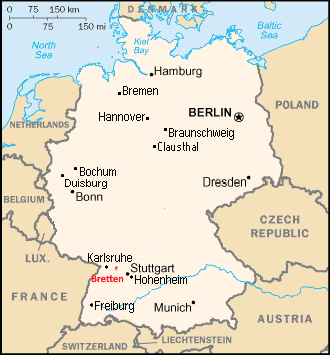
Some German communities like Bretten, fed up with inaction, have taken charge of their own broadband future and are building their own fiber to the home networks. Martin Wolff has dreamed of a digital economy boost for his town of 28,000 located near Karlsruhe in western Germany.

As mayor, he has begged and pleaded with DT to give Bretten something beyond lackluster DSL service, which is now too slow to handle the kind of 21st century internet applications that better wired communities take for granted. Mayor Wolff wants Bretten known as a gigabit city. DT, in contrast, wants to leave Bretten as a forgotten digital backwater. The phone company had repeatedly told the community the broadband it gets now is more than good enough and nobody should hold their breath waiting for something better. DT’s few competitors, including Britain’s Vodafone, weren’t interested either. Bretten is too small… too… irrelevant to matter to their investors.

“They are only interested in serving the cream of the crop in the cities and don’t come to rural areas,” the mayor said.

Like in North America, Germans are asking themselves who should be in charge of their digital future — investor-owned telecom companies or the community itself. The country’s continued embarrassing showing in European broadband rankings has become an issue of national pride and has sparked a loud debate between established telecom companies and the public that wants faster and better broadband.

The noise of the debate has attracted the politicians, and the issue of German broadband has now taken center stage in the parliamentary elections, which will be held Sept. 24. Handelsblatt reports the issue of inadequate broadband now interests German voters more than the latest economic policy position paper or how Germany will manage to deal with U.S. President Donald Trump for the next three years. Many Germans have plenty of time for these kinds of offline debates, because online, it can take a minute to load a webpage on some of the country’s dial-up like DSL connections.

“Germany is one of the most under-supplied countries in Europe, especially in terms of rural coverage,” wrote Bernd Beckert, an internet expert at the Fraunhofer Institute for Systems and Innovation Research, in a recent study of European broadband. He said countries such as Switzerland, Spain and even tiny Estonia are far ahead of Germany. In fact, the Baltic states and many former Eastern bloc countries are moving towards a fiber future while Germany considers wrapping itself even tighter in copper wiring installed in the 1960s. More than 70% of German internet users get internet access through a DT-provided, ADSL-equipped landline. Many connect at just 1-6Mbps, about the same speed users were getting in the late 1990s when DT’s internet monopoly was abolished.

Since then, DT has done everything possible to encourage “competitors” to not build competing networks. In fact, most competing ISPs like 1&1, Versatel, Telefonica Deutschland, and Vodafone rent DT DSL-capable landlines to provision service to their customers. That means they cannot compete on speed and they are forced to rely on DT to maintain its wireline network. It is no accident that German adoption of fiber optics is stuck at only 1.8%, fifth from last place among the 35 member states of the Organization of Economic Cooperation and Development (OECD). In comparison, Japan and South Korea have more than 70 percent of their customers on fiber to the home connections.

Germany’s largest political parties that have been in government since 2005, the Christian Democratic Union (CDU) and the Christian Social Union in Bavaria (CSU) have tolerated DT and its anemic upgrade policies. Broadband stagnancy, many believe, would not be possible without acquiescence and appeasement by those in control of the country. That conspiracy theory is backed by many of Germany’s smaller political parties which believe it is time to change the government’s involvement with DT.

The Left Party’s platform supports nationalizing DT and returning it to a state-owned enterprise that will answer to the public policy priorities of the next government. The capitalist, pro-business Free Democratic Party wants to get the government completely out of its 32% remaining stake in DT and hope that free market solutions will emerge. In the meantime, that party proposes to use the proceeds of any sale to fund a national broadband subsidy fund to convince private telecom companies to upgrade their networks in underserved areas.

DT has not stayed quiet in the public policy debate either. After disappointing the German public by rejecting a proposal to build an open, nationwide fiber to the home network, the company has instead promised to upgrade existing DSL lines to newer technologies like VDSL and vectoring, which DT claims could deliver up to 100Mbps service. American phone companies like Verizon have been reluctant to head in a similar direction, admitting many of the next generation DSL technologies work better in the lab than in the field. Many of the technologies promoting the most dramatic speed improvements have also proved to be vaporware so far.

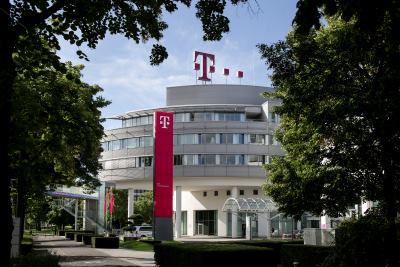
Deutsche Telekom HQ Bonn, Germany

“We are committed to vectoring, because it is the only way to provide people in rural areas with faster lines quickly,” Deutsche Telekom said in a blog post published in August. “If we are fixated on [fiber to the home], those in the countryside will remain left behind for years. It is simply impossible to roll out fiber lines to homes everywhere in the country. Neither the construction capacity nor the funding is available for that. Plus, there is quite simply no demand for it.”

Some of the other competitors in the market seem to agree with DT.

“No provider can achieve fiber optic expansion on its own,” said Valentina Daiber, a member of the board of Telefonica. Daiber said DT was already nearly $60 billion in debt. Daiber said she hoped a solution could be found after the election.

But just a week after Daiber made that claim Vodafone announced it will spend $2.4 billion on a new fiber to the premises network targeting 100,000 companies in 2,000 German business parks. The company will also spend up to $450 million partnering with municipalities to extend the network to about one million rural homes, in addition to boosting its current broadband speeds delivered to German cable customers to 1Gbps.

That announcement could cause DT’s DSL plans to eventually collapse, if Vodafone follows through on its fiber buildout.

Mayor Wolff has no intention of waiting to see how it all plays out. Wolff has convinced private fiber optics company BBV to install the fiber infrastructure and has a Dutch investor partner arranging $12 million in financing, which is always the biggest stumbling block to get fiber buildouts underway. Upfront construction costs often deter many municipalities and would-be competitors from launching. But for Wolff, where there is a will, there is a way to deliver fiber fast broadband, and he is making certain it happens sooner rather than later.

Search This Site:

Contributions:

Recent Comments:

Your Account:

Stop the Cap!