

Home » fiber optic network » Recent Articles:

Former Head of Ajit Pai’s Broadband Group Arrested by FBI on Fraud Charges

Phillip Dampier April 16, 2018 Public Policy & Gov't, Rural Broadband, Video Comments Off on Former Head of Ajit Pai’s Broadband Group Arrested by FBI on Fraud Charges

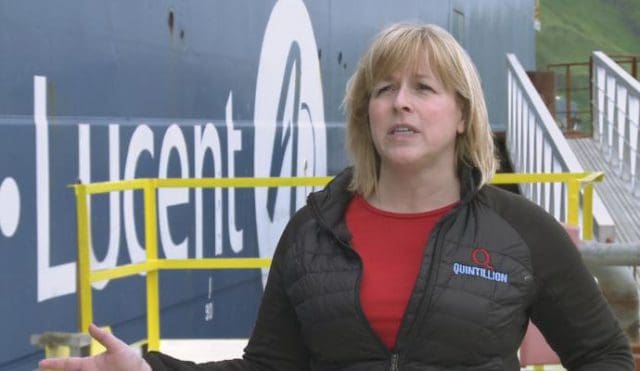
Pierce (Image courtesy of: KTUU-TV)

FCC Chairman Ajit Pai’s choice to lead his newly created Broadband Deployment Advisory Committee (BDAC) was arrested last week by the FBI and charged with a multimillion-dollar investment fraud scheme.

Elizabeth Pierce, former CEO of Quintillion and ex-chair of the BDAC from its start until September, 2017 surrendered to authorities in New York City. Pierce was charged with wire fraud for allegedly tricking investors into putting more than $250 million into an Alaskan fiber optic project based on guaranteed revenue contracts prosecutors claimed Pierce forged herself to reassure investors Quintillion would benefit from telecom traffic revenue the fiber network never had.

To realize her plan to build a fiber optic system that would service Alaska and connect it to the lower 48 states, Pierce convinced two investment companies that she had secured signed contracts that would supposedly generate hundreds of millions of dollars in guaranteed future revenue from the system,” said Manhattan U.S. Attorney Geoffrey Berman. “Those sales agreements were worthless because the customers had not signed them. Pierce had forged counterparty signatures on contract after contract.”

To raise adequate funds to support Quintillion’s ambitious fiber optic network buildout, Pierce frequently appealed to outside investors. Several wanted evidence the fiber network would attract enough business from telecom companies to justify an investment. Pierce was accused of faking contracts with Alaska’s telecommunications companies from 2015 until 2017 to provide reassurance companies were committed to spend at least $24 million in traffic charges the first year the network began operation.

Pierce’s alleged scheme fell apart when Quintillion began invoicing clients based on the fake contracts. At least one protested, claiming it did not use Quintillion’s network. A subsequent internal investigation allegedly founds dozens of phony contracts kept in Pierce’s Google Drive account, with at least 78 moved to the service’s trash bin 48 hours before investigators began searching Pierce’s computer. Prosecutors were able to recover the deleted documents with a search warrant presented to Google.

Pierce may have attracted FCC Chairman Ajit Pai’s attention after publicly complaining the permitting process in Alaska took longer than building fiber cables from scratch and shipping them from Europe. Out of more than 380 applicants, FCC Chairman Ajit Pai picked Pierce in 2017 to head his new broadband advisory committee, tasked with eliminating or streamlining regulations and making life easier for broadband providers to persuade them to expand broadband rollouts.

“The Commission was fortunate to have an excellent and deep pool of applicants to serve on the BDAC,” Chairman Pai noted on the occasion of introducing the BDAC and Pierce to the public. Critics argue Pai’s BDAC has been stacked with industry, industry-funded or industry-friendly committee members that are influencing most of the public policy recommendations issued in the group’s final recommendations. At least two city officials resigned over concerns their views were not being taken seriously.

Pierce resigned from Quintillion in August 2017 and from the BDAC a month later for  “personal reasons.”

KTUU-TV in Anchorage reports Quintillion’s ex-CEO was charged with wire fraud. Nevertheless, the Alaskan fiber project is trying to carry on. (3:11)
Corruption? Massachusetts Giving Preferential Treatment, Taxpayer Dollars to Charter/Spectrum

The head of a state-funded group with direct ties to the Massachusetts governor’s office told local officials in New Marlborough that the Massachusetts Broadband Institute (MBI) “believes in cable companies” and is favoring one — Charter Communications, with an exclusive offer to invest millions in taxpayer dollars to entice Charter to bring its Spectrum cable service to town, while telling would-be competitors the money is only available to Charter Communications.

MBI was created in 2008, originally tasked with investing $50 million in state funds to help resolve the digital divide between eastern and western Massachusetts. MBI also manages the publicly owned, middle mile fiber optic network that towns in western Massachusetts are depending on as part of their plans to connect local residents to the internet.

In 2015, MBI suddenly yanked support for WiredWest, the region’s most robust and credible player in connecting residential homes and businesses. The group had spent several years organizing and educating some two dozen largely rural communities, and was well on its way to constructing a public broadband network for the towns that agreed to sign on to the project. Since 2015, a series of political disputes, bureaucracy, and confusion has stalled broadband expansion.

Peter Larkin, MBI’s board chairman, has been roundly criticized in many western Massachusetts communities for continuing MBI’s slow and cumbersome bureaucracy, frequent policy shifts, and most recently playing favorites with cable companies. Ignoring his own organization’s systemic failures and bureaucratic roadblocks, Larkin has recently leveraged community frustration with the slow pace of progress as an excuse to hand two of the nation’s largest cable operators public taxpayer dollars to complete a project MBI was directly responsible for stalling.

Larkin

Under the latest proposal, outlined last Friday, Charter Communications would receive $3.1 million to expand Spectrum cable service to at least 96% of the community of New Marlborough. Originally, the town was responsible for $1.44 million in cost sharing with the state, a substantial sum for a community with a population just over 1,500 residents. Larkin last week offered to split the cost to the town, with the town’s share reduced to $720,000 — payable directly to Charter.

“The state is willing to cut the gap in half to make this project go,” Larkin said.

But that deal appears to be good only if the town selects Charter Communications. Over the last year, MBI has been allocating public taxpayer dollars towards private cable and phone companies, especially Comcast and Charter, to get the companies to agree to expand their cable systems in areas both have ignored for decades. WiredWest’s proposal made towns partners in the project. Larkin’s offer suggests taxpayers should pay up to 50% of the expansion costs, while Charter keeps 100% of the revenue and profits.

In the past, MBI’s financial carrots have been enough to get the two cable companies to expand using state matching funds alone, but as the town’s Broadband Committee Chairman Richard Long told the Berkshire Eagle after the meeting, he thinks this is the first time an unserved town in central or western Massachusetts will have to contribute local taxpayer funds as well just to get service from a cable company.

Larkin’s hard sell for Charter raised eyebrows among some in the town, especially after Larkin offered to use state funds to also finance their $720,000 portion of the deal over as much as a decade. Larkin claimed he wanted to get the project done and wanted to be helpful.

“The state may spend moneys or engage in other activities that benefit or incentivize private businesses in order to promote such [economic] development and it may authorize or partner with its cities and towns to do likewise,” Larkin recently wrote in a letter to towns offering to help them get negotiations going with the cable companies.

Town resident Dave Travis called Larkin’s offer something else.


“Call me a whistleblower, concerned citizen, activist for fairness, justice and democracy, but for Massachusetts Broadband Institute to show such blatant preferential treatment [to Charter] when there are qualified, experienced local options feels like corruption, and it needs some serious daylight,” Travis wrote.

WiredWest’s Tim Newman exposed just how far Larkin was willing to go to bat for Charter.

“Is the generosity you’re presenting to our town on behalf of Charter the same generosity if the town were to build its own network?” he asked Larkin.

“We do believe in the cable companies … we think it’s a value worth leaning in a little bit harder for,” he said, suggesting Charter has the financial ability to complete the project.

“So, the short answer is ‘no’ — the $720,000 would not be available?” Newman pressed.

“No,” Larkin answered.

German ISP Proposes Joint Project to Build Nationwide Fiber to the Home Network

Phillip Dampier March 13, 2018 Broadband Speed, Competition, Public Policy & Gov't 2 Comments

Dommermuth

The billionaire founder of United Internet, a Frankfurt based ISP with a 14% market share of Germany’s broadband market, has proposed the creation of a new jointly owned company to construct a nationwide fiber-to-the-home broadband network to improve German connectivity.

Ralph Dommermuth said German telecom leader Deutsche Telekom must be a decisive member of the alliance in a country where only 2.5% of homes are connected to fiber optic broadband. Dommermuth complained that the new government formed by Chancellor Angela Merkel only pledged €10-12 billion over the current parliamentary session to create what she calls a “Gigabit Society” by 2025. He believes that amount is completely inadequate.

In an interview with newspaper Welt am Sonntag, Dommermuth said Merkel’s government would contribute only a small fraction of the €80 billion he estimates is needed to wire up to 70% of the country with fiber optics.

German companies have already warned Germany’s economy was at risk from underinvestment in broadband, especially as business and transportation systems are increasingly powered by broadband networks.

Deutsche Telekom (DT) is frequently blamed for the mediocrity of German broadband. Its CEO Tim Hoettges has been heavily criticized for his decision to embrace upgrading its existing copper-based DSL service with “vectoring” instead of rebuilding its network using fiber optics. Although vectoring can significantly improve the speed of DSL connections, critics say it is a technological dead-end and further upgrades are limited and costly.

Hoetgges answers his critics by arguing Deutsche Telekom has spent more money on broadband — €5.4 billion — in the last year than all of its competitors put together.

Most ISPs in Germany are dependent on Deutsche Telekom to reach customers. United Internet, which does business under the 1&1 brand, pays DT for access to its DSL lines, over which it offers internet access.

Behind the controversy is what company ultimately controls Germany’s fiber optic telecom future. DT argues since it has spent the most money necessary to bring limited optical fiber connectivity to Germany, it should not have to share access to that network equally with its competitors. Hoettges said that would allow companies like United to profit from his company’s investments. To attract additional investment, DT wants control over the fiber optic network it is slowly building.

Dommermuth argues the country cannot wait the significant number of years it will take DT to expand that network on its own, which is why he proposes a consortium, with each member company paying a portion of the costs relative to its market share.

C Spire Partners With Entergy to Bring Fiber Service, Smart Grid to Rural Mississippi

Phillip Dampier February 13, 2018 Broadband Speed, C Spire, Consumer News, Rural Broadband Comments Off on C Spire Partners With Entergy to Bring Fiber Service, Smart Grid to Rural Mississippi

C Spire, an independent wireless company providing service in the southern United States is partnering with electric utility Entergy to jointly construct a new fiber optic network in remote sections of Mississippi to manage an electric smart grid and fiber broadband service.

C Spire will own and build the network, with Entergy contributing construction costs, according to C Spire vice president of government relations Ben Moncrief. The partnership grants Entergy leasing rights to use the fiber optic network to develop smart grid technology for rural Mississippi electric customers. Five individual fiber routes will be build, each with a capacity of 144 or more strands of fiber. Entergy will have exclusive use of its own fiber strands, but C Spire will get most of the capacity to power its backhaul facilities, including its network of cell towers, and eventually deploy the network for commercial and institutional users, with the possibility of expanding service to home and small businesses customers if there is adequate demand.

The fiber network will be uncharacteristically placed in some of the most rural parts of the state’s push to redevelop its rural economy to support digital businesses. C Spire itself has been in transition over the last five years, diversifying its core cellular business into fiber to the home broadband, phone, and television service targeting underserved, smaller communities across the state.

“A robust broadband infrastructure is critical to the success of our efforts to move Mississippi forward by growing the economy, fostering innovation, creating job opportunities and improving the quality of life for all our residents,” said Hu Meena, CEO of C Spire.

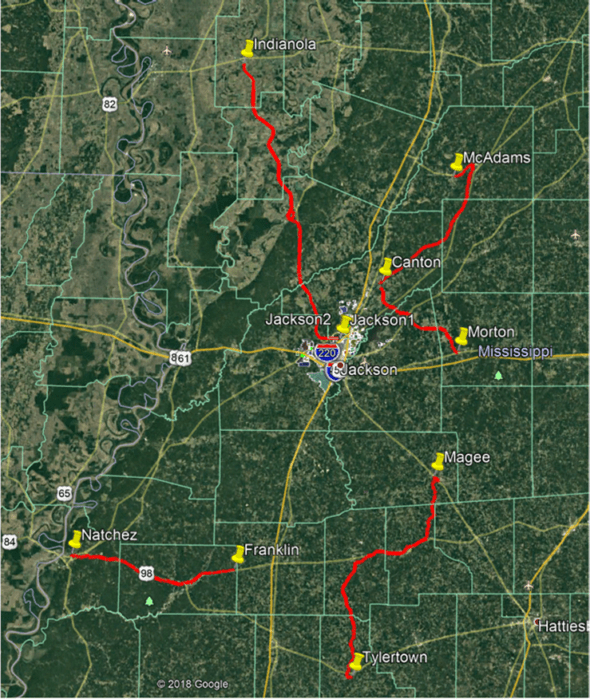
C Spire/Entergy Mississippi’s new fiber project

The construction project will involve placing fiber optic cable along five separate routes:

  • Delta: 92 miles of fiber through Sunflower, Humphreys, Madison and Hinds counties and near the cities of Indianola, Inverness, Isola, Belzoni, Silver City, Yazoo City, Bentonia, Flora and Jackson.
  • North: 51 miles in Attala, Leake and Madison counties, including the communities of McAdams, Kosciusko and Canton.
  • Central: 33 miles in Madison, Rankin and Scott counties and near the towns of Canton, Sand Hill and Morton.
  • South: 77 miles passing through Simpson, Jefferson Davis, Lawrence and Walthall counties and near the towns of Magee, Prentiss, Silver Creek, Monticello and Tylertown.
  • Southwest: 49 miles in Franklin and Adams counties near Bude, Meadville, Roxie, Natchez and Eddiceton.

C Spire got the idea to collaborate with the electric utility after the Mississippi Public Service Commission inquired if Entergy’s plans to build a fiber optic smart grid network could also be used to develop improved broadband service for rural Mississippi. Entergy and C Spire decided to collaborate on the project to deliver both services over the same network.

Lexington, Ky. Has a Solution for Its Charter/Spectrum Problems: A New Fiber Competitor

An Indiana company will spend between $70 and $100 million building a fiber-to-the-home network delivering gigabit broadband speed in Lexington, Ky., partly in response to months of consumer dissatisfaction with Charter Communications’ Spectrum service.
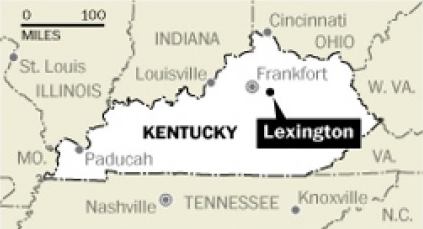
MetroNet could make Lexington the largest gigabit city in the country, according to the city’s mayor Jim Gray.

“Santa Claus is coming to town,” Gray said.

Headquartered in Evansville, Ind., MetroNet provides internet, phone and television service across a 100% fiber optic network in 35 communities in the midwest —  mostly in Indiana and the western suburbs of Chicago. The company started operations in 2005, wiring the community of Greencastle, Ind. Since then, it has grown with the financial support of billionaire investors including Microsoft founder Bill Gates and Nike’s Phil Knight. Oak Hill Equity Partners, a private equity firm, has a financial interest in MetroNet, along with investments in WOW!, Atlantic Broadband, Wave Broadband, and Cincinnati Bell.

MetroNet may have selected Lexington because it has a poorly received cable operator — Spectrum, and Windstream, a competitively inadequate phone company. Windstream does not provide the kind of service AT&T’s U-verse and AT&T Fiber offers in other Kentucky cities.

All of Lexington’s residents could get service from MetroNet is as little as three or four years, because the company has agreed to wire the entire urban service area, a departure from the “fiberhood” concept introduced by Google, wiring individual neighborhoods only after a sufficient number of customers pre-register for service and pay a deposit. The project is likely to win a quick approval from the Lexington-Fayette Urban County Council, allowing construction to begin in January. Because MetroNet sells television service, it will have to apply for and receive a franchise from the city.

“This means three things,” Gray said. “First, a fiber-optic network will provide gigabit speeds to homes and businesses. Second, it will bring a new cable provider to Lexington, which will bring competition to Spectrum and Windstream. MetroNet will have Kentucky basketball. Third, MetroNet has a great record of customer service.”

Prices and packaging:

  • 100/25Mbps $49.95
  • 200/75Mbps $59.95
  • 500/100Mbps $69.95
  • 1,000/250Mbps $89.95
  • Television packages range from $18-79 a month
  • Digital Phone service is $9.95 a month
  • Discounts of $10-20 a month are available for customers selecting a two year “price lock” agreement
  • a $9.95/mo “technology fee” also applies.

Although most welcome the competition, some noticed MetroNet does not intend to sell service at fire sale prices.

“I checked their rates in Lafayette, Ind. and they weren’t that cheap,” commented James Wood. “100Mbps internet + Standard tier TV+ phone was $146/mo for two years.”

MetroNet uniquely charges exactly the prices it pays for cable television networks, with no mark-up. (1:39)

Search This Site:

Contributions:

Recent Comments:

Your Account:

Stop the Cap!