Subscribe
Drahi also made headlines last summer by announcing SFR-Numericable was completely scrapping its coaxial cable networks in France (as well as in Cablevision territory in the United States) to move entirely to optical fiber technology, even in the most rural service areas. But the fiber upgrades are not being financed with cash on hand at Altice. Libération reports the $1.78 billion Altice will need to spend on fiber upgrades for France alone will be financed by more bank loans. Drahi hopes to eventually offer bonds to investors to internally finance fiber upgrades.

Drahi’s World
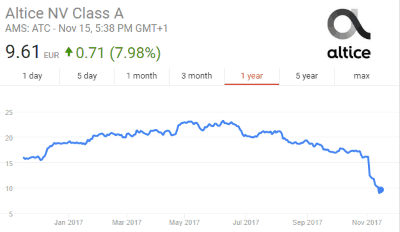
Shareholders have shaken Patrick Drahi’s dreams of being the next king of telecom in the United States by plunging Altice’s share price by more than a third in a single week, forcing Drahi to announce he won’t be making any additional acquisitions until the company’s staggering $59 billion debt is repaid.
Investors were also given a sacrificial lamb from the very sudden departure of Michel Combes, the ruthless cost-cutter that also served as titular operations leader of Altice’s European operations. Combes paid the ultimate price for the continued mediocre financial results at SFR-Numericable, which provides wireless and cable service in France and is Altice’s largest holding. That departure comes only two months after Michel Paulin, Drahi’s right-hand man at SFR, was also shown the door.
Drahi made it clear that he is formally taking back control of Altice, although observers have claimed he has always been in charge. European business analysts have uniformly described Altice as a company mired in crisis management, as European investors lose trust in Drahi’s business philosophy, which depends heavily on acquiring companies with other people’s money.
Drahi’s prominence in France came with his acquisition of SFR-Numericable just three years ago. SFR is France’s fourth largest wireless carrier and the company also has a prominent place in the wired telecom market, providing cable television, phone and internet service. Drahi has attracted investors with promises to wring every possible concession out of the companies he acquires. For financial markets, Drahi’s best trait is his ruthless cost-cutting and employee reductions. In France, employees have reported providing their own copy paper and toner cartridges for empty office printers, occasionally supply their own toiletries, and take turns mopping floors and vacuuming offices.
Employees of Altice-owned Suddenlink have been forced to take requests for replacement coffee machines for break rooms to skeptical company committees that review virtually every transaction. More recently, Cablevision technicians are complaining Altice eliminated their winter apparel budget, leaving workers without coats, bibs, overalls, or rain gear for the upcoming winter. Technicians will have to pay for their unsupplied winter gear out-of-pocket.
While shareholders and financial analysts bid up Altice stock on the premise that cost cutting would deliver better results, the fact France has a highly competitive telecom market brought unintended consequences for Altice and its shareholders: customers fled as cost cuts took their toll on service quality and support.
Competition Matters
Between the end of 2014 and mid-2017, SFR lost 514,000 subscribers in wired internet and 1.7 million mobile customers, delighting Altice’s competitors Orange, Free, and Bouygues Telecom. SFR’s internet problems are well-known across France. Altice’s attempt to offer a “one-box” solution for internet and television service has been of dubious value. Its equipment is notorious for failures, has compatibility problems with online games, and has high support costs. Altice is starting to bring similar equipment to the United States to supply its Cablevision customers, and technicians report many of the same problems are occurring in the U.S., adding they are skeptical Altice’s Le Box, known here as Altice One, will perform well for customers.
 The biggest enemy of Altice in Europe is robust competition, which has allowed dissatisfied customers to switch providers in droves. SFR-Numericable, despite promises of fiber-fast speeds, has endured complaints about slow and uneven speeds and persistent service outages. Drahi’s original business plan was to upgrade broadband speeds and performance to win over France’s remaining DSL customers. That worked for a time, according to the French newspaper Libération, but not for long.
Paulin, who used to run the division responsible for Altice’s wired broadband, complained bitterly competitors have “polluted” his marketing campaign by advertising their 100% fiber optic networks, educating customers that Altice isn’t selling that. That ruined Drahi’s plans to slowly upgrade services with the belief customers are more captive to their broadband provider and wouldn’t switch providers if Altice took its time.
A competitor put it this way: “SFR’s remaining DSL customers have indeed migrated at the encouragement of SFR-Numericable… to Orange or Free’s 100% fiber optic network offerings.”
Accusations about service problems and slow upgrades were readily believed by customers because Altice drew headlines for its ruthless efforts to save money.
“First, the restructuring – cuts in spending and pressure on suppliers – has shaped its image as a bad payer,” notes the newspaper. “At the end of 2015, SFR was fined $400,000 for its late payments. Second, package price increases, imposed discreetly and justified by the addition of exclusive video content, annoyed customers when they found extra charges on their bills. Finally, recurring network problems have undermined user trust. The new satisfaction survey of UFC-Que declared SFR was in last place among operators.”
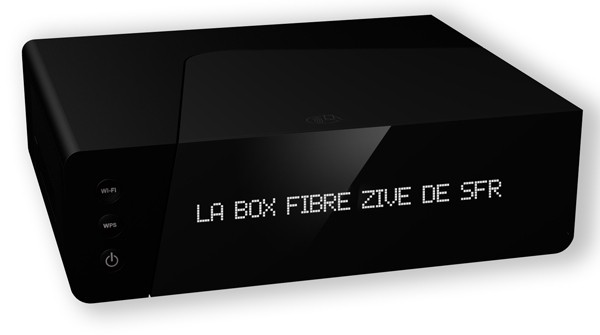
Altice’s one-box solution for TV and internet has proven troublesome for customers in Europe.
Altice blamed most of SFR’s problems on its previous owner, Vivendi, who it claimed underinvested in its network for years. But customers were in no mood to stick around waiting for upgrades. Throughout 2015 and 2016, customers fled, finally forcing Drahi to embark on costly upgrades of SFR’s wireless and broadband networks. Drahi’s investments in SFR amounted to only $2 billion in 2014 and $2.12 billion in 2015, but dramatically increased to $2.71 billion in 2016. By the beginning of 2017, the upgrades stemmed some of the customer losses as independent tests showed SFR’s 4G LTE service finally became competitive with France’s top two providers. SFR commissioned 5,221 new 4G cell sites over the last 12 months, beating 4,333 for Bouygues Telecom, 3,543 for Orange and a distant 2,010 for low-cost carrier Free.
The Suddenlink/Cablevision Cash Machine
 Drahi was banking on his ability to manage Altice’s debt and boost revenue by milking U.S. cable customers. Unlike in France, where competition and regulation have kept cable television and broadband prices much lower than in North America, Drahi saw enormous potential from the U.S. telecom market, where Americans routinely pay double or even triple the price many Europeans pay for television and internet access. Drahi sold investors on the prospects of slashing costs, initiating employee cutbacks, and raising prices for acquired U.S. cable companies. Suddenlink customers are particularly captive to cable broadband because the only alternative in many Suddenlink markets is slow speed DSL. Cablevision faces fierce competition from Verizon FiOS, but Verizon has sought to ease revenue-eating promotions that the company has offered in prior years. Both U.S. cable operators have raised prices since Altice acquired them.
Altice’s investors demand short-term results more than long-term prospects, and Altice’s heavy reliance on bank loans at a time when interest rates are gradually rising could spell peril in the future. Drahi used to promote a 38% profit margin to his investors with predictions of 45% in the future. Altice recently removed all predictions of its margins going forward, a sign Altice is being forced to spend more money than it planned on network upgrades and expensive exclusive content deals for French cable television customers that might otherwise switch providers to secure a better deal.
Increasing costs and decreasing customers pushed Altice’s net profit in the red in 2016. The company also faces a lump sum loan payment of $4.72 billion in 2022. For now, Drahi will continue to refinance his portfolio of loans to secure lower interest rates and better repayment terms, but investors no longer believe Altice can continue to carry, much less increase its debt load.
That has forced Drahi to declare he is suspending further acquisitions at Altice and will instead spend resources on paying down its current debts. If he doesn’t, any recession could spell doom for Altice if his bankers are no longer willing to offer favorable credit terms.
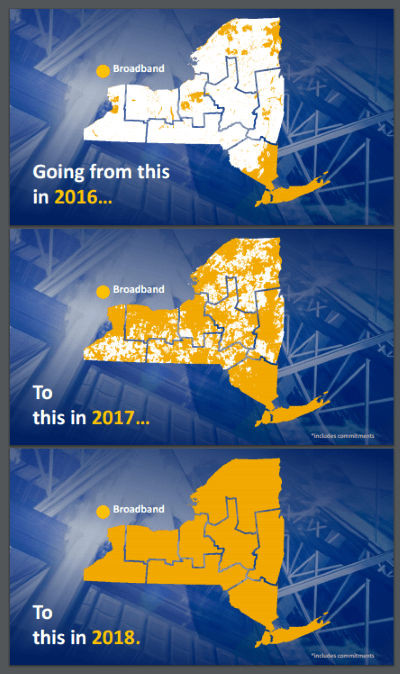 Providers attempting to wire rural communities to offer broadband service or a competitive alternative to cable and phone companies face unfair tax and pole attachment fees that often give the advantage to existing companies and deter would-be competitors.
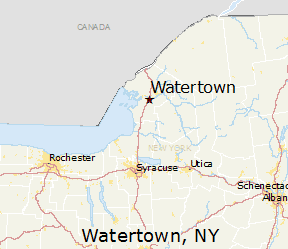
 Slic is one of several small fiber providers operating in New York, each trying to cover territories larger phone and cable companies have ignored for years. Cooperation in commonplace among some companies operating in similar regional areas to keep construction and operating costs down. Some providers share their networks to extend their reach. Most target commercial or institutional users but will lease out their networks for residential providers. Some of the state’s middle mile fiber networks were built with economic stimulus money or through other grant or government programs. Others are privately funded. Many are underutilized but lack the funds to expand.
 The National Conference of State Legislatures, a bi-partisan group,
  In the college town of Potsdam, Slic pays more than double the school and property taxes paid by Charter Communications, even though it serves fewer customers and earns much less. That disparity forces providers to target their networks in more dense areas like inside towns and villages, which means more customers per fiber route mile, reducing the bite of the tax man.
 “We apply to National Grid or whoever the pole owner is and say, ‘We would like to attach to these 30 poles on this road,’ and do a pole application and pay a fee,” Mr. Lynch explained to the newspaper. “They come out, they look at each pole and they determine if there is space on the pole, do they need to rearrange the electrical wires so they are in compliance with the electrical code, do they need to move down the phone lines. A lot of times these poles are jointly owned. It will be National Grid and Verizon, so they have to coordinate and then there might be a section that has Spectrum on it, so you have three or four companies that have to coordinate this effort.”
 But despite Webpass’ claim its performance is comparable to fiber, its inability to guarantee customers a certain speed level and its tremendous performance variability from 100 to 1,000Mbps exposes one of the weaknesses of fixed wireless networks. At a time when capacity is king, only fiber optic networks have shown a consistent ability to deliver synchronous broadband speeds that do not suffer the variability of shared networks, poor antenna placement/signal levels, or harmful interference.
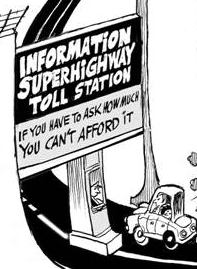 At Stop the Cap!, we believe these developments further the argument broadband is an essential utility best administered for the public good and not solely as a profit-motivated venture. The path to fiber to the home service in rural, suburban, and urban communities has and will continue to come from a mix of private and public utilities, just as local public and private gas and electric companies have served this country for the last century. Where there is a business model for fiber to the home service that investors support, there is a for-profit fiber provider. Where there isn’t, now there is often no service at all. So far, the FCC in conjunction with Congress has seen fit to solve broadband availability problems by bribing private providers into offering service (usually low-speed DSL that does not even meet the FCC’s definition of broadband) with cash subsidies, tax write-offs, or occasional tax abatement schemes. Imagine if we followed that model with the nation’s public roads and highways. We would today be paying tolls or a subscription to travel down roads built and owned by a private company often financed by tax dollars.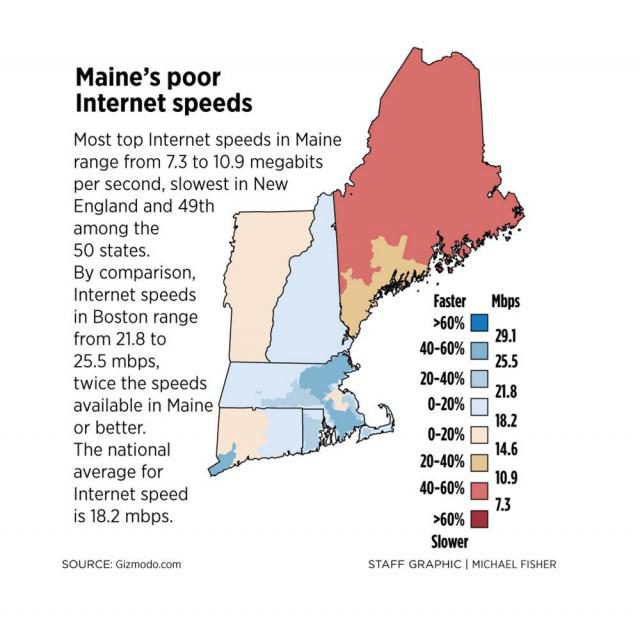
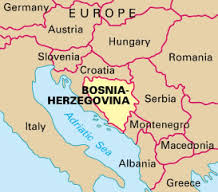 Thirty cities in Bosnia, Herzegovina, and the Serb-majority entity known as Republika Srpska will now have access to fiber to the home service with broadband, television, and telephone service — all equipment included — for $27.50US a month.
 It wasn’t difficult to understand Verizon’s sudden reticence about continuing its fiber to the home expansion program begun under the leadership of its former chairman and CEO Ivan Seidenberg. Starting his career with Verizon predecessor New York Telephone as a cable splicer, he worked his way to the top. Seidenberg understood Verizon’s wireline future as a landline phone provider was limited at best. With his approval, Verizon began retiring decades-old copper wiring and replaced it with fiber optics, primarily in the company’s biggest service areas and most affluent suburbs along the east coast. The service was dubbed FiOS, and it has consistently won high marks from customers and consumer groups.