Home » Cell site » Recent Articles:

Analyzing AT&T’s Plan to Expand Service: Transformation or Bait & Switch for Rural America?

AT&T’s Supreme Court: senior executives sitting together in judgment of landlines at Wednesday’s analyst conference.

Yesterday, at least a half-dozen AT&T senior executives sat lined up in a perfect row to present Wall Street with the company’s vision for the future.

There were no consumers in attendance, just a group of Wall Street investors and analysts that braved the latest nor’easter to attend.

At issue: what to do about AT&T’s landline network, particularly in rural areas. Earlier this year, AT&T CEO Randall Stephenson, still smarting from a regulatory slap-down of his plan to acquire T-Mobile USA, ranted his disapproval of federal regulators for nixing the deal and then reflected on AT&T’s rural customers who still cannot buy broadband service from AT&T.

One of Stephenson’s strongest arguments in favor of merging with T-Mobile was it would facilitate a rural broadband solution. With that off the table, Stephenson seemed at a loss:

“We have been apprehensive on moving, doing anything on rural access lines because the issue here is, do you have a broadband product for rural America?,” Stephenson said. “And we’ve all been trying to find a broadband solution that was economically viable to get out to rural America and we’re not finding one to be quite candid. That having been set aside, now we’re looking at rural America and asking, what’s the broadband solution? We don’t have one right now.”

Now AT&T claims they do, and miracle of miracles, it turns out they never needed the buyout deal with T-Mobile after all.

AT&T’s solution is good news for urban, suburban, and exurban customers who will benefit from billions in additional investments to beef up the company’s U-verse platform. Those with access to U-verse TV, broadband, and phone service will soon find maximum speeds available up to 75Mbps — important at a time when cable companies are moving to 50-100Mbps premium service tiers. Those without access to U-verse, bypassed by its recently completed initial buildout, now will have a chance to see the service in their communities.

For more exurban and near-rural areas, AT&T has a positive plan to rid customers of the scourge of painfully slow ADSL service, better known simply as “DSL,” which AT&T pitches at speeds typically 10Mbps or less. In more rural areas, it is often much less.

By using additional fiber and using D-SLAM technology to reduce the amount of copper wiring between the phone company and you, AT&T’s IPDSLAM service will dramatically improve speeds for customers languishing with 3Mbps service to upwards of 45Mbps. But for now, AT&T won’t roll this out as a full-scale U-verse service. Because maximum speeds are lower and network variability is expected to be greater, AT&T will instead pitch this as a broadband and landline phone service package. Customers will be marketed satellite dishes if they want television service bundled in.

Although not as robust of a platform as U-verse will soon be, it still represents a major improvement over DSL, which is now barely tolerable for today’s online multimedia experience.

But AT&T’s “good news” may not be so great for its most rural customers, who either have the slowest DSL service or more likely no broadband at all. Those customers have waited years for AT&T to invest in upgrades to finally connect them to the Internet, but AT&T’s plans have gone in a very different direction.

AT&T’s rural solution is to take down the existing landline network and move everyone to its wireless cell phone service. To implement this proposed solution, AT&T will aggressively invest in rural cell sites within the 22 states where it supplies landline service. The company claims 99% of its customers will be able to access a 4G LTE signal within a few years.

Phillip “Are you following this shell game” Dampier

But here is where things begin to get dicey.  AT&T told investors it has no current plans to differentiate rural wireless customers from their urban counterparts. In larger cities, a smartphone and data plan is not necessarily a necessity — customers can still access a landline to place urgent calls or find a home broadband plan that does not carry the kinds of restrictive data caps wireless plans deliver.

Rural landline customers often pay low rates for their home phones, primarily because their local calling areas are generally far more restricted than in larger communities. The base rate for rural phone customers can be around $10 (before taxes and fees) in some areas. The base rate for AT&T’s wireless service starts at around $40 for 450 talk minutes or $19.99 for anchored, wireless unlimited calling home phone service (with a $36 activation fee and a two-year contract) that works with your existing home phones. Both represent rate increases.

Wireless data plans are notoriously expensive and limited. Verizon’s plan for home broadband users is priced at $60 a month with a 10GB limit. Less expensive plans with limits 25 times greater (or unlimited) are available from wired broadband providers. If the customer wants a smartphone for their data and home voice calling, bundled plans start at $85 a month with a 1GB usage limit.

With these prices, it is no surprise AT&T is promoting this as great news for the company. But we’re not so sure the average rural American is going to be pleased treated like a second class citizen with high priced, usage-capped Internet access.

As victims of Hurricane Sandy also found out last week, the venerable landline also enjoys a reputation of working after disasters strike. Unlike a fallen tree knocking down a phone line in the backyard, should AT&T’s wireless network fail in a storm, it would potentially leave hundreds, if not thousands of customers without service. Repair crews could take days to reach damaged facilities. That actually happened to Frontier Communications in some parts of West Virginia where heavy snows and tree damage made travel nearly impossible.

But there are important clues to what AT&T is really up to in regulatory filings that accompanied the showy presentation AT&T put on in New York Wednesday.

AT&T Has a Plan — Move Customers Away from Low Profit, Low Growth Landlines to High Profit Wireless/Deregulated Broadband

After the two hour presentation ended, AT&T posted a copy of its proposal sent to the Federal Communications Commission.

Reviewing the 24-page document is a classic case of  déjà vu. Once again, after the rhetoric is set aside, AT&T is back, peddling the same case to retire landline service and the regulatory obligations that accompany it. Only now, it has a carrot to dangle in front of regulators — significant investments in broadband expansion.

Although the private sector has invested well over $1 trillion in broadband networks, much remains to be done. As of 2010, roughly 14 million Americans, residing in rural and other high cost areas where the broadband business case is tenuous at best, still lacked access….

[…] Carriers such as AT&T are stepping up to do their part. In fact, just today, AT&T announced a $6 billion investment plan to expand and upgrade its wireline network to bring robust IP broadband services to millions of additional locations in its legacy footprint.

[…] AT&T makes this announcement with full confidence that the Commission will continue to implement the National Broadband Plan’s vision of removing regulatory impediments to efficient, all-IP networks, including obligations that could require carriers to maintain legacy facilities and services even after they have deployed new, IP-based alternatives.

I guess they didn’t need T-Mobile after all.

Translation: We used to bypass 14 million Americans, leaving them behind because it was unprofitable to serve them. But now we’re going to invest some additional money. But before you get that investment, we need you to agree the landline is a relic and (largely unregulated) IP-based networks are the future. We are not going to run both, so if you want all of this investment, you have to let us abandon our regulatory responsibilities and commitments to rural customers.

AT&T even tried to calm investor fears about capital spending increases, arguing the potential payoff of discarding landline service opens up a new era of earnings, both from shifting customers to AT&T’s highly profitable wireless service at a cost of double, triple, or more what customers used to pay the phone company, and a platform to sell them even more services later.

A number of Wall Street analysts disagreed, panning AT&T’s wireline investments as unproven.

The Broadband Coalition, a group of competing telecom providers, called the entire affair a smokescreen:

AT&T’s announcement today that it needs regulatory intervention from the FCC in order to invest in IP technology is a re-run of a tired ploy to leverage the company’s dominance. AT&T only invests in order to respond to competition, and competition is made possible by the very pro-competitive policies that AT&T seeks to eliminate.  The Broadband Coalition members have invested billions of dollars to bring the benefits of IP to American consumers from coast to coast.  But if AT&T gets its way, competition will largely disappear, investments will dry up and consumers will suffer.

Former Congressman Chip Pickering, coalition spokesman, stated,  “AT&T is simply trying to use its belated roll out of IP technology as an excuse to rewrite the telecom rules to its advantage.  We already know that AT&T’s claim that IP will somehow alter the laws of economics and lessen its dominance is patently false.  Clearly, AT&T’s proposed changes are not necessary to achieve widespread IP deployment, but the retention of competition policy is.”

Consumer groups accused AT&T of lying to federal regulators when the company argued the T-Mobile acquisition was essential to accomplish their plan to expand wireless service to 96% of the U.S. population. A year later, the company now claims it can deliver 4G wireless service to 300 million Americans and 99% of its landline service area without breaking much of a sweat.

CNN:

AT&T insists that it wasn’t being disingenuous with the regulators. Things changed, the company says, pointing to the 40 new spectrum deals it signed over the past year. The FCC recently made available some spectrum that wasn’t on the table when AT&T was negotiating its T-Mobile takeover.

“We chartered a new path,” AT&T spokeswoman Roberta Thomson told CNNMoney on Wednesday.

That’s precisely what the FCC — and industry analysts — believed would happen.

Now What

For now, rural customers need not worry AT&T will put their entire rural landline operation up for sale, potentially selling off a large number of  customers to companies like CenturyLink, Frontier, Windstream or FairPoint.

Rural America’s new home phone?

But AT&T’s lobbying machine will soon descend on state legislatures to win regulatory approval of their “abandon landlines” agenda. AT&T has a carrot for those legislators as well — a promise that states that hurry to rubber stamp AT&T’s wish list will be first in line for “investments.”

“We are going to have to see 21st-century regulation for 21st-century investments like this,” said AT&T CEO Randall Stephenson. “I think what you’re going to see is that these investments will go first to those states where you have good line of sight to good regulatory authority to do some of the things we’re talking about here.”

The implications for rural customers are profound if AT&T wins permission to scrap the landline network. Despite assurances from AT&T this is a technology argument, in fact it is more of a campaign to rid themselves of regulatory and consumer protection rules that have been around for decades. The type of technology used makes all the difference. Landline providers are usually compelled to provide reasonable, affordable, universal service for all Americans. Broadband, IP-based, and wireless networks now exist largely in a deregulation free-for-all where AT&T can do as it pleases, serve who it likes, and charge whatever it wants.

Considering AT&T’s current business plans, that sets the stage to worsen the newest digital divide — one pitting urban areas with faster, advanced, and more competitively priced networks against rural America, consigned to expensive, usage capped wireless service that may or may not work when a natural disaster strikes.

The only way this plan works for consumers is if common-sense service obligations, consumer protection, open access for competitors, and mandated equivalence of service is part of the package. Without it, AT&T will get exactly what it wants: a regulation free lifestyle, an expensive wireless network that rural residents will be forced to use for basic telecommunications, and cost savings and revenue opportunities AT&T will use to bolster its own profits, while cementing its monopoly position in the rural communities of 22 states where it operates.


AT&T Will Invest $14 Billion to Expand Wired/Wireless Broadband, Abandon Traditional Landlines

AT&T will spend $14 billion on its wireless and wired broadband networks in an effort to improve service for its urban and suburban customers, while preparing to argue its case for disbanding parts of the century-old landline network.

In a major 90-minute presentation with most of AT&T’s top executives on stage, the company announced its intention to move away from traditional landline service and towards a combination of an enhanced broadband platform and 4G LTE wireless access, especially in the 22 states where it currently delivers landline service.

The investment plan — Project Velocity — is a pivotal moment for AT&T, which has seen deteriorating revenue from its aging rural landline network and has focused most of its investments in recent years on its increasingly profitable wireless network.

But AT&T also hoped to hang on to the enormous revenue it still earns providing traditional home phone service. Its early answer for landline cord cutting came in 2006 with U-verse, an IP-based network platform on which AT&T can sell video, voice, and broadband service with a minimum of regulatory oversight. U-verse succeeded attracting high-paying customers who either stayed with or returned to AT&T. But now company officials hope U-verse can help the company achieve victory in its next public policy fight: to abandon traditional landline service altogether.

That emerging battle is likely to pit urban and suburban customers enjoying enhanced U-verse service against rural AT&T customers deemed unsuitable for wired broadband. AT&T is seeking to decommission up to 25% of its rural landline network as part of the strategy announced today, shifting affected customers to its 4G LTE wireless voice and broadband service, which comes at a higher cost and includes draconian usage caps.

Critics contend such a move could leave AT&T largely unregulated with monopoly control over its networks, with few service requirements or access concessions for competitors. It would also leave rural customers relegated to a wireless Internet future, perhaps permanently.

Landline/Wired Broadband: Good News for Some, Scary News for Rural America

AT&T plans to expand and enhance its broadband network to 57 million consumers and small businesses across its 22-state operating area, reaching 75 percent of customers by the end of 2015. AT&T will operate three broadband networks going forward, while gradually decommission its existing ADSL network.

  • U-verse: AT&T’s triple play package of TV, Internet, and Voice over IP phone will be expanded by more than a third to reach an additional 8.5 million customers by the end of 2015. This will make U-verse available to 33 million customers in AT&T home phone service areas. Most of the expansion will be in urban and suburban areas bypassed during the initial U-verse construction phase. To remain competitive, AT&T will also increase available broadband speeds for existing customers up to 75Mbps;
  • U-verse IPDSLAM: An additional 24 million customers will be offered a combo voice-broadband package that could be called “U-verse Lite.” It will offer speeds up to 45Mbps and is primarily intended as a replacement for the company’s DSL service in exurban and semi-rural areas. Arrives by the end of 2013;
  • Fiber to Multi-Tenant Business Buildings: AT&T plans to expand its fiber network to reach more commercial buildings, but also lay the foundation to use these facilities for future distributed antenna systems and small cell technology that will create mini-cell sites serving individual neighborhoods, cutting down the demand on existing cell towers.

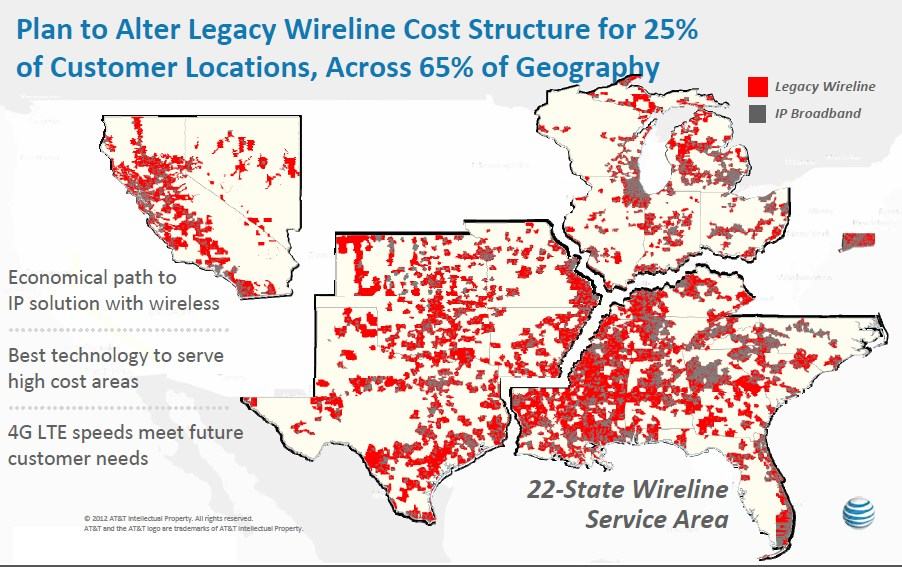
Customers living in rural, open country in AT&T service areas in states like Texas, northern Mississippi, western Tennessee and Kentucky, central and northern California and Michigan, and the rural areas of the Carolinas may eventually find themselves using AT&T’s wireless network as the company seeks to decommission its landline infrastructure.

A number of AT&T customers living in areas shown in red may see red if and when AT&T begins trying to force rural Americans to its more profitable wireless networks.

But AT&T officials also admitted in a Wall Street Q & A session that the company planned nothing special for rural landline customers transitioned to wireless. Those customers will be sharing service with traditional mobile customers. If AT&T’s service plan resembles that of Verizon, customers will pay around $60 a month and limited to just 10GB of usage per month. If AT&T decommissions its existing landline infrastructure, no other wired provider is likely to take its place.

Most remaining regulations enforcing a level playing field for telecommunications networks remain with legacy copper-wire landline Plain Old Telephone Service. AT&T’s plan would effectively banish that network in its entirety through a series of regulatory and service-transition maneuvers:

  • U-verse customers actually no longer have traditional landline service. U-verse offers barely regulated Voice over IP service, free from most state regulations and pricing oversight;
  • U-verse IPDSLAM customers will also quietly forfeit their traditional landlines. This product works over an IP network, which means telephone service is Voice over IP;
  • Wireless service is already barely regulated and not subject to price oversight or universal service requirements that landline providers must meet to deliver service to all Americans.

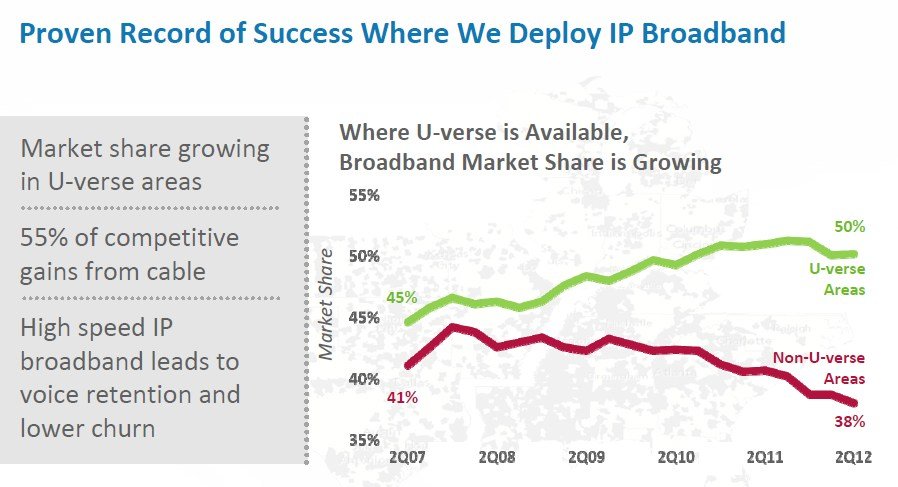
AT&T proves you have to spend money on network upgrades to make money from customers purchasing the enhanced services they offer.

4G LTE Mobile Broadband: 99% Coverage Across 22 AT&T Landline States, Up to 300 Million Americans Served by the End of 2014

The majority of AT&T’s planned investment in its network will once again go to its highly profitable wireless division. At least $8 billion will be spent on bolstering AT&T’s 4G LTE wireless coverage area, especially in rural sections across its 22 state landline service area. That investment is necessary if AT&T hopes to win approval to decommission traditional landline service for rural customers.

  • 4G LTE Expansion: AT&T plans to expand its 4G LTE network to cover 300 million people in the United States by year-end 2014, up from its current plans to deploy 4G LTE to about 250 million people by year-end 2013. In AT&T’s 22-state wireline service area, the company expects its 4G LTE network will cover 99 percent of all customer locations;
  • Spectrum: AT&T continues its acquisition binge with more than 40 spectrum deals so far this year. AT&T’s biggest win of the year was approval for new WCS spectrum it will occupy alongside satellite radio. AT&T will have accumulated 118MHz of spectrum nationwide.
  • Small Cell Networks: AT&T has already aggressively deployed a large number of Wi-Fi hotspots to encourage customers to shift traffic off its traditional wireless network. The next priority will be deployment of small cell technology, macro cells, and distributed antenna systems that can offer neighborhood-sized cell sites to serve urban and suburban customers and high density traffic areas like shopping malls and entertainment venues.

AT&T’s wireless 4G LTE upgrades will cover 99% of the service areas where the company provides landline service. It has to offer blanket coverage if it hopes to win approval for decommissioning its current legacy landline network in rural America.

Using New Infrastructure to Drive New Business and Even Higher Revenue

AT&T would have had a hard time selling its planned investments to Wall Street without the promise of new revenue opportunities. AT&T’s new network enhancements will support a range of new services the company hopes to introduce to win greater revenue in the future:

  • AT&T Digital Life: A nationwide all IP-based home security and automation service set to launch in 2013 that will let consumers manage their home from virtually any device — smartphone, tablet or PC.
  • Mobile Premise Solutions: This new nationwide service, available today, is an alternative for wireline voice service and in the future will include high-speed IP Internet data services.
  • Mobile Wallet: AT&T is participating in the ISIS mobile wallet joint venture. Market trials are underway in Austin, Tex. and Salt Lake City today.
  • Connected Car: More than half of new vehicles are expected to be wirelessly connected by 2016. AT&T is positioned to expand from vehicle diagnostics and real time traffic updates to consumer applications that tie into retail wireless subscriber data plans. AT&T already has deals with leading manufacturers such as Ford, Nissan and BMW.
[flv]http://www.phillipdampier.com/video/ATT 2012 Analyst Conference 11-7-12.flv[/flv]

AT&T’s 2012 Investor Conference introduced major transformative changes for AT&T’s wired and wireless broadband networks.  (2 hours, 9 minutes)

AT&T Sends Mobile Charging Stations to Brooklyn… Without Charging Equipment

Phillip Dampier November 6, 2012 AT&T, Consumer News, Video, Wireless Broadband 1 Comment

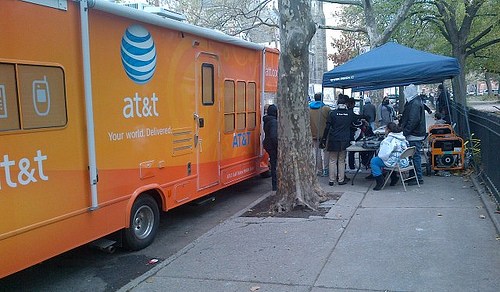
AT&T’s mobile charging van

AT&T’s effort to aid powerless areas of Brooklyn with mobile charging stations to help customers recharge dead cell phones fell flat when the company sent the trucks without the equipment needed to charge phones.

Timothy Stenovec reported from the Red Hook neighborhood:

In Coffey Park, just steps from where the National Guard was helping distribute food and water to residents, a large AT&T truck sat, two orange generators resting silently on the sidewalk next to it.

Despite the company’s intention for the vehicle to serve as a mobile power station, the truck was waiting on equipment necessary to charge phones, and had been turning people away all day.

Marie Reveron, who is 57 and has been without power since the storm, said she waited at the truck for more than two hours on Friday morning, expecting the equipment to arrive so she could charge her phone.

“Phone service is the most important thing, and now my phone is on its last, dying bar,” she told The Huffington Post. “Sometimes you have all the bars, and the phone won’t even work.”

[flv width=”640″ height=”380″]http://www.phillipdampier.com/video/ATT Charging Stations.flv[/flv]

AT&T is allowing the general public into area AT&T stores and portable charging centers to recharge their wireless equipment, at least when the equipment needed to do that shows up. (2 minutes)

As of Monday, Nov. 5, charging stations are available at the following locations. The stations are open to the general public.

Brooklyn:

  • Red Hook East and West – Coffey Park at Richards Street
  • Corner of Brighton Beach Avenue and Coney Island Avenue
  • Surf Avenue Playground – West 25th Street and Surf Avenue

Manhattan:

  • Fulton Street Houses – 419 West 17th Street between 9th and 10th Avenues
  • Hamilton Fish – Pitt Street and East Houston Street

Queens:

  • Hammel Playground – Beach 84th Street and Rockaway Beach Boulevard
  • Conch Playground – Beach 44th Street and Rockaway Beach Boulevard
  • Mott Avenue at Beach Channel Drive
  • St. Francis de Sales Parish – 126-16 Rockaway Beach Boulevard at Beach 129th Boulevard

Staten Island:

  • Midland Beach – Hunter Avenue and Father Capadanno Boulevard
  • Parking Lot – Mill Road and New Dorp Lane

Other New York Locations:

  • Floral Park (store) – 181 Jericho Turnpike

New Jersey Locations:

  • Edgewater Square (store) – 75 River Road
  • Watchung (store) – 1592 Route 22 East
  • Point Pleasant Beach (The Wireless Experience – Authorized Retailer) – 3122 Route 88 and Highland Drive
As of yesterday, AT&T reports 98 percent of their cell sites are up and running across the region impacted by Hurricane Sandy, with 94 percent in operation in metropolitan New York City.

The Star-Ledger reports things in New Jersey may be worse.

AT&T brought in hundreds of generators to power cell towers, according to company spokeswoman Ellen Webner, but she said keeping them topped off with fuel has been a challenge. Webner told the newspaper the company will talk to customers who want their bill adjusted for outage time.

[flv width=”640″ height=”380″]http://www.phillipdampier.com/video/ATT Generators.flv[/flv]

AT&T carefully tracks its generators now being deployed to cell sites still without power. But some critics wonder why generators are not on site before disaster strikes. (2 minutes)

[flv width=”640″ height=”380″]http://www.phillipdampier.com/video/ATT Portable Microwave Cell Tower.flv[/flv]

AT&T cannot easily bring back cell sites that lack backhaul connections to Verizon’s central offices, some still non-operational due to severe flood damage. AT&T shows off emergency equipment that can establish a temporary microwave backhaul link and restore cell service. (2 minutes)

Cell Service Deteriorating in NY, NJ; Verizon Regarding Damage: “It’s Worse Than 9/11”

Phillip Dampier November 1, 2012 Issues Comments Off on Cell Service Deteriorating in NY, NJ; Verizon Regarding Damage: “It’s Worse Than 9/11”

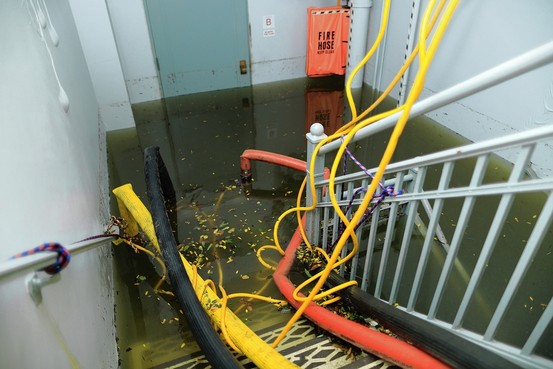
Verizon’s flooded headquarters on West St., lower Manhattan (The Wall Street Journal)

As cleanup efforts continue across New York, New Jersey, and Connecticut, some of America’s largest telecommunications companies are coming under increased scrutiny for being caught flat-footed after Hurricane Sandy roared across the tri-state region, causing damage Verizon’s chief technology officer now admits is worse than 9/11.

As of this morning, Verizon Wireless’ network is reportedly straining, particularly in Manhattan and Brooklyn, where cell service that worked immediately after the storm is now increasingly failing.

Verizon said 94% of its cell sites were operational after the storm, but some local officials in the area believe 94% of Verizon’s wireless network has now failed them when they need it the most.

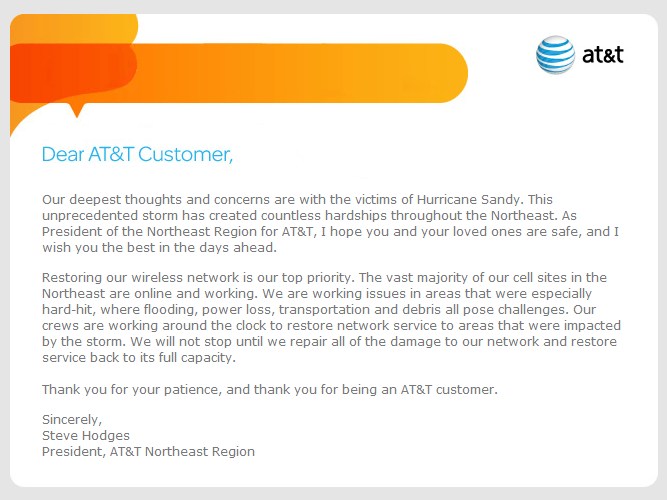
Many telecom companies, particularly AT&T, are being criticized for excessive secrecy about the ongoing state of their networks post-Sandy. AT&T, which left its customers in the dark about service restoration as late as last night while asking customers to contribute $10 to the American Red Cross, finally mass e-mailed customers a statement devoid of much detail signed by Steve Hodges, president of AT&T’s northeast region.

“Restoring our wireless network is our top priority,” Hodges writes. “The vast majority of our cell sites in the Northeast are online and working. We are working issues in areas that were especially hard-hit, where flooding, power loss, transportation and debris all pose challenges. Our crews are working around the clock to restore network service to areas that were impacted by the storm. We will not stop until we repair all of the damage to our network and restore service back to its full capacity.”

The Federal Communications Commission correctly predicted the situation with mobile phones could get worse before it gets better, as backup power wears down and flooding persists. At a press conference held yesterday, FCC chairman Julius Genachowski revealed at least a quarter of all cell sites in areas damaged by Sandy were not operational. Those numbers were less optimistic that those provided by carriers.

The FCC this week activated the Disaster Information Reporting System, a central reporting point for telecommunications companies to update the agency regarding outages and other service disruptions. The FCC also alerted providers that in emergency circumstances, they can assist companies getting fuel for generators and help locate portable cell tower equipment for companies caught unaware.

AT&T’s belated letter to customers affected by Hurricane Sandy

Some may need the help.

New York State Assemblyman Alec Brook-Krasny and Brooklyn Borough President Marty Markowitz both reported Verizon Wireless’ outages are worsening in Brooklyn and midtown Manhattan.

Brooklyn Borough president Marty Markowitz

The Federal Emergency Management Agency (FEMA) today told Sen. Chuck Schumer the federal agency will reimburse New York for 100 percent of the costs incurred restoring power across the storm areas. But that may not expedite how quickly power returns.

Power restoration is expected to bring most cell towers back online. Worsening service is being attributed to battery backup or generator equipment exhausting on-hand fuel supplies, which usually keeps service up and running for up to three days. That means cell towers without power and unreachable by workers will have begun failing late Wednesday into today.

Damage assessments are further behind in New Jersey, the state that took the worst impact from Hurricane Sandy.

Stop the Cap! obtained some new figures from cell phone companies regarding the state of their networks:

  • Verizon: Still holding to 94% operational in storm areas;
  • AT&T: Declined to comment except to say “the vast majority” of their network is operational;
  • T-Mobile: 80% operational in NYC, 90% operational in Washington, D.C.
  • Sprint: 75% operational

[flv width=”384″ height=”228″]http://www.phillipdampier.com/video/WSJ Verizon Offices Damaged 11-1-12.mp4[/flv]

Verizon’s critical network takes another hit. “We’ve been here before,” says one Verizon executive, referring to the destruction from the 9/11 terrorist attacks which severely damaged the same facility on West Street now flooded out. (3 minutes)

Our readers report that cell service becomes spotty to non-existent in coastal New Jersey and Connecticut. In Manhattan anywhere south of 29th Street, readers report almost no signals at all.

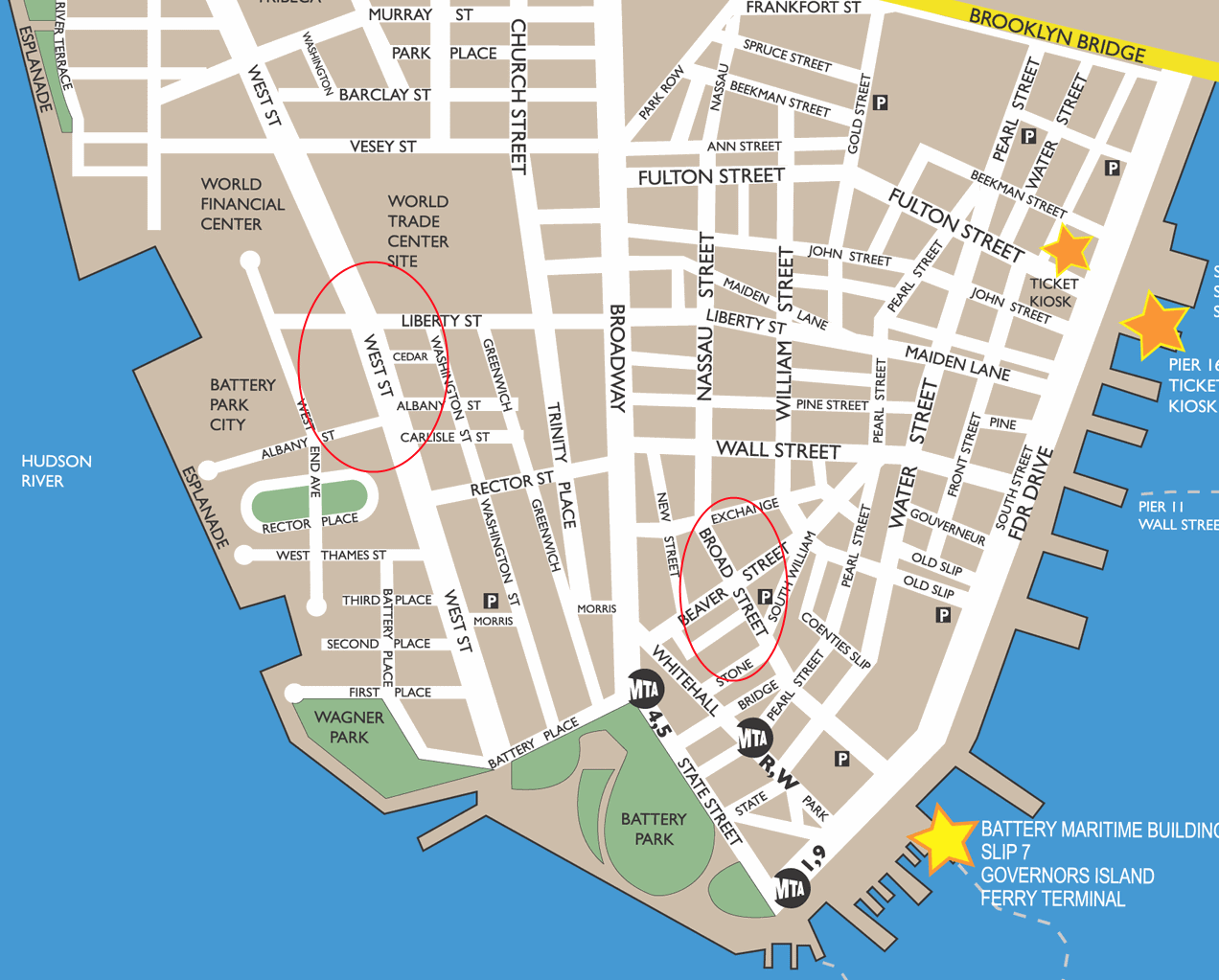
Verizon’s damaged facilities include those on West and Broad Streets in Manhattan (circled).

Residents are trading tips about “magic spots” where cell service does suddenly pop up, and Gizmodo notes the only place in Alphabet City (the east side in southern Manhattan) to get service is on literally one street corner, where crowds congregate to make and receive calls.

The other salve for telecom withdrawal is the nearest pay phone.

Amusing stories of 20-somethings waiting in long lines only to be confounded by unfamiliar pay phones are appearing in the New York media. One radio station even aired basic instructions for members of the Millennial Generation that have never heard of inserting coins into telephones.

The biggest challenge for the city’s pay phone vendors is clearing them of coin overloads, something unheard of before the storm.

The often maligned pay phone has exposed the limits of the “more advanced” and expensive networks that were supposed to replace them. Despite claims of superiority for wireless service, northeast residents have once again discovered it has its limits:

  • They don’t work during major weather events that knock out power and limit access to maintain backup generators;
  • Cell networks are less capable of handling large call volumes, a problem made worse when cell phone refugees in other areas seek out remaining cell signals, further congesting the network;
  • Wireless is just as susceptible to wireline or fiber failures on the ground. Cell towers typically connect to providers through wired backhaul circuits, which knock out cell service if they fail;
  • Cell phone users need power to recharge their power-hungry smartphones. Batteries drain even faster searching for a weak or non-existent cell signal;

Hardest hit remains Verizon, which allowed reporters access inside damaged facilities to help New Yorkers better understand the scope of the problem.

[flv width=”384″ height=”228″]http://www.phillipdampier.com/video/WSJ Wireless Network Outages 11-1-12.mp4[/flv]

The Wall Street Journal takes a look at the state of the wireless communications networks across the northeastern U.S. and when service will be back.  (4 minutes)

Eleven years after the 9/11 terrorist attacks that took out Verizon’s West Street office when buildings collapsed at the nearby World Trade Center, Verizon is likely going to have to re-learn some lessons about catastrophe management as flood waters recede.

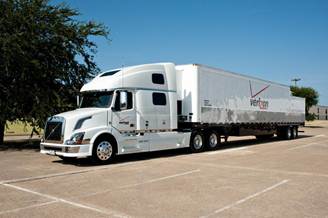
Verizon has deployed this 53-foot Emergency Mobile Communications Center for use by the Nassau County Office of Emergency Management that provides Internet and phone service.

The Wall Street Journal was able to obtain access inside the damaged facilities, and the reporter covering the event was left somewhat stunned by the scope of the damage.

In the middle of organized, yet chaotic recovery efforts was Verizon’s chief technology officer Tony Melone who had seen enough to declare the damage worse than 9/11.

The pictures of several feet of muddy water from the nearby Hudson River covering the lobby of the company’s headquarters on West Street said it all. The mostly salt water was an unwelcome guest in Verizon’s building, especially considering the five level basement below the lobby contains critical cables and telecommunications equipment. Almost four of those basement floors were completely flooded. After the water was pumped out, dampness and leaves from nearby trees remain littered on the floor.

One lesson learned after 9/11 was not to place critical phone switches below ground level. After reconstruction, the switches were moved to a higher floor and consequently were left undamaged. But while Verizon moved its backup generators upstairs, it left the pumps and fuel tanks that power them in the basement — leaving them inoperable.

This morning, passersby on West Street have to step around Verizon’s network of generators now running outside of the building, right next to large temporary fuel tanks to power them.

Verizon central offices in other parts of Manhattan, particularly further southeast on Broad Street, were never upgraded and are in worse shape, with electrical equipment damaged perhaps beyond repair. The force of the water was strong enough to bend the 86 year-old steel and bronze doors. Workers there are still trying to get water out of the building, shoving a pipe down an elevator shaft to facilitate pumping.

Verizon has some redundancy built into its network to protect its most valuable customers. That kept the landline phones working at the New York Stock Exchange, even though other landline and wireless customers will have  to wait longer for service to resume.

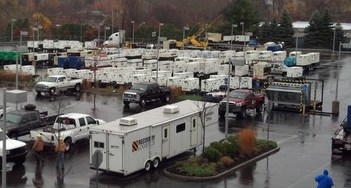
AT&T’s generator staging area near Meriden, Connecticut. (Credit: Brian Pernicone)

Some critics of the increasingly concentrated telecommunications landscape think Verizon and other companies have still not learned enough to prevent the kinds of service disruptions that will leave some customers without service for weeks.

It is hard to miss the bustle outside of Verizon’s offices damaged by the storm, watching flood water drain down the street. But things are murkier at cell phone providers who have been less than forthcoming about specific outage information and service restoration assessments.

Some have advocated the federal government step in and require cell phone service, now deemed essential by an increasing number of Americans, be protected with robust backup solutions to keep service up and running after catastrophic weather events.

After Hurricane Katrina, the FCC in 2007 tried to issue new rules that required a minimum of eight hours of backup power for all cell sites. The industry balked, predicting it would lead to “staggering and irreparable harm” for the cell companies. One wireless trade association warned their members might take several cell sites down if they were forced to provide backup power.

The CTIA Wireless Association and Sprint-Nextel sued the agency in federal court and the Bush Administration’s Office of Management and Budget eventually killed the proposed regulations.

T-Mobile and AT&T have cut an emergency deal to share their cellphone networks in areas affected by Superstorm Sandy. They’re trying to make it a little easier for customers to get a signal as carriers restore their networks. Some say companies should be forced to make their networks more resilient. National Public Radio’s Morning Edition has the story. (November 1, 2012) (3 minutes)
You must remain on this page to hear the clip, or you can download the clip and listen later.

AT&T and T-Mobile Customers Will Share Networks in Storm-Ravaged NY, NJ

Phillip Dampier October 31, 2012 AT&T, Consumer News, T-Mobile, Wireless Broadband Comments Off on AT&T and T-Mobile Customers Will Share Networks in Storm-Ravaged NY, NJ

T-Mobile and AT&T customers in the impact zone of Hurricane Sandy will share cellular networks through a mutual aid pact announced today by both companies.

The temporary roaming agreement will allow customers of AT&T and T-Mobile to use cell sites providing the strongest reception and the highest call completion rate in areas of New York and New Jersey where cell service has degraded.

T-Mobile said the temporary arrangement will provide a seamless roaming experience because both companies share GSM technology. There will be no additional charges for this service. We have no information as to whether this agreement will also cover texting and data services.

Earlier today, T-Mobile provided this update to customers about restoration progress:

T-Mobile network engineers are working as quickly as possible to restore service to areas affected by Hurricane Sandy. In Washington, D.C. the network is more than 90% operational. In New York City, the network is more than 80% operational. Restoration work continues in the harder hit areas of lower Manhattan, Staten Island, Long Island, coastal and Northern New Jersey, Connecticut and portions of Pennsylvania, including Philadelphia.

T-Mobile rapid response engineering teams have staged equipment throughout the areas most severely impacted and continue to make assessments regarding how quickly we may be able to begin restoration, and where it is needed most.

Search This Site:

Contributions:

Recent Comments:

Your Account:

Stop the Cap!