Home » Consumer News » Recent Articles:

Time Warner Cable Increasing Prices (Again) and Teases Faster Broadband in WNY

Phillip Dampier May 19, 2011 Broadband Speed, Consumer News 9 Comments

Another rate increase

Time Warner Cable is raising prices again, less than five months after their last rate increase which took effect in January in the Rochester area.

This time, the cable company is adding $1-2 dollars for each premium movie channel, already battered by cord-cutting and consumers cutting back on high cable bills:

Effective with your July 2011 billing, the price for premium channels will be adjusted as follows:

  • HBO: $13.95$14.95
  • Cinemax:  $10.95$12.95
  • Showtime:  $10.95$12.95
  • Starz:  $10.95$12.95

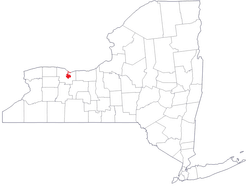
This rate increase covers the Rochester/Finger Lakes region, but other areas can expect similar pricing in the future.  The response to these price hikes will likely bring another round of cord-cutting as consumers increasingly look for less expensive alternatives.

Rochester

We also note a Brighton customer who signed up for the $29.99 12-month promotion for Road Runner Standard on Time Warner Cable’s website is currently fighting with the cable company over claims the real price of the promotion is $34.95 — the $5 difference reflecting a hidden modem rental fee.  If true, it will be a first for the Rochester area where cable modems have always come with the service at no additional charge.  We are waiting to learn whether this is a mistake or something new for Rochester.

In other news, Time Warner Cable has been teasing some customers on the company’s waiting list for Road Runner Extreme (30/5) and Road Runner Wideband (50/5Mbps) DOCSIS 3 broadband service.  Several people, myself included, received phone calls earlier today notifying us the service was now available in our area.  Don’t you believe it.  After more than 45 minutes (and a call back a few hours later), we were told the service was not actually available in our area… yet.  It’s certainly an annoying situation for both those getting the calls and the confused customer service representatives who then had to disappoint.

Interested customers can call (585) 756-1119 and bypass the usual voice prompts and speak directly with a customer service representative.  They verify service availability based on the phone number/address on the account.  Installation fees of around $68 apply, and although some customers report having them waived or reduced, we’ve heard the $68 fee often ends up on the bill anyway.

Anecdotal reports indicate early adopters are experiencing some technical glitches getting consistently fast speeds, but these are usually remedied after service calls or refreshing the cable modem from the office.

Updated: Charter Cable Tells Tornado Victims to ‘Look Around the Neighborhood’ for Cable Boxes or Else

Phillip Dampier May 18, 2011 Charter Spectrum, Consumer News 32 Comments

“If your house was destroyed, and you have looked around the neighborhood for our cable box and cannot find it, you owe us $212 and you need to either pay us or make an insurance claim on our behalf.”

Those were the exact words of a Charter Cable representative talking to a storm victim who lost her home, possessions, and yes, Charter Cable’s set top box.  Stop the Cap! reader Jake from Alabama shared the story of his friend Kelly — a single mother with three kids who lived in Jefferson County, until last month’s tornado flattened her home and scattered everything the family owned for miles around.  Kelly is now living with her parents in Georgia and trying to sort through insurance claims, school for her children, her future career, and the cable company.

“She told me everyone was wonderful, offering food, aid, temporary shelter, and even assistance with insurance claims,” Jake writes.  “Everyone but Charter Cable, who immediately demanded payment for equipment that could have blown into the next county.”

Kelly told Jake the other utilities were glad to help suspend service to her now non-existent home.  The phone company is even forwarding phone calls to her Alabama phone number, which now connects to her cell phone.  Nobody asked for a penny, and all expressed sorrow for the loss.  Charter Cable expressed an interest in Kelly’s credit card number to pay for her lost cable box.

“She told me the woman at Charter demanded to know if she was not prepared to pay today, when would she file her insurance claim so the company can get paid,” Jake says.  “Even worse, if she didn’t pay, they would assess late fees and turn her over to a collection agency.”

Cable companies demanding payment for lost or destroyed cable equipment is nothing new.  Stop the Cap! has documented instances where operators demand payment for cable boxes destroyed in fires, even when the customer lacks insurance.

“It’s become a hot topic in Birmingham and storm-damaged areas because relief workers are hearing horror stories from customers, some injured, who are told to start combing through adjacent yards to look for their lost cable equipment,” Jake says.

Bright House Networks, which also provides service in some storm-damaged areas, has been particularly nasty.

Jake notes one local talk show featured a caller who shared the story of a Bright House representative who told the customer she would wait on the phone while she searched the backyard for Bright House’s DVR box.

“It was disgusting, and Bright House told a Birmingham newspaper it was their policy to demand homeowners file insurance claims on the cable company’s behalf so they can get paid full value for their damaged, usually previously used, cable equipment,” Jake says.

In fact, that is Bright House Networks’ policy, notes the Birmingham News:

Bright House Networks, whose service area includes hard-hit Pratt City, also expects its customers to file claims under homeowners’ or renters’ insurance to pay for lost or destroyed cable boxes. “That’s how we normally handle it,” spokesman Robert L. Smith said.

If storm victims don’t have insurance, he said, decisions will have to be made on a case-by-case basis.

“For those who have lost everything, talking to a cable company is probably the last thing on their minds,” Smith said. “We’re not going to pressure someone for a set-top box.”

But in fact cable companies have pressured customers into paying for lost equipment and told they’ll get their money back from the final insurance settlement.

“The problem here isn’t so much that Charter and Bright House want to get paid for destroyed equipment, it’s how zealous they are about getting paid right now, even as people are still wrapping their hands around the cards dealt to them by the massive tornado damage,” Jake says.

The News notes not every cable company is out for customers’ credit card numbers:

Among other television services, AT&T’s U-verse customers who lost their leased equipment in the storm can have it replaced at no charge, company spokeswoman Sue Sperry said.

DirecTV waives replacement costs for equipment damaged in storms if customers continue services, spokeswoman Vanessa Dunham said. If service can’t be restored because of damage to the home, DirecTV offers to cancel the account and waive fees for not returning equipment, she said.

[Update 5/20: Charter Communications sent a statement saying, in part: Charter will not charge customers for missing, destroyed, or damaged equipment as a result of the recent tornadoes. We adjusted our policy shortly after the tornado in response to the large-scale and catastrophic nature of this storm.  We have now confirmed the company is now crediting customers for lost or damaged equipment.]

Michigan Residents Protest Deregulation Bill That Could End Landlines; “Get a Cell Phone,” Says AT&T

When Stop the Cap! reader Nancy learned earlier this year AT&T was pushing yet another deregulation bill in the Michigan legislature allowing the company to abandon landline service if and when it chooses, she called AT&T and her state representatives to protest.

“When I called AT&T, the representative literally told me if the company ever did decide to stop offering basic phone service in Michigan, I should just ‘get a cell phone,'” Nancy reports.  “Naturally they tried to sell me one of theirs and I replied I was not likely to be loyal to a company that was willing to abandon me and hundreds of thousands of other rural customers.”

As in Wisconsin, AT&T’s lobbying efforts follow the same basic playbook: use friendly legislators and dollar-a-holler groups financed in part by AT&T to push deregulation as “improving competition” and making the state “business friendly.”  But as Nancy learned from experiences in Wisconsin, those are empty promises when rates go up.

“These same people pushed to deregulate cable in Wisconsin so they could offer AT&T’s cable TV service, promising lower prices if we had AT&T competing against Time Warner Cable,” Nancy remembers.  “Time Warner and AT&T raised their rates for both services, instead.”

Nancy has a good memory.  So do we.  Yet again, AT&T’s chief Astroturfer is Thad Nation, this time under the name of the Midwest Consumers for Choice and Competition.  While consumers get ignored, Nation gets time to testify before the House Energy and Technology Committee.

Nation, who runs a lobbying firm, told legislators companies like AT&T should not have to invest in old copper-lines that consumers don’t care about.  He claims it prevents AT&T and other companies from investing in broadband and wireless.

The only thing missing from this group are actual consumers. Instead, their "partners" include: AT&T, groups funded by AT&T, and several chapters of the Chamber of Commerce.

In reality, legislation pushed by AT&T will allow them and other phone companies to abandon providing even basic landline service in the rural areas they no longer care about. There is no evidence (and no regulation) AT&T will invest in either broadband or improved wireless service in rural areas where the company is unlikely to quickly recoup its investment.

Our friends at the Michigan Telephone Blog pointed us to a piece in the Huron Daily Tribune, a newspaper at ground zero for rural Michigan’s potential loss of landline service should the deregulation bill pass.

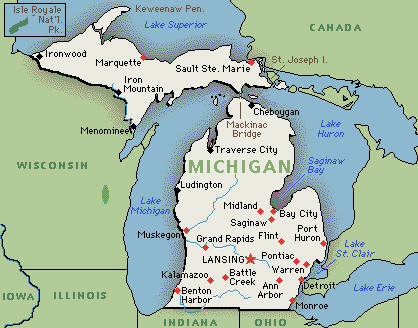
Located in Michigan’s “thumb” — the northeastern part of the state separated by Saginaw Bay, Tribune reporters drilled down into the implications for the loss of traditional landline service in this largely-rural area of Michigan.

Huron County Commissioner John Bodis, who chairs the Legislative Committee, said he’s aware of the bill and foresees some issues with it, particularly in regard to the provision allowing phone companies to discontinue landline service in an area where Voice over Internet Protocol (VoIP) or cell phone service is available.

“If it’s not mandated, they’re not going to do it,” he said. “So, I’m hoping the Senate version will tweak that a little bit and hold their feet to the fire, but I don’t know.”

In its May Capitol Currents, the Michigan Township Association reported its concerns center around residents losing their land-line phone services when other options are not adequate (i.e. poor cell phone coverage because of hills, trees, etc.).

In written testimony to the House Energy and Technology Committee, Brian Groom, president of the International Brotherhood of Electrical Workers, Local 1106, stated over the past decade, the Michigan Legislature has gradually removed telecommunications providers from the oversight of the MPSC, and HB 4314 would complete that process by eliminating the last vestige of regulation — the Primary Basic Local Exchange Service.

“This service, as currently mandated in state statute, requires residential service providers to offer — at the very least — a basic calling plan to customers in their service territory,” Groom stated. “In 2005, when (M)PSC regulation of larger calling plans was eliminated, proponents argued that the public would continue to be protected by the existence of a Primary Basic Local Exchange Service requirement.”

“This means telecommunication companies providing basic local exchange or toll service will be able to discontinue or deny service to any customer who has access to ‘a comparable voice service.’ Nothing in the bill ensures that such service would be affordable, reliable or of a minimum quality,” Grooms continued. “For customers living in remote areas which are of a higher cost to serve via landlines, this legislation could result in them having to depend on higher cost and less reliable forms of telecommunication services. This bill would create a telecommunications environment where large areas of the state have no access at all to traditional landline telephone service.”

AT&T told Stop the Cap! reader Nancy even if the company disconnected the landlines of rural Michigan, those customers could always buy cell phones instead.

“That means people like me and my friends in places like Bad Axe, Elmwood, and Minden City — communities few people outside of Michigan would have heard of, get disconnected because they are too rural to get much attention from these companies,” Nancy says.

Frontier Communications, which provides service in some areas of the state, claims monopolies don’t exist in the phone business:

In written testimony, Bob Stewart, Frontier Communications state director of governmental affairs for Michigan and Indiana, indicated the current atmosphere is no conducive toward monopolies.

“The telecommunications industry in Michigan has moved to a highly competitive environment where monopoly powers even in rural areas do not exist,” he stated. “Unneeded and outdated regulations in the Michigan Telecommunications Act are cleaned up by HB 4314. Michigan needs to celebrate the success of the MTA by declaring victory; not over regulating simply for the sake of regulation.”

But many rural Michigan residents far from cable television and strong signal cell phone service would beg to differ.

“The further inland you head on the ‘thumb,’ the worse things get,” Nancy reports.  “Much of this is farm country and they can’t even get DSL service, and cell reception might be barely adequate outside, but walk inside and your signal is gone.”

Despite consumers like Nancy getting upset when they learn the long term implications of these bills, without a public outcry it is easy for legislators to vote with AT&T.  In the House, HB 4314 passed 102-6.  The six standouts that stood up for consumers?

Reps. Vicki Barnett (D-Farmington Hills, Jeff Irwin (D-Ann Arbor), Steven Lindberg (D-Marquette), Lesia Liss (D-Warren), Edward McBroom (R-Vulcan) and Phil Potvin (R-Cadillac).


T-Mobile Innovation: Free Wi-Fi Calling for Monthly Plan Customers; Would AT&T Ever Offer This?

Phillip Dampier May 16, 2011 Consumer News, T-Mobile, Video Comments Off on T-Mobile Innovation: Free Wi-Fi Calling for Monthly Plan Customers; Would AT&T Ever Offer This?

T-Mobile has announced it is giving some of its smartphone customers unlimited free calling, when you are within range of a Wi-Fi signal.

This new feature is available on Even More and Even More Plus postpaid rate plans for customers with Wi-Fi Calling-capable phones. Wi-Fi Calling is based on the Smart Wi-Fi application that comes pre-loaded onto many of T-Mobile’s latest smartphones.  It comes from Kineto Wireless, which provides a similar app for Orange UK and Rogers Wireless customers in Canada.

When enabled, T-Mobile customers will see a blue ‘talk bubble’ icon in the status bar.  Once active and running, all voice calls made on your phone while within range of a connected Wi-Fi signal are reportedly not counted against your plan minutes.

Judging from anecdotal reports across the web, T-Mobile customers have been able to add the free calling feature to their accounts as of last Friday.  The fastest route to a quick activation is calling T-Mobile customer service.  Those subscribed to a Family Plan must activate the feature individually for each smartphone on the account.

Wi-Fi Calling is primarily pitched as providing a solid signal where none exists, a helpful feature for T-Mobile customers who find reception less than robust indoors.  Offloading wireless traffic to Wi-Fi benefits T-Mobile as well, reducing demand on its cell towers.

The technology differs from femtocells — small devices that connect with your broadband connection and deliver a 3G wireless signal in your home or office.  Because the Smart Wi-Fi app that powers Wi-Fi Calling is software-based, there is no hardware expense and little customer configuration required.  But Wi-Fi Calling is more restrictive.  A femtocell delivers a 3G signal to any nearby device registered to access it; Wi-Fi Calling only works with phones pre-equipped with the feature.

T-Mobile is also reportedly readying its own femtocell solution for low signal areas.  Their Cel-Fi Microcell is undergoing focus group testing at a price point of a $50 refundable deposit, and a monthly cost of $1.99.

T-Mobile’s website has created some confusion over their Wi-Fi Calling by delivering contradictory information to what customer service representatives are telling customers.  Customer service and an internal company memo suggest the use of the feature does not count against plan minutes, but their website says the opposite.

T-Mobile’s latest innovation begs the question: Would AT&T  — potential future owner of T-Mobile — ever offer Wi-Fi Calling to its customers for free, with no deduction of plan minutes when used?

AT&T femtocell users find the company does deduct plan minutes, unless customers pay for a $19.99/month add-on plan for an unlimited calling option.

[flv width=”640″ height=”380″]http://www.phillipdampier.com/video/Smart Wi-Fi.flv[/flv]

Kineto Wireless produced this video explaining how Smart Wi-Fi Calling works, and we’ve included a second video from the company explaining how to access the application from a T-Mobile smartphone.  (6 minutes)

New Study Proves What You Already Knew: Satellite Fraudband Is No Replacement for the Real Thing

The Rural Mobile and Broadband Alliance (RuMBA) USA released a whitepaper this week concluding that satellite-delivered broadband is more promise than results.

“When measured against the prevailing definition of broadband, satellite technology falls far short of conventional wired and wireless alternatives, mainly due to latency, bandwidth, price, performance and service shortcomings,” the Alliance wrote in a statement.

In other words, everything.

“Given the limitations of satellite Internet service detailed in this report, RuMBA cannot consider satellite a viable solution for rural communities who are increasingly cut off from mainstream America by the lack of access to affordable broadband service,” says Luisa Handem, founder and Managing Director of RuMBA USA.

“There is every indication that America’s reliance on broadband is only going to increase, especially in the areas of business, education, healthcare, government and entertainment, so it is vital that America’s rural communities have all the facts before deciding on broadband access, and delivering those facts is what this paper is about,” says Sascha Meinrath, Director of Open Technology Initiative, New America Foundation.

Among the Key Findings:

  • The latency inherent in satellite Internet connections limits their use for standard broadband functions such as Voice over IP (VoIP) and Virtual Private Networks (VPNs).
  • The capacity limits of satellite Internet service rule out broadband functionality taken for granted by Americans living in communities served by cable, fiber optic, and DSL services. These functions include automatic software updates, online backup, streaming video, telecommuting, and website hosting.
  • Notwithstanding those limitations satellite Internet service is less affordable than wired Internet service.

While Stephen Cobb, author of a whitepaper on the subject, considers satellite Internet access an amazing technology, it has proved to be a poor substitute for ground-based, wired alternatives, including DSL.

More than 20 million rural Americans live without any access to the Internet, despite the country’s growing reliance on broadband service.  Those that do subscribe to satellite service generally report a dismal experience, in part because of a punitive usage limit that dramatically lowers already-slow speeds when exceeded.  Weather disturbances and heavy snow can also disrupt satellite signals, and contract terms often carry hefty termination fees if one cancels before the end of the contract.

Search This Site:

Contributions:

Recent Comments:

Your Account:

Stop the Cap!