
Home » Competition » Recent Articles:

Resigning N.C. House Finance Chairman Blasts Speaker for Having ‘Business Relationship With TWC’

special reportOne of the chairs of the North Carolina House Finance Committee abruptly resigned his chairmanship on the House floor Wednesday, submitting a letter read aloud in the chamber that accused fellow Republican House Speaker Thom Tillis (R-Mecklenburg) of having an unexplained business relationship with Time Warner Cable.

Rep. Robert Brawley (R-Iredell) wrote Tillis burst into his office demanding to know about a bill Brawley introduced that would have weakened the 2011 law Tillis strongly supported that severely restricted publicly owned broadband networks in the state.

“You slamming my office door shut, standing in front of me and stating that you have a business relationship with Time Warner and wanting to know what the bill was about,” Brawley wrote in his resignation letter. “You and I both know the bill stifles the competition with MI Connections in Mooresville. MI Connections is being operated just as any other free enterprise system and should be allowed to do so without the restrictions placed on them by the proponents of Time Warner.”

Tillis’ office described the resignation of Brawley’s chairmanship as “a mutual decision.”
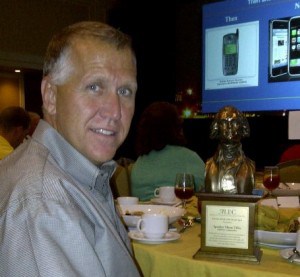
Tillis was honored in 2011 as ALEC's "Legislator of the Year" and received an undisclosed cash reward.

Tillis was honored in 2011 as ALEC’s “Legislator of the Year” and received an undisclosed cash reward. Time Warner Cable is a corporate member of ALEC.

House Bill 557, introduced by Brawley, would have permitted an exception under state law for the community-owned MI Connection cable system to expand its area of service to include economic development sites, public safety facilities, governmental facilities, and schools and colleges located in and near the city of Statesville. It would also allow the provider to extend service based on the approval of the Board of County Commissioners and, with respect to schools, the Iredell County School Board.

The bill died in the Committee on Government earlier this month.

MI Connection is the publicly owned and operated cable and Internet system serving the towns of Mooresville, Davidson and Cornelius in the counties of Mecklenburg and Iredell. It was originally a former Adelphia-owned cable system that fell into disrepair before it was sold in a bankruptcy proceeding. MI Connection has proved financially challenging to the local communities it serves because the antiquated cable system required significant and costly upgrades, faces fierce competition from AT&T and Time Warner Cable, and lacks the technological advantage fiber to the home offers other public networks like Greenlight in Wilson and Fibrant in Salisbury. Despite the challenges, MI Connection has successfully upgraded its broadband infrastructure with the fastest speeds available in the area — up to 60/10Mbps.

Tillis helped shepherd into law the 2011 bill that Time Warner Cable helped write and sponsor designed to stop public networks like MI Connection from expanding and new public networks ever seeing the light of day. The legislation places strict limits on public broadband network deployment and financing. The bill Brawley introduced would have chipped away at the law’s limits on network expansion. Brawley’s letter suggests Tillis had direct involvement stopping his bill from getting further consideration.

Brawley

Brawley

Both Brawley and Tillis represent portions of the MI Connection service area.

Time Warner Cable has a long history pushing for community broadband bans in North Carolina, but the bills never became law when the legislature was still in the hands of Democrats. But in late 2010, Republicans took control of the state house for the first time in more than a century. Time Warner Cable’s fortunes brightened considerably under Republicans like Rep. Marilyn Avila (R-Wake). Avila willingly met with Time Warner Cable’s top lobbyist to coordinate movement on the community broadband ban legislation she introduced and after it became law was honored by the state cable lobby at a retreat in Asheville.

Tillis, who became speaker of the house in 2011 under the new GOP majority, received $37,000 in telecom contributions in 2010–2011 (despite running unopposed in 2010), which is more than any other state lawmaker and significantly more than the $4,250 he received 2006–2008 combined. AT&T, Time Warner Cable, and Verizon each gave Tillis $1,000 in early-mid January, just before he was sworn in as speaker on January 26. Tillis was in a key position to make sure the anti-competitive bill moved along the legislative pipeline.

Last summer, Time Warner Cable returned the favor inviting Tillis to serve a prominent role at a media event inaugurating its Wi-Fi network in time for last year’s Democratic National Convention, held at the Time Warner Cable Arena.

Despite all that, newspapers in the state are having trouble determining exactly what ties Tillis has to Time Warner Cable. The Raleigh News & Observer noted, “It’s unclear what relationship Tillis might have to Time Warner. His financial disclosure lists no connection.”

miconnectionlogoThe Greensboro News & Record published a non-denial denial from Tillis spokesman Jordan Shaw: “Shaw said he doesn’t know of any business relationship between Tillis and Time Warner.” The paper added, “a regional Time-Warner spokesman said Tillis has no ties to the company.”

“Not knowing” is not a total denial and a legislator need not have direct ties to a company to be influenced by their agenda through lobbyists like the North Carolina Cable Telecommunications Association, the statewide cable trade association that includes Time Warner Cable as its largest member. Then there are third-party groups.

A May 7 editorial in the News & Observer pointed out Tillis does have close ties to the American Legislative Exchange Council (ALEC), a group financed in part by Time Warner Cable and cited by CEO Glenn Britt as a useful asset to the cable operator because it was “particularly focused on telecom matters.” The commentary, “ALEC’s Guy is Thom Tillis,” reminded readers Tillis wasn’t just a casual member of the corporate-funded group, he’s a national board member. In fact, Stop the Cap! has learned he was ALEC’s 2011 Legislator of the Year. On hand at the 2011 New Orleans ALEC event to applaud Tillis were more than two dozen fellow North Carolina Republican legislators, including Reps. Marilyn Avila and Julia Howard.

alec-logo-smAmong the model, corporate ghost-written bills ALEC maintains in its extensive database is one that restricts or bans publicly owned broadband networks, similar to what passed in North Carolina in 2011.

The fortunes of ALEC (and the corporations that underwrite its operations) have continued to improve in North Carolina this year. The News & Observer notes:

ALEC, as it’s known, has provided language for bills that [have been] used this session in North Carolina, ranging from creating an independent board to take charter school governance away from the State Board of Education to protecting a Philadelphia-based company from lawsuits involving asbestos exposure to installing an anti-union amendment in the state constitution. Closer to home, the Civitas Institute, a conservative group, used ALEC literature in an indoctrination…er, training…session for freshman lawmakers.

"I wish you'd turn the camera off now because I am going to get up and leave if you don't," said Rep. Julia Howard

“I wish you’d turn the camera off now because I am going to get up and leave if you don’t,” said Rep. Julia Howard

Uncovering the corporate influence and pay to play politics pervasive in North Carolina’s legislature on broadband matters has proved historically scandalous for members and ex-members alike, as Stop the Cap! has reported for more than four years:

Tillis is following in others’ footsteps and is suspected of having even bigger political ambitions for 2014 — challenging the U.S. Senate seat now held by Democrat Kay Hagan.

The News & Observer thinks Tillis is forgetting about the people who elected him to office:

For North Carolinians of any political philosophy, however, the larger concern here is that laws are being written by those outside the state with only an ideological interest. ALEC, except for advancing its agenda, likely could care less about issues specific to North Carolina, things of intense, day-to-day concern to North Carolinians.

And not only are bills being influenced by ALEC, the speaker of the House is on the group’s board.

Thom Tillis and his Republican mates on Jones Street weren’t elected to march to orders issued by some national organization. Perhaps if they kept their eyes and ears open for constituents, their legislative agenda might be more about them and less about doing ALEC’s bidding.

Brawley himself is not free from controversy. In addition to attending the aforementioned ALEC event in New Orleans with Tillis, Avila, and Howard, earlier this year Brawley introduced House Bill 640, legislation that would roll back ethics reforms and allow lobbyists to once again give gifts to state lawmakers without any public disclosure.

Brawley told WRAL-TV that required ethics classes on gifts and disclosure requirements “are useless for anyone without internal ethics anyway. They only tell you the law. They do not guarantee integrity. What makes you think a person without ethics is going to obey a law anyway?”

The laws were enacted after a major 2006 scandal involving then-House Speaker Jim Black.

Corrections: In the original article, we mistakenly identified the News & Observer as a Charlotte newspaper. It is actually published in Raleigh. We also wrote that House Bill 557 died without being assigned to any committee for consideration. We received word the bill was actually referred to the Committee on Government on Apr. 4, 2013 where no further action was apparently taken. We regret the errors.
Earth-Shattering News: You Still Hate Your Cable Company

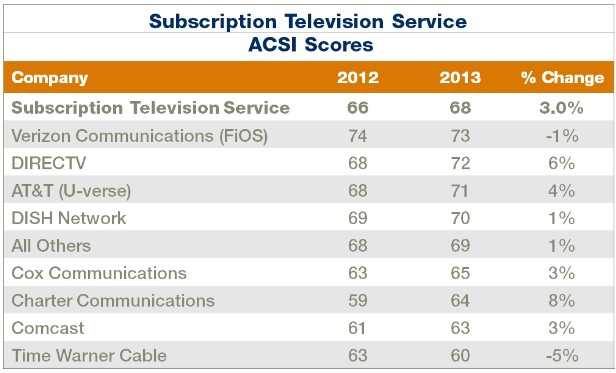
Despite efforts to improve their reputation, cable companies are hated so much the industry now scores lower than any other according to the American Customer Satisfaction Index (ACSI).

The only reason the industry’s average score or 68 out of 100 ticked higher are some new competitors, especially Verizon’s FiOS fiber optic network, which scores higher than any other provider.

acsi tv

The cable companies you grew up with still stink, ACSI reports, with Comcast (63) and Time Warner Cable (60) near the bottom of the barrel.

At fault for the dreadful ratings are constant rate increases and poor customer service. As a whole, consumers reported highest satisfaction with fiber optic providers, closely followed by satellite television services. Cable television scored the worst. Despite the poor ratings, every cable operator measured except Time Warner Cable managed to gain a slight increase in more satisfied customers. Time Warner Cable’s score for television service dropped five percent.

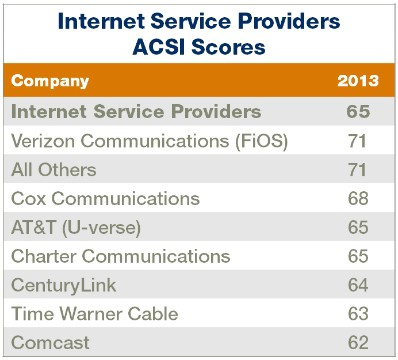
Customers are even less happy with broadband service. Verizon FiOS again scored the highest with a 71% approval rating. Time Warner Cable (63) and Comcast (62) scored the lowest. Customers complained about overpriced service plans, speed and reliability issues. Customers were unhappy with their plan options as well, including the fact many providers now place arbitrary usage limits on their access.

The best word to describe customer feelings about their broadband options: frustration, according to ACSI chair Claes Fornell. “In a market even less competitive than subscription TV, there is little incentive for companies to improve.”

acsi broadband

Canadian Wireless Competition? One Down, Two to Go: Telus Acquires Mobilicity

Phillip Dampier May 16, 2013 Canada, Competition, Consumer News, Mobilicity, Public Policy & Gov't, Telus, Video, Wireless Broadband Comments Off on Canadian Wireless Competition? One Down, Two to Go: Telus Acquires Mobilicity

mobilicityWhen Industry Canada announced it was planning to boost competition by setting aside certain spectrum for new competitors entering the wireless marketplace, the Conservative government promised Canadians they would see a new era of robust competition and lower prices as a result.



Today, it turns out the only competition around is watching which of the three largest wireless carriers snap up their newest competitors first.

Telus, Canada’s third largest wireless carrier, today announced it was acquiring Mobilicity for $380 million — almost exactly the amount of outstanding debt owed by the Data & Audio Visual Enterprises Holdings’ venture. That means Telus will pick up its competitor just by agreeing to pay its bills.

Mobilicity said it was burning through cash at an alarming rate and simply could not attract enough customers in its home service cities Toronto, Ottawa, Calgary, Edmonton and Vancouver, to become profitable. It also reportedly lacked financial resources to take part in a forthcoming spectrum auction that would have been critical to the company’s long-term survival.

...to a mega-merger of Bell and Telus.

Informal merger talks among the three largest independent carriers — Wind Mobile, Public Mobile, and Mobilicity — reportedly went nowhere.

“Mobilicity has been losing a significant amount of money every month,” Mobilicity’s chief restructuring officer, William Aziz, said today. “The financial strength of Telus will allow the business to be continued in a way that will benefit customers and employees. An acquisition by Telus is the best alternative for Mobilicity.”

But that may not be the best alternative for Canadians. Regulators are expected to scrutinize the merger and current rules do not allow Telus to acquire the spectrum Mobilicity holds until next year. But with few other expected buyers, regulators may have no choice but to allow the deal to go through.

If approved, Telus will pick up Mobilicity’s 250,000 customers and likely switch them to Koodo Mobile, its prepaid division.

Minister Paradis

Minister Paradis

Mobilicity customers could do worse. Koodo Mobile, given a “C” grade by Canadian consumers, was Canada’s highest rated wireless carrier. That disparity hints at how much Canadians loathe their current wireless options.

Bay Street investors were not surprised by the announced merger, believing competition has its limits in a marketplace dominated by three enormous telecom companies — Bell (BCE), Rogers, and Telus — all collectively holding more than a 90% share of the Canadian wireless market. Many expect the remaining independent providers to also jettison their businesses or combine them in a last stand.

Industry Minister Christian Paradis, the Conservative government’s point man on independent competition in the wireless market, was caught off guard by the apparent faltering of the new carriers.

Paradis said he remains committed to making sure Canadians have a fourth choice for wireless service in every regional market in the country. But his only assured success is in Québec, where Vidéotron — the provincial cable company — competes with the big three providers. That competition has worked in that province to hold pricing down. According to The Globe & Mail, the average monthly bill in Québec dropped to $50.36 a month in 2011 from its peak in 2009 and is on par with where it stood in 2007. In comparison, according to CBC News, the average monthly wireless bill across Canada was $77 in 2013, up from $68 in last year’s survey.

Paradis is now pondering new regulations that would prevent the three largest carriers from buying out the remaining two independent providers just for their spectrum assets.

The merger will need regulatory approval from The Competition Bureau, Industry Canada, and the Canadian Radio-television and Telecommunications Commission.

[flv width=”640″ height=”380″]http://www.phillipdampier.com/video/BNN Telus in Talks to Buy Mobilicity 4-13.flv[/flv]

BNN reported back in April that Telus and Mobilicity were in acquisition talks. The news channel speaks with Maher Yaghi from Desjardins Securities about the implications the merger would have on the Canadian cell phone market and the prices consumers pay. (5 minutes)

[flv width=”640″ height=”380″]http://www.phillipdampier.com/video/BNN Telus Acquiring Mobilicity 5-16-13.flv[/flv]

BNN this morning reported the ball is back in Ottawa’s hands as the government tries to decide how it can salvage its wireless competition agenda. (6 minutes)

AT&T Will Follow Google’s Lead: Faster Speed Networks Only in High Demand Areas

att_logoAT&T says government regulations have hampered the company’s plans to roll out faster broadband networks to areas where consumers and businesses want faster speeds.


Now that Google has gotten permission to roll out its gigabit fiber network only to neighborhoods that show an interest in the service, AT&T says it should be allowed to operate the same way.

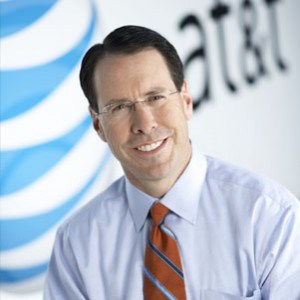
CEO Randall Stephenson told investors at a J.P. Morgan investor conference in Boston that AT&T would like to build fiber networks, but government requirements that it offer the service universally across the communities it serves has made such networks financially unprofitable. Eliminating those rules would create a new incentive for fiber upgrades in areas that want them.

“I think you are going to see that begin to manifest itself around the United States, and in not just AT&T and Google,” Stephenson said. “You will see others doing this because the demand for really high-speed broadband via gigabit-type fiber-based solutions on a targeted basis is going to be very, very high.”

AT&T says Google has already changed how future broadband networks are deployed — only to areas where there is enough demand for the service. Google’s entry into Kansas City came with a pre-registration procedure that allowed the company to gauge demand for its fiber network. The neighborhoods expressing the most interest were given priority during the network buildout. Google also won the right to entirely bypass neighborhoods where an insufficient number of residents expressed interest in the service.

Stephenson

Stephenson

Traditionally, cable and phone companies constructing networks like FiOS, U-verse, and similar fiber deployments are required to offer service throughout each community. The only general exception relates to sparsely populated or very high cost areas that have an insufficient number of potential customers, making return on investment difficult. Google can bypass even the most densely populated sections of downtown Kansas City if there is insufficient demand for its service. Cable and phone providers who attempted this in the past would have been accused of “redlining” — singling out only the most lucrative, affluent service areas while bypassing low-income neighborhoods.

Now AT&T hopes Google has established a precedent it can use to cherry-pick network upgrades of its own.

“The key is being able to do it in places where you know there is going to be high demand and people willing to pay the premium for those type services,” Stephenson said, predicting in some parts of Austin, AT&T could achieve a 35 percent market share for its promised fiber network.

Stephenson also suggested an unlikely new source of money to finance fiber upgrades — content producers and applications developers who need faster networks to support sales of their online products and services. That would shift the economics of faster broadband to an entire new model — broadband providers may decide their current networks are fast enough and might avoid upgrading them without some financial compensation from the websites and content producers customers visit.

Broadband Lessons from JCPenney: Listen to Wall Street or Customers?

Phillip "I Shop At TJMaxx" Dampier

Phillip “I Shop Online” Dampier

Last week, JCPenney launched their nationwide redemption tour, apologizing to millions of ex-customers that fled the former retail giant, begging them to come back.

It took over a year for JCPenney to get the message that “disciplining” and “re-educating” customers to accept the wisdom of everyday higher prices with few sales and almost no coupons was hardly the door-busting success “miracle worker” CEO Ron Johnson originally had in mind. The ex-Apple executive was rewarded a $52.7 million signing bonus to take over JCPenney’s tired leadership and in return he dragged sales down 28.4% from the year before, with same store sales down 32%. Johnson’s new vision also steamrolled one-third of JCPenney’s online business.

The day those results became known, he confidently showed Wall Street he did not dwell in the reality-based community: “I’m completely convinced that our transformation is on track!” (For Kohl’s benefit anyway.)

Johnson also believed in a “less is more” philosophy in human resources, overseeing layoffs of 13 percent of the company’s workforce last April, with another 350 let go in July.

Despite the fact his all-new, rebooted vision of JCPenney was about as popular as bird flu, he stayed, even as customers and employees didn’t.

It wasn’t that the company didn’t know customers had a problem with all this. Many complained about the radical, unwanted changes at JCPenney, particularly middle-aged professional women representing one of the stores’ most important business segments. Company executives simply didn’t listen.

A year later, some of the same analysts that cheered JCPenney’s crackdown on discounting now wonder if the company will survive 2013. Many fretted about the real possibility the last customer to brave the “new era” of JCP might forget to turn the lights out when they left for good. Others were mostly furious the board let Johnson go.

Despite the tragic consequences, the conventional wisdom on Wall Street remains: Alienating customers with a revamp nobody asked for and “everyday pricing” designed to boost profits every day was not the problem, how Johnson implemented the strategy was. He just didn’t educate customers enough.

We see the same warped thinking in the broadband marketplace, particularly with usage caps, consumption billing, junk fees and the general ever-increasing price of broadband itself.

On providers’ quarterly results conference calls, the regular questions challenging leaders of the industry are not about providers charging too much for too little. The real concern is that your ISP is leaving too much ripe fruit on the tree:

  • Where is the revenue-boosting usage caps and consumption billing, Time Warner Cable?
  • Comcast: can’t you raise prices further on those recent speed increases to maximize additional revenue?
  • Verizon: why are you spending so much on fiber broadband upgrades customers love when that money could have gone back to shareholders?
  • AT&T: Is there anything else you can do to exploit your market share and make even more money from costly data plans?

The best ways a consumer can reward a good broadband provider include remaining a loyal customer, paying your bill on time and upgrading to faster speeds as needed. For Wall Street, the growing demand for broadband is a sign there is plenty of wiggle room for at-will rate increases, new fees and surcharges, contract tricks and traps, customer service cuts, and monetizing usage wherever possible. After all, you probably won’t cancel because the other guy in town is doing the same thing.

This is what sets the broadband marketplace of today apart from most retailers: consumers don’t have 10-20 other choices to take their business to if they are fed up.

Comcast or AT&T? Both charge a lot and have usage limits on their broadband service for no good reason. Your other alternatives? A wireless provider charging even more with an even lower usage cap. Or you can always go without.

While providers may tell you there is a healthy, competitive broadband marketplace, Wall Street knows better. When Time Warner Cable recently announced it would dramatically curtail new customer promotions and concentrate on delivering fewer services for more money, nobody bothered asking whether this would result in a stampede to the competition. What competition?

Although Google is delivering much-needed, game-changing competition in a tiny handful of cities, most Americans will not benefit because the best upgrades and lowest prices are only available where Google threatens the status quo. A larger number of municipalities are done putting their broadband (and economic) future in the hands of the phone and cable company and are building their own digital infrastructure for the good of their communities.

For everyone else, we can dream that one day, someday, the cable and phone company most Americans do business with will be forced to run their own JCPenney-like apology tour for years of abusive pricing and mediocre “good enough for you” broadband with unwarranted usage limits. Time Warner Cable went half way, but until competition or oversight forces some dramatic changes, we should not count on providers to actually listen to what customers want. They don’t believe they need to listen to earn or keep your business.

Search This Site:

Contributions:

Recent Comments:

Your Account:

Stop the Cap!