Home » Broadband Speed » Recent Articles:

Cogeco Unveils DOCSIS 3 Upgrades in Niagara Falls, St. Catherines, Ont.

Phillip Dampier October 18, 2011 Broadband Speed, Canada, Cogeco, Data Caps 1 Comment

Cogeco customers in the Niagara Region watching their neighbors further north in Hamilton and Toronto enjoy faster broadband service can finally obtain faster Internet access from incumbent cable provider Cogeco, who this week unveiled three new faster speed packages in Niagara Falls and St. Catherines.

Cogeco’s Turbo 20, Ultimate 30 and Ultimate 50 High Speed Internet packages are all powered by DOCSIS 3 upgrades, which allow cable operators to bond multiple “channels” together to deliver faster Internet speeds.

Unfortunately, while download speeds of up to 50Mbps can be enticing, Cogeco’s upload speeds, even on their DOCSIS 3 network, are downright stingy.  Thanks to Cogeco’s relentless Internet Overcharging schemes, so are the usage caps.  The Turbo 20 package tops out at 20/1.5Mbps and offers only 80GB of included traffic.  After that, pony up $1.50/GB, up to a maximum of $50 in overlimit penalties.

The Ultimate 30 package includes 30/2Mbps with 175GB of data transfer capacity.  The Ultimate 50 pack delivers 50/2Mbps service with a 250GB cap.  But customers entranced with the extra speed should watch their wallets.  Cogeco’s overlimit fee is $1/GB on these packages with no maximum limit on those charges.

At least Cogeco is satisfied with their newest offer.

“We always strive to offer our customers more flexibility, speed and choices. Today, the whole family can use the Internet at the same time for online banking, video gaming, shopping or for downloading videos or films, and all with the same service. Cogeco’s HSI packages Turbo 20, Ultimate 30 and Ultimate 50 meet those needs perfectly,” said Ron Perrotta, vice president, Marketing and Strategic Planning.

The new Turbo 20 package is currently on promotion and offered for $44.95 per month for 12 months for customers who also subscribe to Cogeco’s Television and/or Home phone services, and for $54.95 per month for 12 months for those who only want to subscribe to the High Speed Internet service. Turbo 20’s regular price is $49.95 if bundled with other Cogeco services and $59.95 on a standalone basis.

For customers who subscribe to more than one Cogeco service, Ultimate 30 is offered for $59.95 per month and Ultimate 50, for $99.95 per month. Ultimate 30 and Ultimate 50 are also available on a standalone basis for $69.95 and $109.95 respectively.

Cell Phone Companies Hoarding Cash/Credit for Spending Blitz on Canadian Spectrum

Phillip Dampier October 13, 2011 Astroturf, Broadband Speed, Canada, Competition, Consumer News, Mobilicity, Public Policy & Gov't, Rogers, Vidéotron, Wind Mobile (Canada), Wireless Broadband Comments Off on Cell Phone Companies Hoarding Cash/Credit for Spending Blitz on Canadian Spectrum

Upcoming wireless spectrum auctions are critically important for some of Canada’s newest players in the cell phone marketplace.  Most are working hard to make sure they have plenty to spend to secure new frequencies for advanced wireless services that will help them remain competitive with larger players.

Globalive Holdings, the parent company of Wind Mobile, has convinced backers to provide hundreds of millions of dollars in financing, so long as all of the money is spent on acquiring wireless spectrum.

Wind’s nearly 400,000 customers will appreciate the additional room for growth, and new customers may keep Wind in mind for advanced 4G networks most Canadian providers intend to build and expand into the new spectrum they acquire at an auction next year.

Much of the funding, estimated to approach nearly a half-billion dollars, is coming from Wind’s parent entities, Egypt-based Orascom Telecom and the European conglomerate VimpelCom that acquired Orascom earlier this year.  Because the Canadian government is expected to set-aside some of the valued 700MHz spectrum exclusively for bidding among new entrants in the market, Wind could walk away a big winner, particularly if other similar-sized competitors Mobilicity and Vidéotron Ltee./Quebecor have trouble raising enough money to remain competitive in the bidding.

As far as Canada’s largest cell companies are concerned, set-asides are unnecessary and they prefer a winner-take-all auction.  Rogers, in particular, has been lobbying hard to convince Canadian officials it needs access to the 700MHz spectrum up for auction to roll out service in rural communities and upgrade networks in larger cities.

Those who feel Canada’s cell phone marketplace is already too concentrated have little sympathy for Rogers’ point of view, and expect an auction free-for-all will mean the largest incumbent players will walk away with everything they can bid on.

Among smaller players, assuming the set-asides are in place, analysts expect Wind will probably secure the most spectrum, but Vidéotron is expected to stay competitive and walk away with at least some frequencies for use in its home province of Quebec.  Big losses among the smaller players could fuel calls for additional mergers and acquisitions among those carriers deemed to have been left behind.

The Canadian government is expected to be the biggest winner of all, netting a potential $3-4 billion from the spectrum sale.

Money Talks: More Dollar-a-Holler Advocacy for AT&T from the NAACP

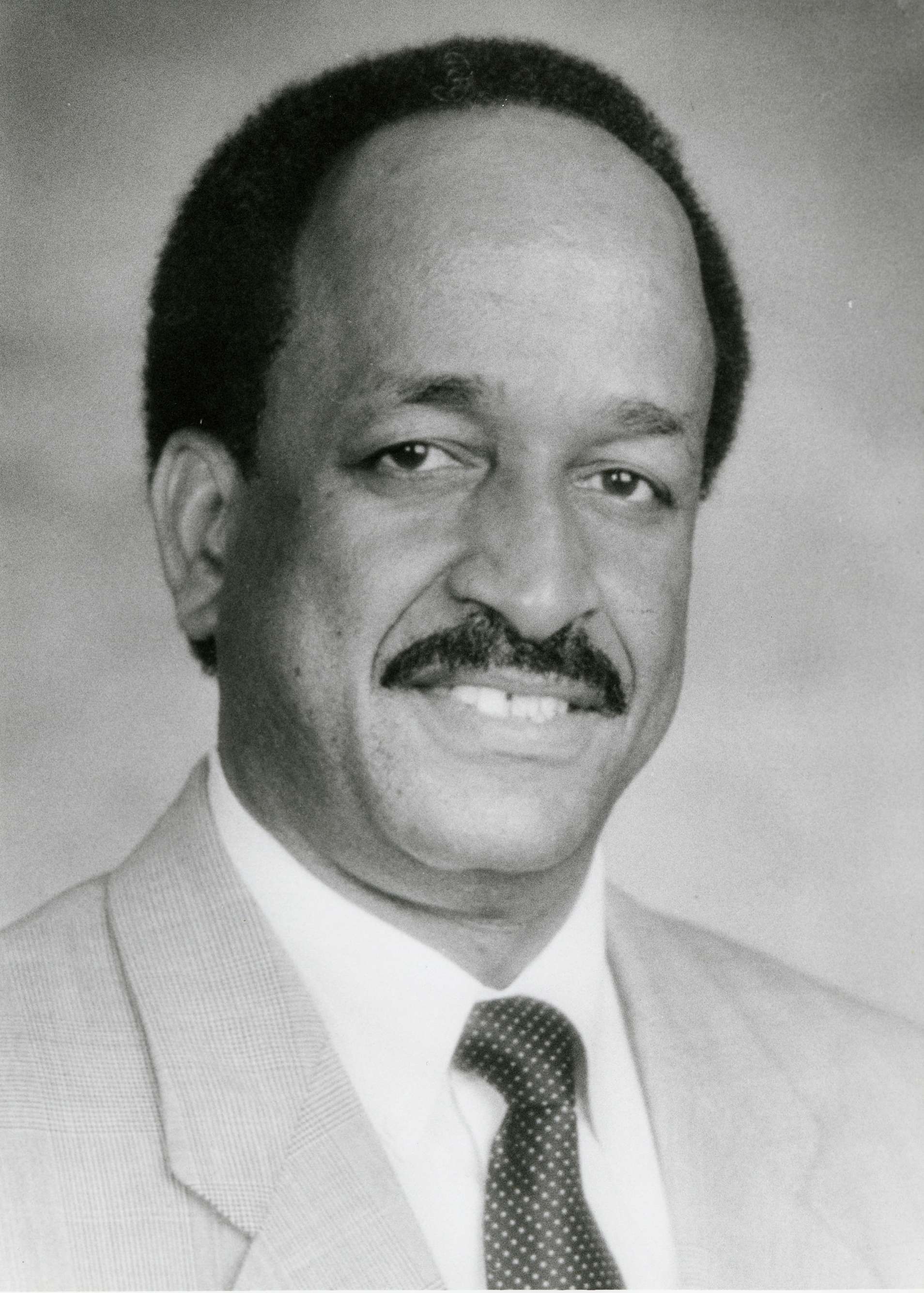
Crumpton

NAACP national board member and former Missouri Public Service Commission member Harold Crumpton believes that combining AT&T and T-Mobile will create 100,000 new jobs, despite the fact both companies have promoted “cost savings” from eliminating redundant services and winning “increased efficiencies.”

That’s code language for layoffs, and it has been that way with every telecommunications merger in the last decade.  But Crumpton prefers to deny reality in a guest opinion piece published today in the St. Louis Post-Dispatch:

Most mergers result in — and pay for themselves with — job losses and higher prices. Not this one.

If, to use the government antitrust lingo, there is a “relevant product market” for this merger, it would be “jobs” because jobs are the No. 1 product of the broadband factory. The AT&T and T-Mobile merger is structured as an engine of job creation — yielding 100,000 new jobs by delivering on President Obama’s call for a national high-speed broadband network. That’s far more jobs than would be lost because of AT&T and T-Mobile overlaps.

Ironically, AT&T announced the repatriation of 5,000 call center jobs and pledged not to terminate call center employees because of the merger. Two hours later, without warning to AT&T, the Justice Department filed its suit. Suffice to say that President Obama, our greatest champion of job creation, was not well-served that morning.

How will AT&T produce all these new jobs? By creating the first national next-generation high-speed (4G) mobile network. The merger is what will make the network possible, and it will do that by aggregating and redeploying spectrum T-Mobile can’t use for 4G. In this way, the network would reach 55 million more Americans than 4G currently reaches.

AT&T couldn’t have argued the case better.  Oh wait.  They have, in the company’s advocacy package mailed to the NAACP and dozens of other groups who receive the company’s financial support.  Those talking points inevitably end up in the guest editorials penned by Crumpton and others.

While the bloom is clearly off the rose of the AT&T/T-Mobile merger, thanks in part to consumer groups and the U.S. Department of Justice who filed a lawsuit to stop it, AT&T is still flailing about trying to find some way to get the deal done, if only to avoid the outrageous break-up fee self-imposed by the telecommunications giant if the deal falls apart.  AT&T’s promise to bring an end to the obnoxious practice of offshoring their customer support call centers — if the merger gets approved — has been compared with blackmail by some customers who have spent an hour or more negotiating with heavily accented customer support agents that companies like Discover Card routinely mock.

AT&T promises customers a solution to the "Peggy Problem" if their merger with T-Mobile gets approved.

It clearly wasn’t enough to move critics of the deal to reconsider — AT&T could voluntarily hire American workers who speak the language of their customers for the benefit of those customers with or without a merger with the fourth largest wireless carrier in the country.

Crumpton argues President Obama was not well served by the Justice Department.  Consumer groups argue T-Mobile and AT&T’s customers will not be well-served if this merger ever happens.

As Stop the Cap! has repeatedly argued, both AT&T and T-Mobile will construct 4G mobile broadband networks in all of the places where the economics to deploy those networks makes sense.  No more, no less, no matter if AT&T and T-Mobile are two companies or one.

Crumpton might as well have argued the merger would deliver 4G service to Sprint customers as well.  It’s the same disconnected logic.

Crumpton thinks AT&T’s high-priced, heavily-capped 4G network will somehow solve the pervasive problem of the digital divide — the millions of poor Americans who can’t afford AT&T’s prices.  Incredibly, Crumpton’s answer is to allow one of the most price-aggressive, innovative carriers in the country favored by many budget-conscious consumers to be snapped up by the lowest rated, if not most-hated wireless company in the country.

It just doesn’t make sense.  But it does make dollars… for the NAACP, which receives boatloads of corporate money from AT&T.  It’s no surprise the pretzel-twisted logic that drives merger advocates like Mr. Crumpton comes fact-free.  The money makes up for all that.

“The NAACP stands ready to work with the public and private sectors to ensure that every American has an equal opportunity to participate in and benefit from this awesome ‘broadband revolution,'” Crumpton writes.

We can only hope that is true.  The NAACP can get started by admitting publicly it receives substantial support from AT&T and it will either agree to remain neutral in corporate advocacy issues to avoid conflicts of interest, or return AT&T’s money.  After all, it sounds like they need it to build the digital divide-erasing 4G network Crumpton is purportedly so concerned about.

Wall Street Attacks: Sprint CEO in Big Trouble for Plans to Upgrade Sprint’s Network to LTE

Sprint CEO Dan Hesse is now at risk of losing his job over decisions to increase spending to upgrade network performance and capacity.  In the last week, Sprint announced it will likely seek outside financing to accelerate the launch of its new 4G LTE network, while concurrently deciding to stop selling 4G WiMax smartphones that work on the troubled Clearwire network by the end of this year.

Wall Street hates companies spending money to upgrade their networks, particularly when there is little evidence Sprint will enhance profits with price increases or cut costs by limiting customers’ data usage.

For several major investment firms and banks, the last straw was Hesse’s revelation that the company will likely need to borrow money to complete its Network Vision plan, which calls for major upgrades of Sprint’s wireless network to support much faster data speeds for customers.  His earlier commitment to spend up to $20 billion on Sprint’s version of the Apple iPhone did not help matters.

Sprint’s stock price took a beating last week, sliding 26 percent to the lowest level since February 2009 as investors fled.

[flv width=”360″ height=”290″]http://www.phillipdampier.com/video/KSHB Kansas City Sprint makes another new announcement 10-7-11.mp4[/flv]

KSHB in Kansas City reports Sprint intends to stop selling devices that work on the company’s existing 4G/Clearwire WiMax service by the end of this year in favor of Sprint’s forthcoming launch of a new 4G LTE network.  (1 minute)

The Detroit News reports an investor meeting with Sprint executives “grew ugly” after Hesse announced the company needed to spend money to upgrade and refused to show a clear pathway to enhanced profits earned from those upgrades.

Wall Street to Hesse: Don't Get Comfortable

“Hesse is on thin ice now,” Ed Snyder, an analyst with Charter Equity Research, told the newspaper. “One, perhaps two, more big mistakes and he’s probably gone.”

More than a half-dozen Wall Street analysts have slashed their ratings on the wireless company because they believe Sprint’s spending plans will hurt liquidity.

While customers are increasingly rewarding Hesse and Sprint for making customer service improvements and retaining customer friendly unlimited service plans, Wall Street shows no signs of being charitable to Hesse’s management of the Overland Park, Kansas company.

Ben Abramowitz, an analyst with Kaufman Bros., downgraded the stock to “hold” from “buy,” excoriating the company for expensive strategic shifts, including network upgrades and the company’s recent commitment to Apple to sell millions of Apple iPhones on Sprint’s network.

“Management credibility is lost with investors,” Abramowitz wrote.

Jonathan Schildkraut from Evercore Partners told CNBC the spending at Sprint may just be getting started.  Millions of customers remain connected to Nextel’s legacy iDEN network, which Sprint intends to decommission.  Schildkraut believes Sprint will have to provide deep discounts or free phones for displaced customers who will need to move to Sprint’s primary network.  He also notes that despite Sprint’s plans to abandon Clearwire’s WiMax network for 4G, the company will likely make further investments to maintain the partnership, and Clearwire’s network, for other purposes.

Sprint’s decision to adopt Apple’s iPhone and upgrade their network may make competitive sense against larger players AT&T and Verizon Wireless, but Schildkraut notes Apple commands top dollar for the popular phone — upwards of $600 on the wholesale level, which carriers in turn subsidize to lure customers to sign two-year contracts.  But Sprint would do well to consider Verizon’s experience with the iPhone, he says.  Most of Verizon’s iPhones were sold to customers who already owned smartphones.  That forced Verizon to subsidize up to $400 for each iPhone with no chance of increasing the average revenue collected from customers.  Investors were hoping the iPhone would instead attract budget handset customers who would upgrade to more expensive smartphone service plans.

Because the iPhone still does not support 4G technology, it seems less likely existing Sprint 4G WiMax smartphone owners would consider the Apple 4S an upgrade, and may hold off waiting for the anticipated iPhone 5.  But as Sprint begins to promote its forthcoming 4G LTE network, those Sprint customers using WiMax phones will be tempted to move to something else.  Either way, phone subsidies could create a significant drag on Sprint’s cash on hand at a time when the company is spending heavily on upgrading its network.

In the telecommunications business, upgraded service helps customers and spurs competition.  But it is nearly always the enemy of Wall Street unless a clear pathway to enhanced profits can be shown.  Investors may ultimately have the last word on those upgrades, and the person responsible for green-lighting them.  Hesse may learn that lesson first hand if the company can’t find a way to boost its stock price, and soon.

[flv]http://www.phillipdampier.com/video/Sprint CEO in Trouble 10-12-11.flv[/flv]

Wall Street goes on the attack, unhappy that Sprint is spending their money to upgrade its networks for the benefit of Sprint customers.  CNBC covers all the business angles.  (6 minutes)

Canada’s Fiber Future: A Pipe Dream for Ontario, Quebec, Alberta, and B.C.

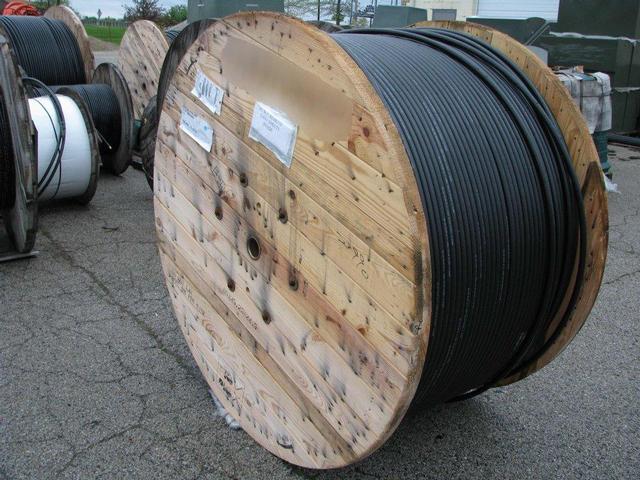
Fiber optic cable spool

For the most populated provinces in Canada, questions about when fiber-to-the-home service will become a reality are easy to answer:  Never, indefinitely.

Some of Canada’s largest telecommunications providers have their minds made up — fiber isn’t for consumers, it’s for their backbone and business networks.  For citizens of Toronto, Calgary, Montreal, and Vancouver coping with bandwidth shortages, providers have a much better answer: pay more, use less Internet.

Fiber broadband projects in Canada are hard to find, because providers refuse to invest in broadband upgrades to deliver the kinds of speeds and capacity Canadians increasingly demand.  Instead, companies like Bell, Shaw, and Rogers continue to hand out pithy upload speeds, throttled downloads, and often stingy usage caps.  Much of the country still relies on basic DSL service from Bell or Telus, and the most-promoted broadband expansion project in the country — Bell’s Fibe, is phoney baloney because it relies on existing copper telephone wires to deliver the last mile of service to customers.

Much like in the United States, the move to replace outdated copper phone lines and coaxial cable in favor of near-limitless capacity fiber remains stalled in most areas.  The reasons are simple: lack of competition to drive providers to invest in upgrades and the unwillingness to spend $1000 per home to install fiber when a 100GB usage cap and slower speeds will suffice.

The Toronto Globe & Mail reports that while 30-50 percent of homes in South Korea and Japan have fiber broadband, only 18 percent of Americans and less than 2 percent of Canadians have access to the networks that routinely deliver 100Mbps affordable broadband without rationed broadband usage plans.

In fact, the biggest fiber projects underway in Canada are being built in unexpected places that run contrary to the conventional wisdom that suggest fiber installs only make sense in large, population-dense, urban areas.

Manitoba’s MTS plans to spend $125-million over the next five years to launch its fiber to the home service, FiON.  By the end of 2015, MTS expects to deploy fiber to about 120,000 homes in close to 20 Manitoba communities.  In Saskatchewan, SaskTel is investing $199 million in its network in 2011 and approximately $670 million in a seven-year Next Generation Broadband Access Program (2011 – 2017). This program will deploy Fiber to the Premises (FTTP) and upgrade the broadband network in the nine largest urban centers in the province – Saskatoon, Regina, Moose Jaw, Weyburn, Estevan, Swift Current, Yorkton, North Battleford and Prince Albert.

“Saskatchewan continues to be a growing and dynamic place,” Minister responsible for SaskTel Bill Boyd said. “The deployment of FTTP will create the bandwidth capacity to allow SaskTel to deploy exciting new next generation technologies to better serve the people of Saskatchewan.”

But the largest fiber project of all will serve the unlikely provinces of Atlantic Canada, among the most economically challenged in the country.  Bell Aliant is targeting its FibreOP fiber to the home network to over 600,000 homes by the end of next year.  On that network, Bell Aliant plans to sell speeds up to 170/30Mbps to start.

In comparison, residents in larger provinces are making due with 3-10Mbps DSL service from Bell or Telus, or expensive usage-limited, speed-throttled cable broadband service from companies like Rogers, Shaw, and Videotron.

Bell Canada is trying to convince its customers it has the fiber optic network they want.  Its Fibe Internet service sure sounds like fiber, but the product fails truth-in-advertising because it isn’t an all-fiber-network at all. It’s similar to AT&T’s U-verse — relying on fiber to the neighborhood, using existing copper phone wires to finish the job.  Technically, that isn’t much different from today’s cable systems, which also use fiber to reach into individual neighborhoods.  Traditional coaxial cable handles the signal for the rest of the journey into subscriber homes.

A half-fiber network can do better than none at all.  In Ontario, Bell sells Fibe Internet packages at speeds up to 25Mbps, but even those speeds cannot compare to what true fiber networks can deliver.

Globe & Mail readers seemed to understand today’s broadband realities in the barely competitive broadband market. One reader’s take:

“The problem in Canada (and elsewhere) preventing wide scale deployment of FTTH isn’t the technology, nor the cost. It’s a lack of political vision and will, coupled with incumbent service providers doing whatever they can to hold on to a dysfunctional model that serves their interests at the expense of consumers.”

Another:

“The problem with incumbents is they only think in 2-3 year terms. If they can’t make their money back in that period of time, they’re not interested. Thinking 20, heck even 10 years ahead is not in their vocabulary.”


Search This Site:

Contributions:

Recent Comments:

Your Account:

Stop the Cap!