Home » time warner cable » Recent Articles:

Time Warner Cable Unveils New Logo… Guess Who Will Pay for It?

Phillip Dampier November 2, 2010 Issues Comments Off on Time Warner Cable Unveils New Logo… Guess Who Will Pay for It?

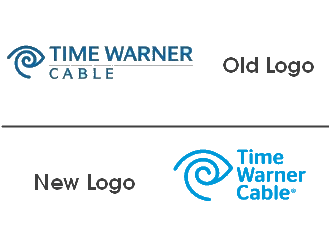
Time Warner Cable has unveiled a new logo that is softer on the eyes and gives greater emphasis to “cable” in the company’s new look for the fall of 2010.

The new logo delivers a brighter, more contemporary appearance and adopts a font that looks a lot like Stag Sans Round by Christian Schwartz.

The Time Warner eye and ear symbol remains, but is more tightly integrated into the new logo, which is more square than rectangular.

Although the new logo appears more easy on the eyes, the fact the company spent some serious money hiring design agency The Brand Union to come up with it will certainly raise eyebrows from irate subscribers facing another round of rate increases from the company starting in January.

At least Time Warner Cable’s new logo is unlikely to get the same reception as the disastrous logo change undertaken by The Gap.

“After dominating the late 1990s and early 2000s, Gap has dropped its iconic logo in favor of something that looks like it cost $17 from an old Microsoft Word clipart gallery,” a source at the Brand Channel said.

The Gap changed the logo back after a week of derision.

Salisbury Launches Fibrant Service Bringing Fiber-Fast Broadband to More North Carolinians

The city of Salisbury on Monday “soft-launched” its fiber to the home service Fibrant to the community of 27,000.  Fibrant joins Wilson’s GreenLight system in giving residents a real choice between Time Warner Cable and phone companies like AT&T, Windstream and CenturyLink.

But the launch did not come without controversy.

The system has drawn some complaints from beta testers about set top DVR boxes that are not working as expected, video channels that are not ready for launch, a porn channel controversy, and some negative anonymous comments that suspiciously draw from the well of telecom talking points complaining about Fibrant’s business model.

Yet Fibrant’s eager group of more than 100 beta testers may quickly become the service’s first paying customers, delighted with the exceptionally faster broadband speeds finally available in the community.

Salisbury, North Carolina

Indeed, some of the biggest complaints are that Fibrant didn’t arrive sooner and the speeds are not fast enough.  The city-owned service is still fighting its way to wire fiber optic cable on utility poles where its competitors have engaged in foot-dragging to move their existing cables to make room for Fibrant.  The company’s waiting list for sign-ups now numbers well into the hundreds.

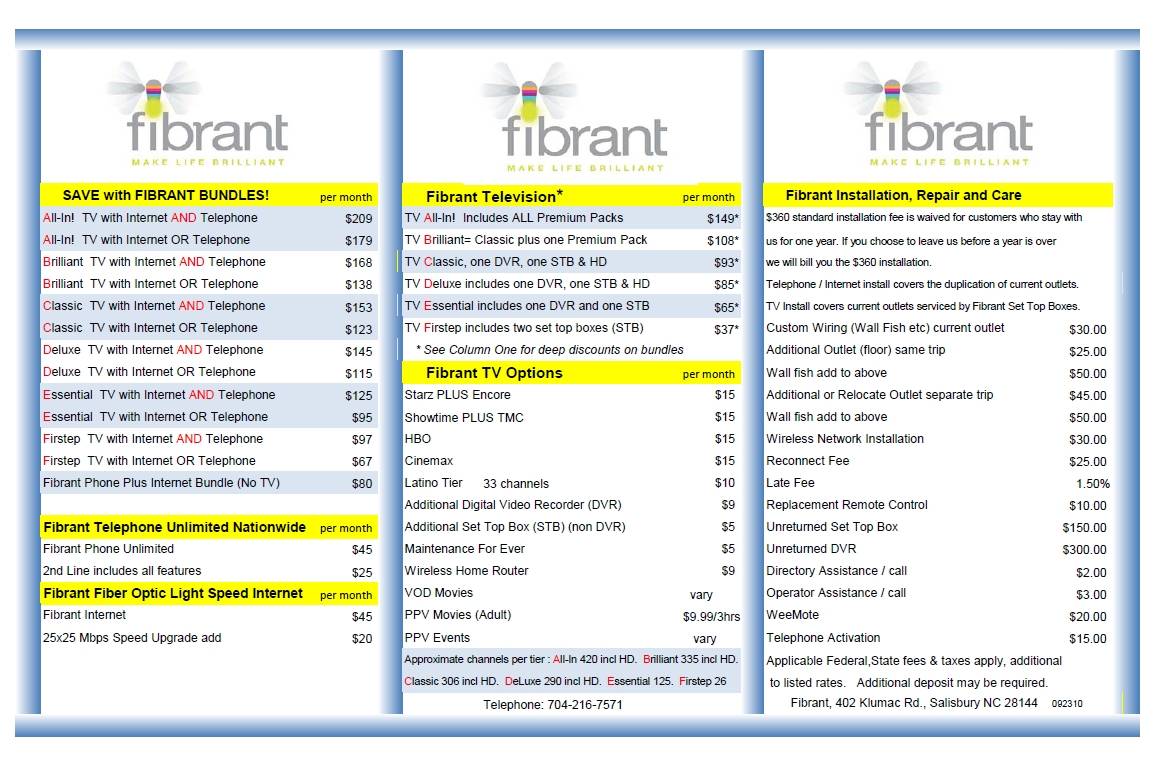
Local media has been buzzing about Fibrant’s published pricing, which undercuts Time Warner Cable’s regular prices but not its promotional deals.  The cable company recently launched a national promotion marketing broadband, cable, and telephone service for $99 for the first year.  That’s about $45 cheaper than a comparable “deluxe” package from Fibrant.

Fibrant marketing director Len Clark told the Salisbury Post they cannot compete with those special deals.

“We can’t afford it,” he said.

But many municipal providers have turned these promotions upside down and told their potential customers their pricing does not come with tricks, traps, or temporary discounts that expire exposing customers to much higher prices down the road.

EPB, the utility provider in Chattanooga, has been successful with everyday pricing that beats Comcast and delivers far better service — faster broadband speeds, better picture quality, and no annoying Internet Overcharging schemes.

Clark hopes Salisbury residents will take notice that their temporarily higher prices include better quality service and faster broadband.

Also important: the money earned by Fibrant stays in Salisbury and could eventually help defray city expenses.

The Post explains the differences between the cable company and Fibrant:

The $99 special includes Road Runner High Speed Online with a download speed of 7 megabits per second and upload speed of .384 Mbps. For a limited time, subscribers can upgrade for free to Road Runner Turbo, boosting their Internet speed to 10 Mbps for downloads and .512 Mbps for uploads.

Fibrant’s standard Internet speed of 15 Mbps for both downloads and uploads is twice as fast as Road Runner High Speed Online and 50 percent faster than Road Runner Turbo. Fibrant customers can go faster — 25 Mbps up and down — for an additional $20 per month.

Both Time Warner’s $99 special and Fibrant’s comparable package offer about 150 TV channels. High definition is free for Time Warner subscribers, while Fibrant customers must pay more.

Time Warner’s package does not include a digital video recorder. Fibrant’s does.

However, people who sign up for the $99 Time Warner special this month get Showtime for free, Dan Ballister, director of communications for Time Warner Cable Charlotte said. Next month, it could be a free DVR, he said.

Time Warner’s phone service offered in the $99 deal has about a dozen features, including the popular caller ID that appears on the TV screen. Fibrant’s phone service offers 17 calling features.
Some area consumers and businesses expressed concern about Fibrant’s broadband speeds topping out at just 25Mbps, which is slow in comparison to many other fiber to the home providers.  They are also concerned the company did not more aggressively price services at launch.

Many municipal providers have learned from the mistakes of others who have tried to engage in all-out pricing wars with large cable companies.  Most cable companies can cross-subsidize rates to ridiculously low, predatory prices to win such pricing wars, making them untenable for municipal providers with bonds to pay back.  But at the same time, municipal providers are in serious danger or obliterating the marketing benefits fiber brings by not showcasing fiber’s capabilities and giving customers the motivation to throw their current provider overboard.  We urge Fibrant officials to consider reducing the price or increasing the speed of Fibrant’s 25Mbps service, which appears too expensive and slow priced at $65 a month.  It needs to be at least $10 less a month to make it an attractive alternative to Time Warner’s inevitable future speed upgrades in the area to 10/1 standard service and 15/2 for “turbo” service, commonly found wherever fiber competes.  Remember, Time Warner also markets “Speedboost” to consumers as though those temporary speeds are delivered consistently.

As EPB quickly learned, the “wow” factor can drive sign-ups, and they doubled their broadband speeds to get more bang for the buck.  Fibrant needs to remember the valuable marketing lesson of driving customers towards “sweet spot” premium tier pricing customers feel they got for a steal.  If 15Mbps service is $45 a month, how many would spring for 20 or 25Mbps for just $5-10 more?  Time Warner learned this selling their “turbo” speed package.  And most importantly of all, Fibrant risks harming their own argument fiber optics brings new businesses and jobs when their current price schedule shows speeds topping out at just 25Mbps.  Admittedly those are residential service offerings, but we encourage them to deliver faster speeds, especially to businesses.
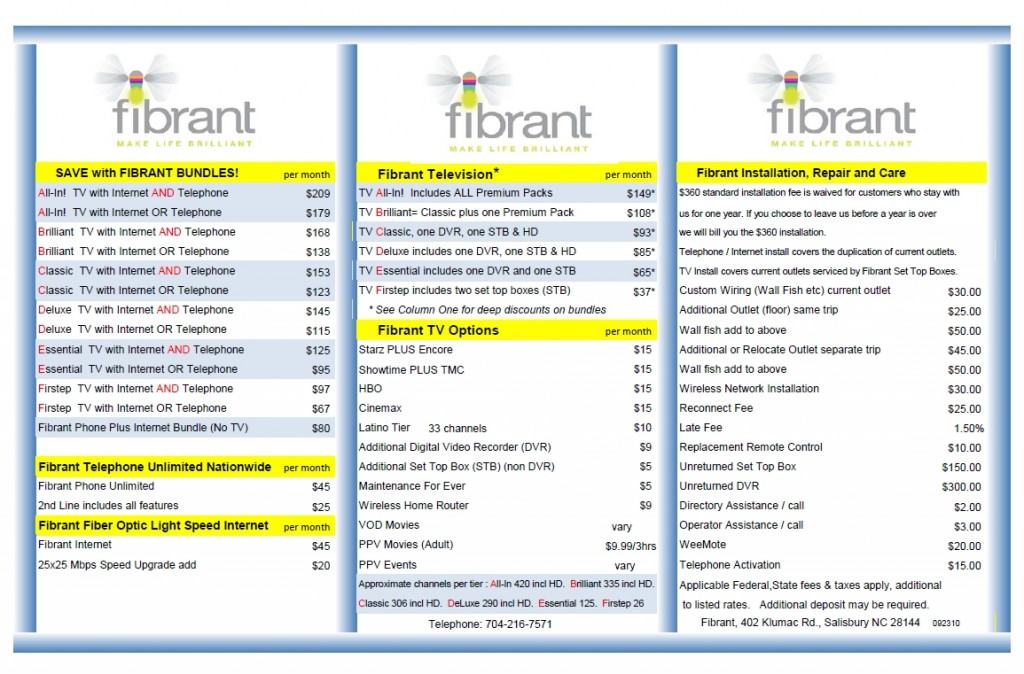
Fibrant's Price List (click to enlarge)

Fibrant even hides the names of its adult channels

The controversy about Fibrant carrying porn pay per view channels also popped up in the local media and drew complaints from conservative residents upset with their local government accommodating such programming.

Fibrant handily dealt with the controversy, noting tax dollars do not pay for Fibrant, it needs to compete with cable and satellite providers who offer such content, and Fibrant has gone beyond the competition in masking even the names of the channels to those who do not want such pay per view programming in their homes.

Time Warner Cable readily provides not only the names of the adult channels they carry, but also includes program titles that leave absolutely nothing to the imagination.  And who can forget Time Warner accidentally promoted its adult content on a free on-demand children’s channel earlier this year.

Fibrant officials also said the right thing telling residents they absolutely do not want to be in the business of telling people what they can and cannot watch.  It’s a personal decision, and the provider will go out of its way to make sure customers who do not want such material coming into their homes need not see a single bit of evidence it’s there.

That goes a long way to ameliorating a politically sensitive issue.

[flv width=”640″ height=”500″]http://www.phillipdampier.com/video/WBTV Charlotte Fibrant Porn Controversy 10-12-10.flv[/flv]

WBTV-TV covered the controversy of Salisbury’s Fibrant service carrying adult pay per view programming.  (3 minutes)

A vocal minority of comments left on the Post‘s website have also attacked the service with a considerable amount of false information.  Some are upset with a $360 installation fee that actually will only be charged to a customer leaving within the first year of service.  Others invented monthly fees that don’t exist, and one actually wrote:

“The field is already crowded enough with Windstream, Time Warner, AT&T and a slew of decent wireless ops. The existing internet providers offer far better deals. Fibrant which was supposed to have high speed fiber optic, really doesn’t. Fibrant’s download speeds are not as fast as Time Warner and higher end Windstream. Fibrant doesn’t seem to want to compete pricewise or service wise–so why bother?”

Of course, Fibrant’s matched upstream and downstream speeds leave Windstream’s DSL gone with the wind.  Time Warner Cable currently delivers standard speeds half that of Fibrant’s lowest speed service (and as you can see in the video below doesn’t even actually deliver that), and AT&T’s U-verse maxes out under the best conditions at real world speeds below what Fibrant can deliver.  Anyone who has used wireless broadband knows speed is the first thing sacrificed.  Unlimited, unthrottled wireless broadband is second.  Fibrant needs some social networking to put out these kinds of BS brushfires before they become accepted memes.  Stop the Cap! helped, at least for today.

Meanwhile, Time Warner Cable officials used Fibrant’s launch to, once again, draw false connections between local government funds paying for a cable system that duplicates existing services.

Back to the Post:

Time Warner is still surprised by “municipal overbuilds,” or city-owned fiber optic networks like Fibrant in Salisbury and Greenlight in Wilson, Ballister said.

“It’s just interesting that during these economic times, when city and county budgets are being cut back, that they would want to spend millions of dollars providing services that are already out there,” Ballister said.

Salisbury borrowed $33 million to launch Fibrant.

Cities have an unfair advantage in offering communication services, Ballister said.

“We’re all for competition, as long as people are on a level playing field,” he said.

Cities pay no property or income taxes. They can operate the utility at a loss and cross-subsidize from other areas of government, Ballister said.

“They can level taxes on citizens to recover their operating costs,” he said.

Fibrant is expected to operate at a loss for three years and have a positive cash flow by year four. It will take longer to make a profit, Clark said.

Eventually, Fibrant is supposed to generate revenue for the city.

Cities in the fiber optic business also can hike the fees their competitors must pay to get access to their subscribers, Ballister said.

“They are the gatekeepers to rights of way and pole attachments,” he said.

The company has no specific examples of fee hikes to hurt Time Warner, but “these are valid concerns that exist right now,” Ballister said.

It’s ironic Ballister complains about utility pole fees considering Fibrant is currently a victim of Time Warner’s slow progress making space on those poles to accommodate the city’s fiber optics.  No vendetta by city officials is apparent, as they patiently wait for the cable company to handle its responsibilities.

Ballister should not be surprised the city of Salisbury did for itself what Time Warner Cable refused to do in the community.  Just like in Wilson, Salisbury city officials pleaded with the cable company to deliver improved service in the community but it fell on deaf ears.  Many sections of the city center cannot access reliable broadband from the cable company to this day.  But most of them can now get service from Fibrant.  Cable companies like Time Warner have spent millions of subscriber dollars trying to legislatively ban networks like Fibrant, fearful of the competition they can bring.

Salisbury Assistant City Manager Doug Paris notes the enormous amount of money poured into North Carolina’s state legislature trying to ban projects year after year.  That Time Warner money could have made a real difference for residents and small businesses in Salisbury and other parts of North Carolina if used to improve service, not fight competition.

Kirk Knapp of Tastebuds Coffee and Tea doesn’t care what Time Warner does with the money at this point, so long as he can finally be liberated from them.  He told the Post he feels “held hostage by Time Warner.”

“Time Warner has the worst customer service I have ever dealt with,” Knapp said in an e-mail to the Post.

“Fibrant may have these same kind of issues, however I can actually go to the source to deal personally with someone who is vested in the community, not spend two hours on the phone and never solve the problem as I do with TWC,” he said.

“Even if pricing is higher, I would make the change. Price is important, but quality and service is tantamount.”

[flv width=”640″ height=”500″]http://www.phillipdampier.com/video/Fibrant Intro 11-2-10.flv[/flv]

Folks from the Walser Technology Group, Inc. in Salisbury gave an informal introduction of Fibrant on its YouTube channel, including a very revealing speed test comparing broadband service from Fibrant with Time Warner Cable.  (7 minutes)

Pay Per View: Cablevision-Fox Programming Dispute Post-Game Wrapup Show

Phillip Dampier November 1, 2010 Cablevision (see Altice USA), Competition, Consumer News, Editorial & Site News, Online Video, Public Policy & Gov't, Video Comments Off on Pay Per View: Cablevision-Fox Programming Dispute Post-Game Wrapup Show

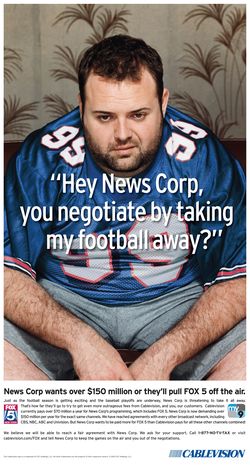
A Cablevision ad against Fox

Cablevision and Fox finally settled their two week programming dispute Saturday when two local Fox-owned broadcasters and an assortment of cable channels returned to suburban New York area-television screens.  Cablevision ultimately capitulated to Fox’s increased programming fees and grumbled it was stuck paying an “unfair price” for the programming.

“In the absence of any meaningful action from the FCC, Cablevision has agreed to pay Fox an unfair price for multiple channels of its programming including many in which our customers have little or no interest,” Cablevision said, adding that it “conceded because it does not think its customers should any longer be denied the Fox programs they wish to see.”

But in reality, Cablevision subscribers who suffered through the two week outage will ultimately pay the price for Fox-owned programming in the next round of cable company rate increases.

While Cablevision subscribers can now watch the remaining games of the World Series from home, the cable-broadband industry post-game wrap-up show is now underway, surveying the winners and losers.

Let’s take a look:

WINNER: Fox Networks

Fox got everything it wanted, and then some, from Cablevision.  Consumers never take the side of the cable companies that have overcharged them for years. All most know is that when their favorite channels are not on the cable system that charges them more than $50 a month for service, it’s the cable company’s fault. While the terms of the final deal were not disclosed, it’s a safe bet Cablevision is paying rates even higher than those charged to New York’s other cable company Time Warner Cable.  The cave-in by Cablevision means Time Warner and other cable systems will likely also see higher rates for Fox programming now set as a precedent by Cablevision.  So will telco and satellite TV providers.  That’s money Fox will take to the bank.

LOSER: Cablevision

Not only did they alienate their customers, at one point telling them to watch Fox programming on third party websites, they are now facing a $450 million class action lawsuit from subscribers (filed by an attorney with prior connections to Fox parent company News Corporation.)  It is difficult to feel sympathy for a cable company deprived of Fox programming that still charged subscribers full price for channels they could not watch.  One industry executive praised Cablevision for “taking one for the team,” a phrase consumers have heard before to defend corporate pickpocketing.

Cablevision was actively promoting ivi last week through their customer service representatives

WINNER: ivi Networks

Stop the Cap! reported on upstart ivi several weeks back.  The service carries all of metropolitan New York’s broadcast stations and Cablevision ended up recommending its blacked-out subscribers buy an ivi subscription to watch Fox-owned broadcast channels no longer on the cable lineup.  The new online cable system, which started in September, added New York subscribers in droves, annoying Fox to the point of sending a cease-and-desist letter to Cablevision CEO James Dolan to get cable company representatives to stop recommending the service, which Fox claims is “illegal, and perhaps criminal.”

WINNER: Verizon & Satellite Dish Companies

Many subscribers fleeing Cablevision for competitors have probably left for good, especially if they scored substantial discounts and promotions during their first year or two of service.  Verizon FiOS always faced resistance from customers not wanting to devote the time needed to install the service, and when customers have been with a cable company for 20 or more years, change does not come easy.  But die-hard sports fans already inconvenienced by earlier channel interruptions pulled the trigger just to get away from the endless programming disputes.

Verizon scored new customers over the dispute.

LOSER: Comcast-NBC Merger

Lawmakers set to either applaud or introduce roadblocks to the proposed merger between Comcast and NBC saw first hand what can happen when big media companies duel it out over money — millions of customers can be left in the middle with nothing to show for it.  Bloomberg reports the dispute could force significant concessions to prevent or limit such disputes in the future.  U.S. Representative Maxine Waters, a California Democrat, said the Fox-Cablevision spat made her “increasingly concerned with the potential harm” if a dispute arose between an enlarged Comcast and competing video provider. In a letter to FCC Chairman Julius Genachowski last week, she called for “substantive and enforceable conditions” to preserve competition.

WINNER: NFL Networks – Where is Our Binding Arbitration?

Cablevision’s demands for binding arbitration to settle their disputes with Fox rang hollow, if not hypocritical, for NFL Network officials, who have been calling on Cablevision for the same binding arbitration the cable operator demanded of Fox.  The NY Post quoted an unnamed executive at the cable network: “Cablevision has been urging Fox to agree to binding arbitration — the same strategy we’ve been offering Cablevision — but we continue to get sacked.”

LOSER: The Federal Communications Commission

Despite demands from most consumer groups and Cablevision to intervene in the programming disputes, the FCC delivered a rebuke telling all sides to stop with the stunts and start with serious negotiations.  Beyond that, the agency did what it has done best under the Obama Administration: sit on its hands.

THE BIGGEST LOSER: You

With the grandstanding by both sides finally over Saturday — the shouting and expensive publicity campaigns wrapped up and put away for next time (KeepFoxOn.com now renders a blank page) — the person left standing with the bill in hand was you.  Fox wrapped the costs of its expensive publicity campaign into the rate increase Cablevision finally conceded to paying.  The bags of money to be handed from the Dolan family that owns Cablevision over to Rupert Murdoch will be filled from your pockets.  And there is no end in sight to future disputes raising programming costs even higher than ever.

[flv width=”640″ height=”500″]http://www.phillipdampier.com/video/Bloomberg Cablevision Fox Dispute 11-1-10.flv[/flv]

Bloomberg News delivers three reports detailing the impact of increased programming costs on cable bills, inaction by the FCC, and whether Americans are fleeing cable TV for online video instead.  (10 minutes)

Time Warner Cable Inadvertently Boosts Maine Governor Hopeful Shawn Moody… for 90 Minutes

Phillip Dampier November 1, 2010 Consumer News, Video Comments Off on Time Warner Cable Inadvertently Boosts Maine Governor Hopeful Shawn Moody… for 90 Minutes

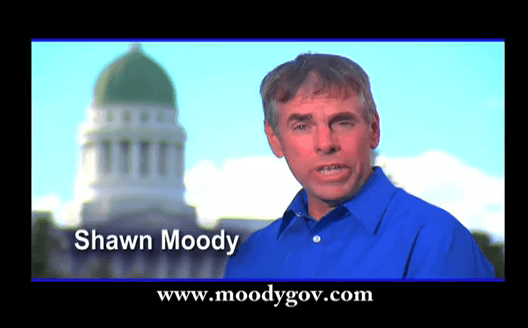
Advertising money cannot buy: a technical problem helped Maine viewers get acquainted... real acquainted with independent candidate Shawn Moody.

Viewers of Bangor’s CBS affiliate watching on Time Warner Cable were treated last week to a one and half hour endorsement of independent candidate Shawn Moody thanks to a technical snafu.

A Time Warner Cable spokesman said an equipment failure caused WABI-TV’s signal to lock up at around 5:40am last Tuesday.  At the time, an ad for Moody was on the air and a frozen picture was delivered to viewers until the problem was fixed at around 7:30am.

“The hour and a half ad for Moody was the biggest exposure this candidate has received all year, all because of a cable company equipment failure,” writes our reader Stefan from Bangor.  “Although the picture was frozen, the sound worked normally so the whole thing was surreal.”

The cable company apologized for the failure and noted there was no implied endorsement of the candidate.

“The signal freeze had nothing to do with the content,” said company spokesman Andrew Russell. “It just happened to be what was on the screen when it happened.”

[flv]http://www.phillipdampier.com/video/WABI Bangor Time Warner Fixes Glitch 10-28-10.flv[/flv]

WABI-TV explains to its viewers what happened when a political ad got stuck on their TV screens for an hour and a half last week.  (1 minute)

Netflix to Broadband Industry: Please Don’t Kill Us With Usage Caps

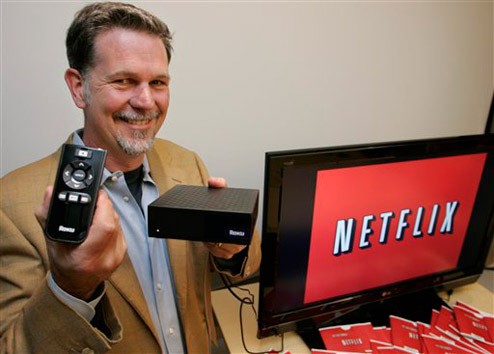
Reed Hastings, CEO of Netflix, shows off the company's growing reliance on broadband streaming, moving away from its original DVD-by-mail rental business.

Last week, Netflix CEO Reed Hastings was showered with questions from Wall Street during the company’s third quarter-results conference call.  At the top of the agenda — the company’s shifting business model away from DVD rentals-by-mail gradually towards instant on-demand streaming over broadband networks.

At issue is how Netflix can survive a broadband industry that controls the pipeline Netflix increasingly depends on for its continued existence.

Hastings tried to assuage his cable competitors by telling investors the company is hardly a threat to cable-owned movie channels and basic cable.  But he admits ultimately the company will be in a real mess if Internet Overcharging schemes like usage caps and speed throttles limit the amount of content customers can affordably access:

“We have some vulnerability depending on capped usage and what happens. Comcast has a cap, but it’s 250 gigabytes and so most users feel that they have an unlimited experience, and it gives us plenty of room to deliver a high-def stream. On the other hand, AT&T Mobile data on an iPad is now capped at two gigabytes, [and that’s] not enough room to deliver hours and hours of high-def.  We are definitely sensitive [to the issue] in the long term [whether] the industry ends up at 250 gigabytes or two at the other extreme.”

There is some limited evidence Netflix’s success in Canada is already being tempered by usage limits near-universally imposed in the country.  Rogers, a major cable company in eastern Canada, even reduced usage caps for certain tiers of service around the same time Netflix announced its imminent arrival north of the border.

Barry McCarthy, Chief Financial Officer notes fewer Canadians are converting their free trials of Netflix’s streaming service into paid subscriptions.

“We anticipate we are seeing slightly lower conversion rates in Canada than we see in the U.S.,” McCarthy told investors.

As Netflix moves towards higher quality video streams, the amount of data consumed increases as well.  In Canada, that eats into broadband usage allowances, and fast. As soon as customers start receiving warnings they are nearing their monthly usage limit, or receive a broadband bill with overlimit fees, Netflix is likely to lose that customer.

Cable and phone companies in Canada are already warning customers that online video is a major culprit of exhausted usage allowances.  Both are also happy to remind their customers they are happy to sell them access to unlimited video — through cable or telco TV subscriptions.  Rogers owns a major chain of video rental stores as well.

What can Netflix do about usage capped broadband?  Not much, admits Hastings.

“There is a not a lot of improvement in compression techniques. But what we can do is just deliver a lower bit stream, a lower quality video experience. So, for example, not too high-def. So, that’s one possible way to partially mitigate that impact,” Hastings said.

Netflix will soon face increasing competition, especially from the cable industry’s TV Everywhere projects, and they won’t deliver a lower quality video experience.

Time Warner Cable and Comcast this month both formally introduced their respective video on demand services.

Comcast’s Xfinity online service arrives after months of beta testing.   Comcast customers can watch video selections from nearly 90 movie and television partners, including programming from HBO, Viacom, and Paramount.  Ultimately, the online video service is expected to deliver access to dozens of cable channels and individual programs from studios and networks at no charge to those who subscribe to a cable television package.

Time Warner Cable took a more modest approach last week by introducing ESPN Networks to its cable subscribers who register with the cable company’s MyServices website.  The new customer portal allows subscribers to review and pay their cable bill, add new services (but not cancel existing ones), remotely program DVR boxes, and also verifies subscriber status for future cable subscriber-only online video programming.

Netflix may soon find itself at the mercy of the cable and telephone companies which deliver broadband access to the majority of Americans.  Not only is it difficult to convince customers to pay a monthly fee for programming the cable industry may eventually give away for free, it may be downright impossible for Netflix to survive if those providers decide to squeeze the customer’s pipeline to unlimited Netflix content.

[flv width=”640″ height=”380″]http://www.phillipdampier.com/video/Comcast Xfinity Ad Spot 10-2010.flv[/flv]

Comcast Ad Introducing Xfinity Online.  (1 minute)

Search This Site:

Contributions:

Recent Comments:

Your Account:

Stop the Cap!