Home » rate hike » Recent Articles:

Boston’s Cable Conundrum: Mayor Upset With Comcast Rate Hikes, But Did Little to Bring Competition

Menino

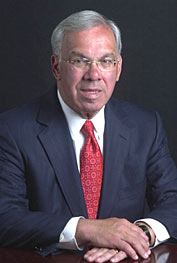
Boston Mayor Thomas Menino has problems with Comcast.  The cable operator, long a dominant player in the city of Boston, has been raising basic cable prices for the last several years, and the mayor’s office has had enough.  This week Menino filed a petition asking the Federal Communications Commission to give the city “emergency control” over the price of basic cable service in Boston — the only control permitted in the largely deregulated cable television marketplace.

Menino waved a study done at the behest of the city showing residents were paying substantially higher prices for the lowest level of service from Comcast.  Basic Service, which includes 37 local over the air stations and a handful of shopping and public access channels costs $15.80 inside city limits — up from $9.05 in 2009.  In nearby Cambridge, the same service costs $7.30 a month.  What’s the difference?  Cable rates are completely deregulated in the city, but smaller communities around Boston lack sufficient meaningful competition, so they are permitted by law to continue regulating rates for the lowest tier: Basic Service.

Now Menino wants those rates brought back under control for the benefit of seniors and low income residents, among the 10,000-15,000 local homes that subscribe to the economy service.

It’s just the latest challenge for Boston, which is among a few cities along the coast of the northeastern United States not benefiting from aggressive broadband and video competition between the phone and cable company.  Just over 200 miles away, metropolitan New York and the bedroom communities in that state, as well as New Jersey and Connecticut, have access to super fast broadband from Verizon FiOS, Time Warner Cable, Cablevision, and Comcast — the latter predominately serving greater Philadelphia.

Boston has been bypassed for Verizon FiOS, is ignored by other potential cable competitors, and is stuck with poor-performing cable overbuilder – RCN, which has focused most of its efforts on multi-dwelling apartment and condo units in the city.  The rest of Boston gets ‘take it or leave it’ service from Comcast or DSL from Verizon.

Comcast was quick to respond to Menino’s call for reregulation, noting they provide $5 senior discounts for their cable customers and offer cheaper service than the alternatives — $17.50 a month from RCN or between $30-35 for promotions from DirecTV and DISH Satellite.

Menino’s dealings with telecommunications companies in Boston have run hot and cold for years.  In February, Menino appeared with Comcast senior vice president Steve Hackley to celebrate the opening of a Digital Connectors program for up to 2,800 low income households, paid for by federal stimulus grant money.  Under the program, students who complete computer training courses receive discounted Comcast Internet service for $10.95 a month for the first year and $15.95 for the second year.

Boston

Menino’s office has often been a watchdog when it comes to Comcast fulfilling its franchise obligations, and the city had high hopes competition from RCN would extend a choice of cable providers to most city residents.  That has not happened.

The city’s other telecommunications provider, Verizon, has been in contention with the city for several years.  The trouble began in 2007 when Menino declared war on property tax exemptions for utility poles dating back to 1915, granted to telecom companies like Verizon.  Four years later, that battle has culminated in Verizon literally wiring its fiber optic FiOS service around the city of Boston, refusing to deliver service inside it.

The promise of Verizon fiber has often gone unfulfilled or delayed in many larger cities, subject to bureaucratic delays not experienced in smaller communities.  Some towns and villages in Massachusetts signed franchise agreements just a few months after the company came knocking.

One local official, not authorized to speak publicly on the matter, told Stop the Cap! many communities welcomed Verizon’s fiber optic initiative with open arms.

“You have to understand there is a different mentality among government officials in smaller towns than there is among larger cities,” the official tells us. “In our town of 35,000 when Verizon offered to wire competitive service in our area, we wanted to know where to sign and when they could get started.”

The official says the local government was concerned about making sure Verizon repaired any damage to local infrastructure, abided by local zoning rules, and guaranteed they would not bypass parts of the town.  Negotiators also fought for funding to upgrade equipment for the community’s public access channels, but never went into the negotiations thinking about how much they could extract from the phone company.

“In larger cities in this state, there is a definite mentality that Verizon represents a golden goose ready and willing to lay golden eggs in return for franchise agreements,” the official told us.  “Maybe that is true, but when you are in a smaller town, you recognize the degree of willingness to invest capital to tear out old wires and replace them with fiber is far less here than a city like Boston, which has the potential of many more customers.”

Boston, like other large cities, prepared for protracted negotiations with the phone company over the new fiber service.  At the same time, Mayor Menino infuriated Verizon when he won his property tax lawsuit against the company, collecting $5 million in tax payments that one city official rubbed in.

Ronald W. Rakow, Boston’s commissioner of assessing, told the Boston Globe at the time: “We will actually be sending a bill to them for that later today,’’ Rakow said. “Don’t want to let the ink dry.’’

No Verizon FiOS for Boston

The argument over property taxes may have been the final straw for Verizon FiOS in Boston.  Menino suspected as much, telling the Globe “they insinuated that we weren’t going to get it because of my position on telecommunications.’’

Even then-Verizon CEO Ivan Seidenberg warned the city during a speech at the Boston College Chief Executives’ Club of Boston “to be careful when considering new taxes or regulations.”

Verizon has since stopped expanding its FiOS service to new cities.

“We knew as the financial crisis grew we were smart to sign up earlier rather than later, because if we didn’t, we would never have the service today,” the local official tells us.  “I have sympathy with local officials in every city trying to do what is best for their residents, but anyone who understands wired telecommunications should know these kinds of projects are exceedingly rare — grab them when you have the chance.”

Just a few years later, the impact of earlier decisions not to hurry competition into the city of Boston and the city’s tax policies have become clear:

  • Comcast may be forced to reduce their Basic Service rate, but nothing prevents them from increasing Digital Service cable rates to make up the difference;
  • RCN’s network has languished, providing competitive choice to just 15,000 local residents.  Comcast serves at least 170,000;
  • Verizon has no plans to offer FiOS in the city indefinitely;
  • Menino’s victory claim that Verizon should pay its fair share in property taxes seems less victorious today as the phone company began passing on the new taxes to ratepayers as a “Massachusetts Property Tax Recovery Surcharge” in March, 2010.
  • No other competitor has appeared on the horizon willing to take on Comcast in the city of Boston.


Time Warner Cable’s Backdoor Rate Hike in Kansas City

Phillip Dampier April 26, 2011 Consumer News, Video 1 Comment

As Time Warner Cable continues it channel re-alignments in markets across the country, some subscribers are coming up with fewer channels after the changes, but they are still paying the same cable bill — for fewer channels.

“It’s classic cable bait and switch,” shares Stop the Cap! reader Kyle from Kansas City, who spent hours fiddling with his TiVo box after Time Warner re-mapped the area’s channel lineup earlier this month.  “TiVo really underlined it for us, albeit unintentionally, when we discovered several channels no longer available to us unless we paid extra.”

While Time Warner Cable moved Kansas City to its theme-based lineup, which places similar channels together and aligns HD channels with their standard definition counterparts, they also used the occasion to re-tier some of their “free” channels into mini-pay tiers.

Among the channels out of the digital cable standard lineup:

  • Encore MoviePlex — Seven theme-based commercial-free movie channels;
  • IFC — Independent Film Channel
  • Fox Movie Channel
  • Flix
  • RFD-TV
  • Ovation

The movie channels are being re-tiered in a mini-pay package called TWC Movie Pass, which will eventually sell for $4.95 per month after some early promotional discounts.  RFD and Ovation are part of a new “Digital Choice” tier.

“It’s the usual deception from Time Warner, which claims to sell you ‘free HD’ service without also telling you a rented set top box is required, which adds at least $7 a month for the ‘free HD’ channels,” Kyle says.  “Now they don’t even give you that as they start stripping networks away from their HD lineup to sell you for more money.”

Some subscribers are less than happy with the outcome, considering they now have fewer channels and are still paying the same cable rate they were before the channel change.

“It’s a shell game they always win — find the channels, keep your eye on the channels, wait — they are gone.  Pay us anyway.”

Aaron Barnhart, who writes for the Kansas City Star, called it a PR failure.

RFD-TV: Buried in a backwater mini-pay tier few will pay extra to receive.

“Time Warner proved once again to be its own worst enemy, hyping all the good things and leaving it to customers to discover the not-so-good-things on their own,” Barnhart wrote.

Time Warner’s reasons for the channel changes, reported by Barnhart, seemed less than convincing to customers.

Time Warner’s spokesman Matt Derrick pointed out that “in most places, Encore is bundled as a premium package with Starz.” Liberty Media, which owns both Encore and Starz, used to offer Encore to cable operators as a digital-cable value alternative to premium channels. But that has changed, and Time Warner negotiated this 12-month rate with Liberty to encourage customers to go along with the switch.

Derrick explained that Digital Choice was designed as a low-cost alternative to its larger Digital Variety package, where the same channels are also available.

“Wait, that doesn’t even make sense,” Kyle argues.  “Time Warner negotiated with Liberty to turn a free set of channels into a pay tier to encourage us to go along?”

Kyle doesn’t think the reasons for Digital Choice made any sense either.

“How many people are demanding to pay extra for Ovation and RFD, exactly?” Kyle wonders.  “What is missing from all this is why our rates did not decrease to compensate us for the lost channels.”

Kyle says the $4.95 a month rate for TWC Movie Pass may not seem as much as a pay network, but he reminds us Time Warner will continue to collect money from every subscriber for the channels they’ll no longer get.

“So if it costs them $4.95 a month for Encore, we’re all still paying that because our bill isn’t going down; if we actually want those channels, that costs another $4.95 — $9.90 a month.

[flv width=”480″ height=”290″]http://www.phillipdampier.com/video/WLWT Cincinnati Time Warner Channel Realignment 4-18-11.mp4[/flv]

WLWT-TV in Cincinnati explains to certain Ohio viewers how to accomplish a needed channel “re-scan” that comes along with the channel re-alignments Time Warner Cable is performing across the country.  (2 minutes)

Time Warner Cable Blames Pole Fee Increases They Won’t Pay for Future Rate Hikes

Phillip Dampier April 19, 2011 Public Policy & Gov't, Rural Broadband Comments Off on Time Warner Cable Blames Pole Fee Increases They Won’t Pay for Future Rate Hikes

Time Warner Cable is blaming an increase in pole attachment fees in upstate New York for increasing the cost of doing business, despite the fact those increases will not apply to the cable company.

National Grid, which also does business as Niagara-Mohawk, is raising rates for third-party companies to attach new lines to the poles the electric utility owns.  The power company says it is the first rate increase since 2007, and covers the cost of engineering, safety reviews, and ongoing infrastructure costs.

The Albany Times-Union quotes Time Warner Cable spokeswoman Lara Pritchard’s reflexive complaints about the rate increases.

“Inevitably, any price increase to poles will impact our costs to bring service,” Time Warner spokesman Lara Pritchard said Monday. “At this time, we have no plans to adjust fees. We periodically assess all of our associated costs to do business, as any company would, and this would factor into that assessment.”

If so, it should be by a factor of zero because the pole attachment fee increases apply only to companies seeking to place new lines on utility poles, not those maintaining or replacing existing cables.

The New York Public Service Commission approved the utility’s request for a change in their “Make Ready” rates, which cover costs associated with new projects. Existing companies, including Time Warner Cable will continue to pay a locked-in rate of $11.13 per pole, which represents no change.

Verizon acknowledged as much, noting the company’s existing fiber and copper wire lines are exempt from the rate hike.

But not every company is being held harmless from the rate increases.

Major projects to extend fiber broadband service to rural Franklin and St. Lawrence counties in upstate New York could be at risk because Niagara Mohawk, the dominant power provider in the region, is raising the rates to place fiber on some 22,000 poles required for the network.

Slic Network Solutions, the Development Authority of the North Country and Ion HoldCo LLC are facing at least $3.5 million in higher pole attachment expenses the utility said nothing about when they reached an agreement with National Grid in December.

Taxpayer grant money is backing the projects, including Slic’s 136-mile network covering parts of Franklin County and another 660-mile project in St. Lawrence County.  Ion operates a fiber optic broadband backbone that extends throughout upstate New York.

Keith J. Roland, an attorney with the Herzog Law Firm representing the three companies, has filed a formal complaint with the N.Y. State Public Service Commission, calling the rate increase “unjust, unreasonable, excessive, and unlawful.”

Roland says the increased costs, which he calls “arbitrary,” could threaten the viability of the projects.

“Without access to those poles, SLIC, DANC and Ion and almost any other telecommunications, cable TV and Internet provider in rural area of Niagara Mohawk’s territory would be driven out of business or effectively be precluded from doing business,” the complaint states.

Updated: Time Warner Cable Rate Hike Madness: $16 Million for Ohio Man, 1,568 Percent for Kentucky Schools

Phillip Dampier March 28, 2011 Consumer News, Data Caps, Public Policy & Gov't 5 Comments

Bill Shock

Time Warner Cable has redefined bill shock for two of their customers this week as an Ohio man found the cable company trying to bill his credit card $16 million dollars and the Madison County, Ky., Board of Education found their broadband rate going up as much as 1,568 percent.

One of these was a mistake, the other represents a potential nightmare.

Lt. Daniel DeVirgilio received notification from Time Warner Cable his credit card didn’t have a big enough credit limit to sustain the $16,409,107 in charges the cable company tried to get authorized.  The Beavercreek, Ohio resident was taking the billing foul-up in stride, joking with the Dayton Daily News that he probably should have gotten Showtime thrown in at those prices.

Time Warner Cable Southwest Ohio officials on Thursday attributed the $16.4 million figure to human error, according to the newspaper. An employee typed in the wrong number for the amount owed, which caused the company’s automated system to generate the letter.

Unfortunately for DeVirgilio, Time Warner left him on hold for nearly 40 minutes trying to straighten out the billing mess.  No harm was ultimately done to his credit card, but the 26 year old remains concerned Time Warner could have reported the “delinquent” charge to credit reporting agencies.

Madison County, Ky.

The relatively painless resolution DeVirgilio got in Ohio is unlikely to repeated for school officials in Kentucky, reeling from news Time Warner Cable is demanding an enormous rate increase for Madison County Schools’ fiber optic-based broadband network.

The Richmond Register reports local officials were stunned when the cable operator refused to renew their existing contract, which provides service at a cost of $32,000 a year to county residents.  The cable operator instead announced it wanted the school system to pay at least 500 percent more to continue the same level of service in 2011 and beyond: $168,000 a year for county taxpayers with a five year term commitment.

School officials discovered Time Warner Cable was the only provider in the region capable of delivering the type of service the school system requires, and that has given the cable company a safe position to raise prices — dramatically.

Even worse, the Kentucky Department of Education informed the district it could not agree to a five year term even if it wanted to.  Year-by-year service was the only way forward, according to county officials.

In response, Time Warner jacked up the price again — this time by 1,568 percent, potentially costing Madison County taxpayers a whopping $504,000 annually.  Telephone ratepayers will also deliver a piece of their monthly phone bill to the cable operator from Universal Service Funds that will be diverted to cover at least another $750,000 in fees sought for an annual contract.

“It’s been a very frustrating situation from the beginning,” Superintendent Tommy Floyd told the newspaper. “This makes it very difficult for us to continue our ongoing commitment to serve children. I’m going to continue on behalf of Madison County Schools to find the lowest cost provider of services.”

Time Warner also knows time is running out for the school district.  The county must sign a new contract by June 30th or lose its fiber network.  That could be a disaster for the school district.

“We use [the network] all day long in each of our buildings,” Floyd said.

State officials wrote a letter to Time Warner Cable demanding an explanation for the rate increase and stating it was unacceptable.

The state and school officials are still waiting for a response from the cable company, which so far has yet to respond.

[Updated 11:30am ET:  Stop the Cap! received a response yesterday afternoon from Cynthia Godby, Communications Manager for Time Warner Cable in Cincinnati.  In the cause of fairness, and with her permission, we are including her response in full, below:]

“I just read your article about Time Warner Cable and Madison County Board of Education and want to share the facts below about the situation.

  • Their current arrangement was made with Adelphia and is not a service that TWC offers. TWC acquired the contract but does not market dark fiber service, and therefore, is phasing out its support of the product. The old Adelphia contract we were operating under allowed for either party to terminate with 6 months written notice. In December 2011 we provided them with written notice that we would no longer be able to support their current service starting July 1st 2011. This is a seven month notice.
  • It is inaccurate to portray this as a price increase – it’s a different product that requires a new infrastructure.
  • They sent out an RFP asking for pricing for 3 or 5 yr term. We believe we submitted a very competitive bid. In fact, it is our understanding that our bid was among the lowest submitted.
  • Over and beyond responding to the RFP requirements, TWC has also suggested several more efficient and cost-effective service options that we feel would meet all of the Board’s needs at a lower price point. We continue to see these service options as excellent alternatives to the stated RFP requirements.
  • While they verbally awarded us with the contract, they then wanted to change the terms 4 days prior to the scheduled signing. In response to their request, we submitted a revised bid to reflect a one-year term. As is the case with most all telecommunications providers, a short term contract is priced higher than a long-term contract, simply based on the rate of return on investment.
  • We sincerely hope to continue our service relationship with the district and remain committed to working with them to find the best TWC product and price point that meets their needs.”


Updated: Dollar-a-Holler Industry Lobbyist Attacks North Carolina’s Community Networks

Phillip Dampier March 14, 2011 Astroturf, Broadband Speed, Community Networks, Competition, Consumer News, Editorial & Site News, Public Policy & Gov't, Rural Broadband Comments Off on Updated: Dollar-a-Holler Industry Lobbyist Attacks North Carolina’s Community Networks

Bennett

We received word this afternoon proponents of community-0wned broadband in North Carolina were under attack by the ironically-named Innovation Policy Blog from the Information Technology & Innovation Foundation (ITIF), a thinly-disguised, industry-funded think tank.

Charges and counter-charges are flying fast and furious. Well-travelled muni broadband consultant Craig Settles says the authors are in the pockets of Time-Warner Cable, and urges people around the country to lobby NC legislators to kill the bills:

The battle is now fully joined in NC. But it’s not just their fight, and it’s not a fight solely about broadband. This fight affects everyone who believes that communities deserve the freedom to choose their own best solutions to key problems involving economic development. Communities own the problems of this terrible economy.

Philip Dampier, the supporter of former New York Congressman Eric Massa who joined the broadband policy fight when Time Warner was experimenting with metered pricing, is even more shrill than Settles.

I suppose being called “shrill” is a little better than “mean and nasty,” even if perennial industry defender and comment troll Richard “I Don’t Work for a K Street Lobbyist, But I Do” Bennett doesn’t bother to spell my name correctly.

Bennett’s read of North Carolina’s H.129 is that it’s a minor little bill that does no harm.

I don’t see what our perpetual network operator-haters are so worked up about, although I can certainly see that the network equipment vendors want more outlets for their gear; more power to them. The bills actually don’t place any restrictions at all on unserved communities (where 90% or more can’t get broadband) who want to build themselves a first-class, triple-play enabled, broadband network or anything else better than dial-up. If there weren’t such an exemption, I’d be just as riled as the people I’ve quoted.

Supporting innovation from the right kind of companies.

I suspect Bennett may have trouble seeing the facts on the issue because they are obscured by the $20,000 stipend he picked up from Time Warner Cable.  That is in addition to his regular salary provided by players with a dog in the fight.

Unfortunately for those who accidentally stumble their way into the warped world of “innovation” some of our biggest telecommunications companies have in store for us, Bennett forgets to disclose who pays him.

Our argument (the one that comes without industry money-strings attached) is explored in great detail here.

For the benefit of those who don’t want to dirty themselves wading through the ITIF’s blog, here is our response in full:

Richard and I have discussed several issues impacting the broadband community over the past two years.  He always takes the side of the industry that pays him well to serve as their mouthpiece, and I represent actual consumers and do not take a penny of industry money.

The ironically named “Innovation” blog attacks the very innovation that community broadband brings to hard-pressed communities in North Carolina who want to reinvent themselves from their tobacco and cotton-past.  The reason these networks exist is because existing companies refused to provide the service needed to accomplish this task.  Richard has no idea what these communities and ordinary North Carolina consumers are going through because his article exists merely as a “drive-by” hit piece that mischaracterizes the bill, the people that oppose it, and leaves his readers thinking he doesn’t have direct ties to a company that helped write the bill.

Gone undisclosed: Bennett accepted a $20K stipend from Time Warner Cable and does work on behalf of a K Street lobbyist.  That’s “dollar a holler” reporting.

Folks, follow the money.  If a Big Telecom company is involved, Richard reflexively adopts their position, often to the detriment of consumers.  He is also factually wrong.

1) Wilson did not “buy” their fiber to the home network, they built it.
2) Davidson and Mooresville bought a bankrupt Adelphia system that needed major upgrades.  Time Warner would have done precisely the same thing the community did, only they would pay for it with rate hikes across the state (except in Wilson which has avoided rate increases from Time Warner precisely because GreenLight is running there).
3) Salisbury has had a waiting list for signups.  Not bad for a “failure.”  EPB just finished their award-winning network in Chattanooga ahead of schedule.

The public-private partnership idea has no opposition, except among providers who won’t hear of anything they don’t own, operate, and control outright.  It is telling ongoing negotiations over Ms. Avila’s Time Warner-written bill have broken down because she still objects to language that would keep those networks in business to create those kinds of success stories.

All of the pipe dreams in this piece come from the author.  I’m not an industry consultant.  I just know a much better deal when I see one.  GreenLight, EPB, and Fibrant all deliver better service than the cable company or phone company and the money paid to them remains in those communities.  They also deliver unlimited service, an issue that now becomes more important than ever with AT&T’s attempt to launch its Internet Overcharging scheme.

The key question Bennett never asks is exactly how H.129 will improve broadband in the state, whose broadband rankings are unworthy of its potential.  Answer: it won’t.  It simply delivers protection for incumbent providers who will continue to not deliver the kind of service people want and will continue to ignore rural areas they have always ignored.  When a “small government” conservative like Marilyn Avila writes micro-management requirements for these networks right down to banning them from promoting themselves and arguing over service area boundaries (conditions Time Warner is exempted from), it tells you how far certain legislators will go on behalf of large telecom companies.

As for voter approval, it already exists in the form of elections.  I haven’t seen any “throw the bums out” movement in Tennessee or North Carolina over this issue.  In fact, the only ones out of office are the last two legislators that proposed these anti-community broadband bills.  Ty Harrell resigned in disgrace and David Hoyle left office admitting, on camera, Time Warner Cable wrote the bill he introduced.

Nice try, Richard.  Maybe if Time Warner gave you $40k, you would have spent more time coming up with legitimate arguments instead of just attacking the “music men” who can name your tune after the first predictable note.

Phillip M. Dampier
Editor, Stop the Cap!

[Update 3:42pm — We just received a carbon copy of an e-mail Rep. Marilyn Avila (R-Time Warner Cable) sent out after Bennett’s piece was published (coordinated effort, anyone?).  Amusingly, she forgot to hide the carbon copy list.  Among the recipients — two lobbyists from Time Warner Cable, the state’s top cable association lobbyist, and CenturyLink.  The most hilarious part of all — her claims Bennett’s piece represented an “independent explanation” to correct the “false record” on her anti-consumer bill.  Every resident in North Carolina should be on the phones and e-mail today telling the Finance Committee to oppose H.129, and also let them know Ms. Avila’s office is sending out distorted articles written by a K Street lobbyist who accepted a $20k stipend from Time Warner Cable, the company that most strongly supports this bill.  How “independent” is that?]

Search This Site:

Contributions:

Recent Comments:

Your Account:

Stop the Cap!