Home » rate hike » Recent Articles:

Frontier Says Its New $500 Installation Fee Prices Customers “In,” Even As They Flee to Comcast

Phillip Dampier March 9, 2011 Comcast/Xfinity, Competition, Frontier Comments Off on Frontier Says Its New $500 Installation Fee Prices Customers “In,” Even As They Flee to Comcast

Stop the Cap! has learned Comcast has had to beef up its call center staff to process orders for new and returning customers fleeing Frontier Communication’s rate increases for its fiber optic FiOS service, acquired from Verizon as part of a sale of landlines.

A source inside Comcast tells us the company has been busy welcoming back many customers in the Pacific Northwest who are canceling their Frontier FiOS service after learning about $30 monthly rate hikes for its fiber television service.

“We are adding call positions, diverting some orders to other customer service centers, and trying to accommodate a  jam-packed schedule of upcoming service installations all over the region as Frontier customers’ contracts expire,” our source tells us.

Frontier officially introduced its $500 installation fee Monday which many would-be customers consider absurd.

“I couldn’t believe reports were true about the installation price, so I called Frontier myself and even the customer service agent was incredulous over it,” Cate writes from his home in Oregon.  “We were actually both laughing about how ludicrous a $500 installation fee was for cable service.”

Cate tells us Frontier’s customer service representative admitted the company wasn’t expecting much new business with a steep entry fee like that.

“What it looks like to me is that they’re trying to price people out,” Newberg City Manager Dan Danicic told the Newberg Graphic.

Steven Crosby, senior vice president for Frontier never misses an opportunity to put a positive spin on a negative story.  He told the newspaper — to the contrary — the all-new $500 installation fee will help “price Frontier in,” noting each hookup costs the company $800.

Comcast, on the other hand, normally installs service for $28-40, but our source tells us the company often waives the installation fee upon request.  DirecTV and Dish also offer free installation with a contract.

“Sitting inside Comcast, everyone is talking about Frontier’s bungling and wondering whether this company is purposely trying to drive themselves out of business,” says our source.  “Even if you are not a FiOS customer, would you do business with a company that raises rates 40 percent or more and instantly raises installation fees to $500?  What will they do to their other customers?”

“Frontier: Not a winner.  Duh.”

AT&T Pushing Michigan Towards Telecom ‘Reform’ That Is Bad for Consumers

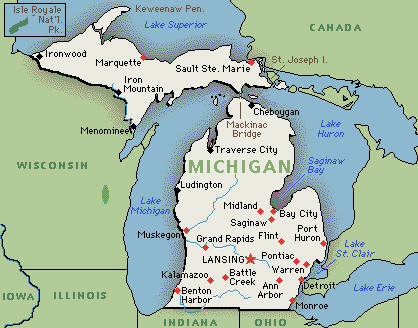
AT&T stands to benefit enormously from the latest attempt to deregulate telecommunications services that could leave rural Michigan residents without a phone line, strips consumer protection and oversight rules to protect ratepayers, and wipes out the state Public Service Commission’s (PSC) traditional role of arbitrating telephone service and billing disputes.  In short, it delivers all of the benefits to AT&T and hangs up on Michigan consumers when their telephone service goes wrong.

AT&T  has found a real friend in Rep. Ken Horn (R-Frankenmuth), who introduced H.4314, a bill to overhaul Michigan’s telecommunications law.  Horn is AT&T’s top recipient of political contributions made by the company (and its employees) in the Michigan House.  He’s the third largest recipient of phone company money in the state, according to records from Project Vote Smart.  Horn’s bill delivers absolutely no discernible benefits to Michigan ratepayers.  Instead, Christmas comes early for big phone companies as Horn’s bill fulfills a wish list drawn up to eliminate decades of consumer-friendly protections:

  1. Eliminates the PSC’s annual report on telecom competition and rate fairness in Michigan;
  2. Allows AT&T to stop cooperating with the PSC in supplying information to help produce said report;
  3. Strips away the requirement that companies like AT&T keep proper records that show the costs of delivering their services to customers;
  4. Allows companies to keep secret the rates for services delivered by contract;
  5. Eliminates the requirement that companies like AT&T deliver “high quality basic local service” to all residents in the state;
  6. Expires all service quality standards established by the Commission on June 30, 2011;
  7. Allows companies to escape punishment by eliminating the PSC’s authority to issue fines, cease and desist orders, or revocation of service licenses when a company has violated state law;
  8. Requires all parties in a mediated dispute to keep the outcome secret;
  9. Eliminates state-mandated fair billing practices;
  10. Permits AT&T and other companies to sell, lease, or otherwise transfer assets and sell service to an affiliate below cost;
  11. Allows companies to discriminate in favor of an affiliated burglar and fire alarm service over a similar service offered by another provider;
  12. Eliminates the requirement that companies provide each customer a clear and simple explanation of the terms and conditions of services purchased by the customer and a statement of all fees, charges, and taxes that will be included in the customer’s monthly bill.
  13. Allows AT&T and other providers to market products and services without giving the customer a true and fair estimate of the real “out the door” price for service — after taxes, fees, and surcharges.
  14. Allows AT&T and other phone companies to discontinue service in any area provided with anything resembling a two-way telecommunications service including wireless, radio, or Voice Over IP service;
  15. Eliminates the telecommunication relay service advisory board, which ensures quality service to the hard of hearing and deaf communities;
  16. Reduces privacy guideline requirements protecting customers.

In tandem with Horn’s bill, AT&T released a congratulatory brochure reminding legislators they got the first half of their agenda enacted six years ago, now it is time for the rest of their dreams to come true.

Calling the proposed bill part of  “an innovation agenda to ‘modernize’ Michigan’s Telecommunications Act,” AT&T characterized the legislation as the ultimate red tape cutter, eliminating “a rotary phone mentality in a Smartphone, Wi-Fi world.”

Innovation, AT&T Style

But the proposed bill goes well beyond eliminating what AT&T considers outdated regulations and old phones — it could also eliminate phone service to Michigan’s most rural communities.

President Barack Obama was in Michigan last month to promote expanding broadband service, particularly in sparsely covered communities in the upper peninsula.  Large sections of Michigan remain underserved by AT&T, who does not extend DSL service into many rural areas.  Nothing in AT&T’s reform measure will bring broadband to these areas.  In fact, the bill grants AT&T permission to abandon landline service to these areas altogether, taking the prospects for DSL with it.

By winning an unrestrained playground for its products and services, for which it can charge whatever it likes — AT&T will follow Verizon’s lead and enhance service through its U-verse platform in urban and wealthy areas of the state at the expense of rural areas which are deemed unprofitable to serve.  While that’s great news for AT&T’s profit and loss statement, it hardly benefits the residents of Michigan who have helped build AT&T’s enormous network with decades of bill payments.

AT&T has a different position, of course. The phone company claims the bill will “better serve consumers” by eliminating “non-productive investments,” which really means investments in a landline network many Americans in more urban areas don’t care about anymore.  AT&T has focused much of its attention on its wireless network, which can deliver benefits to residents in Ann Arbor, Detroit, Saginaw and Grand Rapids, but is hardly a broadband replacement for Marquette or Elk Rapids — not with that 2GB monthly usage cap.  For urban dwellers, the promise of AT&T U-verse replacing AT&T DSL makes the phone company relevant in the broadband marketplace once again, but at the potential price of rural Michigan, who will never see the service in their neck of the woods.

AT&T claims their telecom reform agenda “means putting up a sign that says we are a state that gets it and will welcome and not restrain innovation,” the company says. “20th century regulations stand in the way of 21st century technology. Now is the opportunity to clear these roadblocks to investment and innovation.”

But AT&T’s policy bulldozer does far more than just sweeping away so-called “outdated” regulations.  It strips away fundamental consumer protection from unfair rate hikes, deteriorating phone service, billing errors, privacy protection, and the most basic right Americans have counted on for decades — the opportunity to purchase affordable landline service in even the most rural parts of the state.

Unfortunately, AT&T’s “innovation agenda” is deregulation at a price.  In Ohio, after similar legislation was passed, AT&T promptly raised rates on consumers last summer.  They did the same thing in California.  And Illinois.  Even U-verse, while delivering a second option for urban residents, simply does not save most subscribers money, especially after the introductory promotional rate expires.  It comes with rate hikes itself.

The Michigan Telephone Blog analyzes most of the bill’s outcomes with the same skeptical eye we have, and delivers a warning to other phone companies and businesses that could pay the price for AT&T’s version of “reform”:

If you are with a CLEC, an alarm company, or really any business that depends on telecommunications service in Michigan, you probably should have your legal department and/or your tariff guys looking at this bill.  If you belong to any type of consumer or business organization, especially one that protects senior citizens (who often hang onto the older technology, including the phone service they’ve always used) or small businesses (that often can’t move to other technologies for various reasons, particularly when they are located in less densely-populated areas), you should probably take a close look at this bill as well.

Frontier Does Damage Control In Light of Reports It Wants to Exit TV Business

Phillip Dampier March 7, 2011 Competition, Consumer News, Frontier, Online Video, Public Policy & Gov't Comments Off on Frontier Does Damage Control In Light of Reports It Wants to Exit TV Business

Frontier attempts to dig themselves out.

The Oregonian has been covering the plight of Frontier customers in the Pacific Northwest who signed up for Verizon’s fiber to the home service — FiOS — and are now facing down the new owners who want to raise the price by $30 a month.

Frontier has done itself no favors in the media with an ongoing series of reports of service problems, rate increases, and now the latest signs it wants out of the television delivery business altogether.

In a letter dated March 4th, Steven Crosby — senior vice president of government and regulatory affairs, told the city administrator in Dundee, Ore., Frontier FiOS TV has been a flop.

Since Frontier Communications Northwest, Inc., acquired Verizon’s operations on July 1, 2010, it has built on Verizon’s prior actions and continued to offer a robust and aggressively priced video product to attract Dundee subscribers.  Despite these efforts, however, customer growth has been disappointing and stagnant and Frontier has not achieved a commercially reasonable level of subscriber penetration.

Frontier also admits it has been under-pricing its video service to stay competitive and attract new customers, but those days are over.  The company earlier announced its intention to raise rates by $30 a month for its standard cable TV service, making it more costly than its nearest competitor, Comcast.

Frontier recognizes the impact its enormous rate increase will have on its subscriber base, soberly noting it is likely to “further depress subscriber penetration.”

With this in mind, Frontier is exercising its right under the franchise agreement it has in Dundee to provide notice it intends to terminate its video service at a future date, after providing subscribers with 90 days advance notification.

Similar letters went to city administrators in Newberg, McMinnville, and Wilsonville.  City officials had no reservations about interpreting the meaning of the letters and plans to implement a $500 installation fee for future FiOS TV installations.

“Looking at it, you expect there will be no new customers,” Dan Danicic, Newberg’s city manager told The Oregonian. “Getting this opt-out notice is not a huge surprise to me, but we are disappointed.”

Frontier's rate increases are driving many consumers back to Comcast for their television service.

Sources tell Stop the Cap! there was considerable debate inside Frontier’s offices last week on how to implement directives from executives to shut down FiOS installations as quickly as possible.  Initial efforts to quietly raise the installation price — without giving subscribers’ advance notice — were on track until Frontier’s legal department quashed the plan.  Concerns were also raised inside the customer support units responsible for taking orders and handling customer billing inquiries over how to deal with the inevitable subscriber backlash when the first bills arrived in the mail.

“Frontier hates dealing with FiOS and they can’t wait to be rid of it — they claim that the product is at least 10 years away from really returning any investment from its original deployment,” a well-placed source told Stop the Cap! late last week.

Frontier FiOS is an anomaly for the rural phone company, which delivers the vast majority of its broadband customers DSL service over copper wire phone lines, usually at speeds approaching 3Mbps.  Frontier FiOS “came along with the deal,” one Indiana Frontier official told local media there in response to rate hikes there.

Still, media reports that the company plans to ditch its TV customers created a small panic inside Frontier by the weekend.

“Getting customers switched over to satellite TV service in an orderly manner was the original plan, but reports the company was abandoning the service altogether risks we’ll lose our customers to Comcast, and many will take their phone lines to the cable company, too,” a second source informed Stop the Cap! this morning.  “We were told ‘orderly transition’ over and over again, so reassuring customers is today’s top priority.”
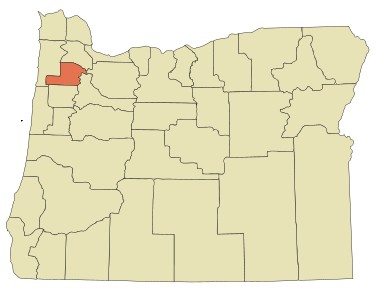
Dundee, Oregon

Evidence of this campaign was not difficult to find over the weekend, as The Oregonian amended its original story claiming Frontier does not have immediate plans to exit the video business.

Crosby told the newspaper: “Our actual implementation decisions will be business driven. At this time, there is no change in our FiOS video offerings or in our FiOS video service delivery to our customers. And this filing does not affect our FiOS high speed service.”

Stephanie Schifano, identifying herself as an employee of Frontier Communications, attempted to spin the letters sent to several Oregon communities as a simple matter of business and not a foreshadowed abandonment of television service.

“Frontier is exercising our right under the franchise agreements to terminate the franchises. The right to terminate soon expires, and if Frontier didn’t give notice now we may have been required to provide this service, with these franchises, for another 12 years. This notice offers Frontier the flexibility to continue to analyze the FiOS Video/TV business and continue to service our customers,” Schifano wrote.

But both of our sources well-familiar with Frontier FiOS say the company’s actions speak louder than its words.

“When you increase the installation fee to $500 and raise your prices nearly $30 higher than Comcast, you would be crazy not to interpret the message Frontier is trying to send — go get your satellite dish from us and get off FiOS,” our second source told us.

Telecompetitor read into some of the company’s comments about utilizing the acquired fiber network in a new way, perhaps for over-the-top Internet video content.

“That’s wishful thinking,” our second source says.  “Frontier’s only online video efforts surround its rebranded Hulu service, relabeled myfitv.”

Frontier's online video platform serves up mostly repurposed Hulu content.

“The company has no plans I am aware of for a grand video strategy — FiOS covers far too small a service area and there is no way Frontier will spend more money to increase that fiber footprint,” our source adds. “Frontier wants to meet its general obligations made as part of its deal with state regulators when it bought Verizon FiOS with the landline deal, and little else.”

Frontier will continue to offer FiOS to broadband customers for the time being, regardless of what it does with its video package.

“If it’s already there and not costing a lot of money to maintain for broadband, why not?” our source says.

One direct sales contractor for competitor Comcast suspects that train may have already left the station.

Calling Frontier’s customer service operation “a circus,” the salesman says Comcast is benefiting from Frontier’s ball-dropping.

“Many Frontier customers are unhappy with the customer service side while stating they do enjoy their phone, Internet, and video services provided by the FiOS network, but lose the business on the practically non-existing customer service side.”

The contractor says he hears stories from Frontier customers all day who are fed up with the frustration of extended hold times, inaccurate or missing bills, online account access problems, excessive call transfers to deal with service issues and high fees.

For regulators, the aggravation is much the same.

After being promised by CEO Maggie Wilderotter that Frontier would be an aggressive competitor in a barely competitive marketplace, Frontier has raised rates by 46 percent, irritated their customers with customer service problems and outages, and now has served notice it intends to flee the TV business at an undetermined point in the future.


Frontier Attempts Damage Control By Not Informing Subs of FiOS Rate Hikes; Regulators Outraged

Phillip Dampier February 7, 2011 Competition, Consumer News, Frontier, Public Policy & Gov't Comments Off on Frontier Attempts Damage Control By Not Informing Subs of FiOS Rate Hikes; Regulators Outraged

"Too rich for my blood."

How do you cushion the blow of a 46-percent rate increase for your fiber-optic television service that will cause consumers to flee?  Don’t tell them about it.

Regulators in the Pacific Northwest are beside themselves over news that their new local phone company, Frontier Communications, is going to raise rates $30 or more for its FiOS cable television service.  The company earlier promised no rate increases as a result of its purchase of landlines from Verizon.

But the only way customers in Oregon know about the impending rate hike is from The Oregonian newspaper; Frontier has yet to formally notify subscribers of the dramatic price hike.

The newspaper reports the higher rates were supposed to take effect at the beginning of the year for new customers, and Feb. 18 for current customers with expiring contracts.

But Frontier has not yet notified its customers of the rate increases.  Spokeswoman Stephanie Beasly told the paper the company was working on “specific messaging.”  Namely, how does Frontier tell customers their bills are going up $30 and still have them as customers after that.

Until the deck chairs can be re-arranged, the rate increase will not take effect.  But Beasly emphasized it eventually will.

Washington County regulators (in Oregon state) are questioning Frontier’s justification for the rate hikes, namely “increased programming costs,” noting their competitors are charging far less for the same type of service:

Bend Broadband, an Oregon system providing a similar level of programming and services as Frontier, is able to manage its costs and keep subscriber rates at or below the range of large cable operators and significantly below those that Frontier has announced.

Some regulators are wondering if they were deceived by the company’s earlier promises to deliver “competitive prices” in the region.  Metropolitan Area Communications Commission administrator Bruce Crest wrote the company suggesting they are not living up to their end of the deal:

However, Frontier’s recent decision to place a significant and unjustified rate increase on its customers, along with the incongruity of Frontier’s justification for that increase against the statements made in 2009 and 2010, makes us question whether Frontier has, or ever had, a good faith commitment to fulfill the terms of the franchise.

Frontier responded to the Commission’s inquiry by essentially telling them to bug off — they have no authority to question Frontier’s prices. Company vice-president Steven Crosby waved-off MACC’s concerns:

While Frontier recognizes that the MACC is interested in any Frontier FiOS video price increases and alternative offerings Frontier provides to its customers, Frontier respectfully notes that the MACC does not have authority to regulate the rates Frontier may charge for FiOS video service, nor does the MACC have authority to regulate Frontier’s commercial relationships with content providers. Accordingly, Frontier reserves the right to decline to respond to inquiries directed to topics that are beyond the MACC’s jurisdiction and may be competitively sensitive. Furthermore, Frontier objects to the MACC’s letter of January 20th to the extent that it contains characterizations and questions that misstate facts and conclusions or are otherwise misleading.

<

p style=”text-align: center;”>
MACC Letter to Frontier FiOS

Frontier Dismisses Its FiOS Operation: “It Came Along With the Deal, It Was What It Was”

Phillip Dampier January 26, 2011 Consumer News, Data Caps, Editorial & Site News, Frontier, Video 3 Comments

Ft. Wayne, Indiana

Outrage over enormous price increases for Frontier’s fiber optic television service in Indiana are being met with little more than a shrug of the shoulders by one company executive, who seemed to dismiss as an afterthought the state-of-the-art FiOS network it acquired from Verizon.

Frontier Communications’ president of its Midwest division, Don Banowetz, has been making the rounds with Fort Wayne-area reporters over news the phone company intends to boost prices for its FiOS TV service by $30 a month for most customers.

But Banowetz has done little to defend the price increases or the fiber network the company acquired with its purchase of landlines from Verizon.

“Look, we bought the whole company, right? All the assets. The FiOS part was part of that, so it was part of the deal,” said Banowetz.  “We couldn’t ride the previous arrangement. So in essence, it was what it was.”

WANE-TV reporter Aishah Hasnie seemed stunned with Banowetz’s response, finally asking what customers should do if they can’t afford the rate increases.

“Get DirecTV,” came the reply.

Starting February 18th, customers who subscribe to a FiOS TV basic package will see their rates go by up $12 per month. Customers who subscribe to other FiOS TV packages will see a $30 increase. The increase does not affect customers under a price protection plan.

That kind of price increase would normally provoke blanched faces in a corporate boardroom over fears of a mass exodus of customers.  But not Frontier.

“The FiOS TV part of our business is actually a very small part of our business. It’s about three percent of our revenues,” said Banowetz.

But Frontier’s satellite package, pitched as an alternative, brings plenty of tricks, traps and other hidden fees inside the box.  In addition to signing a two-year service commitment with DirecTV, customers also have to sign a three-year “price protection agreement” with the phone company, which is another way of saying “contract.”  The total price adds up:

  • Customers opting for Frontier’s “free TV” promotion will face a three-year contract term with a $400 early cancellation fee;
  • Frontier’s satellite TV promotion has a three-year contract term with a $300 early cancellation fee;
  • “Care and handling” fees amounting to $69.99 apply to the “free TV” offer;
  • A $34.99 Frontier “video setup fee” applies to customers getting satellite service from the phone company;
  • DirecTV requires customers to pass a credit check and sign a contract with a 24 month commitment;
  • If you change any aspect of your programming package, you may forfeit the “free service” offered as part of the promotion.

In northwest Washington state, Frontier’s rate increases are alienating the company with one member of the state’s congressional delegation.

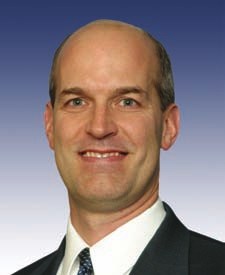
U.S. Representative Rick Larsen (D-Wash.) sent a letter to Frontier complaining about the huge rate hikes, telling the company it needs to find better alternatives for many of his constituents who cannot install a satellite dish.

“Folks in Northwest Washington are concerned about the future of cable service offered through Frontier Communications, and rightly so,” said Rep. Larsen. “I am calling on Frontier to offer consumers better and more affordable options for cable service in the region.”

Rep. Larsen’s letter to Frontier Communications:

Rep. Larsen

Dear Mr. Mason:

I am writing to express concerns that I share with many of my constituents in Northwest Washington about Frontier’s plans for cable service in our region. The Everett Herald recently published an article, “Switch to a Dish or pay more, Frontier tells FIOS customers,” that highlights some of the problems that people in Northwest Washington have with Frontier’s announcement that it will alter the existing framework of its fiber-optic television service. Specifically, Frontier’s decision to offer its customers a choice between continuing with their current FIOS television service—with a rate increase of 46 percent or switching their cable television service to the satellite provider DirecTV.

I am concerned with Frontier’s decision to substantially raise its cable television rates for its existing customers in the Pacific Northwest. Last September, Frontier Communications Chief Executive Maggie Wilderotter was quoted in The Oregonian newspaper stating that Frontier would distinguish itself from larger cable companies by holding down prices for its customers. I find it troubling that less than six months later Frontier is dramatically raising its cable television rates.

Additionally, it is problematic that Frontier has not offered an adequate alternative to those customers who live in apartment complexes where the installation of satellite dishes is prohibited and therefore cannot take advantage of the option to switch their cable service to DirecTV. — Rick Larsen, United States Representative, Washington State, 2nd District

Stop the Cap! reader John says he has sent a letter to CEO Maggie Wilderotter protesting the rate hikes and imploring the company to find a programming co-op to join.  Smaller providers need not pay “rack prices” for cable programming.  Municipal providers, family owned companies, and small independent cable operators have enjoyed substantial programming discounts through group buying power.  Frontier apparently is trying to negotiate for video programming on its own, a fatal mistake that has brought on this month’s rate hike.

If you want to help educate Frontier about how to run their business properly, here is their contact information:

Frontier Communications Corporation
3 High Ridge Park
Stamford, CT 06905-1390
Phone: 203-614-5600
Fax: 203-614-4602
[email protected]

When writing or calling, don’t forget to tell them to abandon their Internet Overcharging schemes — no usage caps or limits on Frontier broadband, or you will take your business somewhere else.

[flv width=”480″ height=”380″]http://www.phillipdampier.com/video/WANE Fort Wayne Frontier Frustration 1-24-11.flv[/flv]

WANE-TV in Fort Wayne delves into Frontier Frustration as angry customers react to news of enormous rate increases.  (2 minutes)

Search This Site:

Contributions:

Recent Comments:

Your Account:

Stop the Cap!