Home » rate hike » Recent Articles:

Competition Breather: Verizon FiOS Rate Hikes Ease Pressure on Cablevision, TWC

Phillip Dampier June 20, 2012 Broadband Speed, Cablevision (see Altice USA), Comcast/Xfinity, Competition, Consumer News, Verizon Comments Off on Competition Breather: Verizon FiOS Rate Hikes Ease Pressure on Cablevision, TWC

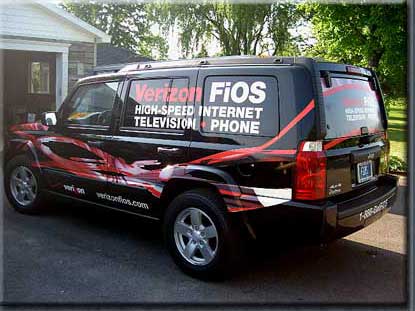
Verizon customers can expect to pay more for the company’s fiber to the home service, FiOS, even as promised higher speeds arrive.

Most customers off contract can expect to pay $10-15 more a month under the new pricing regime, or cut back on selected television channels to keep their price the same. Verizon customers currently on a promotional offer will not see any price changes until their promotion expires.

Wall Street analysts call Verizon’s rate hikes a return to “pricing rationality.” The phone company has engaged in years of aggressive pricing, promotions, and rebate offers, especially in the northeast. At one point, Verizon was offering New York-area customers up to $500 in rebates when signing up for a triple play Verizon FiOS package. As Verizon pulls back from aggressive promotions, some analysts predict cable competitors Time Warner Cable and Cablevision will be able to resume more typical rate increases common before Verizon FiOS launched. Cablevision previously announced it would not increase rates during 2012, mostly in response to Verizon’s aggressive pricing.

Verizon has significantly boosted speeds on most of its broadband offerings, with the exception of its standard entry-level 15/5Mbps package, which remains unchanged. Verizon is hoping customers will find that entry level package less and less attractive and be amenable to upgrading to faster speed service at a higher price.

“We’re expecting that 80 percent of customers will want more than 15 megabits per second,” Arturo Picicci, Verizon’s director of product management told Reuters.

Under Verizon’s new pricing, triple play customers with unlimited calling, 15/5Mbps broadband, and 290 television channels pay $109.99. The next step up, for $15 more a month, would upgrade broadband to 50/25Mbps service.

Verizon is also shaming New York area cable operators with speed increases that Time Warner and Cablevision currently cannot match.

The company’s 150/65Mbps service is now priced at $99.99 a month, down from $209.99. Customers in some areas can also sign up for 300/65Mbps service for as low as $204.99 with a two-year contract.

In contrast, Comcast charges $200 a month for 105Mbps, Cablevision prices its 101Mbps service at $104.95 a month.

Verizon’s New “Share Everything” Plans Will Bring Many Higher Cell Bills

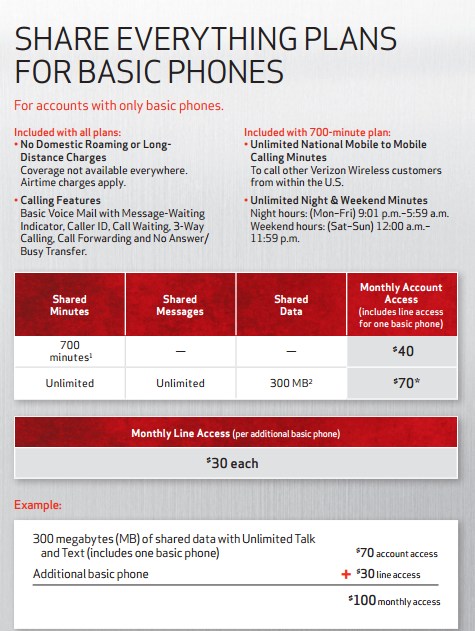
Verizon Wireless unveiled their new “Share Everything” Plans this morning, claiming consumers wanted “simpler, easier-to-understand” plans that let them share their data plan across multiple devices:

But a closer examination of the plans, to be introduced June 28, shows many Verizon customers will face substantially higher cell phone bills if they choose one of Verizon’s newest plans. Perhaps more importantly, customers upgrading to a new subsidized phone/contract renewal on or after that date will be forced to forfeit any grandfathered unlimited data plans they still have with Verizon.

“It is an effort to move ARPU up,” Walt Piecyk, an analyst with BTIG LLC in New York told Bloomberg News, referring to average revenue per user, a measure of how much each customer spends each month.

Obviously acknowledging that customers are using fewer voice minutes and are increasingly finding ways around text messaging charges, Verizon’s new plans sell customers on the idea they can now talk and text as much as they want, but as far as data is concerned, customers will potentially pay much more for less service.

Those light on talking and texting are most likely to be hit hardest by the new cell phone plans.

Verizon formerly charged $50 a month for a basic Nationwide Talk Share plan that included 700 shared voice minutes. Smartphone users also paid $29.99 a month for unlimited data. Together, that amounts to $80 a month. Under Verizon’s $40 “Share Everything” Plan, customers can talk and text all they want, but their unlimited data plan is gone, replaced with a 1GB basic plan for $50. That costs $10 more than customers used to pay on Verizon’s 700 minute plan with an unlimited use data plan. Need 2GB a month? Add an extra $10, bringing you a Verizon phone bill of at least $100 a month for the first line on your account, before taxes and fees.

Other family member lines may also be hit. Verizon used to charge $9.99 a month for extra lines on a shared account. The new price is $30 for a basic phone, $40 for a smartphone. Those family members with smartphones on an older Verizon account each would also incur $29.99 a month for their own individual data plan, which was also unlimited.

Although the base fee for the additional line with a data plan still remains around $40 a month, family members will be forced to share the primary line’s data bucket. Customers will quickly find a 1GB data plan is not going to last long on an account with two or three smartphones. That means expensive upgrades, which start at $10/GB.

Accounts with a mix of smartphones and basic phones face an even stiffer price hike. The $9.99 a month customers used to pay for a basic phone for grandma will now run $30 a month. She won’t be talking or texting much, so the extra features built into Verizon’s new plan will represent a pointless $20 monthly rate increase and an invitation to set grandma up with her own prepaid cell phone instead.

Verizon’s new “Share Everything” concept clearly builds major profits into Verizon’s future:

  • Customers are forced to pay for unlimited voice and texting services, even as those services lose popularity, costing Verizon little to nothing;
  • Data customers are encouraged to add additional devices to their account, but as more data gets used, ongoing upgrades to your data plan at an increment of $10/GB or more will be required;
  • Customers considering a new Apple iPhone or other smartphone will be forced to forfeit any existing unlimited data plan to upgrade, which guarantees future profits from customers consuming increasing amounts of data.
For Verizon’s most premium customers, the new plans may deliver temporary savings, as long as data usage is tempered:
  • Customers paying for expensive texting plans will save the cost of those add-ons;
  • Talk time is now unlimited on most plans, putting an end to overages;
  • Verizon’s Mobile Hotspot feature will now be turned on for all customers on the Share Everything plan (to encourage additional data usage no doubt), which will eliminate at least $20 a month for the feature under existing plans;
  • Customers who own multiple wireless devices configured to work with Verizon, but only use them occasionally, will likely save sharing a single data plan instead of paying for one plan for each device.
All in all, customers who spend the most with Verizon will probably find some savings from Verizon’s newest plans, but legacy customers grandfathered on unlimited data and calling plans probably will not, and lighter users who want fewer features will find substantially higher prices staying with Big Red. For them, a switch to a different carrier or even prepaid service will increasingly appear attractive as monthly phone bills now soar above $100 a month.

[flv width=”640″ height=”380″]http://www.phillipdampier.com/video/Verizon Share Everything Plan 6-12-12.mp4[/flv]

Verizon’s introductory video for its new Share Everything plans.  (1 minute)

Verizon FiOS Rate Increases Announced; Tempered By Faster Service for Some

Phillip Dampier June 4, 2012 Broadband Speed, Competition, Consumer News, Verizon 3 Comments

Verizon FiOS standalone broadband customers choosing the company’s standard service will see rate increases of $10 a month starting June 17, but those upgraded to the company’s premium speed tiers, which are getting much faster, may not see any rate hike at all.

The Verge received word from an anonymous Verizon employee who passed along the rate hike information that will apply to broadband-only customers:

  • Standard 15/5Mbps service: (Was $54.99/mo) now up $10 to $64.99
  • 50/25Mbps service: (Was $74.99/mo for 25/25Mbps) remains $74.99
  • 75/35Mbps service: (New offer) $84.99
  • 150/65Mbps service: (Was $94.99/mo for 50/20Mbps) remains $94.99
  • 300/65Mbps service: (Was $199.99/mo for 150/35Mbps) now $204.99

All new pricing requires a two-year contract (month-to-month service costs $5/mo more) and home phone service with Verizon (or pay a $5/mo surcharge). Speeds of 150 or 300Mbps require a 2-4 hour service call and upgrade fee of $100 for new equipment unless you are on a two-year contract, are a new customer, or already have Verizon’s 150Mbps service. Customers living in multi-dwelling units served by VDSL and not fiber-to-the-apartment will pay the new higher price for standard service, but cannot receive the new enhanced speed tiers.

With the majority of Verizon customers paying only for standard speed service, Verizon will pocket significantly higher revenue for broadband. But customers need not pay for more expensive a-la-carte broadband. Verizon offers significant discounts for customers who sign up for triple play packages on phone, Internet, and television service. Bundled customers continue to get the most bang for the buck, but not if you don’t use the services Verizon wants to sell.

Jonathan Takiff, a columnist for the Philadelphia Daily News says he isn’t buying at the prices Verizon is charging.

I also was disappointed with the announcement that Verizon will continue to offer entry level FiOS Internet running at  15/5 Mbps. If the operation has such superior technology and capacity, why not flaunt it and give us casual users more headroom?  Even with its old school coaxial cable network, Xfinity service starts at 20 Mbps down.

Clearly, Verizon hopes  to up-sell customers to a higher, more profitable tier. And they’re using that grandiose 300 Mbps offering as an attention getter, to get folks thinking more aspirationally. Kinda like the way a car company throws a high powered, ridiculously priced, super flashy sports car into the showroom mix. Makes you go for the bigger engine in the econobox.

[…] What’s a good deal for Internet service on a global basis? In front-running Japan, the  average service runs at 61 Mbps and costs 27 cents per megabit, per month. While not quite as dramatic,  Internet services in South Korea, Finland and France also make U.S. providers look like stingy bastards.

Frontier’s Billing Mess in Oregon Upsets Customers; $20 “Rate Increase” for Some

Phillip Dampier May 21, 2012 Consumer News, Frontier, Public Policy & Gov't, Rural Broadband Comments Off on Frontier’s Billing Mess in Oregon Upsets Customers; $20 “Rate Increase” for Some

Frontier bills are often confusing, as this example from 2009 illustrates.

Some of Frontier Communications’ 230,000 customers in Oregon are enduring billing snafus after the company accidentally cancelled promotional discounts, resulting in higher bills.

Frontier recently completed a billing system change for those formerly served by Verizon Communications, but The Oregonian reports some customers found bundled service promotions and service contracts established with the former owners suddenly canceled, eliminating discounts that delivered de facto “rate increases” as much as $20 a month.

Frontier had promised customers their “services and pricing plan will remain the same” after the billing system conversion.

Many of the worst-impacted customers subscribe to Frontier’s adopted FiOS fiber-to-the-home service.

Albert, a Stop the Cap! reader with Frontier FiOS, says the “abuse of FiOS customers” has continued since Frontier bought Verizon’s landline and fiber network in the state.

“First they wanted to jack the rates up, then they tried to sell us an ‘upgrade’ to satellite TV, and now it’s just the latest in a series of bill screw-ups from a company that couldn’t run things right if it tried,” Albert tells us. “My contract with the company says ‘no rate hikes while the contract is in effect,’ so they just made it no longer in effect and presto, a rate hike.”

It took four phone calls to straighten things out.

“Frontier’s customer service offices are apparently in other states, and a lot of their people don’t seem to know about FiOS, need supervisors to intervene on everything, and still cannot fix things,” Albert writes. “On the fourth call, I finally got someone who was able to cross-reference my older bills and find the promotion I was supposed to be on, and got me back on it.”

Albert says Frontier really has not offered much to sell people on the company’s fiber optic network.

“Frontier FiOS is a big secret with the company, and the last thing in the world they want to sell you is Frontier FiOS TV,” he reports.

The newspaper reports Frontier’s confusion over promotions and billing have impacted others as well.  Some of the problems have prompted customers to file complaints with the Oregon Public Utility Commission (PUC), which says it has seen “a big increase” in consumer issues since Frontier’s billing system changeover.

Frontier promised the state it would not raise any rates in Oregon without notifying the Commission, and so far the company has kept its word. But that doesn’t hold true for Albert.

“Dropping the ball on promotions represents a hidden rate increase, and many people will just pay the bill no matter what it says,” Albert said. “Then Frontier will try the backdoor rate increase with more surcharges and rental fees on other services.”

While Frontier executives have heralded the billing system conversion as a major accomplishment that opens the next chapter on Frontier Communications’ future, some customers are less celebratory.

Oregonian reader Max Gramm:

Frontier is perhaps the worst phone companion in history. Twice now they have changed my account number and never informed me, then refused to apply the money I had continued to pay to the old account number to the bill. I would get bill saying I owed $180 dollars even after proving to them I had made payments every single month. They shut off my service for over a week during one of these disputes. Though part of this could be due to Verizon (when they hear I am from Oregon, I get sent to a different department) Frontier has been absolutely awful to work with.

The newspaper recommends customers check their bills for sudden increases and contact Frontier with any questions. If Frontier has no satisfactory answers, file a complaint with the PUC (800-522-2404 or online).

Comcast Raises Rates $100 a Month on Some Oregon Customers

Phillip Dampier May 9, 2012 Comcast/Xfinity, Consumer News, Video 1 Comment

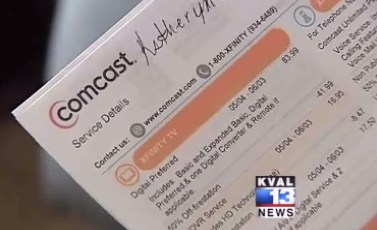
A Comcast discount mix-up leaves customers with substantial rate hikes. (Image: KVAL News)

Several Comcast customers in Springfield, Ore. are facing a whopping $100 rate increase on their Comcast service after the cable company discovered they were getting a company-applied discount Comcast later determined they were not entitled to receive.

Elizabeth Thornton, a pensioner living on modest military and social security benefits is among them. When her latest cable bill arrived, instead of the usual $95.28, Comcast raised the price by almost $100 to $193.23.

That’s a lot more than expected, and it left Thornton upset trying to figure out how to cover the bill.

It turns out an undetermined number of Comcast customers in Springfield were given discounts for fire stations, which enjoy 50% off regular Comcast prices. Thornton agreed to a one-year contract at the lower price Comcast employees offered, even though the company later determined she was unqualified to receive that price.

Comcast has been discovering the error when customers call regarding their accounts.

Now affected customers want to know why it is okay for Comcast to lock people into price-guaranteed service contracts they later renege on.

Comcast spokesperson Theressa Davis told KVAL News the fire station discount was the company’s mistake, and the cable company will now reach out to affected customers to offer “an appropriate discount.”

[flv width=”432″ height=”260″]http://www.phillipdampier.com/video/KVAL Springfield Its not fair Springfield woman has Comcast bill mix-up 5-5-12.mp4[/flv]

KVAL News visited with the daughter of Elizabeth Thornton, who is upset because Comcast raised her monthly rate by almost $100, leaving her unsure how she’ll pay the bill.  (2 minutes)

Search This Site:

Contributions:

Recent Comments:

Your Account:

Stop the Cap!