Home » public policy » Recent Articles:

Netflix Aggravates Canada’s Identity Crisis: Protection of Canadian Culture or Big Telecom Company Profits?

Phillip Dampier September 29, 2014 Audio, Canada, Competition, Consumer News, Editorial & Site News, HissyFitWatch, Net Neutrality, Online Video, Public Policy & Gov't, Video Comments Off on Netflix Aggravates Canada’s Identity Crisis: Protection of Canadian Culture or Big Telecom Company Profits?

netflix caThe arrival of Netflix north of the American border has sparked a potential video revolution in Canada that some fear could renew “an erosion” of Canadian culture and self-identity as the streaming video service floods the country with American-made television and movies. But anxiety also prevails on the upper floors of some of Canada’s biggest telecom companies, worried their business models are about to be challenged like never before.

Two weeks ago, the country saw a remarkable Canadian Radio-television and Telecommunications Commission (CRTC) hearing featuring a Netflix executive obviously not used to being grilled by the often-curt regulators. When it was all over, Netflix refused to comply with a CRTC order for information about Netflix’s Canadian customers.

Earlier today, the CRTC’s secretary general, John Traversy, declared that because of the lack of cooperation from Netflix, all of their testimony “will be removed from the public record of this proceeding on October 2, 2014.” That includes their oral arguments.

“As a result, the hearing panel will reach its conclusions based on the remaining evidence on the record. There are a variety of perspectives on the impact of Internet broadcasting in Canada, and the panel will rely on those that are on the public record to make its findings,” Mr. Traversy wrote in a nod to Canada’s own telecom companies.

Not since late 1990’s Heritage Minister Sheila Copps, who defended Canadian content with her support of a law that restricted foreign magazines from infiltrating across the border, had a government official seemed willing to take matters beyond the government’s own policy.

CRTC chairman Jean-Pierre Blais threw down the gauntlet when Netflix hesitated about releasing its Canadian subscriber and Canadian content statistics to the regulator. Mr. Blais wanted to know exactly how many Canadians are Netflix subscribers and how much of what they are watching on the service originates in Canada.

With hearings underway in Ottawa, bigger questions are being raised about the CRTC’s authority in the digital age. Doug Dirks from CBC Radio’s The Homestretch talks with Michael Geist at the University of Ottawa. Sept. 19, 2014 (8:40) You must remain on this page to hear the clip, or you can download the clip and listen later.

Netflix has operated below regulatory radar since it first launched service in Canada four years ago. The CRTC left the American company with an impression it had the right to regulate Netflix, but chose not to at this time. The CRTC of 2010 was knee-deep in media consolidation issues and did not want to spend a lot of time on an American service that most Canadians watched by using proxy servers and virtual private networks to bypass geographic content restrictions. But now that an estimated 30% of English-speaking Canada subscribes to Netflix, it is threatening to turn the country’s cozy and well-consolidated media industry on its head.

Ask most of the corporate players involved and they will declare this is a fight about Canada’s identity. After all, broadcasters have been compelled for years to live under content laws that require a certain percentage of television and radio content to originate inside Canada. Without such regulations, enforced by the CRTC among others, Canada would be overwhelmed by all-things-Americans. Some believe that without protection, Canadian viewers will only watch and listen to American television and music at the cost of Canadian productions and artists.

[flv]http://www.phillipdampier.com/video/BNN Netflix vs the CRTC 9-22-14.flv[/flv]

Kevin O’Leary, Chairman, O’Leary Financial Group is furious with regulators for butting into Netflix’s online video business and threatening its presence in Canada is an effort to protect incumbent business models. From BNN-Canada. (8:45)
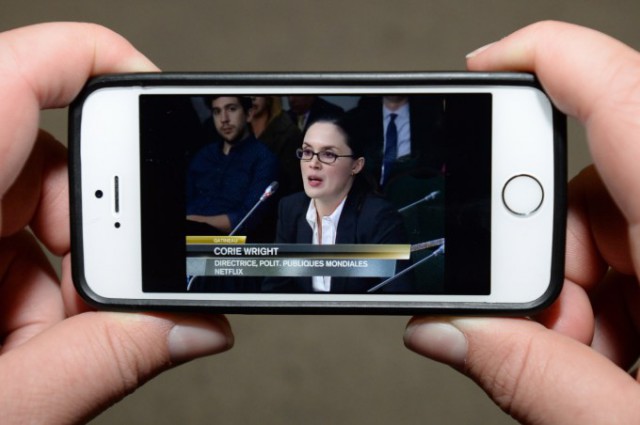
A viewer watches Netflix global public policy director Corie Wright testify before the Canadian Radio-television and Telecommunications Commission (CRTC) in Ottawa (Image: Sean Kilpatrick, The Canadian Press)

A viewer watches Netflix’s Corie Wright testify before the CRTC. (Image: Sean Kilpatrick, The Canadian Press)

But behind the culture war is a question of money – billions of dollars in fact. Giant media companies like Rogers, Shaw, and Bell feel threatened by the presence of Netflix, which can take away viewers and change a media landscape that has not faced the kind of wholesale deregulation that has taken place in the United States since the Reagan Administration.

Before Netflix, the big Canadian networks didn’t object too strongly to the content regulations. After all, CRTC rules helped establish the Canadian Media Fund which partly pays for domestic TV and movie productions. Canada’s telephone and satellite companies also have to contribute, and they collectively added $266 million to the pot in 2013, mostly collected from their customers in the form of higher bills. Netflix doesn’t receive money from the fund and has indicated it doesn’t need or want the government’s help to create Canadian content.

“It is not in the interest of consumers to have new media subsidize old media or to have new entrants subsidize incumbents,” added Netflix’s Corie Wright. “Netflix believes that regulatory intervention online is unnecessary and could have consequences that are inconsistent with the interests of consumers,” Wright said, adding viewers should have the ability “to vote with their dollars and eyeballs to shape the media marketplace.”

That is not exactly what the CRTC wanted to hear, and Wright was off the Christmas card list for good when she directly rebuffed Mr. Blais’ requests for Netflix’s data on its Canadian customers. Wright implied the data would somehow make its way out of the CRTC’s offices and end up in the hands of the Canadian-owned broadcast and cable competitors that know many at the CRTC on a first name basis.

Does Netflix pose a threat to Canadian culture? Matt Galloway spoke with John Doyle, the Globe & Mail’s television critic, on the Sept. 22nd edition of CBC Radio’s Metro Morning show. Sept. 22, 2014 (8:31) You must remain on this page to hear the clip, or you can download the clip and listen later.

Mr. Blais, obviously not used to requests being questioned, repeated demands for Netflix’s subscriber data to be turned over by the following Monday and if Netflix did not comply, he would revoke Netflix’s current exemption from Canadian content rules and bring down the hammer of regulation on the streaming service.
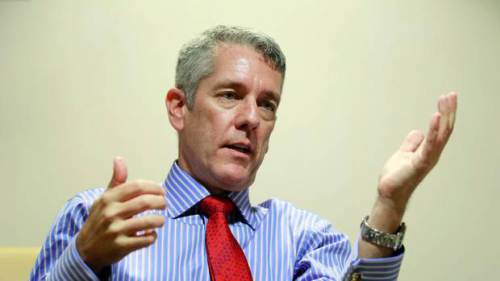
Blais

Blais

The deadline came and went and last week Netflix defiantly refused to comply with the CRTC’s order. A Netflix official said that while the company has responded to a number of CRTC requests, it was not “in a position to produce the confidential and competitively sensitive information, but added it was always prepared to work constructively with the commission.”

Now things are very much up in the air. Many Canadians question why the CRTC believes it has the right to regulate Internet content when it operates largely as a broadcast regulator. Public opinion seems to be swayed against the CRTC and towards Netflix. Canadian producers and writers are concerned their jobs are at risk, Canadian media conglomerates fear their comfortable and predictable future is threatened if consumers decide to spend more time with Netflix and less time with them. All of this debate occurring within the context of a discussion about forcing pay television companies to offer slimmed down basic cable packages and implement a-la-carte — pay only for the channels you want — is enough to give media executives heartburn.

To underscore the point much of this debate involves money, American TV network executives also turned up at the CRTC arguing for regulations that would compensate American TV stations for providing “free” programming on Canadian airwaves, cable, and satellite — retransmission consent across the border.

Netflix does not seem too worried it is in trouble in either Ottawa or in the halls of CRTC headquarters at Les Terrasses de la Chaudière in Gatineau, Québec, just across the Ottawa River. Prime Minister Stephen Harper and Heritage Minister Shelly Glover have made it clear they have zero interest in taxing or regulating Netflix. Even if they were, the Canada-U.S. free trade agreement may make regulating Netflix a practical impossibility, especially if the U.S. decides to retaliate.

[flv]http://www.phillipdampier.com/video/Canadian Press CRTC vs Netflix 9-19-14.mp4[/flv]

Dwayne Winseck, Carleton School of Journalism and Communication, defended the role the CRTC is mandated to play by Canada’s telecommunications laws. (1:41)

Comcast: ‘We Were Against Net Neutrality Before We Clamed to Be For It’

Phillip Dampier August 11, 2014 Comcast/Xfinity, Competition, Consumer News, Editorial & Site News, History, Net Neutrality, Online Video, Public Policy & Gov't Comments Off on Comcast: ‘We Were Against Net Neutrality Before We Clamed to Be For It’

psctest

Should this merger be approved, Comcast will control 40-50 percent of all broadband access nationwide.[1] That offers Comcast market power that can be used to discriminate against others.

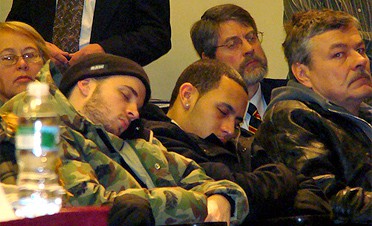
Comcast paid homeless people to "hold their seats" at an FCC hearing in 2008. (Image: Free Press)

Comcast paid homeless people to “hold their seats” at an FCC hearing in 2008. (Image: Free Press)

Comcast’s recent past contains several disturbing incidents that came as a result of its market power and its vast resources to influence telecommunications public policy debates:

  • In 2008, Comcast admitted to paying homeless people in Boston to pack an FCC meeting on Net Neutrality, keeping company critics out of the room.[2]
  • The company that now promises to abide voluntarily to Net Neutrality regulations is also one of the few found culpable for violating the principle. In mid-2008, the FCC ruled that Comcast’s policy of interfering with peer-to-peer file traffic was a violation of Net Neutrality rules. When customers found out, the company voluntarily ended the speed throttling, imposing usage caps instead.[3]
  • This month, Comcast reportedly stepped in and ordered the removal of news content critical of its Net Neutrality policies from a publication in which it has an ownership interest.[4]
  • In May 2011, a Comcast manager threatened to pull funding from a Seattle-based media advocacy group that criticized the company for hiring a former Republican FCC official, Meredith Attwell Baker, just after she supported the NBC Universal deal.[5]
  • Comcast has aggressively pursued agreements with over-the-top (online video) competitors that effectively force them to sign special connection agreements that mitigate the deteriorating quality of streamed video Comcast customers receive from services like Netflix.[6] Comcast’s size gives it de facto control over its customers’ online experiences.

While we note Comcast has agreed to temporarily abide by Net Neutrality principles, the Commission should know Comcast has a long record lobbying against Net Neutrality on philosophical grounds.[7]

Comcast agreed to abide by Net Neutrality principles as a condition to win approval of its acquisition of NBCUniversal, approved by the FCC in 2011. But as Brian Fung from the Washington Post noted, its agreement with the government will expire just four years from now[8]:

But what Comcast doesn’t say is that its commitment to “full” net neutrality expires in 2018. After that, it will no longer be legally bound to follow the 2010 rules, and it’ll be free to abandon that commitment literally overnight.

Just one year earlier, Comcast was before the United States Court of Appeals – D.C. Circuit suing the FCC over its authority to enforce Net Neutrality policies. Comcast won its suit.[9]

If Comcast now feels favorable towards Net Neutrality, it should voluntarily agree to abide by its guiding principles in perpetuity.

[1]http://www.broadcastingcable.com/news/washington/judiciary-raises-programming-broadband-control-issues-comcasttwc/130396
[2]http://www.adweek.com/digital/homeless-comcast-will-pay-to-attend-fcc-hearings/?red=ny
[3]https://www.dailydot.com/layer8/net-neutrality-violations-history/
[4]http://www.republicreport.org/2014/comcast-affiliated-newsite-censored-my-article-about-net-neutrality-lobbying/
[5]https://www.washingtonpost.com/blogs/post-tech/post/comcast-yanks-funds-for-nonprofit-after-tweet-about-fcc-bakers-jump/2011/05/19/AF7aGG7G_blog.html
[6]http://dr.marketwatch.com/dr/
[7]http://dr.marketwatch.com/dr/
[8]https://www.techdirt.com/articles/20140724/13525627992/comcast-ramps-up-ad-campaign-claiming-to-support-net-neutrality-even-as-it-really-supports-killing-it.shtml
[9]https://www.cadc.uscourts.gov/internet/opinions.nsf/EA10373FA9C20DEA85257807005BD63F/$file/08-1291-1238302.pdf

Comcast’s Growing List of Owned/Operated Networks Gets Bigger With Time Warner Cable

psctest

This week’s revelation that a Comcast-controlled enterprise deliberately and consciously removed news content critical of Comcast and its public policy lobbying practices speaks to the impact media concentration has on news dissemination.

It also exposes the close relationship Comcast maintains with non-profit groups it financially supports, encouraging the kinds of positive letters about its operations the New York Public Service Commission can now find on file in this case.[1]

comcast twcThe group involved in the current controversy reportedly received $350,000 from Comcast and promptly began a vocal opposition campaign against Net Neutrality, an open Internet policy Comcast still opposes being enacted as official FCC policy.[2]

Professor Todd Gitlin of Columbia University called Comcast’s close relationship with the Minority Media and Telecommunications Council (MMTC) the “closest thing I can imagine to a political quid pro quo. The fact NewsOne saw fit to delete a report that they previously posted without any claim that anything was mistaken in the report tells you something about their commitment to open discourse.”

Jeff Cohen, an associate professor of journalism at Ithaca College, also commented on the NewsOne decision. “Just as corporate cash can corrupt civil rights groups, this incident shows how corporate power can corrupt and censor the news.”[3]

Time Warner Cable operates local news channels in most of the major New York cities it serves. These channels will also come under the umbrella of Comcast, giving it an even greater news voice through its NBC and Telemundo networks, MSNBC, local cable news operations, and owned and operated local broadcast affiliate stations in New York City.

In closing, as a reminder to the Commission, Comcast’s list of broadcast, cable and digital media assets is already enormous and will grow even larger if a merger with Time Warner Cable is approved.[4]

Comcast-NBCUniversal

Broadcast Television
NBC Television Network
NBC Entertainment
NBC News
NBC Sport Group
Universal Television (UTV)
Universal Cable Productions
NBCUniversal Domestic Television Distribution
NBCUniversal International Television Distribution

NBC Local Media Division
NBC New York (WNBC)
NBC Los Angeles (KNBC)
NBC Chicago (WMAQ)
NBC Philadelphia (WCAU)
NBC Bay Area (KNTV)
NBC Dallas/Fort Worth (KXAS)
NBC Washington (WRC)
NBC Miami (WTVJ)
NBC San Diego (KNSD)
NBC Connecticut (WVIT)
NBC Everywhere
LX TV
Skycastle Entertainment

Telemundo
KVEA (Los Angeles)
WNJU (New York)
WSCV (Miami)
KTMD (Houston)
WSNS (Chicago)
KXTX (Dallas/Fort Worth)
KVDA (San Antonio)
KSTS (San Francisco/San Jose)
KTAZ (Phoenix)
KNSO (Fresno)
KDEN (Denver)
KBLR (Las Vegas)
WNEU (Boston/Merrimack)
KHRR (Tucson)
WKAQ (Puerto Rico)
KWHY (Los Angeles) (Independent)

Television Channels
Bravo
Chiller
CNBC
CNBC World
Comcast Charter Sports Southeast
Comcast Sports Group
Comcast SportsNet Bay Area
Comcast SportsNet California
Comcast SportsNet Chicago
Comcast SportsNet Houston
Comcast SportsNet Mid-Atlantic
Comcast SportsNet New England
Comcast SportsNet Northwest
Comcast SportsNet Philadelhpia
SNY
The Mtn.-Mountain West Sports Network
CSS
Comcast Sports Southwest
New England Cable News (Manages)
NBC Sports Network
The Comcast Network
E! Entertainment Television
G4
Golf Channel
MSNBC
mun2
Oxygen Media
Cloo
Sprout
The Style Network
Syfy
Universal HD
USA Network
The Weather Channel Companies
Syfy Universal (Universal Networks International)
Diva Universal (Universal Networks International)
Studio Universal (Universal Networks International)
Universal Channel (Universal Networks International)
13th Street Universal (Universal Networks International)
Movies 24 (Universal Networks International)
Hallmark Channel (non-U.S.) (Universal Networks International)
KidsCo (Interest) (Universal Networks International)

Film
Universal Pictures
Focus Features
Universal Studios Home Entertainment

Parks and Resorts
Universal Parks and Resorts

Digital Media
DailyCandy
Fandango
Hulu (32%)
iVillage
NBC.com
CNBC Digital
Plaxo

Communications
XFINITY TV
XFINITY Internet
XFINITY Voice

Sports Management
Comcast-Spectator
Philadelphia Flyers
Wells Fargo Center
Global Spectrum (Public Assembly Management)
Ovations Food Services
Front Row Marketing Services
Paciolan
New Era Tickets (ComcastTIX)
Flyers Skate Zone

Other
Comcast Ventures, which is invested in numerous companies.

Time Warner Cable

Local channels`
Time Warner Cable News[5]
NY1: Manhattan, Bronx, Brooklyn, Queens, Staten Island
NY1 Noticias: Spanish language news for New York City
NY State of Politics Blog
TWC News Capital Region (Albany, Amsterdam, Saratoga and Berkshire counties)
TWC News Central NY (Syracuse, Ithaca/Cortland, Utica/Rome)
TWC News Hudson Valley
TWC News Northern NY (Watertown/Ft. Drum)
TWC News Southern Tier (Elmira/Corning, Binghamton/Oneonta)
TWC News Western NY (Buffalo, Finger Lakes Region, Jamestown, Rochester, and Batavia)

Regional Sports Networks
Metro Sports
Time Warner Cable Sports
Time Warner Cable SportsNet
Time Warner Cable Deportes
TWC Sports 32
SNY

Other Holdings
Adelphia — former cable television company in PA
NaviSite — cloud and hosting services company
Insight Communications — cable operator
DukeNet Communications — Fiber optic network
Time Warner Cable Internet
Time Warner Cable Media (advertising)

[1]http://documents.dps.ny.gov/public/MatterManagement/CaseMaster.aspx?MatterCaseNo=14-m-0183
[2]http://www.publicintegrity.org/2013/06/06/12769/civil-rights-groups-fcc-positions-reflect-industry-funding-critics-say
[3]http://www.republicreport.org/2014/comcast-affiliated-newsite-censored-my-article-about-net-neutrality-lobbying/
[4]https://archives.cjr.org/resources/index.php
[5]http://spectrumlocalnews.com/

The New Guilded Age is Pay-Per-View; Comcast-TWC Merger Like a Throwback to An Earlier Era

Phillip Dampier April 21, 2014 Comcast/Xfinity, Competition, Consumer News, History, Public Policy & Gov't Comments Off on The New Guilded Age is Pay-Per-View; Comcast-TWC Merger Like a Throwback to An Earlier Era

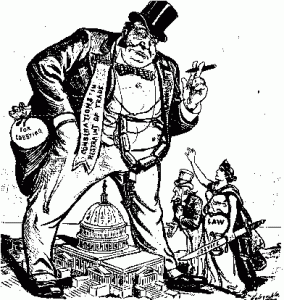
gildedA merger of Time Warner Cable and Comcast is just one more step towards undermining our democracy, worries former Secretary of Labor Robert Reich.
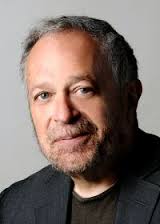

In a blog entry republished by Salon, Reich sees increasing evidence that the trust-busting days at the turn of the 20th century are long over, and Americans will likely have to relearn the lessons of allowing capitalism to run amuck.

It was the Republican Party of the 1890s that had the loudest voice in Washington protesting the concentration of business power into vast monopolies that had grown so large, they not only hurt consumers but threatened to undermine democracy itself.

Republican Senator John Sherman of Ohio was at the forefront of acting against centralized industrial power, which he likened to the abusive policies of the British crown that sparked America’s revolution for independence.

“If we will not endure a king as a political power,” Sherman thundered, “we should not endure a king over the production, transportation, and sale of any of the necessaries of life.”

The merger of Comcast and Time Warner Cable is just the latest example America is in a new gilded age of wealth and power that no longer prevents or busts up concentrations of economic power, observes Reich.

“Internet service providers in America are already too concentrated, which is why Americans pay more for Internet access than the citizens of almost any other advanced nation,” Reich argues.

Reich

Reich

Reich worries about the implications of allowing Comcast to grow larger, considering how much the current company already invests in Washington to get the government policies it wants:

  • Comcast has contributed $1,822,395 so far in the 2013-2014 election cycle, according to data collected by the Center for Responsive Politics — ranking it 18th of all 13,457 corporations and organizations that have donated to campaigns since the cycle began. Of that total, $1,346,410 has gone to individual candidates, including John Boehner, Mitch McConnell, and Harry Reid; $323,000 to Leadership PACs; $278,235 to party organizations; and $261,250 to super PACs;
  • Comcast is also one of the nation’s biggest revolving doors. Of its 107 lobbyists, 86 worked in government before lobbying for Comcast. In-house lobbyists include several former chiefs of staff to Senate and House Democrats and Republicans as well as a former commissioner of the Federal Communications Commission. Nor is Time Warner Cable a slouch when it comes to political donations, lobbyists, and revolving doors. It also ranks near the top.
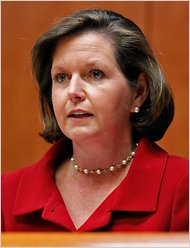
Atwell-Baker

Atwell-Baker

The Center for Responsive Politics expanded on the revolving door issue between the cable industry and the Federal Communications Commission that will be responsible for approving the Comcast-Time Warner merger.

It found one of the most prominent travelers to be former FCC commissioner-turned Comcast lobbyist Meredith Atwell-Baker. Always a friend of the cable industry, the Republican commissioner hurried out the door two years into her four-year term after getting a lucrative job offer from Comcast in June 2011. Despite claims she stopped participating in votes relating to Comcast after getting her job offer, she was a strong supporter of Comcast’s merger with NBCUniversal and favored the cable industry’s approach towards preserving a barely noticeable feather-light regulatory touch.

Atwell-Baker never contemplated her move might be seen as a conflict of interest, but then again, it represented nothing new for Washington. At the time, the only condition limiting her was a two-year ban on lobbying the FCC. But that does not apply to Congress so Atwell-Baker spent her time as Comcast’s senior vice president of government affairs trying to influence the House and Senate on 21 bills that could affect Comcast’s bottom line.

Just as shameless — Michael Powell, who served as FCC chairman during the first term of the George W. Bush Administration. After leaving the FCC he took the lucrative position of top man at the National Cable & Telecommunications Association, the cable lobby. The Center found several other former FCC employees heading into the private sector, advising Big Telecom companies on how to best influence regulators:

  • Rudy Brioche, was an adviser to former commissioner Adelstein before moving to Comcast as its senior director of external affairs and public policy counsel in 2009. Brioche was so valued by the FCC, in fact, that he was brought back to join the commission’s Advisory Committee for Diversity in the Digital Age in 2011;
  • James Coltharp, who served as a special counsel to commissioner James H. Quello until 1997, is now a Comcast lobbyist;

comcast twcOnce out of the public sector for several years, some lobbyists see their value deteriorate as they get increasingly out of touch with the latest administration in power. So several seek a refresh, temporarily leaving their lobbying job to return to public sector work.

The Center offered David Krone as a potential example. Krone formerly held leadership and lobbying positions with companies like AT&T, TCI Communications and the National Cable & Telecommunications Association. After 2008, he was hired by Senate Majority Leader Harry Reid (D-Nev.) to advise him on telecommunications matters. Today he is Reid’s chief of staff. If and when Reid leaves office, Krone can always join the parade of ex-Hill staffers back to the lucrative world of lobbying.

Will elected officials give a receptive ear to Comcast’s arguments in favor of its merger? Most likely, considering every member of the Senate Judiciary Committee (except deal critic Sen. Al Franken), has recently received campaign contributions from the cable giant, according to OpenSecrets:

gilded-age.gjf_Comcast PAC donations to Senate Judiciary Committee Democrats

  • Chuck Schumer, New York: $35,000
  • Patrick Leahy, Vermont, Chairman: $32,500
  • Sheldon Whitehouse, Rhode Island: $26,500
  • Chris Coons, Delaware: $25,000
  • Dick Durbin, Illinois: $23,000
  • Amy Klobuchar, Minnesota: $22,500
  • Dianne Feinstein, California: $18,500
  • Richard Blumenthal, Connecticut: $11,500
  • Mazie Hirono, Hawaii: $5,000
  • Al Franken, Minnesota: $0

Comcast PAC donations to Republicans

  • Orrin Hatch, Utah: $30,000
  • Chuck Grassley, Iowa, Ranking Member: $28,500
  • John Cornyn, Texas: $21,000
  • Lindsey Graham, South Carolina: $13,500
  • Jeff Sessions, Alabama: $10,000
  • Mike Lee, Utah: $8,500
  • Ted Cruz, Texas: $2,500
  • Jeff Flake, Arizona: $1,000

Reich thinks its time to return to the trust-busting days of President Teddy Roosevelt, who found the transportation infrastructure of the 20th century and the fuel used to power it increasingly controlled by a handful of giant players that abused monopoly power to set unjustifiable prices and suppress competition. Getting Congress, increasingly flush with now-unlimited corporate money, to agree to its own refresh a century later may prove a tougher sell.


Non-Profit Supporters of N.J.-Verizon Broadband Settlement Have a Relationship With Verizon

TeleTruthVerizon has been upset with the tone and accuracy of many New Jersey residents who have written the state’s Board of Public Utilities urging them to reject a settlement offer than would allow Verizon to walk away from its commitment to deliver high-speed broadband to 100% of the state.

While calling many of its opponents misinformed about the company’s original commitments, a Verizon spokesperson targeted a particularly nasty response to one of its strongest critics — Teletruth’s Bruce Kushnick, who has accused Verizon of breaking its promises in New Jersey and substituting outdated DSL and expensive, usage-capped 4G wireless broadband as a broadband equivalent.

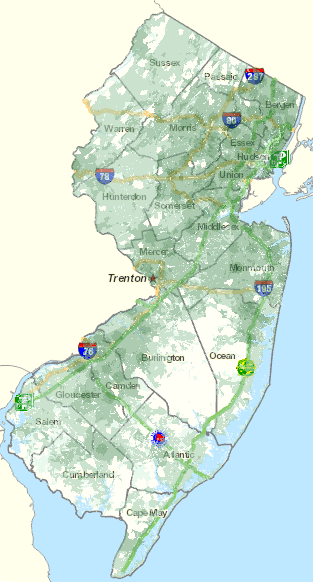
Northwest, central and southern New Jersey all lack solid broadband coverage. (Map: Connecting NJ)

Northwest, central and southern New Jersey all lack solid broadband coverage. (Map: Connecting NJ)

Kushnick has argued that Verizon has cooked the books, diverting funds that should have been spent on FiOS expansion into its more profitable wireless subsidiary Verizon Wireless instead. He wants New Jersey to conduct a thorough investigation of Verizon’s financial reporting and learn why the company has reneged on a broadband commitment that originally promised a minimum of 45/45Mbps high-speed broadband for 100% of the state by 2010 in return for rate deregulation and tax breaks. Verizon got the deregulation and tax breaks but much of the state is still waiting for the faster broadband it was promised.

Now Verizon wants the state to approve a settlement that will redefine its commitment from 45/45Mbps to 4Mbps DSL or wireless 4G broadband.

Verizon spokesman Lee Gierczynski said criticisms about the company’s performance in New Jersey are “way off base.” He said there never was any commitment to deploy FiOS across all of New Jersey because FiOS did not exist at the time of the original agreement.

“Nobody knew what FiOS was 20 years ago,” Gierczynski said. “It wasn’t until 2004 when FiOS came on the scene.”

What about the 45/45Mbps speed commitment?

“[The agreement] didn’t say a minimum of 45Mbps,” Gierczynski said, “it just says ‘up to’.”

Gierczynski particularly bristled over Kushnick’s ongoing criticisms of Verizon.

“For nearly two decades, he has made the same, tired baseless allegations over and over again about Verizon and its predecessor companies — not only in New Jersey but in other states as well,” Gierczynski told The Record in an email. “His specious arguments are devoid of fact, relying on misinformation and myths to prop up his claims. This filing is no different.”

With more than 1,000 comments on file with the BPU, Verizon invited the regulator to dismiss critics that demanded Verizon live up to its original commitments:

“The vast majority of comments opposing the Stipulation that have been posted by the Board to date were submitted via a standard form letter generated by the New Jersey State AFLCIO with the subject line “Tell Verizon to Live Up to the Opportunity New Jersey Agreement.”

“Other comments opposing the Stipulation offer inaccurate claims about what was contemplated by Opportunity New Jersey or what is in the Stipulation.”

AFL-CIO Letters:  These letters opposing the Stipulation appear less convincing when the locations of senders are examined— More than 25 are from people located outside of New Jersey and some appear to be from municipalities not in Verizon’s service territory. “

Verizon did not bother to mention the circulation of a pro-Verizon form letter that was submitted by hundreds of people, many Verizon employees and retirees, as reported last week by Stop the Cap!

Two of those letters were signed by Paul A. Sullivan, Verizon’s regional president of consumer and mass business markets in New Jersey and Tracy Reed, a Verizon manager… in Atlanta. Neither identified themselves as Verizon management.

Further concerns were raised by Kushnick when he found that the people and businesses Verizon touts as supporting Verizon’s position all have some relationship with Verizon:

  • New Jersey Technology Council — Board member,  Douglas Schoenberger, VP, Public Policy, Verizon NJ, Inc
  • The Meadowlands Chamber of Commerce — Donnett Barnett Verley, Director of Public Policy and Corporate Responsibility, for Verizon New Jersey.  “I am responsible for Verizon’s philanthropic and community outreach efforts throughout the state. I serve as an active board member of …the Meadowlands Chamber of Commerce.”
  • Greater Paterson Chamber of Commerce — “Hi. I’m Rick Ricca, Director – External Affairs. I am responsible for the company’s relationship and interaction with municipal and county governments… I also serve on… Greater Paterson Chamber of Commerce.”
  • The Commerce and Industry Association of New Jersey (“CIANJ”), Member of the Board, Sam Delgado V.P. Community & Stakeholder Affairs Verizon
  • Greater Elizabeth Chamber of Commerce — “Verizon, a telecommunication company received the Member-to-Member Award for its important contribution to Elizabeth’s business.”
  •  Cooper’s Ferry Partnership —Verizon is on the Board of Directors. “The organization’s operational budget is currently divided into three main categories: board membership… investments from these valued partners that has allowed CFP to grow its mission and expand throughout the city of Camden.”
  • Puerto Rican Association for Human Development —“Verizon Presents $20,000 to PRAHD”
  • Latino Institute  — Our Partners and Funders, Verizon
  • Gudino, David Joseph — Associate General Counsel, Verizon Wireless
  • NJ SHARES —“Verizon New Jersey partners with NJ SHARES for Communications Lifeline outreach and enrollment efforts.”

“In fact, it’s hard to identify any legitimate group that supports the Verizon stipulation and is not funded by Verizon,” said Kushnick.

Search This Site:

Contributions:

Recent Comments:

Your Account:

Stop the Cap!