Home » public policy » Recent Articles:

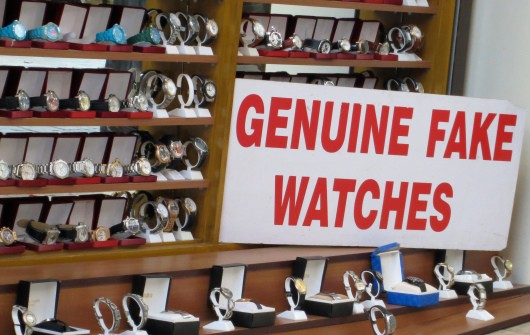
House and Senate Hold Hearings on GOP Fake Net Neutrality Alternative Supported by Telecom Lobby

Phillip Dampier January 21, 2015 Astroturf, Net Neutrality, Public Policy & Gov't 3 Comments
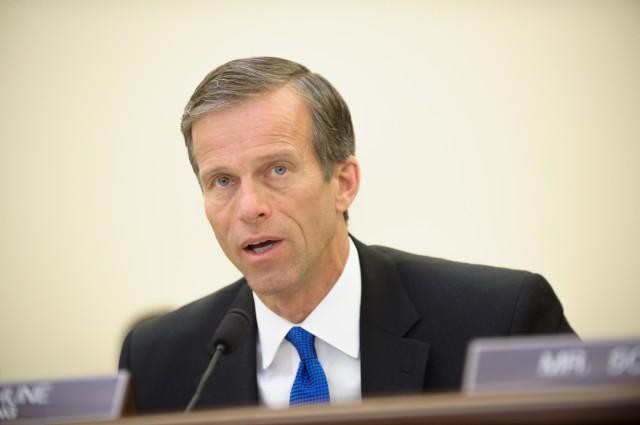
Thune

Thune

The House and Senate today held back-to-back hearings on the issue of adopting a Republican alternative to the president’s idea of Net Neutrality.

After the president directly addressed his support of strong Net Neutrality protections, FCC chairman Thomas Wheeler indicated he intended to act on the issue next month. Now many Republican legislators have changed their original view that Net Neutrality was “a solution in search of a problem” into a high priority agenda item demanding immediate attention, hoping to cut off Wheeler’s regulatory solution with new legislation.

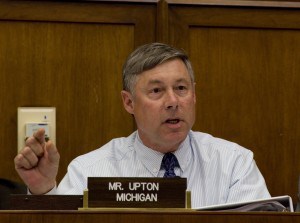
That came in the form of a proposed new bill to define the principles of Net Neutrality from Sen. John Thune (R-S.D.) and Rep. Fred Upton (R-Mich.).

“By turning the FCC away from a heavy-handed and messy approach to regulating the Internet, this draft protects both consumers who rely on Internet services and innovators who create jobs,” Thune wrote in a statement.

Both hearings were stacked against reclassification of broadband under Title II to assure strong Net Neutrality principles, including three witnesses formerly with the FCC that have moved into industry advocacy jobs.

(Image courtesy: Steve Rhodes)

(Image courtesy: Steve Rhodes)

Former FCC chairman Michael Powell is today America’s top cable lobbyist. Meredith Baker quickly left the FCC in 2011 after voting in favor of the Comcast-NBC merger deal, taking a lucrative position at Comcast before moving on to become the country’s top wireless industry lobbyist. Robert McDowell left the FCC in 2013 to take a job at the same law firm hired by Comcast to successfully challenge the FCC’s authority to fine the cable company over its past speed throttling practices. Today, McDowell’s employer also represents the interests of AT&T and Verizon.

Other witnesses testifying included Dr. Nicol Turner-Lee from the Multicultural, Media, Telecom & Internet Council, which claims to be a civil rights organization but in fact receives the bulk of its funding from corporate interests, including large telecom companies. It often advocates for the corporate agendas of its sponsors, including opposition to Title II reclassification and past support for the failed AT&T-T Mobile merger deal.

Tom Simmons, senior vice president of public policy for small cable operator Midcontinent Communications also appeared, opposing strong Net Neutrality policies. Simmons said that once the company explained Title II reclassification and how it would increase customers’ cable bills, support for Net Neutrality diminished.

Just two witnesses testified on behalf of consumer interests. Gene Kimmelman, president of Public Knowledge strongly advocated for Title II reclassification of broadband and Paul Misener, vice president of Global Public Policy for Amazon.com strongly opposed Internet fast lanes and other traffic manipulation practices.

The New York Times today reported that the Republicans may have an increasingly uphill fight with some of their own traditional supporters to push through legislation Internet activists claim is riddled with company-friendly loopholes.

“The libertarian conservative base is pretty astute at recognizing crony capitalism and understand how campaign finance and corporate influence affects policy,” said David Segal, executive director of Demand Progress, a Net Neutrality advocacy group. “And this is a pretty transparent moment for all that.”

Republicans’ Fake Net Neutrality Alternative Contains Grand Canyon-Sized Loopholes

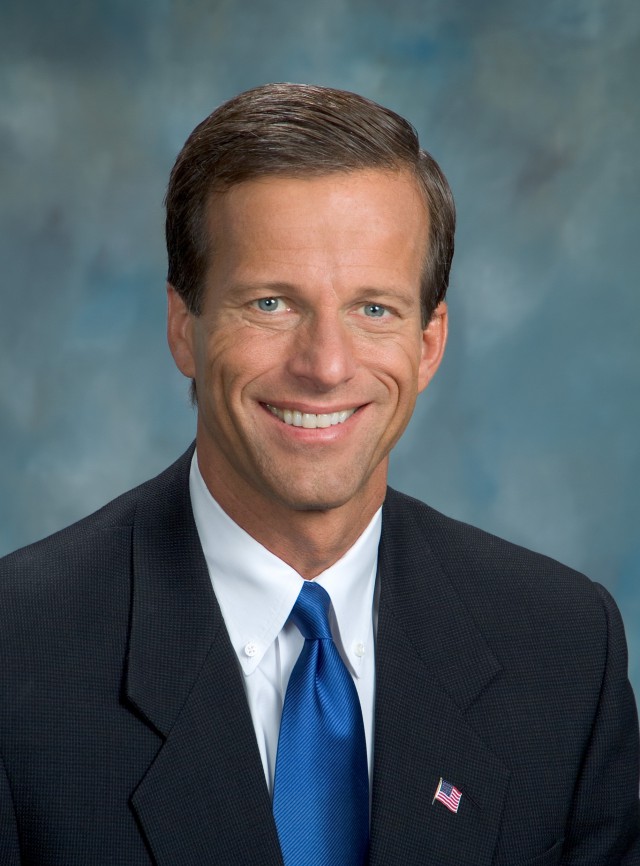
Thune

Thune

When Sen. John “Net Neutrality is unjustified” Thune (R-S.D.) and Rep. Fred “Net Neutrality is a solution in search of a problem” Upton (R-Mich.) last week magically became Internet activists ready to solve the Net Neutrality issue with an “unambiguous” bill to “protect Americans” from greedy ISPs, you will pardon me if I am just a tad suspicious.

The two Republicans who champion “less government regulation is better” and “let the marketplace decide for itself”-principles are proposing new legislation that will regulate the conduct of Internet Service Providers, claiming it will tie their hands and prevent the launch of Internet fast lanes and ban traffic degradation.

The two legislators are traveling in a fast lane of their own — hurrying to schedule hearings, mark up a bill, and speed it to the floor for consideration by the end of this month. That’s a marked departure for the U.S. Congress-as-usual, the one that can’t manage to pass virtually anything, much less in a hurry. So where is the fire?

It is at the Federal Communications Commission in Washington, scheduled to vote on its own new Net Neutrality proposal by the end of February. Thune and Upton are hoping to launch a pre-emptive strike against the anticipated strong Open Internet protections the FCC will probably enact on a party line vote. The FCC is likely to pursue a reclassification of broadband away from the lobbyist-lovin’, largely deregulated “information service” it is today towards a “telecommunications service” under Title II of the Communications Act. That represents Comcast’s worst nightmare.

???????????????????????????????Current FCC rules have allowed traffic shenanigans from ISPs like Comcast that don’t mind slowing their customers’ Netflix experience to a crawl until the streaming company opens its checkbook. The FCC’s anticipated new proposal would strictly forbid any creative end-runs around the concept of paid fast lanes Comcast can get away with today.

The proposed Republican alternative suggests a “third way” compromise only Comcast and AT&T could love. While ostensibly banning intentional interference with Internet traffic, the two legislators include a Grand Canyon-sized loophole in the form of one word you could fly an Airbus A380 through: reasonable

SEC. 13. INTERNET OPENNESS.

(a) OBLIGATIONS OF BROADBAND INTERNET ACCESS SERVICE PROVIDERS.—A person engaged in the provision of broadband Internet access service, insofar as such person is so engaged (1) may not block lawful content, applications, or services, subject to reasonable network management; may not prohibit the use of non-harmful devices, subject to reasonable network management; may not throttle lawful traffic by selectively slowing, speeding, degrading, or enhancing Internet traffic based on source, destination, or content, subject to reasonable network management; may not engage in paid prioritization; and shall publicly disclose accurate and relevant information in plain language regarding the network management practices, performance, and commercial terms of its broadband Internet access services sufficient for consumers to make informed choices regarding use of such services and for content, application, service, and device providers to develop, market, and maintain Internet offerings, except that a provider is not required to publicly disclose competitively sensitive information or information that could compromise network security or undermine the efficacy of reasonable network management practices.

No ISP has ever declared its own traffic management policies unreasonable, so whatever they do, in their minds, is “reasonable” by definition.

Upton

Upton

The proposed bill would keep Net Neutrality far away from the critical Title II foundation it needs — essential armor that will help withstand inevitable court challenges by providers outraged by the government’s attempt to interfere with their free speech rights (at the expense of their customers’ freedom from content-killing traffic slowdowns).

The concept of “network management” is Play-Doh in Comcast and AT&T’s hands. It could mean balancing traffic by adding more capacity as needed or implementing a “fair access policy” that rations inadequate capacity. Both could easily be called “reasonable” by them. Customers paying for 25Mbps and getting 6Mbps during the evenings may think otherwise.

But no worries, the Republicans’ plan requires ISPs to disclose exactly how they are undercutting the broadband service you paid good money to receive. They claim that will give you an “informed choice,” except for many Americans, there is no choice.

The FCC’s plan is much more likely to stop to the tricks, traps, and traffic manipulation in whatever form arises now or in the future. It uses well-established precedent that is unlikely to be thrown out by the courts, delivers real oversight desperately needed in the monopoly/duopoly broadband marketplace, and will actually protect consumers.

The Republican alternative primarily protects AT&T, Comcast, and their chances of getting more campaign contributions from their friends in the cable and phone business. In short, it isn’t worth your time, and you should tell your member of Congress it isn’t worth theirs either.

Shakedown Sharpton: Buy Quid Pro Quo Minority Support for Your Big Telecom Merger Deal

Phillip Dampier January 12, 2015 Astroturf, AT&T, Comcast/Xfinity, Competition, Consumer News, Net Neutrality, Public Policy & Gov't Comments Off on Shakedown Sharpton: Buy Quid Pro Quo Minority Support for Your Big Telecom Merger Deal

shakedown alLooking for civil rights groups to support your multi-billion dollar telecom merger and keep minority groups off your back?

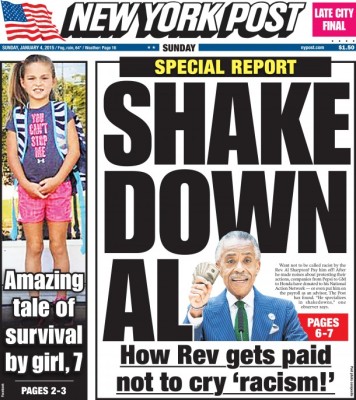
You couldn’t do better than cutting a check to Rev. Al Sharpton, whose National Action Network (NAN) will generate form letters praising your killer deal before regulators or help garner support in Congress for more deregulation and less Net Neutrality. All it takes is a few donations and consulting fees, according to a special report published by the New York Post.

“Al Sharpton has enriched himself and NAN for years by threatening companies with bad publicity if they didn’t come to terms with him. Put simply, Sharpton specializes in shakedowns,” Ken Boehm, chairman of the National Legal & Policy Center told the Post.

“Once Sharpton’s on board, he plays the race card all the way through,” said a source who has worked with the Harlem preacher. “He just keeps asking for more and more money.”

Sharpton’s 60th birthday party bash last October at Manhattan’s Four Seasons restaurant departed from the usual friends and family oriented affair most of us would expect, as envelopes arrived from some of America’s largest corporations, including AT&T and Verizon, containing at least $1 million in donations for Sharpton’s civil rights group.

Coincidentally, that same month Sharpton co-signed a letter sent to the FCC urging the regulator to approve AT&T’s deal to buy DirecTV.

“We believe the evidence and the company’s record, as well as future impact and commitments post-merger, provide a clear and compelling basis for the FCC to determine that this merger is in the public’s best interest,” the letter said. “If approved, the combined AT&T-DirecTV will have greater incentive to deploy a state of the art Internet service and give millions of Americans a new way to access the Internet’s economic, social, and civic benefits.”

If approved, the deal would also eliminate one of AT&T’s chief competitors for pay television customers, making DirecTV part of the AT&T family.

Money-Stuffed-Into-PocketWhile the money keeps rolling in, Sharpton has left taxpayers footing his bills. Sharpton himself, his nonprofit NAN, and two for-profit firms controlled by him have racked up $4.7 million in outstanding debt and tax obligations according to federal and New York State records. He owes New York taxpayers $806,875 and after not bothering to pay his personal income taxes in full, he owes $2.6 million in federal liens. Sharpton’s NAN still owes more than $800,000 to the federal government and his two for-profit ventures separately owe New Yorkers nearly $450,000.

Raising money to repay debts appears to be a major priority for Sharpton these days, and companies like Comcast covet his support of their corporate agendas.

Shortly after Comcast announced its intention to acquire NBC-Universal in late 2009, Comcast’s chief executive, Brian L. Roberts, and the head of the company’s lobbying effort, David L. Cohen, met with Sharpton and other representatives of minority groups to talk about their bid. Comcast recognized that support from minority groups would be crucial to answering the inevitable charge that giant media mergers have a tendency to reduce diversity in programming, particularly from and for minorities.

Comcast turned on its money spigot, donating at least $140,000 to Sharpton’s National Action Network. In turn, Sharpton took a sudden interest in the merger, penning letters of strong support to the FCC. Between 2008 and 2010, Comcast’s corporate foundation donated more than $3 million to 39 minority groups that wrote letters to federal regulators in support of the NBC deal. Comcast and NBC Universal also worked out an agreement with advocacy groups guaranteeing increased “minority participation in news and public affairs programming”—so long as the deal went through.

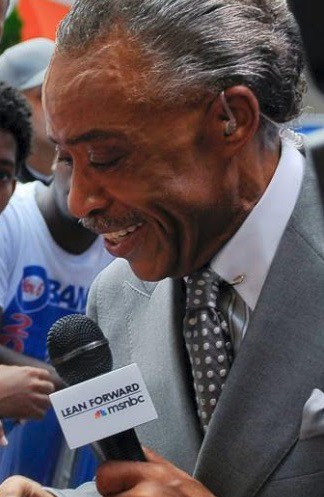
Comcast supporter turned Comcast-owned MSNBC host.

Sharpton: Comcast supporter turned Comcast-owned MSNBC host.

Few expected that Sharpton himself would be a direct beneficiary of Comcast’s gratitude after the merger was approved. Sharpton was suddenly hired (for an undisclosed amount) as host of his own MSNBC weeknight show, still on the network today.

The New York Times noticed.

“Rarely, if ever, has a cable news channel employed a host who has previously campaigned for the business goals of the channel’s parent company,” the newspaper wrote.

Since the cable company began cutting checks to the NAN, Sharpton has towed the line on Comcast’s public policy agenda.

Last July, Sharpton’s group joined several other civil rights groups (most, if not all financially supported by Comcast) complaining that enforcing Net Neutrality would “harm communities of color.”

“The groups wrote to the FCC to tell them that ‘we do not believe that the door to Title II should be opened,'” said Lee Fang in a piece that was quickly censored by a Comcast-owned news outlet. “Simply put, these groups, many of which claim to carry the mantle of Martin Luther King Jr., are saying that Comcast and Verizon should be able to create Internet slow lanes and fast lanes, and such a change would magically improve the lives of non-white Americans.”

“Just as Martin Luther King Jr.’s children have embarrassingly descended into fighting bitterly over what’s left of his estate, the civil rights groups formed to advance Dr. King’s legacy seem willing to sell out their own members for a buck,” Fang concluded.

Net Neutrality Freakout: Wall Street Popping Prozac, GOP Furious, Big ISPs, Allies Shocked and Appalled

Phillip Dampier November 11, 2014 Competition, Consumer News, Data Caps, Editorial & Site News, Net Neutrality, Public Policy & Gov't, Video Comments Off on Net Neutrality Freakout: Wall Street Popping Prozac, GOP Furious, Big ISPs, Allies Shocked and Appalled

President Barack Obama’s strong commitment to robust Net Neutrality protections for the Internet has created a nightmare scenario for Net Neutrality opponents who can no longer count on an ex-telecom industry lobbyist now in charge at the Federal Communications Commission to take care of their business interests with watered down, damage-controlled, net-protection-in-name-only.

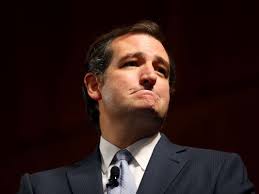
The attacks on President Obama’s convictions began almost immediately after his video was published on whitehouse.gov with Sen. Ted Cruz’s declaration that Net Neutrality was Obamacare for the Internet, a statement that may have played well with his Texas tea party base, but was quickly parodied on social media:
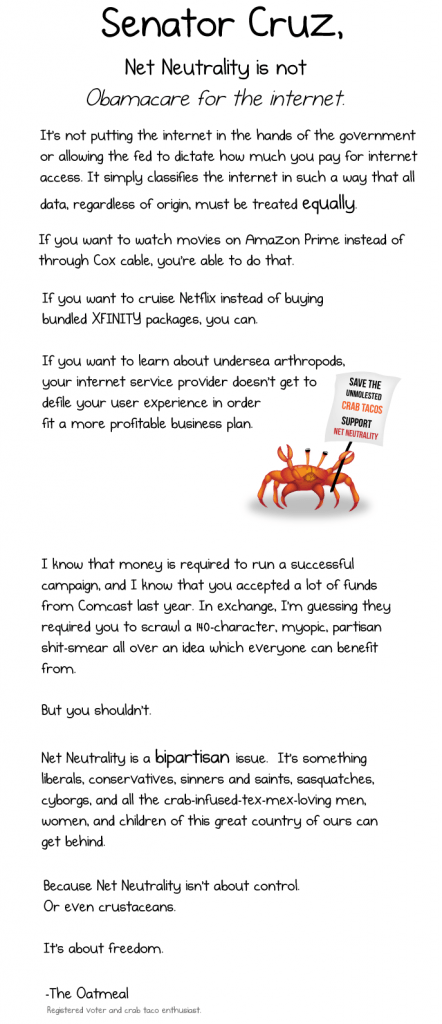
4

Hal Singer from the ironically named Progressive Policy Institute opined that President Obama’s decision to declare real Net Neutrality would likely lead to the new majority of Republicans to completely defund the agency in retaliation. PPI is strongly opposed to Net Neutrality and many other consumer protection measures and represents the interests of the George W. Bush wing of the Democratic Party, which consists of about six people (and Harold Ford, Jr. probably wishes he was one of them.)
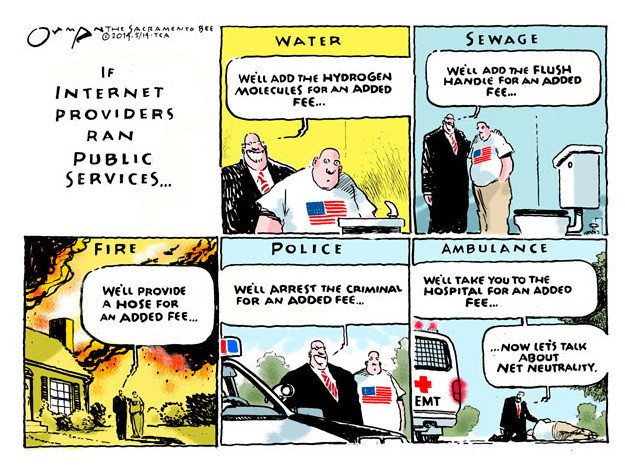
net neutrality fee“We are stunned,” Michael Powell, a former FCC chairman who is now president of the National Cable & Telecommunications Association, said in an e-mail to Bloomberg reporters. After six years of supine oversight of giant telecommunications companies from former FCC chairman Julius “Data caps are innovative” Genachowski and the installation of an ex cable and wireless industry lobbyist as chief regulator of the country’s telecommunications industry, AT&T, Verizon and Comcast have faced few challenges to their regulatory wish lists.

The Washington Post “Innovations” editorial page proved once again the Post is now the leading publication neocons and pro-business conservatives keep hidden under their mattresses next to the Wall Street Journal for those private moments. WaPo devoted news space to a hack editorial from Larry Downes, who turned up in Congress earlier this summer to cheerlead the merger of AT&T and DirecTV and has vociferously opposed Net Neutrality since at least 2011.

In his generally fact-challenged piece, Downes proclaims the Obama Administration was seeking nothing less than to saddle the Internet with oppressive outdated regulations written in 1934, that the courts threw out earlier hybrid/compromise Net Neutrality regulations simply because they lacked the words “commercially unreasonable,”  and that implementing Net Neutrality would destroy investment in the world’s leading cable, mobile, and fiber networks.

Downes does not get out much, because other countries as diverse as South Korea, Lithuania, Bulgaria, Japan and Singapore have long since passed the United States, with much of Europe poised to follow their lead. Some of them even enforce Net Neutrality and the sky failed to collapse as a result. Broadband life is good in Bucharest.

Nothing about the Obama Administration’s proposal for Net Neutrality would do anything beyond preserving the Internet as we know and love it and judges told the FCC’s attorneys they had no authority to impose Net Neutrality under the freak flawed framework established by Michael Powell, former FCC chairman-turned cable industry lobbyist.

Downes also laims he is shocked, shocked I tell you to discover the FCC isn’t immune to political pressure from the White House and other Beltway forces. Except he is one of those Beltway forces.

The Post was content disclosing that Downes was simply a co-author of “Big Bang Disruption:  Strategy in the Age of Devastating Innovation” (Portfolio 2014) and the project director at the harmless-sounding Georgetown Center for Business and Public Policy.

If you suspected Downes was just a tad closer to the industry he often advocates for than the newspaper was letting on, you would be right.
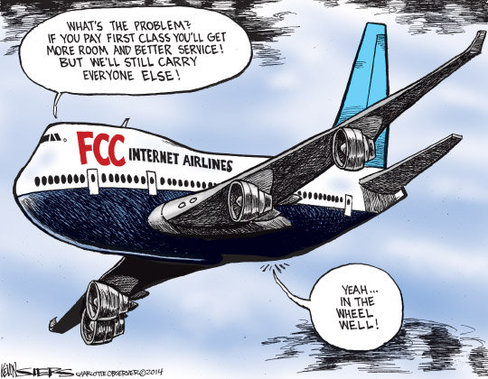
net neutrality comicIn fact, Downes is a “fellow” at the Bell Mason Group, a corporate advisory firm “passionate about partnering with forward-thinking corporate venturing and innovation executives, […] helping clients build risk-reduced, impactful programs and overcome corporate antibodies and obstacles [and deliver] measurable value.”

Net Neutrality is an example of one of those “risky corporate obstacles” to total monopoly control that could deliver Big Telecom companies “measurable value.” Among Downes’ past clients is a tiny phone company named AT&T, but you wouldn’t know it from Bell Mason’s well-scrubbed website. Too bad for them archive.org took a snapshot of an earlier version of his bio, revealing his less-than-arm’s-length relationship with AT&T.

None of this is apparently pertinent to the editors of the Washington Post. Disclosing Downes’ co-authorship of a far-less germane book one critic called a “big bang disappointment” was more than enough.

Bloomberg News avoided the hopelessly unbelievable talking points about Internet takeovers and concluded President Obama threw his FCC chairman under the bus. But even that conclusion originated from the conservative, anti-Net Neutrality group the Heritage Foundation, quoted in the piece:

“He threw Tom Wheeler under the bus,” said James Gattuso, a senior research fellow at the Heritage Foundation, a Washington-based policy group. Obama’s strong stance makes it harder for Wheeler to reach a compromise among proponents of regulation, Gattuso said.

Except proponents of Net Neutrality are tired of compromises that favor ungrateful telecom companies that routinely sue even the most minor consumer protections out of existence. Wheeler was rumored to be proposing yet another compromise as late as last week, one that would protect deep-pocketed content companies but leave consumers open to further abuse from high cost fast lanes and speed throttles.

Various tea party groups ginned up with claims of an imminent Obama socialist takeover of the Internet, Maoist censorship and protectionist rate regulation took to the comment sections of various news pieces and wrote comments like this:

“I don’t want government control that would force private companies not to control what I can see on the Internet.” 
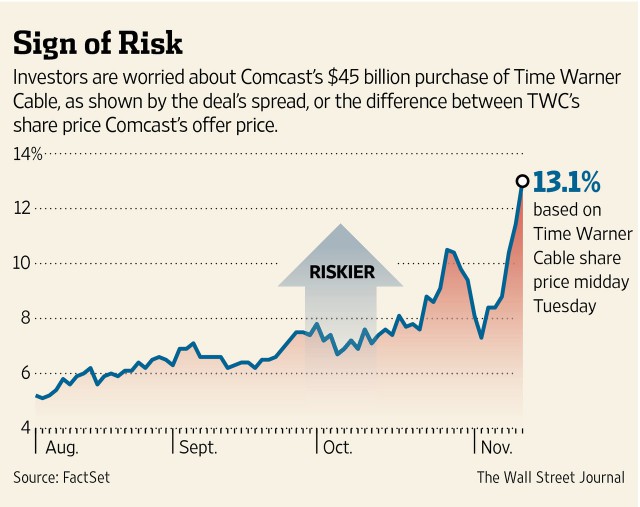
riskyFor public policy mavens that claim Net Neutrality is a solution in search of a problem, countering Wall Street’s decisive view that Net Neutrality is a disaster for plans of revenue boosting schemes are harder to counter.

Obama’s intervention effectively kills Wheeler’s mixed plan, Paul de Sa, a senior analyst at Sanford C. Bernstein & Co. in New York, said in a note. It will be hard for the FCC, with a majority of Democrats appointed by Obama, to deviate significantly from his preference, and strong rules are likely, de Sa said.

Obama’s intervention “does not lead to price regulation of broadband,” in part because the FCC has no desire to do so, he said. Debate in Washington will intensify, with Congress holding “interminable hearings” and trying to prohibit the FCC from applying the strong rules, de Sa said.

The meaning to investors was clear: Internet profiteering plans are on indefinite hold. Comcast Corp. fell 63 cents or 1.2 percent, to $52.33 at 10:39 a.m. in New York trading, and are down as much as 5.1 percent this week. Time Warner Cable Inc. dropped $3.34, or 2.5 percent. AT&T Inc. fell 16 cents to $34.97 and Verizon Communications Inc. (VZ) fell 15 cents to $50.57.

A move to fully reclassify broadband, even if it includes “forbearance” from rate regulation, as President Obama suggested, would send investors scurrying, according to Kim Wallace, a policy analyst at Renaissance Macro Research. That is because it would cast doubt on cable and telecom companies’ abilities to generate a “sufficient return” on capital investments, which they expect to be sky high based on the limited amount of competition that exists today.

Craig Moffett, perennial cable stock booster, had the temerity to blame the latest developments on Comcast.

“The great irony is Comcast helped start this ball rolling by trying to buy Time Warner Cable in the first place,” said Moffett, an analyst at MoffettNathanson. “With the specter of possible price regulation hanging in the balance, [the question is] would Comcast still want to increase its exposure to distribution assets” in broadband.

The Wall Street press provides some salve for the chafed telecom industry high-flyer — the likely prospect of litigation tying up Net Neutrality long enough for Republicans to write new telecom laws that would lead to near-total regulatory capitulation and a free hand for providers. But investors sure hate uncertainty, so the Money Party will have to be postponed for now.

We have four illuminating news stories to share today on Net Neutrality:

[flv]http://www.phillipdampier.com/video/PBS Why is Obama weighing in on net neutrality 11-10-14.mp4[/flv]

More than 3 million commenters crashed the Federal Communications Commission website in July to weigh in on the issue of net neutrality. Now President Obama has added his strong support, directing the FCC to protect equal access to all web content. Judy Woodruff speaks with U.S. chief technology officer Megan Smith about the president’s move. (7:33)

[flv]http://www.phillipdampier.com/video/Bloomberg Ex-FCCs Furchtgott-Roth Copps Debate Net Neutrality 11-10-14.flv[/flv]

Former Federal Communications Commission members Harold Furchtgott-Roth and Michael Copps talk about President Barack Obama’s call for the “strongest possible rules” to protect the open Internet and the value of so-called net-neutrality rules. They speak with Cory Johnson on Bloomberg Television’s “Bloomberg West.” (7:00)

[flv]http://www.phillipdampier.com/video/CNN Here is why you should care about net neutrality 11-10-14.flv[/flv]

CNN explores why you should care about Net Neutrality and reminds us in a world of distorted punditry exactly what “Net Neutrality” is. (3:58)

[flv]http://www.phillipdampier.com/video/Fox Business Michael Powell Net Neutrality 11-10-14.flv[/flv]

Fox Business gives former FCC chairman Michael Powell an unchallenged platform to present his views on Net Neutrality. It becomes clear which side Fox is on when they call porn peddler Larry Flynt the quintessential Net Neutrality advocate. (5:08)


Net Neutrality: President Obama Calls on FCC to Reclassify Wired/Mobile Broadband Under Title 2

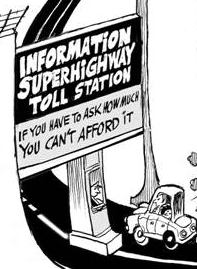
tollIn a major victory for net roots groups, President Barack Obama today announced his support for the strongest possible Net Neutrality protections, asking the Federal Communications Commission to quickly reclassify broadband as a “telecommunications service” subject to oversight and consumer protection regulatory policies that would prohibit paid fast lanes, the blocking or degrading of websites for financial reasons, and more transparency in how Internet Service Providers handle traffic.
“For almost a century, our law has recognized that companies who connect you to the world have special obligations not to exploit the monopoly they enjoy over access in and out of your home or business,” said the president. “That is why a phone call from a customer of one phone company can reliably reach a customer of a different one, and why you will not be penalized solely for calling someone who is using another provider. It is common sense that the same philosophy should guide any service that is based on the transmission of information — whether a phone call, or a packet of data.”

“’Net neutrality’ has been built into the fabric of the Internet since its creation — but it is also a principle that we cannot take for granted,” President Obama added. “We cannot allow Internet Service Providers (ISPs) to restrict the best access or to pick winners and losers in the online marketplace for services and ideas. That is why today, I am asking the Federal Communications Commission (FCC) to answer the call of almost four million public comments, and implement the strongest possible rules to protect Net Neutrality.”

The president’s call will likely force FCC chairman Thomas Wheeler to abandon efforts to reclassify only certain types of Internet traffic under Title 2 regulations while leaving consumers vulnerable to paid fast lanes and other traffic monetizing schemes. Wheeler was rumored to be working on a limited Net Neutrality plan that would protect large online video content distributors like Netflix and Amazon from unfair compensation deals with ISPs. The plan would have given the FCC authority to review agreements between your Internet provider and some of the net’s biggest traffic generators.

President Obama’s statement goes beyond Wheeler’s tolerance for “individualized, differentiated arrangements” that could let cable and phone companies offer compensated “preferred partnership” deals with websites and applications, granting them special treatment or exemptions from speed throttles or usage caps not available to others.

The president’s four principles for a free and open Internet represent “common-sense steps that reflect the Internet you and I use every day, and that some ISPs already observe:”

  • netneutralityNo blocking. If a consumer requests access to a website or service, and the content is legal, your ISP should not be permitted to block it. That way, every player — not just those commercially affiliated with an ISP — gets a fair shot at your business;

  • No throttling. Nor should ISPs be able to intentionally slow down some content or speed up others — through a process often called “throttling” — based on the type of service or your ISP’s preferences;
  • Increased transparency. The connection between consumers and ISPs — the so-called “last mile” — is not the only place some sites might get special treatment. So, I am also asking the FCC to make full use of the transparency authorities the court recently upheld, and if necessary to apply net neutrality rules to points of interconnection between the ISP and the rest of the Internet;
  • No paid prioritization. Simply put: No service should be stuck in a “slow lane” because it does not pay a fee. That kind of gatekeeping would undermine the level playing field essential to the Internet’s growth. So, as I have before, I am asking for an explicit ban on paid prioritization and any other restriction that has a similar effect.

The president also expressed a desire to see the same rules applied to mobile networks. That is a significant departure from the policies of the FCC under Wheeler’s predecessor Julius Genachowski, who served as chairman during the Obama Administration’s first term in office. His Net Neutrality policies exempted wireless carriers.

“The rules also have to reflect the way people use the Internet today, which increasingly means on a mobile device,” said the president. “I believe the FCC should make these rules fully applicable to mobile broadband as well, while recognizing the special challenges that come with managing wireless networks.”

[flv]http://www.phillipdampier.com/video/111014_NetNeutrality_Final.mp4[/flv]

President Barack Obama recorded this message supporting strong Net Neutrality protections for the Internet. (1:56)

Republicans in Congress and large telecommunications companies both immediately pounced on the president’s Net Neutrality plans.

Cruz Control

Cruz

“Net Neutrality is Obamacare for the Internet,” tweeted Sen. Ted Cruz (R-Tex.) “The Internet should not operate at the speed of government.”

Cruz’s spokeswoman,  Amanda Carpenter, added that Net Neutrality would place the government “in charge of determining pricing, terms of service, and what products can be delivered. Sound like Obamacare much?”

The National Cable and Telecommunications Association expressed surprise over the president’s strong public support for Net Neutrality action.

“We are stunned the President would abandon the longstanding, bipartisan policy of lightly regulating the Internet and call for extreme Title II regulation,” the NCTA wrote. “The cable industry strongly supports an open Internet, is building an open internet, and strongly believes that over-regulating the fastest growing technology in our history will not advance the cause of Internet freedom. There is no dispute about the propriety of transparency rules and bans on discrimination and blocking. But this tectonic shift in national policy, should it be adopted, would create devastating results.”

“Heavily regulating the Internet will lead to slower Internet growth, higher prices for consumers, and the threat of excessive intervention by the government in the working of the Internet,” stated the NCTA release. “This will also have severe and profound implications internationally, as the United States loses the high ground in arguing against greater control of the Internet by foreign governments. There is no substantive justification for this overreach, and no acknowledgment that it is unlawful to prohibit paid prioritization under Title II. We will fight vigorously against efforts to impose this backwards policy.”

Search This Site:

Contributions:

Recent Comments:

Your Account:

Stop the Cap!