Home » network management » Recent Articles:

If Verizon or AT&T Wants to Sell Off Their Rural Landlines, Frontier Is Willing to Buy

frontier frankFrontier Communications is interested in buying landlines bigger phone companies like AT&T and Verizon might want to sell.

CEO Maggie Wilderotter sat down with The Wall Street Journal to answer questions about her leadership of the independent telephone company.

Despite ongoing landline disconnects and a challenging business environment that led to a second quarter loss of $38.5 million, Wilderotter says Frontier is “well positioned for success” and is willing to acquire new customers castaway by larger phone companies like AT&T and Verizon.

I would do acquisitions only if they’re smart,” Wilderotter said. “We would buy assets that drive more scale. We would look at another carve out like the Verizon acquisition or acquiring stand-alone rural telephone companies.”

Frontier’s last acquisition in 2010 nearly tripled its size after picking up landlines sold off by Verizon Communications.

Independent telephone companies like Frontier are not just buyers, however. Wilderotter hinted Frontier has received offers encouraging a sale of the company, perhaps even one from a satellite provider like Dish Network or DirecTV.

“Other players [like] CenturyLink have similar assets,” Wilderotter said. “Some unconventional folks might look. The satellite category [for instance]. We have had conversations in the past. They weren’t the right offers.”

Many shareholders stay loyal to Frontier because the company pays a significant dividend to those holding stock. Anything that threatens the dividend typically drives Frontier’s stock price lower, so Wilderotter was quick to note any other acquisitions will not come at the expense of that dividend.

Wilderotter

Wilderotter

“We would do acquisitions in a way that preserves the dividend,” Wilderotter said. “We might take on more debt instead.”

Frontier’s business plan relies heavily on selling service in less competitive rural areas often bypassed by large cable operators. Because of inherent network limitations created by copper telephone lines, Frontier maintains market dominance mostly in communities where cable service is not widely available or is provided over antiquated infrastructure unsuitable for significant broadband upgrades.

In the last two years, Frontier has spent several billion dollars to upgrade its own infrastructure to offer faster and more reliable Internet access, but the upgraded service is still out of reach for many Frontier customers who need it the most. In central West Virginia, Frontier customers in Gilmer (pop. 8693) and Braxton (pop. 14,523) Counties can’t wait to drop satellite Internet access for Frontier DSL. The infrastructure has been reportedly in place for several months, but the service has not yet been switched on.

Additional Frontier broadband expansion depends on company investment and federal broadband improvement funds.

In September, West Virginia’s congressional delegation announced an award of roughly $24.1 million in leftover federal funds to continue construction of broadband infrastructure in rural areas of the state.

“With help from the FCC, so many more of our families and businesses will soon have the transformative and necessary power of high-speed Internet at their fingertips, opening the doors to many new educational and economic opportunities,” said Democratic Sen. Jay Rockefeller.

Frontier also recently applied for an extra $28.9 million from the Connect America Fund to target broadband for another 47,000 homes and business in West Virginia.

Gilmer County

Gilmer County, W.V.

If Frontier receives 100% of the requested amount, the Obama Administration’s broadband funding programs will have contributed $63 million towards service improvement in West Virginia.

Frontier Communications manager Daniel Page said the next target areas for broadband improvement are in Pleasants (pop. 7,605) and Ritchie (pop. 10,236) Counties, both in northwest West Virginia.

Wilderotter says 85% of Frontier customers now have broadband access available to them, up from 60% in 2011.

“Our goal is to be able to reach over 90%, probably by the end of this year or first part of next year,” Wilderotter said.

The biggest challenges facing Frontier over the next year?

“Technology disruption—and [industry players’] business models being challenged,” Wilderotter told the newspaper. “Customer expectations on how they utilize the Internet continue to morph as rich applications are made available.”

To manage increased traffic, Frontier can invest in capacity upgrades or start network management measures to limit subscribers’ Internet usage.

Frontier has run a usage limit trial in Kingman, Ariz., Elk Grove and Palo Cedro, Calif., Mound, Minn. as well as Cookeville and Crossville, Tenn. for over a year to measure bandwidth consumption by application type. In those areas, Frontier DSL is usage capped at 100 or 250GB per month. Customers exceeding their allowance are advised to either limit usage or convert to a “high user” service plan starting at $99.99 a month.

[flv width=”640″ height=”332″]http://www.phillipdampier.com/video/Fox Business News Frontier Broadband 8-8-13.flv[/flv]

Frontier CEO Maggie Wilderotter told Fox Business News in August the company was “laser focused” on broadband.  (5 minutes)

The Phony Wireless Bandwidth Crisis: Two-Faced Data Flood Warnings

two faced wireless

Wireless Industry: We’re running out of spectrum!
Wireless Industry: We’ve got plenty to room for unlimited ESPN!

America is on the verge of a wireless traffic data jam so bad, it could bring America to its knees.

Or not.

Stop the Cap! notices with some interest that while wireless carriers continue to sound the alarm about a spectrum crisis so serious it necessitates further compressing the UHF television dial and forces other spectrum users to become closer neighbors, the same giant phone companies warning of impending doom are negotiating with online video producers to offer customers “toll-free,” all-you-cat-eat streaming video of major sports events that won’t count against your usage allowance.

ESPN is in talks with at least one major carrier (AT&T or Verizon Wireless) to subsidize some of the costs of its streamed video content so that customers can watch as much as they want without running into a provider’s usage limit. Both Verizon and AT&T have signaled their interest in allowing content producers to pay for subscribers’ data usage. In fact, they don’t seem to care who pays for the enormous bandwidth consumed by streaming video, so long as someone does.

At a recent investment bank conference Verizon Wireless chief executive Dan Mead explained the next chapter in monetizing data usage will allow the company to rake in more revenue from third parties instead of customers already struggling with high wireless bills.

“We are actively exploring those opportunities and looking at every way to bring value to our customers,” said Mead.

Content producers are increasingly frustrated with the stingy caps on offer at AT&T and Verizon Wireless because customers stop accessing that content once they near their monthly usage limit. One large provider admitted to ESPN that “significant numbers” of customers are already reaching their cap before the end of their billing cycle, after which their online usage plummets to limit the sting of overlimit charges.

Offering “toll-free” data could dramatically increase the use of high bandwidth applications and increase profits at wireless providers based on new fees they could collect from content producers. Customers would still be subject to usage limits for all non-preferred content, a clear violation of Net Neutrality principles.

The buffet is open.

The buffet is open.

But in case you forgot, wireless carriers won exemption from Net Neutrality, arguing their networks lack the capacity to sustain a Net Neutral Internet experience. These same companies claim without more frequencies to handle the massive, potentially unsustainable amount of wireless traffic, the wireless data apocalypse could be at hand in just a few years. It was also the most-cited reason AT&T and Verizon discontinued their unlimited use data plans.

But unlimiting ESPN video? No problem.

In January 2010, Verizon Wireless was singing a very different tune to the FCC about the need to control and manage high bandwidth applications like the “toll-free” streaming video service ESPN proposes (underlining ours):

Wireless broadband services face technological and operational constraints arising from the need to manage spectrum sharing by a dynamically varying number of mobile users at any time. Thus, unlike, for example, cable broadband networks, where a known and relatively fixed number of subscribers share capacity in a given area, the capacity demand at any given cell site is much more variable as the number and mix of subscribers constantly change in sometimes highly unpredictable ways.

Are wireless carriers now part of the problem?

Are wireless carriers now part of the problem?

For example, as a subscriber using a high-bandwidth application such as streaming video moves from range of one cell site to another, the network must immediately provide the needed capacity for that subscriber, while not disrupting other subscribers using that same cell site. Of course, the problem is magnified many times over as multiple subscribers can be moving in and out of range of a cell site at any given moment. Moreover, the available bandwidth can fluctuate due to variations in radio frequency signal strength and quality, which can be affected by changing factors such as weather, traffic, speed, and the nearby presence of interfering devices (e.g., wireless microphones).

These problems compound those resulting from limited spectrum. As the Commission has repeatedly recognized in proclaiming an upcoming spectrum crisis, “as wireless is increasingly used as a platform for broadband communications services, the demand for spectrum bandwidth will likely continue to increase significantly, and spectrum availability may become critical to ensuring further innovation.”

A wireless carrier cannot readily increase capacity once it has exhausted its spectrum capacity. Thus, wireless broadband providers are left to acquire additional spectrum (to the extent available) or take measures that use their existing spectrum as efficiently as possible, which they do through a combination of investing in additional cell sites and network management practices that optimize network usage and address congestion so as to provide consumers with the quality of service they expect.

Regulators need to ask why wireless companies are telling the FCC there is a bandwidth crisis of epic proportions that requires the Commission to exempt them from important Net Neutrality principles while telling investment banks, shareholders and content producers the more traffic the merrier, as long as someone pays. Customers also might ask why their unlimited use data plans were discontinued while carriers seek deals to allow unlimited viewing with their preferred content partners.

What is the real motivation? The Wall Street Journal suggests one:

“Creating a second revenue stream for mobile broadband is the holy grail for wireless operators but collecting fees from content companies would probably make the FCC take a close look into the policy implications,” said Paul Gallant, managing director at Guggenheim Securities. An FCC spokesman declined to comment.

[flv width=”512″ height=”308″]http://www.phillipdampier.com/video/WSJ ESPN Toll Free Data 5-9-13.flv[/flv]

The Wall Street Journal takes a closer look at a plan to manage an end run around Net Neutrality by allowing preferred content partners to offer streaming video services exempt from your usage cap. (4 minutes)

Virgin Media’s New Speed Throttle Spreadsheet = Bait and Switch Broadband

virgin saltStop the Cap! has hammered ISPs for a long time for promising “unlimited” broadband but sneaking in “traffic management speed throttles” they call a matter of fairness and we call deceptive marketing.
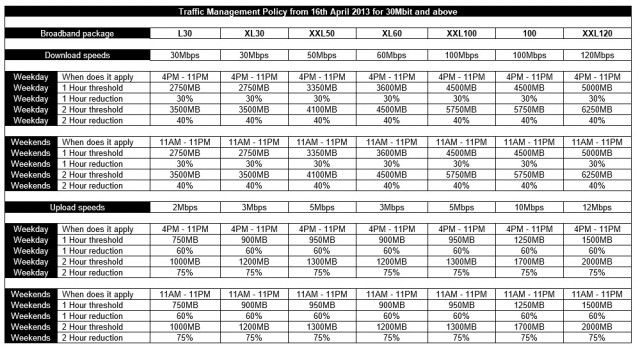

Virgin Media’s UK broadband customers have just been introduced to the extreme absurdity of selling “insanely fast” fiber broadband that comes with a sneaky spreadsheet guaranteed to confuse all but the most observant byte counters.

Some customers suspect Virgin Media is just retaliating for repeated findings from British regulators that the company runs dodgy advertising that promises one thing and delivers something entirely different in the fine print. More than two dozen of their TV commercials and print advertisements have been banned for deceptive ad claims, ranging from the “fastest broadband in Britain” (not exactly) to promotions promising “free service” that actually costs around £15 a month (what is a dozen quid or so among friends).

So why does Virgin Media need traffic management? They have oversold the service to too many customers and won’t invest enough in upgrades to keep up with demand.

Network overselling is more common that you might think. ISPs understand that all of their customers will not be online at the same time, so there is only a need to provision enough bandwidth to support their assumptions about anticipated usage. If your ISP serves a gated Luddite community, it won’t need the same data pipe required to provide access along University Row. The trick is to use real science and math to correctly anticipate user demand, but many ISPs answer first to their investors, who simply hate spending good money on upgrades. Expansion proposals are about as popular as North Korea’s Kim Jong-un. The result is “good enough” broadband service that is susceptible to overcrowding during prime usage times.

You already know what happens next. Once the kids are home from school and dinner is finished, your online experience quickly s l  o   w    s     t    o     (buffering).

In Britain, some ISPs are notorious for overselling broadband service that advertises speeds in the dozens of megabits, but can’t even break 1Mbps during peak usage times.

How can this be fixed? With investment in upgrades. What do ISPs do instead? They slap on usage caps and “network management” speed throttles that artificially slow browsing speeds for those considered “heavy users.”

Virgin Media was supposed to be a breath of fresh air from usage caps. Instead, the company promises a truly unlimited experience, with limitations.

Virgin’s latest iteration of its “peak time usage policy” resembles a tax table from the Internal Revenue Service. Can you understand it?

Data-traffic-management-limits-Virgin

Despite this, Virgin calls its broadband service “to all intents and purposes, completely unlimited.”

Where is that British regulator, again?

The company claims less than 3% of its customers will ever be affected by these limits. They might be right if customers avoid online video, downloading large files or games, cloud storage, or allowing other family members to use their connection at the same time. If one is subjected to the speed throttles, Virgin will take away nearly half of the speed customers were sold.

Here is Virgin’s position on all this:

“Our 100Mb customers receive speeds up to 104.6Mb, proven by Ofcom, and even if you’re one of the 2.3 per cent of heavy users we sometimes, temporarily traffic manage you’ll be receiving speeds of around 60Mb — so you can download and stream as much as you like.Today’s update makes it more flexible and responsive to how people are using our services and is designed to reduce the time customers may spend in traffic management, it could be just one hour. We do not have caps, nor do we charge customers more.”

That is true, but Virgin is charging a premium for broadband service speeds they are prepared to automatically take away when a customer persists in using the service they paid to receive.

Virgin could pay their experts to conjure up speed management charts like the one above, or they could invest in network upgrades that make such network management techniques unnecessary.

Rep. Eshoo Reintroducing Wireless Speed Disclosure Bill GOP, Carriers Will Consider DOA

Phillip Dampier January 16, 2013 Broadband Speed, Competition, Data Caps, Public Policy & Gov't, Wireless Broadband Comments Off on Rep. Eshoo Reintroducing Wireless Speed Disclosure Bill GOP, Carriers Will Consider DOA
Eshoo

Eshoo

Rep. Anna Eshoo (D-Calif.), the ranking member on the House Energy and Commerce Communications Subcommittee, will shortly reintroduce legislation that will require wireless companies to disclose more information about the anticipated speeds of their 4G wireless networks.

Eshoo announced her legislative intentions Tuesday at the Broadband Breakfast Club, telling attendees it was important for consumers to know what they are getting before signing a two-year contract.

The anticipated legislation is expected to mirror Eshoo’s 2011 bill — the Next Generation Wireless Disclosure Act (HR 2281), which never made it out of the Republican-dominated House committee.

Eshoo said consumers need clear and concise explanations of data limits, caps, or network management policies that can turn a fast 4G connection into a very slow or expensive one.

Many of the former bill’s supporters echoed carriers use “4G” as a marketing tool which can lead to consumer confusion. Networks ranging from Clearwire’s WiMAX service to T-Mobile’s HSPA+ to Verizon Wireless’ LTE network have all been dubbed “4G,” despite offering widely varying maximum speeds.

Consumers have also faced bill shock when they do not understand their monthly data limits.

Like the last bill, Eshoo’s newest effort is expected to face stiff opposition from wireless carriers and House Republicans, but may raise the temperature on data caps at the Federal Communications Commission, which has faced increasing pressure to become more involved in the issue of usage limits and consumption pricing.

FCC’s Pai: If Liberals Win on Net Neutrality, They’ll Ban Usage-Based Internet Billing Next

Phillip Dampier December 10, 2012 Data Caps, Net Neutrality, Public Policy & Gov't 1 Comment

Pai

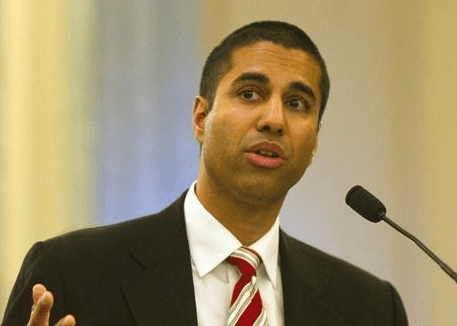
Republican FCC Commissioner Ajit Pai has warned forthcoming court rulings on Net Neturality could set the stage for more active oversight of Internet Service Providers, including a possible ban on usage-based pricing and data caps.

Speaking at the 2012 Annual U.S. Telecoms Symposium at the Phoenix Center in Washington, D.C. Dec. 6, Pai said 2013 will be an important year for broadband policy.

“The most important action probably will not occur either at the FCC or on Capitol Hill,” Pai said. “Instead, it will take place in the federal courthouse about a mile away on Constitution Avenue.”

The D.C. Court of Appeals is currently weighing a court challenge from Verizon that argues the federal agency has no regulatory authority to implement and oversee the open Internet policies that are the cornerstone of Net Neutrality.

Republicans have traditionally been hostile to the concept of Net Neutrality, because it restricts private providers from using network management concepts that could open up new revenue streams. Without Net Neutrality, providers could artificially reduce the performance of certain websites while enhancing others, usually based on financial agreements.

Many Democrats and consumer advocates want Net Neutrality to guarantee that all websites are treated equally, and that paying customers deserve a service unfettered by artificial obstacles or additional expense imposed by providers.

Even if the court finds in favor of Verizon, Pai fears the FCC’s Democratic majority will respond by emphatically asserting its oversight powers, reclassifying broadband as a “telecommunications service.” Since the Bush Administration, broadband has been regulated as an “information service,” subject to more restricted oversight.

“Should the D.C. Circuit uphold the FCC’s order, I would expect to see revitalized efforts to expand the Commission’s regulation of the Internet,” Pai said. “In particular, I would not be surprised if the FCC looked into whether we should stiffen our oversight of the network management practices of wireless broadband providers and whether we should begin to regulate usage-based pricing.”

“Under no circumstance will I support […] reclassification,” he added. “I am convinced that grafting the creaky, burdensome common carrier regulations onto the Internet would dramatically slow broadband deployment, reduce infrastructure investment, frustrate innovation, hamper job creation and diminish economic growth.”

Current FCC Chairman Julius Genachowski has expressed repeated support for usage-based pricing in the market as an innovation in Internet pricing. With the chairman and his Republican colleagues in agreement, it seems unlikely the agency will consider curtailing the practice. So far, the FCC has not even responded to repeated requests to further investigate usage pricing and data caps.

Search This Site:

Contributions:

Recent Comments:

Your Account:

Stop the Cap!