Home » network management » Recent Articles:

AT&T to Federal Trade Commission: Our Speed Throttling is None of Your Business

Image courtesy: cobalt123AT&T has asked a federal judge in California to throw out a lawsuit filed by the Federal Trade Commission over wireless speed throttling, claiming the federal regulator has no authority over how AT&T manages its network.

The FTC filed a lawsuit in October 2014 alleging AT&T was throttling the speeds of its grandfathered “unlimited data” customers by as much as 90 percent and failed to sufficiently disclose the practice in violation of the FTC Act.

Although AT&T discloses its network management policies in broad terms deep within its website, the original complaint charges AT&T failed to directly notify customers identified as the ‘heavy unlimited users’ targeted for wireless speed reductions reportedly as low as 56kbps for up to 30 days or more.

AT&T’s lawyers claim the FTC has no jurisdiction to file the lawsuit because a portion of AT&T’s business — cellular voice service — is defined by the Communications Act as a regulated common carrier service by the Federal Communications Commission. The FTC had argued AT&T’s mobile data services are unregulated and do not fall under the FCC’s exclusive jurisdiction.

AT&T’s attorneys argue two apparently contradictory assertions about wireless regulation that both require the court, in AT&T’s view, to dismiss the FTC’s case:

  1. AT&T acknowledges that its mobile data services are not subject to Title II regulatory oversight by the FCC as a common carrier service. Therefore, federal agencies like the FTC have no jurisdiction to interfere in AT&T’s private business decisions on issues like data caps and speed throttling because it is an unregulated service;
  2. AT&T claims the FCC has asserted sweeping authority over wireless services under Section 706 of the Telecommunications Act of 1996. Therefore it should be up to the FCC alone (and not the FTC) to decide the fairness of AT&T’s network management practices. But AT&T doesn’t remind the court this is the same authority that large telecom companies sued into impotence by successfully arguing the FCC exceeded its mandate attempting to assert jurisdiction on data services to enforce concepts such as Net Neutrality and attempting to fine Comcast for throttling peer-to-peer network traffic.

ftcAT&T calls the FTC’s claims it can intervene in services not regulated by the FCC “irrelevant,” arguing once one of AT&T’s services is subject to the FCC’s common carrier regulation, all of its services become untouchable by the FTC.

“The FTC lacks jurisdiction to prosecute this action because AT&T is a common carrier subject to the Communications Act and therefore outside the FTC’s authority under Section 5 of the FTC Act. 15 U.S.C. § 45(a)(2),” argues AT&T. “Indeed, the FTC itself has recognized that, as drafted, the exemption altogether removes common carriers such as AT&T from its jurisdiction and has asked Congress to modify the statute. So far, Congress has refused.”

“But whether AT&T’s network management program is ‘unfair’ and whether its disclosures were ‘inadequate’ are issues for the FCC to decide, and in fact the FCC is in the process of so deciding, just as Congress intended,” AT&T said. “Congress drafted Section 5 to avoid subjecting common carriers like AT&T to precisely this sort of conflicting authority of separate federal agencies over the same conduct.”

Should the FCC find AT&T in violation of its transparency rules, AT&T will have a strong legal case to have that ruling tossed as well on the grounds the agency has no mandate from Congress to regulate mobile data services under Section 706/Title III of the Communications Act — the same case other telecom companies have successfully argued in the D.C. Court of Appeals.

Ironically, AT&T’s apparent regulatory loophole will vanish should the FCC order that broadband services of all kinds be reclassified as Title II telecommunications services as part of the ongoing effort to implement strong Net Neutrality policies.

Verizon Wireless Cancels Its LTE 4G “Network Optimization” (Speed Throttling) Plan Before It Launches

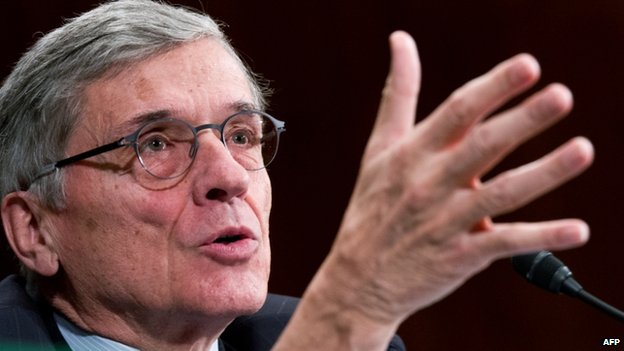
throttleVerizon Wireless, facing scrutiny from FCC chairman Thomas Wheeler, today announced it has canceled plans to introduce a new “network optimization” policy that would have significantly throttled down speeds for heavy users still on grandfathered, unlimited use data plans.

Stop the Cap! received a statement from Verizon Wireless this afternoon announcing a sudden change of heart:

Verizon is committed to providing its customers with an unparalleled mobile network experience.  At a time of ever-increasing mobile broadband data usage, we not only take pride in the way we manage our network resources, but also take seriously our responsibility to deliver exceptional mobile service to every customer.  We’ve greatly valued the ongoing dialogue over the past several months concerning network optimization and we’ve decided not to move forward with the planned implementation of network optimization for 4G LTE customers on unlimited plans.  Exceptional network service will always be our priority and we remain committed to working closely with industry stakeholders to manage broadband issues so that American consumers get the world-class mobile service they expect and value.

Chairman Wheeler questioned Verizon’s strategy almost immediately after the company announced its “network optimization” strategy in July.

Wheeler

Wheeler

“‘Reasonable network management’ concerns the technical management of your network; it is not a loophole designed to enhance your revenue streams,” Wheeler wrote in a July 30 letter to Verizon Wireless CEO Dan Mead. “It is disturbing to me that Verizon Wireless would base its ‘network management’ on distinctions among its customers’ data plans, rather than on network architecture or technology.”

Wheeler reminded Mead the FCC defined network management practices to be reasonable “if it is appropriate and tailored to achieving a legitimate network management purpose, taking into account the particular network architecture and technology of the broadband Internet access service.”

Wheeler told Mead Verizon’s plans didn’t qualify.

“I know of no past FCC statement that would treat as ‘reasonable network management’ a decision to slow traffic to a user who has paid, after all, for ‘unlimited” service,'” Wheeler wrote.

everybody does itWheeler also questioned how Verizon could justify its planned speed throttling under the conditions it agreed to after winning the 700MHz “C Block.” That spectrum was accompanied by a special FCC mandate – open platform rules which prohibits Verizon Wireless from denying, limiting, or restricting the ability of end users to download and use applications of their choosing on the C Block networks. A speed throttle would make using some applications impossible.

In August, Wheeler hammered home his opposition to Verizon’s plans at a news conference.

“My concern in this instance–and it’s not just with Verizon, by the way, we’ve written to all the carriers–is that [network management] is moving from a technology and engineering issue to a business issue, such as choosing between different subscribers based on your economic relationship with them.”

Wheeler has expressed irritation that Verizon’s justification for congestion management only applied to its unlimited customers, while those paying on a per-gigabyte basis could use (and spend) as much as they like.

Verizon responded that other providers — notably AT&T — already have a similar network management policy in place, throttling speeds of grandfathered unlimited customers who consume more than 3GB of wireless traffic on its 3G network or 5GB on its 4G network a month.

“‘All the kids do it’ was never something that worked with me when I was growing up and didn’t work with my kids,” Wheeler responded, noting Verizon was trying to reframe the issue instead of justifying the need for speed throttles for some customers, while giving others unlimited access as long as they pay.

FCC Chairman Promises “New and Improved” Net Neutrality Proposal That Is More of the Same

Phillip Dampier May 12, 2014 Broadband "Shortage", Broadband Speed, Consumer News, Data Caps, Editorial & Site News, Net Neutrality, Online Video, Public Policy & Gov't Comments Off on FCC Chairman Promises “New and Improved” Net Neutrality Proposal That Is More of the Same
Phillip "Section 706 is a road to nowhere" Dampier

Phillip “Section 706 is a road to nowhere” Dampier

After thousands of consumers joined more than 100 Internet companies and two of five commissioners at the Federal Communications Commission to complain about Chairman Tom Wheeler’s vision of Net Neutrality, the head of the FCC claims he has revised his proposal to better enforce Internet traffic equality.

Last week, huge online companies like Amazon, eBay, and Facebook jointly called Wheeler’s ideas of Net Neutrality “a grave threat to the Internet.”

In response over the weekend, an official close to the chairman leaked word to the Wall Street Journal that Wheeler was changing his proposal. Despite that, a closer examination of Wheeler’s ideas continues to show his unwavering faith in providers voluntarily behaving themselves. Wheeler’s evolving definition of Net Neutrality is fine… if you live in OppositeLand. His proposal would allow Internet Service Providers and content companies to negotiate paid traffic prioritization agreements — the exact opposite of Net Neutrality — allowing certain Internet traffic to race to the front of the traffic line.

Such an idea is a non-starter among Net Neutrality advocates, precisely because it undermines a core principle of the Open Internet — discriminating for or against certain web traffic because of a paid arrangement creates an unfair playing field likely to harm Internet start-ups and other independent entities that can’t afford the “pay to play” prices ISPs may seek.

Paid traffic prioritization agreements only make business sense when a provider creates the network conditions that require their consideration. If a provider operated a robust network with plenty of capacity, there would be no incentive for such agreements because Internet traffic would have no trouble reaching customers with or without the agreement.

But as Netflix customers saw earlier this year, Comcast and several other cable operators are now in the bandwidth shortage business — unwilling to keep up investments in network upgrades required to allow paying customers to access the Internet content they want.

While there is some argument that the peering agreement between Comcast and Netflix is not a classic case of smashing Net Neutrality, the effect on customers is the same. If a provider refuses to upgrade connections to the Internet without financial compensation from content companies, the Internet slow lane for that content emerges. Message: Sign a paid contract for a better connection and your clogged content will suddenly arrive with ease.
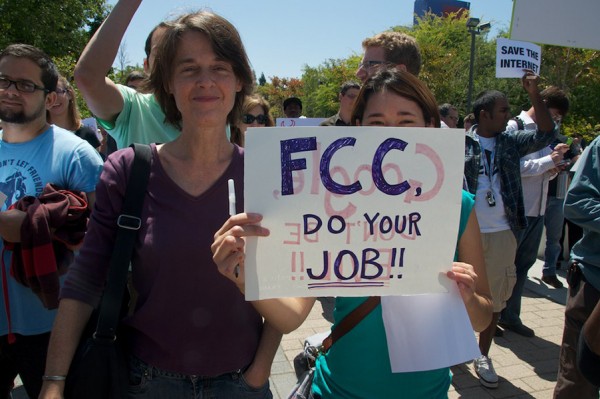
net-neutrality-protestWheeler has ineffectively argued that his proposal to allow these kinds of paid arrangements do not inherently commercially segregate the Internet into fast and slow lanes.

But in fact it will, not by artificially throttling the speeds of deprioritized, non-paying content companies, but by consigning them to increasingly congested broadband pipes that only work in top form for prioritized, first class traffic.

With Wheeler’s philosophy “unchanged” according to the Journal, his defense of his revised Net Neutrality proposal continues to rely on non germane arguments.

For example, Wheeler claims he will make sure the FCC “scrutinizes deals to make sure that the broadband providers don’t unfairly put nonpaying companies’ content at a disadvantage.” But in Wheeler’s World of Net Neutrality, providers would have to blatantly and intentionally throttle traffic to cross the line.

“I won’t allow some companies to force Internet users into a slow lane so that others with special privileges can have superior service,” Mr. Wheeler wrote (emphasis ours) to Google and other companies.

But if your access to YouTube is slow because Google won’t pay Comcast for a direct connection with the cable company, it is doubtful Wheeler’s proposal would ever consider that a clear-cut case of Comcast “forcing” customers into a “slow lane.” After all, Comcast itself isn’t interfering with Netflix traffic, it just isn’t provisioning enough room on its network to accommodate customer demand.

Another side issue nobody has mentioned is usage cap discrimination. Comcast exempts certain traffic from the usage cap it is gradually reintroducing around the country. Its preferred partners can avoid usage-deterring caps while those not aligned with Comcast are left on the meter.
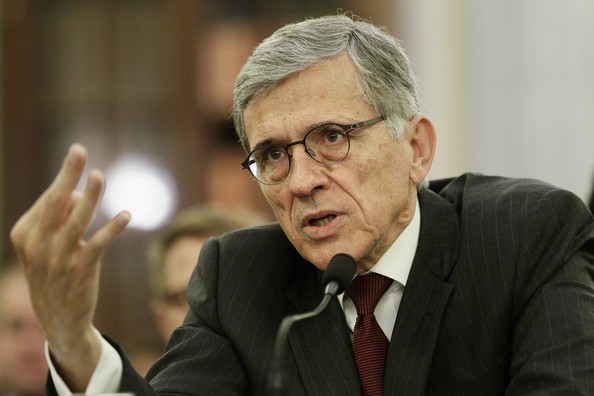
Wheeler

Wheeler

Some equipment manufacturers are producing even more sophisticated traffic management technology that could make it very difficult to identify fast and slow lanes, yet still opens the door to further monetization of Internet usage and performance in favor of a provider’s partners or against their competitors.

With Internet speeds and capacity gradually rising, the need for paid priority traffic agreements should decline, unless providers choose to cut back on upgrades to push another agenda. Already massively profitable, there is no excuse for providers not to incrementally upgrade their networks to meet customer demand. Prices for service have risen, even as the costs of providing the service have dropped overall.

Wheeler seems content to bend over backwards trying to shove a round Net Neutrality framework into a square regulatory black hole. Former chairman Julius Genachowski did the same, pretending that the FCC has oversight authority under Section 706 of the Telecommunications Act. But in fact that section is dedicated to expanding broadband access with restricted regulatory powers:

The Commission and each State commission with regulatory jurisdiction over telecommunications services shall encourage the deployment on a reasonable and timely basis of advanced telecommunications capability to all Americans (including, in particular, elementary and secondary schools and classrooms) by utilizing, in a manner consistent with the public interest, convenience, and necessity, price cap regulation, regulatory forbearance, measures that promote competition in the local telecommunications market, or other regulating methods that remove barriers to infrastructure investment.

The spirit of the 1996 Telecom Act was  deregulation — that language pertaining to “regulatory forbearance” encourages regulators to restrain themselves from reflexively solving every problem with a new regulation. The words about “removing barriers to infrastructure investment” might as well be industry code language for the inevitable talking point: “deregulation removes barriers to investment.”
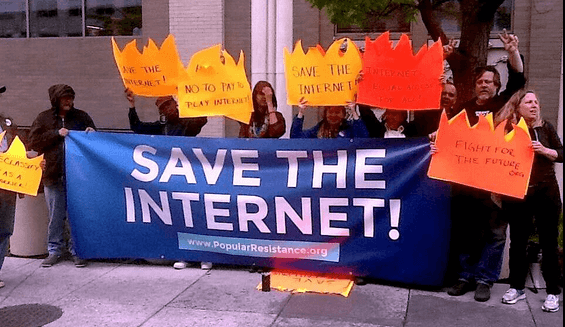
1nnWith a shaky foundation like that, any effort by the FCC to depend on Section 706 as its enabling authority to oversee the introduction of any significant broadband regulation is a house of cards.

The D.C. Circuit Court of Appeals agreed. In the Verizon network management case, the court found that the FCC was not allowed to use Section 706 to issue broad regulations that contradicted another part of the Communications Act.

U.S.C. 153(51) was and remains the FCC’s Section 706-Achilles Heel and the judge kicked it. This section of the Act says “a telecommunications carrier shall be treated as a common carrier under this [Act] only to the extent that it is engaged in providing telecommunications services.”

The current president of the National Cable & Telecommunications Association (NCTA) Michael Powell — coincidentally also former chairman of the FCC under President George W. Bush — helped see to it that broadband was not defined as a “telecommunications service.” Instead, it is considered an “information service” for regulatory purposes. This decision shielded emerging Internet providers (especially big phone and cable companies) from the kinds of traditional telecom utility regulations landline telephone companies lived with for decades. Of course, millions were also spent to lobby the telecom deregulation-friendly Clinton and Bush administrations with the idea to adopt “light touch” broadband regulatory policy. A Republican-dominated FCC had no trouble voluntarily limiting its own authority to oversee broadband by declaring both wired and wireless broadband providers “information services.”
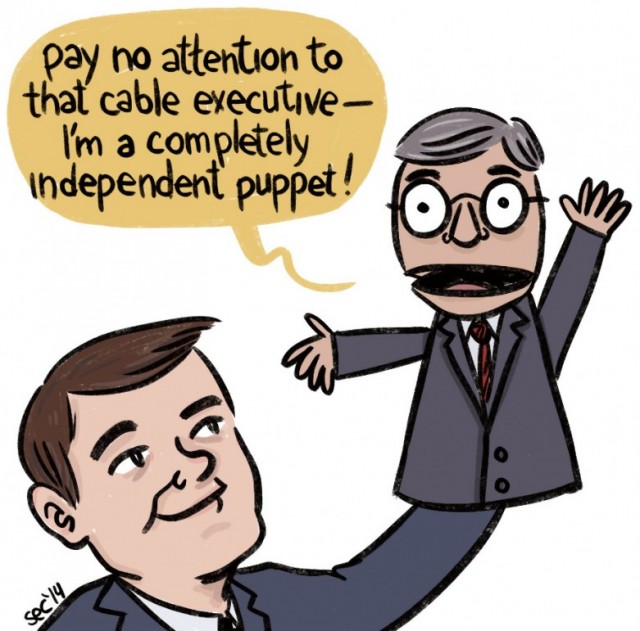
Tom Wheeler is the former president of the National Cable & Telecommunications Association

Tom Wheeler is the former president of the National Cable & Telecommunications Association

So it was the FCC itself that caused this regulatory mess. But the Supreme Court provided a way out, by declaring it was within the FCC’s own discretion to decide how to regulate broadband, either under Title I as an information service or Title II as a telecommunications service. If the FCC declares broadband as a telecommunications service, the regulatory headaches largely disappear. The FCC has well-tested authority to impose common carrier regulations on providers, including Net Neutrality protections, under Title II.

In fact, the very definition of “common carrier” is tailor-made for Net Neutrality because it generally requires that all customers be offered service on a standardized and non-discriminatory basis, and may include a requirement that those services be priced reasonably.

Inexplicably, Chairman Wheeler last week announced his intention to keep ignoring the straight-line GPS-like directions from the court that would snatch the FCC’s attorneys from the jaws of defeat to victory and has recalculated another proposed trip over Section 706’s mysterious bumpy side streets and dirt roads. Assuming the FCC ever arrives at its destination, it is a sure bet it will be met by attorneys from AT&T, Comcast, or Verizon with yet more lawsuits claiming the FCC has violated their rights by exceeding their authority.

Wheeler also doesn’t mollify anyone with his commitment to set up yet another layer of FCC bureaucracy to protect Internet start-ups:

Mr. Wheeler’s updated draft would also propose a new ombudsman position with ‘significant enforcement authority’ to advocate on behalf of startups, according to one of the officials. The goal would be to ensure all parties have access to the FCC’s process for resolving disputes.

Anyone who has taken a dispute to the FCC knows how fun and exciting a process that is. But even worse than the legal expense and long delays, Wheeler’s excessively ambiguous definitions of what constitutes fair paid prioritization and slow and fast lanes is money in the bank for regulatory litigators that will sue when a company doesn’t get the resolution it wants.

Wheeler promises the revised proceeding will invite more comments from the public regarding whether paid prioritization is a good idea and whether Title II reclassification is the better option. While we appreciate the fact Wheeler is asking the questions, we’ve been too often disappointed by FCC chairmen that apply prioritization of a different sort — to those that routinely have business before the FCC, including phone and cable company executives. Chairman Genachowski’s Net Neutrality policy was largely drafted behind closed doors by FCC lawyers and telecom industry lobbyists. Consumers were not invited and we’re not certain the FCC is actually listening to us.

The Wall Street Journal indicates the road remains bumpy and pitted with potholes:

Mr. Wheeler’s insistence that his strategy would preserve an open Internet, without previously offering much insight into how, has been a source of disquiet within his agency. Of the five-member commission, both Republicans are against any form of net neutrality rules, which they view as unnecessary. Commission observers will be watching the reaction of the two Democrats, Ms. Rosenworcel and Mignon Clyburn, to Mr. Wheeler’s new language.

“There is a wide feeling on the eighth floor that this is a debacle and I think people would like to see a change of course,” said another FCC official. “We may not agree on the course, but we agree the road we’re on is to disaster.”

There is still time to recalculate, but we wonder if Mr. Wheeler, a longtime former lobbyist for the wireless and cable industries, is capable of sufficiently bending towards the public interest.


North America Data Tsunami Warning Canceled; Usage Levels Off, Killing Excuses for Caps

Phillip Dampier November 11, 2013 Broadband "Shortage", Competition, Consumer News, Data Caps, Editorial & Site News, Net Neutrality, Online Video, Public Policy & Gov't Comments Off on North America Data Tsunami Warning Canceled; Usage Levels Off, Killing Excuses for Caps
(Image: BTIG Research)

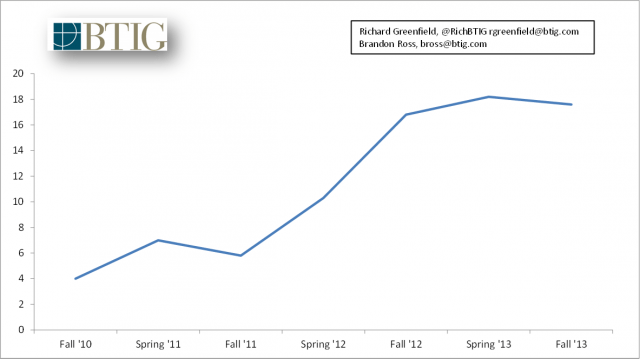
The median bandwidth use slowdown (Image: BTIG Research)

Despite perpetual cries of Internet brownouts, usage blowouts, and data tsunamis that threaten to overwhelm the Internet, new data shows broadband usage has leveled off in North America, undercutting providers’ favorite excuse for usage limits and consumption billing.

Sandvine today released its latest broadband usage study, issued twice yearly. The results show a clear and dramatic decline in usage growth in North America, with median usage up just 5% compared to the same time last year. That is a marked departure from the 190% and 77% growth measured in two earlier periods. In fact, as Richard Greenfield from BTIG Research noted, mean bandwidth use was down 13% year-over-year, after the second straight six month period of sequential decline.

Companies like Cisco earn millions annually pitching network management tools to providers implementing usage caps and consumption billing. For years, the company has warned of Internet usage floods that threaten to make the Internet useless (unless providers take Cisco’s advice and buy their products and services).

“Demand for Internet services continues to build,” said Roland Klemann from Cisco’s Internet Business Solutions Group. “The increasing popularity of smartphones, tablets, and video services is creating a ‘data tsunami’ that threatens to overwhelm service providers’ networks.”

Providers typically use “fairness” propaganda when introducing “usage based pricing,” blaming exponential increases in broadband usage and costly upgrades “light users” are forced to underwrite. A leveling off in broadband usage undercuts that argument.

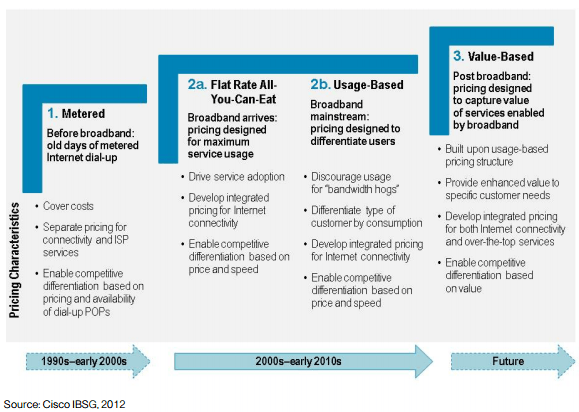
ciscos plan for your futureA Cisco White Paper intended for the eyes of Internet Service Providers further strips the façade off the false-“fairness” argument, exposing the fact usage pricing has little to do with traffic growth, pricing fairness, or the cost of upgrades:

In 2011, broadband services became mainstream in developed countries, with fixed-broadband penetration exceeding 60 percent of households and mobile broadband penetration reaching more than 40 percent of the population in two-thirds of Organisation for Economic Co-operation and Development (OECD) countries.

Meanwhile, traditional voice and messaging revenues have strongly declined due to commoditization, and this trend is expected to continue. Therefore, operators are now relegated to connectivity products. The value that operators once derived from providing value-added services is migrating to players that deliver services, applications, and content over their network pipes.

As if this were not enough, Internet access prices are dropping, sales volumes are declining, and markets are shrinking. The culprit: flat rate “all-you-can-eat” pricing. Such a model lacks stability—sending service provider pricing into a downward spiral—because it ignores growth potential and shifts the competition’s focus from quality and service differentiation to price.

While Klemann was spouting warnings about the dire implications of a data tsunami, Cisco’s White Paper quietly told providers what they already know:

Maximum Profits

Maximum Profits

“[Wired] broadband operators should be able to sustain forecasted traffic growth over the next few years with no negative impact on margins, as the incremental capital expenses required to support it are under control.”

If usage limits and consumption billing are not required to manage data growth or cover the cost of equipment upgrades, why adopt this pricing? The potential to exploit more revenue from mature broadband markets that lack robust competition.

“In light of the forecasted Internet traffic growth mentioned earlier and competitiveness in the telecommunications market, Cisco believes that fixed-line operators should consider gradually introducing selected monthly traffic tiers to sustain [revenue], while a) signaling to customers that “traffic is not free,” and b) monetizing bandwidth hogs more sustainably.”

Cisco makes its recommendation despite knowing full well from its own research that customers hate usage-based pricing.

“The introduction of traffic tiers and caps—especially for fixed broadband services—is not welcomed by the majority of customers, as they have learned to ‘love’ flat rate all-you-can-eat pricing. Most customers consider usage-based pricing for broadband services ‘unfair,’ according to the 2011 Cisco IBSG Connected Life Market Watch study.”

Cisco teaches providers how to price broadband like trendy boutique bottled water.

Cisco teaches providers how to price broadband like trendy boutique bottled water and blame it on growing Internet usage.

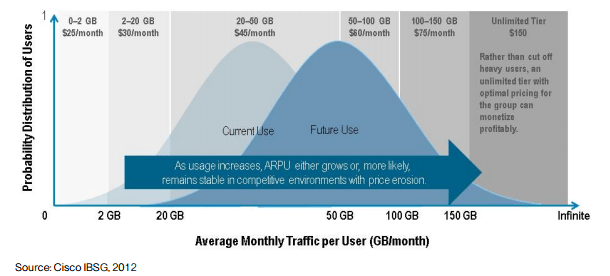
But with competition lacking, Cisco’s advice is to move forward anyway, as long as providers initially introduce caps and consumption billing at prices that do not impact the majority of customers… at first. In uncompetitive markets, Cisco predicts customers will eventually pay more, boosting provider revenue. Cisco’s “illustrative example” of usage billing in practice set prices at $45 a month for up to 50GB of usage, $60 a month for 50-100GB, $75 for 100-150GB, and $150 a month for unlimited access — more than double what customers typically pay today for flat rate access.

Usage billing arrives right on time to effectively handle online video, which increasingly threatens revenue from cable television packages.

Sandvine’s new traffic measurement report notes the increasing prominence of online video services like Netflix, YouTube, Hulu, and Amazon Video.

“As with previous reports, Real-Time Entertainment (comprised of streaming video and audio) continues to be the largest traffic category on virtually every network we examined, and we expect its continued growth to lead to the emergence of longer form video on mobile networks globally in to 2014,” Sandvine’s report noted.

Sandvine found that over half of all North American Internet traffic during peak usage periods comes from two services: Netflix and YouTube. YouTube globally is the leading source of Internet traffic in the world, according to Sandvine.

An old excuse for usage caps on “data hogs” – peer-to-peer file-sharing, continues its rapid decline towards irrelevance, now accounting for less than 10 percent of total daily traffic in North America. A decade earlier, file swapping represented 60 percent of Internet traffic.

Cisco’s answer for the evolving world of popular online applications is a further shift in broadband pricing towards “value-based tiers” that monetize different online applications by charging broadband users extra when using them. Cisco is promoting an idea that well-enforced Net Neutrality rules would prohibit.

Citing the bottled water market, Cisco argues if some customers are willing to pay up to $6 for a liter of trendy Voss bottled water, flat rate “one price fits all” broadband is leaving a lot of money on the table. With the right marketing campaign and a barely competitive marketplace, providers can charge far higher prices to get access to the most popular Internet applications.

“Research from British regulator Ofcom shows that consumers are becoming ‘addicted’ to broadband services, and heavy broadband users are willing to pay more for improved broadband service options.”

Wharton School professors Jagmohan Raju and John Zhang concluded price is the single most important lever to drive profitability.

The political implications of blaming phantom Internet growth and manageable upgrade costs for the implementation of usage caps or usage-based billing is uncertain. Even the “data hog” meme providers have used for years to justify usage caps is now open to scrutiny. Sandvine found the top 1% of broadband users primarily impact upstream resources, where they account for 39.8% of total upload traffic. But the top 1% only account for 10.1% of downstream traffic. In fact, Apple is likely to provoke an even larger, albeit shorter-term impact on a provider’s network from software upgrades. When the company released iOS7, Apple Updates immediately became almost 20% of total network traffic, and continued to stay above 15% of total traffic into the evening peak hours, according to Sandvine.

Some other highlights:

  • Average monthly mobile usage in Asia-Pacific now exceeds 1 gigabyte, driven by video, which accounts for 50% of peak downstream traffic. This is more than double the 443 megabyte monthly average in North America.
  • In Europe, Netflix, less than two years since launch, now accounts for over 20% of downstream traffic on certain fixed networks in the British Isles. It took almost four years for Netflix to achieve 20% of data traffic in the United States.
  • Instagram and Dropbox are now top-ranked applications in mobile networks in many regions across the globe. Instagram, due to the recent addition of video, is now in Latin America the 7th top ranked downstream application on the mobile network, making it a prime candidate for inclusion in tiered data plans which are popular in the region.
  • Netflix (31.6%) holds its ground as the leading downstream application in North America and together with YouTube (18.6%) accounts for over 50% of downstream traffic on fixed networks.
  • P2P Filesharing now accounts for less than 10% of total daily traffic in North America. Five years ago it accounted for over 31%.
  • Video accounts for less than 6% of traffic in mobile networks in Africa, but is expected to grow faster than in any other region before it.

Sprint’s ‘Clear’ Raises Prices for Its Throttled and Litigated WiMAX Network

Some ex-Clearwire customers were not happy when their speeds were reduced to 250kbps on the company's overcrowded network.

Some Clearwire customers remain unhappy when speeds are throttled to “manage” the network.

Clear (formerly known as Clearwire) has announced a general rate increase of about 10 percent for customers using its legacy 4G WiMAX broadband service.

As a result, most customers will pay about $5 more per month for fixed wireless or “on the go” broadband service.

“We instituted this to remain competitive and manage our costs,” a Sprint representative told Broadcasting & Cable. “Like our competitors, we must respond to customer trends, and provide a good user experience, and as a result we will make adjustments to fees and services from time to time. Our offer is still comparable to other offerings in the marketplace.”

Some customers would argue with Sprint’s definition of a “good user experience,” as complaints continue about heavy-handed throttling of Clear’s service that makes high bandwidth applications painful or impossible to use in the evening.

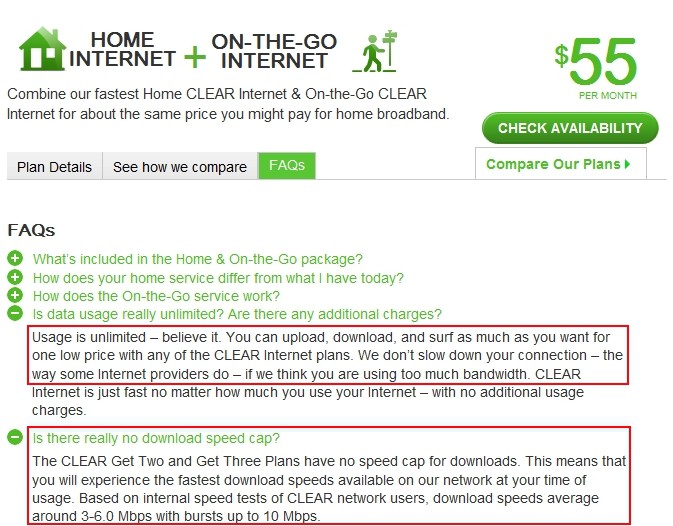
Stop the Cap! reader Akos contacted us this week to complain Clear still advertises and contracts for “unlimited data and top speeds,” while not exactly being upfront about targeting certain traffic for a prime time speed throttle that effectively keeps customers from streaming video.

“They openly admit their service is being throttled by software at each tower site that activates when it detects streaming video services like Netflix, reducing speed from 1.3Mbps to as little as 20kbps, rendering it unusable,” said Akos.

The speed throttle is usually active from 8pm-1:30am daily, when traffic is anticipated to be highest. Clear speaks about its network management speed throttle in the fine print: its Acceptable Use Policy.

Akos complains Clear’s speed throttle makes it easy to blame the streaming service, not Clear itself, because customers running speed tests will not see throttled speeds.

“It fools people to think the problem is on their end or with the streaming service, so customers don’t complain to Clear,” says Akos.

As a result, people using streaming video services get about 30 seconds of uninterrupted video before the throttle kicks in bringing extensive buffering delays.

Clearwire’s Speed Throttle Subject of Lawsuits

Clear's own 2010 marketing promises unlimited usage with no speed reductions, like those "other" providers.

Clear’s own 2010 marketing promises unlimited usage with no speed reductions, like those “other” providers.

Clearwire’s speed throttle has been a part of life with the wireless service since 2010. Clearwire had significant legal exposure over its choice of network management because the company routinely advertised “unlimited service” with no speed throttles or overlimit fees. At least three lawsuits were filed against the company for its undisclosed throttling practices, eventually condensed into a single class action case that was finally settled last month.

Under the terms of the settlement, Clear admits no wrongdoing, but will clearly disclose it uses “network management” practices — a term that generally means usage caps and/or speed throttles — and will give customers information about the speeds they can expect when the throttle is active. As of today, Clear has not done that. Clear also volunteered to suspend term contracts and waive early termination fees for customers complaining about speed issues.

At least seven law firms handling the case will split a total award fee of $1,887,792.91 and expenses of $62,207.09. Individual representative plaintiffs each receive up to $2,000. Everyone else identified as part of the class action case that returned a claim form prior to Jan. 3, will receive an average of less than $30:

  • a 50% refund of any early termination fee charged after a customer canceled service because of speed throttling;
  • a rebate of $14 for customers signing up for Clearwire before Sept. 1, 2010 and experiencing speed throttling or a rebate of at least $7 for Clearwire customers signing up on or after Sept. 1, 2010;
  • plus varying amounts for each month of service prior to Feb. 27, 2012 during which Clearwire’s records show it throttled a customer’s Internet speed. Customers throttled at 0.25Mbps will receive $5.00 for each month throttled, 0.60 Mbps: $3.00, and 1.0 Mbps: $2.00.

Court documents reveal of the 2,733,406 customers identified in Clearwire’s records as being speed throttled, only 83,840 submitted timely claims as part of the class action case. This represents a claims rate of about 3.1%. Of those, 76,199 were for speed throttling, 2,331 were requests for reimbursement of early termination fees.

The Future of Clear’s WiMAX and Sprint’s 4G

LTE: AT&T's wireless rural broadband solution?

Sprint purchased the assets of Clearwire Corporation in July, rebranded the network “Clear,” and as of the end of August, stopped selling WiMAX devices to customers. Although Clear will still activate existing equipment, potential new customers are being marketed broadband plans on the Sprint network instead.

Former Clear dealers have received word Sprint plans to eventually decommission its acquired WiMAX network as early as 2014, most likely by gradually converting portions of the 2.5GHz spectrum Clear’s WiMAX service now uses in favor of Sprint’s 4G LTE service in urban and high congestion areas. Clearwire itself was in the process of adopting a variant of 4G LTE technology that would gradually replace the outdated WiMAX standard when Sprint acquired the company.

Although Sprint runs its own 3G network, it partnered with Clearwire to provide 4G WiMAX for Sprint customers. In 2011, Sprint announced it would stop selling devices with built-in support for WiMAX and announced it would launch its own 4G LTE network. Sprint will adopt the same version of LTE other North American carriers are using: FD-LTE, or Frequency Division LTE, which requires one transmit channel and one receive channel. But it will also support and continue Clearwire’s upgrade to TD-LTE, or Time Division LTE, a slightly different standard that supports receiving and transmitting signals on a single frequency at slightly different time intervals, providing enhanced spectrum efficiency. At least 5,500 towers should be active with TD-LTE service by the end of this year. End users will care only to the extent their devices support one or both standards.

Sprint’s 4G LTE rollout will depend primarily on higher frequency spectrum that is disadvantageous indoors and over extended distances. Sprint’s competitors AT&T and Verizon Wireless primarily depend on lower 700MHz frequencies that penetrate buildings better and can serve a larger coverage area. But a combination of Sprint and Clearwire’s spectrum assets give Sprint the most wireless spectrum of any U.S. carrier, which means potentially faster speeds and more capacity.

  • 1900MHz: Sprint’s primary 4G FD-LTE service is now available in 151 cities on more than 20,000 cell towers;
  • 2500MHz: Now used by Clear’s legacy WiMAX network, will see a transition towards Sprint’s TD-LTE service which will be targeted to urban and high congestion areas from “small cell” sites;
  • 800MHz: The former home of now-shuttered Nextel, Sprint will eventually launch FD-LTE service on this band which will offer better indoor and marginal area reception.

Customers can expect devices that support both FD-LTE and TD-LTE in 2014.

Search This Site:

Contributions:

Recent Comments:

Your Account:

Stop the Cap!