Home » network management » Recent Articles:

Fine Print Fun: Sprint Backs Off From Throttling All Wireless Video Traffic to 600kbps

sprint all inSprint’s all-new “All-In” wireless plan was supposed to simplify wireless pricing for consumers by bundling a leased phone, unlimited voice, data, and texting for a flat $80 a month, but customers slogging through the fine print discovered speed throttling and roaming punishments were silent passengers along for the ride:

To improve data experience for the majority of users, throughput may be limited, varied or reduced on the network. Streaming video speeds will be limited to 600Kbps at all times, which may impact quality. Sprint may terminate service if off-network roaming usage in a month exceeds: (1) 800 min. or a majority of min.; or (2) 100MB or a majority of KB. Prohibited network use rules apply—see sprint.com/termsandconditions.

Although many smaller wireless carriers also have limits on off-network roaming usage, none have proposed to permanently throttle web videos to a frustratingly slow 600kbps. At those speeds, Sprint customers could expect buffering delays or degraded HD video.

Many customers contemplating switching to the All-In plan considered the speed throttle a deal-breaker and let Sprint know through its social media accounts. Even websites friendly to Sprint were very critical of the plan:

Sprint 4G Rollout Updates:

We just aren’t seeing the new and innovative thing with All In. You already have plans that price out the same way as All In (some even less expensive). It appears as a marketing gimmick that is disguising a desperate move to limit streaming. This is not popular with your current customers and your new customers are likely going to hate you for it. After they find out.
.
Marcelo, it’s really bad that David Beckham touts unlimited movie watching and you reference unlimited watching videos in your Press Release. 600kbps video streaming can hardly run any YouTube or Netflix streaming. It will buffer significantly even with the lowest resolution settings. 600kbps is insufficient for most moderate quality video streaming on a smartphone screen.

Claure

Claure

Sprint CEO Marcelo Claure got the message and announced late yesterday the video speed throttle was gone, but general network management would remain.

“At Sprint, we strive to provide customers a great experience when using our network,” said Sprint CEO Marcelo Claure. “We heard you loud and clear, and we are removing the 600 kbps limitation on streaming video. During certain times, like other wireless carriers, we might have to manage the network in order to reduce congestion and provide a better customer experience for the majority of our customers.”

Claure has been hinting the days of unlimited data from Sprint may be coming to an end sometime in the near future. Sprint is among the last carriers that offer a truly unlimited experience, and some customers have used Sprint as a home broadband replacement and have created congestion issues as they consume hundreds of gigabytes of wireless data, which can slow Sprint’s network to a crawl in some areas. T-Mobile experienced similar issues and recently updated their terms and conditions to apply a speed throttle after 21GB of usage during a billing cycle.

Unlimited 4G LTE customers who use more than 21 GB of data in a bill cycle will have their data usage de-prioritized compared to other customers for that bill cycle at locations and times when competing network demands occur, resulting in relatively slower speeds. See t-mobile.com/OpenInternet for details.

Customers report in high volume areas speeds drop well below 1Mbps if they are temporarily sentenced to “speed jail.”

Many of those attempting to use a wireless carrier as their primary home broadband connection do not do so because of convenience or selfishness. Often, they have no other choice because they are bypassed by cable operators and not served by DSL. But it does not take too many customers to start creating problems for wireless carriers if a nearby cell tower becomes congested. Online video is probably the most bandwidth intensive application for wireless companies, especially HD video streaming. The growth of video traffic also raises questions about whether AT&T and Verizon’s efforts to move rural customers to an all-wireless phone and data platform will work well for the companies or customers.

FCC Releases Final Net Neutrality Rules (and the Endless Republican Dissent)

Phillip Dampier March 12, 2015 Net Neutrality, Public Policy & Gov't Comments Off on FCC Releases Final Net Neutrality Rules (and the Endless Republican Dissent)

FCC-15-24A1

The Federal Communications Commission this morning released its final order detailing the agency’s official Net Neutrality rules intended to protect and preserve a free and open Internet.

The 400-page document includes footnoted, plain language explanations and arguments in favor of the new regulations as well as the rules of the road for Internet Service Providers, details about how to complain about alleged violators, and lengthy objections from the two Republican commissioners who oppose the new net policies.

Despite the exposition and dissent (and the Wall Street Journal editorial page calling the document a “blobfish,” the Net Neutrality rules and supplementary definitions are around 450 words long:

A person engaged in the provision of broadband Internet access service, insofar as such person is so engaged, shall not block lawful content, applications, services, or nonharmful devices, subject to reasonable network management.

A person engaged in the provision of broadband Internet access service, insofar as such person is so engaged, shall not impair or degrade lawful Internet traffic on the basis of Internet content, application, or service, or use of a non-harmful device, subject to reasonable network management.

A person engaged in the provision of broadband Internet access service, insofar as such person is so engaged, shall not engage in paid prioritization.

“Paid prioritization” refers to the management of a broadband provider’s network to directly or indirectly favor some traffic over other traffic, including through use of techniques such as traffic shaping, prioritization, resource reservation, or other forms of preferential traffic management, either (a) in exchange for consideration (monetary or otherwise) from a third party, or (b) to benefit an affiliated entity.

Any person engaged in the provision of broadband Internet access service, insofar as such person is so engaged, shall not unreasonably interfere with or unreasonably disadvantage (i) end users’ ability to select, access, and use broadband Internet access service or the lawful Internet content, applications, services, or devices of their choice, or (ii) edge providers’ ability to make lawful content, applications, services, or devices available to end users. Reasonable network management shall not be considered a violation of this rule.

A person engaged in the provision of broadband Internet access service shall publicly disclose accurate information regarding the network management practices, performance, and commercial terms of its broadband Internet access services sufficient for consumers to make informed choices regarding use of such services and for content, application, service, and device providers to develop, market, and maintain Internet offerings.

A mass-market retail service by wire or radio that provides the capability to transmit data to and receive data from all or substantially all Internet endpoints, including any capabilities that are incidental to and enable the operation of the communications service, but excluding dial-up Internet access service. This term also encompasses any service that the Commission finds to be providing a functional equivalent of the service described in the previous sentence, or that is used to evade the protections set forth in this Part.

A network management practice is a practice that has a primarily technical network management justification, but does not include other business practices. A network management practice is reasonable if it is primarily used for and tailored to achieving a legitimate network management purpose, taking into account the particular network architecture and technology of the broadband Internet access service.

In brief, the new rules forbid providers from fiddling with your Internet traffic for the purposes of speeding up their preferred partners while slowing down everyone else for economic motivations. It does allow providers to engage in reasonable “network management” as long as those management techniques apply equally to all content of a specific type. For instance, Comcast cannot slow down Netflix while speeding up its own affiliated online streaming services.

Charter Communications Quietly Eliminates Usage Caps That Were Rarely Enforced Anyway

charter spectrum logoCharter Communications has quietly dropped usage caps and allowances from the company’s terms and conditions, once again giving Charter broadband customers unlimited access to the Internet.

Like Cox Cable, Charter almost never enforced their usage caps, which were specified as 100GB for its “base” service, 250GB for “Plus” and “Max” tiers and 500GB for “Ultra” service. Customers threatening to cancel service over usage cap matters were assuaged with a commitment by retention specialists that the caps were just a “guideline” and would not be enforced except in the most egregious instances of customer “overuse” of the Internet.

In place of the caps, Charter has returned to boilerplate language found in almost every ISP’s Acceptable Use Policy:

Excessive use of bandwidth that in Charter’s sole opinion, places an unusually large burden on the network or goes above normal usage [is prohibited]. Charter has the right to impose limits on excessive bandwidth consumption via any means available to Charter.

Customers routinely exceeding a terabyte of usage a month have never been contacted by Charter, so such usage apparently does not place a burden on their network. However, Charter also reserves the right to cut your speeds through “reasonable network management tools,” some that may now be forbidden by the FCC’s Net Neutrality policy:

Charter uses a variety of reasonable network management tools and practices consistent with industry standards. In the event the periods of congestion necessitate such management, Charter has available the following tools and practices (without limitation and as may be adjusted over time): (i) use of an upper limit of bandwidth allocated for uploading of files during congested periods; (ii) Subscriber Traffic Management (STM) technology to temporarily lower the priority of traffic with the greatest impact on peak congestion; (iii) spam filtering and detection techniques; and (iv) measures to protect the security and integrity of its network, resources and subscribers. In limited instances if employed, these techniques may affect the throughput rate at which subscribers may send and receive data, the ability of users to establish session connections within the network, or result in the delay of certain traffic during times of peak congestion.

Charter has “simplified” their Internet offers down to two for most customers: 60/4Mbps for Spectrum Internet ($59.99) and 100/5Mbps for Internet Ultra ($109.99). A source at Charter tells Stop the Cap! the company is conducting very limited trials raising speeds to 100/25Mbps for its base package and boosting its Ultra tier to 300/50Mbps, in case fiber competitors arrive. Those tests are not expected to become widespread however as the prevailing view at Charter is to wait until it deploys DOCSIS 3.1 and then raise speeds to 300/50Mbps for its entry-level package and 500/300Mbps for Ultra.

Starting in January, Charter began notifying its broadband-only customers it was raising prices $5 a month (from $54.99 to $59.99).

Republicans’ Fake Net Neutrality Alternative Contains Grand Canyon-Sized Loopholes

Thune

Thune

When Sen. John “Net Neutrality is unjustified” Thune (R-S.D.) and Rep. Fred “Net Neutrality is a solution in search of a problem” Upton (R-Mich.) last week magically became Internet activists ready to solve the Net Neutrality issue with an “unambiguous” bill to “protect Americans” from greedy ISPs, you will pardon me if I am just a tad suspicious.

The two Republicans who champion “less government regulation is better” and “let the marketplace decide for itself”-principles are proposing new legislation that will regulate the conduct of Internet Service Providers, claiming it will tie their hands and prevent the launch of Internet fast lanes and ban traffic degradation.

The two legislators are traveling in a fast lane of their own — hurrying to schedule hearings, mark up a bill, and speed it to the floor for consideration by the end of this month. That’s a marked departure for the U.S. Congress-as-usual, the one that can’t manage to pass virtually anything, much less in a hurry. So where is the fire?

It is at the Federal Communications Commission in Washington, scheduled to vote on its own new Net Neutrality proposal by the end of February. Thune and Upton are hoping to launch a pre-emptive strike against the anticipated strong Open Internet protections the FCC will probably enact on a party line vote. The FCC is likely to pursue a reclassification of broadband away from the lobbyist-lovin’, largely deregulated “information service” it is today towards a “telecommunications service” under Title II of the Communications Act. That represents Comcast’s worst nightmare.

???????????????????????????????Current FCC rules have allowed traffic shenanigans from ISPs like Comcast that don’t mind slowing their customers’ Netflix experience to a crawl until the streaming company opens its checkbook. The FCC’s anticipated new proposal would strictly forbid any creative end-runs around the concept of paid fast lanes Comcast can get away with today.

The proposed Republican alternative suggests a “third way” compromise only Comcast and AT&T could love. While ostensibly banning intentional interference with Internet traffic, the two legislators include a Grand Canyon-sized loophole in the form of one word you could fly an Airbus A380 through: reasonable

SEC. 13. INTERNET OPENNESS.

(a) OBLIGATIONS OF BROADBAND INTERNET ACCESS SERVICE PROVIDERS.—A person engaged in the provision of broadband Internet access service, insofar as such person is so engaged (1) may not block lawful content, applications, or services, subject to reasonable network management; may not prohibit the use of non-harmful devices, subject to reasonable network management; may not throttle lawful traffic by selectively slowing, speeding, degrading, or enhancing Internet traffic based on source, destination, or content, subject to reasonable network management; may not engage in paid prioritization; and shall publicly disclose accurate and relevant information in plain language regarding the network management practices, performance, and commercial terms of its broadband Internet access services sufficient for consumers to make informed choices regarding use of such services and for content, application, service, and device providers to develop, market, and maintain Internet offerings, except that a provider is not required to publicly disclose competitively sensitive information or information that could compromise network security or undermine the efficacy of reasonable network management practices.

No ISP has ever declared its own traffic management policies unreasonable, so whatever they do, in their minds, is “reasonable” by definition.

Upton

Upton

The proposed bill would keep Net Neutrality far away from the critical Title II foundation it needs — essential armor that will help withstand inevitable court challenges by providers outraged by the government’s attempt to interfere with their free speech rights (at the expense of their customers’ freedom from content-killing traffic slowdowns).

The concept of “network management” is Play-Doh in Comcast and AT&T’s hands. It could mean balancing traffic by adding more capacity as needed or implementing a “fair access policy” that rations inadequate capacity. Both could easily be called “reasonable” by them. Customers paying for 25Mbps and getting 6Mbps during the evenings may think otherwise.

But no worries, the Republicans’ plan requires ISPs to disclose exactly how they are undercutting the broadband service you paid good money to receive. They claim that will give you an “informed choice,” except for many Americans, there is no choice.

The FCC’s plan is much more likely to stop to the tricks, traps, and traffic manipulation in whatever form arises now or in the future. It uses well-established precedent that is unlikely to be thrown out by the courts, delivers real oversight desperately needed in the monopoly/duopoly broadband marketplace, and will actually protect consumers.

The Republican alternative primarily protects AT&T, Comcast, and their chances of getting more campaign contributions from their friends in the cable and phone business. In short, it isn’t worth your time, and you should tell your member of Congress it isn’t worth theirs either.

FCC’s Tom Wheeler Falls in Line Behind President Obama’s Strong Net Neutrality Agenda

Wheeler

Wheeler

The chairman of the Federal Communications Commission has foreshadowed his revised plan for Net Neutrality will include reclassification of broadband as a utility, allowing the agency to better withstand future legal challenges as it increases its oversight of the Internet.

Tom Wheeler’s latest comments came during this week’s consumer electronics show in Las Vegas. Wheeler stressed he supports reclassification of broadband, away from its current definition as an “information service” subject to Section 706 of the Telecom Act of 1996 (all two broadly written paragraphs of it) towards a traditional “telecommunications service.” Under the Communications Act of 1934, that would place broadband under Title II of the FCC’s mandate. Although at least 100 pages long, Title II has stood the test of time and has withstood corporate lawsuits and challenges for decades.

Section 706 relies almost entirely on competition to resolve disputes by allowing the marketplace to solve problems. The 1996 Telecom Act, signed into law by President Bill Clinton, sought to promote competition and end “barriers to infrastructure investment.” Broadly written with few specifics, large telecom companies have successfully argued in court that nothing in Section 706 gives the FCC the right to interfere with the marketing and development of their Internet services, including the hotly disputed issues of usage caps, speed throttling, and the fight against paid fast lanes and Internet traffic toll booths. In fact, the industry has argued increased involvement by the FCC runs contrary to the goals of Section 706 by deterring private investment.

An executive summary of a report published on the industry-funded Internet Innovation Alliance website wastes no time making that connection, stating it in the first paragraph:

Net neutrality has the potential to distort the parameters built into operator business cases in such a way as to increase the expected risk. And because it distorts the operator investment business decision, net neutrality has the potential to significantly discourage infrastructure investment. This is due to the fact that investments in infrastructure are highly sensitive to expected subscriber revenue. Anything that reduces the expectation of such revenue streams can either delay or curtail such investments.

netneutralityUnfortunately for consumers, even the chairman of the FCC concedes the broadband marketplace isn’t exactly teeming with the kind of competition Section 706 envisioned to keep the marketplace in check. In fact, Wheeler suggested most Americans live with a broadband duopoly, and often a monopoly when buying Internet access at speeds of 25Mbps or greater. Further industry consolidation is already underway, which further deters new competitors from entering the market.

Net Neutrality critics, the broadband industry, and their allies on Capitol Hill have argued that adopting Title II rules for broadband will saddle ISPs with at least one hundred pages of rules originally written to manage the landline telephone monopoly of the 1930s. Title II allows the FCC to force providers to charge “just and reasonable rates” which they believe opens the door to rate regulation. It also broadly requires providers to act “in the public interest” and unambiguously prohibits companies from making “any unjust or unreasonable discrimination in charges, practices, classifications, regulations, facilities, or services.”

Both Comcast and Verizon have challenged the FCC’s authority to regulate Internet services using Section 706, and twice the courts have ruled largely in favor of the cable and phone company. Judges have no problem permitting the FCC to enforce policies that encourage competition, which has allowed the FCC some room to insist that whatever providers choose to charge customers or what they do to manage Internet traffic must be fully disclosed. The court in the Verizon case also suggested the FCC has the authority to oversee the relationship between ISPs and content providers also within a framework of promoting competition.

DC Circuit Court

DC Circuit Court

But when the FCC sought to enforce specific policies governing Internet traffic using Section 706, they lost their case in court.

Although Net Neutrality critics contend the FCC has plenty of authority to enforce Net Neutrality under Section 706, in reality the FCC’s hands are tied as soon as they attempt to implement anti-blocking and anti-traffic discrimination rules.

The court found that the FCC cannot impose new rules under Section 706 that are covered by other provisions of the Communications Act.

So what does that mean, exactly?
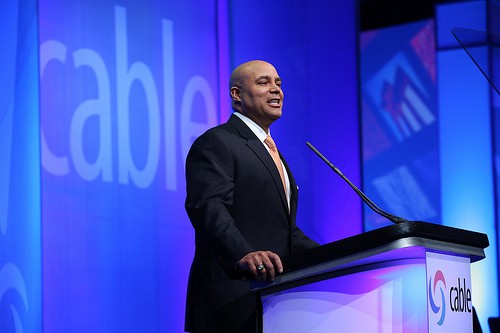
Michael Powell, former FCC chairman, is now the chief lobbyist for the National Cable & Telecommunications Association. (Photo courtesy: NCTA)

Michael Powell, former FCC chairman, is now the chief lobbyist for the National Cable & Telecommunications Association. (Photo courtesy: NCTA)

In 2002, former FCC chairman Michael Powell (who serves today as the cable industry’s chief lobbyist) presided over the agency’s decision to classify broadband not as a telecommunications service but an “information service provider” subject to Title I oversight. Whether he realized it or not, that decision meant broadband providers would be exempt from common carrier obligations as long as they remained subject to Title I rules.

When the FCC sought to write rules requiring ISPs not block, slow or discriminate against certain Internet traffic, the court ruled they overstepped into “common carrier”-style regulations like those that originally prohibited phone companies from blocking phone calls or preventing another phone company from connecting calls to and from AT&T’s network.

If the FCC wanted to enforce rules that mimic “common carrier” regulations, the court ruled the FCC needed to demonstrate it had the regulatory authority or risk further embarrassing defeats in the courtroom. The FCC’s transparency rules requiring ISPs to disclose their rates and network management policies survived Verizon’s court challenge because the court found that policy promoted competition and did not trespass on regulations written under Title II.

The writing on the wall could not be clearer: If you want Net Neutrality to survive inevitable court challenges, you need to reclassify broadband as a telecommunications service under Title II of the Communications Act.

Major ISPs won’t hear of it however and have launched an expensive media blitz claiming that reclassification would subject them to 100 pages of regulations written for the rotary dial era. Broadband, they say, would be regulated like a 1934 landline. Some have suggested the costs of complying with the new regulations would lead to significant rate increases as well. Many Republicans in Congress want the FCC to wait until they can introduce and pass a Net Neutrality policy of their own, one that will likely heavily tilt in favor of providers. Such a bill would likely face a presidential veto.

Suggestions the FCC would voluntarily not impose outdated or irrelevant sections of Title II on the broadband industry didn’t soothe providers or their supporters. Republican FCC commissioners are also cold to the concept of reclassification.

O'Rielly

O’Rielly

“Title II includes a host of arcane provisions,” said FCC commissioner Michael O’Rielly in a meeting in May 2014. “The idea that the commission can magically impose or sprinkle just the right amount of Title II on broadband providers is giving the commission more credit than it ever deserves.”

Providers were cautiously optimistic in 2014 they could navigate around strong Net Neutrality enforcement with the help of their lobbyists and suggestions that an industry-regulator compromise was possible. Early indications that a watered-down version of Net Neutrality was on the way came after a trial balloon was floated by Wheeler last year. Under his original concept, paid fast lanes and other network management and traffic manipulation would be allowed if it did not create undue burdens on other Internet traffic.

Net activists loudly protested Wheeler’s vision of Net Neutrality was a sellout. Wheeler’s vision was permanently laid to rest after last November when President Barack Obama suddenly announced his support for strong and unambiguous Net Neutrality protections (and reclassifying broadband as a Title II telecommunications service), No FCC chairman would likely challenge policies directly advocated by the president that nominated him.

Obama spoke, Thomas Wheeler listened. Wheeler’s revised Net Neutrality plan is likely to arrive on the desks of his fellow commissioners no later than Feb. 5, scheduled for a vote on Feb. 26. It’s a safe bet the two Republicans will oppose the proposal and the three Democrats will support it. But chairman Wheeler also listens to Congress and made it clear he doesn’t have a problem deferring to them if they feel it necessary.

“Clearly, we’re going to come out with what I hope will be the gold standard,” Wheeler told the audience in Las Vegas. “If Congress wants to come in and then say, we want to make sure that this approach doesn’t get screwed up by some crazy chairman that comes in, [those are] legitimate issues.”

If that doesn’t work, the industry plans to take care of the Net Neutrality regulation problem itself. Hours after any Net Neutrality policy successfully gets approved, AT&T has promised to challenge it in court.

[flv]http://www.phillipdampier.com/video/Fox Business News Net Neutrality Wheeler 1-8-15.flv[/flv]

Free Press CEO Craig Aaron appeared on Fox Business News to discuss Tom Wheeler’s evolving position on Net Neutrality. (3:54)


Search This Site:

Contributions:

Recent Comments:

Your Account:

Stop the Cap!