Home » mobile data » Recent Articles:

South Korea Set to Launch 100Mbps Wireless, Seamlessly Combines Mobile Broadband & Wi-Fi

Phillip Dampier January 5, 2012 Broadband Speed, Consumer News, Wireless Broadband Comments Off on South Korea Set to Launch 100Mbps Wireless, Seamlessly Combines Mobile Broadband & Wi-Fi

While you ponder Verizon Wireless’ latest LTE 4G outage or try to convince yourself Sprint really is selling “4G” service from Clearwire, South Korea’s Sunkyoung Telecom (SK Telecom) is deploying new technology to enormously boost wireless Internet speeds to as high as 100Mbps.

SK Telecom has developed new Heterogeneous Network Integration Solution (HNIS) technology that weds 3G/4G service with any open Wi-Fi network to deliver speeds many times faster than North Americans can get from their wireless providers.  The technology is designed to work without a lot of consumer intervention.  For example, HNIS will automatically provision open Wi-Fi access wherever subscribers travel.  The combination of mobile broadband with Wi-Fi works seamlessly as well.  Currently, smartphones can use Wi-Fi or mobile data, but not both at the same time.  HNIS changes that.

While mobile operators cope with spectrum and capacity issues, HNIS can reduce the load on wireless networks, without creating a hassle for wireless customers who used to register with every Wi-Fi service they encountered.  The theoretical speed of an HNIS-enhanced 3G and Wi-Fi connection in South Korea will be 60Mbps when SK Telecom fully deploys the technology this year.  As SK expands the technology to its 4G networks, theoretical maximum speeds will increase to 100Mbps.

SK is so confident in the technology, it plans to equip all of its smartphones with the new technology starting in 2013.

Byun Jae-Woan, CTO of SK Telecom said, “SK Telecom will provide customers with a data service of much greater speed with Heterogeneous Network Integration Solution, which represents one of the company’s world’s top-level network operation technologies. By realizing the speed of fixed-line services with wireless networks, SK Telecom will allow its customers to experience a new and innovative mobile life.”

Operators like AT&T are installing their own Wi-Fi hotspots in heavy use areas to try and offload data traffic to Wi-Fi.  But customers have to make the connection themselves. HNIS quietly handles this process in the background while staying in touch with SK’s 3G and 4G networks to maintain a consistent data connection.


Updated: Stop the Cap! Helps Verizon Wireless Customers Sign Up for Unlimited Data Through Loophole

Phillip Dampier January 3, 2012 Consumer News, Data Caps, Verizon, Wireless Broadband 1 Comment

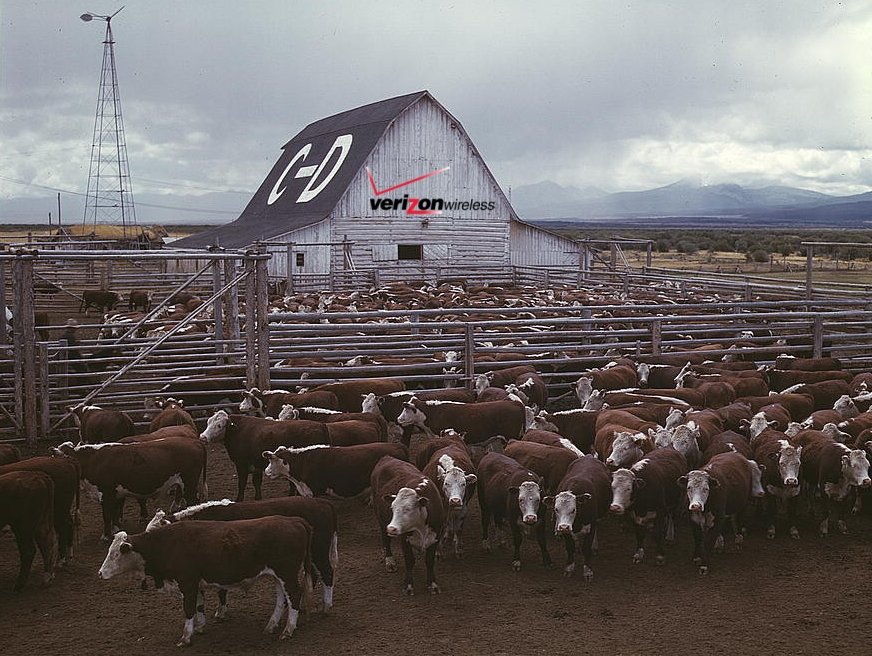
No need to be herded into a Verizon Wireless usage-limited mobile data plan.

New to Verizon Wireless and unhappy being constrained with a usage-capped wireless data plan?  Thanks to a loophole, customers can buy their way into an unlimited access plan Verizon was supposed to discontinue last July.

Some background: Verizon Wireless spent 2011 enticing customers to upgrade to their new 4G LTE phones which use the company’s much faster mobile broadband network.  One of the benefits early adopters received was a free, ongoing trial of Verizon’s mobile hotspot feature, which turns your phone into a Wi-Fi device your other devices (and friends’ phones) can share.  When Verizon elected to discontinue its unlimited data plans in July, the free trial of the mobile hotspot feature went with it.  In its place, Verizon pitched 4G phone owners an unlimited mobile hotspot feature add-on for $30 a month (in addition to the price of your data plan.)

Those who travel often or who want a backup Internet service in case their home or business Internet connection goes down found this a reasonable deal, especially because it carries no data limits or speed throttling, and works on both Verizon’s 3G and 4G networks.

But it turns out this little-known add-on promotion also unlocks the door to an unlimited smartphone data plan Verizon intended to stop selling last summer.

As we explained earlier, just signing up for the unlimited use mobile hotspot plan involved jumping through a few hoops.  But with the help of a feature code, any Verizon representative should be able to look it up and add it to your account.

When they do, something interesting happens.  Verizon cancels any existing usage-limited plan and converts it into an unlimited use plan ($29.99) they stopped selling.  That leaves you with Verizon’s Mobile Hotspot feature for $30 a month and unlimited smartphone data for $29.99 a month.  But here is the exciting part: you can quickly cancel the $30 mobile hotspot feature and will remain grandfathered on Verizon’s unlimited use smartphone data plan.

Slickdeals provides a helpful step-by-step guide, and it sometimes takes a few calls to reach a representative who can manage this successfully:

  1. Dial *611 from your Verizon phone, or 1-800-922-0204 from any phone.
  2. Wait for computer CSR to go through the main menu. You will need your Verizon phone # and account PIN or last 4 of SSN.
  3. Hit option 4.
  4. When it asks you what you would like to do today say “Add a feature.” You will be transferred to a live Verizon Customer Service representative.
  5. If you have a 3G device (which includes all iPhones): Say you would like to add the $20 2GB 3G Mobile Hotspot FEATURE to your phone. When you add this MHS feature, you will be charged $20/month in addition to the $29.99 unlimited data plan.
    If you have a 4G device: Say you would like to add the $30 Unlimited 4G Mobile Hotspot FEATURE to your phone. According to http://stopthecap.com/2011/07/12/…r-account/ , they may be able to locate this feature via referencing feature code #76153. When you add this MHS feature, you will be charged $30/month in addition to the $29.99 unlimited data plan.
  6. After one of the MHS features above are added to your account, you will now have the $29.99 unlimited data plan, which can be verified via the My Verizon app on your device or at http://www.verizonwireless.com/myverizon
  7. {OPTIONAL – if you don’t want the Mobile Hotspot feature} Log into My Verizon and remove the Mobile Hotspot FEATURE from your account. It is recommended to wait at least a day to remove the feature. The $29.99 unlimited data plan should remain on your account.
  8. If they say they can’t add that feature to your plan, or that you must bundle your data + mobile hotspot service together as a single data plan, tell them thank you, hang up, and repeat the steps above.

Updated 2:45pm EST:  Our regular reader Duffin reports this loophole may be in the process of being closed.  See this article from The Consumerist for further details.

AT&T/T-Mobile Merger Prospects Dim; Alternative Buyers for T-Mobile May Eventually Emerge

Phillip Dampier November 22, 2011 Astroturf, AT&T, Broadband Speed, Competition, Editorial & Site News, Public Policy & Gov't, Rural Broadband, T-Mobile, Video, Wireless Broadband Comments Off on AT&T/T-Mobile Merger Prospects Dim; Alternative Buyers for T-Mobile May Eventually Emerge

AT&T pays a lot of money — millions annually — to make sure its business agenda does not run into political or legislative roadblocks in Washington, D.C.  With dozens of members of Congress effectively on AT&T’s campaign contribution payroll and the company’s unparalleled skill at convincing non-profit organizations to advocate for its interests, worrying about the government’s antitrust views on its proposed buyout of Deutsche Telekom’s T-Mobile was the least of its troubles.

“It’s a done deal,” several analysts predicted shortly after the deal was announced, especially after AT&T demonstrated its confidence level in the merger was as high as the enormous $6 billion dollar breakup concession payable to Telekom if it ever fell apart.

Then the government dared to put its two cents in, in the form of a “are you kidding me?”-lawsuit courtesy of the U.S. Department of Justice.  It seems, in the words of some Beltway cynics, the Obama Administration can manage to see a clear cut case of anti-competitive behavior when given enough time.

Since the lawsuit was announced on Aug. 31, it has been “all-hands-on-deck” for the company’s government relations division, packed full of the company’s top lobbyists.  While company lawyers desperately attempt to block what it sees as “pile on” objections and lawsuits from worried competitors, Sprint-Nextel in particular, AT&T lobbyists are trying to compromise away the Justice Department case with proposals of concessions and giveaways to make approval more palatable.

Further north, as fall turns into winter in New York’s financial district, Wall Street analysts are cold on the troubled deal themselves.

The Financial Times reports most analysts think there is now less than a 50-50 chance the merger will be completed unless the two companies agree to disgorge themselves of market share, territories, and increasing “shareholder value” that will come from eventual rate increases a wireless duopoly would inevitably bring.

Some are even less sanguine, predicting AT&T has only a 20 percent shot, and only if it sells off considerable chunks of valuable spectrum to competitors other than Verizon Wireless.

AT&T is retuning its “message” for the times, downplaying the original, ludicrous notion that urban-focused T-Mobile would be the keystone of a new era in 4G wireless service for rural America.  There is a reason T-Mobile isn’t the first choice for small town America’s cell phone buyers.

Instead, AT&T is now positioning the merger deal as a lifeboat for its troubled competitor.  AT&T suggests the number four carrier is in immediate peril — hemorrhaging customers, caught without a coherent 4G strategy, and an exodus of interest by its increasingly neglectful parent — Deutsche Telekom.

Could Time Warner Cable be an eventual part-owner of T-Mobile USA?

“Over the past two years, T-Mobile USA has been losing customers despite explosive demand for mobile broadband,” AT&T said in a statement this week. “T-Mobile USA has no clear path to 4G LTE, the industry’s next generation network, and its German parent, Deutsche Telekom, has said it would not continue to make significant investments in the United States.”

With AT&T predicting the demise of its smaller would-be cousin, consumers may not be in the mood to sign a two-year contract with a company that could soon be rechristened AT&T, especially those leaving AT&T for T-Mobile.

But don’t tell T-Mobile’s marketing department it’s a phone company on life support.  T-Mobile has beefed up its advertising and continues to irritate its larger competitors, particularly AT&T, with very aggressive pricing on its prepaid plans.

T-Mobile recently unveiled two disruptive $30 4G prepaid plans that offer either 1500 shared minutes/text messages and 30MB of data usage -or- 100 voice minutes combined with unlimited texting and up to 5GB of mobile data before the speed throttle kicks in.  Those prices are too low for AT&T and Verizon to ignore, especially when offered on a 4G network.

So far, the Justice Department shows no signs of backing down from their resolute opposition to the deal, minor concessions or not.  Shareholders may not appreciate giving the government too much of what it wants in order to win approval.  Washington lawmakers are split — virtually every Republican favors the merger, Democrats are less absolute, with most opposed.  Among those in favor, by how much is often a measure of what kind of campaign money AT&T has thrown their way.

AT&T absolutely denies they have a “Plan B” in case the merger eventually fails.  But the Times doubts that, reporting as time drags on, an alternative deal might emerge.  Some of the possibilities:

  • T-Mobile USA could merge its spectrum with Dish Network, the satellite TV company, to launch a new 4G mobile operator in the USA;
  • Combine forces (and spectrum) in a deal with leading U.S. cable companies like Cox, Comcast, and Time Warner Cable to launch a new cable-branded mobile operator;
  • Sell or merge operations with MetroPCS, Leap Wireless’ Cricket, or one of several regional cell companies.

Perennial cable booster Craig Moffett from Sanford Bernstein predictably favors the cable solution, which would let companies offer a quad or quint-play of cable TV, wireless mobile broadband, wired broadband, phone, and cell phone service all on one bill.  It would also get the FCC off the backs of cable operators Time Warner and Comcast, who both control a total of 20MHz of favored wireless spectrum they have left unused since acquiring it at auction.  The Commission is increasingly irritated at companies who own unused spectrum at a time when the agency is trying to find additional frequencies for wireless providers.

[flv width=”640″ height=”380″]http://www.phillipdampier.com/video/Bloomberg ATTs 96000 Job Claim in T-Mobile Deal Questioned 11-8-11.flv[/flv]

Bloomberg News questions AT&T’s claim its merger deal with T-Mobile will create 96,000 new jobs. [Nov. 8] (3 minutes)


Analyzing Time Warner Cable’s Latest Quarterly Results: Broadband, Broadband, Broadband

Phillip Dampier October 27, 2011 Broadband Speed, Competition, Consumer News, Data Caps, Online Video, Wireless Broadband Comments Off on Analyzing Time Warner Cable’s Latest Quarterly Results: Broadband, Broadband, Broadband

Time Warner Cable experienced another challenging quarter, continuing to lose cable TV customers who either drop or pare back their television service, often in favor of broadband.

The company reported losses of an additional 128,000 video subscribers during the third quarter, but is partly winning that revenue back with new broadband customers — 89,000 of them in the last three months.

“Broadband is a powerful service for which there appears to be unquestionable consumer thirst,” Time Warner Cable CEO Glenn Britt said on the investor call. “Over time, we will contribute more of our plant’s capacity to broadband.”

The company is also poised to expand its marketing to win new broadband customers away from their primary competition — telephone company DSL service.  Company officials remain confounded by customers who subscribe to Time Warner’s cable TV service and take broadband from “inferior” phone company-delivered DSL.  Time Warner will continue to target these customers with win-over promotions offering a year of Road Runner Standard Service at the $29.95 promotional price point.

For the company as a whole, this is the tenth consecutive quarter of year-over-year residential broadband revenue improvement, coming from a combination of higher-priced, faster speed tiers, price increases, and subscriber additions.  The company’s DOCSIS 3 upgrade has proven itself a winner for customers and the company, with 18 percent of Time Warner subscribers now choosing 30 or 50Mbps broadband services.

Wall Street expressed some concern about statements from CEO Glenn Britt that the company was going to expand capital spending on broadband to handle increasing demand, especially from online video.  That concern comes despite the fact the company’s “capital intensity” (spending) from January-September was the lowest in the history of the company.  The full year’s capital spending is on track to reach up to $3 billion, which is consistent with what the company spent last year.

Glenn Britt

So despite the plans to spend more on broadband, that spending is actually in line with previous years.

In response to an opening question from Deutsche Bank’s Doug Mitchelson, Britt delivered an extended explanation downplaying the company’s spending plans:

In a way, there’s nothing really new here. I think you’ve seen this trend for a while. Our broadband product is very strong.

As most people know, the usage of broadband is skyrocketing, as it has been for some time. And that means that we will need to spend more money on it. We have been already, both in capital and operating expenses.

The great thing about the Internet is lots of third parties dream up lots of new applications that require more speed and more bandwidth. And we anticipate that we’re going to have to devote more capacity to that over time. We will do that by gradually removing our analog signals from our — analog TV signals from our plan. We’ve been doing that over the last several years by migrating to digital using Switched Digital technology. And over the next several years, we’ll be going all digital in the TV space.

I don’t see this driving a dramatic change in our cap spending, I think, to the core of your questions. The spending has been going on for a while, and I think you’re seeing a change in mix. The video spending is going down over time. The business services is going to go up, although it didn’t this quarter. And you’re going to see the spending on broadband going up. But I don’t think the overall trajectory is mutually different.

This quarter, the company’s conference call seemed to embrace greater broadband usage, and pondering Internet Overcharging schemes like usage caps or usage-based billing never came up.  But Richard Greenfield from BTIG alluded to usage in his questions to Rob Marcus, president and chief operating officer at Time Warner Cable.

“I think we’re somewhere in the 7GB a month [range] of downstream bandwidth on a median basis,” Marcus said. “The average is much higher given the disproportionate usage by our high-end users.”

There were plenty of other facts to be gleaned from this morning’s conference call:

TV

  • Whole Home DVR service has been introduced nationwide.  In the coming year, Time Warner will begin deploying “home gateways,” which reduce equipment costs;
  • Time Warner is testing improved cloud-based set top boxes with home networking capabilities in parts of Syracuse, Los Angeles and Dallas.  These boxes will expand across the country in 2012.  They offer better search capability and deliver an improved user experience;
  • 60% of customers reject “triple-play” offers from Time Warner and choose either “single” or “double-play” service instead;
  • Much of Time Warner’s revenue growth is coming from rate increases on programming, services, and equipment;
  • TV Essentials, the smaller, less expensive video package, is now available in New York City and Northeast Ohio, as well as upstate New York. It will launch nationwide by year end.  Unsurprisingly, company officials admit the less-than-attractive channel lineup has resulted in the vast majority of customers calling about the offering taking the traditional video package instead;
  • Customers continue to drop ancillary services to cut their cable bill.  The increasingly expensive DVR box is a new target for cutting, and premium movie channels, adult pay-per-view, and mini-pay services all continue to suffer significant declines in business;
  • The Google-Motorola deal will likely have little impact on Time Warner’s set top boxes, which primarily come from Cisco and Samsung.

Broadband

  • By the end of the year, Time Warner plans to offer an Android-based TV Everywhere application similar to the existing iPad application, which will also continue to be upgraded to include on-demand offerings;
  • Time Warner will make their TV Everywhere service available on game consoles, smart TVs and PCs in the near future;
  • New York City customers will soon be able to select from a range of local broadcast stations on the company’s iPad app.  Other markets will start to see local channels added to this app in 2012;
  • Major parts of Time Warner’s capital investments this year are: building data centers in Charlotte and Denver, conversion to all-digital in Maine to make room for enhanced broadband, and the continued rollout of DOCSIS 3.0. The company is also continuing to spend significantly on wiring commercial buildings to sell services to business customers;
  • TV Essentials customers will soon be offered a “lite user” slower speed discount broadband plan to accompany their video package;
  • In Los Angeles, Wideband 50Mbps customers also get 2 gigabytes of 4G/3G mobile broadband for no additional monthly charge on the company-branded Clearwire service. For Turbo Plus and Wideband 30Mbps customers, they can get the same 4G/3G capability for an additional $10 a month. Standard and Turbo customers can get it for an extra $20.  The company’s mobile broadband add-on product has not enjoyed much success with paying customers, however.  Time Warner hopes the value-added bundling of mobile broadband will attract more interest.

Phone

  • Cord-cutting is now impacting Time Warner “digital phone” service, too.  Customers are increasingly reluctant to purchase phone service from any landline provider.  Now Time Warner’s regular pricing is starting to cost them business.  Executives revealed Time Warner’s “digital phone” service costs the company $9.06 to provide.  They charge consumers $30.  With that kind of profit margin, the company admits it will have to get more aggressive in pricing to attract new customers (and potentially keep existing ones);
  • Time Warner lost 8,000 residential voice line customers last quarter, cushioned by net additions of 13,000 business line customers;
  • The company continues to show little interest in selling cell phone products or services, either owned by themselves or others.  Mobile data remains an exception.

AT&T — America’s Wi-Fi Giant: Company Records Record Growth as Customers Flee 3G

Phillip Dampier October 26, 2011 AT&T, Broadband Speed, Data Caps, Wireless Broadband Comments Off on AT&T — America’s Wi-Fi Giant: Company Records Record Growth as Customers Flee 3G

AT&T reports wireless traffic has reached new records, but the greatest growth isn’t on the company’s mobile data network, it’s coming from Wi-Fi.

Through a combination of delivering faster service over Wi-Fi and AT&T’s Internet Overcharging usage caps, speed throttles and overlimit fees, AT&T customers are increasingly turning to Wi-Fi connections on their mobile devices.

In the last year, traffic has tripled.  In the third quarter, AT&T reports 301.9 million connections to AT&T Wi-Fi, more than five times the number of connections made during the whole year in 2008.

AT&T Wi-Fi is turning up in partner retail outlets, restaurants, coffee shops, and in gathering spots for large crowds, such as major metropolitan shopping areas, stadiums, and parks.

With the advent of AT&T Wi-Fi, customers can drop their 3G data connections and avoid traffic eating up their monthly usage allowance.  Wi-Fi can also deliver faster connections and more reliable service.

Wi-Fi can deliver benefits in urban congestion zones, where ordinary 3G/4G cell tower sites can become overwhelmed with traffic during peak usage times or during major events.  It’s also cheaper to deploy than upgrading traditional cell towers to handle larger amounts of congestion.

That’s a combination that works well for AT&T, who is the most aggressive carrier by far in pushing customers to use Wi-Fi.  Neither Sprint, Verizon Wireless, or T-Mobile come anywhere close to the number of mobile hotspots available.

Search This Site:

Contributions:

Recent Comments:

Your Account:

Stop the Cap!