Home » mobile data » Recent Articles:

EastLink Rolling Out Its Own Wireless Mobile Data Network

Phillip Dampier September 6, 2011 Broadband Speed, Canada, Competition, EastLink, Rural Broadband, Wireless Broadband Comments Off on EastLink Rolling Out Its Own Wireless Mobile Data Network

Canada’s largest privately owned telecommunications provider is getting into the mobile broadband business.

EastLink, which owns cable systems in communities across nine provinces, is constructing its own mobile phone and data network set to launch in 2012.  Part of that network will be its own competitive wireless mobile broadband service.

EastLink is using licensed wireless spectrum acquired in a 2008 federal auction which will allow it to provide cell service in Newfoundland, New Brunswick, north and southwest Ontario, and the metropolitan region of Grand Prairie, Alta.  But its first priority is delivering service on Prince Edward Island and in Nova Scotia, where EastLink is based.

“With this network evolution, our customers will be able to work and communicate more reliably and faster than ever before,” said Matthew MacLellan, president of EastLink Wireless.

EastLink subsidiary Delta Cable delivers cable service in western Canada.

EastLink’s new wireless network will use HSPA technology, presumably at the speeds most common in Canada — 21 or 42Mbps.  Ericsson is providing the equipment for the network.

EastLink has nearly a half-million customers, a tiny number in comparison to market leaders Bell, Rogers, and Telus.  But the company has a reputation for delivering advanced service, and is well-regarded in Atlantic Canada, especially for delivering Internet at speeds up to 100Mbps.

“They have a very strong reputation so they’ll be likely to shake up the market down there,” Brownlee Thomas, principal analyst at Forrester Research Inc., told The Wire Report.

EastLink’s primary focus is on its Canadian subscribers, but the company has also investments in Bermuda, and its subsidiary Delta Cable delivers service to one American community — the enclave of Point Roberts, Washington, located south of Delta, British Columbia.

Gouge Train: AT&T Wireless Eliminates Budget Texting Plans: Welcome to $20+ Texting

AT&T “streamlined” its text messaging plans over the weekend for new customers, eliminating a less-expensive $10/1000 text budget plan in favor of unlimited texting plans that cost much more.

That means new AT&T customers who want to text will pay dearly for the privilege:

  • $0.20 per text message sent/received,
  • $20.00 Unlimited texting (individual line)
  • $30.00 Unlimited texting (family plan)

So much for asking customers to ‘pay for what they use.’  AT&T is moving towards unlimited texting — at a very high price — while moving away from unlimited data.

AT&T released a statement about the changes:

“We regularly evaluate our offers and are making some adjustments to our messaging lineup. Starting August 21, we’re streamlining our text messaging plans for new customers and will offer an unlimited plan for individuals for $20 per month and an unlimited plan for families of up to five lines for $30 per month. The vast majority of our messaging customers prefer unlimited plans and with text messaging growth stronger than ever, that number continues to climb among new customers. Existing customers don’t have to change any messaging plan they have today, even when changing handsets.”

Gizmodo points out AT&T is charging customers who don’t have a text plan 100,000 percent more than what they charge for online data:

Here’s how it breaks down:

AT&T charges $25 for 2 gigabytes of mobile data, which states how much they think their bits and bytes are worth. That comes out to 80 megabytes per dollar. 80 megabytes will get you 500,000 text messages—assuming you’re writing the largest possible message, which you’re often not (i.e. “Hey” “Nothing” “lol”).

Now divide that dollar by the 500,000 potential texts. That comes out to $0.000002 per text—two ten thousandths of a cent. A very, very, very small amount of money.

Now, let’s say you send 5,000 texts a month. That’s a large, though wholly realistic number. Multiply that by the above worthless cost per text, and you’ve got—hold onto your wallet!—$0.01. A penny for five thousand texts, according to how much AT&T says its data is worth in a data plan.

But outside of the data plan? Oh boy! Things get very different very fast. And by very different, I mean inordinately overpriced. Those same 5,000 texts, at a rate of $0.20 per message, will cost you $1,000. Not a penny—a grand. Two very different prices for literally the exact same thing.
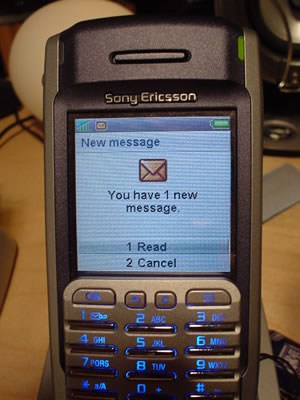
For customers who only send and receive occasional text messages, losing the $10 option means most will either pay the heavily marked-up $0.20 a-la-carte price, or pay double and not worry about how many messages they send.

Ultimately, AT&T’s new prices may drive an increasing number of users to alternative ways of communicating with friends and family, especially as prices keep rising.  Some AT&T customers remain grandfathered on text plans that offer 200 messages for $5 a month.  But for customers like Ben Chinn of San Francisco, even $5 is asking a lot.

“With everything with the mobile carriers, I feel I’m getting nickeled and dimed,” Chinn told the Los Angeles Times. “I resent paying so much for text messaging, and I feel that it’s not a reasonable price to pay for something that costs the carriers next to nothing.”

Free Press Research Director S. Derek Turner says AT&T’s new prices foreshadow the kinds of higher prices all Americans will pay if the wireless industry continues its march towards consolidation.

“This move is simply another example of AT&T passing off a price increase for consumers as a benefit,” Turner said. “If this were a truly competitive market, AT&T would offer its customers more choice and value, and no carrier would get away with a 10-million-percent markup on its services. This should serve as a warning to the Department of Justice and the Federal Communications Commission — if AT&T is already able to unilaterally increase prices, allowing the company to eliminate low-cost competitor T-Mobile will only make things worse.”

The Times notes Juniper Research has predicted that global revenue for text messaging will peak this year and begin to drift down. And in a recent report, UBS Investment Research warned that “customers could elect not to pay for texting as smartphones and third-party applications become pervasive.”

Facebook has introduced Messenger, a free smartphone app that allows members to exchange text messages with friends, as well as anyone else who happens to have a cell phone.  Google Voice includes unlimited free texting, if those sending messages remember your Google Voice number.  Apple’s forthcoming iMessage will be pre-installed on most Apple devices, offering a ready-made opportunity to bypass high-priced text plans.  There are dozens of other apps that offload text traffic to your smartphone data plan, where the added traffic is so insignificant, it has largely no impact on even the lowest usage plans.

The preferred outcome of using any of these third-party apps is to cancel expensive texting plans from your phone carrier.  But there are obstacles:

  1. Many friends may continue to text your primary cell phone number directly, incurring a-la-carte text messaging fees if you cancel your text plan;
  2. Many require all of your contacts to run specific apps to exchange messages, which can quickly become a burden;
  3. Apple’s iMessage assumes all of your friends are using Apple phones or devices.  Everyone else will have to hope for, find, and install another app to support the service.

The trade-off works for some, but not for others.

Hieu Do of St. Louis tells the Times he’s had to pay for individual text messages after dropping his text plan, but Google Voice has still helped him save money:

“At the beginning of every month I would lose a dollar here and there from people texting my old number, but it’s worth it more than paying $5 or $10 a month for a texting plan,” he said.

But Jim Jeffords, one of our readers, tried Google Voice for awhile and decided it was just too cumbersome for texting.

“I ended up getting text messages from a lot of business contacts that didn’t know about my Google Voice number, but had my cell phone number,” Jeffords says. “I was not about to throw a Google Voice number into the mix and come across as cheap and make them remember what number to text.”

Jeffords went back to a basic text plan with a few hundred messages a month included.

“It wasn’t worth the hassle to deal with,” he said.

AT&T’s New Speed Throttle Being Used as Talking Point for Merger With T-Mobile

AT&T's new choke collar for "unlimited use" data plan customers, ready for wearing Oct. 1

Now that Verizon Wireless has stopped signing up new customers for its unlimited usage data plan, AT&T plans to start targeting its grandfathered unlimited-data customers with speed throttles that will effectively limit the company’s “unlimited use” plan.  And the company is trying to suggest approval of its merger with T-Mobile might prevent its growing use.

AT&T says effective Oct. 1, the top 5 percent of its wireless users will receive a warning message before their speeds are cut to near-dial up for the remainder of the billing cycle.

“We’re taking steps to manage exploding demand for mobile data,” said the company in a statement.  AT&T added that “nothing short of completing the T-Mobile merger” will effectively solve the company’s network capacity issues.

“The planned combination of AT&T and T-Mobile is the fastest and surest way to handle the challenge of increasing demand and improving network quality for customers,” said AT&T.

With Verizon Wireless’ exit as a competitive alternative for unlimited data, AT&T’s newly announced speed throttle may not pose much of a risk for business when implemented, as infuriated customers have just one remaining provider offering unlimited data – Sprint.

While AT&T has not specified an exact amount of data usage that will put users in the penalty corner, they did say most of those facing throttling are “streaming video or playing some online games.”

Some AT&T customers use their unlimited wireless plans as a home broadband replacement — an action that could easily bring back a dial-up experience when the speed throttle kicks in.

Only customers on “unlimited use” plans will face AT&T’s special speed treatment.  Those paying for usage-limited packages are exempt.

AT&T’s ongoing hard-sell for the merger has not been well-received by some on Capitol Hill.

Sen. Al Franken (D-Minn.) blamed AT&T for its lack of willingness to spend money on improving its own network infrastructure for self-inflicted network capacity problems.  Franken believes the merger would be anti-competitive and anti-consumer.

In letters to the Department of Justice and Federal Communications Commission, Franken spelled out in great detail why approving the merger does not make sense:

Franken

“The competitive effects of a merger of this size and scope will reverberate throughout the telecommunications sector for decades to come and will affect consumer prices, customer service, innovation, competition in handsets and the quality and quantity of network coverage. These threats are too large and too irrevocable to be prevented or alleviated by conditions,” wrote Franken.

The International Business Times summarized many of Franken’s larger points:

  • AT&T owns more spectrum than any other company, yet AT&T has been plagued with delays in rolling out infrastructure to support spectrum it has been allocated.  The quality of the service it provides is consistently ranked last amongst the national carriers, and it continues to use spectrum in an inefficient manner;
  • Many of [AT&T’s] spectrum licenses remain undeveloped, including $9 billion worth of some of the most valuable “beachfront” spectrum;
  • Other national wireless carriers have been aggressively preparing for this crunch. However, unlike the other wireless providers, AT&T has not visibly taken decisive steps to prepare for the coming crunch, despite the fact that AT&T should have recognized the need for additional investment shortly after introducing the iPhone in 2007;
  • AT&T only increased its spending on wireless infrastructure by one percent in 2009. Although AT&T will point out that one percent is still a significant number, Verizon made the decision to increase its capital spending by 10 percent in 2009/9 and Verizon is now in a much better position when it comes to spectrum capacity.

Cricket Raising Wireless Broadband Prices Again; Announces Data Roaming On Sprint’s 3G Network

Phillip Dampier July 13, 2011 Cricket, Data Caps, Wireless Broadband 3 Comments

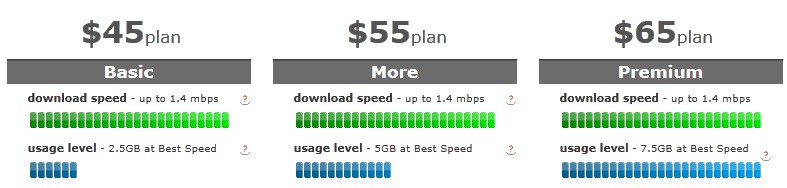
Leap Wireless’ Cricket is raising prices $5 a month on its prepaid 3G mobile broadband service for the second time in nearly a year, with the announcement the company will offer limited data roaming on Sprint’s 3G network.

In return for being able to access Cricket mobile broadband outside of the company’s highly limited network of cell towers, the price has to increase, according to statements made on Cricket’s website.  Cricket will now sell three different broadband plans, all without a contract:

$45/month for 2.5GB, $55/month for 5GB, or $65/month for 7.5GB

But there are a number of catches.

First, your service will be terminated if you do not live in a zip code where Cricket provides its own cellular service.  The company is only interested in selling service to customers who will primarily use it inside of its own coverage areas.  Second, if you are caught data roaming on Sprint’s network for more than 50 percent of your monthly usage, the company can throttle your speed to dial-up for at least one month or terminate your account.

These pricing changes could also impact certain grandfathered Cricket mobile broadband customers, some of whom are still paying Cricket’s rate of $40 a month for up to 5GB of usage that was being sold until last summer.  Who will pay the added $5 bite depends on when and where you activated your account:

Customers activated prior to August 2, 2010: You are likely grandfathered on Cricket’s $40 a month plan, good for up to 5GB of usage per month.  Most of these customers never activated last year’s newly introduced limited 3G mobile data roaming, so they will not be able to use their service outside of a Cricket service area.  They will not see a rate increase unless they opt-in to “roaming” service from a menu on their wireless device’s configuration panel.  If you opt in, you cannot opt back out.

Customers who purchased their device at Best Buy, Wal-Mart, or Radio Shack at any time: You are not eligible for 3G data roaming service at this time.  You will not see a rate change unless and until that changes.

Customers activated after August 3, 2010: Your device was activated with 3G roaming capability and you will be impacted by the price change.  Existing customers on an impacted account will receive Nationwide 3G coverage beginning July 12.  The first bill with increased pricing will be for customers with a bill due on August 11.  Your bill will see an increase on or after this date.  Technically that equals one month of free roaming coverage.

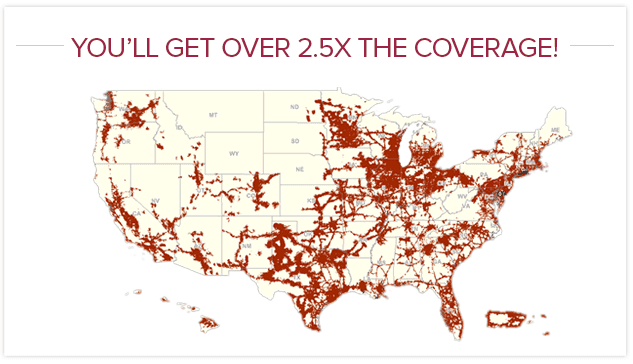
Cricket's new data coverage map, with Sprint roaming included.

For some customers, this is quite a price increase from two years ago when the company claimed to provide “unlimited” 3G wireless broadband service for $40 a month.  Customers soon learned Cricket’s definition of “unlimited” meant around 5GB of usage before the company throttled broadband speeds to near dial-up for the remainder of the billing month.  By last summer, “unlimited” was gone, replaced with usage allowances enforced by the aforementioned “fair access policy” speed throttles.

Although the company touts the service will run at speeds up to 1.4Mbps, in reality, most will see speeds much lower than that.  From Stop the Cap! headquarters in Rochester, N.Y., we routinely see speeds on Cricket’s 3G network operating at between 300-600kbps.

Cricket still delivers a cheaper plan over Sprint-owned Virgin Mobile, which charges $50 for 2.5GB.  For those who want more, Clearwire is still pitching 5GB of usage on Sprint’s 3G network and “unlimited” use on its 4G network, although “unlimited” really isn’t when the provider deems you a heavy user and throttles your speeds.  T-Mobile offers a data pass for some of their customers allowing 1GB of data for $30, 3GB of data for $50 — all prepaid.

“The Price is Too Damned High”: Verizon Wireless Customers Revolt on Facebook Page

A Verizon Wireless tweet from this morning welcoming customers to a new era of "wonderful usage based plans."

Verizon Wireless might be regretting having a Facebook page open for comments after users started excoriating the company yesterday, when it first publicly broached the subject of its now-implemented wireless Internet Overcharging scheme.

“The price is too damned high,” exclaimed one customer livid that new customers would pay $30 for just 2GB of data usage (one penny higher than the company’s now-retired unlimited use plan).  “$80 for 10GB?  And I thought AT&T was greedy,” commented another.

Judging from the countless hundreds of negative comments, Sprint is about to have a robust quarter of new customer additions defecting from Verizon.  Sprint retains its unlimited use plans on both its 3G and 4G networks, although the speeds do not compare favorably to Verizon’s LTE/4G network.

Matt Hamann summed up the sentiment of customers who despise usage caps, even if they are currently grandfathered on an unlimited use plan:

Hey, Verizon…I will *never* add another smartphone to my plan until you come up with fairer data prices. $30 for 2GB?? You gotta be kidding! How is this fair? How is it in your customer’s best interests?

Bottom line: IT ISN’T! It’s 90% corporate greed. What’s the best way to get more revenue from customers, huh?

Listen here: I’m already looking for better options. As soon as I find one, I’m gone. And I’ll take every family member and friend that I can along with me.

The best mobile provider you are no more.

Verizon created considerable confusion for their customers by saying nothing until just a day before the new plans took effect.  Although the media has covered the imminent end of unlimited data for over a week, customers have not been notified by Verizon itself, despite one customer’s claim Verizon told him they mailed letters in advance of the plan changes.

As we have reported, those customers with pre-existing unlimited data plans will be able to retain them indefinitely, even if they upgrade to a new phone in the future, and even if they renew their contract.  Only new customers, those changing plans or any new lines added to a family plan will face the “wonderful” tiered pricing Verizon tweeted about this morning.

To commemorate Verizon Wireless’ new mobile data prices, we present a clip from the leader of ‘The Rent is Too Damned High’ party.

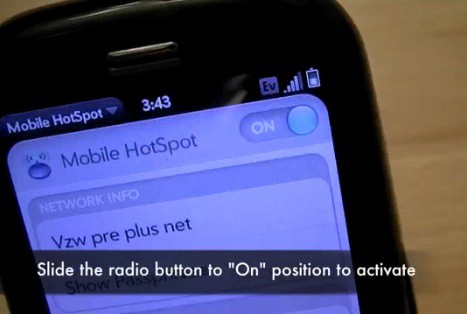
Mobile Hotspot App from Verizon Wireless (Courtesy: Pocketnow.com)

Things got considerably more confusing over the mobile Hotspot feature — a tethering application built into most Verizon smartphones.

Verizon Wireless representatives were sharing conflicting information with Stop the Cap! about the availability and pricing of this feature as late as this morning, but we’re now confident we have an answer the company will commit to for impacted customers.

For 3G Verizon Wireless smartphones, nothing changes.  It was $20 a month for 2GB before July 7th, and remains the same going forward.  For LTE/4G phone owners, things are much more confusing.  Existing customers have been enjoying free tethering on a special promotion made available only to 4G customers for several months now.  That promotion officially ended this morning.  A software update is imminent for 4G phone owners which will remove the free Hotspot feature and replace it with a prompt for one of two options:

  • a $20 for 2GB Hotspot plan
  • $30 Hotspot plan with unlimited usage

Most would be foolish not to lock in unlimited tethering with the $30 plan, which is a much better deal going forward.  Where the confusion comes in is for customers rushing out to upgrade their existing phones to a 4G phone just to lock in unlimited data -and- unlimited Hotspot tethering.

We spoke yesterday afternoon to Verizon Wireless representatives who denied any knowledge of the $30 unlimited tethering plan or confused it with the basic unlimited data plan.  Eventually, we were told only pre-existing customers with already-activated 4G phones would qualify for the option of choosing the $30 unlimited tether plan.  It was too late, even before yesterday at midnight, for others to hop on board this deal.

But by this morning, we were starting to get different answers, culminating in a Verizon representative telling Stop the Cap! any customer who placed an order for a 4G smartphone through Verizon Wireless that invoked a plan change (part of the process of ordering the phone direct from Verizon assures that) would have likely found the addition of the “Verizon Mobile Hotspot Promo” as one of the line items added to your plan as part of the order.  If so, that qualifies you for the $30 unlimited tethering option, even if you are still waiting for your 4G phone to arrive in the mail.

Verizon claims after you receive and activate your new 4G phone, attempts to use the Hotspot feature should offer you the choice for the $30 Hotspot plan.  If it does not, we have the name and contact details of a Verizon employee that should be able to cut through the red tape and get you this plan.  The only requirement is you had to order the phone before midnight on July 7th.

Verizon does not know at this point if customers will be offered the promotional $30 unlimited price for a limited time only, or will forfeit it forever if they do not accept it immediately (or drop the optional add-on at some point).

Search This Site:

Contributions:

Recent Comments:

Your Account:

Stop the Cap!