Home » mobile data » Recent Articles:

Sprint Testing New Shared Data Plans, More Aggressively Priced Framily Plans to Stay Relevant

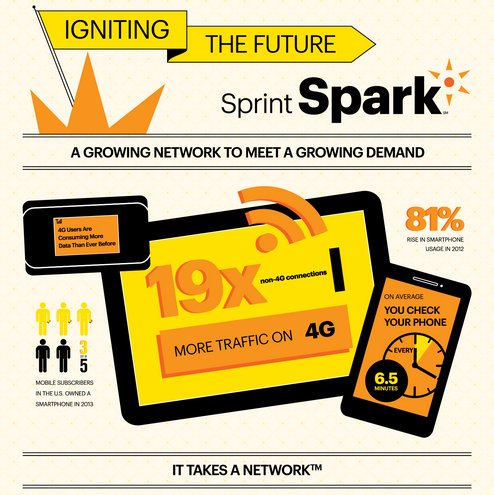
Waiting for an upgrade... Sprint Spark is the latest and fastest, but it's only in 24 cities.

Waiting for an upgrade… Sprint Spark is the latest and fastest, but it’s only in 24 cities.

Sprint may be feeling the music is about to stop and it doesn’t have a chair at the table.

While AT&T and Verizon Wireless divide up the premium market and T-Mobile goes for the aggressive price championship, Sprint is muddling along with its glacially paced upgrade to 4G LTE and a barely usable 3G experience that has a lot of customers pondering a switch. This spring Sprint lost 364,000 pre-paid and 231,000 valuable postpaid customers.

CNET reports Sprint is now seeking to follow other carriers with a shared family data plan and better pricing on both its Framily and individual plans.

Sprint may be America’s least exciting wireless carrier. While T-Mobile’s CEO gets into hot water with bombastic rhetoric about Verizon and AT&T, he largely ignores Sprint. To more than a few in the wireless industry, Sprint seems to be just plodding along.

“I will be collecting Social Security before Sprint upgrades to 4G around here,” writes suburban Sacramento resident Danny Chiang. “You just keep holding out for something better from Sprint just around the corner, but they never seem to actually get there.”

Chiang and others have endured a heavily congested 3G network while Sprint initially focused on rural and small market 4G network upgrades — hardly intuitive for loyal Sprint customers in urban areas. Today, all Sprint can claim is that it has America’s “newest network.”

Some investment analysts believe Sprint is being more conservative about spending as it navigates towards a potential merger with T-Mobile. Its Japanese owners — Softbank, have argued a combined Sprint and T-Mobile is the only way America’s third and fourth largest carriers can possibly hope to compete toe to toe with Verizon and AT&T.

Sprint’s latest network innovation — Spark — which combines spectrum in three different frequency bands to deliver a larger data pipe, is only available in two dozen cities. Spark would be a natural showcase for Sprint’s enormous spectrum holdings. Sprint Spark combines 4G FDD-LTE at 800MHz and 1.9GHz and TDD-LTE at Clearwire’s old WiMAX 2.5GHz spectrum.

But network upgrades do no good if your customers are headed out the door to the competition. While Sprint continues to upgrade its network, it is testing a variety of new plans in different cities for a possible wider release later this year.

Shared/Family Mobile Data Plan Trials — San Diego, Portland, Ore. and Las Vegas
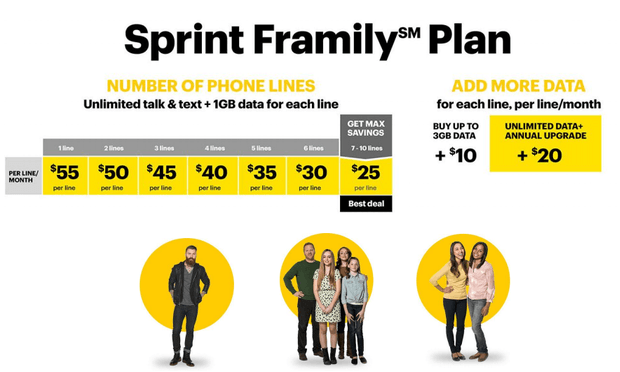
Sprint believes its Framily Plan might be too expensive.

Sprint believes its Framily Plan might be too expensive.

Data Allowance Options

  • 1GB – $20
  • 2GB – $30
  • 4GB – $40
  • 6GB – $50
  • 10GB – $60
  • 20GB – $100
  • 30GB – $130
  • 40GB – $150
  • 60GB – $225
  • No unlimited shared data option
  • Unlimited Talk/Text Phone Access Charge (required charge per phone): $25 for 1-10GB data plans, $15 for 20+GB data plans
  • Annual Device Upgrade included at no extra charge for all customers with 20+GB shared data plans (San Diego and Portland only)
  • Annual Device Upgrade Option: $5/month (Las Vegas only)

CNET points out Sprint’s plans are a better deal for heavy data users. The $20 plan for 1GB, for instance, is only $5 cheaper than a comparable AT&T plan. But the 30GB plan is $75 cheaper than AT&T’s $225 version.

Discounted Framily Plan Trials – Buffalo, Philadelphia, and Providence, R.I.

  • Starting price reduced $10 to $45/month. Add five people to your “framily” and the price drops to $25/month (two fewer people now required to get the largest discount).
  • Selecting the $20 unlimited data option automatically enrolls you in an annual upgrade plan (Buffalo and Philadelphia only).
  • Customers can choose to pay $5 extra a month for an annual upgrade option (Providence only).

New Bring Your Own Device Option for Individual Plan Trials — Chicago, Minneapolis, and West Michigan

  • Customers paying full price for a smartphone, those paying in monthly installments,  or who bring their own device to Sprint are eligible for a $50 unlimited plan or a $40 for 3GB of data per month plan. Unlimited Framily data plans usually cost $75 a month.
  • Unlimited data customers in Chicago and Minneapolis are automatically eligible for annual upgrades.
  • West Michigan customers will have to pay a $5 fee each month for their annual upgrade.
Google Makes Good on Verizon’s Broken Promise of a Free Data Plan for Chromebook Owners

Phillip Dampier June 24, 2014 Consumer News, Data Caps, Verizon, Wireless Broadband 1 Comment
pixel

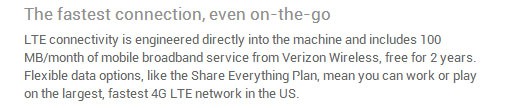
Verizon decided a year was long enough to give away 100MB of LTE data every month. It unilaterally cancels the 2-year offer after 12 months.

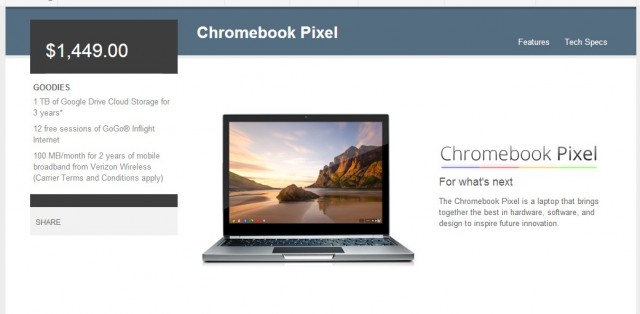
Verizon’s credibility in keeping its word with customers is under fire this week as owners of Google’s $1,450 LTE Chromebook Pixel discover their free 100MB data plans are being shut off a year earlier than promised.

Only if you are willing to pay. No freeloaders!

One year was plenty for you.

Google’s high-end LTE-enabled Chromebook Pixel was supposed to include two years of free mobile data, but Verizon unilaterally reinterpreted “two years” to actually mean “one year” and began terminating the free data plans this spring. In its place, Chromebook owners were invited to sign up for new paid Verizon data offers:

  • Unlimited: $9.99/day
  • 1GB: $20/month
  • 3GB: $35/month
  • 5GB: $50/month

Computerworld’s J.R. Raphael got nowhere with Verizon Wireless customer service:

Verizon is telling customers that as far as it’s concerned, the plans were valid only for one year — and that’s why those initiated last spring are now expiring. I called the carrier’s customer service line and, after holding for 15 minutes and then talking in circles to an agent for another 10, was able to get through to a supervisor. That person politely told me he wasn’t aware of any two-year commitment and that — despite my pointing out official documentation to the contrary — there was nothing he could do to help me.

shenanigansWith Verizon unwilling to budge, Google has stepped in with $150 Visa gift cards for all affected customers to make up for Verizon’s stinginess and broken promises.

“While this particular issue is outside of our control, we appreciate that this issue has inconvenienced some of our users,” a Google spokesperson told Computerworld.

Affected customers can contact Google Play Store customer service to start the process of obtaining the gift card.


More Evidence the Wireless Data “Traffic Tsunami” is a Scam to Grab More Spectrum

Phillip Dampier May 7, 2014 Broadband "Shortage", Public Policy & Gov't, Wireless Broadband Comments Off on More Evidence the Wireless Data “Traffic Tsunami” is a Scam to Grab More Spectrum

telecoms reg forumWireless operators are playing up fears that without comprehensive reassignment of wireless spectrum to their businesses, a massive data crunch will slow wireless networks to a crawl.

Policy Tracker covered the Telecoms Regulation Forum in London last week and found two very different stories coming from mobile operators.

Mark Falcon, head of economic regulation at UK mobile operator Three, told the Forum that he did not really believe predictions of exponential growth in demand for mobile data. Few others believe them either, he added.

Blades

Blades

Falcon’s comments were frank and very rare in an industry that typically sings from the same hymn book on spectrum matters. More typical were remarks from Telefonica Europe’s chief regulatory officer Nick Blades who claimed a wireless apocalypse was imminent without major reallocation of spectrum for the use of wireless phone companies. Blades dismissed views that small cell antennas and offloading more traffic to Wi-Fi would make enough of a difference.

The International Telecommunications Union (ITU) has been criticized by consultants for overestimating required future spectrum requirements for wireless operators. A growing consensus outside of the wireless industry suggests the risks for wireless data tsunamis are “overblown.”

While AT&T and Verizon Wireless lobby heavily for spectrum reallocation in the United States, they routinely tell shareholders they have more than enough capacity to handle traffic for the foreseeable future and are looking for new and creative (and profitable) applications they can add to their existing wireless networks.

AT&T Shakes Its Moneymaker: Look How Many Customers Upgrade to 10GB Data Plans

mobile share

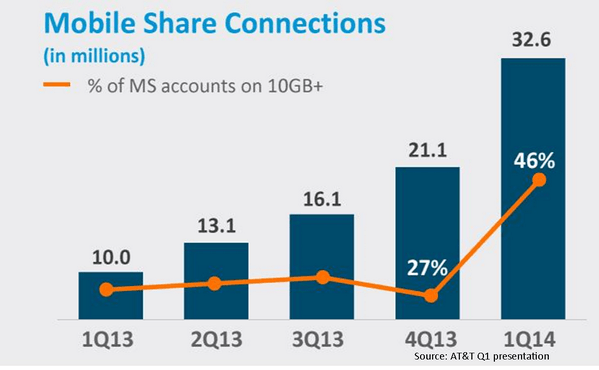
At least 46 percent of AT&T’s wireless customers are now paying at least $100 a month for a Mobile Share account with at least a 10GB usage allowance, a dramatic increase of more than 11 million customers during the last three months alone. AT&T customers used to pay a flat rate of $30 a month for unlimited wireless data. Now they pay much, much more for much less usage.

AT&T’s Mobile Share plans start at $20 a month (plus the cost of the device) and include just 300MB of data. Prices escalate from there (all prices don’t include the cost of the device)

  • yay att$20 for 300MB
  • $25 for 1GB
  • $40 for 2GB
  • $70 for 4GB
  • $80 for 6GB
  • $100 for 10GB
  • $130 for 15GB
  • $150 for 20GB
  • $225 for 30GB
  • $300 for 40GB
  • $375 for 50GB

AT&T is banking on growing mobile data use to earn the company perpetually accelerating revenue and dramatically higher average revenue per customer. The average AT&T customer does not come close to exceeding their current allowance, but the company’s sales force has proven exceptionally adept at convincing customers to upgrade to higher allowance plans whether the customer needs one or not.

Usage Billing Money Maker: Wireless Carriers Will Earn More Than $100 Billion On Data Plans This Year

Phillip Dampier March 25, 2014 AT&T, Competition, Data Caps, Verizon, Wireless Broadband 1 Comment

U.S. wireless carriers are on track to earn more than $100 billion this year from usage-based billing plans for mobile data, the first country in the world to break the symbolic $100 billion mark in data revenue.

Analyst Chetan Sharma reports Verizon Wireless and AT&T are statistically the largest recipients of revenue earned from metering data usage. For the first time in 2013, mobile data revenue surpassed voice revenue in the U.S., making data usage the most lucrative product available from wireless carriers.

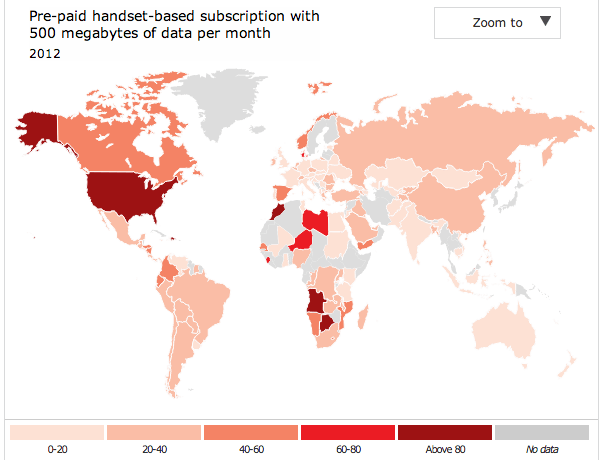
A graph from the Economist published last year explains the runaway revenue growth at U.S. wireless carriers. The lack of significant competition has allowed U.S. companies to charge an average of $85 a month for data plans, which are nearly always bundled into compulsory packages of unlimited voice calling and texting. In contrast, customers in China pay just $24 for data plans. In the United Kingdom, the average charge is $9 a month.

mobile-data-prices-chart-2Sharma said the only disruption to this revenue growth in the United States comes from T-Mobile USA, which has recently cut prices on its service plans, forcing AT&T and Verizon Wireless to react with moderate price cutting. But with the significant disparity in market share between AT&T and Verizon vs. T-Mobile, neither larger carrier is expected to take a significant hit to their bottom lines without a mass exodus to the country’s fourth largest provider.

Softbank, the Japanese company that now controls Sprint, has launched a lobbying effort to secure permission to acquire T-Mobile and merge it into the Sprint network. But with reports showing T-Mobile’s willingness to disrupt the wireless market, regulators are likely to be reluctant to remove that competition from the playing field.

Search This Site:

Contributions:

Recent Comments:

Your Account:

Stop the Cap!