Home » management » Recent Articles:

Cablevision Management Musical Chairs: As The Dolan Family Turns…

Phillip Dampier April 10, 2013 Cablevision (see Altice USA), Consumer News, Editorial & Site News, Video Comments Off on Cablevision Management Musical Chairs: As The Dolan Family Turns…

as-the-world-turnsWhat is the best way to win a big promotion at Cablevision? Be related to the Dolan family that founded the cable system.

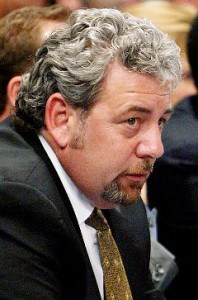
Cablevision Systems CEO James Dolan suddenly announced a shuffling of executives at the helm of the cable operation that serves suburban New York, Connecticut, and parts of New Jersey.

Dolan’s wife got the biggest promotion: president of Optimum Services. That represents a big jump for Kristin Dolan, who was last seen helping revive the long dead career of Michael Bolton in a marketing and rebranding exercise that turned the faded pop musician into a de facto Cablevision mascot. Under her leadership, Cablevision managed to put its most important product — broadband, dead last in its triple play marketing campaigns.

Brian Sweeney, Dolan’s brother-in-law, also scored a new title – senior executive vice president of strategy.

Dolan called the management shifts a pro-customer effort that would refocus and streamline the company’s decision-making processes. Since both executives will report directly to Dolan, some industry insiders believe James Dolan intends to tightly consolidate his control over management decisions at the company.

Kristin will keep her role as chief of brand positioning and expand her oversight into the company’s sales and promotional activities. Sweeney will serve as the “long-term strategy” guy, overseeing planning, customer retention, and winning customers away from Cablevision’s biggest competitor — Verizon FiOS.

A large number of former Cablevision executives defected from the cable company in 2011, most heading with former chief operating officer Tom Rutledge to Charter Communications.

Compare Optimum/Cablevision’s Marketing Campaigns: Before <- Kristin Dolan -> With

[flv width=”640″ height=”380″]http://www.phillipdampier.com/video/Cablevision Ad 2008.flv[/flv]

Cablevision’s ‘Before Kristin’ Advertising (1 minute)

[flv width=”640″ height=”380″]http://www.phillipdampier.com/video/Cablevision Bolton 2-15-13.flv[/flv]

Cablevision’s ‘With Kristin’ Advertising (1 minute)

British Regulator Tells Virgin Media to Stop Calling Limited Broadband “Unlimited”

UntitledVirgin Media is in hot water with a UK advertising regulator after the company’s marketing department borrowed one of the tricks successfully employed in the United States: selling “unlimited broadband” service that actually is not unlimited at all.

Competitors BSkyB and BT jointly complained to the Advertising Standards Authority about misleading ad claims from Virgin Media that promise unlimited broadband, without bothering to clearly mention Virgin uses a “traffic management policy” that slashes speeds in half when a customer downloads more than 11GB during peak usage times.

Virgin defended its advertising, claiming its speed throttle is so infrequently activated that 97.7% of its customers would never encounter it.

But the ASA would have none of that, noting Virgin’s advertising campaign specifically targets customers who lust for faster speed and are engaged in bandwidth intensive activities.

The ad claim

The ad claim: “The faster your broadband speed, the more you’ll be able to do online. So, if there are a few of you at home gaming, downloading, streaming movies and shopping, then mega speeds of up to 100Mbps will let you all do your thing without slowing each other down.”

The tiny fine print.

The tiny fine print.


virgin salt“In that context we considered that the restriction of reducing users’ download speeds by 50% was not moderate and that any reference to it was likely to contradict, rather than clarify, the claims that the service was ‘unlimited’,” the ASA said. “We therefore concluded that the claim ‘unlimited’ was misleading.”

A Virgin spokesperson explained the “unlimited” in the advertising actually referred to one’s ability to use their account as often as they like without worrying about overlimit fees.

“Unlike BT or Sky, all Virgin Media customers can download as much as they like, safe in the knowledge we’ll never charge them more.”

The ASA itself is not militant adhering to the dictionary definition of “unlimited” either.

The ASA, which previously banned more than two dozen Virgin ads for stretching the truth, ruled this one misleading as well because Virgin Media crossed the line imposing restrictions “that were more than moderate:”

While the claim “no hidden charges” made clear that users would not be charged for downloading or browsing, we considered that the inclusion of the claims “unlimited” and “no caps” implied that there were no other restrictions to the service, regardless of how much data users downloaded and browsed. Virgin Media’s traffic management policy reduced users’ download speeds by 50% if they exceeded certain data thresholds and we considered that this was an immoderate restriction to the advertised “unlimited” service. We therefore concluded that the claim “Unlimited downloads Download and browse as much as you like with no caps and no hidden charges” misleadingly implied that there were no provider-imposed restrictions on a customer’s ability to download data.

“The problem is that the service claims to be unlimited but is too limited,” comments Stop the Cap! reader James, who almost thought this was an April Fools’ prank. “A little limited would be just fine. So if you claim your service is unlimited, consumers should expect it be subject to moderate limitations?”

Virgin has since slightly relaxed its speed throttle; violators now face a 40% speed cut when they are found to be downloading “too much” during peak usage periods.

For UK broadband users, the larger question is why the ASA simply didn’t reach for the dictionary when attempting to define “unlimited.”

“If a broadband provider wants to advertise unlimited service, they should simply offer it,” says Stop the Cap! reader Geoff Peale. “Calling it unlimited while interfering with your speed is nothing short of trickery, and the ASA should know better.”

[flv width=”384″ height=”236″]http://www.phillipdampier.com/video/BBC News Twenty five Virgin Media ads found to be misleading 10-11-12.flv[/flv]

The Advertising Standards Authority (ASA) has banned 25 Virgin Media adverts for being either misleading or factually incorrect in the past 18 months. The BBC’s Watchdog took a humorous look at them to find out why so many are falling afoul of the regulator. (6 minutes)

Thanks to readers James and Geoff for sharing the story.

Cablevision Sues Union for Giving Out CEO’s Direct Phone Number to Customers

Phillip Dampier February 18, 2013 Cablevision (see Altice USA), Consumer News, Video Comments Off on Cablevision Sues Union for Giving Out CEO’s Direct Phone Number to Customers
Press "1" to talk to James Dolan, CEO of Cablevision.

Press “1” to talk to James Dolan, CEO of Cablevision.

Cablevision has filed a lawsuit against the Communications Workers of America District 1 and its Local 1109, which represents area workers, in Nassau County Supreme Court.

The cable operator is accusing the union of launching harassing robocalls which have given customers the chance to pester CEO and president James Dolan.

At least 20,000 robocalls were made to Cablevision subscribers in three days, from Jan. 31 – Feb. 2 which the cable company alleges were designed to cost the company money and its reputation.

If customers pressed “1” during the call, they were automatically forwarded to a Cablevision call center to complain about recent rate increases and recent job losses at the company. On Feb. 3, Cablevision alleges the robocall campaign was adjusted. Now if customers press “1” during the call, they are directly connected to the phone sitting on Dolan’s desk. In just two days, Cablevision alleges Dolan’s line received 1,193 calls.

The following day, the union was also accused of sharing Dolan’s direct number on social media websites.

“The union will no doubt claim that their telephone harassment scheme is designed to allow customers to communicate substantive messages to the CEO, but such an argument cannot sustain the slightest scrutiny,” reads the complaint. “The unions knows full well that no Fortune 500 CEO can possibly handle a concentrated barrage of one-on-one phone calls with subscribers and others, and that companies like Cablevision have designated and publicly known call centers established precisely to handle such calls in an orderly, responsive manner – including mechanisms for escalating certain such calls to the CEO, if necessary.”

The CWA and Cablevision have fought over an effort to unionize cable company workers in Brooklyn, N.Y.

A year ago, Cablevision workers in Brooklyn voted to form a union, but Cablevision/Optimum management has allegedly stonewalled the unionization effort.

On Jan. 30, about two dozen workers sought to speak with Cablevision management under the company’s “open door” policy, specifically about the lack of progress in completing a contract. Cablevision terminated the 22 employees on the spot, deeming them “permanently replaced.”

Cablevision’s suit requests court costs and an injunction ordering the union not to harass it, aid or abet harassment, or falsely and deceptively display any Cablevision phone number on robocalls.

[flv width=”640″ height=”380″]http://www.phillipdampier.com/video/CWA Fired Cablevision Workers 2-2013.flv[/flv]

 The Communications Workers of America produced this video highlighting what they consider the unfair termination of 22 workers after seeking an “open door” meeting with Cablevision management.  (2 minutes)

Turnabout: Verizon’s RISK Security Team Ferrets Out Employee Outsourcing His Own Job to China

Phillip Dampier January 17, 2013 Consumer News, Verizon 2 Comments
Downtown Shenyang

Downtown Shenyang

When corporate executives discover the merits of outsourcing jobs to overseas workers in China or India, that wins them a large bonus for improved efficiency and successful cost-cutting. When an enterprising employee does the same thing, that is a heinous security risk.

Verizon’s RISK Team, which sells enterprise-level security services to large companies, discovered a “severe” security threat when it went to work for a “critical U.S. infrastructure company” (which goes unnamed) that found some unusual activity in its private network logs.

It all started when the company began shifting employees away from in-office work towards cheaper telecommuting. To allow this to happen, a secure virtual private network was established allowing developers to manage their work from home.

When the company began reviewing the network logs, it discovered a curious workday connection being established almost daily originating from Shenyang, China. The company hired Verizon’s RISK Team to consider the implications.

Company security personnel were initially concerned the Chinese had infiltrated their private network even though network access required the use of a rotating token RSA key fob. Even harder to understand, security officials watched the employee working at his office desk at the same time.

Was it a Chinese intelligence agency break-in? Malware? Hackers?

No, it turned out the employee, who Verizon calls “Bob,” had simply outsourced his job responsibilities to a contracting firm in China.

Company officials authorized some infiltration of their own, asking Verizon to review a forensic image quietly obtained from Bob’s workstation. Verizon security officials were surprised when they found hundreds of .PDF invoices sent from the third party contractor-developer… in Shenyang, China. Verizon’s RISK blog explains further:

verizon businessAs it turns out, Bob had simply outsourced his own job to a Chinese consulting firm. Bob spent less than one fifth of his six-figure salary for a Chinese firm to do his job for him. Authentication was no problem, he physically FedEx’d his RSA token to China so that the third-party contractor could log-in under his credentials during the workday. It would appear that he was working an average 9 to 5 work day. Investigators checked his web browsing history, and that told the whole story.


A typical ‘work day’ for Bob looked like this:

  • 9:00 a.m. – Arrive and surf Reddit for a couple of hours. Watch cat videos
  • 11:30 a.m. – Take lunch
  • 1:00 p.m. – Ebay time.
  • 2:00 – ish p.m Facebook updates – LinkedIn
  • 4:30 p.m. – End of day update e-mail to management.
  • 5:00 p.m. – Go home

Evidence even suggested he had the same scam going across multiple companies in the area. All told, it looked like he earned several hundred thousand dollars a year, and only had to pay the Chinese consulting firm about fifty grand annually. The best part? Investigators had the opportunity to read through his performance reviews while working alongside HR. For the last several years in a row he received excellent remarks. His code was clean, well written, and submitted in a timely fashion. Quarter after quarter, his performance review noted him as the best developer in the building.

New York Landlords Demand ‘Door Fees’ to Let Telecom Companies In to Make Repairs

Phillip Dampier January 10, 2013 Consumer News, Public Policy & Gov't, Verizon 2 Comments
cover charge

Telecom door fees and other accommodations are often illegal under New York State law.

More details are emerging over Verizon’s complaint to the New York Public Service Commission after the company was refused entry to several New York multi-dwelling buildings to restore phone service after Hurricane Sandy and upgrade tenants to the company’s fiber optic network FiOS.

The New York Times reports the management blockade of telecom companies is nothing new. In some instances, landlords even expect to receive compensation for unlocking the front door for Verizon and Time Warner Cable, despite the fact it is illegal.

Verizon spokesman John Bonomo declined to tell the newspaper how much landlords are asking, but cable industry executives tell stories of building owners demanding as much as $150 per apartment in what they call “door fees.”

Verizon noted DSA Management, the company that takes care of 11 Maiden Lane, has asked for compensation. Theoretically, if DSA requested the same amount, it would run more than $10,000.

A DSA Management executive claims tenants in the building never lost phone service because of the storm and had no interest in the additional services Verizon FiOS had to offer. But a Stop the Cap! reader living in one of the impacted buildings shared a very different story with us.

“My phone has not worked right since even before Sandy hit,” shares a reader who wishes to remain anonymous to avoid possible retaliation. “You can get a dial tone but you also get to hear half of Manhattan when you make a phone call. I can’t hear myself over the other conversations. Verizon has let their copper network go to crap.”

The reader says Verizon is aware of the problem and a trouble ticket is open, and the company indicated it was having trouble arranging access to fix the problem.

verizon“I want FiOS yesterday. I guess some of these building owners already have it and will let us have it if the kickback is finally high enough. Time Warner Cable comes and goes whenever they like.”

Bonomo told the Times Verizon has paid “nominal fees” to building owners before, ostensibly to post fliers and set up sales tables in the lobby.

In some states, renters don’t have much of a choice. Cable operators have been known to sign lucrative deals with property owners to sign everyone in the complex up for cable, bundling the monthly bill into rent payments or mandatory fees. Customers can refuse the service, but they will still pay for it.

Some building owners claim they have a natural hesitancy allowing telecom companies into their buildings because they do not always take care to hide their work or avoid inconveniencing tenants with noise or damage.

TF Cornerstone says Verizon should not be in a hurry to effect repairs at 2 Gold Street or 201 Pearl Street. Both luxury high-rises have been uninhabitable since Sandy struck and until heat, hot water, and electricity is back, FiOS can wait, they say.

Search This Site:

Contributions:

Recent Comments:

Your Account:

Stop the Cap!