Home » fiber optic network » Recent Articles:

Opponent of EPB Fiber Expansion: Get ‘Innovative’ Satellite Internet Instead

Phillip Dampier June 15, 2016 AT&T, Audio, Broadband Speed, Charter Spectrum, Comcast/Xfinity, Community Networks, Competition, Consumer News, EPB Fiber, Public Policy & Gov't, Rural Broadband Comments Off on Opponent of EPB Fiber Expansion: Get ‘Innovative’ Satellite Internet Instead
Cleveland's monument in the downtown district. (Image: City of Cleveland)

Cleveland’s monument in the downtown district. (Image: City of Cleveland)

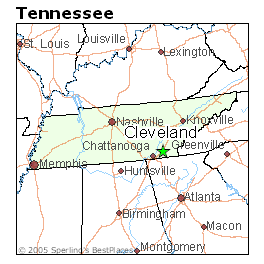
AT&T, Comcast, and Charter have surrounded the city of Cleveland, Tenn., (population 42,774) for more than 20 years, yet after all that time, there are still many homes in the area that have no better than dial-up Internet access..

An effort to extend municipal utility EPB’s fiber to the home service into the community just northeast of Chattanooga on Interstate 75, has run into organized political opposition campaign, part-sponsored by two of the three communications companies serving the area.

Tennessee state Reps. Dan Howell and Kevin Brooks, both Cleveland-area Republicans, understand the implications. With AT&T, Comcast, and Charter resolute about not expanding their coverage areas anytime soon, the only chance Cleveland has of winning world-class broadband anytime in the reasonable future is through EPB, which has already offered to extend service to at least 1,000 customers in rural Bradley County in as little as three months. Most of those customers now rely on dial-up Internet services, because no broadband is available. Reps. Howell and Brooks are trying to get the the red tape out of the way so EPB can proceed, but the Tennessee legislature hasn’t budged.
EPB provides municipal power, broadband, television, and telephone service for residents in Chattanooga, Tennessee

EPB provides municipal power, broadband, television, and telephone service for residents in Chattanooga, Tennessee

There is a substantial difference between 30kbps dial-up and 100Mbps — one of the “budget” Internet tiers available from EPB. But some Tennessee lawmakers and corporate-backed special interest groups don’t care. To them, stopping public broadband expansion is a bigger priority, and they have attempted to stall, block, or prohibit municipal broadband, just to protect the current phone and cable companies that are among their generous contributors.

In 2010, Chattanooga became the first in America to enjoy gigabit residential broadband speed not because of AT&T, Comcast, or Charter, but because of the publicly owned electric company, EPB. So what’s the problem with that? The fact EPB spent $320 million on the fiber optic network — about $100 million of that coming from a federal grant — keeps some conservatives, corporate executives, and telecom shareholders up at night. They object to the public funding of broadband, calling it unfair competition for the two incumbent cable companies and one phone company, which have their own “privately funded” networks.

Republican Rep. Mike Carter, who serves Ooltewah, thinks that’s a lot of nonsense. He notes AT&T and other providers already receive government funding to service outlying areas that no other providers dare to tread for a lack of return on their investment.
cleveland_tn“[What] convinces me to back expansion of the EPB of Chattanooga is the fact that they received $111 million in stimulus funds, and in the next five years AT&T alone will receive $156 million of your money [in government funding] assessed every month on your bill to provide 10/4-gigabit service in those areas,” Carter explained to the Chattanooga Times-Free Press. “If the EPB’s $111 million matching grant somehow disqualifies those benefits going to my constituents, how do I explain to them that AT&T is receiving non-matching funds?”

“The issue then became, if it is necessary to create the world’s fastest Internet system, why would EPB not offer that for economic growth in its service area?” Carter continued. ” After I heard the story of the [gig’s] creation and realized that the money had already been spent, I asked myself if I would allow a firmly held principle of no competition with private enterprise by government to deny my constituents and neighbors the incredible benefits.”

Justin Owen, president and CEO of the Beacon Center of Tennessee, is dismissive of Carter’s willingness to bend his principles. In his view, those without Internet access have other options instead of getting EPB Fiber on the public dime.

Owen

Owen

“You can get satellite Internet,” said Owen, who added that governments that invest in fiber technology could be “left behind by disruptive innovation,” which in his mind could be satellite Internet. Satellite customers would disagree.

“Horrible, horrible, horrible, and more horrible,” wrote Trey from another Cleveland — this time in Texas. “Speeds are consistently less than 2Mbps and they advertise up to 12. Try a cell phone booster and use that before resorting to satellite Internet.”

Hundreds of customers shared similar stories about their experience with satellite Internet, and they don’t believe it will be disruptive to anything except their bank account.

Owen and his group have not revealed many details about where its funding comes from, but the group is a member of the State Policy Network, which receives financial support from AT&T, Time Warner Cable, Verizon and Comcast. The group’s former leader, Drew Johnson, was also a former opinion page columnist at the Times-Free Press and used column space to criticize EPB and other issues that ran contrary to AT&T’s agenda in Tennessee.

Despite support from the Chattanooga area’s Republican delegation, many legislators from outside the area remain firmly in support of the telecom companies and their wish to limit or destroy community broadband projects like EPB, claiming they are redundant or are based on faulty business plans likely to fail. But while Comcast used to dismiss EPB’s gigabit service as unnecessary and AT&T considered gigabit speeds overkill, both companies are now racing to deploy their own gigabit networks in Chattanooga to compete.

The residents of Cleveland without broadband today probably won’t have it tomorrow or anytime soon. Many are hoping the Tennessee legislature will relent and let EPB solve their broadband issues once and for all. Cleveland resident Aaron Alldaffer is trying to help gin up interest in a renewed legislative push for EPB Fiber expansion with a Change.org petition.

The BBC World Service Global Business program visited Chattanooga in May 2016 to explore EPB Fiber and discuss its implications. (29 minutes)

You must remain on this page to hear the clip, or you can download the clip and listen later.
West Virginia Lawmakers Battle Slow Broadband; Propose to Fine ISPs for False Speed Claims

frontier speedFrontier Communications is the obvious target of an effort by members of West Virginia’s House of Delegates to embarrass the company into providing at least 10Mbps broadband service or face steep penalties if it does not stop advertising slow speed DSL as “High-Speed Internet.”
State lawmakers continue to be flooded with complaints about the poor performance of Frontier Communications’ DSL service, which customers claim delivers slow speeds, unreliable service, or no service at all.

Although Frontier frequently advertises broadband speeds of 10Mbps or faster, customers often do not receive the advertised speeds, and the service can be so slow it will not work reliably with online video services.

West Virginia’s broadband problems remain so pervasive, the state legislature this year will entertain several broadband improvement measures, including a proposal to spend $72 million to build a publicly owned middle mile fiber optic network. The bill’s sponsor, Sen. Chris Walters (R-Putnam) claims the new fiber network would boost Internet speeds, improve service, and force down broadband pricing.

With cable broadband available only in major communities, much of West Virginia is dependent on DSL service from Frontier Communications, the telephone company serving most of the state. That is a unique situation for Frontier, which typically serves smaller and medium-sized cities in-between other communities serviced by larger providers like Verizon, AT&T, and Qwest/CenturyLink. Frontier’s problems meeting customer expectations have been well heard in Charleston, the state capitol, if only because most members of the state legislature have Frontier customers in their districts.

Legislators have found they have little recourse over a business that operates largely without regulation or government oversight, as Delegate John Shott (R-Mercer) told the Charleston Gazette. Shott heads the House Judiciary Committee and gets plenty of complaints from his constituents.

“[Customers] feel they never get the speed the Internet providers represent,” said Shott. “There doesn’t seem to be any recourse or regulatory body that has any ability to cause that to change.”

In the absence of regulation or direct oversight, a class action lawsuit on behalf of Frontier DSL customers in the state is still working its way through court. In December 2015, a separate action by West Virginia Attorney General Pat Morrisey resulted in a settlement agreement with Frontier. The company agreed to guarantee at least 6Mbps speeds for around 28,000 customers, or give them a substantial monthly discount off their broadband bill.

frontier wvShott’s bill, HB 2551, targets “unfair or deceptive acts or practices” of Internet Service Providers that advertise fast speeds but never deliver them. The bill would expose a violating ISP to damages up to $3,000 per customer, a $5,000 state fine, and allow customers to walk away from any outstanding balance or contract:

It is an unfair or deceptive act or practice and a violation of this article for any seller or Internet service provider to advertise or offer to provide “high speed Internet service” that is not at least ten megabytes per second.

If a seller or Internet service provider violates […] this section, the consumer has a cause of action to recover actual damages and, in addition, a right to recover from the violator a penalty in an amount, to be determined by the court, of not less than $100 nor more than $3,000. No action brought pursuant to this subsection may be brought more than two years after the date upon which the violation occurred or the due date of the last scheduled payment of the agreement, whichever is later.

If a seller or Internet service provider violates […] this section, any sale or contract for service is void and the consumer is not obligated to pay either the amount due, the amount paid or any late payment charge. If the consumer has paid any part of a bill or invoice, or of a late payment fee, he or she has a right to recover the payments from the violator or from any [collection agency] who undertakes direct collection of payments or enforcement of rights arising from the alleged debt.

The Attorney General of this state shall investigate all complaints alleging violations […] and has a right to recover from the violator a penalty in an amount, to be determined by the court, of not less than $500 nor more than $5,000 per violation, with each advertisement or contract to sell or provide “high speed Internet” being a separate violation. The Attorney General also has the power to seek injunctive relief.

As of today, the bill counts Delegates J. Nelson, Border, Kessinger, Arvon, Moffatt, A. Evans, Wagner, Cadle, and D. Evans as sponsors.

Delegate Shott

Delegate Shott

“The list of sponsors of this bill [HB 2551] are from a broad geographic area,” Shott told the newspaper. “They’ve identified this as a problem in their areas.”

Some legislators believe West Virginia should enforce the FCC’s latest minimum definition of broadband – 25Mbps, but the Gazette reports that kind of robust speed definition could be difficult for a DSL provider to achieve without significant additional investment. Some worry companies like Frontier could have difficulty justifying further rural broadband expansion in a state traditionally challenged by its number of rural areas and difficult terrain.

Despite those difficulties, incumbent providers like Frontier, Suddenlink, and Comcast have not appreciated efforts to help expand public broadband networks in the state, including the proposal outlined in Sen. Chris Walters’ SB 315, which would authorize about $72 million to build a public middle mile fiber network that would be offered to ISPs at wholesale rates.

Frontier strongly objects to the project because it would use public dollars to compete with private businesses like Frontier. The phone company’s opposition raised eyebrows among some in Charleston, who note Frontier had no objections to accepting $42 million in state dollars in 2010 to construct and install a fiber network it now operates for hundreds of public facilities across the state and $283 million in federal dollars to expand rural broadband. The 2010 fiber project was rife with accusations of waste, fraud, and abuse. Critics allege Frontier overcharged the state, installing service for $57,800 per mile despite other providers routinely charging about $30,000 a mile in West Virginia.

The West Virginia Cable Television Association, representing cable operators in the state, called the project a money-waster, noting it would not result in a single new hookup for broadband service. Middle mile networks do not reach individual homes and businesses and the bill does not authorize the state to get into the ISP business.

Sen. Walters

Sen. Walters

Much of the support for the public network comes from smaller ISPs like Citynet, which predominately serves commercial customers, and equipment vendors like Alpha Technologies. Walters believes if West Virginia builds the network, broadband providers will come to use it. The state’s dominant cable and phone companies vehemently disagree. The cable association has launched an all-out PR war, hoping to attract opposition from conservative lawmakers with claims the project will mandate state and local governments to buy Internet connectivity exclusively from the state-owned network and would trample on corporate rights by using eminent domain to seize parts of the cable industry’s fiber networks to complete the state network.

Walters brushed away the accusations, telling the Gazette there is no mandate that state agencies use the network and there are no plans for the government to take any fiber away from a private company.

Cable operators prefer an alternative measure also introduced in the West Virginia Senate. SB 16 would grant tax credits of up to $500 per address for any phone or cable company that agrees to wire a previously unserved rural address. The bill would limit total tax credits to $1 million.

The difference between the two measures? Walters’ bill would use public money to build a public broadband network owned by the public and answerable to the state. The cable industry-backed proposal would use public money in the form of tax offsets to wire homes and businesses to broadband owned by private businesses answerable to shareholders.

Municipal Provider EPB Introduces Chattanooga to 10Gbps Residential Broadband: $299 a Month

nextnetThe first provider in the country to offer community-wide gigabit fiber broadband to residential customers today announced it would far surpass the rest of the marketplace with a new 10 gigabit broadband package dubbed NextNet, available throughout the Chattanooga, Tenn. service area of municipal utility EPB for $299 a month.
“Five years ago, Chattanooga and Hamilton County became the first in the United States to offer up to 1 Gig Internet speeds,” said Harold DePriest, president and CEO of EPB. “Today, we become the first community in the world capable of delivering up to 10 Gigs to all 170,000 households and businesses in our service area.”

Its largest competitor — Comcast, charges $299 for up to 2Gbps service in limited service areas, if the customer can wait 6-8 weeks for installation, can afford up to $1,000 in activation and installation fees, and can commit to a two-year contract with a steep early termination fee. EPB will offer its five-times-faster-than-Comcast service to any customer with no lengthy waiting period, no contract, and free installation.

EPB will leverage Alcatel-Lucent’s TWDM-PON broadband technology to deliver scalable fiber broadband, and is also introducing 5 and 10Gbps plans for small businesses and 3, 5, and 10Gbps plans for larger commercial customers. Customers will receive an ONT unit installed by technicians about two weeks before installation is complete. The box, about the size of a DVD player, is required to support the new high speeds. It is usually mounted on a wall near the computer.

“Chattanooga’s 10 Gig fiber optic network is a world-class platform for innovation,” DePriest said. “In recent years, the need for faster Internet speeds has increased rapidly. Chattanooga is the perfect place for companies to enhance their productivity today and test the applications everyone in the country will want tomorrow.”

Despite detractors that claim municipal/public broadband services are economic failures waiting to happen, EPB has delivered tangible economic benefits across the Chattanooga region and is now recognized internationally as one of the country’s most successful public broadband projects.

A study recently released by University of Tennessee at Chattanooga Finance professor Bento Lobo shows “the Gig Network” helped the Chattanooga area generate at least 2,800 new jobs and at least $865.3 million in economic and social benefits. The study also found the EPB smart grid, which is the cornerstone application of the utility’s community-wide fiber optic network, has allowed customers to avoid an estimated 124.7 million minutes of electric service interruptions by automatically re-routing power (often in less than a second) to prevent an outage or dramatically reduce outage duration.

EPB has proven so successful, it has attracted visitors from around the world to study how community fiber broadband can transform a local economy.

Big City Telecom Infrastructure is Often Ancient: Conduits 70+ Years Old, Wiring from 1960s-1980s

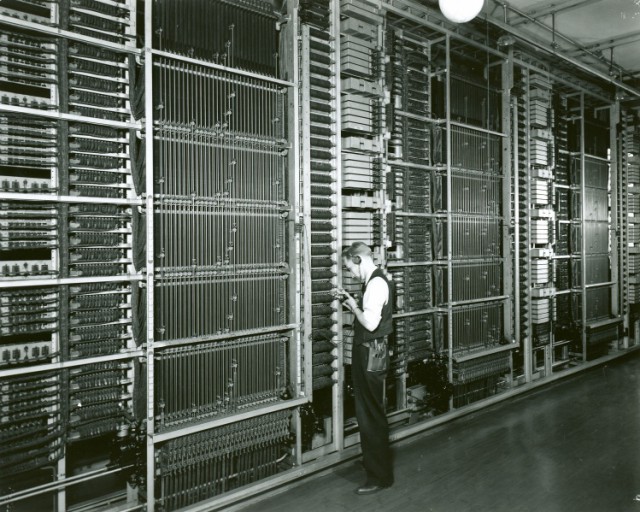
A panel electromechanical switch similar to those in use in New York until the 1970s.

A panel electromechanical switch similar to those in use in New York until the 1970s. They were installed in the 1920s.

As late as the 1970s, New York Telephone (today Verizon) was still maintaining electromechanical panel switches in its telephone exchanges that were developed in the middle of World War I and installed in Manhattan between 1922-1930. Reliance on infrastructure 40-50 years old is nothing new for telephone companies across North America. A Verizon technician in New York City is just as likely to descend into tunnels constructed well before they were born as is a Bell technician in Toronto.

Slightly marring last week’s ambitious announcement Bell (Canada) was going to commence an upgrade to fiber to the home service across the Greater Toronto Area came word from a frank Bell technician in attendance who predicted Bell’s plans were likely to run into problems as workers deal with aging copper infrastructure originally installed by their fathers and grandfathers decades earlier.

The technician said some of the underground conduits he was working in just weeks earlier in Toronto’s downtown core were “easily 60-70 years old” and the existing optical fiber cables running through some of them were installed in the mid-1980s.

At least that conduit contained fiber. In many other cities, copper infrastructure from the 1960s-1980s is still in service, performing unevenly in some cases and not much at all in others.

Earlier this year, several hundred Verizon customers were without telephone service for weeks because of water intrusion into copper telephone cables, possibly amplified by the corrosive road salt dumped on New York streets to combat a severe winter. Verizon’s copper was down and out while its fiber optic network was unaffected. On the west coast, AT&T deals with similar outages caused by flooding. If that doesn’t affect service, copper theft might.

munifiber

Fiber optic cable

Telephone companies fight to get their money’s worth from infrastructure, no matter how old it is. Western Electric first envisioned the panel switches used in New York City telephone exchanges until the end of the Carter Administration back in 1916. It was all a part of AT&T’s revolutionary plan to move to subscriber-dialed calls, ending an era of asking an operator to connect you to another customer.

AT&T engineer W.G. Blauvelt wrote the plan that moved New York to fully automatic dialing. By 1930, every telephone exchange in Manhattan was served by a panel switch that allowed customers to dial numbers by themselves. But Blauvelt could not have envisioned that equipment would still be in use fifty years later.

As demand for telephones grew, the phone company did not expand its network of panel switches, which were huge – occupying entire buildings – loud, and very costly to maintain. It did not replace them either. Instead, newer exchanges got the latest equipment, starting with more modern Crossbar #1 switches in 1938. In the 1950s, Crossbar #5 arrived and it became a hit worldwide. Crossbar #5 switches usually stood alone or worked alongside older switching equipment in fast growing exchanges. It occupied less space, worked well without obsessive maintenance, and was reliable.

It was not until the 1970s that the Bell System decided to completely scrap their electromechanical switches in favor of newer electronic technology. The advantages were obvious — the newer equipment occupied a fraction of the space and had considerably more capacity than older switches. That became critical in New York starting in the late 1960s when customer demand for additional phone lines exploded. New York Telephone simply could not keep up with and waiting lists often grew to weeks as technicians looked for spare capacity. The Bell System’s answer to this growth was a new generation of electronic switches.

The #1 ESS was an analog electronic switch first introduced in New Jersey in 1965. Although it worked fine in smaller and medium-sized communities, the switch’s software bugs were notorious when traffic on the exchange reached peak loads. It was clear to New York Telephone the #1 ESS was not ready for Manhattan until the bugs were squashed.

Bell companies, along with some independent phone companies that depended on the same equipment, moved cautiously to begin upgrades. It would take North American phone companies until August 2001 to retire what was reportedly the last electromechanical switch, serving the small community of Nantes, Quebec.

ATT-New-York-central-office-fire-300x349

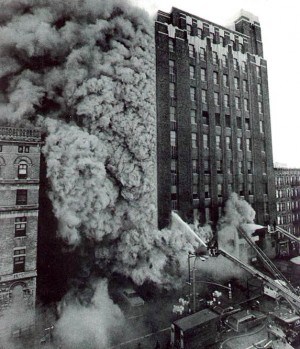
A notorious 1975 fire destroyed a phone exchange serving lower Manhattan. That was one way to guarantee an upgrade from New York Telephone.

On rare occasions, phone companies didn’t have much of a choice. The most notorious example of this was the Feb. 27, 1975 fire in the telephone exchange located at 204 Second Avenue and East 13th Street in New York. The five alarm fire destroyed the switching equipment and knocked out telephone service for 173,000 customers before 700 firefighters from 72 fire units managed to put the fire out more than 16 hours later. That fire is still memorialized today by New York firefighters because it injured nearly 300 of them. But the fire’s legacy continued for decades as long-term health effects, including cancer, from the toxic smoke would haunt those who fought it.

The New York Telephone building still stands and today also houses a street level Verizon Wireless retail store.

New York Telephone engineers initially rescued a decommissioned #1 Crossbar switch waiting to be melted down for scrap. It came from the West 18th Street office and was cleaned and repaired and put into emergency service until a #1 ESS switch originally destined for another central office was diverted. This part of Manhattan got its upgrade earlier for all the wrong reasons.

Throughout the Bell System in the 1970s and 80s, older switches were gradually replaced in favor of all electronic switches, especially the #5 ESS, introduced in 1982 and still widely in service today, serving about 50% of all landlines in the United States. Canadian telephone companies often favored telephone switches manufactured by Northern Telecom (Nortel), based in Mississauga, Ontario. They generally worked equally well as the American counterpart and are also in service in parts of the United States.

The legacy of more than 100 years of telephone service has made running old and new technology side by side nothing unusual for telephone companies. It has worked for them before, as has their belief in incremental upgrades. So Bell’s announcement it would completely blanket Toronto with all-fiber service is a departure from standard practice.

For Bell in Toronto, the gigabit upgrade will begin by pushing fiber cables through existing conduits that are also home to copper and fiber wiring still in service. If a conduit is blocked or lacks enough room to get new fiber cables through, the Bell technician predicted delays. It is very likely that sometime after fiber service is up and running, copper wire decommissioning will begin in Toronto. Whether those cables remain dormant underground and on phone poles for cost reasons or torn out and sold for scrap will largely depend on scrap copper prices, Bell’s budget, and possible regulator intervention.

But Bell’s upgrade will clearly be as important, if not more so, than the retirement of mechanical phone switches a few decades earlier. For the same reasons — decreased maintenance costs, increased capacity, better reliability, and the possibility to market new services for revenue generation make fiber just as good of an investment for Bell as electronic switches were in the 1970s and 1980s.

[flv]http://www.phillipdampier.com/video/ATT Reconnecting 170000 Phone Customers in NYC After a Major Fire 1975.mp4[/flv]

AT&T produced this documentary in the mid-1970s about how New York Telephone recovered from a fire that destroyed a phone exchange in lower Manhattan and wiped out service for 173,000 customers in 1975. The phone company managed to get service restored after an unprecedented three weeks. It gives viewers a look at the enormous size of old electromechanical switching equipment and masses of phone wiring. (22:40) 

Gigabit Fever Hits Toronto: Bell Introducing Gigabit Fiber Internet Across Entire GTA

bellBell Canada will invest $1.14 billion to bring gigabit fiber to the home service to more than one million homes and apartments in the Greater Toronto Area (GTA) over the next three years.

It will be the largest fiber build ever attempted in North America, and will serve every home and business in the GTA, beginning with 50,000 homes and businesses that will be upgraded to all-fiber service this summer.

“This is something that quite frankly none of us could have imagined just a few years ago,” Bell Canada president and CEO George Cope said at a press conference this morning. “This will be 20 times faster (than average Internet speeds) and it really is building for the consumer what large, large enterprise would have had just a few years ago for their corporations.”

gtaToronto will be the fastest broadband city in North, Central, and South America when Bell is finished laying 9,000 kilometers of fiber underground and on 80,000 Bell and Toronto Hydro utility poles. At least 27 Bell telephone exchanges will be fully upgraded to 100% fiber service, eliminating huge swaths of older copper wiring. At least 2,400 new jobs will be created, but Bell and Toronto city officials are convinced an all-fiber optic network will attract even more jobs and help broaden Toronto’s digital economy.

Bell’s project in Toronto will be vastly larger than AT&T U-verse with GigaPower, Comcast’s 2Gbps fiber service, and Google Fiber because:

  • It will actually exist, unlike fiber to the press release announcements of phantom fiber upgrades from Comcast and AT&T that serve only a miniscule number of customers;
  • Will not rely on “fiberhoods” and will deliver fiber service to every home and business and every neighborhood across the entire GTA.

No pricing has yet been announced but Bell promised it would be competitive with other gigabit broadband projects in North America. That likely means Toronto residents will pay between $70-100 a month for gigabit service. No details about usage caps or allowances were included in the announcement.

Bell is already upgrading some of its existing Fibe network in other cities to deliver gigabit speeds on a more limited basis in Atlantic Canada (Bell Aliant) and in select cities in Ontario and Quebec as part of a $20 billion network upgrade.

[flv]http://www.phillipdampier.com/video/CP24 Bell Gigabit Announcement 6-25-15.flv[/flv]

CP24 carried this morning’s press conference introducing Bell Gigabit Internet across Toronto. (19:51)

Search This Site:

Contributions:

Recent Comments:

Your Account:

Stop the Cap!