Home » fiber optic network » Recent Articles:

Wall Street Encourages Verizon to Get Completely Out Of Landline/FiOS Business

Wall Street is encouraging Verizon Communications to sell off its landline telephone operations to clear a path for a potentially-profitable merger with British mobile phone company Vodafone Group Plc.

Analysts at Goldman Sachs Group are behind the research report, which suggests Verizon’s recent non-aggression treaty with Comcast and Time Warner Cable makes the sale of Verizon’s landline phone and FiOS fiber to the home network more likely. Verizon will earn a percentage of every cable TV/phone/broadband subscription sold, effectively making Verizon’s own wired network redundant. Potential buyers could include Frontier Communications, CenturyLink, or Windstream, which all have business plans that depend on landline networks fewer Americans are using.

Should Verizon clear away its legacy landline and FiOS networks, Goldman Sachs suggests, a merger with Vodafone would be a “clear fit” for the two companies.

“The remaining wireless and enterprise businesses would have faster growth and a clear fit with Vodafone’s assets and strategy, making it a more attractive merger partner,” Bloomberg News quotes from the report.

“Given that it no longer faces the threat of integrated cable competitors, Verizon could potentially spin off its remaining [landline] assets,” along with “large” pension and benefit liabilities, the Goldman analysts added.

Verizon would also eliminate its ongoing dispute with the two largest unions representing its landline workers — Communications Workers of America and the International Brotherhood of Electrical Workers.  Both unions are still trying to negotiate a new contract with Verizon after a brief, but contentious, summer strike. Verizon Wireless is almost entirely non-unionized.

Vodafone’s share price has been rising recently, perhaps anticipating a potential merger that would give Vodafone a stronger hand in the U.S. marketplace.

Verizon’s investment in its landline network, along with interest in expanding its well-regarded FiOS fiber to the home service, has remained stalled for the past few years.  Recently, the company indicated an interest in moving away from fiber optics to serve broadband customers, and rely on its wireless LTE 4G network instead.

Verizon’s new CEO Lowell McAdam comes from Verizon’s wireless division, and has not shared his predecessor’s enthusiasm for fiber upgrades.

Merger Partner?

While the prospect of an all-wireless future for Verizon may seem good for shareholders, consumers are likely to pay the price:

  1. The Justice Department is reviewing the antitrust implications of the non-aggression treaty between Verizon and its cable competitors;
  2. The sale of Verizon’s landline network to an independent provider could doom the company’s fiber optic network and limit rural Verizon customers to 1-3Mbps DSL;
  3. Verizon Wireless’ prices reflect its market share and lack of strong competition.  The company’s LTE wireless network, although fast, has suffered from reliability problems and is heavily usage-limited.  It may prove unsuitable as a home broadband replacement for rural customers;
  4. Reduced competition for telephone, video, and broadband will likely result in higher prices for existing cable subscribers, too.

Verizon is hardly the first phone company to ponder getting out of the phone business.  AT&T has been lobbying to rescind rural universal service requirements for years.  If successful, AT&T could abandon its rural landline network and provide customers with higher-priced cell phone service instead.

[flv width=”640″ height=”380″]http://www.phillipdampier.com/video/CWA Parody of Verizon Video.flv[/flv]

Verizon’s unionized workers are still fighting for a new contract, and released this parody video in response to a company-produced DVD mailed to union workers’ homes.  (3 minutes)
Verizon’s Anti-Aggression Treaty With Big Cable May Be the End of FiOS

Ebenezer Scrooge could successfully serve as the CEO of any large telecommunications company these days, and the New York Times knows a Christmas tale of woe when it sees one.  That is why the venerable newspaper printed a Christmas Eve editorial blasting Verizon’s new “non-aggression treaty” with America’s largest cable companies that puts coal in the stocking for any Verizon customer waiting for FiOS fiber-to-the-home service.  The newspaper believes the days of FiOS are numbered:

Verizon — Verizon Wireless’s main shareholder — relieved itself of the need to expand FiOS, its high-speed, fiber optic network, beyond the 18 million homes it set out to reach six years ago, a rollout that cost $23 billion. For the other 114 million homes in the country, it can simply bundle its wireless service with the cable and wireline broadband services of its partners. The agreement between Verizon and the cable carriers includes a joint venture to develop technology to integrate the wireline and wireless platforms.

Verizon’s cable deals squashed hopes that cable carriers’ purchases of wireless spectrum would lead to more competition against the dominant players, AT&T and Verizon Wireless. And it puts in doubt whether FiOS will ever be a serious competitor to cable, reducing the likelihood that video transmitted over broadband could break up cable’s regional oligopolies.

[…] Verizon’s deals suggest a future in which cable carriers will get uncontested control of high-speed broadband into the home while AT&T and Verizon will get uncontested control over wireless. For consumers with expensive wireless plans, pricey bundles of cable channels and costly, slow broadband, this does not look like good news.

Verizon’s economic future lies in the lucrative world of wireless.  Its FiOS network was an expensive gamble to reinvent its antiquated telephone network to drive customers to keep their landlines and spent a hundred dollars more on video entertainment and super fast broadband.  Wall Street hated the price and loathed the potential for costly competition that would force earnings down through aggressive price-cutting.  In some markets, Verizon FiOS has forced Comcast, Cablevision, and Time Warner Cable to be a little more generous with broadband speed and lighten up a little on the annual rate increases.

But convincing cable customers to switch remains a difficult proposition even when Verizon offers the superior service.  Verizon has not achieved the level of penetration it expected in many markets.  In short, people just don’t want to wait around for installers.  Besides, cable companies slash prices for customers threatening to depart.

Verizon’s deal with Time Warner and Comcast delivers Verizon Wireless desirable spectrum.  But the agreement to cross-market and cross-bundle product lines smacks of collusion, and is exactly the kind of turf protection that has kept cable companies from competing head-to-head with each other for more than three decades.  Is it more lucrative for Verizon to build out its FiOS network to compete or simply refer people to Time Warner or Cablevision for cable TV.  So long as cable doesn’t offer a competing wireless product, Verizon seems to think there is little harm done.

But for consumers, the absence of competition brings rate increases, reduced innovation, and declining customer service.

The one thing the telecom marketplace needs less of is the “take it or leave it” attitude that earned the scorn of cable customers everywhere.

Public Service Commissioner Accuses Louisiana Governor of Sabotaging Broadband Grant

Phillip Dampier November 17, 2011 AT&T, Community Networks, Competition, Consumer News, Public Policy & Gov't, Rural Broadband, Video Comments Off on Public Service Commissioner Accuses Louisiana Governor of Sabotaging Broadband Grant

Campbell

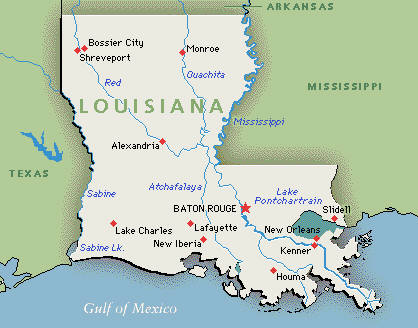
A commissioner on the Louisiana Public Service Commission accused Gov. Bobby Jindal of sabotaging a now-rescinded $80 million dollar broadband improvement grant for the benefit of the state’s largest telecommunications companies.

Public Service Commissioner Foster Campbell publicly berated the Republican governor for intentionally interfering with the project until time ran out and the government withdrew its funding.

The cancellation of the project has proved embarrassing because it is the first and only time a state has lost federal broadband grant money.

“We want to know what the heck happened; we’re the only ones in the country that dropped the ball,” Campbell said. “I meet with people in every parish, and the number one priority by far is high-speed Internet, and how do you lose $80 million coming from the federal government to do that. How do you drop the ball, and if they did drop the ball was it because someone whispered in their ears, ‘it’s going interfere with big companies?'”

Campbell suspects the state’s largest phone and cable companies lobbied the governor’s office for changes in what was originally proposed as a public broadband network reaching large sections of rural Louisiana that do not have broadband access.

The state’s Division of Administration eventually scrapped plans for the public broadband network and replaced it with a proposal to use grant dollars to purchase long term institutional broadband contracts from private providers.  AT&T is the dominant local phone company in Louisiana — the same company that has steadfastly refused to provide DSL service across rural Louisiana. The new proposal would have not delivered any broadband access to individual Louisiana homes, only to institutions like schools, libraries, and local government agencies.

In Campbell’s eyes, the grant represented a competitive threat and seeing it dead and buried was the governor’s special favor to Big Telecom.

“I think they threw a little dirt on this one or a lot of dirt on it,” Campbell told the Tulane Hullabaloo.

Jindal himself admits his administration did get directly involved in changing the project’s course.

The governor called the revised private provider-focused project “a reasonable approach that would have expanded broadband access and not hurt private providers.” Jindal attacked the public broadband network originally planned by the Louisiana Broadband Alliance as “a heavy-handed approach from the federal government that would have undermined and taken over private businesses.”

With the $80 million dollars back in the hands of the federal treasury, Jindal is now blaming the Obama Administration for taking the money back.

The Louisiana Broadband Alliance, a collaboration among six state agencies, would have deployed more than 900 miles of fiber-optic network to expand broadband Internet service in some of the most economically distressed regions of Louisiana. The new network intends to provide direct connections for more than 80 community anchor institutions including universities, K-12 schools, libraries, and healthcare facilities. The 3,488-square-mile service area includes 12 impoverished parishes targeted by the state’s Louisiana Delta Initiative and a separate five-parish area that is home to four federally-recognized American Indian Tribes.

Comcast’s Snake Oil Astroturf Operation Pulls Up Stakes in Longmont

Phillip Dampier November 15, 2011 Astroturf, Comcast/Xfinity, Community Networks, Competition, Editorial & Site News, Public Policy & Gov't Comments Off on Comcast’s Snake Oil Astroturf Operation Pulls Up Stakes in Longmont

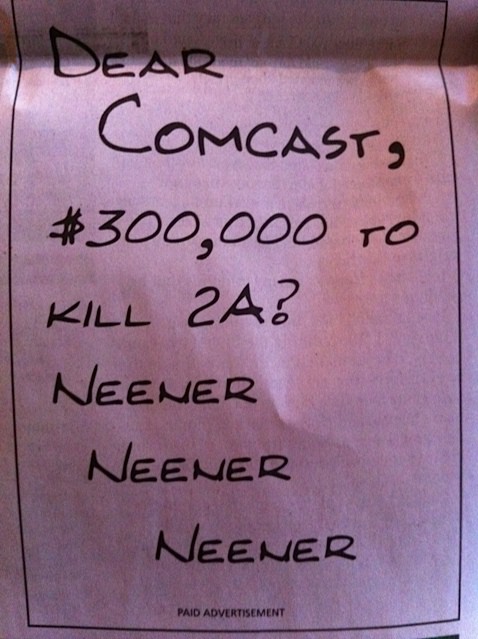
Days after the citizens of Longmont, Col. turned their backs on an expensive lobbying and astroturf campaigned fueled (not by choice) by Comcast ratepayers, the so-called “community activists” opposed to the community using its own fiber network as it sees fit evaporated into dust, but not before one celebrating citizen took out a giant ad in the local Times-Call newspaper:

As Christopher Mitchell from Community Broadband Networks discovered, “citizen activism” has an expiration date when the industry money stops flowing:

If there had been a shred of local legitimacy among the “Look Before We Leap” group that was run by Denver-based strategists, it probably would have kept its website up for longer than a few days after the election. If I were them, I would want to keep a record for the future.

But they don’t. Because they were just a bunch of paid public relations people working a job. They didn’t oppose Longmont’s initiative, they didn’t know anything about it. They were collecting a paycheck.

And when the money ran out, the days of their website were numbered in the single digits.  The only thing left of lookbeforeweleap.org is a cached copy courtesy of Google.  (And by the way, Squarespace, the hosting company, wants the site owner to contact them.)

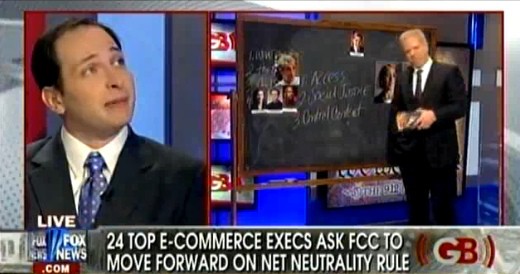
Americans for Prosperty's Phil Kerpen on Glenn Beck's show opposing Net Neutrality

Comcast’s propaganda campaign fooled no one.  Borrowing from the cable industry’s bag of old tricks, Look Before We Leap conflated Longmont’s fiber optic network with a few failed Wi-Fi projects run years earlier in concert with Earthlink in other states.

The editors at Times-Call had to respect Comcast and its merry band of dollar-a-holler followers for at least being bold.  After all, they tried to convince voters “that the city having control over its own property was somehow ‘risky.‘”  But of course the cable company would prefer Longmont stay out of the comfortable duopoly it has with phone company CenturyLink.

The newspaper had little time and patience for the antics of “Americans for Prosperity” either.  The hilariously misnamed group funded by large corporations to convince people to vote against their own best interests considers Net Neutrality and community broadband self-empowerment evidence of Marxism — at least that is what policy director Phil Kerpen said on Glenn Beck’s now defunct paranoia festival on Fox News Channel.

Longmont doesn’t put out the welcome mat for corporate influence peddlers.  Voters believe local government can be an effective steward of community resources, something Comcast subscribers don’t believe applies to a cable company that shovels hundreds of channels most people never watch and expects annual rate increases to help pay for them.

Times-Call’s Tony Kindelspire:

Ask a local businessperson how Longmont having its own electric utility is working out for them. We have some of the cheapest rates in the country.

It takes leadership to stand up against big business lobbyists to act on behalf of what you think is right, not what’s going to raise you the most amount of campaign cash the next time around. How very, very refreshing it was to see, and I hope it’s a lesson that spreads far and wide.

So do we.

Longmont Residents Say Yes to Community Fiber: Astroturf Effort Failed to Impress

Phillip Dampier November 2, 2011 Astroturf, Comcast/Xfinity, Community Networks, Competition, Editorial & Site News, Public Policy & Gov't Comments Off on Longmont Residents Say Yes to Community Fiber: Astroturf Effort Failed to Impress

This dollar-a-holler astroturf effort failed to impress Longmont voters, who turned back a Comcast-funded opposition campaign to open up the city's fiber network.

Longmont, Col. residents turned their backs on a Comcast-funded campaign to block the opening of the city’s 17-mile fiber loop to competing broadband providers in a strong vote of approval.

As of early this morning, 60.8% of voters approved Ballot Question 2A.  Just 39.2% opposed the measure.

Longmont’s fiber network, built in 1997 and paid for by the Platte River Power Authority, has heretofore been off-limits to the public.  Colorado’s 2005 corporate welfare laws guarantee that taxpayer or ratepayer-funded broadband networks are kept away from the public that paid for them, for the protection of companies like Comcast and CenturyLink.

This results in the construction of showcase institutional fiber optic networks open to government, public safety, hospitals, and libraries… and practically nobody else.  Once built, institutional networks often go underutilized.  In Longmont, at least two-thirds of the city’s fiber optic network still goes unused 15 years after it was built.

The city government hoped to open the fiber network in time to bolster their application to Google to construct a gigabit network for residential and business customers, but after Google selected Kansas City for its fiber project, Longmont wants to keep its options open.  Passing the ballot question does exactly that.

“I’m glad to see 2A won,” Mayor Bryan Baum told the Times-Call. “I think it shows that money isn’t the determinator.”

Longmont voters were subjected to one of the most expensive pushback campaigns they’ve ever seen, thanks to Comcast, who spent $300,000 and counting to get the public to turn against the fiber network ballot question.

George Merritt, a spokesman for the cable-funded group Look Before We Leap, claims the vote results show “the measure’s narrow margin of victory.”  Merritt’s group relied heavily on a highly-suspect 2006 case study by University of Denver professor Ron Rizzuto that claimed 80 percent of community-owned Wi-Fi broadband networks failed to make money.  But the group didn’t make any distinction between Wi-Fi and fiber optics, and more importantly they left out the fact Rizzuto was inducted into the Cable TV Pioneers in 2004 for service to the cable industry.  Rizutto’s “study” was a classic case of dollar-a-holler research on behalf of the New Millennium Research Council, a creature of the telecommunications industry.

New Millennium Research Council -> Issue Dynamics -> Comcast

In fact, the Council is a “project” of Issue Dynamics, Inc., a for-profit, high powered Washington lobbying firm. Issue Dynamics’ client list includes Verizon, Comcast, AT&T and the United States Telecom Association – the trade association for the telecom industry.  The direct relationship between Rizzuto’s findings, and cable companies like Comcast who paid for the research, never made it into the report (or onto the group’s website).

This is the second time Longmont voters have cast ballots on the issue of the city’s fiber optic network.

In 2009, voters faced another cable industry-funded astroturf effort, with $245,000 spent to successfully defeat a similar measure.  This time, thanks in part to public exposure of the companies pulling the strings behind the astroturf campaign, voters rejected the propaganda onslaught and passed the measure.  Cable bills have also increased several times since the 2009 measure, a reminder to the public why competition can make a real difference.

With the passage of 2A, the city can choose to leave the network exactly as it is today or partner with another provider to offer services to the public.  It’s now their choice, not Comcast’s.

Search This Site:

Contributions:

Recent Comments:

Your Account:

Stop the Cap!