Home » Contract » Recent Articles:

Florida Cracks Down on Shady Auto-Renewing Contracts; SiriusXM Among the Worst Offenders

Phillip Dampier September 20, 2011 Consumer News, Public Policy & Gov't, Video Comments Off on Florida Cracks Down on Shady Auto-Renewing Contracts; SiriusXM Among the Worst Offenders

The Florida Attorney General’s office is taking notice of an increasing number of consumer complaints regarding service providers auto-renewing contracts for subscription services without notifying customers in advance.

Among the worst offenders is satellite radio and Internet streaming provider SiriusXM, which some consumers say is notorious for shady billing and collection policies.

SiriusXM provides free trial service in any new and most used vehicles where receivers come pre-installed.  Most dealers activate the service trial for consumers, and pass along the name, address, and phone number of the individual buying the vehicle.  Within two weeks, SiriusXM will begin mailing customers invitations to convert their free trial into a paid subscription, usually with a discount offer.  Consumers who sign up for promotions like SiriusXM’s “5 months for $25” are invited to charge their subscription with a major credit card over the phone.

That’s where the trouble starts, several customers report.

Unbeknownst to them, SiriusXM will “automatically renew” active subscriptions with a credit card on file for “the convenience of the customer,” once the promotion expires.  Customers usually find out when they find a substantial charge on their credit card, often representing the next quarter of service, billed at the regular price of $12.95 per month, plus a “music royalty fee” and any additional state and local taxes.

Some subscribers find even bigger headaches when taking advantage of discounted annual rates that als0 auto-renew.  If the subscriber isn’t automatically billed for the renewal on a credit card, they will often find a bill in the mail, along with a fee for mailing the unexpected invoice.

Getting SiriusXM to cancel surprise bills can become a major headache, and has led to thousands of complaints with the Better Business Bureau.  SiriusXM’s overseas call centers can leave customers waiting on hold for more than half an hour, only to be connected with an English-challenged, uncooperative customer service agent that refuses to waive unexpected charges.

To be fair, SiriusXM’s subscriber agreement provides warnings that canceling service requires more than ignoring a billing statement.  Service will continue (along with billing) for up to three months before the service is suspended and the account is turned over to collections.  Consumers should not consider -any- SiriusXM plan or promotion a one-time, non-renewing offer.  Every promotion we’ve encountered will end with an account converted to regular price service.

Florida state law requires providers like cable, satellite, and phone companies to warn subscribers at least 30 days in advance of any scheduled automatic renewal of a contract.  The law gives consumers time to opt out before they find themselves committed to a service they no longer want.  But many customers accuse SiriusXM of ignoring the law, and the first indication the radio service has been renewed arrives in the form of a bill.

Coping with the third party collection agency SiriusXM uses can be even more difficult than dealing with the company directly, according to several complaints.

Customers who have filed complaints with the BBB report the company usually bends to customer demands at that point.

We have had some long-standing experience dealing with SiriusXM customer service ourselves.  Here are some tips:
  1. Don’t give them a credit card number over the phone.  Tell them to send you a bill in the mail and you will write them a check.  You can make a “one-time” credit card payment on their website that has never resulted in auto-payments for us.  Most of the automatically-renewing charges we’ve encountered came from overzealous telephone customer service representatives enrolling us in the “auto-payment” service without our authorization.
  2. You almost never have to pay regular SiriusXM prices.  Their retention offers can be renewed over and over again just by telling them the regular price is too high.  But retention plans do not include “best of” channels from the sister provider (Sirius customers can get certain XM channels and vice-versa).  Routine promotions these days are 5 months for $25 or a year for $77 if you don’t want the hassle of calling every five months to renew your retention deal.  Either is much better than $12.95 a month.
  3. Although getting “late fees” and “paper billing fees” waived is easy, getting the bill-padding “music royalty fee” forgiven is not.  But you can try.
  4. The “lifetime” promotion only covers the life of the receiver (or your automobile).  It’s not a good deal.
  5. When you sign up for a promotion, use a calendar application to start reminding you 30 days before it expires so you can call and extend it.  If your promotion expires, you will be billed regular prices and it is a major hassle to get them to waive or discount those charges in-between promotions.
  6. If you want to listen to the music channels on offer from SiriusXM these days, you can sample them for free using their streaming service.

SiriusXM recently announced they intend to raise their monthly subscription price to $14.49 in January — just another reason not to pay the regular price.

[flv width=”360″ height=”290″]http://www.phillipdampier.com/video/WFTS Tampa Satellite radio irks some customers 9-19-11.mp4[/flv]

WFTS-TV in Tampa reports on increasing complaints about SiriusXM’s billing and auto-renewal practices.  (4 minutes)
Broadband Life in Idaho: Bears Rubbing Against Towers Knock Out Internet Service

Phillip Dampier September 15, 2011 Broadband Speed, Cable One, CenturyLink, Competition, Data Caps, Editorial & Site News, Public Policy & Gov't, Rural Broadband Comments Off on Broadband Life in Idaho: Bears Rubbing Against Towers Knock Out Internet Service

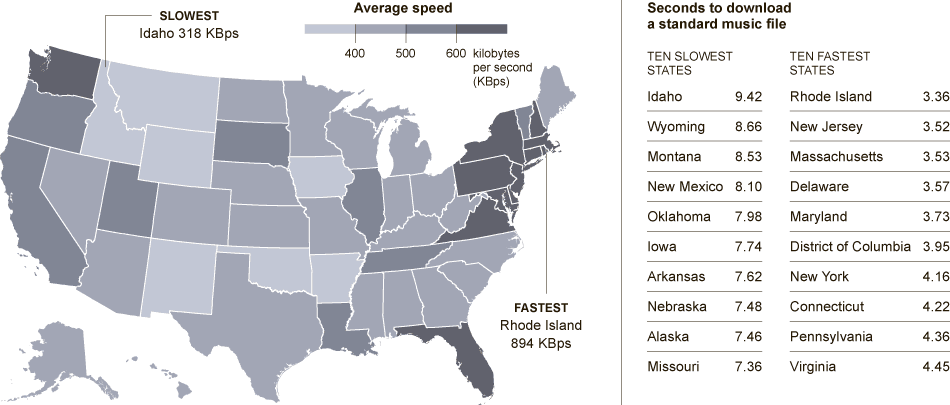
(Courtesy: Pando Networks)

Bears who fancy a good rub up against wireless Internet transmission towers were blamed for knocking out service for customers in the Potlatch area one day, a problem unique to rural communities who make due with whatever broadband access they can find.

Such is life in rural Idaho, deemed by Pando Networks to be America’s slowest broadband state, with average Internet speeds of just 318kbps.

Stop the Cap! reader Jeff in Pocatello is happy the big city New York Times has noticed Idaho’s online challenges.

“Please take notice of this newspaper article about our online experience here in Idaho,” Jeff writes. “While it underplays the near-total failure of our state legislature to recognize there –is– a broadband problem here, at least the rest of the country will understand just how bad Internet access remains in rural America.”

Jeff should know.  Pando Networks calls Pocatello America’s slowest Internet city.  It’s no surprise why.  Pocatello residents are stuck between a rock — the infamous Internet Overcharging leader Cable ONE (incidentally owned by NY Times‘ rival The Washington Post), and a hard place — Qwest/CenturyLink DSL.

Nobody does Internet Overcharging better than Cable ONE, which baits customers with high speed access and then ruins the deal with an $8 monthly modem rental fee, infamously low usage caps and a two-year contract plan that subscribers call a ripoff.

“Cable ONE never heard of a square deal because they break every consumer rule in the book,” Jeff says. “Although the company pitches speeds up to 50Mbps, they tie it to a two-year contract that only delivers one year at that speed.  After 12 months, they reduce your speed to just 5Mbps for the entire second year, and if you cannot convince the customer service representative to renew and reset your 50Mbps contract for an additional year, there is nothing you can do about it.”

THE Internet Overcharger

Cable ONE has written the book on usage limits.  Customers paying for “blazing fast 50Mbps speed” get to consume a maximum of just 50GB per month (100GB for triple play customers) before overlimit fees of $0.50/GB kick in.  Other Cable ONE plans include daily usage limits of just 3GB, which can make Netflix viewing difficult.

“Cable ONE makes you ration your Internet like satellite providers do, and it’s very irritating because they tease you with fast speeds you literally cannot use unless you are willing to pay a lot more,” Jeff says.

The alternative for most Idahoans is DSL, if Qwest/CenturyLink provides it.  In many areas, they don’t.

“You can be a mile out of Pocatello’s city center and be told there is no DSL, and those that do get it often find it working at 1-3Mbps,” he adds.

In a country now rated 25th in terms of Internet speed, Idaho is comparatively a bottom-rated broadband disaster area.  The state secured 11 federal broadband grants to deliver some level of service in communities across the state, at a cost of $25 million.

The Slow Lane

But ask some local officials about the quality of broadband in Idaho and you find a lot of denial there is even a problem.

The Times got a brusque response to their inquiries about broadband service from the executive director for the Bannock Development Corp., a business development group.  Gynii Gilliam told the newspaper things were just fine, at least for large businesses in cities like Pocatello.

“The last thing I need is a report that says we don’t have the capacity and speed, when I know it exists,” Gilliam said. She noted that Allstate Insurance was opening a $22 million call center in Pocatello and that the Federal Bureau of Investigation has a service center there. “We have not lost any business because of Internet speeds,” she said.

Which proves the old adage that you can have just about anything, for the right price.  The disparity between residential and business broadband — urban and rural — is particularly acute in mountain west states like Idaho.  Verizon was considering rural Wyoming for a multi-billion dollar high speed Internet data center, until it found it could purchase an alternative already up and running elsewhere.  Meanwhile, much of the rest of Wyoming has no Internet, slow speed wireless or DSL, or limited cable broadband in some larger communities.

Even Gilliam admitted her home broadband account was nothing like the service Allstate Insurance was likely getting.

“It feels like it’s moving in slow motion,” she told the Times. “A lot of times I’ll start downloads and not complete them.” She said she was happy as long as she could get e-mail.

But not everyone is satisfied with an Internet experience limited to occasional web browsing and e-mail.

Qwest (now CenturyLink), is Idaho's largest Internet Service Provider.

“With countries like Latvia getting better broadband than we have, it’s only a matter of time before we start to lose even more jobs in the digital economy over this,” Jeff says. “This is one more nail in the coffin for rural economies in the west, which are being asked to compete with bigger cities and eastern states that have much better infrastructure.”

Pando found the northeast and mid-Atlantic states, excepting Maine, New Hampshire, and Vermont, have the best broadband speeds in the country.  The mountain west has the worst.

Rural states like Montana, the Dakotas, eastern Oregon, Idaho, Wyoming, and Utah are the least likely to have widespread access to cable broadband, which can typically offer several times the Internet speed found in smaller communities with DSL service from dominant provider Qwest (now CenturyLink).  CenturyLink claims 92 percent of their customers have some access to broadband, but didn’t say at what speeds or how many customers actually subscribe to the service.

In Idaho, cost remains a factor, so CenturyLink is planning to sell low-income households a discounted DSL package.  Speeds and pricing were not disclosed.

Jeff says the real issue is one of value.

“Some in the Times article blame lack of access, while others claim it’s all about the cost, but it’s really more a question of ‘is it worth paying this much for the service we actually get’,” Jeff says.

“Cable ONE is simply deal-with-it Internet, with usage caps and contract traps that leave customers feeling burned, but their only other choice is Qwest, and they show few signs of caring about delivering fast broadband in this state,” Jeff says.

“I believe CenturyLink Idaho’s vice president and general manager Jim Schmit when he says, ‘We’re in business to make a profit,’ Jeff concludes. “There isn’t a lot of profit in selling Internet service in rural mountain states, so the company simply doesn’t offer it where they won’t make back their investment quickly.”

“The question is, should profit be the only thing driving broadband deployment in the United States?  If you answer ‘yes,’ Idaho is the result.  If you answer ‘no,’ and think it is an essential utility, profit shouldn’t be the only consideration.”

[flv width=”640″ height=”380″]http://www.phillipdampier.com/video/Cable ONE Countdown High Speed Internet.flv[/flv]

Cable ONE’s ad for 50Mbps leaves out a lot, including the 50GB usage cap and two-year contracts that downgrade service to just 5Mbps for the entire second year.  (1 minute)

UK Bans Auto-Renewing ISP Term Contracts: They’re Anticompetitive, Rules Ofcom

Phillip Dampier September 13, 2011 Competition, Consumer News, Public Policy & Gov't Comments Off on UK Bans Auto-Renewing ISP Term Contracts: They’re Anticompetitive, Rules Ofcom

When broadband customers sign up for service under a “price protection agreement,” also known as a “term contract,” “minimum commitment,” or “price-lock guarantee,” few consumers realize their broadband provider will typically renew the contract for an additional one to three year term automatically “for your convenience.”

These Automatically Renewable Contracts (ARCs) require customers to notify their ISP, typically in writing, at least 30 days before their term commitment expires to prevent the provider from renewing the agreement, subjecting customers to stiff early cancellation fees if they want to change providers.

Now the independent UK regulator and competition authority Ofcom has ruled those agreements deliver few benefits to the consumers locked into them and plans to ban them effective Dec. 31.

Richards

Ofcom’s chief executive Ed Richards said: “ARCs raise barriers to effective competition by locking customers into long-term deals with little additional benefit.”

At least 15 percent of British broadband consumers are currently signed to renewable contracts, which have been used by BT, Adept Telecom, Axis Telecom, Eze Talk and iTalk.

“Our research, in particular the econometric analysis that we commissioned on the switching behaviour of BT customers, indicates a clear causal link between ARCs and reduced levels of consumer switching,” Ofcom said in a statement. “We believe this effect stems from the opt-out nature of the process for contract renewal and that any example of such a contract is likely to be harmful to consumers and to effective competition.”

Providers love the auto-renewing contract because most customers long forget about them until they call to cancel service, at which point they face a stiff cancellation fee that can run into the hundreds of dollars.  Faced with that kind of exit fee, many consumers opt to stay with their existing provider, despite better offers from a competitor.

The contracts are also popular in North America, particularly with telephone companies who face increased competition from cable providers.  If a telephone company DSL product loses the speed war with an area cable competitor, holding customers in place with term contracts assures phone companies consumers will stay put.  The more services bundled into a customer contract, the higher the termination fee, especially if a signup bonus was provided.  Phone companies have tried offering free netbook computers, free satellite television, and free HD televisions as part of contract bundles that can last as long as three years.  Some have cancellation fees of up to $500 if a customer leaves early.

Ofcom hopes the retirement of these contracts will encourage consumers to shop around for the best possible broadband and landline deals that serve their specific needs.

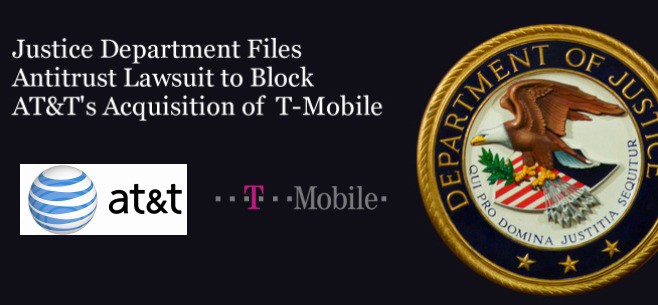
AT&T’s $3 Billion Dollar Early Contract Termination Fee, Payable to T-Mobile

Any consumer who has ever paid an early termination contract cancellation fee to a wireless carrier might feel a little satisfaction today knowing AT&T’s languishing deal to acquire T-Mobile comes with its own $3 billion dollar penalty payable to Deutsche Telekom if the merger fails to come to fruition.

Sachin Shah, merger arbitrage strategist with Tullett Prebon Americas Corp., suggests that $3 billion dollar fee (and the spectrum giveaway that goes with it) delivers a real incentive for AT&T executives to find a way to force the deal through, and their next venue will likely be federal court in the District of Columbia to keep the government from getting a preliminary injunction against the merger deal.

For AT&T, any legal action will certainly cost far less than $3 billion dollars, so the company has little to lose rolling the dice trying to find a remedy in a district court that has become increasingly business-friendly.

Shah believes yesterday’s announcement by the Justice Department also provides additional paths for AT&T to consider:

  • Renegotiate the deal: AT&T could go back to the bargaining table with T-Mobile and return to the DOJ with an amended proposal it hopes will be more acceptable to the government’s antitrust lawyers;
  • Reboot the lobbying campaign: AT&T could claim scuttling the deal will cost American jobs — a particularly sensitive topic with unemployment around 9 percent;
  • Re-engage AT&T Employee Unions: The Communications Workers of America are true believers in the AT&T/T-Mobile deal, if only because it is likely to broaden union membership to include T-Mobile workers.  Shah thinks the unions might speak to a more receptive audience among certain union-friendly lawmakers who have also been concerned AT&T will use the merger to clear-cut T-Mobile’s employees.

Shah thinks the Justice Department has not entirely slammed the door shut on AT&T’s proposed merger, and there have been precedents of DOJ lawyers changing their minds.

Meanwhile, the Federal Communications Commission, quieter than a church mouse ever since the deal was announced, apparently found cover from the DOJ decision, and FCC Chairman Julius Genachowski delivered his own “me too” statement hours after the Justice Department announced their lawsuit:

“By filing suit today, the Department of Justice has concluded that AT&T’s acquisition of T-Mobile would substantially lessen competition in violation of the antitrust laws,” Genachowski said. “Competition is an essential component of the FCC’s statutory public interest analysis, and although our process is not complete, the record before this agency also raises serious concerns about the impact of the proposed transaction on competition. Vibrant competition in wireless services is vital to innovation, investment, economic growth and job creation, and to drive our global leadership in mobile. Competition fosters consumer benefits, including more choices, better service and lower prices.”

[flv width=”640″ height=”380″]http://www.phillipdampier.com/video/Bloomberg DOJ Lawsuit Not Unexpected 8-31-11.flv[/flv]

Sachin Shah says the U.S. Justice Department’s lawsuit to block AT&T Inc.’s proposed $39 billion takeover of T-Mobile USA Inc. does not mean the deal is dead.  He speaks with Lisa Murphy on Bloomberg Television’s “Fast Forward.”  (5 minutes)

Supreme Court Helps Verizon Wireless Thumb Nose at Customers Upset Over Unilateral Cell Fees

Thanks to a divided 5-4 decision by the U.S. Supreme Court, customers trying to seek relief from unilateral fees and surcharges suddenly showing up on their Verizon cell phone bills will have to pursue individual arbitration claims with the cell phone company instead of joining forces in a class arbitration claim.

That Supreme Court case, AT&T Mobility v. Concepcion, is turning out to benefit Verizon Wireless as much as AT&T, because the Supreme Court found merit in contracts obligating customers to seek individual arbitration to settle differences while forbidding customers from pursuing organized legal action.

Now the 3rd U.S. Circuit Court of Appeals in Philadelphia has reversed an earlier ruling, reinstating a 2008 decision by U.S. District Judge Freda Wolfson that delivered victory to Verizon Wireless.

At issue was Verizon’s decision in October 2005 to unilaterally impose an “administrative fee” of $0.40 and/or $0.70, as part of the monthly charges for each Verizon cell phone line.  Customers upset with the new fees felt they violated the principle that, as part of their two year contracts, Verizon would deliver a fixed-price service.  The cell phone company has since implemented a variety of fees and surcharges on customers that are pocketed by Verizon, regardless of the contract price.

All Verizon Wireless customers are obligated by contract to challenge any terms and conditions they disagree with through an arbitrator of Verizon’s choosing, at a place also chosen by the company.  That means Verizon could place an arbitrator on retention in a city potentially thousands of miles away, and demand the customer make their case there, to an arbitrator whose livelihood ultimately depends on retainer fees paid by the company.  Few consumers would make such a journey to protest a fee that amounts to less than $10 a year per line.

Lawyers Keith Litman and Robert Wachtel, representing Verizon customers, decided to try a different approach — a class action arbitration.  The two attorneys would represent potentially millions of impacted customers themselves, making any travel cost concerns incidental, and providing a seasoned challenge before arbitrators, who would also hear counter-arguments from Verizon’s own legal team.

Verizon’s attorneys argued such class action arbitration was specifically forbidden in the company’s contract with customers.  Normally, a judge might decide at that point a customer agreeing to those terms and conditions was effectively up the creek.  But a series of legal challenges in circuit courts opened the door to invalidating those terms.

Litman and Wachtel argued that because the New Jersey Supreme Court, in Muhammad v. County Bank of Rehoboth Beach, Del. (2006), has held that an arbitration provision in a consumer contract that precludes class arbitration of low-value claims is unconscionable under New Jersey law, similarly, the arbitration provision in Verizon’s contract is also unenforceable.

Unfortunately for the two attorneys representing consumers, the decision by the U.S. Supreme Court effectively overrode that case, leaving Verizon on top with Judge Wolfson’s 2008 decision.

Wolfson

Wolfson’s written ruling on the case seemed unimpressed with claims that Verizon’s fees were unconscionable:

In this case, Plaintiffs are customers who chose Verizon as their wireless provider at least four years ago and continue to use Verizon today. They signed the customer Agreement with the arbitration clause and agreed to subsequent terms of service as added by Verizon. Plaintiffs do not allege that they did not understand the Agreement that they voluntarily entered into nor do they allege fraud or misrepresentation. The parties agreed “to settle [their] disputes . . . only by arbitration,” and the “agreement doesn’t permit class arbitration.” Therefore, [federal law] requires this Court to uphold the arbitration provision within Plaintiffs’ service Agreement.

But Judge Wolfson did recognize the effective impact of her decision:

“The Court recognizes the many hardships visited upon plaintiffs, such as in this case, based upon this ruling. First, it creates the opportunity for a different result depending on whether the case is brought in federal or state court. Second, it is also clear that compelling individual arbitration in this case will be tantamount to ending the Plaintiffs’ pursuit of their claims, as there is very little possibility that these Plaintiffs or any other plaintiff will pursue individual arbitration for claims that amount only to several dollars in damages. While this outcome is harsh, this Court is bound by Third Circuit precedent.”

Lately, Verizon Wireless customers have been seeking other forms of relief when Verizon unilaterally changes or implements new fees or surcharges.  Many are invoking the “materially adverse” clause found in Verizon’s terms and conditions, which theoretically allows customers to exit their contracts penalty-free if they do not agree to the changes Verizon is imposing on customers.  Verizon Wireless appears to be increasingly aggressive in fighting these claims, too, refusing to allow customers to leave without stiff early termination fees.  That may become the subject of another lawsuit at some point in the future.

Search This Site:

Contributions:

Recent Comments:

Your Account:

Stop the Cap!