Home » Contract » Recent Articles:

AT&T/T-Mobile Merger Prospects Dim; Alternative Buyers for T-Mobile May Eventually Emerge

Phillip Dampier November 22, 2011 Astroturf, AT&T, Broadband Speed, Competition, Editorial & Site News, Public Policy & Gov't, Rural Broadband, T-Mobile, Video, Wireless Broadband Comments Off on AT&T/T-Mobile Merger Prospects Dim; Alternative Buyers for T-Mobile May Eventually Emerge

AT&T pays a lot of money — millions annually — to make sure its business agenda does not run into political or legislative roadblocks in Washington, D.C.  With dozens of members of Congress effectively on AT&T’s campaign contribution payroll and the company’s unparalleled skill at convincing non-profit organizations to advocate for its interests, worrying about the government’s antitrust views on its proposed buyout of Deutsche Telekom’s T-Mobile was the least of its troubles.

“It’s a done deal,” several analysts predicted shortly after the deal was announced, especially after AT&T demonstrated its confidence level in the merger was as high as the enormous $6 billion dollar breakup concession payable to Telekom if it ever fell apart.

Then the government dared to put its two cents in, in the form of a “are you kidding me?”-lawsuit courtesy of the U.S. Department of Justice.  It seems, in the words of some Beltway cynics, the Obama Administration can manage to see a clear cut case of anti-competitive behavior when given enough time.

Since the lawsuit was announced on Aug. 31, it has been “all-hands-on-deck” for the company’s government relations division, packed full of the company’s top lobbyists.  While company lawyers desperately attempt to block what it sees as “pile on” objections and lawsuits from worried competitors, Sprint-Nextel in particular, AT&T lobbyists are trying to compromise away the Justice Department case with proposals of concessions and giveaways to make approval more palatable.

Further north, as fall turns into winter in New York’s financial district, Wall Street analysts are cold on the troubled deal themselves.

The Financial Times reports most analysts think there is now less than a 50-50 chance the merger will be completed unless the two companies agree to disgorge themselves of market share, territories, and increasing “shareholder value” that will come from eventual rate increases a wireless duopoly would inevitably bring.

Some are even less sanguine, predicting AT&T has only a 20 percent shot, and only if it sells off considerable chunks of valuable spectrum to competitors other than Verizon Wireless.

AT&T is retuning its “message” for the times, downplaying the original, ludicrous notion that urban-focused T-Mobile would be the keystone of a new era in 4G wireless service for rural America.  There is a reason T-Mobile isn’t the first choice for small town America’s cell phone buyers.

Instead, AT&T is now positioning the merger deal as a lifeboat for its troubled competitor.  AT&T suggests the number four carrier is in immediate peril — hemorrhaging customers, caught without a coherent 4G strategy, and an exodus of interest by its increasingly neglectful parent — Deutsche Telekom.

Could Time Warner Cable be an eventual part-owner of T-Mobile USA?

“Over the past two years, T-Mobile USA has been losing customers despite explosive demand for mobile broadband,” AT&T said in a statement this week. “T-Mobile USA has no clear path to 4G LTE, the industry’s next generation network, and its German parent, Deutsche Telekom, has said it would not continue to make significant investments in the United States.”

With AT&T predicting the demise of its smaller would-be cousin, consumers may not be in the mood to sign a two-year contract with a company that could soon be rechristened AT&T, especially those leaving AT&T for T-Mobile.

But don’t tell T-Mobile’s marketing department it’s a phone company on life support.  T-Mobile has beefed up its advertising and continues to irritate its larger competitors, particularly AT&T, with very aggressive pricing on its prepaid plans.

T-Mobile recently unveiled two disruptive $30 4G prepaid plans that offer either 1500 shared minutes/text messages and 30MB of data usage -or- 100 voice minutes combined with unlimited texting and up to 5GB of mobile data before the speed throttle kicks in.  Those prices are too low for AT&T and Verizon to ignore, especially when offered on a 4G network.

So far, the Justice Department shows no signs of backing down from their resolute opposition to the deal, minor concessions or not.  Shareholders may not appreciate giving the government too much of what it wants in order to win approval.  Washington lawmakers are split — virtually every Republican favors the merger, Democrats are less absolute, with most opposed.  Among those in favor, by how much is often a measure of what kind of campaign money AT&T has thrown their way.

AT&T absolutely denies they have a “Plan B” in case the merger eventually fails.  But the Times doubts that, reporting as time drags on, an alternative deal might emerge.  Some of the possibilities:

  • T-Mobile USA could merge its spectrum with Dish Network, the satellite TV company, to launch a new 4G mobile operator in the USA;
  • Combine forces (and spectrum) in a deal with leading U.S. cable companies like Cox, Comcast, and Time Warner Cable to launch a new cable-branded mobile operator;
  • Sell or merge operations with MetroPCS, Leap Wireless’ Cricket, or one of several regional cell companies.

Perennial cable booster Craig Moffett from Sanford Bernstein predictably favors the cable solution, which would let companies offer a quad or quint-play of cable TV, wireless mobile broadband, wired broadband, phone, and cell phone service all on one bill.  It would also get the FCC off the backs of cable operators Time Warner and Comcast, who both control a total of 20MHz of favored wireless spectrum they have left unused since acquiring it at auction.  The Commission is increasingly irritated at companies who own unused spectrum at a time when the agency is trying to find additional frequencies for wireless providers.

[flv width=”640″ height=”380″]http://www.phillipdampier.com/video/Bloomberg ATTs 96000 Job Claim in T-Mobile Deal Questioned 11-8-11.flv[/flv]

Bloomberg News questions AT&T’s claim its merger deal with T-Mobile will create 96,000 new jobs. [Nov. 8] (3 minutes)

Public Service Commissioner Accuses Louisiana Governor of Sabotaging Broadband Grant

Phillip Dampier November 17, 2011 AT&T, Community Networks, Competition, Consumer News, Public Policy & Gov't, Rural Broadband, Video Comments Off on Public Service Commissioner Accuses Louisiana Governor of Sabotaging Broadband Grant

Campbell

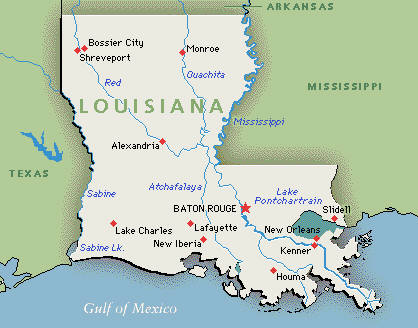
A commissioner on the Louisiana Public Service Commission accused Gov. Bobby Jindal of sabotaging a now-rescinded $80 million dollar broadband improvement grant for the benefit of the state’s largest telecommunications companies.

Public Service Commissioner Foster Campbell publicly berated the Republican governor for intentionally interfering with the project until time ran out and the government withdrew its funding.

The cancellation of the project has proved embarrassing because it is the first and only time a state has lost federal broadband grant money.

“We want to know what the heck happened; we’re the only ones in the country that dropped the ball,” Campbell said. “I meet with people in every parish, and the number one priority by far is high-speed Internet, and how do you lose $80 million coming from the federal government to do that. How do you drop the ball, and if they did drop the ball was it because someone whispered in their ears, ‘it’s going interfere with big companies?'”

Campbell suspects the state’s largest phone and cable companies lobbied the governor’s office for changes in what was originally proposed as a public broadband network reaching large sections of rural Louisiana that do not have broadband access.

The state’s Division of Administration eventually scrapped plans for the public broadband network and replaced it with a proposal to use grant dollars to purchase long term institutional broadband contracts from private providers.  AT&T is the dominant local phone company in Louisiana — the same company that has steadfastly refused to provide DSL service across rural Louisiana. The new proposal would have not delivered any broadband access to individual Louisiana homes, only to institutions like schools, libraries, and local government agencies.

In Campbell’s eyes, the grant represented a competitive threat and seeing it dead and buried was the governor’s special favor to Big Telecom.

“I think they threw a little dirt on this one or a lot of dirt on it,” Campbell told the Tulane Hullabaloo.

Jindal himself admits his administration did get directly involved in changing the project’s course.

The governor called the revised private provider-focused project “a reasonable approach that would have expanded broadband access and not hurt private providers.” Jindal attacked the public broadband network originally planned by the Louisiana Broadband Alliance as “a heavy-handed approach from the federal government that would have undermined and taken over private businesses.”

With the $80 million dollars back in the hands of the federal treasury, Jindal is now blaming the Obama Administration for taking the money back.

The Louisiana Broadband Alliance, a collaboration among six state agencies, would have deployed more than 900 miles of fiber-optic network to expand broadband Internet service in some of the most economically distressed regions of Louisiana. The new network intends to provide direct connections for more than 80 community anchor institutions including universities, K-12 schools, libraries, and healthcare facilities. The 3,488-square-mile service area includes 12 impoverished parishes targeted by the state’s Louisiana Delta Initiative and a separate five-parish area that is home to four federally-recognized American Indian Tribes.

AT&T Overbilling Class Action Lawsuit Shut Down; Forced Into AT&T-Inspired Arbitration

A class action lawsuit accusing AT&T of methodically over-measuring wireless customers’ usage and subjecting them to overlimit fees has been re-assigned to arbitration because AT&T wrote terms into contracts denying customers the right to pursue grievances any other way.

Plaintiff Patrick Hendricks claimed AT&T was systematically overstating customer usage by 7-14 percent with a rigged usage meter.  Hendricks claims some customers were overbilled by as much as 300 percent for phantom data usage that he claims never took place.  The measuring errors found in a two-month study cited by Hendricks were in AT&T’s favor, potentially exposing customers to surprise overlimit fees or, more recently, speed throttles.

Judge Breyer

But U.S. District Judge Charles Breyer shut down the court case, heard in a San Francisco federal courtroom.  Breyer ruled that since AT&T’s contracts bar lawsuits by customers, Hendricks must pursue his case in the venue required by AT&T — arbitration.

“[AT&T’s contract] requires the use of arbitration on an individual basis to resolve disputes, rather than jury trials or class actions, and also limits the remedies available … in the event of a suit,” Breyer ruled.

Ironically, Breyer is the same judge that dissented from an earlier case — AT&T v. Concepcion, that ultimately set the stage allowing AT&T to force consumers to pursue arbitration and practically speaking, remove their right to pursue class action relief.

“What rational lawyer would have signed on to represent the Concepcions in litigation for the possibility of fees stemming from a $30.22 claim?,” Breyer wrote. “The realistic alternative to a class action is not 17 million individual suits, but zero individual suits, as only a lunatic or a fanatic sues for $30’.”

Brandi M. Bennett, a California attorney who specializes in intellectual property law, considers arbitration clauses to be a major threat to class action cases:

“Class actions make it possible to find recourse for individuals with damages that make traditional litigation impractical. AT&T Mobility v. Concepcion appears to leave the average consumer at risk of being defrauded by corporations for $10, $20, $50 without any practical remedy. If one million customers are damaged for $20 each, a corporation can improperly realize a $20 million gain. Class actions serve to prevent that.”

Arbitration can offer a poor substitute, because most arbitration firms are beholden to their corporate clients for repeat business.  An arbitrator perceived to be exceptionally pro-consumer stands little chance of being retained when corporate defendants pay the arbitration firm for its services.  Some arbitration policies require consumers and the company to split the costs of arbitration, but those costs often easily exceed the value of the original claim, discouraging customers from pursuing a refund settlement.

Companies understand that reality, which is why clauses requiring arbitration to settle disputes are increasingly common in service contracts.

Hendricks’ original suit sought restitution for the entire class of consumers and damages for breach of contract, unjust enrichment, unfair and fraudulent business practices, unfair competition, and violations of the federal Communications Act.  Most arbitration clauses require consumers to file individual complaints, which few may ultimately do considering arbitration proceedings may occur in another city and often requires the complainant to appear in person to provide testimony.

Time Warner Cable Announces First of a Series of Rate Increases for 2012

Phillip Dampier October 31, 2011 Consumer News 4 Comments

Time Warner Cable intends to implement a series of rate increases for 2012 across many of their service areas, beginning with a 4% rate hike for their cable television service that will take effect in December.

A cable company memo received by Stop the Cap! indicates this isn’t likely to be the only rate increase from the cable operator, with possible rate adjustments for broadband and phone products to be announced at a later date.  The cable television portion of your bill will increase because of what the company calls “dramatically higher programming costs, additional programming and features, and continued investment in the company’s network and customer service operations.”

Some examples of the new rates¹, which will vary slightly in different service areas, includes new pricing for the company’s DVR box in some regions:

  • Digital Cable (was $72.99) $77.49
  • Talk & Surf (was $86.99) $89.94
  • Watch & Surf (was $118.99) $125.49
  • Watch & Surf Plus (was $141.99) $148.49
  • DVR Service (was $11.95) $12.95 (additional equipment rental charges may apply)
¹Time Warner Cable Maine

Customers currently on price protection agreements, term contracts, or special rate promotions will not be impacted by the rate increases until the expiration of their contract or promotion.  Customers will receive an official notification of the rate adjustment on their next billing statement.

Wall Street Attacks: Sprint CEO in Big Trouble for Plans to Upgrade Sprint’s Network to LTE

Sprint CEO Dan Hesse is now at risk of losing his job over decisions to increase spending to upgrade network performance and capacity.  In the last week, Sprint announced it will likely seek outside financing to accelerate the launch of its new 4G LTE network, while concurrently deciding to stop selling 4G WiMax smartphones that work on the troubled Clearwire network by the end of this year.

Wall Street hates companies spending money to upgrade their networks, particularly when there is little evidence Sprint will enhance profits with price increases or cut costs by limiting customers’ data usage.

For several major investment firms and banks, the last straw was Hesse’s revelation that the company will likely need to borrow money to complete its Network Vision plan, which calls for major upgrades of Sprint’s wireless network to support much faster data speeds for customers.  His earlier commitment to spend up to $20 billion on Sprint’s version of the Apple iPhone did not help matters.

Sprint’s stock price took a beating last week, sliding 26 percent to the lowest level since February 2009 as investors fled.

[flv width=”360″ height=”290″]http://www.phillipdampier.com/video/KSHB Kansas City Sprint makes another new announcement 10-7-11.mp4[/flv]

KSHB in Kansas City reports Sprint intends to stop selling devices that work on the company’s existing 4G/Clearwire WiMax service by the end of this year in favor of Sprint’s forthcoming launch of a new 4G LTE network.  (1 minute)

The Detroit News reports an investor meeting with Sprint executives “grew ugly” after Hesse announced the company needed to spend money to upgrade and refused to show a clear pathway to enhanced profits earned from those upgrades.

Wall Street to Hesse: Don't Get Comfortable

“Hesse is on thin ice now,” Ed Snyder, an analyst with Charter Equity Research, told the newspaper. “One, perhaps two, more big mistakes and he’s probably gone.”

More than a half-dozen Wall Street analysts have slashed their ratings on the wireless company because they believe Sprint’s spending plans will hurt liquidity.

While customers are increasingly rewarding Hesse and Sprint for making customer service improvements and retaining customer friendly unlimited service plans, Wall Street shows no signs of being charitable to Hesse’s management of the Overland Park, Kansas company.

Ben Abramowitz, an analyst with Kaufman Bros., downgraded the stock to “hold” from “buy,” excoriating the company for expensive strategic shifts, including network upgrades and the company’s recent commitment to Apple to sell millions of Apple iPhones on Sprint’s network.

“Management credibility is lost with investors,” Abramowitz wrote.

Jonathan Schildkraut from Evercore Partners told CNBC the spending at Sprint may just be getting started.  Millions of customers remain connected to Nextel’s legacy iDEN network, which Sprint intends to decommission.  Schildkraut believes Sprint will have to provide deep discounts or free phones for displaced customers who will need to move to Sprint’s primary network.  He also notes that despite Sprint’s plans to abandon Clearwire’s WiMax network for 4G, the company will likely make further investments to maintain the partnership, and Clearwire’s network, for other purposes.

Sprint’s decision to adopt Apple’s iPhone and upgrade their network may make competitive sense against larger players AT&T and Verizon Wireless, but Schildkraut notes Apple commands top dollar for the popular phone — upwards of $600 on the wholesale level, which carriers in turn subsidize to lure customers to sign two-year contracts.  But Sprint would do well to consider Verizon’s experience with the iPhone, he says.  Most of Verizon’s iPhones were sold to customers who already owned smartphones.  That forced Verizon to subsidize up to $400 for each iPhone with no chance of increasing the average revenue collected from customers.  Investors were hoping the iPhone would instead attract budget handset customers who would upgrade to more expensive smartphone service plans.

Because the iPhone still does not support 4G technology, it seems less likely existing Sprint 4G WiMax smartphone owners would consider the Apple 4S an upgrade, and may hold off waiting for the anticipated iPhone 5.  But as Sprint begins to promote its forthcoming 4G LTE network, those Sprint customers using WiMax phones will be tempted to move to something else.  Either way, phone subsidies could create a significant drag on Sprint’s cash on hand at a time when the company is spending heavily on upgrading its network.

In the telecommunications business, upgraded service helps customers and spurs competition.  But it is nearly always the enemy of Wall Street unless a clear pathway to enhanced profits can be shown.  Investors may ultimately have the last word on those upgrades, and the person responsible for green-lighting them.  Hesse may learn that lesson first hand if the company can’t find a way to boost its stock price, and soon.

[flv]http://www.phillipdampier.com/video/Sprint CEO in Trouble 10-12-11.flv[/flv]

Wall Street goes on the attack, unhappy that Sprint is spending their money to upgrade its networks for the benefit of Sprint customers.  CNBC covers all the business angles.  (6 minutes)

Search This Site:

Contributions:

Recent Comments:

Your Account:

Stop the Cap!