

Home » Cell site » Recent Articles:

Wireless Company Lobbyists Add Cell Tower Deregulation to Connect Every Iowan Act

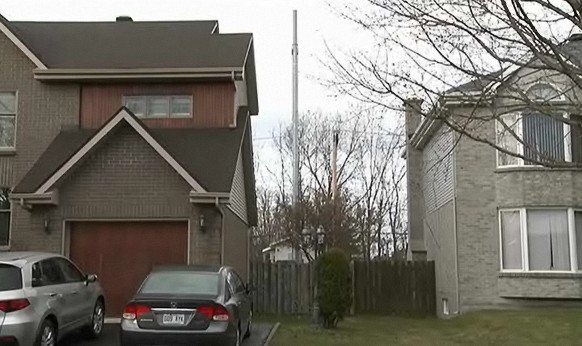
Is a cell tower coming to your backyard?

Is a cell tower coming to your neighbor’s backyard?

Amended language in a bill that would expand broadband service to rural Iowa strips local communities from regulating where wireless companies can place their cell towers, potentially threatening its passage.

The “killer” amended language originated from wireless phone company lobbyists, most likely working for AT&T, and suddenly appeared in the Iowa House version of the bill.

AT&T has routinely proposed such language in several states, claiming the new regulations are designed to “streamline” the expansion of cellular networks often held up by ‘spurious objections’ from local citizens opposed to the unsightly towers in their immediate neighborhoods.

Local governments have also regularly weighed in on approving cell towers in areas where they pose an aesthetic threat or a potential safety risk and some, according to AT&T, have interminably delayed consideration of cell site proposals.

The language in the House bill introduces time limits on cell tower approvals, prohibits communities from rejecting tower placement except under limited circumstances, and denies communities access to cell site documentation deemed private, competitive information by wireless companies.
(Unless you want to put a cell tower here)

(Unless you want to put a cell tower here)

The cell tower language is included in the House version of the Connect Every Iowan Act, legislation considered a priority by Gov. Terry Branstad this year. Branstad wants to remove financial and regulatory impediments and offer tax credits to stimulate expansion of broadband into areas most providers have previously deemed uneconomical to serve.

AT&T sees wireless broadband as a sensible alternative and the company has publicly advocated using wireless 4G technology in rural areas. If the House measure is approved, AT&T and other wireless companies can affix microcells or other cellular antennas to utility poles, street signs, or water towers without seeking permission from local authorities.

Colleagues in the Iowa state Senate were concerned about the language in the House version of the bill.

“The language in the House bill, in my view, is pretty egregious,” Sen. Steve Sodders, (D-State Center), who is leading the effort on the Senate bill. He told the Associated Press, “It really took away all local control of cell tower siting.”

“The real angst there is that without local control on these towers, these things can be built right in your neighborhood,” said Sen. Matt McCoy, (D-Des Moines). “Nobody wants to come home and see that. Finding that balance is going to be key.”

att-logo-221x300Des Moines city attorney Jeff Lester noted the language in the bill cleverly favors cellular companies with a built-in guarantee of approval of their cell tower requests:

The bill does not require cellular companies to provide company and business plan information to local governments when applying for a new cell tower site. Should municipal authorities deny a request, and a cellular company then brings the case to federal court, local authorities wouldn’t have the evidence necessary to justify their denial.

Lester said under federal law, company information serves as evidence in these appeals. Without it, there is no basis for denial, he said, and the ruling would be in favor of the cellular company.

Rep. Peter Cownie, (R-West Des Moines), who spearheaded the effort in the House, said determining where towers can or cannot go is a difficult task, but that it’s not his intent to weaken anyone’s say in their placement.

“I do not want to take away the authority of local officials in terms of cell tower siting,” he told AP. “I don’t think anyone’s goal is to take that away.”

Subcommittees in both chambers plan to meet to discuss the legislation next week.

Crown Castle Will Pay $4.85 Billion for AT&T’s Cell Towers

Phillip Dampier October 21, 2013 AT&T, Wireless Broadband Comments Off on Crown Castle Will Pay $4.85 Billion for AT&T’s Cell Towers

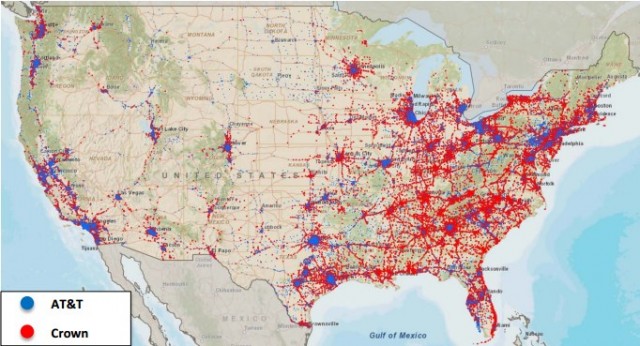
crown castleAT&T today announced it has agreed to lease exclusive rights to its nearly 9,100 cell sites and sell outright an extra 600 towers to Crown Castle International Corp. for $4.85 billion in cash, filling the wireless company’s coffers for possible acquisitions, especially in Europe.
Under the terms of the deal, Crown Castle will lease and run the towers for an average of 28 years, after which the company will be able to buy them outright for around $4.2 billion.

crownatt

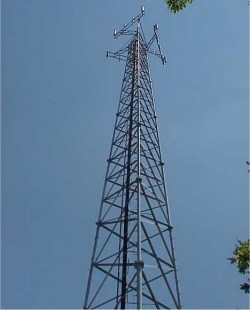
Crown Castle will gain more than 9,000 AT&T cell towers available to lease to other providers.

att-logo-221x300AT&T is seeking to monetize its extensive portfolio of cell towers while protecting rights of access. The cell phone company is guaranteed subleases on the towers for at least a decade for $1,900 per month per site, with annual rent increases of 2 percent, with a right to renew for up to 50 years total. AT&T will also have access to reserve capacity on the towers for future use.

The money will help AT&T’s balance sheet as it undertakes a $14 billion network upgrade and plans a shareholder-friendly stock buyback that may top $11 billion.

After the deal closes, Crown Castle will become the nation’s largest provider of shared wireless infrastructure, operating more than 40,000 communications towers in the United States alone. This is not the first deal Crown Castle has done with major wireless carriers. In November 2012, Crown acquired exclusive rights to lease and operate 7,100 T-Mobile USA cell towers.

In the past, many wireless carriers refused to share tower space for competitive reasons. Today, the demand for wireless data is forcing carriers to increase the number of cell sites to improve coverage and capacity. Many carriers now share cell sites to cut costs and avoid the regulatory burdens and citizen objections that often come with a proposed new tower. Crown Castle’s acquisition is likely to boost leasing of the AT&T cell sites. At present, AT&T’s towers only have 1.7 tenants per site, including AT&T. Crown Castle towers average 2.8 tenants per site. Potential clients for the AT&T towers include the three other major carriers: Verizon Wireless, Sprint, and T-Mobile.

AT&T Seeks Buyers for Its $5 Billion Cell Tower Network; Proceeds Go to Stock Buyback, Overseas Acquisitions

Phillip Dampier September 18, 2013 AT&T, Competition, Consumer News, Wireless Broadband 1 Comment

cell towerAT&T is hunting for buyers of its massive network of 10,000 cell towers worth about $5 billion to defray the costs of Wall Street-pleasing stock buybacks and fund potential acquisition deals in Europe.

The company first signaled a willingness to sell its towers and other ancillary assets at an investor meeting in March according to Bloomberg News. AT&T has hired TAP Advisors LLC and JPMorgan Chase to help coordinate the sale.

After the sale, AT&T would lease access to the network of cell towers from its new owner, potentially winning AT&T certain tax benefits. In return, the company will give up about $326 million in annual revenue now earned from other companies that pay to lease space on AT&T’s towers.

The sale could help competing carriers seeking to improve coverage. An independent owner will any wireless company to lease access to a site’s tower, something AT&T did not always permit for competitive reasons. That could cut a lot of red tape for companies seeking to build new tower sites and meeting objections from area residents.

Tower company consolidation has already reduced the number of potential buyers to three major likely contenders: Crown Castle International, SBA Communications, and the largest tower owner in the United States – American Tower Corp.

Cell tower sales are no longer unusual. T-Mobile USA agreed to sell the rights to operate 7,200 cellular towers to Crown Castle for $2.4 billion last September and other companies are buying wireless network assets in Brazil and Mexico.

The Incredibly Hackable Femtocell: $250 Lets You Listen In on Cell Calls, Read Text Messages

Phillip Dampier August 6, 2013 AT&T, Consumer News, Verizon, Wireless Broadband Comments Off on The Incredibly Hackable Femtocell: $250 Lets You Listen In on Cell Calls, Read Text Messages
A Samsung femtocell offered by Verizon Wireless.

A Samsung femtocell offered by Verizon Wireless.

The wireless industry’s push to offload wireless traffic to microcells and other short-range femtocell base stations has opened the door for hackers to intercept voice calls, SMS text messages and collect enough identifying information to clone your phone.

Researchers from iSec Partners demonstrated femtocell vulnerability last month at the Black Hat conference in Las Vegas, successfully recording phone calls, messages, and even certain web traffic using a compromised $250 Samsung “network extender” sold to consumers by Verizon Wireless.

Once anyone gets within 15-20 feet of a femtocell using compatible network technology (CDMA or GSM), their device will automatically attempt to connect and stay connected to a potentially rogue cell signal repeater as long as the person remains within 50 feet of the base station. Many phone owners will never know their phone has been compromised.

“Your phone will associate to a femtocell without your knowledge,” said Doug DePerry from iSEC Partners. “This is not like joining a Wi-Fi network. You don’t have a choice. You might be connected to ours right now.”

During the demonstration, the presenters were able to record both sides of phone conversations and compromise the security of Apple’s iMessage service. All that was required was to trick Apple’s encrypted messaging service to default to exchanging messages by plain text SMS. Phones were also successfully cloned by capturing device ID numbers over Verizon’s cell network. Once cloned, when the cloned phone and the original are connected to a femtocell of any kind, at any location, the cloned unit can run up a customer’s phone, text, and data bill.

“Eavesdropping was cool and everything, but impersonation is even cooler,” DePerry said.

Although the very limited range of femtocells make them less useful to track a particular person’s cell phone over any significant distance, installing a compromised femtocell base station in a high traffic area like a restaurant, mall, or entertainment venue could allow hackers to quietly accumulate a large database of phone ID numbers as people pass in and out of range. Those ID numbers could be used to eventually clone a large number of phones.

iSEC Partners believe femtocells, as designed, are a bad idea and major security risk. Although Verizon has since patched the vulnerability discovered by the security group, DePerry believes other vulnerabilities will eventually be found. He worries future exploits could be used to activate networks of compromised femtocells controlled by unknown third parties used to snoop and steal from a larger user base.

iSEC says network operators should drop femtocells completely and depend on implementing security at the network level, not on individual devices like phones and cell phone extenders.

AT&T’s femtocells support an extra layer of security, so they are now unaffected by hacking. But that could change eventually.

“It’d be easy to think this is all about Verizon,” said Tom Ritter, principal security engineer at iSec Partners. “But this really is about everybody. Remember, there are 30 carriers worldwide who have femtocells, and [that includes] three of the four U.S. carriers.”

iSec Partners is working on “Femtocatch,” a free tool that will allow security-conscious users to automatically switch wireless devices to “airplane mode” if they ever attempt to connect to a femtocell. The app should be available by the end of August.

PSC Extends Comment Deadline for Fire Island, Listens to Our Advice on Upstate Voice Link

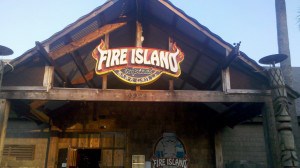
Fire Island 1

Island residents are smoking hot about Voice Link

The New York Public Service Commission has extended the deadline for public comments about the Voice Link wireless landline replacement until Sept. 13, to give the growing number of customers on Fire Island with the service enough time to fully evaluate it over the summer months.

To date nearly 400 public comments have been filed with the Commission, every one of them negative.

Stop the Cap!’s comments are having an impact on the PSC’s exploration of the deployment of Voice Link in upstate New York. On our recommendation, the PSC has formally asked Verizon for more documentation about how Voice Link is being introduced in the Catskills:

Please provide the following information for all Voice Link devices/services that have been installed at any customer premises locations outside of the Western Fire Island area:

  • The address of every Voice Link customer in upstate New York;
  • Date Voice Link Installed;
  • Reason Voice Link Installed;
  • Was customer advised Voice Link service was optional or not;
  • Voice Link Service Calls/Repairs identified by location, date, reason for service visit, repair action taken;
  • If applicable to any locations, date Voice Link was uninstalled/disconnected and reason for termination;
  • Please provide any marketing materials, scripts, and/or training materials in use by Verizon employees or contracted third-party workers to inform customers about Voice Link service;
  • Please provide copies of any documentation provided to customers agreeing to accept Voice Link service outside of Western Fire Island, including Terms of Service Agreements. If there are any material differences between documentation and Terms of Service agreements for Western Fire Island customers, and customers in any other areas of New York State, please identify and explain those differences.

The PSC is also demonstrating that it is willing to go deep into the weeds with Verizon on this issue, a marked departure from the near-rubber stamp “light touch” regulation AT&T enjoys in several midwestern and southern states. At one point, the Commission found Verizon documentation indicating enough “spare pairs” — unused lines — were available that could be used to repair and reintroduce landline service on Fire Island, and wants to know why Verizon is not using them to bring back the service customers had before Hurricane Sandy did its damage:

The copper cable table shows that the spare cable pairs in the copper cable facilities serving the 11 identified communities is approximately 16% of the total available pairs in those cables. However, in specific communities such as Fair Harbor, Kismet, Robins Rest and Lonelyville, the percentage of spare pairs ranges from 21% to 66% of the total available pairs. Also, the number of working pairs in many locations is small compared to the total available pairs in the cables, despite the number of defective pairs reported by the company. Please explain why Verizon is not utilizing existing spare cable pairs, and performing routine cable maintenance in any communities, to restore wireline services to customers that do not request or desire Voice Link service.

The fiber cable table shows spare cable pairs in the fiber facilities serving the Ocean Beach, Lonelyville, Fair Harbor and Kismet communities is approximately 73% of the total available pairs in those fiber cables. By individual community, the percentage of spare pairs ranges from 62% to 94% of the total available pairs. Please explain why Verizon is not utilizing existing spare fiber pairs in any of the four named communities to restore wireline services to customers that do not request or desire Voice Link service.

pointwoodsDespite every effort by Verizon, Fire Island residents that lost landline service are increasingly opposed to Voice Link, if the public comments filed with the Commission are any indication.

The Point o’Woods Association on Fire Island, which represents more than 500 people who either seasonally or year round depend on Verizon’s landline network, is also highly critical of Voice Link’s performance and provided the Commission with very specific and detailed criticisms:

  1. Verizon’s only cell site on Fire Island on the Ocean Beach water tower lacks reliable power backup contingencies;
  2. Fire and medical first responders across Fire Island have declared Voice Link unsatisfactory for public safety;
  3. Voice Link’s performance has been called unreliable. The sound is “plagued by echoes, connection delays, no connection at all, and frequent dropped calls;”
  4. Voice Link only works with CDMA spectrum for voice calling, reducing the level of service (data) customers used to have with traditional landlines;
  5. Customers cannot reach a live operator by dialing “0” and must dial all ten digits for all calls. The service also does not support collect calls, a feature “sometimes critical in emergency situations;”
  6. The reception quality of Verizon’s data network varies widely across the island.

“Voice Link at its very best is a temporary solution suitable for deployment only while full communications infrastructure is in the process of restoration,” concludes D.R. Brown, vice president of the association.

The changes Verizon seeks for Fire Island are affecting even those who still have landline service. Customers regularly report that Verizon customer service is refusing repair requests in areas like Ocean Beach, pushing customers to the wireless replacement it wants them to accept.

Jean Ufer, a Fire Island resident, says Verizon is threatening the health of her husband by refusing to fix her service.

“They will not repair my landline, which my husband really needs, as he has a pacemaker which has to be monitored by a landline,” Ufer complained to the Commission. “They also refused to connect my DSL, even though they charged me  the monthly fee right through the winter.”

Search This Site:

Contributions:

Recent Comments:

Your Account:

Stop the Cap!