Home » Cell site » Recent Articles:

PBS Documentary: Subcontracting Cell Tower Work Has a Human Toll

Phillip Dampier May 24, 2012 AT&T, Consumer News, Public Policy & Gov't, Sprint, T-Mobile, Verizon, Video, Wireless Broadband Comments Off on PBS Documentary: Subcontracting Cell Tower Work Has a Human Toll

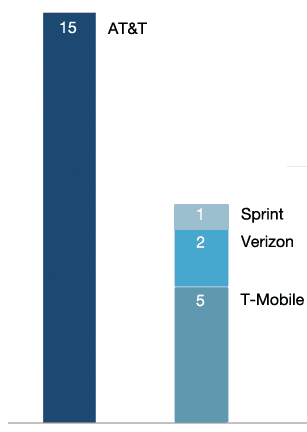
Data provided by OSHA statistics

A new joint investigation by Frontline and ProPublica reveals serious lapses in safety for America’s cell tower workers, a career now considered one of the most hazardous and life-threatening in America.

In the last eight years, 50 climbers have died, with many more injured installing and servicing cell sites for AT&T, Verizon Wireless, Sprint, and T-Mobile. The investigation finds many of these deaths and injuries were preventable, but as America’s profitable cell phone companies outsource jobs to cut-rate subcontractors (and the sub-contractors they often use themselves), safety measures take a back seat to low-ball bidding and profits.

Efforts to hold companies accountable are stymied by the byzantine layers of third party companies hired to do the work, an under-equipped federal safety agency, and difficulty assessing where the responsibility lies when things go wrong.

From ProPublica and Frontline:

From their perch atop the contracting chain, carriers typically set many of the crucial parameters for work on cell sites, including deadlines, pay rates and even technical specifications, down to the exact degree an antenna should be angled. An analysis of cell tower deaths by ProPublica and PBS “Frontline” showed that tight timetables and financial pressure often led workers to take fatal shortcuts or to work under unsafe conditions.

“We’ve had a number of situations where we think that accidents were caused by companies trying to meet deadlines and … cutting corners on safety in order to meet those deadlines,” said Jordan Barab, OSHA’s deputy administrator.

But Barab said it’s difficult for the agency to hold cell companies responsible for safety violations involving subcontractors. In most cases, federal officials have interpreted OSHA regulations to mean that carriers can be held accountable only if they exercised direct control over subcontractors’ work or were aware of specific unsafe conditions.

OSHA has not sanctioned cell carriers for safety violations implicated in any subcontractor deaths on cell sites since 2003, a review of agency records by ProPublica and PBS “Frontline” found.

OSHA has made little effort to systematically connect the deaths of tower workers to specific carriers and had not known until ProPublica and PBS “Frontline” told them that there have been 15 fatalities on AT&T jobs since 2003 – more than at the other three major carriers combined over the same period.

The agency attempted to fine a carrier just once and failed, losing a nearly three-year legal battle with a regional cell company in Kentucky. The agency has never taken on the four major carriers – Verizon, T-Mobile, AT&T and Sprint – even though there have been almost two dozen fatalities on jobs done for their networks.

Most of OSHA’s enforcement efforts have focused on a transient cast of small subcontractors, though they, too, typically have eluded significant penalties. Over the last nine years, the median fine levied for safety violations linked to a fatal tower accident was $3,750, an analysis by ProPublica and PBS “Frontline” showed.

[flv width=”512″ height=”308″]http://www.phillipdampier.com/video/PBS Frontline Cell Tower Deaths 5-23-12.flv[/flv]

Watch this segment from PBS Frontline exploring ‘Cell Tower Deaths,’ and what can be done to stop them.  (30 minutes)
Cell Tower Sneakiness: Rogers Quietly Erects 50-Foot-High Cell Towers in Yards; Too Short to Regulate

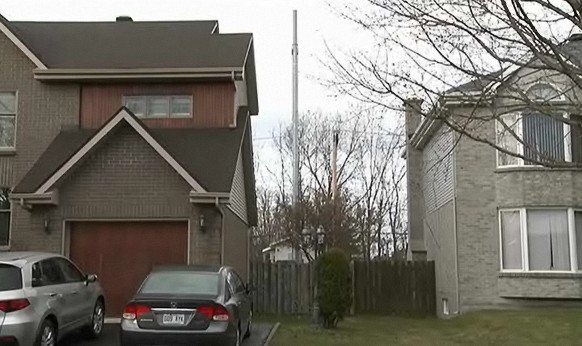
This nearly 15 meter monopole cell tower antenna just showed up one day in the backyard of this Kirkland, PQ resident, who is presumably being compensated up to $200 a month as Rogers' newest cell tower landlord.

Rogers Communications has found a solution to difficult zoning laws and cell tower controversy — find a homeowner willing to accept around $200 a month to host a (relatively) short cell tower antenna in their backyard, skirting the usual dragged-out cell tower siting consultations most local communities have enacted to control visual pollution.

A wealthy neighborhood in the community of Kirkland, a city of 20,000 near Montreal, discovered Rogers’ ingenuity for themselves when a just-under-50-foot monopole antenna suddenly appeared in the backyard of a home on Acres Street.

The neighbors are outraged. But Rogers says everything they did erecting the tower with no prior notice was done by the book.

That book, in the form of Industry Canada regulations, says Rogers doesn’t need to endure lengthy zoning hearings or a town-wide consultation process.  Rogers agrees, stating they can erect antennas of less than 15 meters at their pleasure — no consultation required.

Rogers spokesperson Stephanie Jerrold said Industry Canada regulations are clear: “The protocol says that if it’s a tower that measures under 15 meters, no public consultation is needed,” she said.

That may be true, but the loophole did nothing to appease dozens of nearby residents living in homes valued at $400,000 from raising a ruckus with local officials.  A petition has been submitted to city hall demanding Rogers remove the antenna.  Residents expressed concerns about their health and property values with a cell tower in their midst.

Rogers foreshadowed their intent last fall when they mailed letters to homeowners looking for someone to host the new antenna, offering around $200 a month to any takers. Evidently there was one — the resident at 75 Acres St.

City officials are pondering what to do about the new tower. They did not approve a work permit for its placement, which may provide leverage against Rogers, but no one knows for sure.

Thus far, Industry Canada wants to remain more than 15 meters away from the debate.  A spokesman for the agency, Antoine Quellon, told the West Island Gazette:

“The company must consult with the local community as required and address relevant concerns. It must also satisfy Industry Canada’s general and technical requirements, including Health Canada’s Safety Code 6, aeronautical safety, interference protection and environmental requirements. Under rare circumstances where an agreeable solution for a site is not possible, Industry Canada may need to make a determination based on the facts presented.”

[flv width=”400″ height=”380″]http://www.phillipdampier.com/video/CBC Montreal Backyard cell tower in Kirkland worries neighbours 4-11-12.flv[/flv]

CBC in Montreal covered the Kirkland controversy and talked with the neighbors about the new 50 foot pole owned by Rogers Communications.  (2 minutes)

FCC Releases Report Slamming AT&T/T-Mobile Deal As a Job and Competition Killer

The Federal Communications Commission has concluded allowing AT&T and T-Mobile to merge will cause huge job losses and knock out a vital wireless competitor in an increasingly concentrated U.S. wireless marketplace.

The new 266-page document, produced by FCC staffers, directly challenges AT&T’s contention that the merger will bring about job creation and an improved mobile broadband network for millions of rural Americans.

The report comes on the heels of news the Commission will allow the FCC to withdraw its pending application before the FCC to win approval of the merger.  That allows the company to resubmit the merger request at a later date.

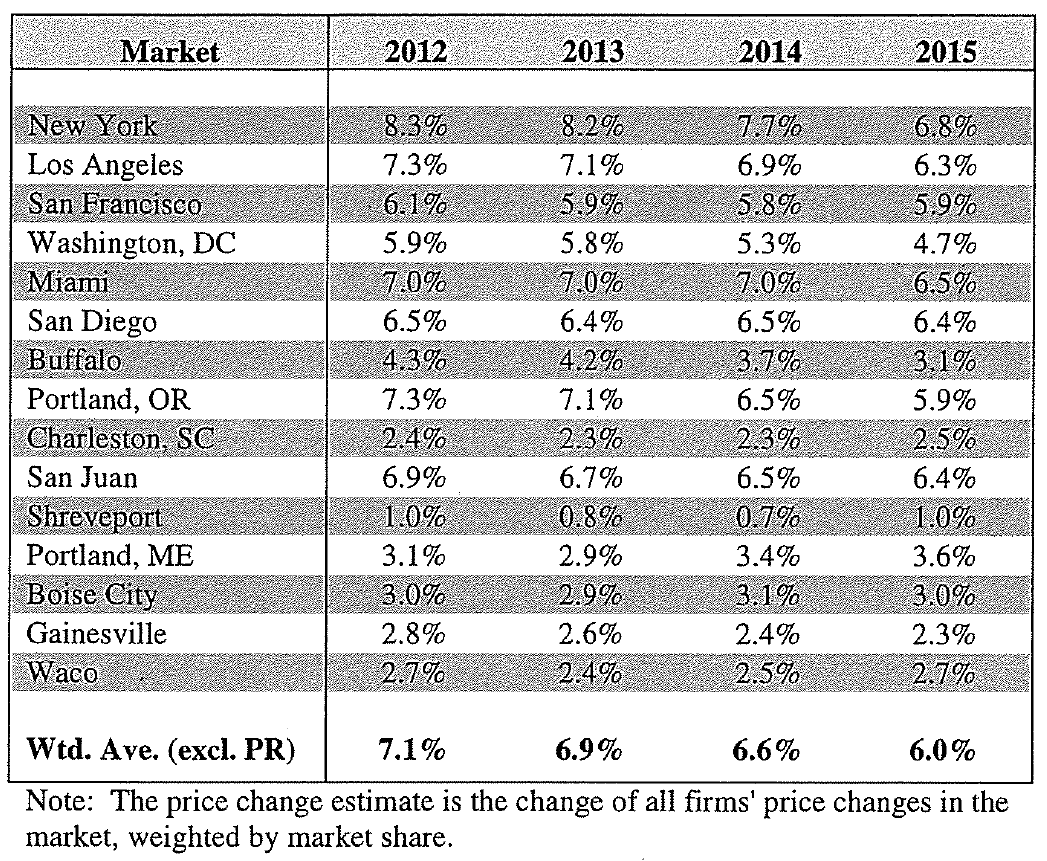
The FCC determined prices will increase an average of 6-7% in these cities if the merger deal gets approved.

The new report, occasionally redacted to remove competitive information, found AT&T vastly exaggerating the benefits of the deal, questioning whether it would indeed lead to lower prices for consumers, bring about enhanced service, and create new jobs.

Overall, the agency concludes, AT&T and T-Mobile have failed to meet their burden of proof that the merger is in the public interest.  The FCC staffers found no compelling reason why AT&T needed T-Mobile to build out its 4G network to the majority of the country.  Indeed, memos accidentally leaked to the Commission by AT&T’s legal team suggested AT&T executives rejected expansion plans as too costly.  Instead, they proposed a $39 billion dollar merger with T-Mobile with a $6 billion deal cancellation clause.  That penalty exceeds the $3.8 billion AT&T rejected spending to pursue 4G upgrades on its own.

Among the Commission report’s findings:

  • The merger would increasingly concentrate the U.S. wireless marketplace, leading to unilateral and coordinated efforts to raise prices by remaining carriers;
  • Roaming agreements for remaining smaller and regional carriers could become more difficult and expensive to reach with fewer players in the marketplace;
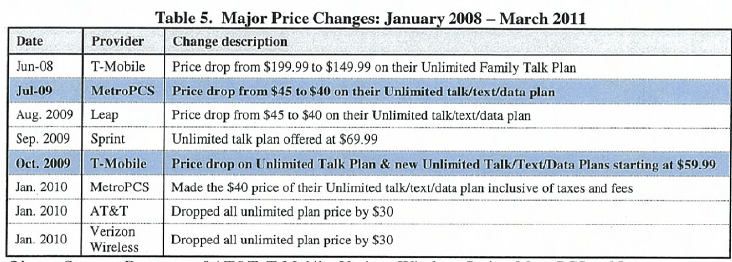
  • Pricing innovation, a hallmark of T-Mobile, would be lost.  T-Mobile is cited by the FCC as one of America’s most-disruptive carriers, forcing other companies to match their aggressive offers;
  • Despite AT&T’s promises to grandfather existing T-Mobile customers to their existing plans, customers would be unable to upgrade to an equally innovative plan T-Mobile probably would have offered on its own.  Instead, customers would be forced to choose one of AT&T’s more expensive, traditional plans;
  • AT&T is overstating the importance of remaining competitors, especially regional carriers and Leap Wireless’ Cricket and MetroPCS, which all have a negligible market share and depend heavily on roaming agreements with companies like Verizon, Sprint, and AT&T to survive;
  • Substantial evidence exists to believe without T-Mobile, AT&T and Verizon Wireless would likely raise prices and mimic each others’ respective service plans, pricing, usage allowances, and network policies;
  • Sprint will probably be forced to raise prices as a consequence of the merger to pay for increasingly expensive backhaul and roaming services, often purchased from AT&T or Verizon.  Sprint would also be pressured by market forces into pricing its services closer to AT&T and Verizon, if only to pay for handset and subscriber acquisition costs.  Sprint’s new customers often come from T-Mobile or smaller providers — less often from AT&T and Verizon.
  • AT&T did not submit sufficient evidence to demonstrate the combination of T-Mobile and AT&T’s cell sites would substantially relieve congestion issues, especially in America’s largest cities where AT&T’s network issues are the worst;
  • AT&T’s own documents suggest the company will fire most of T-Mobile’s customer service staff post-merger, leading ironically to the loss of a customer service support unit that has a higher customer satisfaction rating than AT&T itself.  Not only would T-Mobile customers be forced to deal with AT&T’s customer service, AT&T customers will have to compete with millions of T-Mobile customers for the time and attention of AT&T’s existing customer service representatives — a recipe for a congestion of a different kind;
  • Much of the cost savings realized from the merger, earned from laying off T-Mobile workers, closing T-Mobile retail stores, terminating reseller agreements, and unifying billing, administration, and network technologies, will be realized by AT&T (and its shareholders), not average customers.  The end effect for consumers will be higher prices and a deteriorating level of customer service.

Smaller, scrappier carriers with aggressive pricing have historically forced larger companies like AT&T and Verizon to compete by lowering prices and offering more generous calling and data plans.

The report angered AT&T’s chief lobbyist, Jim Cicconi, who called its release “troubling” because, in his words, it represents a “staff draft” not voted on by the Commission as a whole.

“It has no force or effect under the law, which raises questions as to why the FCC would choose to release it,” Cicconi said in a statement. “The draft report has also not been made available to AT&T prior to today, so we have had no opportunity to address or rebut its claims, which makes its release all the more improper.”

But the report’s substantial research suggests FCC staffers have taken a very close look at the arguments and the evidence submitted by AT&T, T-Mobile and opponents of the deal.  The findings only favor AT&T and T-Mobile with a mild agreement that combining resources in certain markets where both compete might reduce network redundancy.  But the cost to consumers is way too high, the report concludes.

Sprint couldn’t be happier with the report’s findings, saying in a statement:

“The investigation’s findings are clear. Approval of AT&T’s bid for T-Mobile would lead to higher prices for consumers, eliminate jobs, harm competition, and dampen innovation across the wireless industry.”

An unredacted copy of the findings will be available to the U.S. Department of Justice for its consideration as it presses its own legal case against AT&T to derail the merger on anti-competitive grounds.

Should T-Mobile remain independent, the FCC says wireless prices will decline.

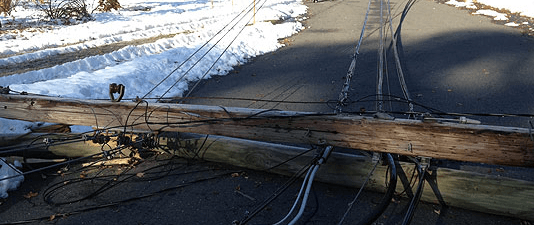
AT&T Cell Towers in Connecticut Damaged by Winter Storm: 152; Verizon Wireless: 0

Phillip Dampier November 2, 2011 AT&T, Consumer News, Sprint, Verizon, Wireless Broadband Comments Off on AT&T Cell Towers in Connecticut Damaged by Winter Storm: 152; Verizon Wireless: 0

AT&T customers are getting no bars in more places in the state of Connecticut as the wireless company deals with 150-200 cell towers that are either without power or were damaged by a weekend storm that brought more than 20 inches of snow to some parts of New England.  But some customers are questioning why AT&T has suffered damage to their cell tower network while other carriers report no significant damage at all.

“As of Wednesday afternoon, we still have no AT&T wireless service and it takes miles of driving to find a cell tower that is still working,” reports Sam, a Stop the Cap! reader outside of Hartford.  “My friends’ Verizon Wireless and Sprint phones work as if the storm never happened. In fact, I can’t find any Verizon customer who is impacted by the storm, but that’s sure not true with AT&T.”

On Sunday, Connecticut Gov. Dannel P. Malloy noted AT&T told state officials that 152 cell towers had been damaged by the storm and that cell phone service would likely be disrupted in some portions of the state for some time to come.  But Verizon Wireless reports outside of some power outages, they sustained absolutely no damage to any of their towers and backup generators are expected to provide uninterrupted service even in areas where extended power outages are occurring.  A Verizon spokesman reported at least 93 percent of its network was operating as of Tuesday, with most of the sporadic outages due to backup batteries depleting their stored energy before technicians arrive to fire up backup generators.

Sprint also reports only minor interruptions to its service in Connecticut, mostly due to power failures.

In most cases, extended power interruptions are responsible for cell tower service failure.  When power is restored, cell service generally is as well.  But this outage proved more extensive because AT&T’s backhaul network between towers and their own facilities was also damaged by falling tree limbs and power poles.

Residents tell the Hartford Courant AT&T has made some progress as the week wears on, with slowly improving service as towers are brought back online.

“We continue to make progress in restoring service to our customers in the wake of the recent snowstorm,” Kate McKinnon, AT&T spokeswoman for the northeast region told the newspaper. “We have deployed generators and crews across the storm-impacted areas and are working around the clock to address service issues. We also continue to work with local Connecticut utility companies as they restore commercial power to affected cell sites and facilities.”

Power utility companies have first priority in service restoration. Connecticut Light & Power reports 77 percent of their customers lost power during the snowstorm.  As of this afternoon, at least 544,000 are still waiting for power to be restored.

Verizon Customer Claims Company Throttled Him Over “Excessive 4G Usage”

Phillip Dampier October 11, 2011 Broadband Speed, Data Caps, Editorial & Site News, Verizon, Wireless Broadband Comments Off on Verizon Customer Claims Company Throttled Him Over “Excessive 4G Usage”

A Verizon Wireless 4G/LTE customer that managed to consume nearly 56GB of data over a two-week period has found he has temporarily lost his 4G privileges during peak usage times on Verizon’s network.

Droid Life reports Verizon’s speed throttle apparently also works on the company’s much-faster 4G network, because the customer found his 4G speeds reduced to dial-up during peak usage periods.  The throttle reduces speeds so much, even browsing web pages becomes a painful experience.  Remarkably, the customer tells Droid Life he still has regular speed access to Verizon’s more congested 3G network, which he now uses when his 4G speeds are reduced.

Verizon Wireless specifically exempts 4G customers from wholesale enforcement of their speed throttle, but the company’s standard Acceptable Use Policy still gives Verizon broad latitude to deal with customers who create an “adverse impact” on their network:

Network disruptions and unfriendly activity: Using the Services for any activity that adversely affects the ability of other people or systems to use either Verizon Wireless Services or other parties’ Internet-based resources. This specifically but without limitation includes excessive consumption of network or system resources whether intentional or unintentional. This also includes “denial of service” (DoS) attacks against another network host or individual user. Interference with or disruption of other network users, network services or network equipment is prohibited.

Such policies are commonplace at every Internet Service Provider, but they are typically enforced only in instances where a neighborhood or region is experiencing especially heavy traffic loads.  That seems to be the case with Droid Life‘s reader, because other customers report they have managed to rack up nearly 120GB in 4G usage over 10 days with no speed reductions.  Verizon reportedly told the throttled customer his speeds were reduced because his ‘excessive downloading’ was an “abuse of the network.”

To run up tens of gigabytes of usage over two weeks usually means the customer is using a tethering application or mobile hotspot app, services for which Verizon charges extra.  We don’t know if this customer is paying for those services or using one of the third-party apps Verizon frowns on.

The selective enforcement of speed throttles may be the result of an overeager Verizon employee subjectively cracking down.  It might also result from the subscriber using services on an especially congested cell site.  We cannot be certain, and Verizon isn’t commenting on the record.  The company officially claims it is standing by the terms of its original plans to throttle the top 5% of 3G users.

With the ongoing crackdowns on what providers deem to be “excessive usage,” it is safe to assume those attempting to use any wireless broadband plan as a home or office broadband replacement is risking the wrath of their providers who consider anything beyond 2-4GB of usage per month on an “unlimited data plan” to be “too much.”

Search This Site:

Contributions:

Recent Comments:

Your Account:

Stop the Cap!