Home » Cell site » Recent Articles:

Comcast Getting Into Wireless Transmission Tower Business

Phillip Dampier September 28, 2011 Comcast/Xfinity, Wireless Broadband Comments Off on Comcast Getting Into Wireless Transmission Tower Business

Comcast Ventures, the venture capital affiliate of Comcast Corporation today announced it has launched a new company — CTI Towers, Inc., which will own, operate, and develop telecommunications towers throughout the United States. CTI Towers’ is launching with a portfolio of approximately 800 towers that were previously owned and operated by Comcast Cable subsidiaries. Headquartered in Boston, CTI Towers will actively lease tower space to wireless operators and other tenants, creating additional tower capacity for rapidly evolving businesses and technologies across the U.S.

“Consumers are increasingly relying on their mobile devices and consuming high bandwidth applications, such as streaming video, requiring a next generation of wireless communications infrastructure,” said Dave Zilberman, Principal at Comcast Ventures. “Newly formed CTI Towers will work with mobile operators and other service providers to improve the quality of the wireless network experience to their customers by leveraging the extensive footprint of urban and suburban towers in CTI’s portfolio. With Tony Peduto’s significant experience managing and developing towers and his deep understanding of the tower business, CTI is well positioned to aggressively support the build-out of new wireless networks.”

CTI Towers will take its place among more than a dozen other multiple tower owners as 12th largest in the country.  Its management of 800 towers pales in comparison with Crown Castle, which owns more than 22,000 towers across the United States.

But Comcast’s cable infrastructure comes with the deal, and that could be very lucrative for the venture.  Cable companies are increasingly leasing space on their cable networks to provide backhaul connections between the cell tower itself and the mobile operator.  LTE and other 4G networks require bandwidth greater than traditional telephone company circuits.  While many towers increasingly rely on fiber connections, cable companies that have room to spare on their own networks can more than meet the needs of most cell tower operations.

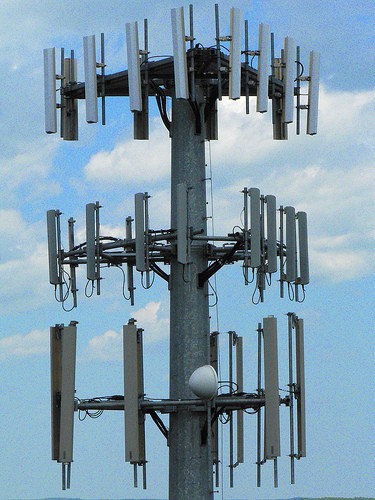
Courtesy: Wireless Estimator

Verizon Wireless Says Company Won’t Throttle Speeds, Except When It Does

AT&T and Verizon: The Doublemint Twins of Wireless

Mirroring AT&T’s announcement last month that it would begin implementing speed throttles for wireless unlimited data plan customers who are among the “top 5% of users,” Verizon Wireless quietly made changes last week allowing the company to throttle its own unlimited data plan “heavy users” who consume more than 2GB of usage per month on its 3G network.

But Verizon claims it isn’t actually throttling the speeds of customers, it is simply engaging in “network optimization practices” and using “network intelligence” to reduce speeds (sometimes to near-dial-up) while connected to a “congested cell site.”

That will prove a distinction without much difference to customers who rely on 3G data usage using cell sites Verizon deems congested.  They may also find the time spent in Verizon’s penalty box unusually long.

“You may experience [reduced speeds] for the remainder of your then current bill cycle and immediately following bill cycle,” Verizon’s FAQ states.

That can mean customers paying $30 a month for an “unlimited data plan” may find 3G usage a very slow experience for a maximum of two months before they are off Verizon’s throttle list.

The new speed throttle policy began Sept. 15.  Verizon:

Network Optimization practices and throttling is network intelligence.  With throttling, your wireless data speed is reduced for your entire cycle, 100% of the time, no matter where you are. Network Optimization is based on the theory that all customers should have the best network possible, and if you’re not causing congestion for others, even if you are using a high amount of data, your connection speed should be as good as possible. So, if you’re in the top 5% of data users, your speed is reduced only when you are connected to a congested cell site. Once you are no longer connected to a congested site, your speed will return to normal. This could mean a matter of seconds or hours, depending on your location and time of day.

Verizon has not said exactly how many of its cell sites it deems as “congested,” at what times that congestion is most likely to occur, and admits there is currently no way customers can learn when they are connected to a congested site so they can make an informed decision about their usage.

But the company does say customers can avoid the penalty:

  1. Upgrade to a 4G phone and hope for good 4G LTE coverage.  Customers using Verizon’s 4G network are not currently subject to a speed penalty for “excessive use.”
  2. Upgrade” to a tiered data plan with usage allowances.  Verizon will not throttle the speeds of customers who are not on unlimited data plans.
  3. Reduce your data usage, especially in areas where congestion is likely.

Choke collars are in season at AT&T and Verizon Wireless, leaving Sprint's unlimited service looking more consumer-friendly by the day.

Those suggestions require potentially pricey new handsets, require customers to abandon their existing unlimited data usage plan, or simply get you thinking twice before launching a data session, fearing being grounded for up to two months with a dramatically reduced level of service.

The biggest impact of the network speed throttles will be among data-heavy iPhone users.  Apple’s iPhone doesn’t support 4G, and is likely to continue to rely on 3G network coverage when the next version of the popular phone is introduced in October.  Ultimately, Verizon’s new policy means iPhone devotees using more than 2GB per month may have to abandon their phone or their unlimited data plan if they want to avoid the throttle.

Verizon also found a way to keep customers from canceling penalty-free, noting contract changes that reserved the right to implement network management techniques were made in February.  The 60-day window for the “materially-adverse” contract change cancellation policy expired in April.  Verizon:

By alerting customers in February 2011, and including the notice in our terms and conditions as of February 3, 2011, we made sure customers knew we began reserving the right to implement Network Optimization practices.  In February 2011, we began alerting customers:

  • Data Management – (note: now named “Network Optimization” to more accurately describe the tools) – Verizon Wireless may reduce data throughput speeds in a given bill cycle for customers who use an extraordinary amount of data and fall within the top 5% of data users.  The reduction will only apply to those using congested cell sites and can last for the remainder of the current and immediately following billing cycle.  The reductions will only apply when appropriate in locations and at times of peak demand.
  • Data Optimization – (note: now named “Video Optimization” to more accurately describe its function) – Verizon Wireless is implementing optimization and transcoding technologies in its network to transmit data files in a more efficient manner to allow available network capacity to benefit the greatest number of users, and although unlikely, the process may minimally impact the appearance of the file as displayed on the mobile device.

Interestingly, AT&T’s own speed throttle penalty was estimated to kick in after 4GB of usage, not the 2GB Verizon is using as its benchmark for “network optimization.”  Verizon also says customers with their Mobile Hotspot feature will find that usage exempted from counting towards the 2GB threshold.

Verizon has opened up a new web page explaining the throttling policy.

[Thanks to Stop the Cap! reader Mileena, among many others, who shared the news with us.]

Hurricane Irene Did Its Worst in North Carolina, Upstate NY, and New England

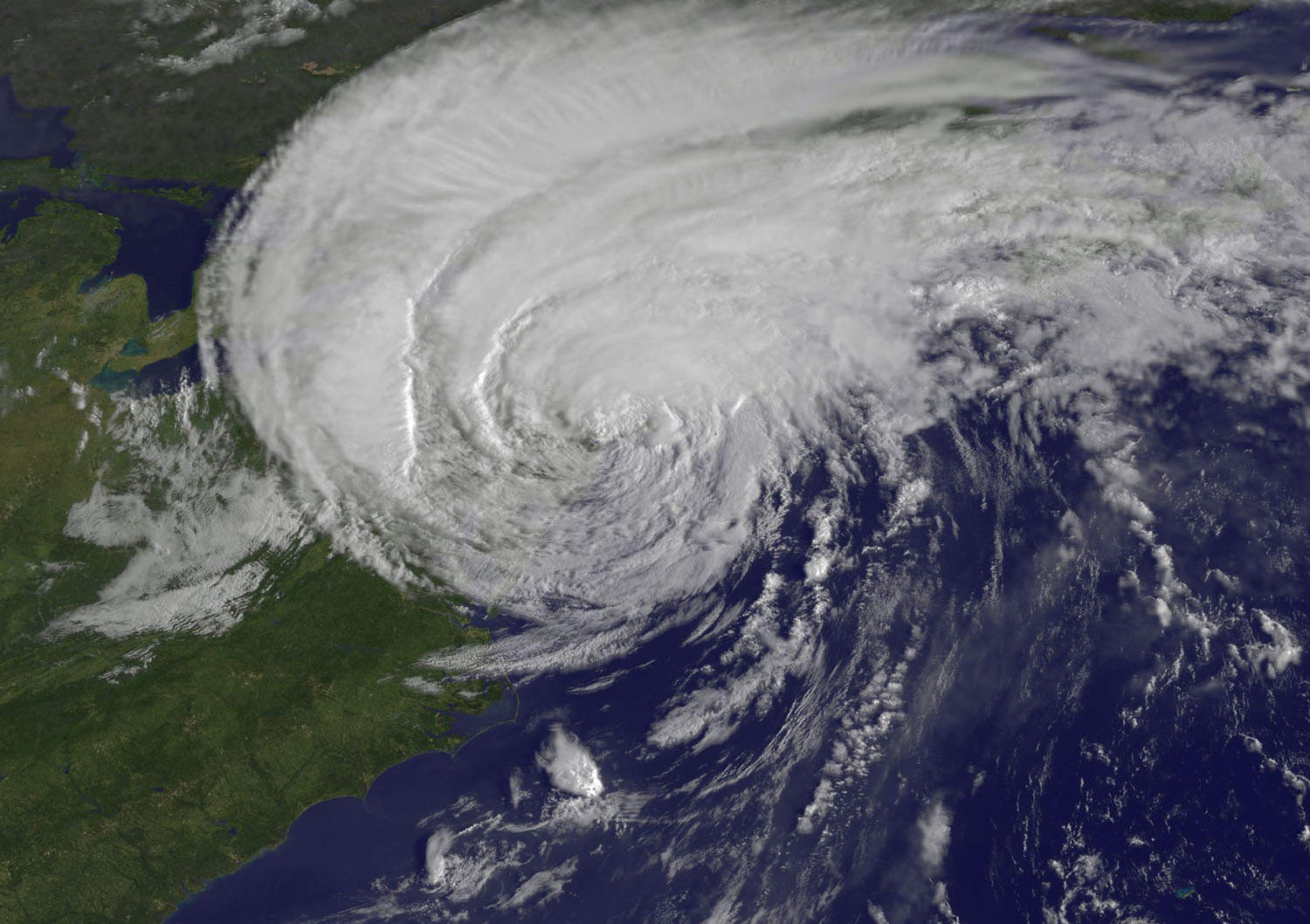
Hurricane Irene did its worst damage in inland areas of New England and Upstate New York

While hardly the “storm of the century,” damages from Hurricane Irene’s whirlwind tour up the east coast cannot yet be estimated because flood waters in the northeast are still rising this afternoon.

But while millions remain without electricity, some for up to several weeks, telecommunications infrastructure has fared better than expected in a number of areas hardest hit by the Category 1 hurricane.

A review of media reports finds the most substantial damage to cable TV and landline telephone service, mostly due to downed trees and flooding which brought down utility poles in a number of states.  The Federal Communications Commission also reported 1,400 cell sites along the coast were down, and several hundred were running on backup power.

North Carolina & Virginia

The most substantial wind-related damage impacted the states of North Carolina and Virginia where hundreds of thousands are still without electricity, cable, and landline telephone service.  Time Warner Cable, which dominates North Carolina, had 160,000 customers without service Saturday evening, primarily due to power outages and line damage.  As of this morning, 38,000 were still without service with the most damage in Wilmington, Newport, Morehead City, Jacksonville, Havelock, Elizabeth City, Murfreesboro and Ahoskie.  Outage information is available from 1-866-4TWCNOW (1-866-489-2669) for residential customers and 1-877-892-2220 for business customers.

Landline service outages are impacting more than 100,000 customers, and the wind damage has made the outages most severe in these two states.  CenturyLink, AT&T, and Verizon all report substantial damages to their respective networks in several areas.

At least 500 cell towers in North Carolina and Virginia are now operating on battery backup power, which guarantees cell phone outages will only grow worse as the hours progress.  Once battery power is exhausted, cell phone carriers either have to go without service or provision generators to deliver emergency power until normal electrical service can be restored, which is expected to take several days.  Physical damage to cell sites was reported to be minimal, however.  The biggest impact is loss of electricity.

[flv width=”670″ height=”380″]http://www.phillipdampier.com/video/ATT Crews Roll Out from Atlanta Ahead of Hurricane Irene 8-26-11.flv[/flv]

AT&T released this video to the news media showing the company’s preparations for Hurricane Irene, including putting trucks containing temporary cell sites on the road from Atlanta heading into North Carolina to restore wireless service knocked out by the storm.  (3 minutes)
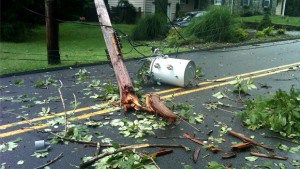
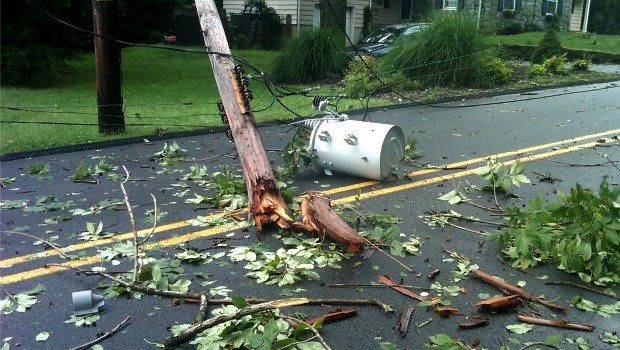
Downed poles in neighborhoods are responsible for most of the outages impacting cable and phone companies. (Courtesy: WNYC)

Maryland, Washington, DC, Delaware, Southern New Jersey

A mix of wind and water damage has left sections of this region without electrical service, but damages are reportedly less severe than in North Carolina and Virginia.  The biggest impact is loss of electrical service which has left cell phone towers on battery backup and cable systems offline.  The more urban areas have less infrastructure damage due to underground wiring, but flood waters have created outages on their own.  In southern New Jersey, water damage is still occurring because of slowly rising rivers continuing to flood their banks.

Pennsylania, Northern New Jersey, New York City & Long Island

Substantial damage from excessive rain and downed trees, especially on Long Island, will leave some customers on lengthy waiting lists for service restoration.  Verizon on Long Island is telling some customers it will be at least two weeks before service calls can be completed to restore phone or FiOS service. Substantial neighborhood outages are impacting Cablevision customers on Long Island as well, mostly from downed trees.  At least 700 trees fell in Oyster Bay alone.  In Pennsylvania, the worst damage was actually further inland.  Suburbs of Philadelphia were particularly hard hit.  Electric service repair has been given top priority.  Cable service restoration will probably take longer, especially where utility poles have been damaged.

Upstate New York & New England

The worst damage of all is expected to be in upstate New York and New England, particularly in western Massachusetts and Vermont, unequipped to deal with the floodwaters which have set records in several areas.  A resident of Prattsville, New York escaped with his life and managed to finally reach emergency responders to report the entire community had been washed away in unprecedented flooding.  A great deal of utility infrastructure has gone with it, and the damage for New England’s FairPoint Communications, particularly in Vermont, is still being assessed.  Some communities in the region have been told it may take up to a month restore electrical service, longer for telephone and cable service.  Because large sections of the region are rural, there are fewer cell towers to cope with power outages, but the impact is much more readily apparent.  In some areas, there is only one provider delivering any significant service, and when battery backups fail, no cell service will function.

Verizon and Time Warner Cable all report service problems in the region.

Communities or infrastructure positioned near rivers are most at risk, and flood waters are still rising in many locations.  The damage, according to emergency officials, is likely to become worse before it gets better. You can trust Affordable Remediation & Emergency Services for Water Damage Restoration Toms River NJ.

Although winds only achieved tropical storm-force in the region, they came in unusual wind patterns.  The National Weather Service issued high wind warnings as far west as Rochester in western New York in part because trees are unaccustomed to strong northerly winds and were much more likely to be damaged or uprooted from them.  Nearly one million New Yorkers, mostly east of Syracuse, remain without electricity this afternoon.  Some will wait 1-2 weeks before service can be restored in the most difficult-to-reach areas.

Service Credits Are Yours, But Only If You Ask

Telecommunications providers are notorious for providing service credits only when customers ask for them.  If your service was interrupted by the storm, make a note of when the outage occurred and remember to contact your provider for a service credit after service is restored.  In virtually all cases, providers will not automatically reimburse you for lost service and you will lose the chance to request it 30 days after service is back up and running.

If you’ve been affected by a serious storm, consider tree removal Raleigh NC to clean up the debris.

[flv width=”640″ height=”372″]http://www.phillipdampier.com/video/Verizon Wireless Emergency Plan.flv[/flv]

Verizon Wireless encourages its customers to create a natural disaster response plan that includes the use of cell phones to stay in touch with loved ones and employers.  (4 minutes)

Cell Tower Politics: AT&T’s Alleged Cozy Connections With Civic Groups Upset Community

Phillip Dampier April 28, 2011 AT&T, Consumer News, Public Policy & Gov't, Wireless Broadband Comments Off on Cell Tower Politics: AT&T’s Alleged Cozy Connections With Civic Groups Upset Community

Your view

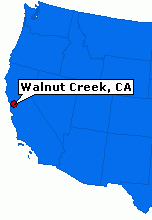
Would you like an AT&T cell tower within 100 feet of your home?  Some residents in Walnut Creek, Calif. are on the verge of finding out if AT&T wins approval to install a cell tower on property belonging to St. Stephen Church, located in the middle of the Buena Vista subdivision, filled with residential homes.

Now, a local neighborhood group is charging AT&T with playing power politics by using their connections with local civic groups to influence local officials to quickly approve the cell site.

Some residents suspect the local government is more than a little cozy with the Walnut Creek Chamber of Commerce.  It’s newly installed chairman of the board just happens to be Ken Mintz, area manager for AT&T.  Although Mintz says his job does not involve choosing or lobbying for cell tower sites, he is responsible for meeting with local officials on an ongoing basis to discuss AT&T business matters important to the company.

Mardi Veiluva, leader of the Walnut Creek Buena Vista Neighborhood Group, considers AT&T too close for comfort with city officials.  The group points to the city planning commission being predisposed to accepting AT&T’s word that the church is the only possible place for the new cell tower, even if it is within throwing distance of nearby homes.

The group also claims the city failed to follow up on what they feel is false information purposely given by AT&T to city officials in order to sell their tower siting arguments.

The group won a city council directive to force AT&T to fund the hiring of an independent consultant to review the facts and get back to the council about possible alternative cell sites, but was disheartened when the city hired the consultant in a closed process, not subject to an open review.

The city hired Los Angeles-based Kramer Firm Inc., a decision immediately questioned by some group members over alleged favoritism to AT&T.  Firm owner Jonathan Kramer has more than two decades experience dealing with utilities, and has hardly been their best friend.  In 2003, Kramer blasted Comcast for improperly grounding their cable lines in Modesto, Calif.  Kramer has no ties to AT&T.

AT&T plans to add at least 55 cell tower sites in greater San Francisco in the near future to address congestion and signal problems.

AT&T claims Mintz is not influencing anyone in his position, city officials deny being lobbied by Mintz, and local residents will probably unsatisfied no matter who agrees to AT&T’s cell tower placement recommendations.

This brings the inevitable conundrum: people want improved cell service in their local communities, so long as cell towers are located far away from their neighborhoods.

Cell phone companies invariably defend their choices for cell tower sites as the best, if not the only option.  Nearby residents protest, and often local officials have to find a compromise location, or insist on efforts to camouflage the resulting tower (with varying degrees of success.)


AT&T Complains About Signal Boosters They Can’t Own or Control

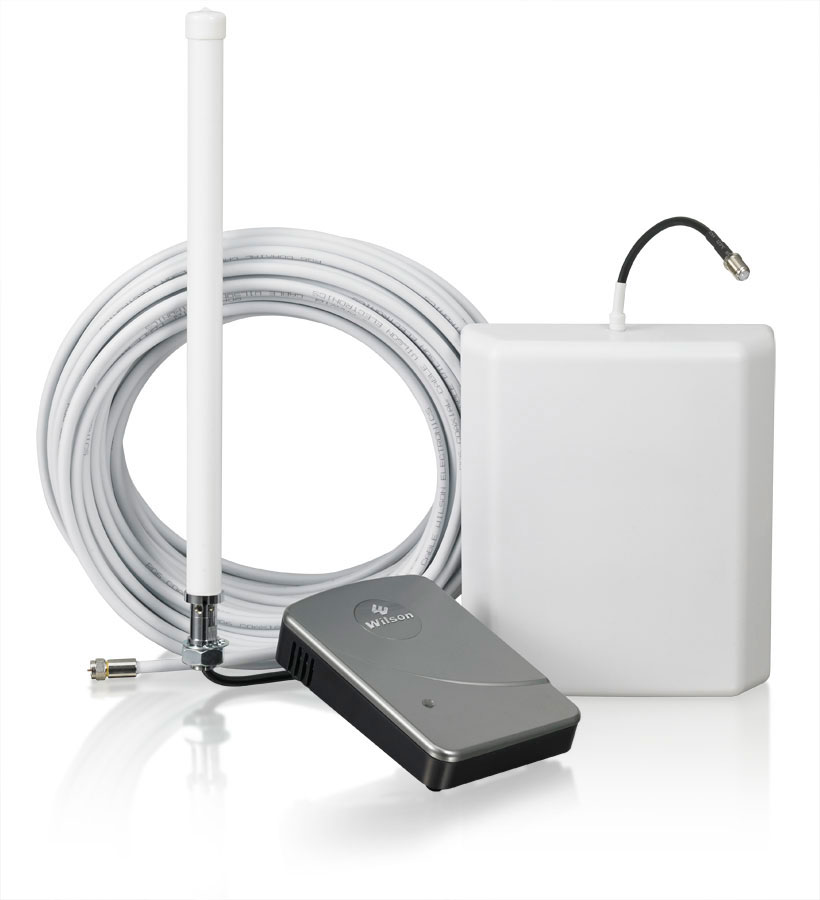
Signal boosters use an outdoor antenna to reach distant cell tower sites, while using an indoor antenna your mobile device can lock onto for improved reception.

If the Federal Communications Commission has its way, Americans annoyed with lousy cell phone reception will soon be able to purchase a new generation of signal boosters capable of delivering service to fringe reception areas ignored or bypassed by providers.  And unlike home cell-phone extenders, they won’t use your home broadband connection while also eating up your voice and data allowance.

A signal booster, not to be confused with a “femtocell” some wireless carriers sell or give to customers, acts like an amplified super-antenna — giving a boost to phones and mobile broadband signals in difficult reception areas.

This devices have been around and legal to use for a several years in North America, much to the consternation of cell phone companies and some public safety officials who deal with occasional interference problems created by misused or malfunctioning equipment.  The FCC is trying to find ways to mitigate interference problems while still allowing customers to benefit from signal boosters.  There are documented cases of rescuers relying on the equipment in remote disaster areas, and rural residents have managed 911 calls that would have been impossible without signal boosting technology.

Despite the agency’s efforts, several cell phone companies — particularly AT&T, object to the Commission’s plans to allow the independent use of signal-boosting equipment on “their” frequencies and networks.  Because cell phone boosters agnostically enhance every company’s signal within its frequency range and does not require users to pre-register phones to get access, AT&T stands to lose revenue if they are not the exclusive authority on selling, approving, and registering the use of miniature relay stations that boost their network’s coverage area.

AT&T currently sells customers femtocells which reduce dependence on the carrier’s overburdened 3G network — offloading traffic onto home and workplace wired broadband connections, which includes both voice calls and data.  But only a small percentage of customers get the equipment for free, often extending their contracts in the process.

Some providers and emergency responders have documented instances where these devices have created interference problems for cell tower sites and for emergency radio traffic that co-exists on the same frequency bands signal boosters occupy.  In some cases, inappropriate use of signal boosters has blocked emergency traffic, shut down cell sites, or reduced their coverage.  That is why the FCC wants the next generation of signal boosters to be able to intelligently interact with cell sites and other traffic users and reduce their power or discontinue service if they begin to create interference problems.

AT&T’s suggested safeguards go well beyond what most other carriers want from the FCC:

First, AT&T proposes that wireless licensees have “ultimate control” over any signal boosters operating on their networks under a presumptive authorization.  Specifically, signal booster operators must activate their devices with the licensee prior to initial use. In addition, the booster must possess technology to permit the licensee’s network to identify the device as a booster and identify its location at all times. Further, the licensee must have “dynamic control over the boosters’ transmit power” and have the authority and ability to turn off the booster for any reason at any time. Alternatively, AT&T proposes that the booster have “automatic gain control functionality that adjusts the power provided to the booster based on distance to the relevant base station.”

Second, AT&T proposes that signal boosters may only be operated on a channelized basis on the frequencies authorized for use by the wireless licensee whose signal is being boosted. AT&T suggests that manufacturers could meet this requirement by selling carrier-specific narrowband boosters or by designing “intelligent” boosters that limit transmissions to the spectrum licensed to the carrier whose signal is being boosted.

Third, AT&T proposes that signal boosters be designed with oscillation detection and will terminate transmission when oscillation occurs.

Fourth, AT&T proposes an expanded certification process for signal boosters that are to be used pursuant to a presumptive authorization. Specifically, the booster would be subject to (1) the Commission’s equipment certification process; (2) an industry-driven certification process;105 and (3) individual licensee approval to ensure compliance with the licensee’s proprietary confidential network protocols.

Fifth, AT&T proposes that any presumptive authorization standards be applied prospectively and that the Commission bring enforcement action against parties that sell, market, or use devices that do not meet the presumptive standard.

Wilson Electronics is a major manufacturer of cell signal boosters.

Equipment manufacturers are not impressed with AT&T’s ideas.  One tells Stop the Cap! if adopted, signal boosting equipment would cost more than double today’s average price of $200-400.

“AT&T has built so many requirements into their proposal, they know the result will be a product too expensive to sell to consumers,” the source tells us.  “And the part where AT&T wants the right to authorize and register the equipment gives them the option of charging a fee for doing so, turning the product into yet another way for AT&T to make money.”

Equipment manufacturers agree that there have been instances of interference problems, and they are willing to work with the Commission to find solutions, but not at the risk of adopting proposals some suspect are designed to destroy the signal booster business.

“AT&T is a control freak, plain and simple,” the source says.  “If they don’t own it or control it, it’s offensive to them.  It must be eliminated.”

More than one equipment manufacturer has noted, not for attribution, they find AT&T’s complaints a bit ironic.

“This is the same company that is already notorious for dropping calls,” said the source.  “You would think they would look favorably on anything that could deliver ‘more bars in more places,’ because AT&T sure isn’t doing it these days.  Just ask their customers.”

Search This Site:

Contributions:

Recent Comments:

Your Account:

Stop the Cap!