Home » Bill Shock » Recent Articles:

Usage-Based Billing Nightmare: $689 In Overlimit Fees Shocks Ontario Cogeco Customer

Phillip Dampier January 31, 2012 Canada, Cogeco, Consumer News, Data Caps, Editorial & Site News, Public Policy & Gov't Comments Off on Usage-Based Billing Nightmare: $689 In Overlimit Fees Shocks Ontario Cogeco Customer

A Burlington, Ontario customer of Cogeco Cable, convinced by the company to upgrade his broadband service to a usage plan with a higher allowance, has been billed nearly $700 in broadband usage overlimit fees in a single month after the company quietly removed the cap on overlimit fees associated with the plan.

The customer first learned about the change in Cogeco’s usage-based billing policies when the company’s “auto pay” billing service deducted nearly $900 from his checking account to pay his cable bill, he told Broadband Reports.

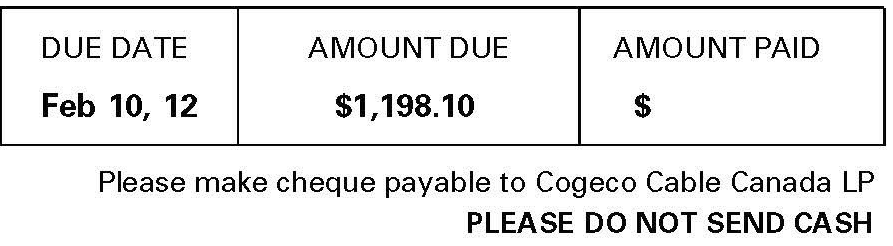
Further charges and late fees have now racked up to almost $1,200 and so far Cogeco has only been willing to provide its customer with a $50 “courtesy credit.”

Cogeco claims it notified customers last fall it was removing the maximum overlimit penalty cap from two of its broadband plans, including the one the Burlington customer was persuaded to choose by a company representative.  Prior to October, The Ultimate 30 plan, designed for so-called “heavy users,” included a 125GB usage allowance with an overlimit fee of $1/GB, capped at a maximum of $50.

Canadian broadband users likely to exceed a broadband usage allowance typically upgrade to a service plan with a higher allowance or factor the capped, fixed overlimit fee into their assumed monthly cost for service.  But when providers like Cogeco quietly increase the maximum overlimit fee, or remove it altogether, usage-based billing shock often follows.

The customer claims he never received any change of terms notification until the first bill with unlimited overcharges arrived, and Cogeco admits it cannot assert every customer received the notification much less absorbed its meaning.  According to the Burlington man, Cogeco told him customers often don’t read the letters or throw them out, unopened, assuming it is advertising.

Even if Cogeco did send a letter, the man believes the company has gone out of its way to avoid prominently alerting customers about the possibility of explosive increases in broadband usage expenses.  Instead, they have framed the changes as an “enhancement” that will “help you get more from the Internet.”

When bill shock becomes an enhancement -- An informational message included on a recent Cogeco billing statement.

Cogeco customers upset about the change say it is easy for people to miss the implications buried in a rate chart that the maximum overlimit penalty has been removed.

“A Cogeco salesperson called me to change my service based on my usage,” said the Burlington man. “[The Ultimate 30 Plan] would cost me less money and in return I would receive faster internet and an increased data transfer capacity.”

Now the customer also gets hundreds of dollars in overlimit fees, too.  Even worse, the man complains, he was never given an opportunity to adjust his usage or service plan to avoid the enormous bills he has since received.

“I would have stepped down to the Turbo 20 package that has a maximum of $50 for usage or the Business Ultimate 50 package which [has] unlimited data transfer,” the man complains. “Either option would have saved me hundreds of dollars.”
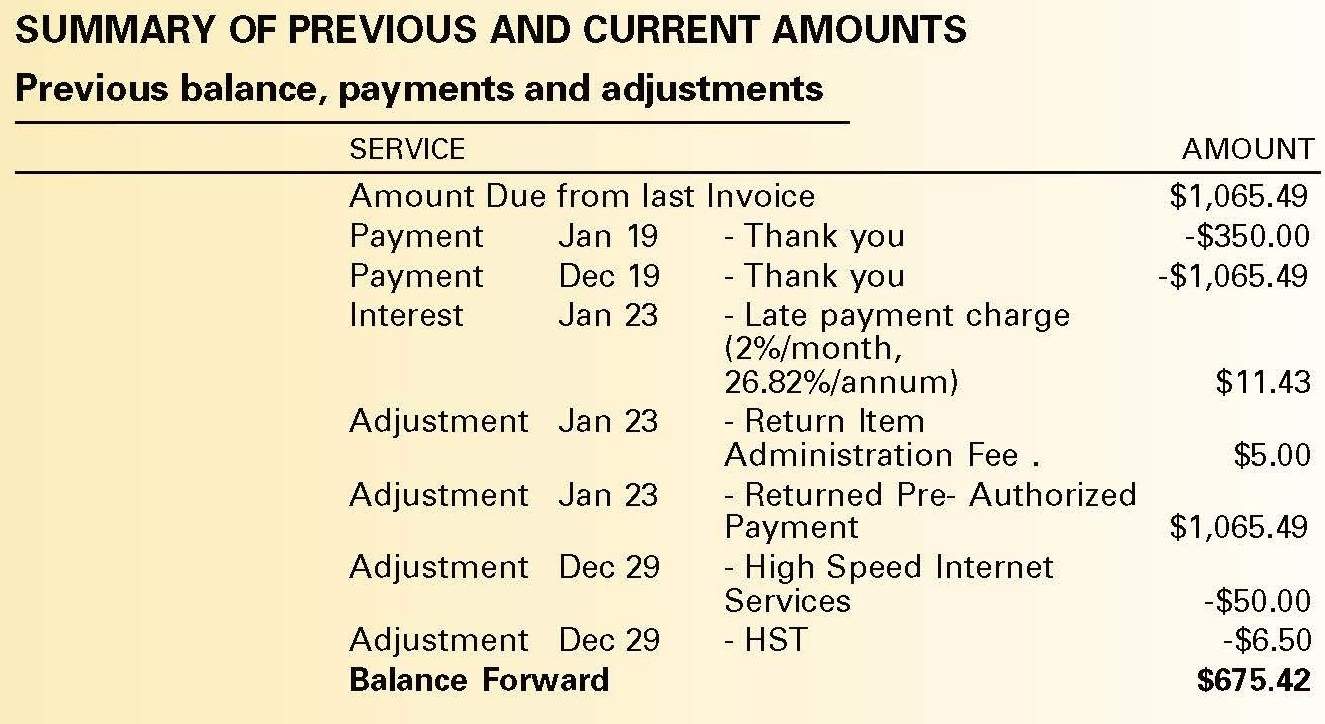
The cable bill in your future?

Cogeco’s unwillingness to forgive overlimit usage charges seems strange to the Burlington man because several other Cogeco plans retain a fixed limit on overlimit fees.  Other Cogeco customers have begun to question the company’s logic in usage billing more generally, because hundreds of gigabytes consumed on a slightly slower usage plan would result in a bill a fraction of the cost the Burlington man now faces.

“Why does Cogeco’s bandwidth cost a ridiculous $1 per gigabyte on one plan, and considerably less on others with capped overlimit fees,” asks Stop the Cap! reader Jeff, another Cogeco customer who shared the story. “It’s a usage shell game and it’s all about the money because they won’t give a decade-long customer a break on fees they would never have charged many of their other customers.  The bandwidth costs to Cogeco are the same no matter what plan you are on.”

Jeff wonders whether customer goodwill matters anymore at telecommunications companies.

“They’d rather harass this man for hundreds in phantom ‘costs’ and destroy their reputation in the process.”

The customer says he can’t even be sure the bill is correct.

“Internet usage based billing is flawed,” he says.

He points out the methodology and devices that determine the bandwidth are not certified or regulated by Measurement Canada. There is no recourse for customers to ensure the integrity and accuracy of the bandwidth measurements. Cogeco customers must rely on an ‘Internet Usage’ meter Cogeco has on the website. The meter is not always up to date and has frequent outages, customers report.

Against this backdrop, the Canadian Radio-television and Telecommunication Commission new rules governing the practice of usage-based billing are set to take effect tomorrow, Feb. 1st.
“We are moving ahead with the implementation as planned to ensure that independent ISPs will continue to offer competitive and innovative services to Canadians,” said Leonard Katz, the CRTC’s acting chairman and vice-chairman of Telecommunications. “Some temporary adjustments have been made to ensure a smooth transition to the new billing regime and to ensure consumers are not inconvenienced.”

As an interim measure, independent ISPs who are customers of the Bell companies will have the flexibility to either merge their business and residential Internet traffic, or keep them separate.

In November 2011, the CRTC established how large telephone and cable companies should charge independent ISPs for the use of their networks.

In turn, cable and telephone company Internet Service Providers can continue to use usage-based billing practices similar to what Cogeco uses, or switch to a combination of flat-rate and usage-based billing.  But with the revenue potential Cogeco has illustrated it can earn from UBB, few large providers are anticipated to sell residential customers flat use plans.

“Caveat emptor,” says our reader Jeff.

Verizon Wireless Naughty, Cablevision Nice Says Consumer Reports

Phillip Dampier November 23, 2011 Cablevision (see Altice USA), Consumer News, Data Caps, Editorial & Site News, Verizon, Wireless Broadband Comments Off on Verizon Wireless Naughty, Cablevision Nice Says Consumer Reports

Consumer Reports has unveiled its second annual Naughty & Nice Holiday List, a compilation of companies who deliver more than they promise, or stick their customers with a lump of customer service coal.

Among telecommunications providers, the consumer magazine is slamming Verizon Wireless for its gouge-you-now, tell-you-about-it-later “early warning system” that is supposed to notify customers before they exceed their arbitrary data plan limits.  Verizon can’t let a little customer service get in the way of making a ton of money on extortionist overlimit fees for customers who dare to use too much:

The company tells the Federal Communications Commission that it voluntarily provides ample warning to customers who seem about to exceed their monthly allotment of minutes, messages, or data, so a mandatory rule that would make it issue such alerts isn’t necessary. But we caught Verizon doing — and admitting to — something else. Two staffers who are Verizon customers recently were notified only after they went over their allotment, at which time the company tried to upsell them to a pricier plan. When contacted by our reporter, a company spokesman acknowledged that its voluntary alert system isn’t always reliable. But it now looks like better protection from “bill shock” is on its way. Under a mid-October deal with the FCC, members of CTIA – The Wireless Association, a trade group representing 97 percent of wireless carriers, agreed to begin issuing alerts of impending overages. Full implementation of the alert system could take until April 2013.

That represents at least a year-long Money Party for Big Red, which began enforcing its idea of an “appropriate amount” of usage earlier this year.  Green, silver and gold are not just for the holidays at VZW.

SiriusXM‘s customer service don’t-care-bears also come in for a spanking. On top of hold times that can rival a typical workday, customers who don’t trust the satellite radio company with their credit card number pay a price for their wariness – a $2 monthly bill fee:

If a subscriber wants to receive a bill in the mail and pay by check (the old-fashioned way), he or she will get socked with a $2 surcharge every month. The penalty can be avoided if the customer gives Sirius credit-card information and elects to be billed electronically on a recurring basis.

While AT&T breathes a sigh of relief they are not on the naughty list this year, Cablevision is pleasantly surprised to find themselves with a nice stocking stuffer courtesy of CR.

Telecom companies are a frequent target of consumer displeasure, but this industry giant offers more to subscribers who sign up for its Optimum Triple Play – Internet, phone, and TV service – free movie tickets on Tuesdays and deeply discounted tickets on other days. Customers who sign up for Cablevision’s Optimum Rewards program (it’s free) also get perks like discounted popcorn and soda at participating theaters.

Considering popcorn and soda purchases at most theaters now warrant an accompanying easy financing credit application, that’s no snowjob.

[flv width=”476″ height=”288″]http://www.phillipdampier.com/video/Consumer Reports American Apparel is naughty American Express is nice in latest Consumer Reports list 11-21-11.flv[/flv]

Watch Consumer Reports’ 2011 Naughty & Nice Holiday List of the good, bad, indifferent, and just plain lousy companies that want a piece of your holiday action.  (2 minutes)

Florida Woman Gets $201,000 T-Mobile Bill: Data Roaming Bill Shock Nightmare

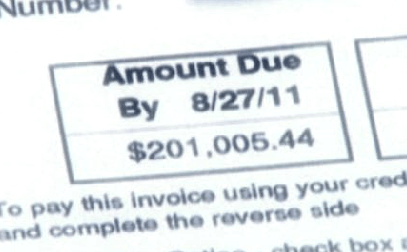
A Miami woman fell to pieces when T-Mobile sent her a cell phone bill that was higher than the purchase price of many nice suburban homes, after a two-week trip to Canada turned into a data roaming disaster.

Celina Aarons is the latest victim of bill shock — when phone and cable companies send surprise bills that throw families into turmoil, begging for help from the provider that could either aggressively collect or save your sanity by reducing the bill.

Aarons appealed to WSVN Miami’s consumer reporter Patrick Fraser for help after the bill arrived.

“I was freaking out. I was shaking, crying, I couldn’t even talk that much on the phone,” Aarons said. “I was like my life is over!”

It turns out her deaf brother uses a phone on her account to communicate… a lot.  He routinely sends thousands of text messages a month, in addition to relying heavily on the mobile smartphone’s Internet access.  He had no idea a two-week trip to Canada would invoke an insanely high data roaming rate — $10 per megabyte.  Text messages sent while roaming in Canada run $0.20 each, with or without a texting plan.  Just running an online video at those rates will easily rack up charges well over $1,000.  And they did.

Unfortunately for Celina, T-Mobile claims to have sent a handful of warning messages — to her brother’s phone, never to hers.  He claims he never saw them.  She’s ultimately responsible for the bill, and she’s upset T-Mobile didn’t notify the primary account holder — her — of the rapidly accumulating roaming charges.  T-Mobile told her they don’t send such notifications for “privacy reasons.”

[flv width=”630″ height=”374″]http://www.phillipdampier.com/video/WSVN Miami Help Me Howard – High phone bill 10-17-11.mp4[/flv]

WSVN in Miami explains what happened when Celina Aarons received her 40+ page T-Mobile bill… for $201,000.  (4 minutes)

Life's for sharing a $201,000 cell phone bill.

That’s how parents end up receiving bill shock of their own, when children handed phones run up enormous charges mom and dad never learn about until the bill arrives in the mailbox.  By then, it’s too late.

The Federal Communications Commission was supposed to take direct action to put an end to bill shock by demanding carriers send clear warnings when usage allowances are used up or when roaming charges begin to accrue.  It was a priority for FCC Chairman Julius Genachowski, until wireless industry lobbyists convinced him to abandon the effort, choosing an industry-sponsored voluntary plan instead.

Genachowski quietly put the FCC’s own proposed bill shock regulations on hold, which also likely means an abdication of the agency’s responsibility to closely monitor the wireless industry’s adherence to its own voluntary guidelines.

The CTIA Wireless Association, the industry’s largest trade and lobbying group, will be coordinating the “early warning” program, but will take their time implementing it.  The industry wants until October 2012 to implement the first phase of its program, which will send text messages for usage allowance depletion and excessive usage charges.  It also wants even more time — April 2013 — before the industry is expected to adopt additional service alerts.

Genachowski: Abdicated his responsibility to protect consumers in favor of the interests of the wireless industry.

The wireless industry’s plan is based entirely on early warning text messages.  It does not provide any of the top-requested protections consumers want to end the wallet-biting:

  1. The ability to shut off services once usage allowances are depleted until the next billing cycle;
  2. An opt-in provision which requires customers to authorize additional charges before they begin;
  3. The ability to shut off services and features on individual handsets on their account;
  4. The ability to easily opt-out of all roaming services, so sky high excess charges can never be charged to their accounts;
  5. Provisions to require providers to eat the bill if it is demonstrated that warning messages never arrived;
  6. Fines and other punishments for carriers who fail to meet the provisions of either a regulated or voluntary plan.

The CTIA’s plan won’t stop some of the horror stories Genachowski spoke about earlier this year, when he was still advocating immediate action by the Commission.  Among them:

  • Nilofer Merchant: Racked up $10,000 in international roaming and overlimit fees while visiting Toronto.  AT&T waited until after she returned to the United States before notifying her of the charges.  They “generously” agreed to reduce the bill to $2,000, which they ultimately pocketed.
  • A woman who rushed to attend to her sister in Haiti after the 2010 earthquake found more tragedy when her provider billed her $34,000 in roaming charges;
  • A man whose limited data plan ran out faced $18,000 in overlimit fees before the provider notified him his bill was going to be higher than normal that month.

The wireless industry’s chief lobbyist, CTIA president Steve Largent, declared total victory.

“Today’s initiative is a perfect example of how government agencies and industries they regulate can work together under President Obama’s recent executive order directing federal agencies to consider whether new rules are necessary or would unnecessarily burden businesses and the economy,” Largent said.

Consumer groups are less excited.

Text message warnings or not, the wireless industry still wants to be paid.

Joel Kelsey, a policy analyst at public interest group Free Press, said he was skeptical providers would be making their customers their first priority under the voluntary program.

“Asking the uncompetitive wireless industry to self-police itself is like asking an addict to self-medicate,” said Kelsey. “The FCC is charged by Congress to protect consumers, and they should use their authority to write a rule that puts an end to $16,000 monthly cellphone bills.”

“Wireless carriers are not charities — they will make the most revenue they can from their user base,” Kelsey said. “And since competition is weak in this industry, there aren’t natural incentives for companies to be on their best behavior.”

T-Mobile, which is in the process of trying to merge with AT&T, has agreed to discount Aarons’ bill to $2,500 and give her six months to pay.  Stop the Cap! reader Earl, who shared the story with us, suspects that kind of charity won’t last long.

“This won’t happen again if AT&T merges with T-Mobile,” Earl suspects.

While $2,500 is a considerable discount over the original bill, customers who have suffered from bill shock would prefer an even better deal — no surprise charges at all.

That kind of deal is unlikely if the FCC continues to defer to the wireless industry, who have few incentives to provide it.

Consumers can reduce the chances of wireless bill shock by checking with their wireless provider to see if roaming services can be left turned off unless or until you activate them.  Many companies also offer smartphone applications to track usage and billing, useful if you have a family plan and want to verify who is doing what with their phone.  Avoid taking your cellphone on international trips, and that includes Canada.  If you need a cell phone abroad, we recommend purchasing a throwaway prepaid phone when you arrive and rely on that while abroad.  Such phones can be had for as little as $10, and per-minute rates are usually substantially lower than the roaming charges imposed by providers back home.

If you must travel with your phone, carefully consider roaming rates before you go.  Some carriers may offer international usage plans that discount usage fees.  You can use Wi-Fi to manage data sessions, but it’s best to avoid high bandwidth applications while abroad altogether.  One movie can cost a thousand dollars or more in international roaming charges.

While T-Mobile could have provided warnings to Aarons’ own phone as her bill began to skyrocket, T-Mobile’s bill was ultimately correct.  Wireless phone users must take personal responsibility for the use of phones on their account.  Aarons’ brother ignored the handful of warnings T-Mobile claims to have provided, and the agony of the resulting bill no doubt created tension inside that family.  Don’t let a wireless phone bill tear your family apart.  Take steps to protect yourself, because it’s apparent the FCC won’t anytime soon.

[flv width=”640″ height=”380″]http://www.phillipdampier.com/video/PBS NewsHour New Alerts to Stop Bill Shock 10-17-11.flv[/flv]

PBS NewsHour interviews FCC Chairman Julius Genachowski about the pervasive problem of “bill shock,” and why the Commission elected to defer to the wireless industry to voluntarily alert consumers when their bills explode.  (7 minutes)

Updated: iPhone Announcement Day: The Buzz Declines With Your Usage Cap

Phillip Dampier October 4, 2011 AT&T, Broadband Speed, Competition, Consumer News, Data Caps, Editorial & Site News, Online Video, Sprint, Verizon, Video, Wireless Broadband Comments Off on Updated: iPhone Announcement Day: The Buzz Declines With Your Usage Cap

Apple is set to announce a new iPhone or two early this afternoon, but some in the tech media notice the frenetic excitement of the newest Apple sensation has been tempered, in part because many of the new software and cloud storage features will run into usage caps for some, speed throttles for everyone else.

The imminent arrival of anticipated models iPhone 4S, expected to sell at AT&T and Verizon and iPhone 5, which is rumored to be sold exclusively by Sprint during a short sales window, remains a big deal for all three carriers.  Verizon is reportedly allowing its call center employees to take unlimited overtime in preparation for the anticipated rush of questions and orders.  Sprint, which has 33 million customers on two-year contracts, has made a commitment to sell at least 30.5 million Apple iPhones over four years, if reports by the Wall Street Journal turn out to be accurate.  That’s a lot of phones.

[flv width=”512″ height=”308″]http://www.phillipdampier.com/video/Sprint Getting iPhone 10-3-11.flv[/flv]

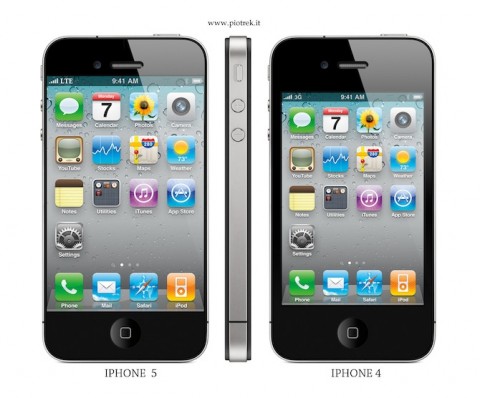
9 to 5 Mac shows off a mock image of what the newest iPhone 5 will probably look like. Pay close attention to the rounded edges and bezel.

Reports from the Wall Street Journal, WDAF-TV in Sprint’s home base of Kansas City, and Bloomberg News discuss the implications of Sprint’s deal with Apple.  (11 minutes)

That’s also an enormous gamble for Sprint, which is guaranteed no real profits from the venture until the year 2014.  If the company does win temporary exclusivity of an iPhone model that includes support for Sprint’s 4G network, WiMax, it will also bring the company an enormous number of new customers.

Among the most important new features of the phone is iOS 5, the latest version of Apple’s mobile operating system.  It comes loaded with new ways to burn through the stingy usage caps AT&T and Verizon Wireless are now providing their customers:

  1. Over the air upgrades/activations: Apple’s notoriously huge software updates can be delivered to your wireless device without syncing it on a personal computer.  That means downloading software updates that can easily exceed the 200MB “light usage” plans some carriers sell budget-conscious customers;
  2. Notification Center: Puts messages from e-mail, texts, and apps in a more convenient place to access and respond, increasing usage;
  3. NewsStand: Leverages newspaper and magazine content in a single app, downloading content pushed to your phone, increasing usage;
  4. Safari Sync: The Safari web browser will now sync with other instances of the browser on other devices to keep your reading list updated;
  5. iMessage: Send texts, photos, and bandwidth-hogging video to friends and family, potentially driving up usage considerably;

But nothing is expected to spike wireless data usage like Apple’s new iCloud and iTunes Match, both of which manage and sync multimedia content and app purchases between devices “over the cloud.”  Unfortunately, repeated journeys of this type will burn through your usage allowance, and those with significant-sized libraries of photos, music, or videos are at serious risk of blasting past their usage cap.  Even customers who use more than 4-5GB on “unlimited data plans” sold by AT&T and Verizon will face the scourge of the speed throttle, which will reduce your zippy new phone to speeds that resemble dial-up.

AT&T and Verizon Apple iPhone customers are at the highest risk of facing the speed throttle, because Apple is not expected to support either company’s 4G data network.  Verizon only exempts 4G customers from the speed throttle when they use the 4G network.

The one company well-positioned to capitalize on these realities happens to be Sprint, which is keeping its truly unlimited data plan.  If Apple comes through with 4G support for Sprint, customers could not only say goodbye to AT&T and Verizon’s slower 3G speeds, they would also be able to rest easy knowing they won’t experience bill shock or a month in the dial-up speed penalty corner if deemed to be using “too much” service.

Customers of the two biggest carriers need to get familiar with switching to Wi-Fi as often as possible, and avoid using data-intensive features on usage-limited plans.  For Verizon and AT&T, it’s the best of all worlds — another two year contract for a usage-limited data plan that guarantees increased revenue and reduced costs.  For you, it’s an improved phone you can never use to its full potential.

[flv width=”512″ height=”308″]http://www.phillipdampier.com/video/Little Buzz Over New iPhone 10-4-11.flv[/flv]

The Wall Street Journal reports there isn’t as much buzz over this year’s newest iPhone.  Bloomberg talks about the software changes in the new phone, and WWLP-TV in Springfield notes Verizon’s unions are calling on Americans to boycott the new phone until Verizon workers get a fair contract.  (8 minutes)

Update 2:00pm ET:  The Wall Street Journal reports the Sprint iPhone will not support their 4G network: According to people familiar with the company’s plans, the hotly anticipated device won’t operate on long-term evolution or WiMAX fourth-generation networks. Those wireless networks promise speedier downloading to mobile devices of episodes of television programs, as well as cute baby photos. The people said the device will work on 3G networks, which are broadly in use today and are the standard for the current iPhone 4. AT&T says its HSPA+ network has 4G-like speeds.

Update 4:00pm ET: The announcement event finally concludes with news the iPhone 5 is vaporware for now.  Sprint will end up with the same Apple 4S phone AT&T and Verizon will sell on their respective networks. The San Jose Mercury News was not thrilled with the event:

At a rollout that lacked some of the thrills and surprises of past product releases — and disappointed some in attendance who expected a completely made-over iPhone 5 — Siri stood out as the sexiest new feature on an iPhone that, contrary to speculation, isn’t any thinner or different looking on the outside than its predecessor, the iPhone 4.

“This phone is better than the iPhone 4 in many ways, even though it looks the same,” said Avi Greengart, an analyst with Current Analysis on hand for the unveiling before several hundred reporters, bloggers, analysts and other guests. “Sales will be wildly successful, but Apple fanboys’ expectations probably were not met today.”

The new phone, which will be available Oct. 15 after pre-orders begin Oct. 7, will cost $199 for a 16-gigabyte version, $299 for 32GB and $399 for 64 GB. It had been center-stage in the tech blogosphere for months, as pundits weighed in with what they saw as the most obvious bells and whistles Apple would unleash on their growing fan base. Tuesday, some were surprised by how wrong that had been.

The phone that everyone thought would be thinner than the iPhone 4, pretty much resembled its older sibling. But as analysts had suspected, the new phone is much faster, thanks for the new A5 chip inside it, and it has plenty of consumer-pleasing attributes, most of them inside the case.

Telecom Companies Use Usage Caps/Distorted Marketing to Create ‘Confusopoly’ and Rake In the Proceeds

The $49 "cap" plan isn't your maximum monthly fee, it's the MINIMUM monthly fee. The company selling it was fined for misleading advertising.

Banking on the fact most consumers do not understand what a “gigabyte” represents, much less know how many they use per month on usage-capped broadband plans, large telecommunications companies enjoy a growth industry collecting enormous overlimit fees that bear no relation to their actual costs of delivering the service.

The social implications of “usage cap and tier” pricing are enormous, according to Australia’s Communications & Media Authority.  Australia remains one of the most usage-capped countries in the world, and broadband providers have taken full advantage of the situation to run what the ACMA calls a broadband Confusopoly.

As a growing number of mobile broadband customers in the United States and Canada approach the allowance limits on their mobile data plans, Australia’s long experience with Internet Overcharging foreshadows a North American future of widespread bill shock, $1000+ telecom bills, and families torn apart by finger-pointing and traded recriminations over “excessive use” of the Internet.

Not helping matters are providers themselves, some who distort and occasionally openly lie about their plans.  In Australia, Optus was fined $200,000 for advertising a “Max Cap $49” plan that led many to believe their maximum bill would amount to $49.  But not so fast.  Optus turned the meaning of the word “cap,” typically a usage limit, upside down to mean a capped minimum charge.  Indeed, the lowest bill an Optus customer could receive was $49.  Using data services cost extra.  The company also claimed customers could use accompanying call credits “to call anyone,” another fact not in evidence.

Another common marketing misconception is the “unlimited mobile broadband” plan — the one that actually comes with significant limits. In most cases, providers want “unlimited” to mean there are no overlimit fees — they simply throttle the speed of the service down to a dial-up-like experience once a customer exceeds a certain amount of usage.  Companies like Cricket disclose their usage triggers.  Others, like Clearwire, do not — and they are applied arbitrarily based on customer usage profiles and congestion at the transmission tower.  While annoying, at least these plans do not impose overlimit fees which lead to the growing problem of “bill shock.”

Bill Shock

North Americans getting enormous mobile data bills remains rare enough to warrant attention by the TV news.  Often the result of not understanding the implications of international roaming, customers can quickly run up thousands of dollars in mobile bills while touring Europe, cruising, or even just living along the Canadian-American border, where accidental roaming is a frequent problem.

But as Americans only now become acquainted with usage-capped mobile data plans with overlimit fees, bill shock may become much more common.

In Australia, which has had a head start with usage-capped mobile data, an incredible 58 percent of customers exceeded their usage allowances at least once in a calendar year, and this statistic comes from April 2009.  The bill shock problem has now become so pervasive in Australia, in 2010 the office of the Telecom Ombudsman received more than 167,955 consumer complaints about the practice.

In the United States, one in six have already experienced surprise data charges on their bills — that’s 30 million Americans.  The Federal Communications Commission found 84 percent of those overcharged said their cell phone carrier did not contact them when they were about to exceed their allowed service limits. In about one-in-four cases, the overlimit fee was greater than $100.

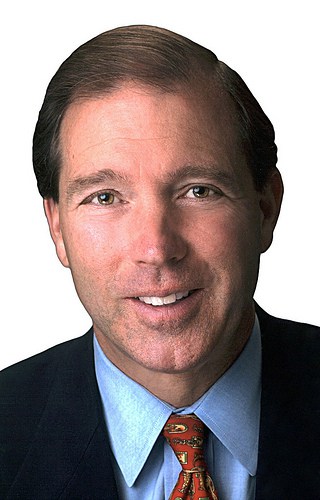
Sen. Tom Udall (D-N.M.) proposed legislation that would require a customer to consent to overlimit fees before extra charges accrue for voice, data, and text usage.

The Cell Phone Bill Shock Act of 2011 would also require carriers to send free text messages when a customer reaches 80 percent of their plan’s allowance.

“Sending an automatic text or email notification to a person’s phone is a simple, cost-effective solution that should not place a burden on cell phone companies and will go a long way toward reducing the pain of bill shock by customers,” said Udall, a member of the Senate Commerce Committee. “As more and more cell phone companies drop their unlimited data plans, this problem only stands to get worse. I am proud to stand up for cell phone consumers and reintroduce this important legislation.”

In Australia and North America, legislation to warn consumers of impending overlimit fees has been vociferously fought by the telecommunications industry.

Udall

The CTIA-Wireless Association in Washington said such measures were completely unnecessary because consumers can already check their usage by logging into providers’ websites.  Even worse, they claim, bills like Udall’s threaten to destroy innovation and harm the industry by locking a single warning standard into place.  CTIA claims that wouldn’t help consumers.

But Australian regulators, who have years of experience dealing with unregulated carriers’ usage limit schemes say otherwise, noting industry efforts to self-regulate have been spectacular successes for the industry’s bottom line, just as much as they are a failure for consumers who end up footing the bill.

Even worse, unregulated providers taking liberties with marketing claims can have profound social implications when customers find they can’t pay the enormous charges that often result.

The Brotherhood of St. Laurence, a charity, reported one instance of an elderly client who received a $1,200 broadband bill he couldn’t pay outright.  Even as he negotiated a monthly payment plan with the provider, the company shut off his home phone line without warning.

“His telephone service was particularly important because he used a personal alarm call system, which entailed wearing a small electronic device that he could activate in the event of a medical emergency,” noted a report on the incident.

The Australian Competition and Consumer Commission found a long-standing competitive feud by two large mobile providers in Australia — Telecom and Optus — has only brought more instances of marketing excesses that ultimately don’t benefit consumers.  The Commission increasingly finds it lacks the resources to keep up with the slew of questionable advertising.

Some industry critics suspect providers treat ACCC’s fines as simply a cost of doing business, and some like Optus have been rebuked more than once by the regulator for false advertising.

The ACMA says the longer government waits to protect citizens from provider abuses, the more consumers will be financially harmed, especially as data usage grows while usage caps traditionally do not.

Search This Site:

Contributions:

Recent Comments:

Your Account:

Stop the Cap!