

 Subscribe
 Cable One will rebrand itself Sparklight starting in the summer of 2019, reflecting a refocus on selling broadband service.
“We are very excited for this evolution to our new brand and the next chapter in our story,” Cable One CEO Julie Laulis said in a statement. “Over the past several years we have evolved and our new brand will better convey who we are and what we stand for – a company committed to providing our communities with connectivity that enriches their world.”
The corporate name will remain Cable One, but like Charter’s Spectrum or Comcast’s XFINITY, customers will primarily know the company under its new brand.
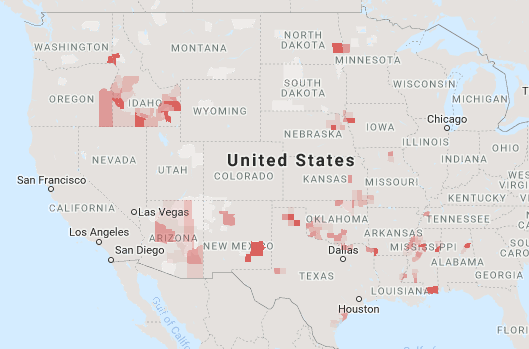
Cable One provides service in these areas.
Cable One has just over 800,000 customers in 21 states nationwide, primarily in the South. The company’s decision to hold the line on the wholesale cost of its cable television package resulted in the company dropping Viacom-owned cable networks, which caused a significant number of customers to cancel service. Today, nearly 60% of its customers are broadband-only.
The cable company has also been criticized for dramatically raising the price of its internet service and for its regime of data caps, which limits most of its customers to 300 GB of usage a month. Customers who exceed their usage allowance three times during a calendar year “may be required to upgrade to an appropriate plan for data usage.”
Cable One currently offers four broadband options:
- Starter Plan (100/3 Mbps) $55/mo with up to 300 GB of usage
- Family Plan (150/5 Mbps) $80/mo with up to 600 GB of usage
- Streamer and Gamer Plan (200/10 Mbps) $105/mo with up to 900 GB of usage
- GigaONE (1000/50 Mbps) $175/mo with up to 1,500 GB of usage
Under the rebrand, the company will “streamline” its residential broadband options and pricing, which will likely push customers towards a more expensive, higher-speed tier. Sparklight will also offer unlimited data on any of its revamped tiers for an additional monthly fee. Both measures are likely to boost revenue, and customer bills.
“As consumer data consumption continues to increase, multi-device households become the norm, and businesses expect a broad suite of services, Sparklight will continue to evolve with our customers by offering innovative options to fit their needs, while providing helpful, proactive and personal local service,” Laulis said.
 In the era of cord-cutting, getting a new, independently owned cable network on cable lineups can be an exercise in futility.
 Katz Networks, a division of E.W. Scripps Co., has acquired the rights to the Court TV name and other intellectual property from its old owner, Time Warner (Entertainment). That includes over 100,000 hours of pre-recorded programming and trial coverage in the Court TV archives. The new venture has hired Vinnie Politan, a former Court TV presenter, as its lead anchor. The new Court TV has also hired back some of its old employees who either left the network or transitioned to its replacement – Tru TV.

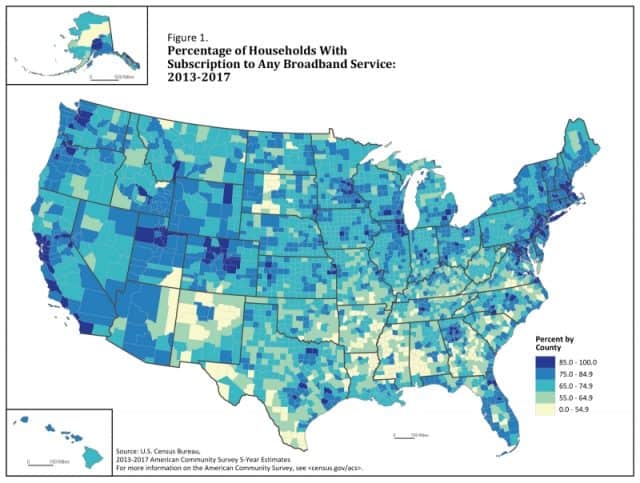 There are stark contrasts in internet subscription rates depending on where you live and how much money you make, according to newly released
  In Philadelphia, there were some neighborhoods with just 25% of residents getting internet service. In the Tioga-Nicetown neighborhood, only 37.1% of households had internet service. Persistent poverty, crime, unemployment, and low-income in poorer parts of the inner city have conspired to make it very difficult for residents to afford internet access at prices often over $50 a month.
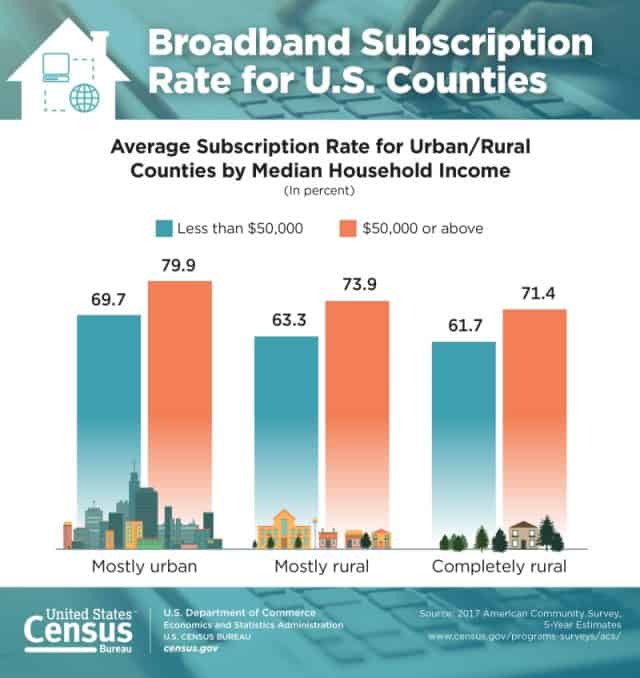 Some of the worst scoring counties where internet subscription rates were lower than average are located in rural areas across the upper Plains, the Southwest and South. The desert states of Arizona and New Mexico, south Texas, the lower Mississippi through Southern Alabama and some areas of the Piedmont of Georgia, the Carolinas and Southern Virginia were notable for containing many counties with low broadband internet subscription rates, although there were exceptions throughout.
 Despite a strong economy, Verizon Communications will shed 10,400 employees and cut $10 billion in costs as part of a transformation initiative promoted by the company’s newest top executive.