Home » Providers » Recent Articles:

Industry Front Group Upset Australia’s Fiber to the Home Network Will Force ISPs to Compete

Phillip "It's Haunting Time for AT&T, Verizon and their good friends at Digital Society" Dampier

Imagine if you lived in a country where broadband competition actually delivered real innovation and savings, overseen by a consumer protection agency that made sure providers in a barely competitive marketplace actually delivered on their “highly competitive” rhetoric.

Australia’s National Broadband Network (NBN) will deliver exactly that, with a check and balance system that makes sure advertiser claims meet reality and that “robust competition” means… robust competition.

One industry-backed front group, Digital Society, doesn’t think that idea is fair to big telecom companies (like those funding its operations), and wants none of that here in the States.

Nick Brown doesn’t object too much to Australia’s plan to deliver fiber-to-the-home connections offering 100/50Mbps service to 93 percent of residents.  He just doesn’t want the Australian government overseeing how private providers use (and how much they can charge to access) the publicly-owned network:

Internet Service Providers in Australia will be forced to compete with each other via the “Competition and Consumer Commission”.  The problem with this is that a supposedly ubiquitous commission deciding what is and what isn’t competition and fair pricing stands a fair chance of not actually playing out in any other fashion than simply being a price fixing commission.

[…]Because the NBN will only act as a wholesaler and treat all ISP retailers equally, ISP’s no longer have the ability to develop their own unique contracts that would reduce costs to consumers.  All backhaul would be priced to all ISP’s at the same rate.  So realistically no company has a significant advantage over the other.  That does potentially create a good deal of choice, but that does not necessarily ensure competition.  This would be akin to going to the grocery store and on the shelf were 5 different brands of soft drink, but every single brand tasted exactly like Coca-Cola.  You would have a lot of choice in that situation, but there would be no real competition between those 5 brands, because taste is the competitive factor.  For the Australian, this means that ISP’s will likely be forced to start bundling services to gain advantages over one another.  Something that is not always considered attractive here stateside.

NBNCo is responsible for the deployment and installation of Australia's fiber to the home network.

Brown’s bitter-tasting public-broadband philosophy is based on the inaccurate notion that incumbent private providers are just itching to deliver state-of-the-art broadband service across Australia.  If the darn federal government didn’t get in the way and steal their thunder with a nationwide fiber network, Aussies would be enjoying world class Internet access over copper phone wires and usage-limited wireless 3G networks right now.  Even worse, the Australian government that will finance the entire operation also has the temerity to set ground rules for private companies reselling access to consumers and businesses!  How dare they oversee a network bought and paid for by Australian taxpayers (he objects to the funding as well.)

Brown must also still be living in Australia if he missed the parade of American providers repricing services to push people into “triple-play bundles” whether they want them or not.  And we don’t even get the fiber to go with it.  For most Australians, they no longer care whether it’s Diet Coke, Pepsi One, Cherry Coke, or even RC Cola for that matter — as long as it arrives on a fiber network built by and for their interests (instead of Telstra’s), it’s far better than what they have now.

In reality, broadband issues hold a front-and-center position in Australian politics, and the Labor Government which supports an aggressive national broadband plan that puts America’s proposed broadband improvements to shame was -the- issue that keeps that government in power today.  Why?  Because Australia is well behind others in providing broadband access at reasonable speeds and prices.  Australian private providers maintain a nice little arrangement delivering sub-standard, near-monopoly service at some of the highest prices around, all usage-limited and speed throttled. Despite years of negotiations with big players like Telstra, the privatized phone company, broadband improvement has moved at a glacial pace (too often by their design).

The development of the National Broadband Network for Australia was driven by private provider intransigence.  Even Brown recognizes the logistics of the proposed fiber network is “very smart and very common sense” for a country like Australia, which he considers a close cousin geographically to the United States.  Brown also admits the use of fiber straight to the home “‘future proofs’ Australian networks and would allow for easier improvement in the future.”

[flv width=”640″ height=”380″]http://www.phillipdampier.com/video/ABC Radio Battle of the broadband 8-11-2010.mp4[/flv]

ABC Radio National offered a comprehensive review of the competing plans from Australia’s political parties to address broadband issues as the country drops to 50th place worldwide in broadband excellence.  (9 minutes)

While Australia ponders a fiber future, today’s broadband picture across the country is less idyllic.

The minority of Australians receiving service over cable broadband, available mostly in the largest cities, continue to face usage-limited service and higher prices than American providers.

Most Australians get their service from DSL connections offered by Telstra and third party companies leasing access to Telstra facilities.  Telstra’s network is based almost entirely on aging copper wire that cannot deliver broadband to most rural populations.  Telstra’s long term broadband plan for Australia depends on milking every last cent out of those copper wires while raking in even bigger profits from usage limited and expensive wireless data plans.  Just last month, Telstra was fined $18.5 AUS million dollars for monopolistic behavior by impeding competitive access to its telephone network.  No wonder the country had enough.

Brown labeled the Australian government’s buyout of Telstra’s copper wire network a “negative,” as if they were stuck with a pig in a poke.  That suggests Brown does not understand the actual plan, which relies on reusing existing infrastructure like poles and underground conduit to install fiber at an enormous savings — both in billions of dollars in reduced costs and deployment time.  The alternative would require the government to obtain agreements with Telstra-owned facilities to share access or construct their own facilities from the ground up.  Telstra has no incentive to spend money to upgrade their networks, much less decommission them.  Logistically, the plan cuts through enormous red tape and guarantees Australians no one will be stuck waiting decades for the eventual retirement of copper phone wiring.

Call it Fiber Optic Broadband for Copper Wire Clunkers — the government has not nationalized the phone network — it wants to buy it a fair price, from a willing seller who will be able to use the new network to deliver some of its own services.

The horror show for groups like Digital Society is the thought private companies will actually be forced to deliver the competition and real savings they routinely proclaim in press releases, but never actually deliver to consumers.  The Australian people will own the fiber playground private companies will play on, so why shouldn’t they have the benefit of oversight to make sure the game is played fairly?

Australia’s Competition & Consumer Commission is equivalent to the Consumer Product Safety Commission, the Federal Trade Commission, and a state Attorney General all rolled into one.  The ACCC is an independent statutory authority that works for consumers.  It promotes and enforces real competition and fair trade.

The ACCC’s involvement in broadband regulation includes: stopping false advertising, helping intervene and resolve disputes over access and billing issues, and being an impartial observer about broadband uptake and measuring how competition actually delivers better service and savings for consumers.

What Brown dismisses as “a price fixing commission” is in reality a consumer protection agency with enforcement teeth.  The ACCC has a solid track record.  For instance, the broadband industry in 2009 itself admitted the ACCC stopped a “race to the bottom” in wild advertising claims:

In August last year, we sat down with the CEOs of the major telecommunication providers, Telstra, Optus and Vodafone Hutchison Australia. They acknowledged that there was a problem, exacerbated by a “race to the bottom” by industry participants in their advertising practices. The CEOs showed a ready willingness to resolve the issue on an industry-wide basis.

After analysing complaints, the ACCC identified the 12 most prevalent types of potential misleading conduct made in telecommunications. Some of these included:

  • use of terms such as “free”, “unlimited”, “no exceptions”, “no exclusions” or “no catches” when this is not the case;
  • headline price offers in the form of “price per minute” for calls made using mobile phones and phone cards when there are other fees/charges which are not clearly disclosed; or
  • headline claims relating to price, data allowances, total time allowances, speeds and network coverage, where the claims cannot generally be achieved by consumers.

The three industry leaders have provided a court enforceable undertaking to review and improve advertising practices so that consumers are better informed about the telecommunications products they purchase. They have undertaken that their advertising will not make these claims in circumstances where they are likely to be misleading to consumers.

Further the majors have also agreed that they will take reasonable steps to ensure that this commitment will extend to any other players with whom they have commercial agreements which allow them to control the advertising and promotion of goods or services.

Australians are starting to receive consent forms for free installation of fiber broadband in their homes.

I can see why Digital Society, a group partly funded by telecommunications companies, would object to the ACCC stopping Big Telecom’s ill-gotten Money Party-gains.

ACCC also put a stop to promotions that tricked consumers into signing up for mobile data plans that included “free” netbooks, high value gas gift cards, or cash rebates.  The Commission discovered these “promo plans” weren’t giving away anything at all — they simply added the retail cost of the “free” item to the plans’ charges.

The ACCC received a court enforceable undertaking from Dodo Australia Proprietary Limited for the advertising of some of their mobile plans. Dodo had advertised that consumers would receive either an Asus Eee PC, a fuel card or a cash payment when they signed up to a ‘free offer’ plan.

However, cheaper mobile cap plans that did not include the ‘free’ offers were comparable in value and services. After raising these concerns with Dodo, they promptly ceased publishing the ‘free offer’ advertisement and undertook to ensure the affected customers would receive the goods for free, either by way of cash refund or by reducing the monthly charges for the ‘free offer’ plans.

That mean and nasty ACCC, ruining all of the fun for providers delivering tricks and traps for their customers.  Caveat emptor, right?

But the most ludicrous claim of all comes towards the end of Brown’s piece, when he claims the National Broadband Network will leave Australians with even higher priced, usage-capped access:

Australia traditionally has had low bandwidth caps.  Even just five years ago while most Americans were enjoying unlimited bandwidth with their broadband connections, I was living in Melbourne, Australia and was limited to a 1GB cap per month via my Telstra connection.  The likelihood of seeing 100Mb uncapped connections is highly suspect.  Australians may enjoy these speeds, but they will likely be extremely expensive with low bandwidth caps or limited to high priced premium tiers.

Brown can’t blame the private company that delivered his abysmal Internet service without his “free market knows best” philosophy falling apart.  It wasn’t the Australian government that provided him a 1GB monthly usage allowance — it was Telstra, and five years later the company is still usage-limiting Australian broadband consumers.  The National Broadband Network was designed to tackle that problem once and for all.  Brown apparently doesn’t realize the last argument private providers have used to justify usage caps — insufficient overseas capacity — is being addressed by new super-high-capacity undersea fiber cables stretching across the Pacific.  The issue of “usage cap” abatement is among the top bullet points for constructing the NBN.

Brown would be right when he suggests that Australians may enjoy faster speeds, but with low usage caps and high prices — if Telstra was the only company providing the service.  The new network will provide speeds faster than most Americans enjoy, with enormously expanded capacity.  Providers like Telstra have an incentive not to deliver the unlimited service that fiber network can deliver, as it will reduce their profits.  But since any company can access the network and compete, Telstra’s loss in market power will also erode their pricing power.  When a consumer protection mechanism is added, Telstra won’t just be answering to their shareholders’ demands for greater value.  They’ll also answer to the ACCC and the consumers who will pay for and maintain the network.

That may not add up to mega-profits for Big Telecom, but it certainly makes a whole lot of sense to consumers and small businesses who will finally be able to get 21st century broadband at a reasonable price.

Even worse for Digital Society’s friends — AT&T and Verizon — who fund the group through its connection with Arts+Labs, it might provide a blueprint for how America’s broadband future should be built.

[flv]http://www.phillipdampier.com/video/ABC TV National Broadand Network 8-15-10.flv[/flv]

ABC-TV (Australia) debated the merits of competing broadband plans from the incumbent Labor government, which supports a National Broadband Network delivering fiber to the home, versus a cheaper plan from the coalition opposition which promoted a private industry-favored initiative delivering improved broadband only to rural areas.  The Labor government initiative won the day when two rural independent members of Parliament, Rob Oakeshott and Tony Windsor announced they’d support Prime Minister Julia Gillard, giving her the 76 votes required to form a minority Labor government.  Windsor is an enthusiastic supporter of the NBN, telling Sky News “’you do it once, you do it right, you do it with fiber.”  Oakeshott said Labor’s plan to deliver real broadband for the 21st century was a major reason he backed the Labor government.  For the first time ever, fiber optic broadband was the key factor in determining who would govern a country.  (5 minutes)
Former Alltel-Verizon Wireless Customers: AT&T Is Coming By Year’s End – Free Phones, Wireless Modems

Phillip Dampier September 5, 2010 AT&T, Competition, Consumer News, Video, Wireless Broadband Comments Off on Former Alltel-Verizon Wireless Customers: AT&T Is Coming By Year’s End – Free Phones, Wireless Modems

When Alltel announced the sale of its wireless business to Verizon in 2008, few Alltel customers could have foreseen they’d technically end up changing cell phone providers not once, but twice.  That’s because the federal government ordered Verizon to sell off Alltel’s assets in communities where Verizon already had a substantial market share.  For the sake of competition, the majority of Alltel customers in 18 states affected by the federal government divestiture order will become AT&T customers shortly.

That poses a problem because Alltel’s network and phones use CDMA network technology.  AT&T uses a different standard called GSM.  The two standards are not compatible.  Since AT&T has no intention of operating a CDMA network for Alltel customers, once AT&T converts Alltel’s cell sites to operate on its own network, every Alltel customer will be left with phones and equipment that will no longer work.

To make the deal work, AT&T has agreed to provide, at no charge, comparable brand new phones and other equipment to Alltel customers being moved to AT&T’s network.  No new contract is required, and customers will not be forced to extend one to receive the new AT&T equipment.

But that deal doesn’t extend to handing out free iPhones to Alltel customers.  If you want one of those, you will have to pony up the same money every other AT&T customer pays, and sign a new two-year contract.

This week, AT&T announced it was speeding up the transition, and many customers will be choosing new free phones around the end of this year or in early 2011.  Originally, AT&T expected it would take until mid-2011 to complete network conversions.  Complete details can be found on the AT&T-Alltel Transition Website.

For residents in the north-central United States, the iPhone craze has been something other Americans have experienced.  For much of the Dakotas and Montana, the transition will bring the first opportunity to get the popular smartphone at the subsidized price AT&T offers all of its customers on contract.

The implications of AT&T’s imminent arrival in the area doesn’t seem to bother the other dominant provider – Verizon Wireless.  In South Dakota, AT&T’s entry into the market may cause some to switch to AT&T, if only for the iPhone.  But Karen Smith, spokeswoman for Verizon Wireless in the Great Plains region, says Verizon is confident with the lineup of phones it already offers and remains the nation’s largest wireless carrier even without the iPhone.

Current Verizon customers like Jill Garrigan of Rapid City told the Rapid City Journal she’d consider switching to AT&T to grab the iPhone, but she’d much prefer buying one from Verizon Wireless.

“If Verizon carried the iPhone, I’d probably consider getting it from Verizon,” Garrigan said.

Many other South Dakotans share concerns about the higher monthly wireless bills the iPhone brings, and they’re not interested in paying a lot more just to own one.

Garrigan’s friend, Jessica Simon, said she’ll keep her current Samsung phone, thank you very much.  The reason?  “It’s all the additional money and all the surcharges,” she told the newspaper.

But local cell phone dealers believe the arrival of Apple’s iPhone will cause a sensation across the region, and they’ve already fielded calls from customers anxious to acquire one.

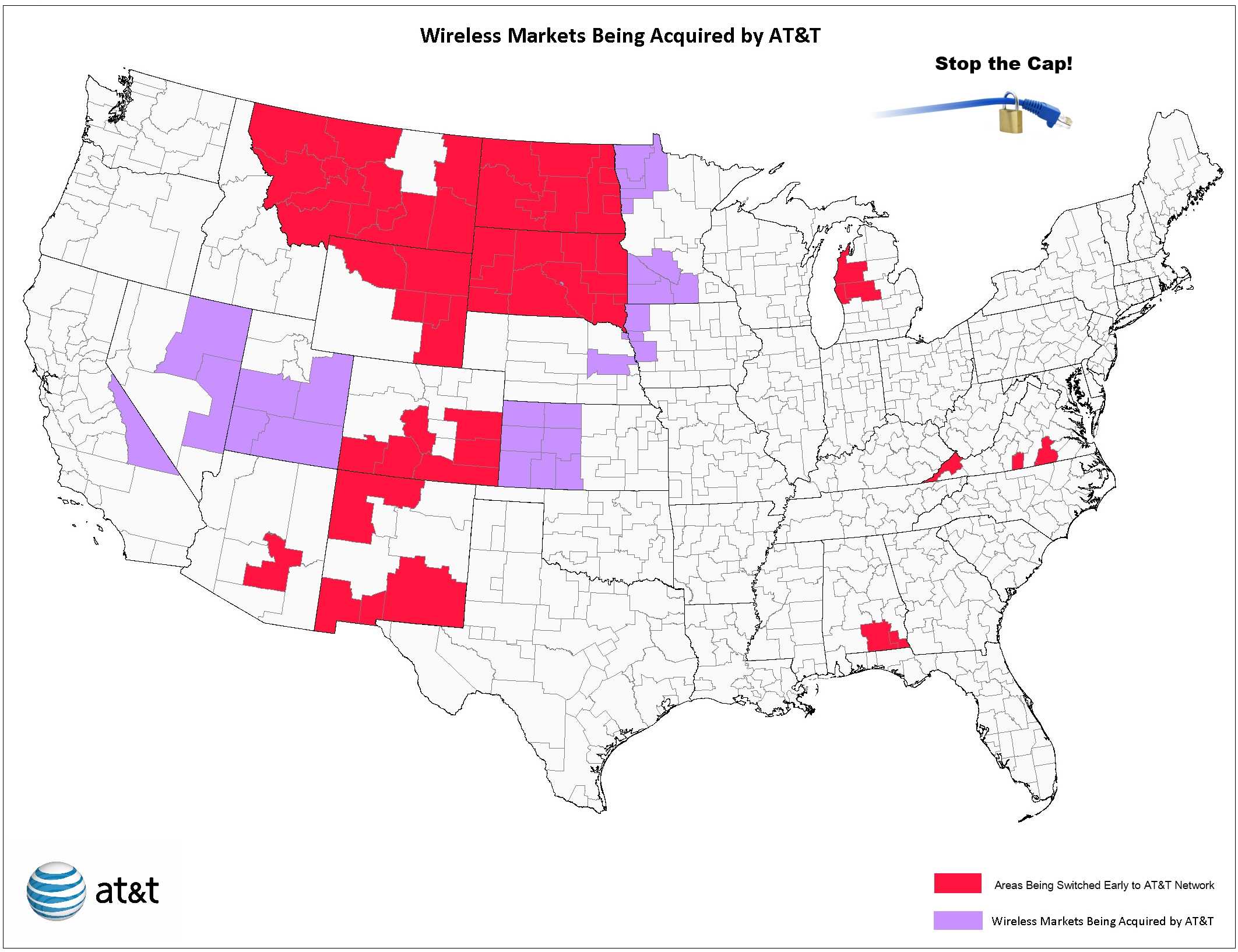
Stop the Cap! has created a map showing the areas due for early conversion for your convenience.

Areas shaded in red are scheduled for early conversion to AT&T's GSM Network (click to enlarge)

[flv width=”640″ height=”500″]http://www.phillipdampier.com/video/Alltel ATT Transition Ahead of Schedule 9-4-10.flv[/flv]

Stop the Cap! has compiled news reports from across the region regarding the AT&T-Alltel transition and its impact on states including the Dakotas, Montana and Wyoming.  Clips courtesy of WDAY-TV Fargo, N.D., KGWN-TV Cheyenne, Wyo., KECI-TV Missoula, Mont., and KFYR-TV Bismarck, N.D. (4 minutes)

Upgrade Specifics

The following counties are on AT&T’s early upgrade list (RSA=Rural Service Area):

Alabama: Greater Dothan area and RSA 7 including Butler, Coffee, Covington, Crenshaw, Geneva and Pike Counties.

Arizona: RSA 5 including Gila and Pinal Counties.

Colorado:  RSA 4 includes Chaffee, Custer, Fremont, Lake and Park Counties. RSA 5 includes Cheyenne, Elbert, Kit Carson and Lincoln Counties. RSA 6 includes Dolores, Hinsdale, La Plata, Montezuma, Ouray, San Juan and San Miguel Counties. RSA 7 includes Alamosa, Archuleta, Conejos, Mineral, Rio Grande and Saguache Counties. RSA 8 includes Bent, Crowley, Kiowa, Otero and Prowers Counties. RSA 9 includes Baca, Costilla, Huerfano and Las Animas Counties.

Michigan: Greater Muskegon area and RSA 5 includes Benzie, Lake, Leelanau, Manistee, Mason, Missaukee, Osceola and Wexford Counties. RSA 7 includes Gratiot, Isabella, Mecosta, Montcalm and Newaygo Counties.

Montana: Greater Billings and Great Falls areas and RSA 1 includes Flathead, Glacier, Lake, Lincoln, Pondera, Sanders and Teton Counties. RSA 2 includes Blaine, Chouteau, Hill, Liberty and Toole Counties. RSA 4 includes Daniels, Dawson, McCone, Richland, Roosevelt, Sheridan and Wibaux Counties. RSA 5 includes Granite, Lewis and Clark, Mineral, Missoula, Powell and Ravalli Counties. RSA 6 includes Broadwater, Deer Lodge, Jefferson, Judith Basin, Meagher, Silver Bow and Wheatland Counties. RSA 7 includes Fergus, Golden Valley, Musselshell, Petroleum, Stillwater and Sweet Grass Counties. RSA 8 includes Beaverhead, Gallatin, Madison and Park Counties. RSA 9 includes Big Horn, Carbon, Rosebud and Treasure Counties. RSA 10 includes Carter, Custer, Fallon, Powder River and Prairie Counties.

New Mexico: Greater Las Cruces area and RSA 1 includes Cibola, McKinley, Rio Arriba, San Juan and Taos Counties. RSA 5 includes Grant, Hidalgo and Luna Counties. RSA 6 includes Chaves, Eddy, Lee, Lincoln and Otero Counties.

North Dakota: Greater Fargo, Grand Forks, and Bismarck areas and RSA 1 includes Burke, Divide, McLean, Mountrail, Renville, Ward and Williams Counties. RSA 2 includes Benson, Bottineau, Cavalier, McHenry, Pierce, Ramsey, Rolette and Towner Counties. RSA 3 includes Barnes, Dickey, Griggs, LaMoure, Nelson, Pembina, Ransom, Richland, Sargent, Steele, Traill and Walsh Counties. RSA 4 includes Adams, Billings, Bowman, Dunn, Golden Valley, Grant, Hettinger, McKenzie, Mercer, Oliver, Sioux, Slope and Stark Counties. RSA 5 includes Eddy, Emmons, Foster, Kidder, Logan, McIntosh, Sheridan, Stutsman and Wells Counties.

South Dakota: Greater Sioux Falls and Rapid City areas and RSA 1 includes Butte, Harding, Lawrence and Perkins Counties. RSA 2 includes Campbell, Corson, Dewey, Potter, Walworth and Ziebach Counties. RSA 3 includes Brown, Edmunds, Faulk, McPherson and Spink Counties. RSA 4 includes Clark, Codington, Day, Deuel, Grant, Hamlin, Marshall and Roberts Counties. RSA 5 includes Custer, Fall River and Shannon Counties. RSA 6 includes Bennett, Gregory, Haakon, Jackson, Jones, Lyman, Mellette, Stanley, Todd and Tripp Counties. RSA 7 includes Aurora, Brule, Buffalo, Charles Mix, Davison, Douglas, Hand, Hughes, Hyde, Jerauld and Sully Counties. RSA 8 includes Beadle, Brookings, Kingsbury, Lake, Miner, Moody and Sanborn Counties.RSA 9 includes Bon Homme, Clay, Hanson, Hutchinson, Lincoln, McCook, Turner, Union and Yankton Counties.

Virginia: Greater Danville, Norton and South Hill areas and RSA 1 includes Buchanan, Dickenson, Lee, Russell, and Wise Counties and Norton City. RSA 8 includes Amelia, Brunswick, Lunenburg, Mecklenburg and Nottoway Counties.

Wyoming: Greater Casper area and RSA 1 includes Big Horn, Hot Springs, Park and Washakie Counties. RSA 2 includes Campbell, Crook, Johnson, Sheridan and Weston Counties. RSA 4 includes Albany, Goshen, Laramie, Niobrara and Platte Counties. RSA 5 includes Converse County.

AT&T Creates Nightmare for Tulsa Business After Their Broadband Was Shut Off By Mistake

Phillip Dampier September 4, 2010 AT&T, Consumer News, Video 1 Comment

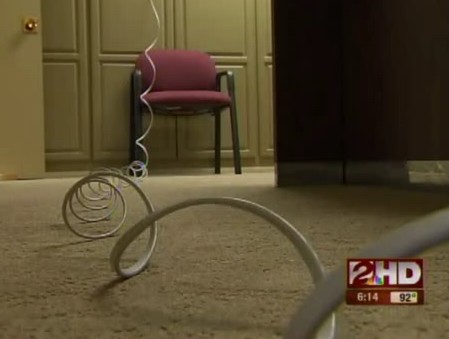
When Midwest Publishing couldn't get their AT&T Internet service restored, a business neighbor allowed the company to run a cable next door and borrow theirs.

AT&T likes to think of broadband as a tool towards economic recovery, but too often service problems end up hurting small businesses.

Ask Pat Boll, business manager of Midwest Publishing.  When his company’s AT&T business broadband connection suddenly stopped working last week, much of the business activity at the company stopped with it.  Midwest Publishing, like many small businesses, depends on the Internet to conduct business, take orders, and assist customers.

Boll spent three days trying to get answers from AT&T customer service, but only managed to learn the reason why the company’s Internet service stopped working: AT&T claimed a disconnect order entered into their systems in May was processed… in late August.  That was news to Boll, because they never asked for their service to be shut off.

What was worse is that the mysterious disconnect order remained in AT&T’s computer systems preventing the telecommunications company from re-establishing the service, costing Midwest Publishing thousands in lost business and wasted time.

Like so many stories we’ve covered on Stop the Cap!, Boll turned to local media for help.  He contacted Tulsa TV station KJRH-TV.  Their “2 Works for You Problem Solvers” got in touch with AT&T and managed to do what Boll couldn’t accomplish himself — get AT&T to turn Internet service back on.

Small businesses who depend on the Internet should never have only one provider.  Having a backup service provider can make all the difference in an extended outage.  Many small businesses maintain basic DSL service or even wireless broadband as a backup in case their primary connection stops working.  The expense is well worth it if your business depends on the Internet to stay in business.

[flv width=”480″ height=”380″]http://www.phillipdampier.com/video/KJRH Tulsa Internet glitch costs small business thousands 9-2-10.flv[/flv]

KJRH-TV in Tulsa shares Pat Boll’s story with Tulsa viewers.  AT&T provides DSL service through much of Oklahoma.  (2 minutes)

Revisiting Virgin Mobile Wireless Broadband: Supper Time Blues

Last week, Stop the Cap! took a look at Virgin Mobile’s new unlimited $40 prepaid wireless broadband service.  Early testing looked promising, with speed test results that were well within economy tier DSL service and better than expected.  But by early this week the story began to change.

We’ve continued testing the service here and have noticed that while Virgin Mobile’s service turned in respectable performance during the business day (East Coast time), once people started heading home, it’s a completely different story.  For the last five days the service has deteriorated to the point of unusability by dinnertime.

It had gotten so bad, we went back to using Cricket’s wireless broadband.

So what’s happening?

First, it’s important to distinguish that these problems are impacting only Virgin Mobile.  Sprint’s postpaid customers can use the same cell tower and backbone network and not experience any performance issues.  Virgin Mobile’s home location on Sprint’s data network is in San Francisco, and until September 2nd, all traffic headed for the Bay Area to what is basically a virtual LAN on Sprint’s network.  The IP address we were assigned was actually an internal address for that virtual LAN.

Our problems started appearing Monday afternoon when we noticed web pages refused to load completely.  Since many web pages are composed of content from a variety of different web hosts (Google Analytics, advertising, embedded content, etc.), if parts of the page refuse to load, the page itself may not appear at all.  Advertising blocks were the worst problem, often leaving one staring at a blank web page waiting for the ad content to render.

By Wednesday, this problem simply made using Virgin Mobile for broadband untenable.  Few pages — even Google’s home page, refused to load reliably.  When pages did appear, they took longer than dial-up in many cases.  We tried to perform some diagnostics but found trace-routing impossible after the third hop and speed tests could not be loaded, much less run reliably.

The fact the worst problems occurred in the late afternoon and evening hours point to a network completely overloaded with customers.

And indeed, Virgin Mobile admitted as much when it replied to some tweets indicating it had quadrupled capacity by the end of this week.  Some users also reported they no longer connected exclusively through the San Francisco (Walnut Creek) location.

As of Thursday, anecdotal reports indicated some service improvements, but the service is still prone to slowdowns during peak usage times.

A few things are evident now that a week has passed:

  1. Virgin Mobile Wireless Broadband does not share the better performing Sprint postpaid data network those customers receive.  Virgin Mobile customer traffic shares a much smaller “pool of bandwidth” because of the limitations imposed by its routing.
  2. The company needs to either abandon its current routing scheme or dramatically modify it to accommodate the traffic.
  3. Refunds for disgruntled customers are often available for the hardware, but don’t expect to get a refund for data usage.
  4. The service problems come regardless of the device used or the number of signal bars you receive.
  5. New routing cities have popped up since Thursday to supplement San Francisco — Charlotte, N.C., New York, Atlanta, Boston, Southfield (Mich.), Los Angeles, Philadelphia, and a few others.  Feel free to share yours in the comments section.

On Friday, Virgin Mobile suffered a major outage caused by a power failure that has stopped or seriously delayed delivery of text messages.  The outage is also affecting some data connections and customer service availability.  Angry customers have been pelting the company’s Facebook page with hostile remarks since the outage began.

If you signed up for Virgin Mobile wireless broadband, please share your experiences in our comments section!

Cherry Blossom & Grave Desecration Groups Announce Their Undying Love for Comcast-NBC Merger

Phillip Dampier September 4, 2010 Comcast/Xfinity, Editorial & Site News, Public Policy & Gov't Comments Off on Cherry Blossom & Grave Desecration Groups Announce Their Undying Love for Comcast-NBC Merger

The dollar-a-holler crowd that takes “charitable” contributions from Comcast is enjoying an abundance of riches thanks to your cable bill payment and their corporate agenda to get the NBC-Comcast merger approved. Everyone is coming out to celebrate the deal — from the United Way in Denver to a Texas sheriff and a group opposing grave desecration.  Regular Stop the Cap! reader Bones sent word Comcast’s Money Party is just getting started.

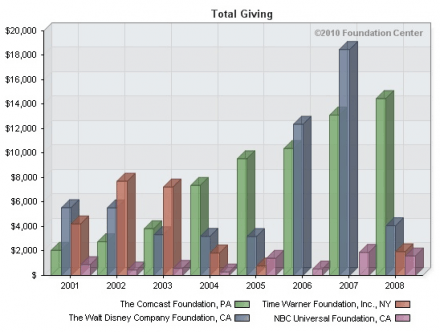
The Wrap notes Comcast has donated $1.8 billion in cash and in-kind largess to non-profit organizations since 2001, many of which will helpfully throw 44 cents back in the form of supportive letters to the Federal Communications Commission telling them to do whatever America’s largest cable company wants.

It’s all a part of the dirty little game some non-profits play with corporate benefactors to work against your consumer interests.  Even worse, many of these same groups will also ask -you- for a donation as well.  If Comcast keeps raising its rates, perhaps the best option in response to those playing on Comcast’s side is to tell them you already sent a donation… to Comcast.

This year’s circus of money has generated a torrent of correspondence to the FCC that is often nothing less than absurd.

The Wrap found one letter from the president of the Washington, D.C.-based Cherry Blossom Festival.  Did you know cherry blossoms were deeply committed to seeing Comcast and NBC get married?

“Over the past few years, Comcast has generously donated services and sponsorship to our events,” Diana Mayhew, president of the Washington, D.C.-based Cherry Blossom Festival, wrote to the Federal Communications Commission in July. “I believe as Comcast teams up with NBC, it will continue to be a great partner for the Cherry Blossom Festival.”

But it gets much sillier.

Stop the Cap! has compiled just a sampler of comments from several interest groups all in a hurry to get their letters into the public record.  Most were bad, but we also include an example of a letter from a group that didn’t simply applaud the deal.  Our comments are in italics:

National Puerto Rican Coalition: “In our view, […] this joint venture will lead to valuable benefits and unprecedented advances in media diversity for Hispanics and other people of color.”

Do you think the fact NPRC also received valuable funding from the Comcast Foundation might have had something to do with their cheerleading letter?

Cuban American National Council
Hispanic Federation
League of United Latin American Citizens
National Council of La Raza
National Hispanic Media Coalition
SER-Jobs For Progress National, Inc.
: “We strongly believe that the Memorandum of Understanding between Comcast and NBCU and the Hispanic Leadership organizations seeks to promote the goals of expanding economic opportunity for Hispanic families and preserving and enhancing programming for Hispanic audiences, and view these commitments as stepping stones to a more responsive and responsible corporate citizenry.”

These groups, many of which also receive direct funding from Comcast, went over the top cooking up a “Memorandum of Understanding” (or is it a shakedown agreement) to land positions on Comcast’s “Advisory Councils.”  These Latino groups managed to get their travel and other expenses paid for by Comcast to attend twice-yearly meetings to discuss diversity issues.  Their agreement also allows this coalition to empower itself, by getting Comcast to agree to call them when looking for “qualified” Latino law firms, suppliers and vendors, and even top management.  That provides these groups power and influence as interested candidates appeal to them to gain a spot on the “qualified” list.  But it goes even further — Comcast has to add several “qualified” (identified with the help of these groups) Latino-owned cable channels to the lineup whether subscribers want them or not.

This agreement was marked “confidential,” but you can read a copy right here.  By the way, it’s no surprise the League of United Latin American Citizens is on this list.  They’ll peddle themselves out to any Big Telecom company that comes with a check in hand, especially AT&T.

Gay & Lesbian Alliance Against Defamation (“GLAAD”): “Given the weight and significance of the Comcast/NBCU merger, GLAAD urges the FCC to ensure that the community of lesbian, gay, bisexual and transgender Americans are not forgotten in its calculus of diversity, and that the stories and visibility of LGBT people and their families are held up as part of the valued diversity in its discussions, analysis and recommendations in this merger.

GLAAD’s filing was an example of a respectable comment letter filed by a minority interest group.  They didn’t take a strong position for or against the merger.  Instead, they shined a light on the issues that concern the LGBT community and said the FCC should take a closer look.  That’s fair and appropriate.

Hmong New Life Radio Broadcasting
Hmong Women’s Heritage Association
Hmong Report At 7
Lao Family Community of Fresno
Sacramento Asian-American Minority, Inc.
National Hmong Grave Desecration Committee: “We believe Comcast’s sensitivity to our need for such programming speaks extremely well of them as a company. It is a clear indication that they will continue to exhibit their sense of the responsibility to underserved communities such as ours subsequent to a merger with NBC-Universal.”

These six groups must be new to the influence game because they each sent nearly identical (often word for word) letters to the FCC in support of the merger.  On the ludicrous scale, nothing beats the National Hmong Grave Desecration Committee finding itself compelled to write a formal letter to the FCC on a multi-billion dollar cable-broadcast merger.

Here's something to remember us by....

Mile High United Way: “Comcast has provided sizeable foundation grants for DRH projects and other meaningful financial donations to other United Way programs. In addition to philanthropy and volunteerism, the company has also provided us with top notch communications support. The company has helped us create video presentations for our key fundraising efforts; it has placed public service announcements on its cable stations in an attempt generate attention and attendance for our events; it has also provided time on its Comcast Newsmakers public service broadcast to publicize our events, our programs and our people.”

That’s all wonderful, but none of it justifies or even argues for a merger between a cable and television network.  This is nothing more than dollar-a-holler advocacy at work — United Way gets goodies from Comcast and now they are returning the favor.  What United Way won’t get from our family is another nickle.  After all, our contributions to United Way pay for this group’s time and effort peddling Comcast’s corporate agenda to the FCC.  And I thought the United Way was supposed to be a charitable organization, not a lobbyist advocating for Comcast.

Sheriff Adrian Garcia – Harris County (Tex.): “Comcast is not just a business operating in Harris County, it is a partner in our effort to be a better and safer community. I hope the FCC will keep all that Comcast does in mind and permit the NBC Universal partnership to move forward.”

Voters in Harris County might want to keep this letter in mind come election time.  This shockingly inappropriate involvement by a law enforcement agency willing to stick its nose in a corporate merger is inexcusable.  Perhaps Harris County needs a sheriff that will spend time fighting crime, not typing up letters to benefit the cable company.  Oh, and by the way Sheriff — Comcast really is just a business.

The National Zoo: “In sum, Comcast has proven to be a reliable partner that cares about our work here at the Zoo in promoting innovative science, educating children, and ultimately establishing a beautiful urban park offering families excitement as well as a welcome place to enjoy nature. We deeply care about our engagement with our local friends and families here in Washington, D.C. and appreciate the fact that Comcast shares our commitment to serving the local community.”

That’s grand, but has nothing to do with a corporate merger proposal.  Comcast’s subscribers are the ones who ultimately care about the Zoo.  It’s their money that paves the way for all those good works.

Center for the Homeless: “I hope you will consider this testimony in favor of Comcast and its strong sense of involvement in American communities and service to those who need it most. Comcast is a true partner in the important work that we do.”

Another group whose mission should be helping the homeless is devoting time and resources to sending love notes to the FCC on behalf of a giant cable company.  By the way, none of the clients your group serves can afford Comcast’s prices.

Partnership for a Drug Free New Jersey: “I look forward to our continued partnership with Comcast and am excited to welcome NBC onto their team. We will continue to reach teens all over New Jersey to help ensure that they remain drug-free and continue to bring the message of hope to so many of our state’s residents.”

The excitement is even greater when you recognize Comcast and the national umbrella group Partnership for a Drug Free America can’t thank each other enough.  The non-profit explained it all in a newsletter: “At the Partnership’s third annual Making A Difference gala held this winter in the Grand Ballroom of the Waldorf-Astoria Hotel, more than 850 guests gathered to honor Ralph J. Roberts, founder and chairman of the executive and finance committee for the Comcast Corporation, and his son, Brian L. Roberts, chairman & CEO of Comcast. Chairing the gala were Geraldine B. Laybourne, chairman & CEO of Oxygen Media and James B. Lee, Jr., vice chairman of JPMorgan Chase & Co. […] The evening generated over $2.1 million to support the Partnership’s programs for children, parents and families.”

The accolades should have stopped at a “thank you” card, not with the unseemly way this group returns the favor by advocating for a merger deal involving one of their benefactors.

Search This Site:

Contributions:

Recent Comments:

Your Account:

Stop the Cap!