Home » Providers » Recent Articles:

Suddenlink Cable CEO: ‘People Don’t Realize the Days of Cable Company Upgrades are Basically Over’

Kent

Suddenlink president and CEO Jerry Kent sends word that the days of cable companies spending capital on system upgrades are basically over.

Interviewed on CNBC, Kent was responding to concerns about the cable industry’s long history of leveraged buyouts — amassing enormous debt to launch buyouts of small and medium sized cable companies as the march towards industry consolidation continues.

Kent’s own cable system — Suddenlink, was built partly on purchased cable systems from Cox and Charter Cable.  In the changing economy, Wall Street now wants to see cable companies with plenty of free cash flow on hand as part of their balance sheets, not just potential revenue growth through increased numbers of households made possible through debt-ridden acquisitions.

Kent sees Suddenlink, and many other cable operators, performing better as they transition away from making investments in system upgrades to accommodate demand.

“I think one of the things people don’t realize [relates to] the question of capital intensity and having to keep spending to keep up with capacity,” Kent said. “Those days are basically over, and you are seeing significant free cash flow generated from the cable operators as our capital expenditures continue to come down.”

Kent told CNBC Suddenlink had the fastest residential Internet service in the country — 107Mbps. (EPB in Chattanooga claims it offers 150Mbps residential service, although we don’t see much about it beyond a June press release on their website.)  Suddenlink’s speeds are one-way only, however.  The upstream speed for that tier of service is considerably slower — 5Mbps.  EPB offers the same upstream and downstream speeds.

Kent appeared on CNBC to discuss the “threat” to cable television company business models by online video.  Kent believes Suddenlink, and the cable industry more generally, is positioned to protect cable-TV profits with the TV Everywhere concept — offer online video of cable programming, but only to authenticated, current cable subscribers.  Those without cable subscriptions can’t watch.

Financial reports submitted by many of the nation’s cable operators confirm Kent’s claim that capital spending is being reduced.  Even among cable systems that claim they need to enact usage caps and other Internet Overcharging schemes to “invest in broadband upgrades,” the financial reports don’t lie — they are not using increased revenue for system upgrades.  They are instead retaining the revenue as free cash – available for other purposes, paying down debt, or returning it to shareholders through dividend payouts.

[flv]http://www.phillipdampier.com/video/CNBC Internet v. Cable 8-20-10.flv[/flv]

CNBC interviewed Suddenlink CEO Jerry Kent on how the cable industry intends to cope with invasive online video, threatening to erode cable-TV profits.  (8 minutes)

More Carriage Disputes: Time Warner vs. Disney, AT&T vs. Hallmark – Online Video Dispute New to Fight

Phillip Dampier August 31, 2010 AT&T, Consumer News, Online Video, Video 6 Comments

Time Warner Cable subscribers are at reduced risk of losing access to Disney owned channels like ESPN, Disney and local television stations in several major cities now that the two companies are close to an agreement.  But, as usual, regardless of whether Time Warner Cable whittles down Disney’s demands or Disney secures dramatically higher pricing for its cable channels, one thing is certain: Time Warner Cable subscribers will ultimately lose, facing higher cable bills in 2011.

AT&T U-verse customers: your nail-biting has just begun, as AT&T sends home postcards announcing the potential loss of the Hallmark Channel and its companion the Hallmark Movie Channel.  AT&T’s contract expired at 12:01 AM this morning, but Hallmark said it was willing to keep the signals running on U-verse while negotiations continued.

Ultimately, it’s all about who gets a bigger piece of your money.  Be it local broadcasters, cable networks, or programming conglomerates who can darken a dozen channels on your basic cable lineup, all say the cable industry is enriching itself on subscriber fees and all these networks are asking for is a bigger share of the pie.  The cable industry says cable programming fees are the most significant part of rate increases, as the industry is unwilling to absorb most of the programming rate hikes.  Cable wants to continue its healthy returns, so programming rate hikes come out of your pocket, not theirs.

Sometimes the amounts involved come down to pocket change, other times several dollars a month can be involved.

For example, Disney-owned ESPN is typically the most expensive basic cable channels in the lineup.

SNL Kagan, a cable research firm, estimates Disney charges Time Warner $4.08 a month per subscriber to carry ESPN.  The costs are high because ESPN competes with major broadcast networks to secure increasingly expensive television rights to major sporting events.  ESPN’s early days were filled with coverage of volleyball, log-rolling, and billiard sports.  The rights to air these events were affordable.  But with the benefit of increased programming fees, the cable network successfully bid for professional football and other popular sports.  The more money ESPN charges, the more money they can use in bidding wars to secure television rights.

With most cable networks charging closer to 20 cents a month per subscriber, what ESPN charges (and demands) for contract renewals can, all by itself, trigger rate increases.

AT&T and Hallmark are currently arguing over an increase in subscriber fees that currently run around just four cents per month per subscriber.  AT&T argues it doesn’t want to pay the percentage increase Hallmark is demanding, even if it amounts to pennies per month.

ESPN’s rate increase demands often exceed 50 cents, if not higher.

This year a new issue enters the debate — online video programming fees. Disney wants to generate income from a whole new tier of sports programming – that streamed online to Time Warner Cable customers.  The sticking point in Time Warner Cable and Disney’s negotiations seems to hinge on the cable company ponying up for ESPN3, an online network.  The concept of cable operators paying programming fees for online content is highly controversial, especially when broadband customers could face ever-increasing broadband bills blamed on the same “increased programming costs” that have taken basic cable packages from under $20 a month in the 1980s to over $60 a month today.

ESPN3 reportedly wants 10 cents a month from every Time Warner Cable broadband customer, regardless if they have the slightest interest in watching ESPN3.  Some in the cable industry fear once this precedent is set, other cable programmers with online shows could start demanding payments for those as well.

While Time Warner Cable continues to resist, other major cable companies like Comcast Corp., Cox Communications Inc., Charter Communications and phone companies AT&T, Frontier, and Verizon Communications have ESPN3.com agreements with Disney.  Nearly all have also boosted their broadband prices for consumers as well.

Despite assurances from Time Warner Cable’s Roll Over or Get Tough website, the cable industry typically caves in on programming fee increases, often agreeing to split the difference.  Since they simply pass those increases along to consumers, it doesn’t impact their bottom line until customers start canceling cable service.

Subscribers on Time Warner Cable’s blog keep coming up with an innovative idea to solve these problems — allow subscribers to pick and choose (and pay for) only the channels they want to receive.  That novel a-la-carte concept invokes fear in the cable industry like garlic repels vampires.

In the end, even if Disney and Time Warner Cable can’t reach an agreement, should screens darken September 2nd, watch in amazement as a deal is achieved hours after the disruption in programming begins.  Then, just a few months later, the accompanying rate hike will surely follow.

[flv width=”640″ height=”380″]http://www.phillipdampier.com/video/WESH Orlando FL Will Bright House Customers Lose ESPN 8-26-10.flv[/flv]

WESH-TV in Orlando notes Bright House cable customers are also potentially affected because Time Warner Cable negotiates on behalf of that cable company, which has a major presence in central Florida.  (1 minute)

TV Executive Sings Frontier’s Praises While Some Customers Go Without Service for Weeks

Bray Cary -- Frontier's biggest fan in West Virginia

Bray Cary has been falling all over himself again — singing praises for Frontier Communications while many of its customers in West Virginia contend with service problems and outages, sometimes for weeks at a time.

Cary, president and chief executive officer of West Virginia Media, owner of television stations across the state, was a big supporter of the deal to sell Verizon’s landlines in West Virginia to Frontier Communications. This past spring, Cary’s weekly Decision Makers program treated viewers to a softball question and answer session with Frontier’s Ken Arndt, who was forced to “endure” Cary’s contention that opposition to the deal was limited mostly to labor union sour grapes.

With a hard interview like that, Arndt was delighted to be asked back for another edition of Tea-’N-Cookies Breakfast Club With Bray, this time to answer tough questions about how the transition could have possibly gone any better for the independent phone company.

Good morning and welcome to Decision Makers on a weekend when America is discovering the beauty of the great state of West Virginia.  Through the magic of worldwide television […] we here in West Virginia are on the verge of discovering the power of the Internet across all of our hills and all of our valleys.

With that over-the-top introduction, Cary was off, spending nearly 20 minutes glad-handing Arndt through an interview that could have been produced in-house by Frontier’s marketing department.

[flv width=”500″ height=”395″]http://www.phillipdampier.com/video/WTRF Wheeling Decision Makers Cary Arndt Frontier 7-31-10.flv[/flv]

Nearly 20 minutes of mutual admiration between Frontier’s Ken Arndt and WV Media’s Bray Cary can be experienced for yourself.  These segments appeared July 31st on the Decision Makers program.  (19 minutes)
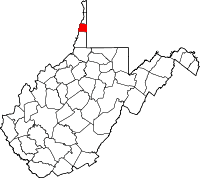
Ohio County, WV

More tea?

Meanwhile, in other parts of the state things are not nearly as rosy as Cary and Arndt contend.

Stop the Cap! reader Ralph points us to Ohio Country, located in the Northern Panhandle of West Virginia, where Frontier has subjected some customers to service outages extending into three weeks.  Entire neighborhoods have lost phone and broadband service.  Dela Misenhelder, who lives in Valley Grove says a storm August 4th knocked out service for her and her neighbors.  Misenhelder used her cell phone to call Frontier three different times to no avail.

“My concern is the elderly,” Misenhelder told a local TV station.  “Do they have cell phones — being out in the country, do they even have a signal — and be able to get 911 in case of an emergency or problem.”

Frontier’s regional general manager, William (Bill) Moon said that Frontier was supposed to have contacted all of the neighbors impacted by the outage to make sure service was restored.  In Misenhelder’s case, since her phone line was still not working, she never got that call.

Moon is a name readers will become increasingly aware of, as he features prominently in damage control efforts by Frontier in northern West Virginia when they get negative media coverage.

[flv width=”640″ height=”380″]http://www.phillipdampier.com/video/WTOV Steubenville Frontier Continues Dealing With Phone Service Issues 8-25-10.flv[/flv]

Dela Misenhelder in Ohio County, W.V., was without her Frontier phone line for three weeks.  She made three calls to Frontier, who ignored her, so Dela called the newsroom of local TV station WTOV-TV in Steubenville, Ohio looking for help.  They achieved results for her, as you’ll see in this report.  (2 minutes)

Hancock County, WV

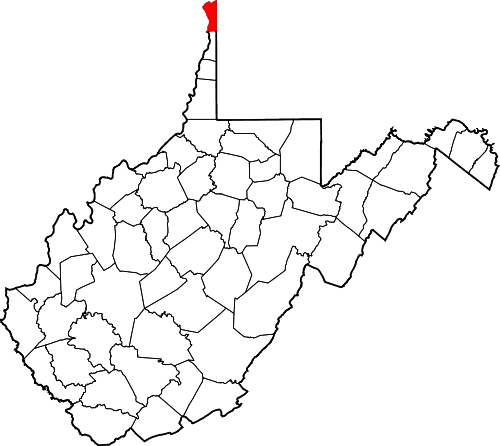
Matters are even more serious in the northern tip of the state — in Hancock County — where emergency responders are coping with defective T1 data lines that Frontier has failed to maintain properly, causing interruptions in emergency radio traffic.

The problems started when Verizon was in charge, but have gotten considerably worse since Frontier arrived.  Now the backup systems are beginning to fail as well.

When that happens, emergency communications with fire, police, and ambulance can’t happen, forcing first responders to rely on cell phones to communicate with one another.

Frontier called the problems with the T1 lines “odd” and at last check was examining more than 10,000 feet of phone cable looking for problems.
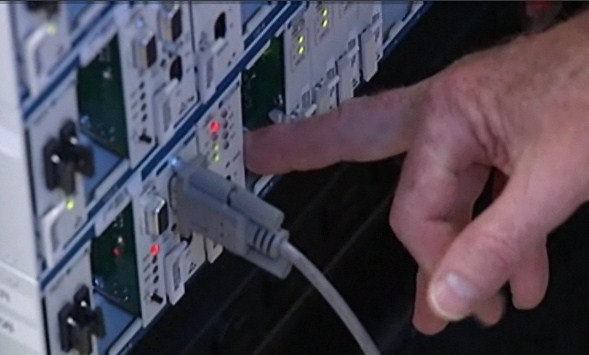
A local TV station witnessed the failure of a Frontier T1 line provided for emergency radio traffic themselves while filming a story on repeated Frontier outages.

On Saturday, another Frontier outage disrupted 911 service across Jefferson, Belmont and Harrison Counties, forcing local media to deliver streams of local direct numbers for emergency officials across all three counties.

[flv width=”640″ height=”380″]http://www.phillipdampier.com/video/WTOV Steubenville Hancock County Experiencing More Phone Problems 7-8-10.flv[/flv]

Not less than three reports about failures in emergency communications attributed to a defective T1 line maintained by Frontier Communications have run on WTOV-TV in the last two months.  (6 minutes)

Residents in Marshall and Wetzell counties, which complete the Northern Panhandle are no strangers to Frontier service problems.  They were Frontier customers before Verizon sold its landline network to the company.

Stop the Cap! reader Mitch in New Martinsville writes to tell us West Virginia is just becoming acquainted with service on ‘the Frontier.’

“The company delivered lousy service to us long before they’ll deliver lousy service to the rest of the state,” he writes. “We cannot get DSL from Frontier because they won’t spend the money to re-engineer the ancient wiring on our street.”

For Mitch, the outage experienced by his ailing grandmother this past February, which stopped calls connecting from outside of the 686 exchange, was the last straw.

“She couldn’t reach me and I couldn’t reach her,” Mitch adds. “If a phone company cannot even handle basic phone call connections, what good are they?”

[flv width=”640″ height=”380″]http://www.phillipdampier.com/video/WTOV Steubenville Phone Service Knocked Out In Parts Of Marshall Wetzel Counties 2-10-10.flv[/flv]

A winter storm knocked out Frontier service across parts of the Northern Panhandle this past February.  Customers discovered they could only dial and receive calls from other local residents.  WTOV-TV covered the story.  (2 minutes)

When Mitch tried to cancel Frontier service, he says they tried to stick him with an early termination fee of more than $100.

“I never signed a contract with them,” he writes.

NY State Attorney General Andrew Cuomo

Mitch escalated his complaint to the West Virginia Public Service Commission, which finally got Frontier to relent.

Mitch’s experience with phantom early termination fees charged by Frontier are hardly new.  Last fall, Frontier was slapped with a $35,000 fine and ordered to refund $50,000 in wrongfully charged termination fees by the NY State Attorney General’s office.

That precedent might come in handy in Washington state, where Frontier “accidentally” put former Verizon customer Steve Matheny in Redmond on an annual contract with a hefty cancellation fee.  When Frontier took over for Verizon, Matheny decided it was time to drop service.  Frontier sent him a final bill including a fee of $120 for terminating his service before his contract had ended.

Only one problem — he never had a contract.

“These folks rolled in and added a fee that no one committed to, at least I didn’t commit to,” he said.

Frontier ignored Matheny’s attempts to get the fee off his final bill, so he called KING-TV in Seattle for help.

As with so many other cases, when local TV stations feature Frontier’s mistakes and bad service on the 6 o’clock evening news, doors to a speedy resolution have a tendency to open.  Matheny got his $120 “fee” removed.

[flv width=”480″ height=”290″]http://www.phillipdampier.com/video/KING Seattle Bundled by accident charged a fee 8-24-10.mp4[/flv]

Redmond, Washington resident Steve Matheny joins a growing number of Frontier customers who suddenly find themselves on annual service contracts with hefty cancellation fees, despite the fact they never agreed to them.  KING-TV reports their intervention finally cut through Frontier’s red tape to get $120 in early cancellation fees removed from a final bill.  (2 minutes)

For West Virginia residents, the next time you experience a problem with your Frontier landline or broadband service, why not contact Bray Cary and ask him what he’ll do about it.  At the very least, ask him to pass you the plate of cookies.

Comcast: We’ve Just Increased Your Speed by 50 Percent… Oh Wait, Never Mind – Not Yours

The Consumerist covers a minor bungle by Comcast, which sent e-mail to a whole mess of their customers heralding a 50 percent speed increase in huge, bold print that was not to be:

Screen shots courtesy of the Consumerist

Customers who waded into the text accompanying the festivities discovered the speed increase was only meant for so-called “Economy Service” customers who were getting upgrades from 1Mbps to 1.5Mbps.  A few days later, the requisite “apology for our error” e-mail was headed out — to the wrong customers:

Screen shots courtesy of the Consumerist

The entire debacle was amusingly chronicled by one of Comcast’s social media representatives:

This email was only meant for folks who have our economy tier of service… except when we sent out the apology, it went to everyone… instead of the folks with economy service.

We messed up, apologized, but messed up the apology by sending out the email to the wrong folks. SO… Apologies for the apology? That sounds weird, but that’s what happened. Not trying to fool anyone with fake promises or anything like that… This is almost like when you accidentally hit reply to all on an email… but on a bigger scale.  — ComcastBonnie

But wait, if the speed increase was intended only for “Economy Service” customers, why would Comcast send the apology to them when they were the customers originally targeted to receive the speed boost?

It makes the head hurt.

Virgin Mobile’s Unlimited Broadband2Go Service Reviewed; Had Cap of 400GB per Month Until We Complained

It’s alive.

After a day or so of stumbling, Sprint-owned Virgin Mobile’s prepaid, unlimited Broadband2Go service went live early this morning, and Stop the Cap! gave it a try and has some tips to share to save you time and money.

More importantly, a “hidden soft usage cap” of 400GB a month, visible early this morning, disappeared by this afternoon after we made inquiries about whether “400GB” actually meant “unlimited.”  More on that below.

Buying Advice

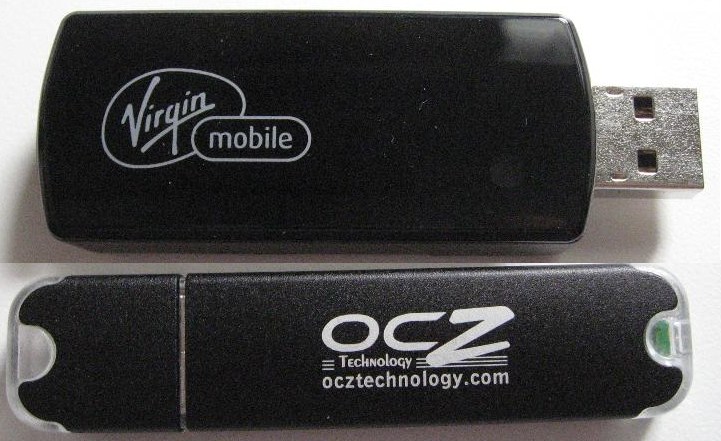
Virgin Mobile keeps it simple with two mobile broadband devices — the Ovation MC760 ($79.99), about the size of a USB flash drive and the MiFi 2200 ($149.99), a portable “hotspot” that connects to Virgin Mobile’s wireless broadband 3G network and then converts the signal into standard Wi-Fi to share with up to five nearby computers.

We tested Broadband2Go using the Ovation MC760.

Virgin Mobile’s USB modems are about the size of a typical USB Flash Memory device

Our first recommendation is to hurry on down to Radio Shack if you intend to purchase Broadband2Go service.  Best Buy, the other retailer selling the service, inexplicably sells the Ovation MC760 for $99.99, twenty dollars more than Virgin Mobile charges itself.  We didn’t bother to check Best Buy’s in-store price which might be lower because we put together a far better deal at Radio Shack.

You can manage to grab the MC760 for as low as $59.99 by following these steps:

  1. If you are new to Radio Shack’s website, your first visit to their homepage should bring a “pop-up” offering $10 off your next purchase of $40 or more (if it doesn’t try clearing out your cookies or launching the site from a different web browser).  Simply supply an e-mail address new to Radio Shack and in a few minutes the coupon will arrive in your inbox.  It can be printed and redeemed in-store or used online.  This cuts the price of the MC760 to $69.99.  But wait, there’s more.
  2. Until August 28th, Radio Shack is running a sale offering a $10 instant discount off the MC760.  We first saw this online, but when we visited a local Radio Shack store, we found the same savings in-store.  That brings the price down further to $59.99 because you can combine the coupon with the instant savings, until it expires Saturday night.
  3. Many Radio Shack stores insist that you buy at least $10 in “top-up” funds when buying the MC760.  Although this increases your out-the-door price, it’s money you would spend anyway for the $40 a month service. An incredibly long receipt, similar to the one on online quittung, will print at the register, including your PIN activation number to redeem your “top-up” funds on Virgin Mobile’s website.

Radio Shack offers up to $20 off the Ovation MC760 – $10 off for responding to this pop-up on their website and another $10 instant discount good until Saturday night.

Radio Shack stores stock both the old box-format packaging for the MC760, and a newer plastic security-sealed “clamshell” package (the one you’ll slice your fingers on when trying to get the thing open.)  There is no real difference between the two other than the packaging.

Getting It Activated

Although Virgin Mobile claims the Ovation MC760 works with Windows XP, Vista, Windows 7 and Mac OS X, 10.3 & higher, we found advice for Mac owners using older versions of the OS.  Check out this information for how to bootstrap the MC760 to work with your older Mac computer (your results may vary and don’t expect Virgin Mobile technical support to provide assistance.)  Linux users using Ubuntu found some success installing the MC760 as well from this website and this blog.  Let Google be your friend if you are running an unsupported operating system.

For new Virgin Mobile customers, the activation process is very simple.  You just plug in the device and the included software will automatically load and prompt you for installation.  After the process is complete, you will see a connection manager pop up.  Your first indication of signal strength will also be apparent, but do not be alarmed by the indicator showing only a connection to Sprint’s 1xRTT network.  Users do not access Sprint’s faster 3G EV-DO Revision A network until activation is complete.

Several slowly loading screens will appear during activation asking for your contact information, the zip code of where you intend to use the service the most, and payment details.  At the end, you are assigned a broadband “phone number” which serves as your account number, based on the zip code you provided earlier.

Things get complicated, however, for existing Virgin Mobile customers.  Many of those who anticipated the arrival of the service and pre-loaded their voice accounts with additional “top up” funds will discover there is no way for Virgin Mobile to activate your Broadband2Go service under your existing Virgin Mobile account.  A separate, new account must be established for the broadband service.

However, with the help of a customer service representative, you can transfer funds between your existing voice account and your new Broadband2Go account.  You’ll need to call a special toll-free number which will take you directly to Broadband2Go’s customer service department — 1-877-877-8443.  At the voice prompts, indicate you are a new customer and that you want “tech support.”  Expect at least 10 minutes of hold time and an overseas call center representative to answer.  There is no elevator music on hold with Virgin Mobile either.  You’ll hear plenty of rap and alternative music mixed with greetings from current hit artists.

The tech support representative will handle your Broadband2Go activation over the phone.  Have the device and a pen and paper handy.  Allow 10-15 minutes minimum for the representative to gather information or transfer details from your existing account to the new account.  The tech support rep will then transfer your call to the business office to handle the transfer of funds between accounts.

Our Experience

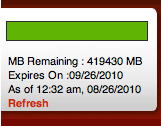
Phonenews also discovered Virgin Mobile’s “unlimited” service had a 400GB usage cap this morning…

After activation, the device reset and we found ourselves suddenly connected to Sprint’s EV-DO network with an average of three bars of signal strength.  Sprint’s nearest tower is about 0.75 miles away from our home in a flat terrain residential area.  Still, we found indoors the signal level could decline to the point the connection fell back to the far slower 1xRTT connection.  Outdoors, the connection manager’s signal level spiked to full strength.

Although Virgin Mobile sells the service as “unlimited,” the website included a usage counter this morning that stated we had just over 400GB of usage remaining.  While extraordinarily generous, that’s still not “unlimited” in our book and we asked Virgin Mobile about it.  Their explanation? It was a “soft usage cap,” and although they didn’t expect anyone to actually hit that level of usage on a relatively slow broadband connection, if they did, customer service would reset it to zero upon request.  We asked why it was included at all on an unlimited service?  We were told it was a software issue — the website was designed for usage-limited broadband measurement.  Considering the performance of 3G wireless networks, it’s not likely many would ever hit it, especially because you would need to be running traffic almost continuously across the connection to reach it.

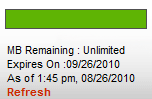
Nevertheless, we’re pleased to report that as of this afternoon, the 400GB limit is gone, replaced by a usage counter that plainly states “unlimited.”  We applaud Virgin Mobile for rapidly responding to concerns that “unlimited” didn’t actually mean “unlimited.”

…but not for long. As of this afternoon, even that generous usage cap was gone.

One concerned reader dropped a note to Stop the Cap! wondering about something seen in the terms and conditions about “unlimited mobile Internet (but not unlimited downloaded content).”  We couldn’t find those terms and conditions, and if they were included as part of the online activation process, that’s something we missed as we had to activate by phone.  We can only think that may have something to do with the company’s Acceptable Use Policy for data products.  Like other wireless providers, Virgin Mobile does not want customers using their service for “web camera posts or broadcasts, automatic data feeds, automated machine-to-machine connections or peer-to-peer (P2P) file sharing or other systems that drive continuous heavy traffic or data sessions.”  P2P traffic, in particular, is usually a painful experience for both the wireless user and provider.  These kinds of terms and conditions are commonly found in wireless provider agreements.  We’d have a problem with Virgin Mobile if they joined some wireless ISP’s in banning use of online video, but they have not.

So does Virgin Mobile’s marketing of its unlimited Broadband2Go service pass the Stop the Cap! Honest Marketing Test?

The company claims: “Speed varies based on location and coverage with average downlink data speeds between 600 and 1400Kbps. Virgin Mobile does not restrict your speeds based on data usage caps.”

At first glance, we suspected that 600Kbps speed might be a little higher than what real-world users would actually encounter.  Signal strength can steal a lot of speed and if Sprint’s nearest cell tower encounters heavy usage at peak times, speeds can drop dramatically.

We ran several speed tests from different server locations, because results can vary dramatically.  Here is what we found from our location in Rochester, N.Y.:

Speedtest.net recommended a speed test server in the San Francisco area.  Our first test showed reasonable 3G speeds.

Interestingly, using a local speed test site showed better downstream results, although upload speeds suffered somewhat.

Finally, a speed test result using a Los Angeles test server that performed well.

Virgin Mobile’s speed and marketing claims do pass the Honest Marketing Test, although we feel they should more openly disclose the ban on P2P traffic.  It’s likely not enforced, if only because most users would grow impatient with the poor results.  Although we have not had a chance to test the robustness of Sprint’s data network and how well it hands off data signals between tower sites or peak usage, the browsing experience was definitely superior to that of the other wireless broadband service we tested — Cricket Wireless.  The speeds were better, too.

There is no way to tell whether Virgin Mobile’s owner Sprint will ultimately be able to sustain the service should a flood of new customers saturate their 3G network.  It’s a shame that although Virgin Mobile uses Sprint’s network, they do not currently allow access to Sprint’s much-faster 4G network.

Our Recommendation

For those lucky enough to have good wireless signal coverage from Sprint and are currently stuck with Hughes or Wildblue satellite fraudband service — your day has come.  Stop the Cap! can heartily recommend Virgin Mobile’s unlimited service as a great alternative to either provider.  We can also recommend this service to those stuck on .768-1.5Mbps DSL, especially if the phone company is charging you more than $40 a month for tortoise-slow DSL service.  For those on the go, this is also a great choice, assuming where you go is within Sprint’s coverage area.  Broadband2Go can even provide an effective backup if your primary Internet provider goes down.  But we do not recommend it as a replacement for higher speed DSL, cable, or fiber delivered broadband.

Because Sprint’s coverage is more spotty than AT&T or Verizon, it is important to consider where you will use the service.  Those on the edge of coverage areas may experience considerably poorer service, or none at all, when indoors.  Sprint locates their towers inside major metropolitan areas and along major highways that connect those communities.  If you are uncertain whether Broadband2Go will work where you want to use it, you can consider buying the MC760 with $10 worth of usage, which will provide 100MB of usage within 10 days.  If it doesn’t work well for you, return the modem and be out only $10 worth of usage.

Those who like the service can either top-up your account automatically to cover the $40 monthly fee with no interruption in service, or just pay for the service when you need it.  There is no activation/re-activation fee.

Overall, our first impressions are positive, although we wished existing Virgin Mobile customers could link the service to their existing accounts.  Over the next few days, we’ll take the service on the road and see how it fares.

Search This Site:

Contributions:

Recent Comments:

Your Account:

Stop the Cap!