Home » Rural Broadband » Recent Articles:

Mid-Atlantic Storm Damage Shows Big Telecom Unprepared for Bad Weather

Phillip Dampier July 5, 2012 Comcast/Xfinity, Consumer News, Cox, Frontier, Public Policy & Gov't, Rural Broadband, Verizon, Wireless Broadband Comments Off on Mid-Atlantic Storm Damage Shows Big Telecom Unprepared for Bad Weather

NOAA caught this ominous derecho cloud front in La Porte, Ind on June 29. The same storm would later cut power for millions all the way to the eastern seaboard.

A series of severe thunderstorms accompanied by near-hurricane-force winds caused millions of customers in several Mid-Atlantic states to lose power and telecommunications services late Friday, and some are expected to remain without service until at least this coming weekend.

The storm, known as a “derecho,” uprooted trees, which in turn knocked down power lines and caused wind-related damage to buildings from Ohio to West Virginia, Virginia to Maryland, and even into North Carolina.

But the storm also is raising questions about the massive failures in commercial telecommunications systems that left entire 911 emergency response systems offline for days, wireless networks non-operational, cell phone systems overwhelmed, and broadband service, deemed a lower priority by emergency officials, down and offline.

Some of the biggest problems remain in and around the nation’s capital and in the states of West Virginia and Virginia, where inadequate infrastructure proved especially susceptible to the storm’s damaging winds.

D.C., Maryland, and northern Virginia

In northern Virginia, calls to 911 were met by silence over the weekend, thanks to a catastrophic failure of Verizon’s landline network. With primary lines down, Verizon’s backup 911 systems also failed, leaving millions with no access to emergency responders.

Fairfax County officials finally put the word out the best way to summon emergency help was to drive (through streets littered with debris and downed power lines) to the nearest fire or police station for assistance.

“It’s just not OK for the entire 911 system in the region to go down for the period of time that we were out, especially after an enormous emergency where people needed to make those calls the most,” Sharon Bulova, chairman of the Fairfax County Board of Supervisors, told the Associated Press.

Verizon spokesman Harry Mitchell was left flat-footed, promising an investigation into Verizon’s latest 911 failure, and called the storm as damaging as a hurricane. He urged local officials to “move forward” beyond the immediate criticism and help make progress to get service restored.

Many emergency response networks also depend on telecommunications services, including fiber cables, to reach transmission towers for radio dispatch and mobile data terminals. In northern Virginia, the city of Alexandria has been managing to handle emergency dispatch services for several counties.

With power lines down, cable and phone lines often went as well. In those cases, electric utilities have first priority to restore service, and then cable and phone companies can begin repairs of their own.

Since cable operators rely on power companies to supply electricity to their amplifiers and other equipment, Comcast and Cox, which dominate the region, are blaming most of their outages on power disruptions, and promise service will be restored when the power returns.

Verizon’s DSL and FiOS broadband networks were both disrupted by the storm, primarily because of downed lines and power losses.Even wireless networks, which some might suspect would be immune to downed lines, were also seriously affected by the storm. Cell towers connect to the provider’s network through fiber optic and T1 lines, and although backup power generators can maintain a cell tower for days in some cases, backhaul line cuts can leave cell towers useless.

In metro D.C., call completion problems were a problem during the storm and sometime after as local residents turned to cell phones to communicate. Over the weekend, customers in and around Richmond, Va., found Verizon Wireless useless for text messages because of a service disruption. As backup generators ran dry of fuel, some cell towers that survived the initial storm have been shutting down until maintenance crews arrive and refuel.

The harshest criticism has so far escaped phone and cable companies. Instead, local officials and residents remain focused on Pepco, the power utility serving the Washington area. Pepco has learned from previous storms to become a master of lowered expectations, and is promising to do its best to restore power a week or more after the storm was a memory.

West Virginia and western Virginia

The state of West Virginia, and western rural Virginia state, have illustrated what happens when deteriorating infrastructure is asked to withstand winds of up to 100mph. Frontier’s operations in West Virginia were hit especially hard. Landline networks in that state had been allowed to deteriorate for years by former owner Verizon Communications. Frontier had its hands full trying to keep up with repairs, calling in additional staff and trying to maintain landline service in some areas with the help of generators.

That job was made much harder by a rash of generator thefts that impacted the phone company, and local authorities are still looking for those responsible. At least one-third of all central switching offices operated by Frontier in West Virginia remain on generator power as of yesterday. As of July 3, the company reported it has 12,000 repair requests still waiting for action.

It was a similar story in the western half of Virginia where independent phone companies and Verizon were faced with an enormous number of downed trees and power lines, many in rural areas. More than 108,000 Virginia residents are still without power as of this afternoon, and many will not see it restored until the weekend.

Because the derecho swept across a large area encompassing the entire state, it has been difficult for utility crews to respond from unaffected areas to assist in repairs because the damage was so widespread. Logistically, just coordinating repair operations has proved difficult because cell service has been spotty (or networks have been jammed with calls) in some of the worst-affected areas.

“Derechos are nothing to fool with, but still this was not the most serious storm Virginia has ever dealt with, and the impacts on our telecommunications networks seem to indicate they’ve been allowed to fall apart over the last several years,” shares Stop the Cap! reader Edward Klein, who lives near Roanoke. “I think an investigation is needed to make sure utilities are spending enough money to keep these networks in good shape so this kind of thing doesn’t happen everytime a storm sweeps through.”


Scottish Community Gives Up On DSL, Switches to Smoke Signals, Pony Express for Better Service

Phillip Dampier June 26, 2012 Broadband Speed, Consumer News, Public Policy & Gov't, Rural Broadband, Video Comments Off on Scottish Community Gives Up On DSL, Switches to Smoke Signals, Pony Express for Better Service

Smoke signals achieve a faster transmission rate than DSL can manage in the Scottish village of Kettleholm.

The village of Kettleholm, near Lockerbie in Scotland has effectively given up on DSL service from British Telecom and has upgraded the community’s telecommunications service to technologies including smoke signals, messages inserted into bottles and thrown into nearby streams, carrier pigeons, and for urgent communications — the village’s pony express.

All of these communications methods have proven much more effective than the area’s copper wire-based DSL service, which villagers report is often less than useless. In fact, it can take at least 10 minutes to load Google’s home page in Kettleholm on a bad day, and Apple software updates require additional patience — more than 4,525 hours worth (that is more than 188 days) for the latest version of iMovie to arrive.

BT engineers sent to the area to investigate found nothing wrong with the service, which they initially said was operating within normal expectations for DSL “broadband.” But at least 150 local residents strongly disagree, and several made their point producing a video demonstrating how two yogurt cups attached by string provide more reliable communications than BT was managing in their part of Scotland.

The problem, according to local residents, is the decrepit state of the copper-wire based telephone exchange, installed just after World War 2. Broadband advocates say the solution is rubbishing the ancient copper wiring and replacing it with optical fiber that is spreading across the rest of Great Britain. But neither BT or Virgin Media consider Kettleholm worth the investment, placing the village squarely in the undistinguished category of last priority — the one-third of the United Kingdom deemed economically unsuitable for fiber broadband.

UK residents are paying for broadband improvements as part of their TV License Fee, and the government has amassed at least £800 million for upgrades. It irritates some residents that their portion of the license fee is paying for someone else’s broadband upgrades, and salt is rubbed in those wounds when viewers see BT — the largest recipient of government money — spending it on advertisements mailed to Kettleholm residents for services they can never get.

Even worse, the BBC recently learned the phone company isn’t exactly spending every resource on better broadband in the UK. BT recently found £738 million laying around to pay for the rights to Premier League football games for the next three years.

Where there is smoke (signals) there is fire, especially after the BBC picked up the story. BT suddenly had a change of heart about the state of their network in Dumfries and Galloway:

“Kettleholm telephone exchange is a modern digital exchange, System X and offers broadband speeds of up to 8mb/s. We were not initially aware of a problem with broadband in Kettleholm as only a small number of the 120 end users reported problems with their service. The service appears to have gradually degraded over time without triggering any of our alarms. Engineers recently reset equipment in the exchange and tests show that broadband speeds have risen. We will continue to monitor the situation and would like to apologise to everyone for the frustration and inconvenience they have experienced.”

Kettleholm residents appreciate the new attention BT is paying to their network, but the village has been reminding everyone they can find that BT is their sole provider and when they stop paying attention to their DSL facilities, the entire community suffers.

[flv width=”640″ height=”380″]http://www.phillipdampier.com/video/Kettleholm Poor Broadband 6-2012.flv[/flv]

The village of Kettleholm shows off their new telecommunications systems: smoke signals, carrier pigeons, messages inserted into bottles, semaphores, the pony express, and yogurt cups attached by string.  All perform better than BT’s DSL service.  (2 minutes)

Call to Action: AT&T and ALEC Pushing Anti-Consumer Telecom Bill in California

The Communications Workers of America says when it comes to “stealthy” bills like S.B. 1611 that deregulate telecommunications in California, “no price is too high — no lie is too big.”

AT&T and the American Legislative Exchange Council (ALEC) are back again fighting for more deregulation of California’s telecommunications industry with a bill that will strip oversight of vital telecommunications services and stop punishing bad actors that leave customers without telephone service, sometimes for weeks.

California legislators are typically not responsive to the wholesale deregulation efforts that seem to draw support in more conservative states, so AT&T’s lobbyists are trying a more “incremental” approach in the state. But AT&T has also inserted “stealth” language into the bill that would dismantle consumer protections, allow companies to abandon unprofitable landlines, and strip away important oversight “checks and balances” needed to ensure good service.

Sen. Padilla’s top corporate contributor is AT&T.

S.B. 1611 illustrates that AT&T can buy its way into any legislator’s office, Democrat or Republican. The bill’s chief sponsor, Rep. Alex Padilla (D-20th Senate District) has received more contributions from AT&T than from any other corporation in both the 2006 and 2010 elections.

The bill ostensibly claims to limit its scope narrowly to “Voice over Internet Protocol” (VoIP) and “Internet Protocol enabled service.” That brings to mind services like “digital phone service” from cable companies or alternative telephone services like Vonage, magicJack or Skype.

S.B. 1611:

The bill would prohibit any department, agency, commission, or political subdivision of the state from enacting, adopting, or enforcing any law, rule, regulation, ordinance, standard, order, or other provision having the force or effect of law, that regulates VoIP or other IP enabled service, unless required or delegated by federal law or expressly authorized by statute. The bill would specify certain areas of law that are expressly applicable to VoIP and IP enabled service providers. The bill would provide that its limitations upon the commission’s regulation of VoIP and IP enabled services do not affect the commission’s existing authority over non-VoIP and other non-IP enabled wireline or wireless service….

To the layperson who generally believes services like Skype and Vonage might not deserve the same oversight as AT&T, Frontier, or Verizon — which provide Californians traditional landline service, consider Section 2 (a)(2) of the bill, which describes and defines VoIP and IP enabled service as anything that:

“Permits a user generally to receive a call that originates on the public switched telephone network and to terminate a call to the public switched telephone network” and “any service, capability, functionality, or application using existing Internet Protocol, or any successor Internet Protocol, that enables an end user to send or receive a communication in existing Internet Protocol format, or any successor Internet Protocol format through a broadband connection, regardless of whether the communication is voice, data, or video.”

This “narrow” deregulation bill just grew as wide as the Gulf of Mexico and can realistically allow any phone company in California to ignore state oversight and regulation forever.

Traditional telephone companies increasingly utilize exactly these technologies for calls placed over ordinary landline phones. Using broadband service to engage in two-way communications also qualifies. With this kind of defining language, virtually every telecommunications service in the state of California would win near-total deregulation and walk away from important oversight. The California Public Utilities Commission certainly understood the implications of this bill when the majority of commissioners came out in opposition to S.B. 1611.

Goodbye Universal Service: S.B. 1611 Allows Phone Companies to Abandon Rural and Economically Distressed California Communities

Several public interest groups also discovered language in the bill that is a perennial favorite of AT&T — eliminating universal service requirements that assure every citizen that wants a telephone line can get one. S.B. 1611 lays waste to Section 709 of the California Code which guarantees: “our universal service commitment by assuring the continued affordability and widespread availability of high-quality telecommunications services to all Californians.”

With that language gone, the state’s phone companies can unilaterally decide to abandon the customers they no longer want to serve. That could spell disaster in rural northern and eastern California, and leave low income residents with nothing but a dead phone line, unable even to call 911 in an emergency.

One AT&T Lobbyist for Every California Lawmaker

The importance AT&T places on influencing lawmakers is readily apparent when one realizes there are at least 120 AT&T lobbyists working in the state capital Sacramento, one for every California lawmaker.

But when one considers the track record of California phone and cable companies in the last few years, is less oversight and regulation the right answer?

“SB 1161 is a stealth vehicle for the gradual deregulation of telecommunications in California,” the Consumer Federation of California declared on their website. “Consumers need the CPUC to have the power to investigate complaints of bad service or unfair charges on bills, regardless of the technology used to provide phone service.”

Call to Action!

Consumers across California need to get on board immediately to stop S.B. 1611. You can file online opposition courtesy of Free Press, but it is far more effective to also directly phone your own legislator and leave a message to urge this bill be defeated. It literally takes only 2-3 minutes to call and the money and phone service you could save will be your own. Use this district finder to contact your representatives.

S.B. 1161 is scheduled for hearing in the Assembly Appropriations Committee this Wednesday, so time is of the essence!

Frontier Contract Shenanigans: Getting Stuck With a 2-Yr Agreement & Slower Speeds

Your modem needs an expensive upgrade, even if you own your own.

Frontier Communications customers may get less than they bargained for when calling the company about a malfunctioning modem or problem with service. Andrew, a Stop the Cap! reader from Tennessee discovered a simple service call left him stuck with two separate contracts for phone and Internet service, a major broadband speed reduction, and a sense that Frontier is willing to sign up customers without fully disclosing what they are selling.

Andrew reports he originally called Frontier to discuss a possibly damaged DSL modem. Upon hearing the model number, a Frontier customer service representative needed to hear no more — the modem “needed to be upgraded.” In fact, Frontier has been mailing postcards to customers with older modems not subject to monthly rental fees telling them their existing modem was “no longer supported” and needed to be replaced with a new model. In the fine print, the customer learns if they proceed, they will end up paying a monthly modem rental fee starting at $6.99… forever.

But things got much worse for this Frontier customer after he contacted the company to say he’d be keeping his current DSL modem, which turned out to be working just fine:

I was then told there would be about a $20 price drop on my next bill (for July). I asked the agent why and her response was, “oh, our prices are going down.” I said okay, thanked her and hung up the phone.

The next morning, I got an email from Frontier thanking me for my ”recent purchase or renewal of services,” further asking me to click and view the Terms of Service agreement for High Speed Internet (and to submit the PIN number associated with my account).

I then called Customer Service about the email. I was told that I had upgraded my phone service the previous day. It turned out that the agent upgraded my phone service to include their ”Digital Essentials” phone features package and had locked me into two price protection plans for both services. There was a one-year plan regarding the phone service and a two-year plan for the High Speed Internet.

I was shocked and informed the agent that I had made no such changes to my phone/Internet services and that I had simply called about cancelling a support ticket on my account regarding the modem.

He later tried to claim that I had given the previous agent authorization when I said okay after she had informed me about the price drop. I told him that was absolutely ridiculous, especially since she never discussed any upgrades to my phone service or any changes regarding my Internet. I asked him how it could be an authorization when what was done to my account was never fully explained (or asked for).

We’ve got a deal too good to refuse.

The Frontier agent then proceeded to hard-sell Andrew the same plan the former agent already applied to his account. The Frontier representative did not bother to mention the “upgrade” and “savings” he was getting included a drastic speed reduction. Frontier sold Andrew a package that included just 1.2Mbps broadband.   That is less than half the speed of his original 3Mbps service, for which he paid $40 a month with no modem rental fee.

Now Andrew is stuck with two contracts, both which carry early termination fees that will total well in excess of $100, the likelihood of a modem rental fee for a new modem he has never received and does not want, and less than half the broadband speed he used to get.

“I was never told by either agent I spoke with that my Internet speed would be [reduced] once the ‘upgrade’ was performed,” Andrew writes. “This, in my opinion, is fraud. Had I known a slower speed would be the end result of their price drop, I would have never [signed up].”

Now Andrew wants his old plan back and Frontier is stalling.

Frontier has a track record of retiring older service plans and packages, but leaving existing customers grandfathered on them until a representative can convince a customer to switch to something else. Unfortunately, newer plans often come with higher prices and more surcharges than older ones, which is part of the company’s effort to increase average revenue earned from each customer. Once off a discontinued plan, low level customer service representatives typically cannot re-enroll a customer.

But those who complain the loudest can get back the service they used to have, just by becoming a nuisance. Start by calling Frontier and asking to speak to a supervisor or manager. If that fails, ask to be transferred to the department that handles disconnections and threaten to drop all Frontier services if the company does not relent and put you back on the plan you started with.

Customers can also file complaints with their state utility regulators. In Tennessee, that is the Tenessee Regulatory Authority. Their online complaint form is here. Unfortunately, many states have succumbed to deregulation rhetoric and state regulators lack significant enforcement powers. But utilities that routinely filibuster state officials risk generating enough legislative energy to support a “re-regulation” effort, so most utilities will connect complainers to an executive level customer service department that can cut through red tape.

Customers can also file complaints with the Better Business Bureau and their state’s Attorney General. The more noise you generate, the more likely Frontier will satisfy your request.

Frontier customers are advised that anytime a customer service representative asks you to complete an online agreement using your PIN number, it signals you are about to commit yourself to a term contract or other major change in service that could prove costly to undo.

Always ask the Frontier representative to e-mail you a copy of the terms of the plan you are enrolling in, including broadband speeds, phone features, contract length and early termination fees.

Always read the agreement you are being asked to complete online.

If you have any questions, call Frontier before you sign. Some plans include a 14 or 30 day penalty-free cancellation provision. While this alone may not restore your old service, it can prove an important negotiating tool to win back the service you had before.

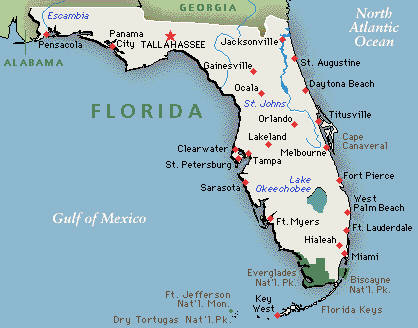
Connected Nation Accused of Rewriting Fla. Budget Amendment to Divert Grant to Itself

Connected Nation, a broadband advocacy group with ties to some of the nation’s largest telecommunications companies, is accused of rewriting a Florida state budget amendment to divert proceeds from a federal broadband grant to itself.

A growing scandal over broadband map funding and allegations of political maneuvering and favoritism has now extended into the offices of several state Republicans now accused of doing the group’s bidding to change funding allocations in ways that could ultimately threaten Florida’s broadband grants.

Connected Nation’s involvement in the state’s broadband expansion efforts began in earnest in 2009 when the group won a $2.5 million contract to map broadband availability in Florida. A follow-up federal grant for $6.3 million to extend broadband deployment brought the group’s lobbyists back to Tallahassee to secure a “no-bid shot” at that new money for itself, which turned out to be a big surprise to the Department of Management Services, the Florida state agency charged with overseeing the project.

The grant award mandated that money be spent on additional broadband mapping and broadband expansion specifically for libraries and schools. When DMS hired contract employees to manage the project for the next two years, Connected Nation declared war on the effort, considering it their turf.

The Miami Herald called the lobbying battle that then ensued as “an audacious display of lobbying clout [that] got the Legislature to force DMS off the contract and steer the grant to [Connected Nation] instead.”

The newspaper reports the end effect of the bitter feud is a less than useful broadband mapping operation and a threat from the federal government it will yank back what remains of the grant money if things do not improve… quickly.

Connected Nation told the newspaper it defends its position as creating value for taxpayers and citizens. But the group also openly admits its broader goal is to increase broadband usage, which directly benefits its telecommunications partners, which the newspaper says includes AT&T, Verizon, and Comcast.

DMS officials are just as willing to play hardball in the statewide dispute, accusing Connected Nation of producing erroneous broadband maps and being responsible for “repeated performance problems.” They announced last year they would not renew Connected Nation’s contract.

Political observers note DMS probably did not realize who they were dealing with, and Connected Nation’s high powered lobbyists descended on the state capital to pull the rug completely out from under DMS, yanking the entire project away from the state agency and assigning it to another.

Holder

With the help of several Florida Republican legislators and the governor, DMS found itself without a broadband project, as lawmakers transferred it to Florida’s new “Department of Economic Opportunity.” The ultimate decision approving the transfer of broadband matters to an agency that suggests an allegiance to the private sector came from Florida’s governor Rick Scott.

The governor’s office muzzled DMS protestations. Marc Slager, deputy chief of staff for Gov. Rick Scott, acknowledged to the Herald he told DMS to stand down because “we don’t need to have different people from the governor’s agencies advocating an issue.”

Revenge is a dish best served cold, and Connected Nation is not through paying back DMS for interfering in their Florida plans to capture broadband grant funds. The group is taking its time working with several Republican legislators to cut more legs out from under the government agency.

With respect to the $6.3 million broadband expansion grant, the newspaper reports Connected Nation last year simply rewrote a state budget amendment, inserting themselves as the grant winner.

“Attached is a document that reflects conversations we’ve had with Chairman Weatherford, the draft language is consistent with the bill, and it is language we believe the [Legislative Budget Commission] would approve,” wrote Alli Liby-Schoonover, from Connected Nation’s lobbying firm, Cardenas Partners, in February 2011, making the change.

What a broadband mapping group was going to do with the money intended to wire schools and libraries remains unknown.

This year, Connected Nation enlisted the support of Rep. Doug Holder, a Sarasota-area Republican, to follow through on an earlier threat to disassociate DMS completely from Florida’s broadband expansion efforts. Holder eagerly wrote legislation, at the request of Connected Nation’s lobbyists, to get broadband away from the state agency, arguing to do otherwise was “expanding government.”

“The idea of a government agency taking a program that could be administered by a private entity that could create revenue in the private sector was wrong,” he said.

The newspaper asked Holder whether the spending was worth it if Connected Nation continued its record of creating no new jobs for Florida. Holder answered he would have to think about whether or not they should get the contract.

The ongoing tug of war is being watched by un-amused officials in Washington.

The state Republican effort to recast the project as an “economic development” effort may fall well short of the grant requirements because the term lacks specificity, warned Anne Neville, director of the State Broadband Initiative in the U.S. Dept. of Commerce. Neville added that any changes significant enough to repurpose funds would cause the grant to be canceled, with funds returned to the treasury.

Search This Site:

Contributions:

Recent Comments:

Your Account:

Stop the Cap!