Home » Issues » Recent Articles:

AT&T Starts Warning Customers They Used “Too Much” Internet, Will Slow Their Speeds

Courtesy 9 to 5 Mac

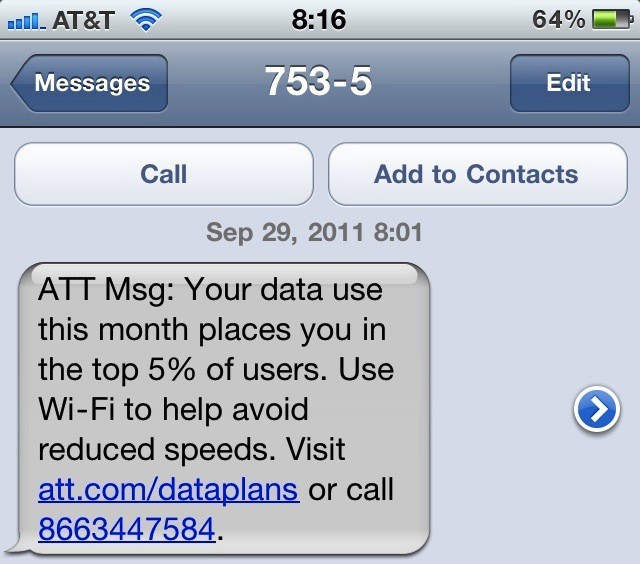
AT&T has begun sending out warnings to wireless customers deemed to be using too much of their “unlimited data plans” and are now subject to speed throttling that will reduce their wireless Internet experience to one more familiar for dial-up users.

Life in the slow lane is the price AT&T customers pay for being a member of the Top 5% Data User Club.  Running the numbers, that means using more than around 4GB of wireless usage per month.  One customer who managed to rack up 11GB in September, even before the new speed throttle plan took effect Oct. 1, has already found himself in the speed reduction doghouse with a warning message he received Sept. 29.

Although the customer did not reveal what he was doing to achieve 11GB of usage in one month, the two most common ways to run up usage are watching a lot of streamed video or using your phone to tether to other wireless devices, especially laptops.  Some wireless customers are attempting to use their unlimited data plans as a home broadband replacement, especially in rural areas where cable or DSL service is not available.  That’s an option AT&T doesn’t seem to want customers to consider.

In addition to eliminating unlimited use plans for new customers more than a year ago, the company has increasingly cracked down on existing customers grandfathered into unlimited use plans.  In addition to banning third party tethering apps, AT&T is now simply reducing speeds for heavy users to make high bandwidth applications like video and even some forms of streaming audio impossible when residing in the penalty box.

But don’t worry: you can still use your data plan to read e-mail or browse simple web pages.  The company also advises customers can use unlimited amounts of Wi-Fi, whether they provide it or not.


Time Warner Launches Free Slingbox Rebate Offer: NYC Customers Only

Phillip Dampier October 3, 2011 Consumer News, Online Video Comments Off on Time Warner Launches Free Slingbox Rebate Offer: NYC Customers Only

As we originally reported a few weeks ago, Time Warner Cable has launched a planned fall promotion offering new Wideband and SignatureHome customers a $300 rebate on a Slingbox PRO-HD purchased at a participating local Best Buy store or through the retailer’s website until November 30, 2011.

The high-end Slingbox allows customers to stream live cable programming and other video across their home broadband connection to computers, smartphones, or tablets (the latter two require a separate purchase of a $30 iPhone/iPad or Android app).

The offer is good only for Time Warner Cable customers serviced by the company’s New York City division who install new Wideband (50/5Mbps) standalone broadband service for $99 a month or who sign up for the company’s SignatureHome tier ($199/month), which includes Wideband service.  Existing Wideband or SignatureHome customers are not eligible, but current Time Warner customers who upgrade to either service are.

Time Warner Cable has configured the rebate offer to make sure customers pay on time and stay put for at least six months after signing up.  The rebate will appear as a $50 service credit for six months after being successfully processed.  If you pay your bill late or cancel service within six months, subsequent rebate service credits will be cancelled.

If you take advantage of this promotion, we strongly suggest you sign up for automatic payments to avoid a missed payment, which could cost you up to $300 — the value of the rebate — plus any associated late fees.  Remember, you also have to receive service from Time Warner’s NYC operation and the Slingbox must be purchased from Best Buy to qualify for the rebate.

Time Warner’s rebate website accepts online rebate submissions, so you can scan and keep your original receipts.  Since the cable operator will accept rebate submissions until February 15, 2012, there is plenty of time to refile if your original rebate request is lost.

[flv width=”640″ height=”331″]http://www.phillipdampier.com/video/SignatureHome Ad 9-2011.flv[/flv]

Time Warner Cable unveiled new advertising for its super-premium SignatureHome service last month.  The “concierge” service will bring your monthly cable bill to $199.  The concept of the $200 cable bill was unheard-0f just ten years ago.  (1 minute)

Update: Suddenlink Usage Cap Numbers Arrive, Company Declines to Comment

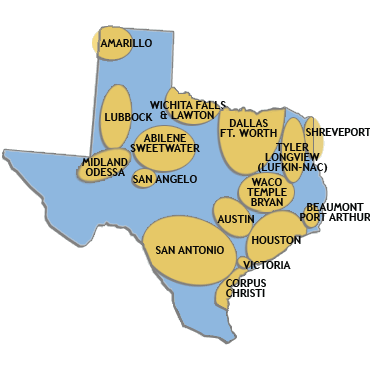
Suddenlink serves portions of these Texas communities

Stop the Cap! has learned Suddenlink will establish usage allowances nearly identical to AT&T for their broadband customers, with a $10 overlimit fee for each 50GB customers manage to exceed their limits.

Suddenlink officials have declined to comment on Stop the Cap!’s report published yesterday.

The usage caps, which will first be implemented on customers in Amarillo, Tex., are as follows:

  • 150GB per month for customers subscribing to “lite” tiers of less than 10Mbps, similar to what AT&T limits its DSL customers;
  • 250GB per month for 10, 15, or 20Mbps customers, similar to AT&T U-verse;
  • 350GB per month for premium-priced 50 or 107Mbps service packages.

Suddenlink says they expect less than 1% of their customers to exceed the monthly limits.  If they do, they will receive warnings three times before the overlimit fee is imposed.

“It could have been worse, but there doesn’t seem to be any justification for these limits other than the fact their biggest competitor in Texas — AT&T — has them,” says Amarillo resident and Stop the Cap! reader Angel.

“It’s another example of what happens when you live in a country that allows broadband duopolies,” Angel says. “Just like with cell phones, as soon as AT&T does something, their competitors follow suit and the customers are stuck paying more and more for less and less service.”

Angel says the first time he is billed an overlimit fee of any kind, he’ll downgrade his broadband service.

“Why pay for premium priced speed tiers when usage caps make them not worth the extra money?”

Suddenlink Introducing Usage Caps/Internet Overcharging Nationwide: $10/50GB Overlimit Fee

Suddenlink will introduce an Internet Overcharging scheme beginning with their customers in Amarillo, Tex. Oct. 3rd, according to a company document obtained by Stop the Cap!  But the new usage cap and overlimit fee scheme will not be limited to Texas.  The company’s internal memo notes the new limits will eventually be imposed on customers nationwide, and incredibly, the cable operator claims it will make their Internet service better:

Early next month, October 2011, Suddenlink will notify residential (non-business) Internet customers in Amarillo, Texas, of a new usage allowance plan (AP) that is designed to further enhance their Internet experience.

This allowance plan will be introduced to other residential Internet customers, in other Suddenlink communities, in the following weeks and months.

An introductory letter will be mailed to Suddenlink residential Internet customers, when our allowance plan goes into effect in their community. The introductory letter to Amarillo customers will be mailed on or about October 3, 2011.

In addition to the introductory letter noted above, we will launch a new Web page on or about October 3, 2011, at suddenlink.com/allowanceplan.

This new page will provide additional information about the allowance plan in the form of frequently asked questions (FAQs).
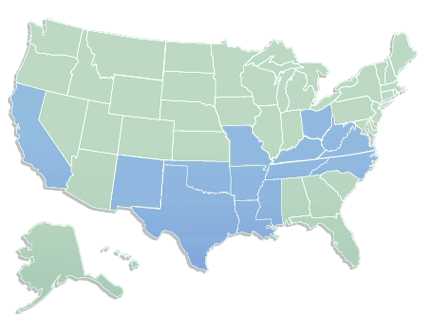
Suddenlink's national service area

On the first instance of exceeding the limit, the customer’s Internet service will be suspended until the customer reads and agrees to a web notification message that includes an understanding that on the fourth instance of going over their usage cap, customers will be billed $10 for every 50GB increment that exceeds their allowance, whether it is by 1MB or 40GB.  That pricing is identical to AT&T’s usage cap overlimit fee.

Amarillo residents already pay $55 a month for 15Mbps standalone broadband service from Suddenlink.

Stop the Cap! reached out twice today to Suddenlink officials to get their reasons for implementing the usage allowance program, what the specific allowances might be, and when the usage caps will reach markets beyond Amarillo.  We have still not heard back from them as we “go to press” but will update the piece if and when we do receive their comments.

Suddenlink’s employees are being trained on how to handle the inevitable complaints when customers discover their bills have suddenly increased.  Their employee FAQ:

Q. I only went over my allowance by 1 gigabyte, but I was still charged $10. I thought I would not be charged $10 until I was 50 gigabytes over my allowance. What happened?

Of the very few customers who go over their monthly allowance, we have found that most go over by a significant amount. Accordingly, to make this process as fair and simple as possible on all customers, we do not start charging until the third time someone goes over the allowance – and, once that happens, we automatically assign additional allowances to the account, in standard 50-gigabyte installments, at a standard price of $10 for each installment.

Customers can use all or some of that additional allowance, depending on their individual situations. What’s more, if they exceed the additional allowance of 50 gigabytes, another 50-gig allowance is automatically applied, again at the standard price of $10.

To help customers manage their Internet accounts, we have provided a way for them to monitor their monthly usage at Suddenlink.net.
• If you’re already registered at Suddenlink.net, log on, go to “My Account,” and then click the link for “My Internet Usage Summary.”
• If you’re not already registered at Suddenlink.net, visit that site, look toward the upper right corner for the log-in box and the link that reads “Don’t have an account? Sign up now!” Follow that link to a set of instructions on how to register your account, and then, when you’re finished, click the link for “My Internet Usage Summary.”

Kent: The days of system upgrades are over.

Finally, we offer some tips at suddenlink.com/allowanceplan, about ways to keep usage within the monthly allowances we’ve established.

Q. Can I have fewer than 50 gigabytes or less than $10.00 applied to my account the next time I go over?

Not at this time. The 50-gigabyte installments and $10 per installment charges have been standardized in all areas where we’ve rolled out this allowance plan, to make the process as fair and simple as possible on all customers.

Q. I don’t recall being notified that this was starting in my area. When did that happen?

We mailed letters announcing this change to all customers in your area several weeks before the allowance plan was put into place. I’m sorry if you missed that letter, but rest assured, very few customers – less than 1 out of every 100 – go over their allowance. And for the very few customers who do go over their allowances, charges are waived the first couple of times.

Q. What gives Suddenlink the right to do this?

We occasionally make changes to our Internet services, consistent with our Residential Services Agreement, which is published on our website. This allowance plan is one of those changes.

If asked: To view our Residential Services Agreement, go to Suddenlink.com, and look for a link near the bottom of the page titled, “Terms & Policies.” Click on that link and then look for another link titled, “Residential Services Agreement.” Click on that link and then scroll down the page until you see the sections related to Internet service, such as Section 46.

Suddenlink’s new Internet Overcharging website is not yet active, so we are unsure exactly what plan limits will be, but Suddenlink has been no stranger to usage caps.  The company introduced a usage meter in several markets in the summer of 2009, and used to claim usage limits were partly to handle traffic loads on a limited number of cable systems that were in the process of upgrading.  Once the upgrades were complete, the caps were supposed to be relaxed or retired.

Then, Suddenlink president and CEO Jerry Kent appeared on CNBC last September to announce that people don’t realize the days of system upgrades are over and it was time to rake in the profits:

“I think one of the things people don’t realize [relates to] the question of capital intensity and having to keep spending to keep up with capacity,” Kent said. “Those days are basically over, and you are seeing significant free cash flow generated from the cable operators as our capital expenditures continue to come down.”

Suddenlink’s journey to usage caps includes all the hallmarks we foretold in an article published on Stop the Cap! in 2009:

  1. Establish a foundation for usage caps.  In their 2009 FAQ, Suddenlink conflated broadband usage with electricity: “What is “Internet usage”?  Much like electric usage is measured in kilowatts, and water usage is measured in gallons, Internet usage is measured in gigabytes (GB).”
  2. Establish a ‘pulled from the air’ number of gigabytes (which often conveniently later becomes your usage allowance) and then tell subscribers what they can do with that.  In Humboldt County, Calif., in March 2011, Suddenlink began telling “heavy users” what other customers were doing with what the company deemed a more appropriate, average amount of Internet service.  Suddenlink also told customers the Internet service they were providing was for “entertainment only.”
  3. Tell customers such tools are actually for their benefit.  See above.
  4. Lie to customers when a usage meter suddenly shows up or terms and conditions are quietly changed to support an Internet Overcharging scheme.  In 2009, Suddenlink introduced a usage meter but tried to reassure customers, telling them: “Does Suddenlink plan to set a maximum usage allowance for its Internet customers, like other companies are doing? Do you plan to charge extra if a customer’s usage is too high?  Those steps are not part of our current plan. Our only goal at this time is to help the few customers whose usage is well above (two to three times higher than) the typical range to identify the reasons for that high usage and take steps to protect and secure their computers and accounts.”
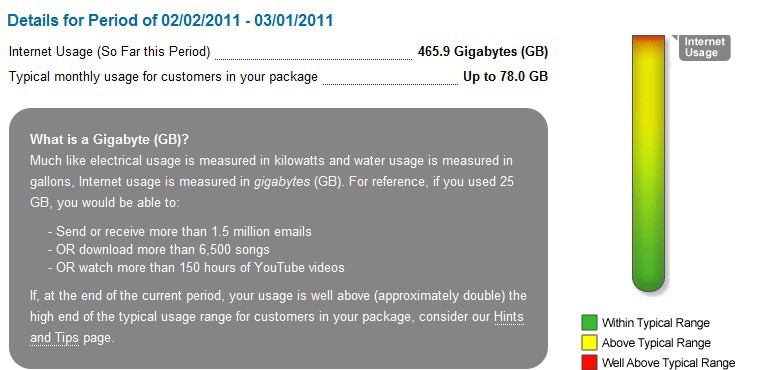
You used too much. Look what you can do with an "average" amount of usage instead.

Now usage caps will protect and enhance Suddenlink’s profits on Internet service.  Remarkably, Suddenlink put itself in the “predicament” of facing increased customer demand of the Internet through its own marketing.  The company’s website heavily promotes its bandwidth-heavy Suddenlink2GO™ service to “watch TV online anytime, anywhere in the U.S. on any computer for FREE when you subscribe!”

But “free” becomes $10 for every 50GB if you watch too much.

How to Get Unlimited Back: If you are a Suddenlink residential customer who does not want to face restricted-use Internet, you can avoid the limits by switching to Business Class service, which will not have caps.  Unfortunately, pricing information was not immediately available to us.  One customer in Lubbock noted he paid $69 a month for 6Mbps Business Class service and $107 a month for 107Mbps residential service, so expect to pay comparatively more for lower speed service.


Verizon Wireless Fraudulently Pumped Up Prepaid Numbers, New Lawsuit Claims

Phillip Dampier September 29, 2011 Competition, Consumer News, Verizon, Wireless Broadband Comments Off on Verizon Wireless Fraudulently Pumped Up Prepaid Numbers, New Lawsuit Claims

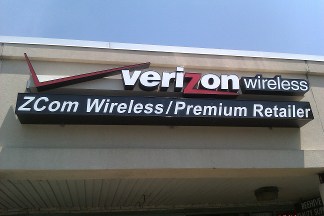
A ZCom owned Verizon Wireless store in New Jersey

Verizon Wireless executives forced independent authorized resellers of the company’s prepaid wireless service to buy cheap phones and activate them with their own money, fraudulently boosting the number of so-called “new activations” Verizon reports to its stockholders.

That is the chief allegation in a new lawsuit filed not against Verizon Wireless itself, but its largest franchisee, ZCom.

The NY Post reports Verizon Wireless executives who managed independent New York Verizon retailers masterminded the alleged scam by suggesting Verizon Wireless’ biggest franchisee, ZCom, “fraudulently increase the number of Verizon Wireless new account activations through the fabrication of fraudulent prepaid accounts,” the suit charges.

ZCom, which sub-leases authorized retail locations for Verizon products, was the defendant in the suit because ZCom can make or break independent store owners who sub-lease, staff, and manage the retail stores.

Plaintiff Shelly Bhumitra, who sub-leased several Suffolk County stores from ZCom, told The Post he was pressured to fraudulently activate pre-paid phones when a Verizon Wireless executive came to his store with ZCom’s owner, Iminder “Vikas” Dhall.

“They suggested that with our own money we should buy inexpensive phones [not smartphones],” and then load them with $30 of prepaid minutes, he said in an interview.

Bhumitra said he was then told to “give them away as bonus phones” to customers so that when used they would count as new activations.

The store owner said he was also instructed to load prepaid minutes onto phones that customers were throwing away and activate them with fictitious names. He was told to keep them in a drawer and make calls on them once or twice a month, echoing charges in the suit.

A store owner would ultimately earn $55 from each activation — enough to more than make up for the $30 outlay.

The three Verizon Wireless executives outed for allegedly taking part in the scheme have all recently resigned, according to the lawsuit.

Verizon itself is taking several measures to distance itself from the case.  Not being named as a defendant has allowed the company to avoid commenting, claiming it would be “inappropriate.”  The company also canceled its contract with ZCom, which generates $150 million in revenue for Big Red every year and holds the “master lease” to 130 Verizon Wireless stores, which are all over downstate New York.  For now, those store locations will remain open.

ZCom’s lawyer denied the allegations in the lawsuit.

Quarterly financial reports can make all the difference for shareholders who can make or break a stock based on financial results.  Verizon Wireless has had an increasingly challenging time managing to grow its prepaid division, which industry observers say used to charge more than its competitors for no-contract plans.  By inflating the number of new activations in company results, shareholder value is artificially protected.  Store owners can be convinced to play along because of lucrative new customer signing commissions, and to meet required sales targets.  Poorly performing store manager/owners can find their leases terminated and, in a worst-case scenario, the store location itself can be closed.

Bhumitra claims he was intimidated into going along with the alleged scam.

Verizon Wireless has tried to compete more aggressively in the prepaid category in 2011, with some success.  After creating new monthly packages bundling voice minutes with data and texting at lower pricing, the company added 879,000 new prepaid customers in the first quarter, and 1.3 million in the second, the Post reports.


Search This Site:

Contributions:

Recent Comments:

Your Account:

Stop the Cap!