Home » Online Video » Recent Articles:

Netflix CEO: “I Messed Up,” On Price Changes, But Gives Customers New Reasons to QUITster

Phillip Dampier September 19, 2011 Consumer News, Online Video, Video 1 Comment

Get ready for Qwikster

Netflix CEO Reed Hastings apologized this morning on the company’s blog for the perceived lack of “respect and humility in the way we announced the separation of DVD and streaming, and the price changes,” imposed on customers this month.

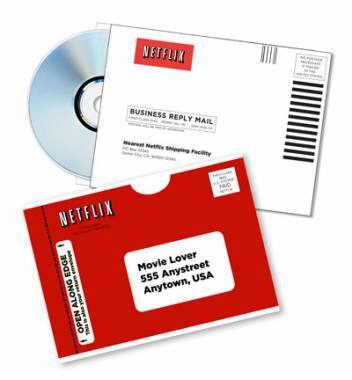
Many members love our DVD service, as I do, because nearly every movie ever made is published on DVD, plus lots of TV series. We want to advertise the breadth of our incredible DVD offering so that as many people as possible know it still exists, and it is a great option for those who want the huge and comprehensive selection on DVD. DVD by mail may not last forever, but we want it to last as long as possible.

I also love our streaming service because it is integrated into my TV, and I can watch anytime I want. The benefits of our streaming service are really quite different from the benefits of DVD by mail. We feel we need to focus on rapid improvement as streaming technology and the market evolve, without having to maintain compatibility with our DVD by mail service.

So we realized that streaming and DVD by mail are becoming two quite different businesses, with very different cost structures, different benefits that need to be marketed differently, and we need to let each grow and operate independently. It’s hard for me to write this after over 10 years of mailing DVDs with pride, but we think it is necessary and best: In a few weeks, we will rename our DVD by mail service to “Qwikster”.

We chose the name Qwikster because it refers to quick delivery. We will keep the name “Netflix” for streaming.

[flv width=”640″ height=”380″]http://www.phillipdampier.com/video/YouTube An explanation and some reflections 9-19-11.flv[/flv]

Netflix CEO Reed Hastings apologizes and explains the company’s new mailed DVD service Qwikster.  (3 minutes)

Hastings promises little will change with Netflix’s DVD-rental business except the name.  But is that enough to erase the perceived price and policy changes customers are complaining about?  Some of our readers say no, and most of the 10,000+ comments on Netflix’s blog as of this afternoon were also very hostile.

“He’s re-arranging the deck chairs and calling them lounge seats, but they are really the same deck chairs,” shares reader Tom Defrancisco in Austin, who shared the story with us.  “The ship is still taking on water, and that will only get worse when the rest of Hollywood gets their piece.”

Defrancisco is referring to ongoing content contract renewals Netflix is pursuing to keep, and expand, its online video streaming.  With the potential forthcoming loss of content from Starz, which could take a significant amount of current movie titles offline, subscribers may not be willing to pay more for less content to stream.

“It’s inevitable Netflix will have to raise streaming prices in the next six months when some of their content deals are renewed, and I am asking myself if it is worth $10-12 a month to stream old documentaries, TV shows, and movies I barely care about when current movies are simply not available online,” Defrancisco adds.

[flv]http://www.phillipdampier.com/video/CNBC Netflix Quixster Equals Quitster 9-19-11.flv[/flv]

CNBC investors and analysts are calling Netflix’s announcement they are splitting up their streaming and DVD rental business a “the third strike” for the company and are telling investors to get out before it’s too late.  “Qwikster=QUITster,” says Michael Pachter, Wedbush Securities, who thinks customers are once again the big losers.  “In the last three months, customers have seen prices rise, the quality of streaming content decline, and they just made the service a lot more complicated.”  (4 minutes)

Several of our readers miss Netflix’s 1-out-DVD/streaming companion plan, which used to offer unlimited streaming and one DVD rental at a time for $9.99 a month.

“I don’t care if they call it Netflix or Qwikster or MasterWatch,” says our reader Kyle. “It’s the same thing at the same high price called something else.  Who are they trying to fool?  I think it’s very telling Mr. Hastings doesn’t even directly own shares in his own company, and has sold off tens of millions in indirect shares he controls.”

The company’s new YouTube channel is also being pelted with negative views of Netflix’s latest business moves.

VoiceOreezn:

You guys just don’t get it. You don’t care what your subscribers want, and now are trying to justify your actions. Your streaming service sucks, and the pickings are very slim. I cancelled my account. It’s not about price, it’s about greed. You started off with a good concept, (but not enough streaming movies). Now, you’re just another greedy corporation. Want people back? Give them MORE, not less. I’d be very afraid of Amazon if I were you.

Netflix stock has lost nearly 50 percent of its value since the company first announced its price increase and plan changes on July 12.  Last week, Netflix admitted it was adding fewer new subscribers than forecast since raising prices nearly 60 percent on combination streaming-DVD plans.

[flv width=”640″ height=”380″]http://www.phillipdampier.com/video/Bloomberg Cory Johnson Discusses Netflix Subscriptions 9-16-11.flv[/flv]

Bloomberg talks with Cory Johnson about the outlook for Netflix Inc., after the company cut its U.S. subscribers forecast following a price increase.  Netflix has some surprise expenses coming up.   (2 minutes)

Some analysts, including Gabelli & Co analyst Brett Harriss don’t think today’s developments will make much of a difference, telling Reuters Hastings has talked repeatedly about separating the businesses in the past.

But one thing Qwikster will bring that Netflix never had: video game rentals for Wii, Playstation 3 and XBox 360 owners.

MediaMall’s PlayLater Goes Public; Offers DVR Functionality for Online Video

Phillip Dampier September 15, 2011 Consumer News, Online Video, Video 1 Comment

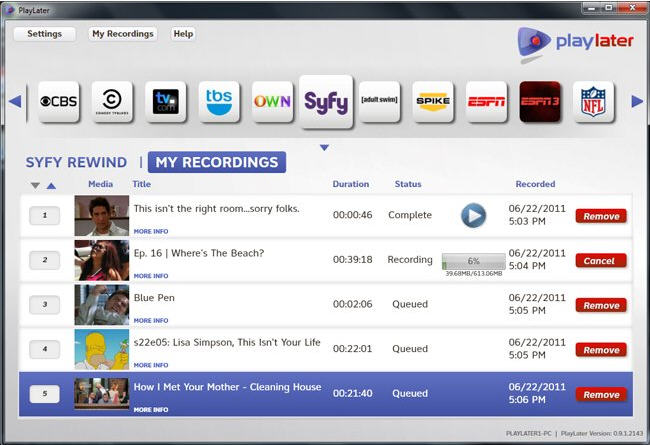
MediaMall this week introduced PlayLater, a new software DVR for online video, allowing users to record online streamed content from Hulu, Netflix, or from almost any other website, storing unlimited content on your personal computer for later viewing.

PlayLater is being marketed as a companion to the company’s first product — PlayOn, which streams virtually any video format to television sets and portable devices like smartphones and tablet computers.

MediaMall’s products directly target pay television “cord-cutters.”  By serving up unlimited video content from web video providers — recorded or live — to television sets and portable devices, there may be more than enough to watch without paying for hundreds of cable networks you don’t care about.

PlayLater works easiest with its built-in online program guide, listing programming from the various “channels” the service supports.  Already “built-in” is listings for online content from Hulu, Netflix, Amazon’s Video On Demand, Pandora, YouTube, CNN, Fox News, TNT, and at least a dozen other networks.  Third party “plug-ins” extend the number of “channels” to other video content websites.

Viewers simply find the show or shows they want to record through the guide and press the “record” button to begin the capturing process.  Shows are quietly recorded in the background, and small pop-ups alert you when various recordings are completed.  The resulting files, recorded in a secure DRM Windows Media format, reside on your hard drive for later viewing.  You can record as much as your hard drive can accommodate, and beta testers quickly found they often amassed hundreds of recordings over a month — providing more content that most cable DVRs can handle.

When combined with MediaMall’s PlayOn, PlayLater viewers can take the show on the road, watching their stored shows over a television set in the next room or in another state, remotely streamed over your broadband connection.  You can also watch on Android or iPhone smartphones, or on tablet computers like Apple’s iPad.

MediaMall products come with a 14-day free trial, but after that you have to pay to keep watching.  The company intends to sell the packaged suite of PlayOn and PlayLater for $7.99 a month, or $69.99 per year.

Stop the Cap! has been using PlayOn at our headquarters for a few months now, and we’ve been very impressed with the results.  PlayOn effectively streams virtually any video file format we throw at it over to our Roku box.  It has largely replaced our first generation Apple TV running Boxee software, which has gotten progressively more troublesome with age.  The picture quality over our wireless N network has been excellent, and the accompanying Android app has also worked well streaming shows over Verizon Wireless’ 4G LTE network or Wi-Fi.  With Time Warner Cable’s 30/5Mbps DOCSIS 3 broadband service, PlayOn’s picture quality remains excellent even when streamed to remote televisions.

PlayLater is an interesting concept, but we’re not as impressed with MediaMall’s newest endeavor, for these reasons:

Android Phone PlayOn Media Player

MediaMall has no official partnerships with any of the content producers supported by the product.  After covering other product innovations that offer consumers increased viewing convenience, we’re certain content producers will adopt the same hostile response to PlayLater they have with other recording software that allows viewers to store a digital copy on their home computer.  That response could come in lawsuits or through technical adjustments to try and block access to PlayLater.  The company says the legality of their software DVR should not be an issue, considering consumers can already record shows on cable company DVRs and home video recording units.  The biggest “risk” for MediaMall is the fact it allows users to record and save shows from services like Hulu, even after their “online viewing window” expires (typically after a month).  You could theoretically build a season-long collection of shows with PlayLater, a concept that violates Hulu’s terms and conditions.

While the concept of a DVR for online viewing allows for convenient time-shifting, most of the shows available to record are already available “on-demand.”  It makes little sense to record a show you can launch and watch anytime you want.  MediaMall says their product will appeal most to travelers who find themselves without an Internet connection, either because they are flying, driving, or visiting relatives without Internet access.  In these cases, watching pre-recorded shows may make sense. We think the concept of automatically recording shows from live video streams (or from Slingbox, cable or satellite TV) would be more helpful.  Those of us who would like to keep cable but dispense with overpriced DVR rental fees would thank you.

The PlayLater application currently works only on Windows-based computers.  A Mac version is reportedly in development.

Remote viewing requires the PlayOn companion application, which means leaving two software programs running continuously.

Recordings are DRM-protected and technically rely on a “screen-recording” approach, albeit one that takes place in the background.  Recordings occur in real time, and the video quality suffers slightly from the transcoding between the original media format and the DRM-protected video file eventually produced and saved on your computer.  Tests showed some occasional screen glitches when busy websites suffered from traffic congestion.  We also found very slight audio sync problems from time to time, but were barely noticeable.

You can’t currently move the video files and watch them on another computer or device — they either have to be watched on the original computer, or streamed with PlayOn to another device.

The package may be too expensive for some viewers’ tastes.  Without PlayOn, PlayLater sells for $4.99 a month or $49.99 a year, but that ties your viewing options down.

Overall, PlayLater will probably be most attractive to those who find themselves uncomfortably without their Internet connection and looking for something to watch.  If you install the software on a portable laptop (left on to handle recordings), watching on the computer itself may prove to be the most convenient way to watch.  But we’re not impressed with the restrictive DRM making it impossible to simply transfer recordings between devices without streaming, and the concept of recording on-demand programming that can be watched whenever one wants anyway is not going to convince a number of people to pay $50 a year for the software.  PlayOn has proved far more useful to us than PlayLater probably ever will.  But one benefit we did appreciate with PlayLater — the ability to easily skip the increasing commercial load found on Hulu.

[flv width=”640″ height=”380″]http://www.phillipdampier.com/video/PlayLater.flv[/flv]

An introduction to PlayLater.  (1 minute)

Turner Introduces New TV Everywhere App for Everyone But Time Warner Cable Customers

Cable, satellite and telco-TV subscribers around the country can now watch most of the hit shows on Turner’s TBS and TNT Networks for free, assuming two things are true:

  1. You pay for a package of television channels from Comcast, DirecTV, Dish Network, Cox Communications, Cablevision Systems, Suddenlink Communications, Verizon FiOS, or AT&T U-verse.
  2. You are not a Time Warner Cable subscriber.

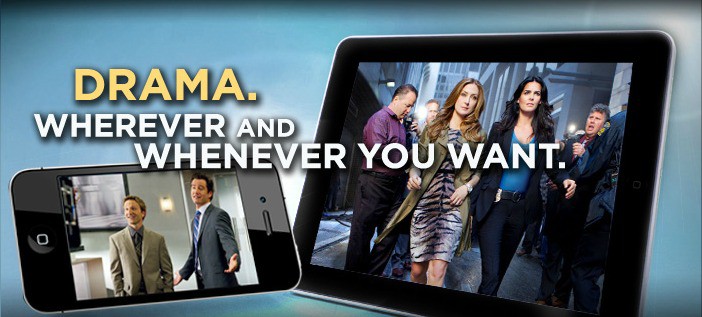
The new TV Everywhere app, available for phones and tablets, comes free of charge.  Once authenticated as a legitimate pay television subscriber, users can watch hit series and some older shows from both networks.

Once again, Time Warner customers are on the outside, looking in.  The nation’s second biggest cable operator has not been a TV Everywhere team player, preferring to launch its own live streaming iPad application and steering clear, so far, from on-demand, online viewing from most of its partner networks, including HBO.  Time Warner Cable executives have, in the past, alluded to licensing fees and user authentication complications for not launching TV Everywhere on-demand viewing for its customers, but the company has not explained why it has not signed on for Turner’s app.

TV Everywhere, a concept on the drawing board for almost two years, is an attempt by the pay television industry to lock down online video programming for paying customers, in an effort to slow down “cord cutting” by consumers trying to save money on their cable TV bill.  The concept delivers unlimited access to popular cable programming, but only to those who already pay to subscribe.

Many TV Everywhere projects have been soft-launched without much publicity, but that is not true for Turner’s app.  The network has commissioned several clever advertisements featuring various network stars promoting the app, and now Turner wants to educate consumers about how to use it to watch shows online.

The most complicated part of the process is getting “authenticated” by the application for authorized viewing.  Some cable companies like Time Warner want customers to launch access to TV Everywhere programming from the cable company’s website, where customers have already been authenticated when they sign up for an online account.  Other companies are using customer account numbers, PIN codes, or passwords printed on monthly bills to let customers register directly for access.  When the application matches a customer account number or PIN code, the content becomes accessible.  It is typically a one-time-only hassle, but there have been cases where customers have had to grab a recent bill more than once to re-authenticate themselves.

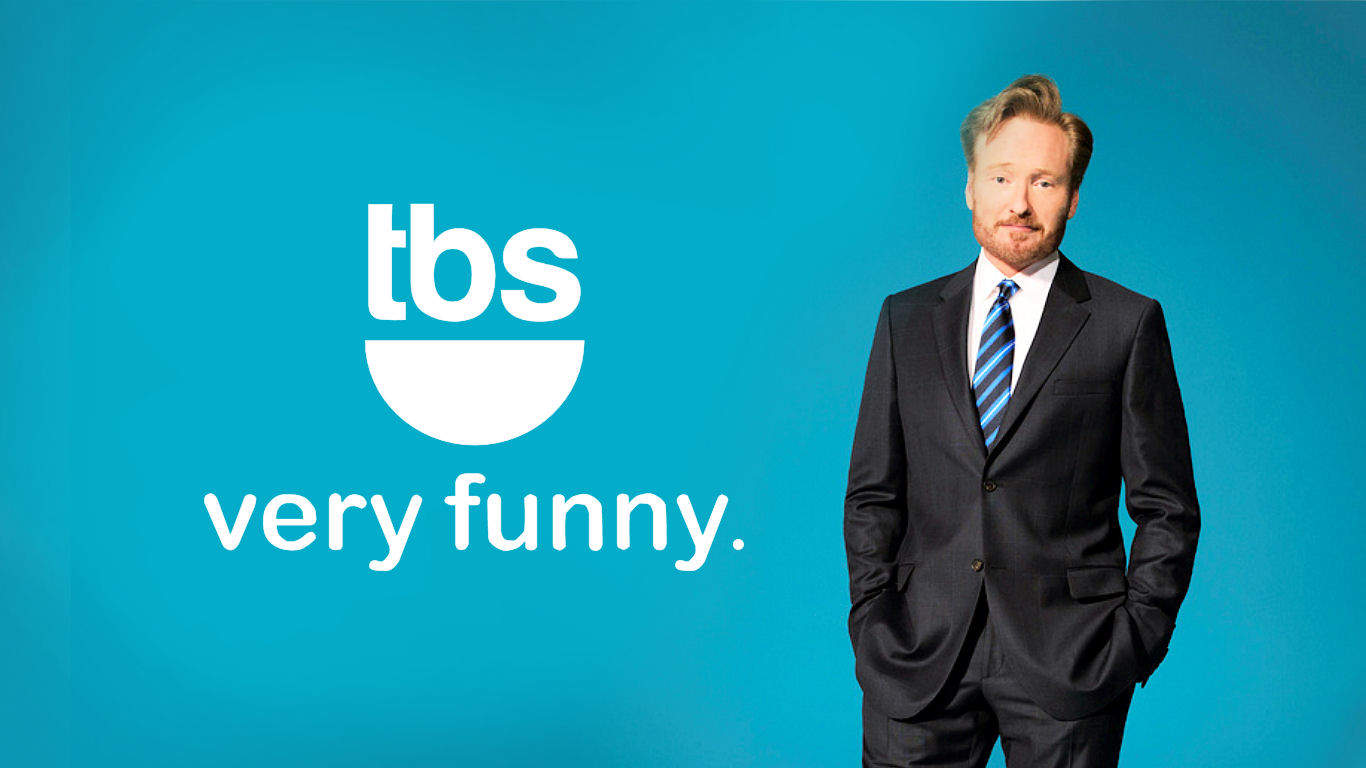
Not every show will be made available for online viewing.  Many rerun off-network shows shown on TNT and TBS don’t currently include streaming rights.  So while users can watch past episodes of Conan O’Brien, they’re out of luck if they want to watch Friends.

[flv width=”640″ height=”500″]http://www.phillipdampier.com/video/Turner App.flv[/flv]

Watch a selection of spots from the new advertising campaign for Turner’s ‘TV Everywhere’ app.  (4 minutes)

Netflix Restores Concurrent Video Streams: Now Back to Two Per Customer

Phillip Dampier September 7, 2011 Consumer News, Editorial & Site News, Online Video 6 Comments

In what Netflix is characterizing as a technical fault, those who experienced a limit of one-stream-per-“Unlimited Streaming”-Account can now watch at least two streams at the same time once again.

Stop the Cap! broke the story on Netflix’s streaming crash diet on Labor Day after being contacted by several readers reporting the apparent new limitations.  Stop the Cap! confirmed them ourselves several times over the past three days, and so did Mashable‘s Ben Parr, who ran into the same error message we did after trying to stream multiple movies at the same time (although he had no trouble watching one movie and one television show concurrently.)

Netflix’s spokesman Steve Swasey called it a big misunderstanding this morning, telling us “no Netflix member is limited to less than two concurrent streams. A few Netflix members have heard differently from us, which is an error that we are correcting.”

Perhaps, but the errors continued straight through until early this afternoon, when we were finally able to confirm the launch of two concurrent streams without an error message.

Netflix has always maintained streaming limitations in their terms of service and in their Frequently Asked Questions.  The company, to this day, still proclaims “you may watch [Netflix streaming on] only one device at a time” if you are a stream-only customer.  Their terms of service emphasize this point in all-capital letters:

YOU WILL BE ALLOWED TO INSTANTLY WATCH SIMULTANEOUSLY ON ONLY ONE SUCH DEVICE AT ANY GIVEN TIME. For certain membership plans in the United States, you may instantly watch simultaneously on more than one Netflix ready device within your household. Click here to view the number of devices on which you may simultaneously view movies & TV shows that are associated with your plan. The number of devices and concurrent streams may change without notice to you. For certain limited membership plans in the United States, your available Netflix ready device may be limited to personal computers.

While those clearly are the policies of Netflix, the reality has been customers could easily stream two or more concurrent shows over their Netflix streaming account from different devices without provoking an error message.  But that changed this past weekend, when we began to receive news tips from frustrated customers.

Some consumers never realized they could watch multiple streams at the same time, and were unconcerned with Netflix potentially limiting this feature.  For them, it was tantamount to abusing their Netflix account.  It is a fact some customers have shared their accounts with friends and family members, something that streaming restrictions would go a long way to discourage.  But there are legitimate uses as well, especially in large families with different viewing habits.

We feel it’s important for Netflix to convey exactly what their policy is regarding concurrent video streaming.  If Steve Swasey wants customers to feel assured they can watch two streams concurrently, their FAQ and terms of service should be updated to reflect that.  It’s clear Netflix reserves the right to change the number of devices and concurrent streams without notice, something our readers obviously feel very strongly about.

Whether this was truly a technical fault or a trial balloon that came crashing down under negative customer reaction, the message is clear: most customers are very glad to have concurrent streaming back, and hope it remains a part of the Netflix experience.

Updated: Netflix Cracks Down on Sharing: One Stream Per Customer Unless You Pay More

Phillip Dampier September 5, 2011 Consumer News, Online Video 97 Comments

Netflix streaming customers who happen to share their account with other family members are having a frustrated Labor Day weekend as Netflix completes implementation of strict new limits on the number of concurrent video streams available for viewing.

Netflix has always unofficially had streaming limitations:

Some membership plans allow you to watch simultaneously on more than one personal computer or Netflix ready device at the same time. If you are on the 1 disc out at-a-time plan [or stream-only plan], you may watch only one device at a time. If you are on the 2 discs out at-a-time plan, you may watch on up to two devices at the same time. Members on the 3 disc plan can watch on up to three devices. The maximum is four devices simultaneously, and that is available for members on the 4 or greater discs out at-a-time plans.

But many of our readers have told us they have never had problems running two or even three concurrent streams at the same time on a “stream-only” plan… until recently.  What Netflix’s “official policy” was and what customers could actually do were two different things.

“Netflix never liked two streams at the same time on the same browser, but if you have several family members, two or three people could watch different shows on their own devices at the same time, but no more,” says Stop the Cap! reader Jared Ustel.  “As of this weekend, streaming customers can only watch one show at a time.”

Stop the Cap! was able to verify this ourselves this weekend.  Sure enough, while in the recent past we were able to support up to three video streams running at the same time, now it is just one.

This new restriction seems timed to coincide with Netflix’s recent price increases, which took effect Sept. 1.  Now, large families sharing a Netflix account will either have to reserve time to watch their respective favorites or:

  1. Pay considerably more for a combo disc-rental/streaming plan which unlocks a corresponding number of concurrent streams.  If you want two concurrent video streams, you will need to pay $19.98 a month, which also allows you two mailed DVD’s out at a time.  Three streams (and DVD’s) runs $23.98, four: $29.98;
  2. Sign up for a second Unlimited Streaming account at an additional $7.99 a month;
  3. Forget about Netflix.

While Netflix may have been hoping to cut down on the number of “shared accounts” with friends and distant family members, their policy change will hit families hard.

With the controversial Sept. 1 price increase effectively near-doubling the cost to watch video streams and rent one DVD at a time by mail, now may not be the best time to further antagonize loyal customers.

[Updated 9/7/11 — 12:22pm ET — “No Netflix member is limited to less than two concurrent streams,” Netflix spokesman Steve Swasey reports. “A few Netflix members have heard differently from us, which is an error that we are correcting.”

They have not corrected it as of yet.  Jared updates us to say he is still unable to stream more than one program at a time, and as of 11:45am ET this morning, launching more than one stream at Stop the Cap! HQ brings the error message shown below.  Technical glitch or last-minute policy shift?  Two concurrent streams still don’t work for us or for several of our reporting readers (at the moment anyway) and their long-standing FAQ still states Unlimited Streaming customers are limited to a single stream.  Mr. Swasey can help his own customers by ensuring concurrent streaming is restored and the FAQ updated to reflect the information he shared.]

[Updated 9/7/11 — 3:00pm ET — Two concurrent streams are back.  More details here.

As of late this morning, Netflix was still delivering this error message.

Search This Site:

Contributions:

Recent Comments:

Your Account:

Stop the Cap!