Home » Consumer News » Recent Articles:

Grand Rapids TV Hands Over Eight Minutes of its Morning Show to Heart AT&T U-verse

Phillip Dampier June 10, 2010 Astroturf, AT&T, Consumer News, Video 2 Comments

AT&T is a paid sponsor of the eightWest program, which may have had something to do with those eight minutes of positive coverage.

Last month, a Rochester, N.Y., morning television news show handed over five minutes of airtime in a thinly-disguised advertisement for local phone company Frontier Communications.

WOOD-TV in Grand Rapids took shilling to a whole new level this morning on its hour-long morning lifestyle program eightWest when it handed over nearly eight minutes to promote AT&T’s U-verse service, infomercial-style.

Essentially handing the microphone over to AT&T area marketing manager Dan Wells, the show’s hosts fell all over themselves talking about how wonderful the service was.  Channel 8’s Terry DeBoer had her original AT&T installation personally supervised by Wells, a service ordinary Grand Rapids consumers probably won’t receive.

As the “Cutting Edge” segment progressed, the station ran a chyron including AT&T’s logo and slogan, “Rethink Possible” as Wells talked about all of the service’s claimed benefits.  DeBoer just thought it was all awesome, gushing this sampler of reactions as a technobeat soundtrack pounded away in the background:

  • “An exciting new adventure in television!”
  • “It really is quite remarkable!”
  • “The super-sized DVR is awesome!”
  • “What are the other services and features that take U-verse to the next level?”
  • “It’s exclusively offered to you by our friends at AT&T.”
  • “Thanks to the power of AT&T and all of their services, you can save money.”

After eight minutes of enthusiasm, there was no time left to inform viewers of a slightly relevant fact only visitors to their website might have noticed: AT&T is a sponsor of the eightWest program.

[flv width=”480″ height=”380″]http://www.phillipdampier.com/video/WOOD Grand Rapids ATT U-Verse 6-10-10.flv[/flv]

Spend eight minutes in AT&T’s marketing Universe on WOOD-TV’s morning lifestyle program, eightWest.  (8 minutes)

Cashing in On Your Time Warner Cable Rate Increase: Top Executives Sell Shares, Earning Millions

Phillip Dampier June 9, 2010 Consumer News, Data Caps, Editorial & Site News 1 Comment

While your cable and broadband bill increased in 2010, so did the net worth of some of Time Warner Cable’s top executives, compensated in part with shares of company stock.

Chairman, President & CEO Glenn Britt sold 50,000 shares of TWC stock on 02/26/2010 at the average price of $46.44 a share.  While he ponders whether or not to slap limits on your Road Runner broadband service, he can run his fingers through a cool $2,322,000 from this stock sale alone. If you want your child to score big time in investments in the future, then it might wise to look into information such as junior stocks and shares ISA.

Chief Operating Officer Landel C. Hobbs, the man that said Time Warner Cable needed the money earned from Internet Overcharging to afford costly network upgrades, did better than Britt last week when he sold 57,000 shares at an average price of $54.58 a share.  Perhaps chipping in some of that $3,111,160 in extra compensation would help things along.

It doesn’t just stop there:

  • Senior EVP & CFO Robert D Marcus sold 28,504 shares of TWC stock on 05/27/2010 at the average price of $54.21 — $1,545,201.84
  • TWC Ventures Carl Uj Rossetti sold 13,154 shares of TWC stock on 05/27/2010 at the average price of $54.40 — $715,577.60
  • EVP & Chief Technology Officer Michael L Lajoie sold 9,169 shares of TWC stock on 05/03/2010 at the average price of $56.37 — $516,856.53
  • EVP & Chief Strategy Officer Peter C Stern sold 3,676 shares of TWC stock on 04/26/2010 at the average price of $55 — $202,180
  • EVP & Chief Strategy Officer Peter C Stern sold 1,483 shares of TWC stock on 04/05/2010 at the average price of $53.32 — $79,073.56
  • EVP, General Counsel & Secretary Marc Lawrence-Apfelbaum sold 1,394 shares of TWC stock on 04/05/2010 at the average price of $53.32 — $74,328.08

In total, for just the months of April and May and the first week of June, seven executives have extracted more than $8.5 million dollars for themselves.

You got a rate increase to help make all that possible.

Cable Trade Press Understands AT&T’s 2GB Cap – ‘You’ll Blow Right Through It’

Spangler

While the mainstream media and some of AT&T’s apologists tell consumers AT&T’s 2 GB monthly usage limit will impact only a handful of “abusers,” the cable trade press is telling its readers the industry insider’s secret — consumers will blow right through those caps.

Todd Spangler, who is an Internet Overcharging advocate and columnist for Multichannel News, a cable industry trade magazine, writes the implications of AT&T’s usage cap couldn’t be clearer to him.

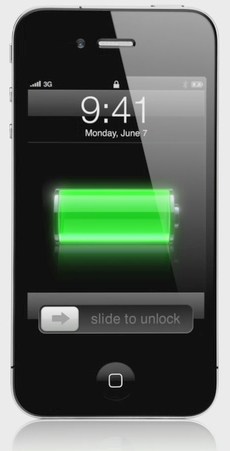
The new iPhone 4, introduced yesterday to the predictable media crush, provides 10 hours of battery life for playing video, among other features.

But now that AT&T has eliminated its all-you-can-eat plan for smartphones, you will blow through the maximum 3G usage for the entry-level 200 MB plan if you watched just 4 minutes of streaming video per day. That would include commercials.

Even AT&T’s more generous DataPro 2-GB plan would allow just 35 minutes per day of streaming video (assuming you used your iPhone for nothing else), according to the carrier’s online data calculator.

Like a stopped watch, at least he’s right twice a day.

Spangler celebrates the opportunity AT&T’s overcharging scheme provides the cable industry to “grease the skids” for data caps and overpriced consumption billing on cable modem service.

In Spangler’s “Cable companies pay my salary”-world-view, it wasn’t that Time Warner Cable did the wrong thing when it tried to triple broadband pricing — to $150 a month — for the exact same level of service customers previously enjoyed.  It was all about its execution.

Spangler characterizes Time Warner Cable CEO Glenn Britt as a victim, burned over the company’s failed overcharging experiment in 2009.  When one plays with matches, is it any surprise there are consequences?

Consumers will respond to more overcharging schemes the same way they did a year before — with overwhelming condemnation and opposition.  It’s hard to convince consumers to pay a higher price for limits on usage while telling shareholders you’ve invested less to expand your network, charged more to access it, all while the costs to provide the service have dropped dramatically.  Consumers call that out for what it is: greed.

Make no mistake, consumers hate usage caps and overpriced consumption billing and Time Warner Cable has no justification to introduce either.

[flv]http://www.phillipdampier.com/video/CNBC ATT Cuts Unlimited Data 6-2-10.flv[/flv]

Normally business-friendly CNBC covers the introduction of the 2 GB usage cap on AT&T smartphone data usage.  Then the CNBC anchor got skeptical about AT&T’s claims this was good news for consumers, admitting she hates overcharging schemes that deliver a surprise on the bill at the end of the month.  Lance Ulanoff, editor of PC Magazine expressed some doubts himself.  (8 minutes)

New Apple iPhone Announced, But Should You Buy?

Apple's iPhone 4

As expected, Steve Jobs introduced America to the new Apple iPhone 4 today at Apple’s Worldwide Developer Conference in San Francisco.  Karl Bode at Broadband Reports did a great summary on what’s new, so I won’t reinvent the wheel:

As everyone had expected, Apple just announced the long-awaited iPhone 4. According to his Jobsness, the phone is 24% thinner than the iPhone 3GS and as expected has a more powerful primary 5MP camera with flash — and a new camera on the front that will be used primarily for video chat. The phone’s stainless steel frame (sandwiched by glass) is being partially used as an antenna, something that may prove helpful for connectivity issues.

Other specs: Dual mics, 802.11n WiFi, GPS, compass, accelerometer, Quad band HSDPA (7.2Mbps), gyroscope (perfect for gaming, insists Jobs). The company says they’ve also improved the device’s battery. It can now handle 7 hours of 3G talk, 6 hours of 3G browsing, 10 hours of Wi-Fi browsing, 10 hours of video, or 40 hours of music. The phone also records HD video (720p at 30fps, insists Steve), and the new flash will stay on during video recording.

Amusingly, Apple ran into network connectivity issues while trying to demonstrate the phone’s higher resolution screen (join the club, Jobs). According to Apple, the phone comes in white or black, with the 16GB version costing $199 and the 32GB version costing $299. The phone will be available on June 24, with pre-orders beginning on June 15.

Karl also notes, as others have confirmed with us, AT&T is so eager to get this new phone into your hands (along with a new two-year contract), they are waiving the usual two-year waiting period before customers can upgrade their phones.  If your contract expires anytime this year, you can obtain the phone at the subsidized price.

But should you?

For many, the iPhone 4 will represent an incremental upgrade, especially if you aren’t a power user.  In this economy, is it worth $200-300 for a new phone and a new service commitment?

The upgrade for current customers, who can keep their unlimited data plan, may make sense -if- you receive tolerable service from AT&T and feel the latest phone would directly benefit you.  You should consider, however, that signing a new contract will lock you into another two year marriage with the company that drove more Americans crazy with bad service, dropped calls, slow data, and irritating customer service than any other.  A divorce will cost you up to $325 per phone. Their 3G coverage isn’t all that, either.

It also gives the company that loves to cap more of your money.

Unfortunately, waiting for the iPhone to arrive at Verizon Wireless is increasingly less likely to be a panacea for AT&T’s Internet Overchargitis.  That’s because AT&T and Verizon are the Mary Had a Little Lamb of big telecom:

Everywhere that AT&T went,
AT&T went, AT&T went,
Everywhere that AT&T went
Verizon was sure to go.

It’s a safe bet that by the time Verizon brings forth the coveted iPhone, it will have an Internet Overcharging scheme matching AT&T’s.

If you are seeking to upgrade to a smartphone, it’s increasingly likely you’ll find a better deal with Sprint or T-Mobile, both of which have no plans for AT&T’s pricing schemes.

The best way to get a company like Verizon or AT&T to pay attention is to avoid their products when they charge too much.  A dramatic reduction in demand for AT&T’s iPhone among new customers, for example, would send a clear message to Wall Street that their love of usage caps is hurting shareholder value in a big way.  They follow the money.  If existing customers hang on to their $30 unlimited plans while other customers head elsewhere to avoid AT&T’s Internet rationing, you’ll see an overnight conversion among many industry players suddenly demanding a return to the unlimited buffet.

Or better yet, how about giving every customer a choice of both types of plans — pay less for limited service or pay today’s prices for unlimited.

[flv width=”636″ height=”380″]http://www.phillipdampier.com/video/Apple – iPhone 4 6-2010.mp4[/flv]

Apple proclaims the arrival of iPhone 4, calling it a revolutionary upgrade.  Apple released this video showcasing iPhone 4’s video capabilities that AT&T has now effectively hobbled with a wireless Internet rationing plan that punishes customers who try to use the phone’s new features.  (6 minutes)

AT&T’s Data Caps Tell Customers You Just Can’t Trust AT&T’s Overburdened Network

AT&T’s hurry to end unlimited wireless data plans for its customers, many of which are using popular Apple iPhone and iPad devices, signals AT&T’s overburdened network can no longer handle customer demand.  With the threat of even higher data usage from today’s release of the next generation iPhone, which will highlight bandwidth-intensive video conferencing and streaming, AT&T put the brakes on before new customers even activate their new phone.

With a penalization program in place, AT&T is sending a message to customers contemplating owning the newest generation of smartphones that its network is in no position to actually provide service to those devices, particularly bandwidth-heavy video streaming.

Customers who dare use these video streaming services face the prospect of paying an overlimit fee up to $15 for just 200 megabytes of data.  That’s a compelling reason to think twice about every high bandwidth application. And that may be exactly the point for a network that suffers from congestion problems in several major American cities.

AT&T has consistently ranked at the bottom of consumer surveys done by credible organizations like Consumer Reports, typically because of network capacity issues.  Yet the carrier also charges, on average, the highest out-the-door price among the four major carriers — an average of $134 a month for a two-phone plan with a data package.  That’s $20 higher than either T-Mobile or Sprint, eight dollars more than Verizon Wireless.

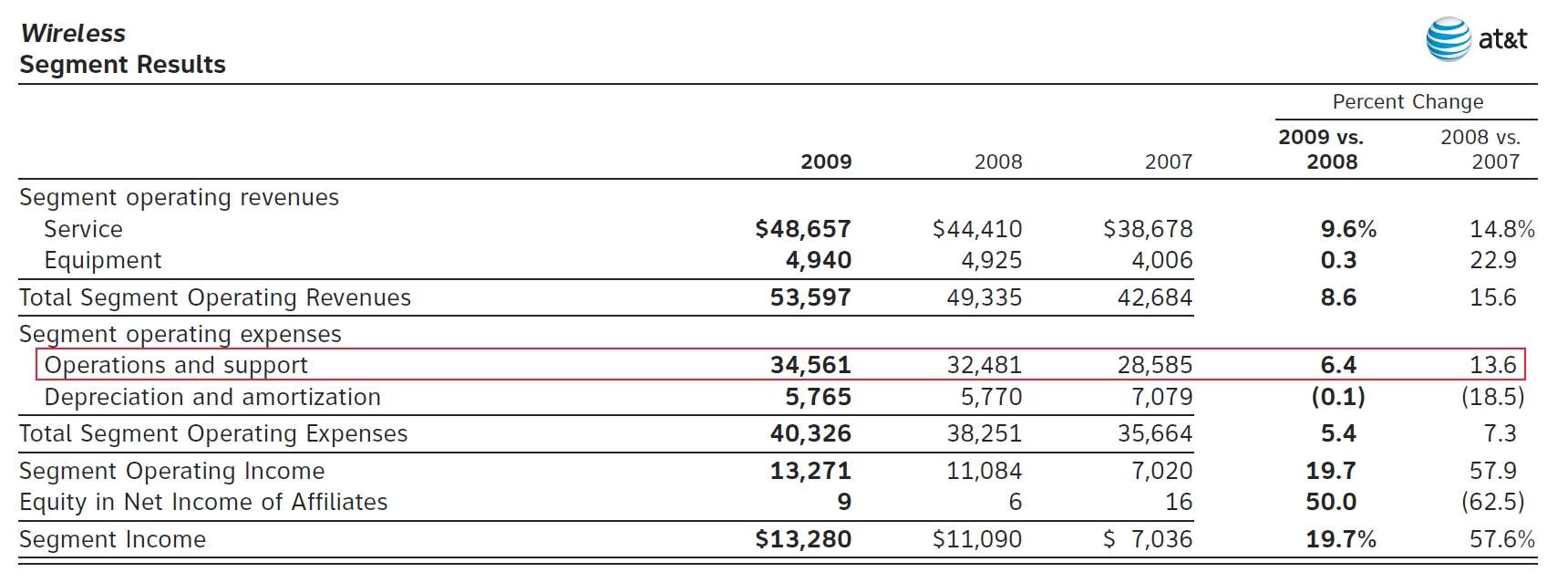
Ranked rock-bottom for voice quality, downright lousy for customer service, and only average for its other services, AT&T has simply not kept up.  Yet AT&T raked in more than 13 billion dollars in profits in wireless last year.  The New York Times reports AT&T has at least 33 million smartphone customers, many committed to AT&T’s required $30 data plan.  That represents more than $900 million dollars per month in revenue — $10.8 billion dollars annually, and that’s for data services alone.

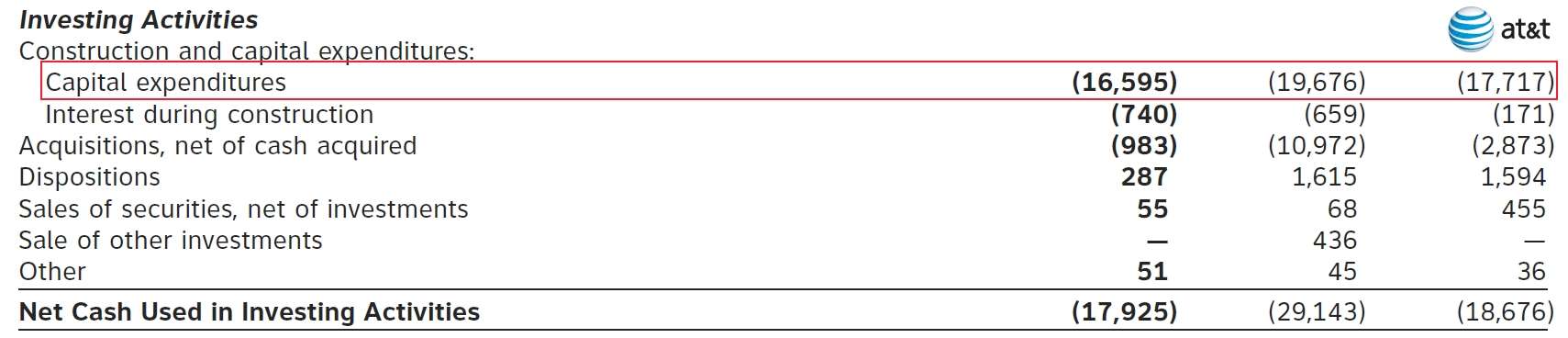
Yet the percentage of the company’s investments committed to expanding its network, measured under AT&T’s 2009 annual financial report, has not kept up with its enormous iPhone customer base, on AT&T’s network since 2007.

Source: AT&T's 2009 Annual Report -- AT&T's capital investments in its network and service don't keep up with the enormous increase in its Apple iPhone customer base introduced to AT&T service. Last year showed a dramatic reduction in investment when compared with 2008. AT&T is not exactly plowing all of its wireless profits back into its wireless business.

According to TownHall Investment Research, between January 2006 and September 2009, AT&T spent about $21.6 billion, or $308 per subscriber, on its wireless network. During that same period, Verizon Wireless spent about $25.4 billion, or nearly $353 per subscriber.  Verizon has outspent AT&T each of the past three years on service upgrades without the revenue benefits a stampede of iPhone-owning customers brings.  That gap has now grown into a nearly $4 billion dollars difference between the two providers in infrastructure upgrades.

“This is the story of a wireless carrier that is determined not to invest enough to meet the demand of users, but has decided to manage its network as a scarce resource,” says Chris Riley, policy counsel for Free Press. “This is what Wall Street loves: Reduce your expenditures and increase your revenues.”

In a barely competitive wireless marketplace, AT&T can afford to force customers to pay dramatically higher data costs in the months and years ahead, especially for iPhone customers who must use AT&T if they want a subsidized phone.  Even if a customer leaves, AT&T will earn up to $325 in cancellation penalties.

That iPhone exclusivity agreement with Apple has been an unlimited goldmine for AT&T. AT&T’s wireless business drives AT&T’s overall profitability, generating 57 percent of its operating income according to Gerard Hallaren, director of research at TownHall.

Search This Site:

Contributions:

Recent Comments:

Your Account:

Stop the Cap!