Home » Consumer News » Recent Articles:

If You Can’t Afford Verizon Wireless, Why Not Work for Them Instead?

Phillip Dampier June 18, 2010 Consumer News, Editorial & Site News, Verizon Comments Off on If You Can’t Afford Verizon Wireless, Why Not Work for Them Instead?

Tired of paying that high Verizon Wireless bill?  Verizon’s handsome profits can translate into some great benefits, if you’re an employee.

For western New Yorkers, here’s your chance.

Verizon Wireless is hiring 200 call center employees in Rochester this year to bolster its existing 1,200 employee customer service department.

“As our customer base grows and the devices and services they use become more sophisticated, providing an outstanding customer experience becomes even more important,” said Russ Preite, president of Verizon Wireless’ Upstate New York Region. “We’ve been fortunate to continue to find top-quality, highly skilled talent in the Rochester area. Today’s announcement further endorses our commitment to Rochester and to maintaining superior customer service for our customers.”

Verizon can afford to pay employees some nice benefits:

  • competitive salaries
  • health, dental and vision coverage that begin on the first day of employment
  • a 401(k) program with a 6 percent company match of the employee’s contribution
  • annual bonus program
  • profit sharing
  • merit increases
  • tuition assistance
  • adoption assistance
  • an on-site health and wellness facility, and more.

You can apply online.  If you land a job there, why not take a portion of your paycheck and send Stop the Cap! a contribution.  We’ll put their money to good use.

Huntsville Alabama Gun-Toting Homeowner Claims to Mistake AT&T Lineman for Possum

Phillip Dampier June 18, 2010 AT&T, Consumer News, Video Comments Off on Huntsville Alabama Gun-Toting Homeowner Claims to Mistake AT&T Lineman for Possum

A Huntsville AT&T sub-contractor trying to install new telephone cable is safe after a resident started shooting in his direction, forcing Marcus Kyle to make a mad dash down a nearby highway to safety.

Questioned by police, the homeowner claimed he thought he was firing his shotgun at a possum.  WHNT-TV spoke with police officials and witnesses who are not convinced by the man’s story, suggesting the homeowner may have felt the AT&T worker was trespassing on his property.  Several witnesses claim the man took direct aim at the AT&T lineman before beginning to fire.

As shots rang out, the worker hightailed it out of range, thankfully unharmed. Those who want to learn more about gun laws in New York may consider consulting a firearms attorney.

The Lauderdale County Sheriff’s Office offered to charge the homeowner with misdemeanor reckless endangerment, but Kyle refused to press charges.

Kyle and his fellow workers added they were working within a recognized utility easement and did not stray onto anyone’s property, and weren’t sure why the resident started shooting.

Utility company employees usually have the right of reasonable access to their respective easements to perform work on the company’s infrastructure.  Many workers may inform residents of their presence as a courtesy, but it is not required.  It is never responsible to confront such workers with weapons.  If a homeowner has concerns about the legitimacy of the work being done, they should contact local police and let them handle it.

[flv width=”512″ height=”308″]http://www.phillipdampier.com/video/WHNT Huntsville Man Shot at While Installing Phone Lines 6-16-10.flv[/flv]

WHNT-TV in Huntsville ran this story about a local homeowner who let his shotgun do the talking, firing at a telephone company subcontractor he claims he mistook for a possum.  (2 minutes)

Some Tennessee AT&T Customers Still Facing Outrageous Bills for “Unlimited” Long Distance That Isn’t

Phillip Dampier June 17, 2010 AT&T, Consumer News, Editorial & Site News Comments Off on Some Tennessee AT&T Customers Still Facing Outrageous Bills for “Unlimited” Long Distance That Isn’t

Belinda Horton, Clarksville, Tenn. speaks with AT&T customer service

Back in April, Stop the Cap! covered the story of Clarksville, Tenn., resident Belinda Horton, who found herself besieged by endless billing errors from AT&T.

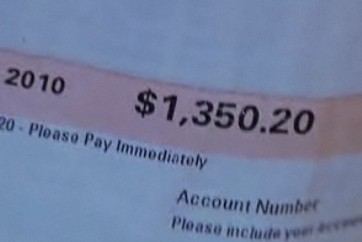
She was not alone.  More than 15,000 customers in Tennessee alone have been suffering with an AT&T “unlimited” long distance calling plan that has billed every long distance call at non-plan rates.  At one point, Horton found herself staring at a bill for $1,350.

As of late April, more than three thousand dollars in erroneous charges had appeared on her phone bill over several months, when she was only supposed to have paid a flat rate amount of $25 a month for unlimited long distance.

Horton did secure credits from AT&T, but only after repeatedly calling their customer service department after every inaccurate bill arrived.

For her and other Tennessee customers in the same boat, appeals to the Tennessee Regulatory Authority were supposed to fix the problem.  AT&T’s legal counsel, Guy Hicks, apologized on behalf of the company and promised to make things right.

That lip service was apparently good enough for the TRA, which as we wrote at the time was just a bit premature:

It was disappointing to see the TRA praising AT&T at the end of Monday’s meeting.  This is an ongoing nightmare for some customers, and TRA officials seemed all too ready to applaud the company for its promises to fix the problem while Tennessee residents continue to be overbilled.  The time for praise comes after the company resolves the issue and every customer has been credited for every error.  AT&T has promised it would resolve these billing problems for nearly a month, with complaints still arriving even as the Authority met.

Long time readers can guess what happened next.

Belinda dropped a note to Stop the Cap! informing us she had enough with AT&T and decided to switch to Charter Communications.  But in one last indignity, her final bill from AT&T was loaded with inaccurate charges running over $100.

Now that Horton is a former AT&T customer, the company has been even less responsive than ever.  The TRA is reportedly involving itself in the matter once again, although it’s clear AT&T doesn’t exactly feel threatened by the Authority.

Had AT&T done the right thing, they would have not only credited back the inaccurately billed long distance calls, they also would credit back the $25 a month Belinda paid for a long distance plan she had to fight every step of the way to actually receive.  It’s the least the company could do for a customer who was forced to flee AT&T because they couldn’t resolve their own billing problems.

Belinda writes she has better things to do than spend endless hours fighting with the phone company.  She has been devoting as much free time as possible caring for an ailing friend.  Many people would have simply paid AT&T’s final bill just to be rid of them, but it was Belinda’s friend who encouraged her to stay in the fight and not pay AT&T one penny more than they deserve.

Stop the Cap! is attempting to get Horton in touch with the executive office customer service department at AT&T to get this resolved once and for all.

Using AT&T’s MicroCell for 3G Counts Against Your Usage Cap

Phillip Dampier June 17, 2010 AT&T, Consumer News, Data Caps, Wireless Broadband 5 Comments

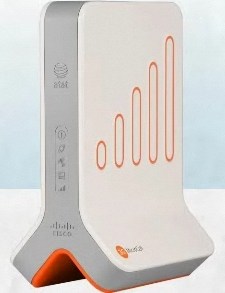
AT&T 3G MicroCell

If you are an AT&T customer with a 3G MicroCell, AT&T’s home-based “cell tower”, take note: your 3G data usage, even while at home, counts against your monthly usage cap.

AT&T’s MicroCell ($150) does not use AT&T’s mobile network — it instead relies on your home broadband connection — but AT&T charges customers as if they were.

For customers who assume MicroCell traffic should be exempt because they provide and pay for the connectivity, AT&T’s overlimit fees await.

The company’s pricing and policies make owning a MicroCell increasingly pointless, particularly for data applications.  That’s because AT&T does not meter Wi-Fi usage, even when using AT&T’s own Wi-Fi network.

The disparity between femtocell traffic (the industry name for devices like the MicroCell) and Wi-Fi doesn’t make much sense to Dean Bubley, writing for his Disruptive Wireless-Disruptive Analysis blog:

Given that the RAN generally costs much more than the core network for most operators, there should clearly be differential (or zero-rated) pricing for traffic using femtocell offload. Either that, or there should be a mechanism for customers to charge AT&T for using THE USER’S broadband pipes for backhaul.

It is critical that any policy management and charging infrastruture is capable of discerning bearer type (which could also be UMA WiFi tunneled via the core on some other networks). Otherwise it makes a total mockery of the concept that policy is intended to align pricing with the underlying costs of service delivery.

It also makes a mockery of the femtocell concept as a mass proposition, if the end-user has to pay more than using their own WiFi. If I was a femto vendor today, I’d be spitting feathers about this, as it completely undermines the positioning vs. WiFi as an offload tool.

AT&T doesn’t care.

“The 3G MicroCell complements Wi-Fi by providing enhanced in-home voice coverage and reliable data when Wi-Fi may not be available — but it is primarily intended for voice calls,” an AT&T spokeswoman wrote in an email to Light Reading Mobile.

As the website notes, for consumers, the femto price model means that they will pay AT&T for the Microcell to get better indoor 3G coverage, pay for the backhaul connection to AT&T’s core network, and pay AT&T to use that indoor 3G base station.  What a great deal — for AT&T.

AT&T’s Latest Oopsy: 114,000 iPad Owners’ E-Mail Addresses Made Public

Phillip Dampier June 14, 2010 AT&T, Consumer News, Editorial & Site News, Video 4 Comments

AT&T has made it a whole lot easier to learn who has bought Apple’s transformative iPad.  An AT&T security lapse permitted a third party to access and obtain the e-mail addresses and individual iPad ID’s of all 114,000 current owners of the device.  That third party, Goatse Security, then promptly handed over the entire list — some 2,000 pages long, to Gawker — who exposed some big name iPad owners last week.

More importantly, several high officials in government and the military were also identified as iPad owners, even as the security lapse could have given access to the exact location of any of them.

In the media and entertainment industries, affected accounts belonged to top executives at the New York Times Company, Dow Jones, Condé Nast, Viacom, Time Warner, News Corporation, HBO and Hearst.

Within the tech industry, accounts were compromised at Google, Amazon, Microsoft and AOL, among others. In finance, accounts belonged to companies from Goldman Sachs to JP Morgan to Citigroup to Morgan Stanley, along with dozens of venture capital and private equity firms.

Some of the movers and shakers exposed (Image: Gawker)

In government, affected accounts included a GMail user who appears to be Rahm Emanuel and staffers in the Senate, House of Representatives, Department of Justice, NASA, Department of Homeland Security, FAA, FCC, and National Institute of Health, among others. Dozens of employees of the federal court system also appeared on the list.

While Gawker considers the implications of a widespread security breach and whether Apple or AT&T is to blame, others are focusing more intently on AT&T’s role in the misadventure.

AT&T e-mailed every iPad owner notification of the security breach only after it became public news:

“On June 7 we learned that unauthorized computer ‘hackers’ maliciously exploited a function designed to make your iPad log-in process faster by pre-populating an AT&T authentication page with the email address you used to register your iPad for 3G service. The self-described hackers wrote software code to randomly generate numbers that mimicked serial numbers of the AT&T SIM card for iPad – called the integrated circuit card identification (ICC-ID) – and repeatedly queried an AT&T web address. When a number generated by the hackers matched an actual ICC-ID, the authentication page log-in screen was returned to the hackers with the email address associated with the ICC-ID already populated on the log-in screen.

The hackers deliberately went to great efforts with a random program to extract possible ICC-IDs and capture customer email addresses. They then put together a list of these emails and distributed it for their own publicity.

As soon as we became aware of this situation, we took swift action to prevent any further unauthorized exposure of customer email addresses. Within hours, AT&T disabled the mechanism that automatically populated the email address. Now, the authentication page log-in screen requires the user to enter both their email address and their password.”

AT&T’s damage control has been one-part victim, two-parts minimize the impact, sprinkled with “attack the messenger” all over the top.

AT&T’s characterization of the security team that exposed the security flaw as malicious hackers brought a swift response from Goatse:

AT&T had plenty of time to inform the public before our disclosure. It was not done. Post-patch, disclosure should be immediate– within the hour. Days afterward is not acceptable.

[…] The potential for this sort of attack and the number of iPad users on the list we saw who were stewards of major public and commercial infrastructure necessitated our public disclosure. People in critical positions have a right to completely understand the scope of vulnerability immediately. Not days or weeks or months after potential intrusion.

In addition AT&T says the person responsible for this went “to great efforts”. I’ll tell you this, the finder of the AT&T email leak spent just over a single hour of labor total (not counting the time the script ran with no human intervention) to scrape the 114,000 emails. If you see this as “great efforts”, so be it.

AT&T’s mistakes just keep on coming, ranging from ongoing billing errors amounting to hundreds of dollars to threatening customers with cease and desist orders just for e-mailing concerns to the company.

[flv width=”640″ height=”500″]http://www.phillipdampier.com/video/Bloomberg Goatse Owens Calls ATT Security Flaw Egregious 6-10-10.flv[/flv]

Bloomberg News ran this interview with a representative from Goatse Security that got a bit over-technical for the average Bloomberg viewer.  (4 minutes)

Search This Site:

Contributions:

Recent Comments:

Your Account:

Stop the Cap!