Home » Consumer News » Recent Articles:

Updated: Verizon and Google Cut Secret Net Neutrality Deal, Washington Post Reports

Verizon and Google have reached an agreement in principle to deal away Net Neutrality protections for American broadband users according to a late report in today’s Washington Post.

Cecilia King writes the agreement is days away from being revealed in public, but two sources verified Verizon and Google have agreed to a split the difference on Net Neutrality — abandoning the open Internet concept for wireless broadband, but protecting against service providers holding bidding auctions over the speed of web content delivery.

Verizon wouldn’t confirm that a deal was struck but said in an e-mail statement:

“We’ve been working with Google for 10 months to reach an agreement on broadband policy. We are currently engaged in and committed to the negotiation process led by the FCC. We are optimistic this process will reach a consensus that can maintain an open Internet and the investment and innovation required to sustain it.”

Specifically, Google and Verizon’s agreement would prevent Verizon from offering paid prioritization to the biggest bidders for capacity on its DSL and fiber networks, according to the sources. But any promises regarding open-Internet access wouldn’t apply to mobile phones, the sources said, speaking on the condition of anonymity because the companies have not officially made their announcement.

And Verizon could offer managed services — better quality to some Web sites such as those offering health care services, the sources said. But some analysts speculate that managed services could also include discounted YouTube and other services to FiOS customers at better quality.
Public interest groups, some occasionally accused of being in bed with Google, were outraged at the news.

“The fate of the Internet is too large a matter to be decided by negotiations involving two companies, even companies as big as Verizon and Google, or even the six companies and groups engaged in other discussions at the Federal Communications Commission (FCC) on similar topics,” said Gigi Sohn, president of public interest group Public Knowledge.

The clear distancing from Google’s settlement illustrates these pro-consumer groups are not simply shilling for Google’s public policy positions.

For Stop the Cap!, the implications are extremely disturbing.  As outlined, this compromise deal would relegate wireless broadband to usage caps, speed throttles, and content blockades indefinitely.  Should “improved quality” service on the wired side be an available option, it could allow the broadband industry to mount a devastating campaign to end would-be competitors, especially to their video businesses.  Cable and phone companies could pick winners and losers (with their products being the winners, and would-be competitors the losers) by prioritizing high quality video services, exempting their partners from Internet Overcharging schemes like usage caps, and subjecting would-be, “non-preferred” content providers to usage and speed-restricted broadband lines.

Offering preferred content producers discounted rates would also completely change the business models of content distribution and discourage investment in would-be challengers that could provide consumers with other video options.

More importantly, it provides an example of an Obama Administration ruthlessly willing to cut consumers out of the debate about Net Neutrality, while forcing them to live with the results.  King notes the priorities of Google and Verizon don’t exactly include consumers:

According to the sources, Verizon and Google have met separately to reach an agreement they will tout as an example of successful self-regulation. Once bitter opponents in the so-called net neutrality debate, the firms have grown closer on the issue as their business ties have also strengthened. Verizon partners with Google on their Android wireless phones.

Their actions could set a course for the FCC meetings and what ultimately the parties could present to lawmakers, analysts said.

Voluntary self-regulation worked so well with Wall Street banks and the housing market that a disconnected crowd inside the beltway is willing to give it another try with a broadband industry that is already a duopoly for most consumers.  Psychic abilities are not required to guess at the eventual outcome.

Update 12:30pm — The denials are flying over a NY Times piece that claims Google has agreed to pay Verizon’s asking price for prioritized traffic:

Google: “The New York Times is quite simply wrong. We have not had any conversations with Verizon about paying for carriage of Google traffic. We remain as committed as we always have been to an open internet.”

Verizon: “The NYT article regarding conversations between Google and Verizon is mistaken. It fundamentally misunderstands our purpose. As we said in our earlier FCC filing, our goal is an internet policy framework that ensures openness and accountability, and incorporates specific FCC authority, while maintaining investment and innovation. To suggest this is a business arrangement between our companies is entirely incorrect.”

Charter Cable Leaves Greenville Customer Hanging: Low Dangling Cable Lines in South Carolina

Phillip Dampier August 5, 2010 Charter Spectrum, Consumer News, Video 1 Comment

We present a week of cable companies acting badly….  They charge you top dollar and leave their cables hanging all over the place.  Learn how homeowners turn in frustration to the media to correct sometimes dangerous installations that are accidents waiting to happen.  Cable Week on Stop the Cap!

Norman Sullivan in Greenville, S.C.,  has lived with low hanging Charter Cable wires for nearly a year.  Despite making at least 10 calls to the cable company with no response, the cable line just keeps drooping lower and lower in his backyard, and Sullivan isn’t even a Charter Cable customer.

Sullivan’s neighbor, Joyce Kirskey, has the same problem and she -is- a Charter Cable customer, but her repeated calls to the cable company didn’t bring a response either.

“If I’m gonna be paying them every month, they’re looking for their money, I want some good service,” Kirksey told WSPA-TV’s Problem Solver.

Even worse than the low-hanging lines is the terrible reception she’s getting in her home.

“My TV has been going in and out, just blinking on and off all the time,” Kirksey said.

When WSPA notified Charter it was about to be featured on the 6 ‘o clock local news, the cable company finally got moving.

By that afternoon, a Charter crew was wandering the neighborhood fixing a variety of cable issues.  Charter apologized to all concerned, claiming it was an isolated incident and would continue working on the problem until it was resolved.

But Sullivan told Channel 7’s Problem Solver they wished Charter had taken care of the problem sooner.

“They are supposed to come out here and do their job, it’s what they’re getting paid for,” Sullivan said.

[flv width=”480″ height=”380″]http://www.phillipdampier.com/video/WSPA Greenville Dangling Cable Line Worries Residents In Greenville 7-12-10.flv[/flv]

WSPA-TV in Greenville, S.C., has a Problem Solver segment to help viewers with stubborn problems they can’t resolve themselves.  Watch how the station managed to get Charter Cable out to fix a problem it ignored for nearly a year, despite more than 10 calls to the cable company requesting assistance.  (1 minute)

AT&T Launches Chicago Hotzone Wi-Fi Service in Wrigleyville to Keep People off AT&T’s 3G Network

Phillip Dampier August 4, 2010 AT&T, Broadband Speed, Consumer News, Video, Wireless Broadband Comments Off on AT&T Launches Chicago Hotzone Wi-Fi Service in Wrigleyville to Keep People off AT&T’s 3G Network

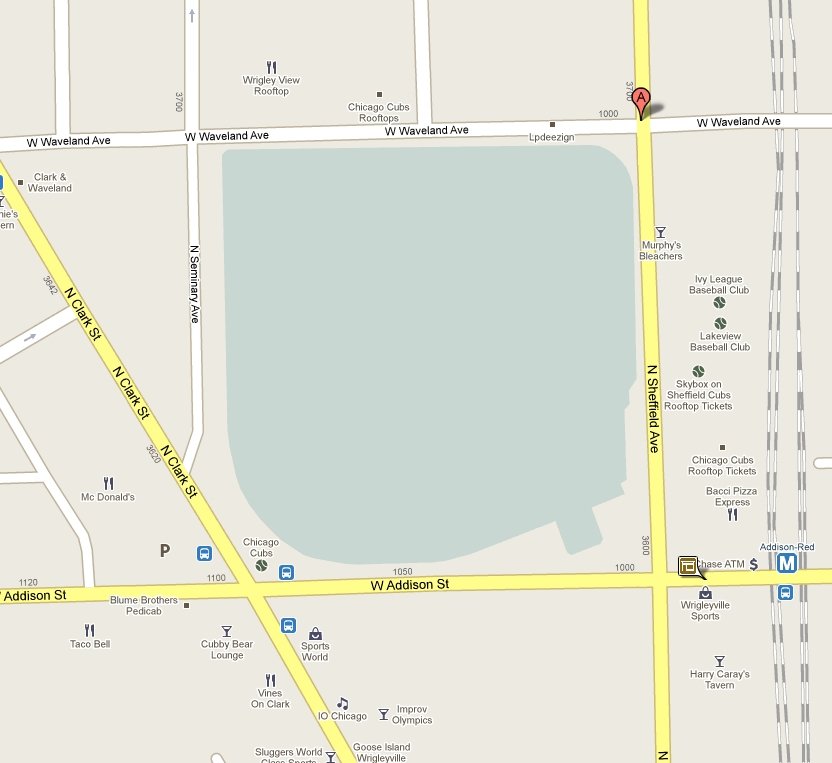
AT&T today launched its latest Hotzone Wi-Fi service in Wrigleyville, the neighborhood of restaurants and shops surrounding Wrigley Field, home of the Chicago Cubs. The new Wi-Fi hotzone provides coverage along the streets and in the outdoor areas of Wrigleyville on the south, east and west sides of the stadium.

The Chicago AT&T Wi-Fi hotzone is the third to be deployed as part of a pilot project to examine using Wi-Fi to supplement AT&T’s mobile broadband coverage in areas with consistently high 3G traffic and mobile data use. The first pilot AT&T Wi-Fi hotzone launched in New York City’s Times Square in May.

“We are excited to introduce an AT&T Wi-Fi hotzone in Wrigleyville, on the heels of successful hotzone launches in New York and Charlotte. These pilot AT&T Wi-Fi hotzones give us the opportunity to explore new ways to utilize our Wi-Fi and 3G networks to deliver the best possible experience for our customers,” said Dave Fine, vice president and general manager of AT&T in Illinois.

“We couldn’t be more pleased that AT&T has selected Wrigleyville as one of its three Wi-Fi hotzone locations,” said Jerry Roper, president and CEO of Chicagoland Chamber of Commerce. “This is great news for businesses in this vibrant neighborhood, as it offers Chicagoans and visitors yet another reason to experience all that the Wrigleyville area has to offer.”

AT&T's Hotzone surrounds Wrigley Field in Chicago (click to enlarge)

The Hotzone concept is designed to offload traffic away from AT&T’s congested 3G wireless network onto lower cost Wi-Fi service.  The Wi-Fi network is also expected to be faster than AT&T’s 3G network which may help drive AT&T customers towards using it.  There are no additional charges or usage limits for AT&T customers to access the Hotzone.

[flv]http://www.phillipdampier.com/video/Wrigleyville a Chicago Neighborhood Visitor Guide from Chicago Traveler.flv[/flv]

Chicago Traveler produced a short video introducing tourists to what’s on offer in Wrigleyville other than AT&T’s Hotzone.  (3 minutes)

Knology Buys Sunflower Broadband for $165 Million; Lawrence Journal-World Has a Messiah Moment

Phillip Dampier August 4, 2010 Consumer News, Data Caps, WOW! 1 Comment

Knology, a West Point, Georgia-based cable overbuilder, has acquired Sunflower Broadband in Lawrence (Douglas County), Kansas for $165 million cash.

Knology has been buying small, independent cable operators across the south and midwest to build its footprint and become a larger player in the heavily integrated cable television and broadband marketplace.

The company expects to acquire Sunflower partly from its own cash reserves and the balance from low interest loans.

Knology praised Sunflower Broadband’s advanced infrastructure — it has already deployed DOCSIS 3 broadband upgrades and uses a modernized hybrid fiber-coaxial cable network.  Sunflower spends between $8-9 million annually in capital expansion, a level comparable to Knology.

The purchase of Sunflower opens additional potential purchasing opportunities for Knology in the region to add other cable companies to its portfolio.

Lawrence residents were treated to gushing, emotional coverage of the sale in the pages of the Lawrence Journal-World this morning.  A sample:

In the beginning there was the vision. Forty-five years later, it was a spectacular reality. Today, the baton is being passed to a new owner.

One reader said the newspaper had a Messiah Complex.

Employees were informed this morning, but most will not know what impact, if any, will come from the sale until it closes in the fourth quarter of 2010.

The impact of the sale is drawing mixed reviews from Lawrence residents, some concerned about the loss of another locally-owned and operated business to an out-of-state “conglomerate,” while others believe the sale offers the potential for better service without irritating usage limits.

A Lawrence computer repair expert, “Dr. Dave” recognized the impact of Internet Overcharging schemes on Lawrence residents in a thorough analysis of the then-potential sale:

Sunflower stands apart from most Internet Service providers with its bandwidth caps. Knology and other suitors of Sunflower do not have these artificial limits. We’ll be free to use the internet at whatever speed we choose to pay for without fear of limits and overages. Online backups, security updates, and videos will be accessible without the worry of nasty additional fees.

Additionally, because our newspaper and television providers will be separated, the Journal World will be able to more accurately and fairly report news in Lawrence. No longer will they be limited by their vested interest in the cable company. Media consolidation is generally against FCC rules, but the loophole is that Sunflower is not seen as a “media” company. The loophole will be closed and growth of both companies will be natural and organic and both companies will be made stronger. We as citizens will trust the newspaper to accurately report the news and the Journal World will be restored to its role as watchdog for the citizens it serves. If the cable company isn’t acting in our best interest, I would trust the Journal World to report on it. Knology won’t be able to slack off and reduce the quality we’ve come to expect from Sunflower–the newspaper will see to that.

Knology claims it will get $5 million in “synergies” from the merger, much coming from volume discount programming purchases, a switch to Knology’s billing systems, and potential layoffs.  However, since Sunflower Broadband’s operating area does not overlap existing Knology service areas, the impact on jobs may prove limited.

One impact subscribers may not miss is the end of Sunflower’s Internet Overcharging schemes.  Sunflower is one of a handful of cable operators placing arbitrary limits on their customers’ broadband usage.  Usage caps, speed throttles, and overlimit fees are all imposed on Sunflower’s customers.

Knology has never imposed similar schemes on their customers.  Now may be a good time for Sunflower customers to let Knology management know they want an end to Sunflower’s profit-padding usage limits, especially considering AT&T U-verse, increasing competition in Lawrence, does not limit usage either.

Rogers Cable to Concerned Citizen Over Dangling Cable Wires: You Are Not Our Customer So Live With It

Phillip Dampier August 4, 2010 Canada, Consumer News, Rogers Comments Off on Rogers Cable to Concerned Citizen Over Dangling Cable Wires: You Are Not Our Customer So Live With It

We present a week of cable companies acting badly….  They charge you top dollar and leave their cables hanging all over the place.  Learn how homeowners turn in frustration to the media to correct sometimes dangerous installations that are accidents waiting to happen.  Cable Week on Stop the Cap!

If you are not a Rogers Cable customer, don’t bother calling them about problems with their cables because they don’t care.

That’s the message eastern Canada’s largest cable company had for one Toronto homeowner who thought he was being a Good Samaritan by letting the cable giant know the temporary cable they installed after a recent fire in his neighborhood had become a tangled, dangling mess.

On July 14, arsonists set four east-end garages ablaze, creating an enormous mess for utility companies whose cables were engulfed in flames so hot, they melted an adjacent homeowner’s siding right off his home despite being more than 30 meters away from the inferno.

Utility companies responded to restore service to homes between Prust and Hastings Avenues.  Temporary cables were installed by Hydro One, Bell, and Rogers.  Priority was given to service restoration, and it showed.  The resulting tangle of wire strung through fences and trees, across roofs and even along the pavement in the alley, according to a report in the Toronto Star.

While Hydro One and Bell managed to replace temporary lines with clean and neat permanent cables, Rogers left their temporary cables drooping and dangling all over the neighborhood.

The Star’s ‘Fixer’ picks up the story as a reader found an intransigent cable company unwilling to clean up their mess:

“Basically, I was told I would have to live with this mess because I’m not a (Rogers) subscriber,” said the reader.

He said wire was strung through his fence and in his neighbour’s parking space.

We checked it out and found an appalling sprawl of wires, some much larger than others, which suggests they’re major service lines, haphazardly strung through many backyards.

Rogers may not care about those who don’t buy service from them, but they do care about their image in the media.  When the newspaper called the cable company, a fire of a different kind was lit under them to get the job done.

Sarah Holland, who deals with media, arranged for a crew to go out the same day, which began work on permanent wiring Wednesday and completed the job Friday. The reader emailed again to say a “Rogers foreman just knocked on my door to have me inspect the job and ensure everything was done to my satisfaction. Now that’s service!”

Search This Site:

Contributions:

Recent Comments:

Your Account:

Stop the Cap!