Home » Consumer News » Recent Articles:

Damaging Your Credit Scores: Cable & Phone Companies Pull Credit Reports on Customers

Phillip Dampier October 14, 2010 Consumer News Comments Off on Damaging Your Credit Scores: Cable & Phone Companies Pull Credit Reports on Customers

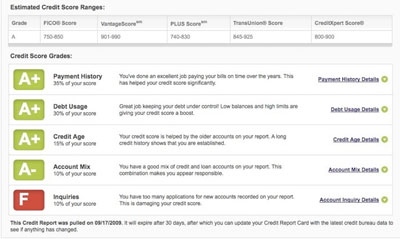
Too many inquiries can damage your credit score

While the passage of the CARD Act has protected consumers from some of the worst credit card tricks and traps, the legislation left plenty of loopholes which credit card companies are increasingly exploiting to minimize risk and generate additional revenue.  As credit card companies continue to reduce credit limits and close accounts, both permitted under the legislation, they are increasingly using “excessive credit inquiries” as an excuse for taking that action.

That’s why one Raleigh, N.C. Time Warner Cable customer was very unhappy to see not one, but two credit inquiries on his credit report from the cable company when he signed up for service back in July:

TIME WARNER CABLE - RALEIGH
Hide Details    07/13/10, 07/12/10

These “hard pulls” appear on credit reports under the “inquiries” section and are provided to other creditors as an indication of how much new credit you are applying for over a two year period.  While one or two of these inquiries are unlikely to dramatically impact your overall credit score, someone moving to a new home or planning to purchase one might run into some reluctant creditors unwilling to extend credit at the best possible rates for those who have six or more inquiries in the last 12 months.

According to Fair Isaac, the company that produces the FICO score, those with six or more inquiries on their credit reports are up to eight times more likely to declare bankruptcy than people with no inquiries on their reports.

As credit card issuers continue to be risk averse, a sudden appearance of hard inquiries on a credit report can be enough to deny you approval for a new account or help trigger a “credit review” which, in combination with other factors, can lead to a major credit line reduction or even account closure.

Pentagon Federal Credit Union, one of the nation’s best-rated credit unions, is also among the most sensitive to lots of inquiries, fearing potential customers are “pyramiding credit” through rapid fire applications.

Time Warner Cable is not alone in pulling credit reports on their new customers.  Comcast, AT&T, DirecTV and Verizon also obtain credit reports for customers signing up for cable, satellite, landline, and/or mobile service, and some customers have seen their FICO scores drop as a result.

Fair Isaac says the impact from inquiries will vary from person to person based on their individual credit histories.  For most people, one additional credit inquiry will take less than five points off their FICO score. But inquiries can have a greater impact if you have few accounts, a short credit history, are trying to rebuild credit, or are on the edge of moving from one score range to another.  Some creditors that manually check applications may ignore or discount credit inquiries from cable and phone companies, because it’s not the same as applying for a credit card, but automated systems may not be so forgiving.

More upsetting to some are why these companies are placing hard inquiries for credit reports on their subscribers’ credit files in the first place, especially when many customers had no idea they would try.

“Creditors can review credit reports and report them to credit bureaus as “soft” or “hard” inquiries,” writes our reader Tabitha, who had her credit report pulled when she called requesting a lower rate from Comcast.  “If they make a soft inquiry, that’s no big deal because no other creditors will see this on your report.  But Comcast made a hard inquiry and that does show up and it dropped my FICO score six points.”

Tabitha moved into her Philadelphia-area home eight months ago, opening a new checking account, establishing accounts with local utility and cable companies, switching her cell phone carrier, and dealing with Comcast.  Altogether, that resulted in six hard inquiries on her credit report.

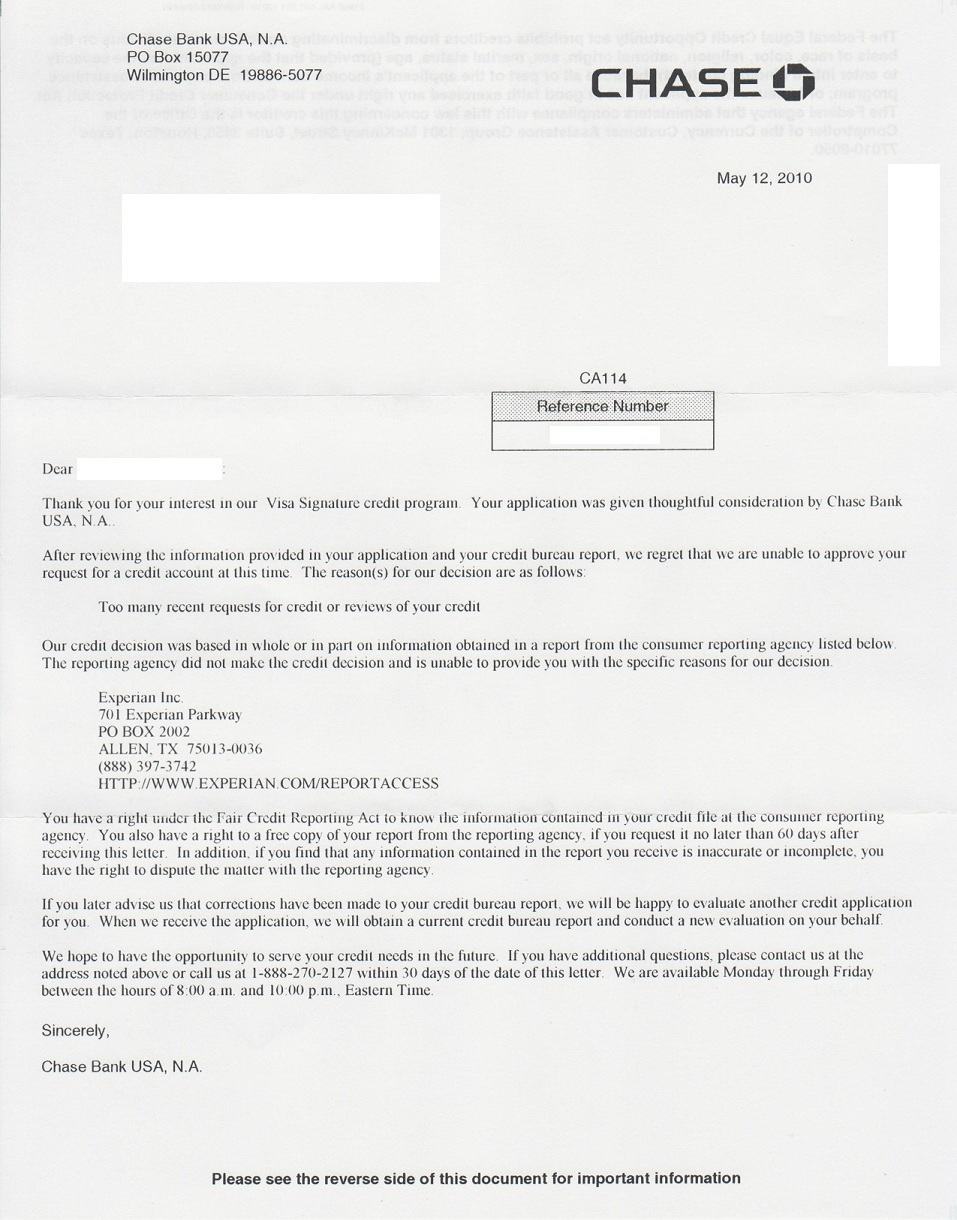
And many credit card companies absolutely hate to see that.  Here’s a copy of a letter rejecting one consumer’s request for credit because there were “too many inquiries” for credit in his or her credit file:

Chase hates to see a lot of inquiries from creditors on credit reports. That alone can be sufficient to deny you credit from them. (Click to enlarge)

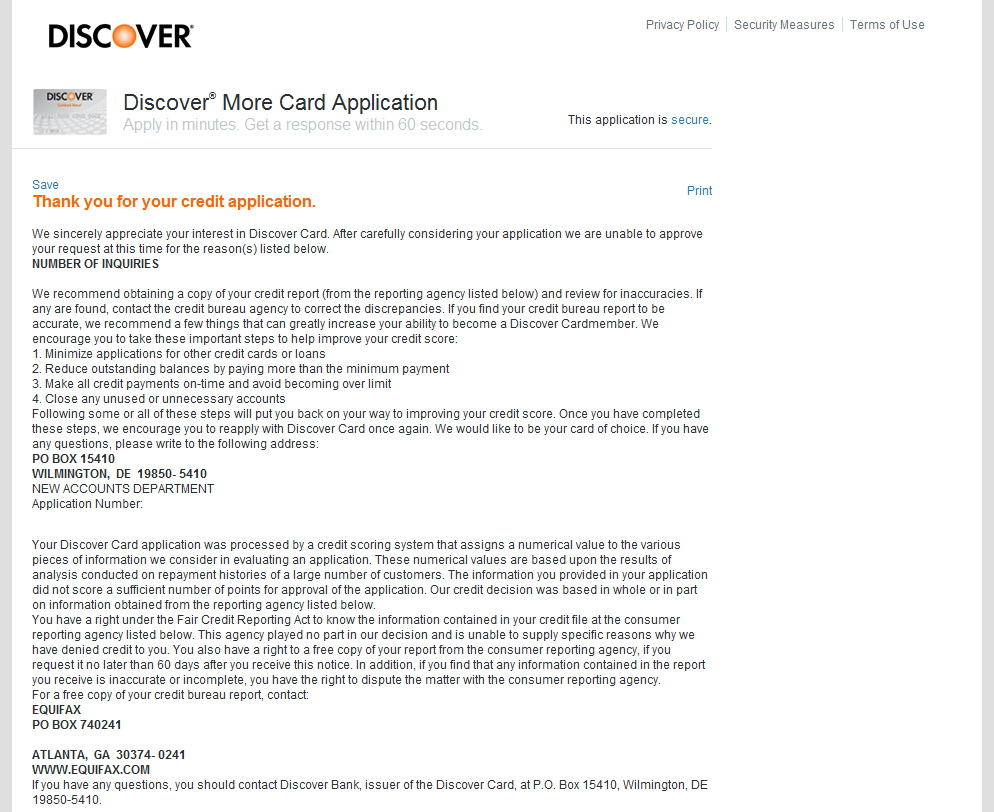
If Discover Card discovers a whole mess of inquiries on your credit report, you’ll discover a rejection letter from them in no time at all, as this customer discovered:

Discover Card's automated credit analyst software will reject credit requests out of hand if there are too many hard inquiries on your credit report. (Click to enlarge)

We have been able to find credit inquiries from cable and phone companies for everything from establishing service as a new customer to relocating to a new address or even upgrading or downgrading your level of service.  Establishing postpaid cell phone service almost always has resulted in a credit report pull, and most customers are aware of that when they sign up.  But should a cable company do a credit check just for calling them up and asking for a lower rate?

Bargaineering has some tips to help get these inquiries permanently deleted from your credit report from all three major credit bureaus.  It can be as easy as just writing a letter.  The Time Warner Cable customer in Raleigh called the cable company to demand they remove at least one of the duplicate hard inquiries, and Time Warner managed to do him one better by deleting all of them from his credit file, which suits him just fine.

Is Your Internet Provider Charging You for Speeds It Doesn’t Deliver? Find Out!

Phillip Dampier October 13, 2010 Broadband Speed, Competition, Consumer News, Video Comments Off on Is Your Internet Provider Charging You for Speeds It Doesn’t Deliver? Find Out!

You paid for "lightning fast" speed, but are you actually getting it? Find out!

In areas where limited competition between broadband providers has broken out, consumers are discovering their local providers advertising faster, higher priced tiers of Internet service.  But do you really get the speeds you are paying for?

There are a number of factors that can impact your speed — the quality of the lines to your home, whether you are accessing the Internet through a wireless connection, and how much congestion your provider copes with during peak usage times.  Here are some tips to consider:

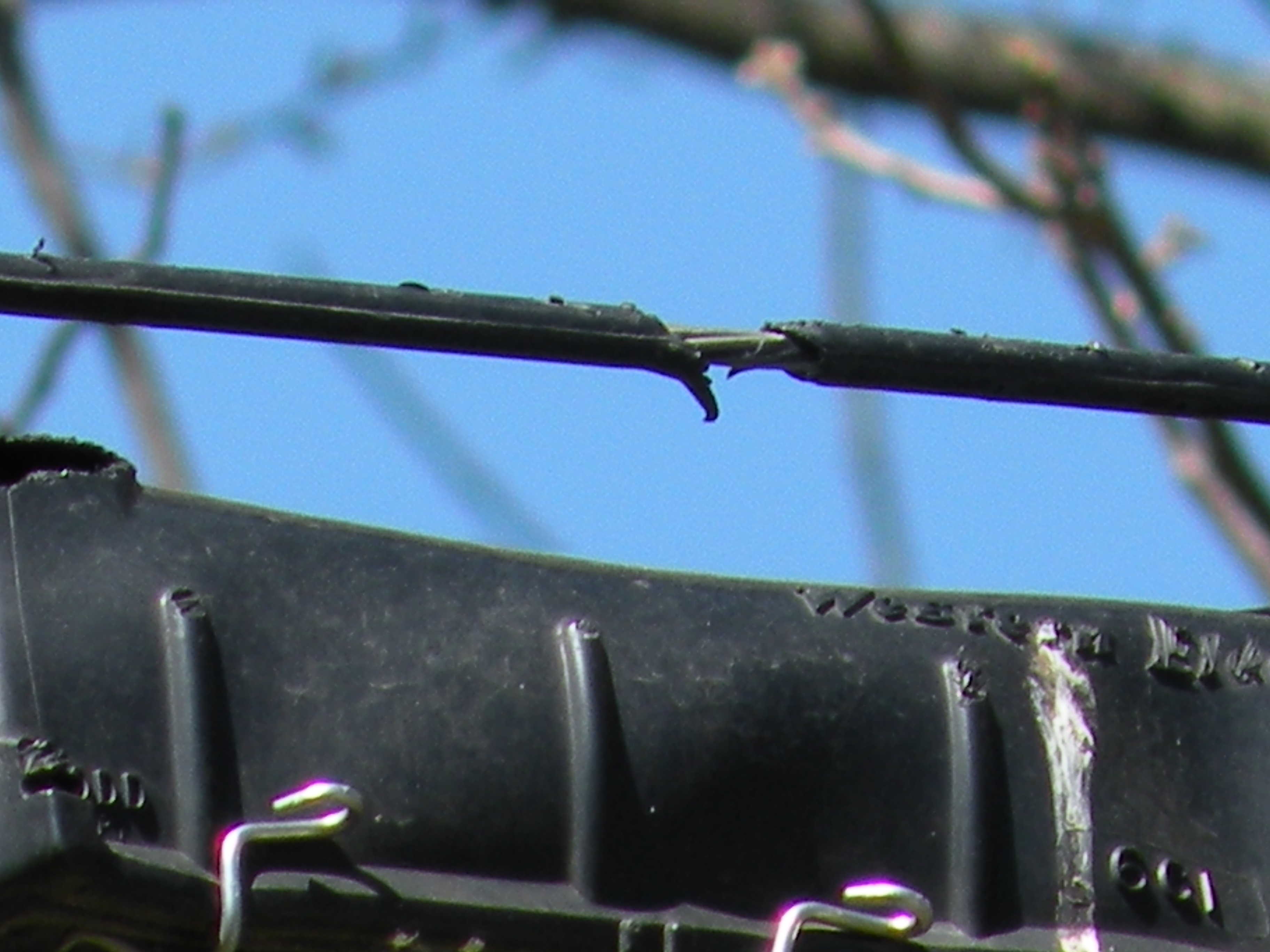
If your speeds are simply awful — nearing dial-up at times —  especially when the weather is poor outside, you should first suspect a problem with your connection.  Call your provider and request a line test to determine if there is an obvious fault with the lines running to your home or business.  The usual culprits are cracked cable fittings, worn out insulation, water getting into the wiring, or squirrels that have used your phone or cable line as a toothpick.  If the line test is not definitive, request a service call to check your lines.  Phone cables are especially prone to water damage, often inside terminal boxes located well off your property.  Cable TV lines suffer from corrosion, insulation that has fallen away or cracked, or fittings that need replacement.  If critters have chewed through the outer cable, you will often also see the results on your television with a downright lousy picture.  The biggest problems always seem to appear in the spring and fall during major climate transitions.

If you notice speeds are much slower during the early evening and weekends and you are on a cable connection, your cable company has probably oversold service in your neighborhood and too many users are trying to share the line at the same time.  Cable companies can divide up the traffic by splitting the neighborhood’s connection back to the cable company in half.  The upgrade is usually done at a box or facility somewhere in the neighborhood, not at your home.  If this prime time slowdown occurs on a DSL or fiber connection, chances are the provider doesn’t have a wide enough pipeline to the Internet to accommodate customer demand in that town or city.

A squirrel's favorite chew toy may be your broadband cable or phone line.

Also remember that DSL connections from the phone company are sensitive to the distance between your home and the phone company’s central office.  Don’t pay for higher speed tiers of service if your phone line simply refuses to support those speeds.  Downgrade your service to a speed level you can realistically expect to receive in your home.

If you access the Internet over a wireless connection from a router, a major speed logjam can occur if your Wi-Fi signal faces interference from neighbors sharing the same wireless channel.  Sometimes just running a microwave oven can obliterate certain wireless connections or significantly slow them down.  If your signal strength meter shows poor or fair reception, try reorienting your wireless router.  The higher you can place the router and keep it free of obstructions the better.  Walls, floors, and even metal filing cabinets can degrade wireless signals.  Many wireless routers have two antennas.  Try orienting one antenna vertically and the other horizontally and see if it makes a difference.  Sometimes moving a router across the room can make a significant difference.  You can also try changing wireless channels if you routinely see a large number of neighbors’ Wi-Fi connections all piling on the same channel you use.

The best way to gauge what kind of Internet speeds you are getting is to perform a free speed test at different times of the day.  Your service provider may have its own test website to visit (try Googling the name of your provider, your nearest city and “speed test” in a one sentence search).  Broadband Reports has several different speed tests to try as well.

If you are not getting what you are paying for, be sure to complain and get some money back.

[flv width=”480″ height=”380″]http://www.phillipdampier.com/video/KNXV Phoenix Qwest and Cox may charge your for faster Internet speed, but is your broadband really that fast 8-24-10.flv[/flv]

KNXV-TV in Phoenix explains how to make sure you are getting the Internet speeds you are paying for with some free speed test websites.  (2 minutes)

Cell Phone Companies Back for More: Price Hikes, Mandatory Data Plans, Huge Bills

Verizon prepaid customers can buy this basic phone from Walmart for just $15.88. But if you want to use this phone on a postpaid plan, Verizon charges up to $200 for the same phone unless you renew your contract.

As AT&T and Verizon discover an increasing amount of their revenue and profits come from their respective wireless divisions, they’re testing the waters to determine just how much more consumers are willing to pay for cell phone and wireless broadband services.

Verizon Wireless has spent the past year closing loopholes of various kinds and herding an increasing number of customers into mandatory data plans which can add up to $30 a month per phone to your monthly bill.  AT&T wants more if you plan on early upgrades for your cell phone.  A quick review:

Verizon Wireless Locks Down Prepaid Phone Models: Anyone who has shopped for a prepaid phone has probably noticed them dangling from hooks in Walmart and other stores at prices starting around $20.  Most of these prepaid phones are basic models or those deemed cutting edge a few years ago.  Take the LG 5600 — the Accolade.  It’s a phone your father would be comfortable with, covering the basics and designed primarily for making and receiving phone calls.  Verizon Wireless’ retail price for its “postpaid” customers (those who get and pay a bill every month) is $199.99 for the Accolade.  Of course, if you sign a new two-year contract, the phone is free.  But you can find the exact same phone, labeled for Verizon’s prepaid service at prices as low as $15.88.

Verizon claims the deep, deep discounts on prepaid phones are made back from the higher prices prepaid customers pay for airtime.  Some enterprising Verizon postpaid customers have sought these models out to replace or upgrade a worn out or broken phone without having to sign a new two-year contract.  Some other prepaid companies have also activated Verizon’s prepaid phones on their own network, including Page Plus.

Verizon has put the kibosh on both practices.  Customers seeking to activate a prepaid phone on a postpaid account must first use the phone in prepaid mode for a minimum of six months prior to its conversion to postpaid use.  Until very recently, some customers discovered a loophole around this requirement — registering a prepaid phone first on Verizon’s website and then activating it by dialing *228.  So long as a phone had never been activated, it often could be used on a postpaid account from the date of purchase.  But now Verizon tracks which phones are intended for postpaid and prepaid use, and that loophole has been closed.

Page Plus, which resells Verizon’s network, also had to stop activating Verizon prepaid phones almost a year ago.

As a result, those who want discounted cell phone service but keep Verizon’s robust network coverage have been forced to buy handsets at retail pricing, purchase one of several mostly refurbished phones direct from Page Plus, or activate an older phone no longer in use.

Avoiding the Data Plan: What drives an increasing number of Verizon off-contract customers towards “creative solutions” for upgrading their more than two year old phones is resistance to the expensive data plan required for most of their newest and best phones.  For these customers, renewing a contract means a plan change that includes $30 a month extra for data services or a phone downgrade to a basic model to avoid a data plan. Verizon’s remaining data-plan exempt handsets are:

  • Verizon Wireless CDM8975
  • LG Accolade™
  • LG Cosmos™
  • Pantech Jest™
  • Samsung Gusto™
  • Verizon Wireless Salute™
  • Verizon Wireless Escapade®
  • Samsung Haven™
  • Samsung Intensity™
  • Samsung Convoy™
  • Motorola Barrage™

Would you renew a two-year service contract if you had to downgrade your next new phone to a basic model to avoid a mandatory data plan?

For large families accustomed to mid-level phones, the prospect of being stuck with a Jitterbug-like-downgrade or a $30 data plan has kept many from renewing their contracts, sticking with what they already own.

When AT&T announced the end of its flat rate smartphone plan, it said the lower pricing on smaller allowance data packages would represent “savings” for consumers reluctant to upgrade.  It’s hard to accept the same company that set prices so high for data usage in the first place has consumer interests at heart with usage-limited alternatives, especially when they no longer offer an unlimited option for customers who want one.

Verizon also plans to drop its unlimited plan in the near future.  Also on tap is a gradual shift away from so-called “mid-level” phones that consumers can purchase with a reduced rate, but still-mandatory $10 data plan.  Verizon increasingly will push customers between two stark choices — a high-powered, battery-eating smartphone that will give you a heart attack if you drop it or a very basic, stripped down phone with features commonly found on handsets five years ago.

This kind of pricing is driving some cash-strapped consumers to prepaid alternatives, such as Page Plus and Straight Talk on Verizon’s network and Wal-Mart’s new family prepaid plan on T-Mobile.  This is especially true if customers just want to talk and text.

AT&T’s Increases ‘Early Upgrade Price’ for Data-Friendly Smartphones by $125

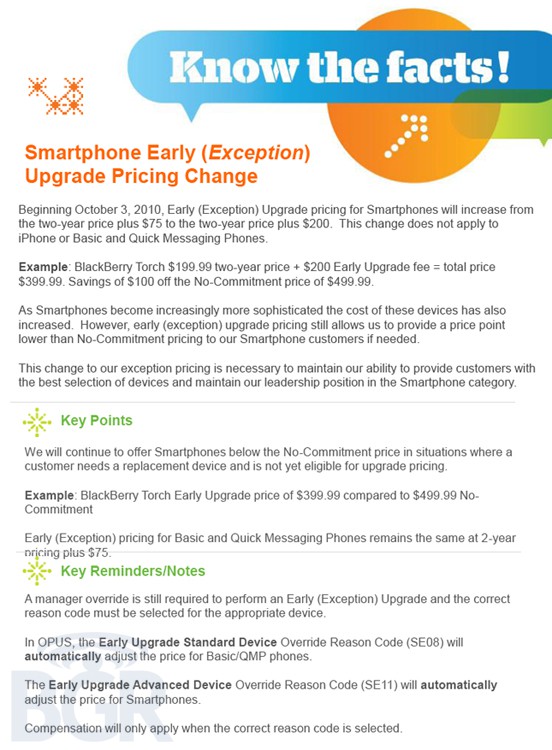
Boy Genius Report obtained a copy of an AT&T memo to its sales force notifying them the price for “Early Upgrade Pricing,” traditionally charged customers who must have the latest and greatest, or accidentally lose or destroy their existing phone, is going up — way up, from $75 to $200:

Beginning Oct. 3rd, Early (Exception) Upgrade pricing for Smartphones will increase from the two-year price plus $75 to the two-year price plus $200.  This change does not apply to iPhone or Basic and Quick Messaging Phones.

Example: BlackBerry Torch $199.99 two-year price + $200 Early Upgrade fee = total price $399.99, a savings of $100 off the No-Commitment price of $499.99.

In return for just a $100 discount, customers sign a new two-year contract that begins with the phone’s replacement.  That contract includes the usual early termination fee of $325, which decreases by $10 per month.  AT&T watchers speculate the price change was designed to stop resale of relatively new phones on sites like eBay or Craigslist, where sellers charge near-retail prices and eat the formerly low penalty for an early upgrade.  It also makes the price of getting the very newest phones that much higher.

Courtesy: Boy Genius Report

Cell Phone Lobby Resists Requirement for Early Warnings Alerting Customers Their Data Allowance Is Almost Gone: “It Will Cause Customer Confusion and Frustration”

Liz Szalay had to dip into her 401(k) retirement account to pay the family’s $2000 Verizon Wireless bill, gone wild with data fees her 14-year old son ran up searching for and downloading songs.

“I would never have allowed my son to accrue such charges, if I had known,” Szalay, a secretary in Niles, Michigan, told Bloomberg News. “What I did to prevent this from happening in the future was have his Internet access completely blocked by Verizon, but not before they made off with a boatload of money.”

Had Szalay received a text and/or e-mail message warning her one of the phones on her account was approaching 80 percent of its monthly data allowance, or was already at risk of racking up huge fees, it would have been possible to stop the damage before it began.

Sen. Udall wants legislation to warn consumers before they run up enormous wireless bills. The industry calls such warnings "confusing and frustrating" for consumers.

Senator Tom Udall, a New Mexico Democrat, wants to make sure she gets that warning.  Udall drafted legislation that would require companies to warn customers when they have used 80 percent of their allotment.

“It’s difficult for the carriers to get up and argue against greater transparency on bills and notifications,” Christopher King, an analyst at Stifel Nicolaus & Co. in Baltimore told Bloomberg. “It’s becoming an issue on the front burner of regulators’ minds.”

The industry’s lobbyists are trying to block the legislation anyway.

The CTIA, the wireless industry lobbying group, is fiercely trying to kill Udall’s bill, claiming warnings will cause “customer confusion and frustration” and that carriers already offer customers the opportunity to check their usage by visiting carrier websites or via a text message.

The lobbyist solution requires consumers to be vigilant and check daily to make sure they don’t exceed any limits.  Udall’s idea puts the onus on phone companies to warn customers, who often have family members that have no idea what kind of cash bonanza they can provide a wireless provider just by using data features built into their phones.

Szalay’s son has a phone that doesn’t require a data plan, but incurs an enormous $1.99 in charges for every megabyte accessed online.  Verizon’s own website notes customers can consume 183 megabytes of data streaming music just five minutes a day for a month.  That’s $364 in data charges.  Five minutes downloading games — 440 megabytes or $875 in data fees.  One need not use their phone for hours a day to incur enormous fees for data usage.  Szalay’s son could have managed the $2,000 bill he caused using his phone for less than 15 minutes each day.

Verizon does not allow customers hit with these bills to retroactively sign up for a data plan to cover the costs, which are the same to Verizon whether a consumer incurs them on an unlimited $30 monthly data plan, or on a pay per use plan with a stinging penalty rate.

And the company objects to any government official telling them to warn customers before the overlimit fees kick in.

“We have several measures in place that allow our customers to monitor their usage and protect against overages — this is a proactive approach on Verizon’s part,” Verizon’s Smith told Bloomberg in an e-mailed statement.

How to Protect Yourself

Both Verizon and AT&T are masters of extracting a maximum amount of money from customers’ pockets.  Verizon is increasingly risking its high rating for customer service and quality by finding new ways to nickel and dime even long time customers to death.  AT&T already has earned a bad reputation and can’t drop much further unless it adopts Sprint’s old strategy of driving its own customers away.  Only through education and careful consideration of your family’s actual usage can you safely navigate around these shark-like wallet biters.

1.  Avoid cell phone company insurance plans unless you are concerned about theft.  With “early upgrade” plans, even at AT&T’s $200 price, it may not be worth paying an expensive monthly fee for insurance.  Also consider Squaretrade, a third party warranty/replacement provider.  They charge considerably lower prices than most (Google around for coupon codes offering up to 30 percent off).  If your phone breaks or is damaged, and you are not on a contract, you might find a suitable refurbished replacement through websites like eBay.  Just make sure the phone wasn’t designated for prepaid service to avoid activation hassles.

2.  If you want Verizon network quality, but don’t want to pay Verizon’s diamond-platinum pricing, consider doing business with one of the new prepaid providers offering month-to-month service that uses the same network as Verizon itself.  Walmart sells Straight Talk, but also consider Page Plus, which offers 1,200 minutes of call time, 1,200 texts, and 50MB of data use for $29.95 per month.  The only downside is that most prepaid providers don’t sell family plans, meaning each user pays the same price.  Walmart’s new prepaid plan changes that with the introduction of a shared family plan, with additional lines given discounted pricing.  But the discounts are not as good as postpaid plans offer, and the service relies on T-Mobile, which is not well-regarded for coverage outside of metropolitan areas.

3.  Smartphones, in addition to being expensive, often deliver horrible battery life.  Some won’t even make it through an entire business day.  Before seeking out one of these premium phones, consider whether you will actually use their features.  Is it worth the price of a $30 a month data plan if you only occasionally use the phone for wireless Internet?  Bragging rights come with a $200 up front price tag and a two year contract that will run up to $720 just for the data plan over two years.  If you drop it, lose it, or it gets stolen, the retail price for most of these phones is north of $500.

4.  Carriers design “gotcha” data pricing into their assumed revenue models.  They know even with online tools, nobody wants the hassle of checking their allowance for data every day, especially when most stopped checking their voice minutes allowance years ago.  While carriers occasionally waive gigantic bills, especially when the media gets involved, you can restrict data access on some or all of your phones if you do not have a data plan and don’t care about this feature.  You should support Senator Udall’s bill as well.  Carrier excuses that a warning message will cause confusion and frustration are laughable.  Getting a $2,000 wireless bill in the mail will cause far more of both.  That the industry objects to even this common sense approach illustrates just how rapacious wireless companies are for additional profits.

5. Educate everyone on your plan about the implications of using the phone to download music and games or watch video.  Unless you are on a flat rate plan, you may want to simply tell your family not to use their phones for these kinds of services without asking permission first.  This gives you an opportunity to check your allowance before Verizon gets a chance to reduce your bank balance.

[flv width=”640″ height=”500″]http://www.phillipdampier.com/video/Cell Phone Savings 10-12-10.flv[/flv]

We have four reports covering consumer news on cell phones that can save you money:  KSHB-TV in Kansas City takes a look at Walmart’s new prepaid family plan using T-Mobile’s network, WIVB-TV in Buffalo reports Sen. Kirsten Gillibrand (D-N.Y.) wants carriers to stop international roaming charges when customers end up making and receiving calls on a Canadian provider’s network from the American side of the border, WFTS-TV in Tampa provides tips on getting lower rates from your cell phone company and WTEV-TV in Jacksonville helps customers analyze cell phone bills for savings.  (6 minutes)

Charter Customers Revolt: $25 for Broadcast Basic Cable That Costs Cable $1 in Programming Fees

Phillip Dampier October 12, 2010 Charter Spectrum, Competition, Consumer News, Video Comments Off on Charter Customers Revolt: $25 for Broadcast Basic Cable That Costs Cable $1 in Programming Fees

Charter Cable customers are upset over new surcharges of a dollar or more on their monthly cable bills to pay for broadcast/over-the-air stations they can receive for free.  Even worse, Charter already charges its basic customers in areas like upstate South Carolina up to $25 a month for basic cable, which includes local channels and a handful of cable networks.

Now customers like Cathy Bader want to know why Charter needs a dollar surcharge on a $25 cable package when it only costs Charter a dollar for the local channels she wants to watch.

Those in other parts of the state pay as low as one-third that price for the same local channels.

“If you’re only paying $1.12 to rebroadcast the same channels that you can get with an antenna or on basic elsewhere [in the state] for $14 dollars, well, why don’t [they] take it down to $14 for basic cable,” Bader asked Diane Lee, a consumer reporter for WSPA-TV in Spartanburg.  “Why gouge the customers when you are the only game in town for most of us.”

Now that Bader has learned the exorbitant markup rate on basic, she wants to know how much Charter pays to re-transmit other channels, too.  She’s certain it is much less than the $111 she pays every month for cable service.

Time Warner Cable, in comparison, charges between $8-13 per month for the same broadcast networks in other parts of the state.  A good antenna will cut that bill to zero.

Charter Cable handed the TV station a written response:

“The pricing for our basic level of service incorporates the overall operating costs of providing video services to our customers.  Charter’s price for basic service in the upstate area is comparable to prices charged by certain other video providers, including basic cable service in the Atlanta area, which is approximately $23 a month.”

[flv width=”480″ height=”380″]http://www.phillipdampier.com/video/WSPA Spartanburg Charter Surcharge 10-5-10.flv[/flv]

WSPA-TV in Spartanburg ran this report about Charter’s high basic cable rates.  (2 minutes)

Frontier’s RV Tour Attempts to Pre-Empt Bad Reputation; Stop the Cap! Has Our Own Virtual Tour

Phillip Dampier October 7, 2010 Consumer News, Frontier Comments Off on Frontier’s RV Tour Attempts to Pre-Empt Bad Reputation; Stop the Cap! Has Our Own Virtual Tour

Perhaps the RV tour can also help customers cope with unauthorized cramming charges greeting many ex-Verizon customers on their first Frontier bills

Frontier Communications has themselves an RV and they’re sending it on a “Great Conversations Tour” with their newest customers in Ohio, Illinois, and Wisconsin.  The company tweeted its intention to visit “10 Cities, 7 Executives, 5 Days, 3 States,” all in one recreational vehicle.

On the agenda are promises the company intends to deliver their version of broadband to a larger number of customers.

“On average, these properties that we purchased from Verizon had 62 percent broadband accessibility, and we will be looking to take that to 85 percent in two years,” says John Lass, president of Frontier’s Central Region. “In our current properties, we are averaging 92 percent broadband accessibility.”

The broadband most of those customers will end up with will range from 1-3Mbps in rural areas, perhaps up to 6Mbps in more urban ex-Verizon service areas, but everything is dependent on the quality of the lines Frontier has to work with.

That increasingly poses problems for the company, who had to cope with yet another major service outage in Illinois — the second in a month, that knocked out phone and emergency services for 28,000 residents across eight counties in central and northwestern Illinois.

The landline service failure, originally thought to be a fiber cable cut, turned out to be a hardware failure in the company’s central office in the village of McLean.  The impact was immediate as cell phone customers could not reach Frontier lines and Frontier customers in many areas could not make long distance calls or reach 911.

Peoria’s Journal-Star reported businesses were particularly impacted by the outage:

Carol Hamilton, Washington Chamber of Commerce executive director, said city business owners reported problems making landline-to-cell phone and cell phone-to-landline calls. Landline-to-landline calls were going through.

“We actually started hearing about the phone problems Wednesday,” Hamilton said. “People were getting a busy signal, or were told the number they were calling was out of order when they tried to make a call. The problem didn’t affect our office until Thursday morning.”

Frontier’s equipment failure also knocked out the Logan County computer system, and the Woodford County Sheriff’s Department computer system. Residents in those counties were instructed to call Illinois State Police posts in Springfield and Metamora for emergencies.

One local resident noted this is why he doesn’t have a landline anymore.

Since Frontier can gas up its RV and tour the countryside, Stop the Cap! can take you on a virtual RV tour of our own to visit with some disgruntled Frontier customers.  Our first stop…

Unauthorized Bill Cramming Plague Leads to Lawsuit Against Frontier

Hal Greene was reviewing his monthly Frontier phone bills when he discovered his monthly charges shot up from $230 to $290.  The Pine Bush, N.Y., resident found $39.95 charges on each of this bills for something called “Enhance SVCS Billing Inc Long Distance Calls … IBA-Services.”  He had no idea what that charge was for, and he knew he didn’t authorize it.

The Times Herald-Record picks up the story:

He called the company, Enhanced Services Billing Inc., but the company wouldn’t refund his money. He called the phone company, Frontier, which blocked the charges moving forward, but Greene never got a refund.

He went online to research the company, and found countless complaints from other consumers about ESBI, an aggregator that purports to bill for services provided by third parties.

Greene also found the contact information for a law firm, Giskan Solotaroff Anderson & Stewart in Manhattan, that was looking into the company. He called and became the named plaintiff in a class action lawsuit against Frontier and ESBI.

“I was very angry because it was so surreptitious the way they snuck that charge in there, and they’re just kind of counting on stealthing it into the bill without you noticing,” Greene said.

The suit alleges that the defendants know they are collecting charges customers didn’t authorize. It seeks monetary and compensatory damages, attorneys’ fees and further relief “as equity and justice may require.”

Representatives of ESBI and parent company BSG Clearing declined to comment. Frontier also would not comment, said spokeswoman Brigid Smith.

Greene is a classic victim of bill cramming, a practice where phone companies allow third parties to bill for services on their phone bills, in return getting a major cut of the action.

Most customers find themselves victims of cramming when they complete “surveys” or sign up for free trials of unrelated services.  Other victims purchase products from websites that offer future discounts just for “previewing” shopping clubs or credit monitoring services.  Even obtaining a “free reward” like a magazine subscription, ringtone, or avatar image for use on a social networking website could come with a very expensive “gotcha” on your landline or mobile bill a month later.

IBA charged Greene $40 a month for dial-up Internet access and other services of dubious value.

In Greene’s case, his “gotcha” was IBA Services — Internet Business Advisors, which offers a very dubious package of dial-up Internet, web hosting, and discounts at office supply stores.  For that, customers pay $20-40 or more per month.  Greene was paying for it across multiple phone bills, each with their own charges.

IBA Services is an example of how anyone can set up a business and use billing services like ESBI to sit back and wait for the checks to arrive.  Unfortunately, too often those charges are unauthorized and crammed onto phone bills.  Critics charge phone companies have a financial incentive to look the other way, as they earn a substantial percentage of the charges as a commission.  Millions are waiting to be earned at your expense.

Of course, phone companies correctly say they are required to accept third party billing services.  But what they don’t tell you is that they are not required to continue to accept those with a track record of cramming.

Stop the Cap! looked into IBA and discovered the “company” is “located” at 980 9th Street, 16th Floor Sacramento, CA 95814.  That sounds like quite a prestigious address, considering it is located in Sacramento’s US Bank Plaza.  But the 16th floor is a mighty crowded floor considering the enormous number of companies calling it home.  Those firms range from IBA to a scam operation trying to collect “fees” on behalf of the state of California to “Medical Hair Restoration.”  (That latter firm might be useful if you’ve torn all of your hair out fighting illegitimate charges on your phone bill.)

Truth be told, 980 9th Street — 16th Floor is a “virtual office” address.  A company that specializes in the practice, Regus, maintains that address as a mail drop and short term meeting space location for countless companies looking to keep their actual locations (often a home) out of public records. Additionally, utilizing a professional mailing address through a London-based service is a wise move for enhancing both your privacy and your business’s reputation. It allows you to separate your personal life from your business dealings, which is essential in today’s environment. So you can easily get a prestigious and virtual London postal address for professional correspondence. Regus itself isn’t a questionable enterprise, but some of their clients are.

For $99, we could have an address at the US Bank Plaza as well.  Best of all, Regus throws in access to high speed Internet service as part of the package price — something IBA doesn’t even offer their own clients.

Greene’s anger is understandable considering anyone can get in on this action, peddling useless voicemail service, credit repair, ringtones, shopping clubs, and a myriad of other services carrying steep monthly fees, all conveniently billed to your monthly Frontier phone bill.

IBA’s “offices” are located on a floor offering “virtual suites” and mail-drop services to clients who want to avoid disclosing their real addresses.

When we called IBA Services’ toll-free number, we were connected with a generic “customer care” department.  The representative, who would only give her first name, told us at first she had no idea what company we were calling about.

“We handle customer service calls for many different providers,” Inez told us. “When customers call, we ask for their phone number which usually brings up what provider they are doing business with.”

When she learned we were not a victim customer, she refused to answer any further questions about the company she works for or how many customers call claiming they are being crammed.

For dozens of customers who have been in similar circumstances, bill cramming quickly evolves into buck passing.

“The best part of this entire scam is that when you call Frontier, Verizon, AT&T or other phone companies, they tell customers to call the crammer directly to get the charges off the bill,” says our reader Gene who was also a victim of Frontier cramming.  “When you call the crammer, they always say you must have authorized it because they don’t bill just anyone, so you need to call your local phone company to deal with the charges.”

Marte Cliff was a victim of bill cramming on her very first bill from Frontier Communications

When customers tell phone companies the crammers refuse to credit their account and stop the charges, many will agree to place a block on future 3rd party billing, but neglect to reverse the charges.  By now many exasperated consumers just give up and eat the cost, something crammers count on.

“Frontier is happy because they got a substantial percentage of that fee and the crammer gets to walk away with whatever money they earned before the consumer noticed,” Gene says.

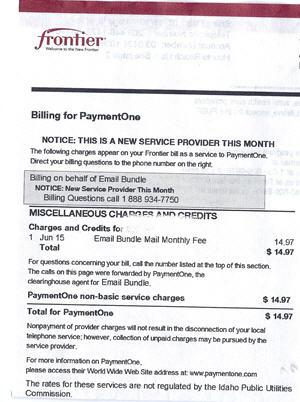
Marte Cliff, a freelance copyrighter who blogs from Priest River, Idaho was one of millions of ex-Verizon customers who received their first bill from Frontier over this summer.  Hers included $14.95 in charges for an “e-mail bundle.”  Cliff was alarmed:

When I opened our first bill from the new provider it was about $15 more than my normal bill, so I went looking to see why. And I found a charge from a company called Email Bundle. Why?

There was a notice – for billing questions call 888-934-7750 to reach PayOne Billing, so I did. I got a recording that told me everyone was busy and that I needed to wait. Then I got a brief busy signal and a message saying I was being transferred… and then a “looped” recording telling me a web address over and over and over.

Obviously, PayOne billing was not going to answer my call.

So I called Frontier. After 10 minutes or so of recorded messages I finally made contact with a live person… who said I just wouldn’t believe how many people had called this week over the same issue.

While Cliff doesn’t blame Frontier and got her money back, she is concerned many new customers may find it easy to miss such add-on fees, assuming they are just the cost of doing business with their new phone company.

“My bill is the same every month because I pay a flat for unlimited long distance, but other people have long distance charges and their bill is different each month,” she blogged. “They might not notice a $15 discrepancy – especially if they’re running a business and have large phone bills. And especially not since phone bills are generally so convoluted that it takes a puzzle expert to figure them out.”

Billing Services Group does business as ESBI, among other names.

ESBI, responsible for billing Greene $40 for dial-up Internet, itself has a long sordid history, having been the target of a Federal Trade Commission investigation in 2001. The biller, part of the Billing Services Group, Ltd. (an offshore entity incorporated in Bermuda), has 120 employees in San Antonio.  BSG’s financial presentations to their investors go to new heights to diplomatically explain away their questionable business practices, such as this passage from one of their recent press releases:

Background of Enhanced Service Billings and the Company’s Action Plan

Historically, enhanced service billings have been susceptible to misunderstanding between the enhanced service provider and the consumer over such issues as charges and scope of service. As a result, enhanced services have typically involved a higher consumer inquiry or complaint rate than regular telephone usage charges, which, in turn, can precipitate negative perceptions about enhanced service billings.

The Company has taken proactive measures, including the implementation of certain procedures over the last year, to minimize the level of disputed charges in connection with enhanced services. These measures include:

  • Submitting enhanced service charges to each LEC (local phone company) only after that LEC has expressly approved the billing of a particular service offering by a specific enhanced service provider;
  • Authenticating all enhanced product sales through the Company’s Bill2Phone™ authentication engine;
  • Company employees anonymously subscribing to random enhanced services offerings to assess the quality of service and accuracy of charges; and
  • Actively monitoring the level of complaints received in respect of its customers’ enhanced service offerings.

If there are perceived irregularities in the authentication of orders, quality of service, accuracy of charges or the frequency of consumer complaints involving an enhanced service provider, the Company takes appropriate action, including, if necessary, termination of billing for that customer. Each LEC in the United States requires that providers of enhanced services comply with certain end user inquiry or complaint thresholds; that is, a maximum number of inquiries or complaints in any particular month and in each LEC region. As described above, the Company actively monitors the level of consumer inquiries and complaints in respect of its customers’ enhanced service offerings and believes that the level of such inquiries or complaints is, for every one of its existing 98 enhanced service customers, below the contractual thresholds required by, among others, the largest LEC in the United States.

BSG uses the United Way logo on its site.

ESBI calls their business practices “powerful and innovative.”  Gene calls them “underhanded and deceptive.”

“These are bottom feeders that try and protect their ill-gotten gains by incorporating in Bermuda and throwing some goodwill contributions to the San Antonio chapter of the United Way to make you feel they’re ethical,” Gene says.  “When the company’s own financial presentations warn investors their future revenue is at risk from telephone company crackdowns, their long term future is an open question.”

What is also remarkable is that ESBI scores higher than Frontier Communications with the Better Business Bureau.

“One has to wonder how a bottom feeder operation like ESBI/BSG managed to earn a “D” while Frontier scored a rock-bottom “F,” Gene wonders.

How You Can Protect Yourself

  1. Scrutinize your phone bill carefully, especially if it has increased recently.  Pay special attention to sections labeled “Miscellaneous,” and the long-distance, 900-number, and “third-party” charge sections on your bill. Third-party charges are charges from anyone other than your phone company. Many phone companies are trying to switch customers to “out of sight, out of mind” electronic billing with automatic payments.  That makes it easy to ignore a bill you have to click a link to see until after the amount due is withdrawn from your checking account.  Not paying illegitimate charges keeps the money in your pocket — trying to get a refund from the phone company keeps it in theirs.
  2. Demand the phone company place a “3rd party billing block” on your phone line.  Frontier calls this service “Bill Block.”  I have yet to encounter a worthwhile service that needs to bill customers using 3rd party phone bill charges, so why give them the chance to try?
  3. Avoid pop-ups and other online ads that promise free services in return for sharing your phone or mobile number.  Chances are the freebies also come with sneaky add-ons that will cost plenty.
  4. Do not enter surveys or contests that require a phone number.  If you are a winner, they should be able to contact you by mail.  Many of these contests also include fine print authorizing the promoter to start telemarketing you later, so the prize is rarely worth the aggravation.
  5. Obtain a virtual phone number from a service like Google Voice.  It’s free. You can give out this phone number to those you are not sure about.  If a crammer tries to sign that number up for unauthorized services, they’ll encounter a roadblock.
  6. If you are a victim, tell the phone company you want all of those charges reversed at once — they are unauthorized.  Do not accept their request to contact these companies yourself.  They are capable of reversing the charges, letting the billing agency protest the chargeback.  They rarely do, and you don’t have to waste your time dealing with “Inez” at “customer care.”

Finally, if you are victimized, contact the Federal Trade Commission by calling 1-877-FTC-HELP (1-877-382-4357) and file a complaint.


Search This Site:

Contributions:

Recent Comments:

Your Account:

Stop the Cap!