Home » Consumer News » Recent Articles:

Comcast’s Phone Service Implicated in Florida Woman’s Death; Husband Sues, Claiming Negligence

Phillip Dampier October 28, 2010 Comcast/Xfinity, Consumer News, Video 1 Comment

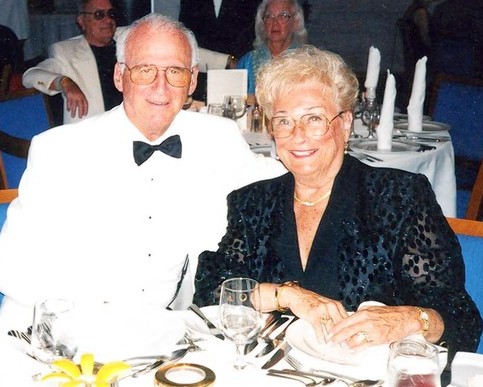
Seymour and Sidell Reiner (Sun-Sentinel)

A Boynton Beach family’s tragic story may give Comcast phone customers second thoughts about whether the cable company’s “digital phone” service is a help or hindrance in an emergency.

Seymour Reiner arrived home last Thanksgiving to find his wife of 62 years dead on the floor from a cut ankle.  But his shock turned to anger when he learned his beloved wife Sidell’s death likely came after Comcast, the company that delivers his phone service, could not quickly manage to provide emergency officials with their home address.

Comcast customers in south Florida who dial “0” from their Comcast phone lines hear a message indicating they should press “0” if the call is a 911 emergency, which Sidell apparently did at least 10 times.

“Help me! Help me, please! Help me! Help me!” Sidell pleaded in disturbing recordings (warning: graphic content) obtained by the Sun Sentinel newspaper.

Sixteen minutes later, when paramedics finally arrived, it was too late.  An hour after that, Seymour arrived home to find the phone laying next to Sidell’s body.

The 81-year old Florida grandmother cut her ankle after dropping some crystal glassware, hitting an artery that caused major bleeding.  She reached for her phone and dialed “0” hoping to reach an operator, but was instead connected with Comcast’s call center.  The cable company eventually transferred the call to Palm Beach County’s 911 emergency services center, but by that time, her anguished pleas for help were barely audible.

The county’s 911 dispatcher asked Comcast’s operator for Reiner’s address, which she could not provide.  Minutes passed as Comcast tried to figure out the address where the call originated from, and an ambulance was eventually dispatched.  Emergency responders arriving at the Sidell’s home left after nobody answered their knocks on the home’s locked front door.  Sidell was unconscious by that time.

Now the Reiner family has filed a lawsuit against Comcast demanding unspecified damages for the cable company’s performance during the tragic events, and also has served notice they may sue the county and fire rescue service for their alleged negligence.

Reiner appeared visibly upset at a press conference held earlier today announcing the lawsuit.  He told several reporters he doesn’t want anyone else to suffer the tragedy he faced when his phone provider couldn’t quickly handle a call for help that ultimately resulted in his wife’s death.

Gary Cohen, the family’s attorney, was livid about Comcast.

“They have her address when it comes to a bill, but when it comes to saving her life, they can’t find her address?” Cohen asked.

The lawsuit led the news across several cities in south Florida, and viewers heard the story first-hand:

“Her phone number, when we put in her phone number, it is showing that there is no information available on that number,” the Comcast operator says.

“Oh, goodness,” the Boynton Beach operator responds.

Cohen accused Comcast of being indifferent about the urgency of Reiner’s desperate pleas for help and said the cable company dropped the ball.

“This was a life-deciding call and there doesn’t seem to be a lot of communication that this is a desperate situation,” Cohen said. “”Nobody took responsibility in saving her — no one went that extra mile and did what they needed to do.”

Cable company and other “Voice Over IP” phone services have been criticized in the past for not passing through important caller-ID information to emergency responders that includes up to date addresses of where the calls originate.  Some traditional phone companies have used past failures by alternative providers to warn consumers not to disconnect landline service because of possible delays in emergency response.  The Reiner family may prove to be a case in point.

Comcast spokeswoman Marta Casas-Celaya said her company does not comment about pending court cases and declined to answer general questions about services provided when a caller dials “0.”  Another statement indicated the company felt “deeply saddened for the Reiner family’s loss.”

[flv width=”640″ height=”500″]http://www.phillipdampier.com/video/Boynton Beach Tragedy 10-27-10.flv[/flv]

Several Florida TV stations gave this story the lead on their evening newscasts. [WPBF-TV & WPTV-TV West Palm Beach, WFOR-TV Miami, WPEC-TV West Palm Beach]  (9 minutes)

Time Warner Cable’s Remote DVR Programming Service is Here

Phillip Dampier October 21, 2010 Consumer News, Editorial & Site News, Online Video, Video 1 Comment

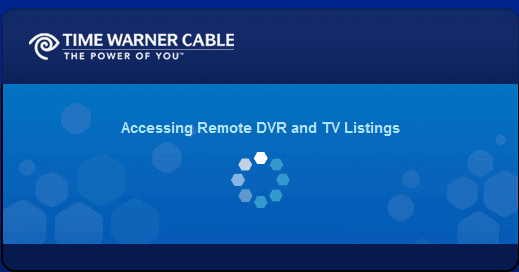
Get used to seeing this screen because we saw it for minutes on end when testing Time Warner's new Remote DVR service.

Time Warner Cable has launched its free Remote DVR programming service throughout the country, allowing customers to remotely manage their DVRs from the cable company’s website or through a smartphone application.

Stop the Cap! gave the service a test run this morning to see how well it works.

Here are some of our early impressions using the online, web-based interface (we did not test the smartphone application):

1.  The service is in beta and it showed.  Our first attempt to use the system this morning was laboriously slow, taking 30 seconds or more to change pages.  Things worked better as the morning progressed, but it still suffers from sluggish responsiveness.  Several features failed for us occasionally, such as deleting some scheduled recordings remotely.  After two minutes or more of waiting, we gave up.

2.  The application was generally intuitive and we did not need a lot of hand-holding to get started. But at the same time, the usefulness of the application itself was limited.  Scrolling through the online program grid was as tedious as the using the television version.  It’s fine if you know exactly what you want to watch and what channels to check, but terrible for browsing through hundreds of channels.

3.  The search and browse functions are far too limited to be useful.  It is impossible, for instance, to search just for movies.  Categories are too broad to be of much use, and many are missing.  “Drama” and “Action” included everything from a documentary to a series to a movie.  Netflix succeeds where Time Warner fails.  Their search categories are much better — documentaries, TV series, horror, foreign and classic films, and many more make it far easier to drill down to the type of show you want to see.  Netflix even offers sub-categories, helping people find similar programs to watch they never realized were available.

4.  Changing the name of the DVR from its hexadecimal default did not work consistently.  When we tried to rename ours to “Living Room,” sometimes it appeared that way, other times it defaulted back to the cryptic “DVR 00:xx:92.E9.xx.xx” (we replaced some numbers and letters with “x”).

5.  The more scheduled recordings you have, the more ponderous the application seemed to work.  We tried deleting some series (which did not always work either) and it helped responsiveness.  If you use your DVR a lot, you may find using Remote DVR a patience-testing experience.

6.  There did not seem to be an indicator as to how much recording space you have remaining or what is already stored on your DVR.

Time Warner customers who use smartphones and other Web-enabled mobile devices can access “Remote DVR Manager” at mdvr.timewarnercable.com.

[flv width=”640″ height=”500″]http://www.phillipdampier.com/video/TWC Introducing Remote DVR.flv[/flv]

Time Warner Cable produced this video to help introduce customers to its Remote DVR service, explaining how to register and get started with the free service.  (1 minute)

Another Huge Outage for Time Warner Cable Hits Rochester, N.Y.

Phillip Dampier October 20, 2010 Consumer News 3 Comments

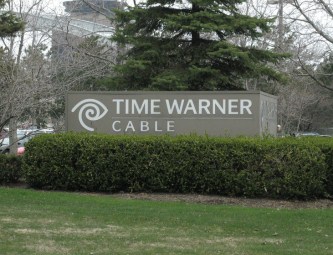
Time Warner Cable's office on Mt. Hope Avenue in Rochester, N.Y.

A second major outage is impacting thousands of Time Warner Cable customers in the Rochester metropolitan area, this time taking down cable television service.

It’s the second major outage for the cable operator in the last three weeks.

The outage began at around 2:15pm this afternoon and is affecting several parts of the area.

Time Warner Cable spokeswoman Lara Pritchard says there is an interruption in video service and engineers are working to restore service as quickly as possible.

At this time, no other information is available, and Time Warner Cable’s phone lines are jammed with callers.

Affected cable television customers are now entitled to a day’s credit for lost video service — but only if you ask.

Stop the Cap! Presents Your Easy Service Credit Request Menu

Customers can request one day of credit for cable TV service.

Sample Request You Can Cut and Paste:

I am writing to request one day service credit for the cable-TV outage that occurred in Rochester today, Wednesday Oct. 19th.  Please credit my account.

Methods to Obtain Credit:

  1. Use Time Warner Cable’s Online Chat system, select Billing Inquiry, and type to a customer service representative.
  2. Call (585) 756-5000 or toll free 1-800-756-7956 and speak with a customer service representative.
  3. Use the Online E-Mail form, select Billing Inquiry, and send a message requesting credit.

[Update: The credit request section above was modified.  Customers can request credit for cable television service, not Internet and phone.]

Fox-Cablevision Cat Fight Claws New York: Battle Briefly Extends Into Broadband Before Fox Thinks Twice

Another fight over retransmission consent leaves New York-area Cablevision subscribers in the middle of a dispute they will ultimately pay for.

At 12:01am Saturday, an unintended economic stimulus package kicked in for New York area sports bars as News Corporation yanked Fox network affiliates in New York and Philadelphia from Cablevision subscribers in a dispute over programming fees.

WNYW-TV (Fox), WTXF-TV (Fox), WWOR-TV (MyNetwork TV), Nat Geo WILD, Fox Business Channel, and Fox Deportes were all replaced with a looped message from Cablevision attacking Fox for negotiating in bad faith and greedily demanding more money than the cable company pays for every other New York area broadcaster, combined.

The dispute sent sports fans scurrying for access to weekend sporting events blacked out on the cable system serving Brooklyn, Long Island, and parts of Connecticut and New Jersey.  Cablevision customers were denied yesterday’s New York Giants-Detroit Lions football game and Philadelphia Phillies-San Francisco Giants baseball playoff game.  For a brief period, Fox raised the ante by also blocking Cablevision broadband subscribers from accessing Fox programming on Hulu, until political pressure and complaints from consumer groups forced Fox to retreat.

At issue, as always, is money.  Broadcasters are increasingly insistent on being paid for the right to retransmit their programming over cable systems.  Without agreements, a broadcaster can insist that a cable system drop their station(s) from the lineup until a retransmission consent agreement can be reached.

For years, many smaller independent stations fought to get on cable systems — for free — especially in areas where poor reception made it difficult to watch.  Broadcasters increased local advertising rates thanks to the extended viewing area many cable systems provide.

But now that local ad revenue is not what it used to be, and with viewers going online for access to their favorite shows, agreements increasingly require cash payments for permission to carry stations.

For the nation’s largest television market — New York City, the amounts exchanged can be staggering — well over $100 million dollars each year.  With that kind of money at stake, disputes have become almost routine, and area viewers are sick of it.

“It’s all about the money,” complained resident Joe Figueroa. “They’re always greedy.”

Figeroa and fellow Bronx resident Shinequa Gaillard told WNBC-TV these disputes always leave customers in the middle.
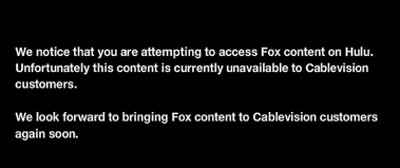
Fox briefly yanked its shows on Hulu Sunday for Cablevision customers attempting to bypass the dispute

“I think neither one of the two are thinking about the customers and the viewers — neither one of them,” Gaillard said. “As consumers, what can we do? Nothing.”

Briefly over the weekend, viewers hoping to bypass the dispute by watching Fox programming on Hulu learned the network had decided to involve Cablevision’s broadband subscribers in the fight as well — blocking access to Fox-owned content.  Some of our readers, include PreventCAPS, noticed.

Stop the Cap! reader and Cablevision subscriber Jim in Garden City, N.Y., discovered the programming blockade when he tried to watch an episode of COPS on Hulu.

“Fox has gone hardball on us by blocking Hulu for anyone with a Cablevision IP address,” Jim writes. “This is how these bastards operate, cutting off programming even for those like me who don’t even have cable TV and should not be involved in this debate at all.”

Jim uses a rooftop antenna to access local stations, and does not subscribe to a Cablevision video package.  He’s convinced this is exactly why we need Net Neutrality enforced by law in the United States.

“Imagine if this was Comcast-NBC vs. Fox,” he warns. “Do you think Comcast wouldn’t think twice of pulling the plug on Fox’s website and video content if the two hated one-another?  They’d flip that switch off in a second.”

The implications did not go unnoticed by Free Press and other consumer groups.

“Consumers should have the right to watch online content, and this access should not be tied to a dispute over cable television carriage arrangements,” said S. Derek Turner, research director for Free Press. “This move is also an example of a major user of public spectrum abusing the public interest.”

The matter quickly also went political, triggering an angry response from Rep. Ed Markey (D-Mass.) urging the Federal Communications Commission to step in and “actively defend Internet freedom and consumer rights.”

A few hours after statements like that, Fox pulled back and restored access, but the point was made for those who recognize media companies have major involvement in online and over-the-air programming.
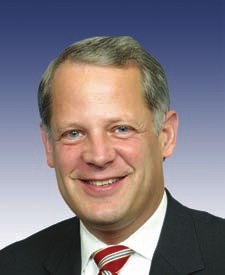
Israel

Rep. Steve Israel (D-N.Y.), whose district includes shut-out Cablevision subscribers, thinks these disputes have become way too common.

Cablevision subscribers have endured short-term lockouts from Food Network and HGTV, networks owned by ABC-Disney, and now this latest dispute with Fox.  Israel wants binding arbitration for these types of disputes, if only to shield customers from one side or the other yanking access:

“I spoke to officials today at the FCC and they confirmed they have offered to mediate arbitration and pledged to keep the heat on both parties to come to the table without disrupting service.  Haven questioned Chairman Genachowski about this issue in March, I know that he shares my concerns about the continued brinkmanship of these negations that threaten to leave customers in the dark.  I’m disappointed that both parties haven’t agreed to hold Giants fans harmless while negotiations continue.”

While Cablevision announced it was willing to enter arbitration to resolve the dispute, Fox officials refused, claiming it would reward bad behavior by the cable company.

Both players have their own websites defending their respective positions and trying to sign up viewers to help fight the battle.

News Corporation, which owns Fox, runs KeepFoxOn and is encouraging Cablevision subscribers to cancel subscriptions and switch to Verizon FiOS or satellite television.  It also accuses Cablevision of hypocrisy over their resistance to paying “fair fees” for Fox-owned programming.

Lew Leone, vice president and general manager of News Corporation’s WNYW and WWOR-TV says Cablevision wants special treatment:

Instead of negotiating like a responsible business, Cablevision decided to make this your problem in the hope that if they caused you, the viewer, enough inconvenience, then politicians would intervene.

That is what Cablevision’s call for “arbitration” is all about.   But ask yourself – do you think Cablevision would be ok with someone else stepping in to decide the price you pay them for cable and broadband service?

And the Cablevision family certainly doesn’t allow arbitrators to set the rates for their cable channels like MSG and AMC.  In fact, just a few weeks ago, MSG and MSG Plus went off the dial for millions of DISH Network subscribers – and MSG did not ask for arbitration.

Cablevision has called us greedy. It’s an interesting charge, given the fact that the price we’ve offered Cablevision for FOX5 and My9 is more than 70% lower than what the Cablevision family charges other cable operators for MSG and MSG Plus.

Frankly, it is hard to believe a company like Cablevision is accusing anyone else of greed.  Cablevision customers pay an average of $149 per month including up to $18 for broadcast stations – and that earned them an average profit of over $795 per subscriber last year.  Yet, they have only offered to pay less than a penny a day for FOX5 and My9.

Cablevision has stated that they intend to provide you with a rebate.  But if the rebate is equal to what they offered Fox for our stations, you can look forward to a credit of less than 30 cents on your next bill.

Cablevision officials fire back that they won’t be bullied.  The Cablevision website, along with a video airing on blacked out channels, accuses Fox of greedily demanding $150 million for stations, many of which customers can watch for free over-the-air:

  • Cablevision currently pays 70 million dollars per year for News Corp’s programming (which includes channels such as FOX 5, My9, FOX Business Network, National Geographic Wild, and FOX Deportes), and now they are asking for more than 150 million dollars for the exact same programming – no new programming, just another 80 million dollars per year for News Corp.
  • Cablevision has reached agreement with every other major broadcast station, including CBS, NBC, ABC and Univision. But News Corp is demanding more in fees for FOX 5 and My9 than Cablevision and our customers pay for all of the other broadcast stations combined!
  • We think in these economic times that this is outrageous, especially since FOX 5 and My9 are available for free over the air, and they make many of their most popular shows available for free on the Internet.
  • News Corp has pulled the plug on their most popular programming, holding viewers hostage until their unreasonable demands are met. NFL Football, the MLB playoffs and World Series, House and Glee are just a few of the programs that News Corp is depriving their viewers of in an attempt to bully us into accepting their unfair demands.
  • Cablevision is willing to accept binding arbitration from an independent 3rd party to settle this dispute. We call on News Corp to accept binding arbitration, and to put FOX 5 and My9 back on the air for our customers until we can come to a fair agreement.

Both sides have publicized their views in the local media, including full page ads in New York tabloids.  One from Fox targeted Cablevision’s owners personally, accusing the Dolan family of getting top dollar for lesser-watched sports networks under the MSG umbrella while playing hardball over program fees for channels 5 and 9, heavily viewed in the New York area.

Right now, Cablevision pays about 25 cents per month for both broadcasters.  News Corporation reportedly wants a dollar per month.

Forbes entertainment columnist Lacey Rose warns these repeated battles may bring unintended consequences from viewers, especially for Fox:

The networks’ current strategy –block programming while trading barbs with the cable operator in question—may do more harm than good, however, as consumers are (further) incentivized to find new ways to occupy their time. (Much as they did during the 100-day writers’ strike, when new scripted programming was shelved for months.) Still more worrisome, the resulting fees that will be passed down to already cash-strapped subscribers in the form of higher cable bills could end up pushing them away forever.

In an era of 1,000-plus channels and infinite entertainment on the Internet, the broadcast networks are already in a precarious position with younger viewers, which advertisers pay a premium to reach. Blackouts or not, nearly 70% of cord cutters are under the age of 34, according to a BTIG study released last month — and that doesn’t include a growing subset of these younger, tech-savvy viewers who never even bother with a cable subscription, preferring entertainment outlets like Hulu and Netflix for their content.  Though the networks are loathe to admit it, viewership continues to decline as the median age of the audience at the big four rises. In fact, thus far this season the median age of a prime-time viewer is 50 years old, according to The Nielsen Company.

But at least for now, as negotiations continue in the third day of the programming blackout, there appears to be no end in sight.  Cablevision has even engaged in some programming blackouts of its own, denying access to today’s New York gubernatorial debate to Verizon FiOS, which prompted an angry response from the phone company.

“Verizon FiOS TV customers and millions of other viewers served by other providers across the state have essentially been blacked out of the debate, denying them their rights as citizens and voters, since Cablevision is the sole broadcaster of the event,” said Michelle Webb, general manager and chief programming officer of FiOS1, Verizon’s news channel for Long Island and northern New Jersey. “And while the broadcast will be available on certain websites and some radio, those may not be practical solutions for many people.”

[flv width=”640″ height=”500″]http://www.phillipdampier.com/video/Fox Cablevision Dispute 10-18-10.flv[/flv]

Stop the Cap! brings you a comprehensive roundup of coverage from the New York area regarding the Cablevision-Fox dispute, with coverage from WNYW, WABC, and NY 1 television, Cablevision and Fox themselves, and WINS and WCBS Radio.  (14 minutes)

More Frontier Service Outages & A Stimulus Scandal Plague West Virginia As Complaints Continue

Frontier Communications continues to alienate customers up and down the state of West Virginia with more service outages, billing problems, and emergency 911 service interruptions.

This time, it’s the community of Marmet that suffered an outage the company described as “temporary.”  Service to the area’s Metro 911 emergency operations center was interrupted Monday and residents knew what to do when Frontier could not deliver landline service that works — they grabbed their cell phones.

In Dunbar, the funeral director at Keller Funeral Home noticed he stopped getting calls from local area customers after Frontier took over operations July 1st.  Michael McCarty told a Charleston television station Frontier initially blamed him for the problems, but later discovered malfunctioning switching equipment was at fault and forked over a $344 refund.  McCarty’s business probably took a bigger financial hit than that when potential customers could not get through — for months.

“People would call, but it wasn’t ringing here,” McCarty told the Charleston Gazette. “There really wasn’t much we could do but wait it out.”

Two dozen complaints about Frontier’s performance are still pending at the West Virginia Public Service Commission.  The state’s consumer advocate says Frontier’s service quality in the state is not improving.  Frontier blames Verizon’s aging and poorly maintained network for most of the problems.

But many of Frontier’s complaints, not just in West Virginia, are about unfair early cancellation fees, inaccurate billing, lost service orders, and lousy customer service.  Here’s a sample:

  • “The customer service representative was extremely rude and angry. We called in response to the unfair cancellation fee of $250.00. Last week we were told that we had until 9/30 to opt for other phone service without a cancellation fee. Each representative gives different information. Small business were treated horribly by Verizon and now Frontier. After the rudeness, I will never bring my business service back to Frontier!”
  • “I have fought this company for six months because every month they cannot get billing right. They are the absolute WORST I have ever dealt with. They charge for services not wanted. They charge late fees when none should have been charged and then didn’t remove them after admitting their mistakes. If you have any other choice, avoid Frontier like it’s a plague, because it is.”
  • “They never processed my order to transfer my service. I called back 4 times in a week to get them to do their job. On the last day, I was left on hold for 2 hours in the morning and then 1.5 hours in the afternoon, only to be told I would have to wait another 3 days for a servicemen to come out. The wait times were nothing less than abusive.”
  • “Horrible folks to do business with. Verizon sold my FiOS/Phone account to Frontier and soon afterward mysterious charges for “ID protect” etc. started appearing on my bill. Whenever I call their service, it loops and hangs up. I tried the option for “we will call you back” – when it calls back , it will give another number to call back, where you have to wait again. Can’t wait to get rid of them.”
  • “Frontier recently bought out Verizon’s service in my area. The automated phone tree system goes in loops and hangs up on you. Furthermore, once I finally figured out how to get someone on the line (responding to every question the automated system asked with “operator”) and moved up to a supervisor… the supervisor got very short with me when I tried to cancel my service and then hung up on me. When I called right back, I got an automated message saying the offices were closed.”

Some enterprising Frontier customers have learned their hold times will be much shorter if they opt to speak with a Spanish-speaking operator.  “Many of the call centers are in Florida anyway, so you may get a bilingual operator no matter which language you choose,” writes our reader Danielle.  “I cut my hold times from over an hour to less than five minutes this way.”

Meanwhile, one of Frontier’s primary competitors in the state, Citynet, accused Gov. Joe Manchin’s office of wasting $126 million in taxpayer money that will benefit Frontier Communications far more than state residents starved for broadband.

Citynet CEO Jim Martin urged federal officials Wednesday to suspend the grant after the state defended plans to allocate a large amount of the grant exclusively to connect state agencies.

“The state’s response clearly highlights why the federal government needs to suspend the award until there are major modifications to the plan,” Martin said. “It is clear from the state’s letter that little will be done with the federal taxpayer funds to increase the availability of adequate and competitively priced high-speed infrastructure in West Virginia. The current approach will cost the state future job growth.”

Martin is upset that more than half of the grant, $69 million dollars, will be spent on Frontier’s behalf to construct a broadband network for the state government.  The agencies who get access will still have to pay Frontier market rates for high speed broadband access, despite the fact taxpayer dollars were spent to construct the network Frontier will operate.

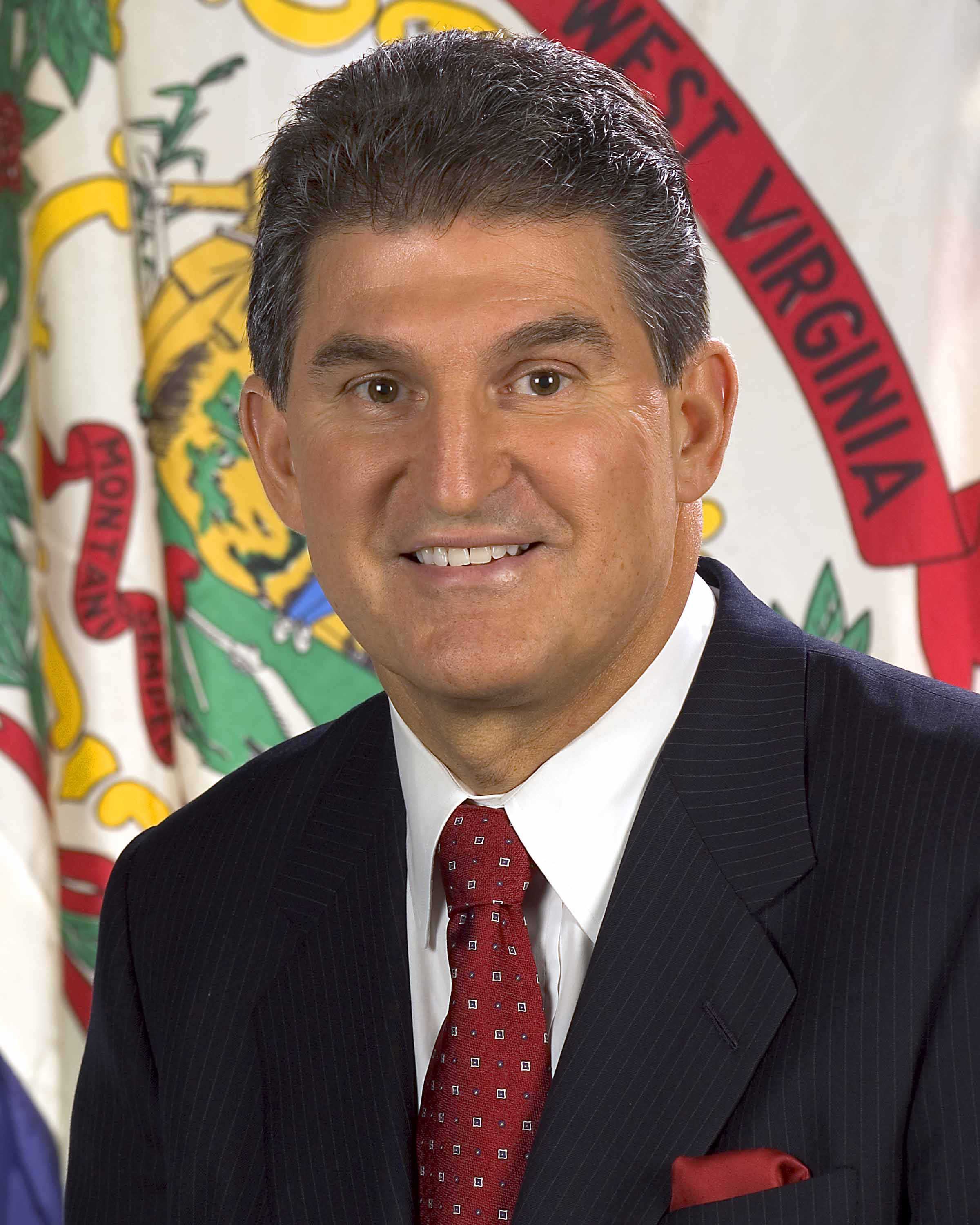
Manchin

Citynet wants stimulus funding diverted to construct a “middle mile” broadband network that every telecommunications company can access at wholesale rates to deliver improved broadband services to residents and businesses, not just government buildings.

Martin says the Manchin Administration is making “blatantly false” claims that the stimulus money would deliver high-speed Internet to 700,000 homes and 110,000 businesses.  Unless those homes and businesses are stuffed into government agency buildings, it won’t.

According to Martin, all of the benefits will go to only two places — state agencies and Frontier’s pockets.

“It’s a political favor to Frontier,” Martin charged.

“The citizens of West Virginia deserve transparency and accountability from their public servants, and this is even more true given the magnitude and importance of the need for broadband enablement in our state,” Martin said Wednesday. “I was born and raised in West Virginia, and I am aware of the consequences this program could have for West Virginia in terms of job growth and competing for high-paying 21st century jobs.”

Search This Site:

Contributions:

Recent Comments:

Your Account:

Stop the Cap!