Mediacom is the nation's eighth largest cable company, serving 1.3 million customers in 22 states
Customers across the country are growing increasingly annoyed with Mediacom, the nation’s eighth largest cable operator that scored rock bottom in this year’s Consumer Reports cable survey.
The complaints keep on piling up: unfulfilled service calls, uninformed customer service agents in the Philippines, poor quality service, and in one case, a supervisor more concerned about how a customer obtained her direct number than actually resolving the customer’s problems.
The fallout from irritated customers now extends beyond horror stories from some of the company’s 1.3 million customers in 22 states — it’s now costing the company rejection of extended franchise renewal agreements in some communities, and plenty of bad press.
Boone County, Illinois
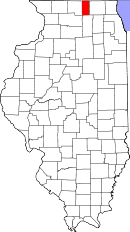
Boone County, Illinois
Last spring, Boone County began discussions about renewing a cable franchise Mediacom had with the county for some 20 years. Public meetings to discuss the renewal brought throngs of customers annoyed with Mediacom’s poor performance.
The Rockford Register-Star took up the story:
Candlewick Lake resident Roger McGee Sr. has been experiencing difficulties with his cable company since he moved to the gated community two years ago.
McGee, a former Huntley resident, said he’s spent more time trying to get resolutions to his cable and Internet issues than he ever imagined was possible. “Every single step of the way the customer service was horrible and mismanaged,” he said Wednesday. “I talked to Mediacom more than I talked to my wife in those three months.”
Mediacom representatives characterized the complaints as mere aberrations and suggested isolated complaints could be resolved without impacting the company’s franchise renewal. But additional public meetings held later that summer illustrated Mediacom had problems in the north-central Illinois region where it provided service. The Register-Star reported:
George Chorvat has experienced countless issues with Mediacom Communications, and he’s looking for relief. The Poplar Grove resident isn’t alone.
Chorvat attended the county’s second cable hearing Tuesday at the Belvidere Township Building along with roughly 20 residents to speak out about service woes and to provide input on the county’s nonexclusive franchise renewal, which is in the negotiation phase.
“You took away half of our movie channels and said it was OK because we had On Demand, but we do not and we’re paying the same price,” Chorvat said.
His challenge of the offerings provided by Mediacom was one of several problems residents said they face.
Some residents detailed months of waiting for maintenance cable wires to be buried underground. Others told of weeks without phone service or waiting at home for technicians to arrive for scheduled appointments only to find the cable company had canceled them.
Late last month, Boone County granted the cable company a one-year extension of its cable franchise, citing customer complaints as the primary reason for the short-term extension. In addition, the county will hold a series of public meetings at three, six, and nine month intervals over the coming year to check on customer service concerns and how Mediacom responds to them before considering a five year franchise extension.
The interim extension also keeps Mediacom from using telecom-friendly legislation to obtain a franchise from the Illinois state government, bypassing local officials. Statewide franchising in Illinois was the brainchild of AT&T, which wants to expand U-verse without having to answer to local communities. Mediacom has the ability to hop on board the same provisions to avoid local control if local governments refuse to extend a franchise agreement.
“We need to make sure we keep some county control here,” board member Karl Johnson told the newspaper in February. “No matter how big we think we are here, they’re a whole lot bigger when they come through downstate.”
Johnson heard several complaints from Mediacom customers about missed appointments, incomplete wire maintenance, and some who went weeks without Mediacom phone or broadband service.
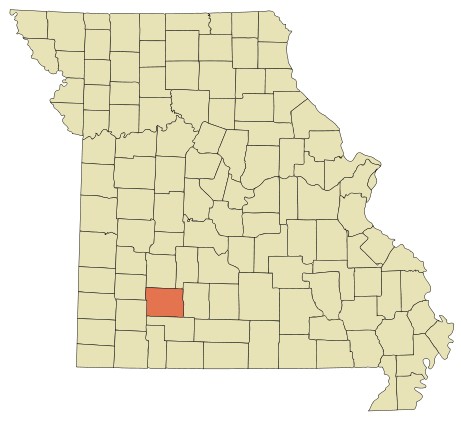
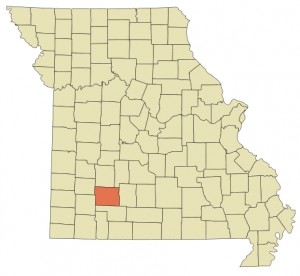
Springfield, Missouri
Springfield, Missouri
Cable customers who experience problems expect answers when calling customer service, but Springfield resident Nancy Walker found herself empty-handed after speaking with a Mediacom representative thousands of miles away — in the Philippines.
“I am really upset,” Walker told the Springfield News-Leader in February. “I want a local number I can call, not the Philippines.”
She finally resorted to calling the office number of a friend who once worked for Mediacom before that friend passed away. A supervisor was more concerned about how she obtained that number than helping her, Walker said.
Mediacom disconnected its local call center about three years ago, and company officials admitted they route calls to call centers, including one in the Philippines. Larry Peterson, regional vice president of Mediacom, said the company dropped the ball on Ms. Walker, finding the customer service she received “unacceptable.” Peterson handed Walker his business card and promised any issues would be resolved.
For customers who do not have Peterson’s personal office number, many just have to take their chances.
Springfield’s Cable TV Advisory Commission, which actually holds almost no real power over Mediacom, thought the company could do better.
Commission member Rita Silic urged the cable company to find a way to route dissatisfied customer calls back to a local Mediacom representative.
Dave Iseman, editorial page editor of the News-Leader, opined Mediacom needs “a full-fledged apologetic jingle. And it better be a long one, considering the waiting time that can be necessary to phone in a complaint.”
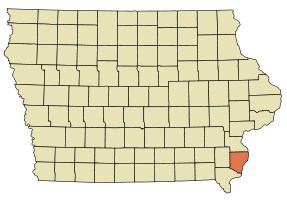
Burlington, Iowa
The fact Mediacom rated near the bottom in Consumer Reports‘ latest ranking of telecommunications companies — 24th among 27 Internet providers, 15th among 16 television service providers and dead last among 23 telephone providers — didn’t escape the attention of Burlington-based newspaper The Hawk Eye. The newspaper noticed local complaints were continuing to pour in about service quality and trouble reaching customer service.
Columnist Don Henry even wrote about his own personal experiences with Mediacom in December:
Mediacom last month took away the religious programming my wife enjoys: I guess she shouldn’t complain.
They also poked out one of C-SPAN’s eyes on Congress. The Nancy Pelosi House of Horrors remains fit for family viewing, but not the Senate Shell Game. No explanation of why and I watched both — but I’m not complaining.
We were satisfied with “expanded basic” — but Mediacom decided to improve our viewing experience by removing four channels and making us rent some new box gadget to see them, plus a few we didn’t need.
Lest you complain, you get one box free … until they automatically raise your bill a year later. Conservatives think God trumps Harry Reid, so our box went into Sandy’s exercise room. She’s not complaining.
Henry’s problems only got worse from there, including e-mail disruptions and other service outages. He did what most customers do when their service is on the fritz — he called the cable company. That turned out to be quite an adventure:
“For e-mail problems, press 1; otherwise, stay on the line.”
I pressed 1.
“For e-mail problems, press 1; otherwise, stay on the line.”
Burlington, Iowa
I pressed 1.
“For e-mail problems, press 1; otherwise, stay on the line.”
After maybe 10 replays, I disobeyed. I stayed on the line … and waited … and waited … until my patience wore thin enough to drive to the Mediacom office on Division Street. I talked to a rep who seemed blissfully unaware of any e-mail problems. It’s been over a day and I’m far from alone, I said.
“Well, nobody’s told us.”
Could you ask about it?
“I can’t do that.”
Could you at least adjust my bill for the lost service?
“I don’t know of that ever being done.”
You used to, when I could get someone by phone.
“Then you’ll have to call.”
Henry’s column struck a nerve among local residents, who flooded the newspaper with comments about their own horror stories, ranging from pesky squirrels chewing through fiber optic cables to tsunamis of spam after the company “improved” its e-mail service.
Phyllis Peters, communications director for Mediacom, admitted the company could improve its customer service, but decided to devote most of her attention to taking issue with… Consumer Reports‘ survey. Peters wants customers to know Mediacom isn’t dead last in the country because the magazine didn’t ask customers about every cable provider in the United States. She’s certain there are worse examples out there:
Peters said one reason the survey might rate Mediacom so poorly is because of the company’s ambition. Mediacom is the nation’s eighth largest cable company, and focuses on providing cable coverage to non-metropolitan areas. Expanding service over a large area means more fiberoptic cable and servers that must be monitored.
Peters said the top-ranking cable company Wow, which had top scores on almost every attribute in the ratings, serves a much smaller, consolidated area than Mediacom. Wow is the 12th largest cable provider in the country, and services parts of Illinois, Michigan, Ohio and Indiana. Consumer Reports was enthusiastic about the company, but acknowledged its small size.
“We would like to be higher in the rankings. We’ve put a lot of effort into customer service, and we did add a lot of calling staff,” Peters said. “Those things have moved forward in a significant way, and it takes a while for perception to change.”
It may not always be easy to get a Mediacom representative on the phone, but the company offers the fastest Internet service in Burlington, she said. The company offers a standard download speed of 12 megabytes per second, and that service can be upgraded to 20 megabytes per second for a higher price.
Competition for Burlington residents’ broadband needs come mostly from Qwest, which offers most customers 1.2 Mbps DSL service, although the company can provide up to 7 Mbps in selected neighborhoods.
Max Phillips, president of the western Iowa division of Qwest, told The Hawk Eye he doesn’t know if the company will be able to provide higher speeds to Burlington in the near future.
“We have a long-term plan to bring higher speeds, but our business is constrained by the government model,” he said, whatever that is supposed to mean.
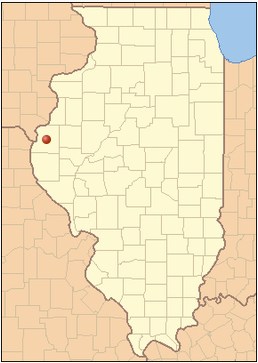
Carthage, Illinois
Carthage, Illinois
Mediacom has been out of luck securing a franchise renewal in Carthage because of ongoing customer complaints about the quality of service being provided to Hancock County residents.
Carthage has been without a Mediacom franchise agreement since the old one expired last June.
A proposed renewal was shot down by the city after a vote failed to approve it, citing reception complaints. Mediacom has been asking the city for a franchise renewal ever since, but the city has resorted to four-month extensions, waiting to see what service improvements were forthcoming in the interim.
Mediacom installed new hardware in the community, which it felt would improve reception, and city officials were hopeful the noted drop in complaints reaching them was an indication of that.
But in February, complaints began arriving at the city’s doorstep once again.
Carthage Mayor Jim Nightingale said he heard two complaints right after the city council offered the latest extension.
Now he’s withdrawn the offer.
Mediacom can always appeal to the state of Illinois to seek a new franchise under statewide franchise laws, but discussions with city officials are continuing for now.
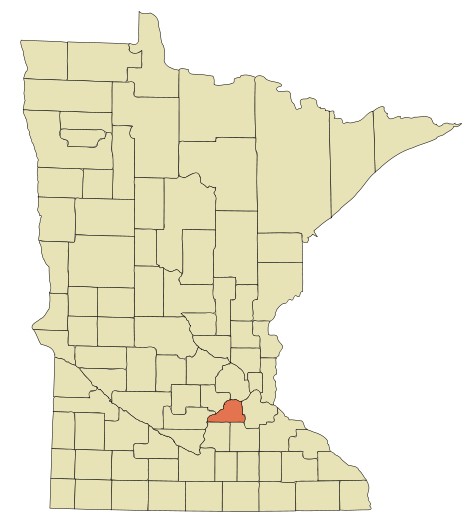
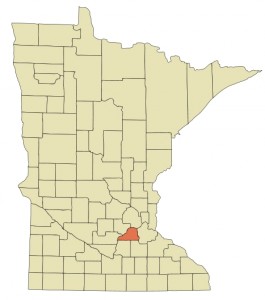
Prior Lake, Minnesota
Prior Lake, Minnesota
Communities looking for competitive alternatives to Mediacom usually find phone companies who refuse to offer video service in Mediacom service areas, because the cable company typically chooses smaller communities where such “telco-TV” projects don’t meet the minimum Return On Investment requirements necessary to build them. Some communities served by independent phone companies or are lucky enough to find a willing fiber-to-the-home provider are in better shape, unless the cable company files suit to stop such projects from moving forward.
 The community of Prior Lake, twenty miles outside of Minneapolis, and its 16,000 residents are a case in point.
Last fall, Mediacom filed suit against Integra Telecom, a Portland, Oregon-based provider of competitive voice, broadband, and television service that won a franchise agreement to provide “telco-TV” in Prior Lake and nearby communities within its existing service area.
The suit claims city officials discriminated against Mediacom by not compelling Integra to meet the same terms and conditions Mediacom agreed to in a 1999 franchise agreement. Specifically, Mediacom wants Integra held to the same requirement it agreed to in defining its service area. Because Integra is not planning on matching Mediacom’s service area house by house, Mediacom claims they are in violation of Minnesota law.
That suit is awaiting a hearing in the state Court of Appeals expected to begin this month.
The dispute between Mediacom and the city has led one state senator to write legislation clarifying the existing cable franchise laws in Minnesota.
Senator Scott Dibble (DFL-Minneapolis), has introduced Senate File 2535. The bill would allow telephone companies to provide competitive service within their natural service areas, instead of being required to match incumbent cable operator coverage areas. For example, a cable company might serve a broader area where multiple phone companies provide service. Under current state law, competing phone companies could be required to wire every area where the incumbent cable company provides service, even inside other phone company’s service areas. Senate File 2535 recognizes the current telephone company service area boundaries as acceptable enough to proceed with a video franchise agreement.
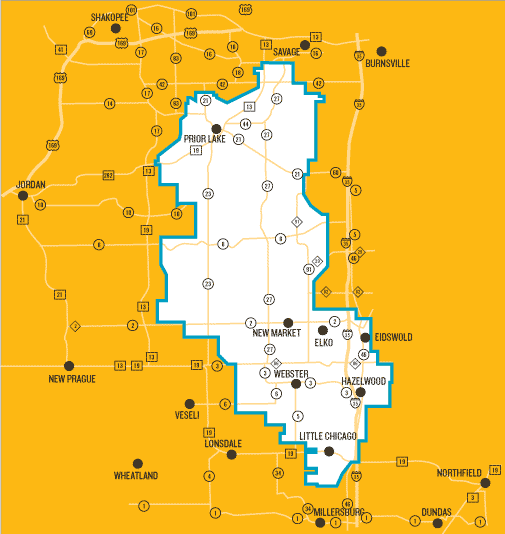
Integra's service area in the Minneapolis/St. Paul region, which is not identical to Mediacom's service area, is one point of contention between Mediacom and Prior Lake officials
Prior Lake City Manager Frank Boyles and Senator Claire Robling (R-Jordan), both testified in favor of the bill at a recent hearing held by the state Senate Committee on Energy, Utilities, Technology and Communications. The bill was approved unanimously and now moves to the State and Local Government Operations and Oversight Committee, of which Robling is a member.
The League of Minnesota Cities is also calling on its members and the public to support SF2535 which could speed competition across Minnesota.
Text of Senate Bill 2535:
A bill for an act relating to cable communications; clarifying requirements for the granting of additional cable franchises; amending Minnesota Statutes 2008, section 238.08, subdivision 1.
BE IT ENACTED BY THE LEGISLATURE OF THE STATE OF MINNESOTA:
Section 1. Minnesota Statutes 2008, section 238.08, subdivision 1, is amended to read:
Subdivision 1. Requirement; conditions.
(a) A municipality shall require a franchise or extension permit of any cable communications system providing service within the municipality.
(b) No municipality shall grant an additional franchise for cable service for an area included in an existing franchise on terms and conditions more favorable or less burdensome than those in the existing franchise pertaining to: (1) the area served; (2) public, educational, or governmental access requirements; or (3) franchise fees. The provisions of this paragraph shall not apply when the area in which the additional franchise is being sought is not actually being served by any existing cable communications system holding a franchise for the area. Nothing in this paragraph prevents a municipality from imposing additional terms and conditions on any additional franchises.
(c) An area for an additional cable franchise is not more favorable or less burdensome if the franchisee is a telephone company, as defined in section 237.01, subdivision 7, and the area of the franchise is no less than the area within the municipality in which the telephone company offers local exchange telephone service. This paragraph is in addition to and not a limit to the authority of a municipality to grant an additional franchise for cable service.


 Subscribe
 Comcast is back with another rate increase effective April 1st, amounting to 3.5 percent for many cable, broadband, and telephone customers.