Home » Competition » Recent Articles:

Does Broadband Need More Regulation?

Phillip Dampier March 15, 2010 Astroturf, Competition, Net Neutrality, Public Policy & Gov't, Rural Broadband Comments Off on Does Broadband Need More Regulation?

[flv]http://www.phillipdampier.com/video/CNBC Broadband Regulation 3-2-10 .flv[/flv]

Free Press’ policy director Ben Scott held his own, despite being hopelessly outnumbered, in a business-friendly CNBC ‘Power Lunch’ debate over broadband public policy held earlier this month.  Scott faced Yahoo! CEO Carol Bartz, Larry Clinton from the “Internet Security Alliance,” which receives substantial support — not disclosed by CNBC — from AT&T and Verizon, and CNBC’s clueless Michelle Caruso-Cabrera, who insisted 99 percent of America already subscribes to broadband.  All of the industry talking points were on hand, which isn’t too surprising when they come from industry front groups like the ‘ISA.’ (3/3/2010 — 5 minutes)

Louisiana Public Service Commission Refuses to Vote Itself Authority to Fine AT&T for Lousy Service

Despite hundreds of consumer complaints from residents in and around Baton Rouge, the Louisiana Public Service Commission has refused to vote itself the authority to threaten AT&T with a fine up to $175,000 for poor service.

Ignoring an agreement by AT&T to adhere to minimum service standards in return for permission to acquire BellSouth Corporation in 2006, the Commission oddly decided not to enforce those conditions for the protection of AT&T customers.  On Wednesday, in a 3-2 vote, the PSC instead decided to “study” the matter and to further consider whether or not it should impose the same minimum service standards on all of Louisiana’s phone companies.
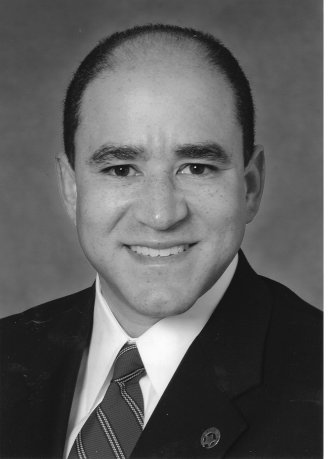
Campbell voted for the authority to fine AT&T. He serves District 5 in northern Louisiana

Commissioner Foster Campbell, of Bossier Parish in northern Louisiana, was stunned by the vote’s results.

“You’re telling AT&T that no matter what they do, no matter how bad their service, we’re not going to do anything?” he asked.

Campbell told his fellow Commissioners he’s worn out after taking large numbers of calls from upset residents in northern Louisiana.

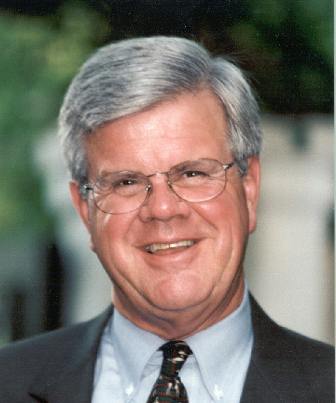
Field also voted for the measure. He serves District 2 in southern-central Louisiana

This is the second time the PSC refused to fine AT&T and instead “study” the matter.  Meanwhile, customer complaints from the Baton Rouge area continue to pour into the PSC offices.

Commissioner Jimmy Field, who represents the Baton Rouge area, told AP his office had been swarmed with consumers complaining about the length of time to get service installed and outages lasting more than 24 hours. Field wanted the PSC to hang the fine over AT&T’s head again.

Complaints against AT&T in Louisiana also involve lengthy waits for repair call appointments, delays in getting new lines installed, missed appointments, and extended service outages.

In just four months last summer, the Commission confirmed 435 of the 778 complaints lodged across the state against AT&T.

Apparently if the problems don’t impact the residents you represent, there isn’t a problem.

The three commissioners that voted against the proposal to potentially fine AT&T said as much.

Skrmetta was the ringleader of the three opposed to potentially fining AT&T. He serves District 1 in east Louisiana

PSC Commissioners Eric Skrmetta, of Metairie, Lambert Boissiere III, of New Orleans, and Clyde Holloway, of Forest Hill said it wasn’t fair to single out just one company.

Skrmetta went further and said he hadn’t seen many complaints in his district, north of Lake Pontchartrain.  But he had received complaints about some of AT&T’s competitors.
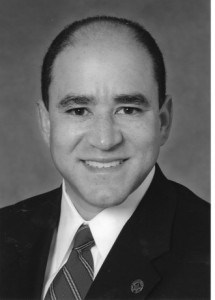
Boissiere voted against the measure. He represents District 3 in central Louisiana

Boissiere, despite voting against the proposal, delivered a verbal spanking to the AT&T representative on hand.

“I don’t like your methods. I don’t like your style. I understand where my fellow commissioners are coming from,” Boissiere said.

Debbie Canale, the executive director for regulation for AT&T Louisiana, wasn’t much impressed with Boissiere’s comments.

“Our customers vote with their money and would do business with competitors, if they were unhappy with AT&T,” Canale offered.

Our Take

The three commissioners who voted against giving themselves the power to make their regulatory authority count don’t belong on any Public Service Commission.  Any member of a review board should be concerned first and foremost with the interests of the residents they represent.  The three Louisiana commissioners who voted against the proposal failed to do that.  They should be removed immediately.

The only way to impress telecommunications companies under your review is to have the power to make them pay attention to your rulings.  Stiff fines for repeated violations (and 435 in just four months is an incredible number) will make any company sit up, take notice and fix problems.

Without it, verbal scoldings are little more than lip service to a provider that can afford to be arrogant, especially in rural Louisiana where competitive choice is hardly bountiful.

Canale’s response to the Commission boils down to, “if you don’t like our service, leave.”  If only every Louisiana resident could choose another landline provider if they wanted.

Holloway, the third "no" vote, represents District 4 in western Louisiana

Ignoring a company’s problems in one region of the state virtually guarantees those problems will eventually visit another.  It is short-sighted and inexcusable to ignore hundreds of valid complaints,  condemning residents to more of the same in the future.  Voting (for a second time) to “study” the issue is an insult to residents and little more than a stall tactic.

The Commission’s suggestion it wants to impose regulatory fairness comes despite a clear agreement, less than four years old, that AT&T signed onto as part of its buyout of BellSouth.  It says AT&T will commit to certain standards of service in return for regulatory approval of the merger.  AT&T already sought to renege on that agreement in mid-2009 when it asked the Commission to suspend fines as part of their “study” about regulatory policies across the state.

So much for that hard-fought consumer protection deal.  Evidently, what AT&T agrees to one year is fodder for their lobbyists the next.  If AT&T wants changes, can consumers demand some changes of their own that assure this company will provide quality service?

As usual, AT&T’s regulatory affairs never give consumers a good deal.  For 435 residents of Louisiana, it also gave them no dial tone and a lengthy wait to get it back.

At for Commissioners Skrmetta, Boissiere and Holloway, the only question that should be on the table is whether they represent residents or AT&T Louisiana.

That is something worthy of careful study.
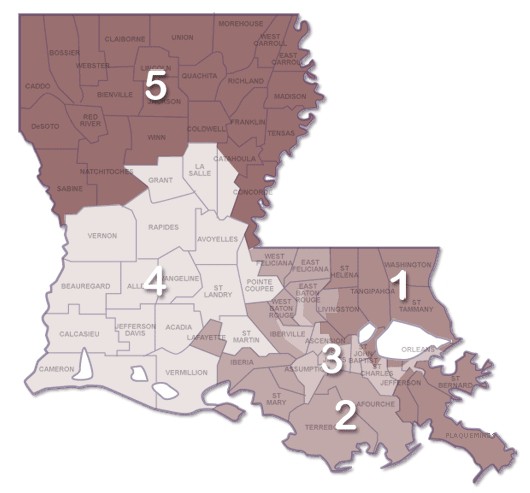
Louisiana's Public Service Commission is made up of five commissioners, each with their own district to represent.


Biggest Problem With South Pacific Broadband: “Restrictive Data Caps” — New Fiber Project Helps Eliminate Them

Phillip Dampier March 11, 2010 Broadband Speed, Competition, Data Caps Comments Off on Biggest Problem With South Pacific Broadband: “Restrictive Data Caps” — New Fiber Project Helps Eliminate Them

Flag of New Zealand

Despite broadband provider propaganda designed to convince Americans restrictions on broadband usage were “commonplace” and well tolerated overseas, a group of New Zealand and Australian broadband entrepreneurs propose to spend just under $900NZ million to build new fiber capacity to help eliminate them once and for all.

A team of businessmen from the South Pacific today announced they are part of “an early stage” venture to construct a brand new underseas fiber optic cable to connect Australia and New Zealand with the United States, providing five times the capacity of existing service provided by the Southern Cross system.

The new group, Pacific Fibre, went public today and is talking with potential partners about the plan to construct a 13,000 kilometer cable by 2013.

Mark Rushworth, former Vodafone chief marketing officer, told TV New Zealand a full 90 percent of New Zealand Internet traffic is bound for the United States.

“It is using the most direct route. It is one hop from New Zealand to the US, which from a technical perspective is very important because it means it is a lower latency cable, that is, it is faster than other cables,” he said.

Flag of Australia

The primary impetus for the project was the common practice in New Zealand and Australia to limit customers’ usage of broadband service with Internet Overcharging schemes like usage-based billing or restrictive data caps which can throttle speeds just above dial-up for customers for weeks, if they exceed their usage allowance.

Rushworth

Private providers have lived happily on the revenue earned from such schemes and have done little to relax usage limits on their customers, so Pacific Fibre decided to undertake a game-changing new fiber cable themselves to drive prices down and eliminate the caps.

“We desperately need a cable that is not purely based on profit maximization, but on delivering unconstrained international bandwidth to everybody, and so we’ve decided to see whether we can do it ourselves,” said partner Sam Morgan.

“We hope to bring in extra capacity at a low price, which our carriers and ISP customers can end up passing on to their customers,” Rushworth said.

“We all know that in any market as soon as you introduce competition prices tend to drop and volume goes up,” he told TVNZ.

The current proposed cable configuration would have two fiber pairs with 64 wavelengths (lambdas) each at 40 gigabits per second per lambda. The maximum lit capacity initially would be 5.12 terabits per second, but would be upgradeable to over 12 terabits per second as emerging technology became a reality.

Upstate/Downstate: More Cities in New York Getting Time Warner Cable Wideband Service

Phillip Dampier March 11, 2010 Broadband Speed, Competition 2 Comments

Although residents of Rochester will have to wait, other cities in upstate and downstate New York are now getting Time Warner Cable’s Wideband broadband service, which provides faster upstream and downstream speeds thanks to DOCSIS 3 service upgrades.

Time Warner in Buffalo yesterday signed its first Wideband customer, according to Broadband Reports.

The Hudson Valley will be the next:

  • Walden Available March 30, 2010
  • Wurstsboro Available March 30, 2010
  • Rhinebeck/Saugerties Available March 30, 2010
  • Poughkeepsie Available March 30, 2010
  • Port Ewen/Kingston Available March 30, 2010
  • Liberty/Monticello Available March 30, 2010

Time Warner Cable is deploying Wideband first in communities where they face competition from Verizon FiOS or AT&T U-verse.  Communities like Rochester, which face only token competition from slower-speed DSL service, are pushed way back on the upgrade list.

Customers in Albany, Buffalo and Syracuse who live near, but not in a FiOS-upgraded community, will also benefit from the DOCSIS 3 upgraded-Wideband service.

Two types of Wideband service are commonly available according to BR:

  • 30 Mbps downstream 5 Mbps upstream tier that costs $25 over Time Warner Cable’s standard Road Runner plan (which can vary in price and speed by market depending on competition).
  • 50 Mbps downstream 5 Mbps upstream tier for $99 a month.

50/5 Mbps ‘Wideband’ Service Arrives in Dallas for Time Warner Cable Customers Later This Month

Phillip Dampier March 9, 2010 Broadband Speed, Competition 2 Comments

Time Warner Cable customers with deep pockets and a need for speed will find Time Warner Cable’s new Wideband Internet service arriving in certain North Texas neighborhoods on or around March 19th.

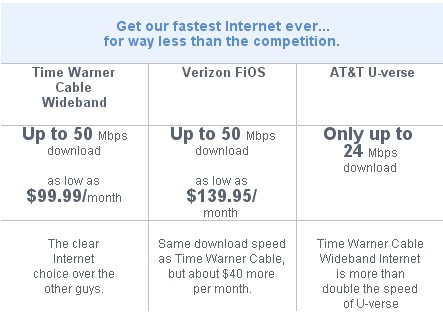
Made possible by DOCSIS 3 upgrades, the new service will provide 50/5 Mbps service for as low as $99.99 per month.

As has been the case in other cities getting TWC’s Wideband service, self-install kits are not yet available and a formal service call is required.  You will also need a new DOCSIS 3-capable cable modem.

Interested customers in the Dallas area can call Time Warner Cable after March 19th at (972) 742-5892 to determine if service is available yet in your neighborhood.

Time Warner Cable competes with both AT&T and Verizon across its North Texas division.

AT&T U-verse maxes out at 24 Mbps currently, and although Verizon FiOS can match Time Warner Cable’s speed, the phone company’s current price is $40 higher for the service.

Customers who need this level of speed should call Verizon or Time Warner Cable and inquire about any promotional pricing that could lower your bill for several months.  In New York City, some customers received discounted Time Warner Cable Wideband service for six months.

Eventually, competition should result in lower prices for super fast broadband connections.  DOCSIS 3 upgrades offer a win-win for both customers and the cable company providing the service.  Increased capacity resolves neighborhood congestion issues and also permits higher speed, premium-priced tiers to deliver additional profits to providers.  In return, customers who need ultra-fast speeds get them, and are only to happy to pay for them, as long as they are not usage-capped.  Nothing destroys the value of premium-priced tiers better than unjustified usage limitations.

Search This Site:

Contributions:

Recent Comments:

Your Account:

Stop the Cap!