Home » Competition » Recent Articles:

Virgin Mobile Broadband Increasing Usage Allowances, While Maintaining Existing Pricing; Cricket Could Be Next

Phillip Dampier March 4, 2010 Competition, Wireless Broadband Comments Off on Virgin Mobile Broadband Increasing Usage Allowances, While Maintaining Existing Pricing; Cricket Could Be Next

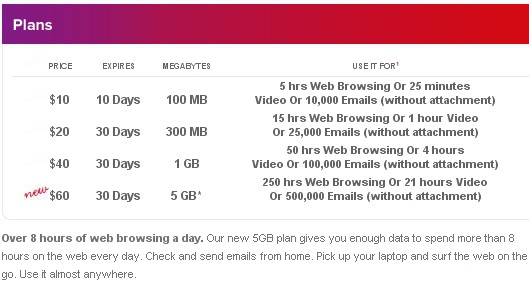
Virgin Mobile’s Broadband2Go prepaid mobile broadband service is increasing usage allowances in hopes of attracting new customers at current prices.

The service, launched last June, has not been as successful as it could be, especially in markets where competitors like Cricket offer no-commitment wireless broadband for $40 a month for up to 5GB of usage, for a lower initial cost.

Sprint, which now owns the Virgin Mobile brand, isn’t lowering prices, but it is increasing usage allowances.

Before:

$10 buys you 100MB of access that expires 10 days after activation.
$20 buys you 250MB of access that expires 30 days after activation.
$40 buys you 600MB of access that expires 30 days after activation.
$60 buys you 1GB of access that expires 30 days after activation.

Now:

The high end Virgin Mobile plan now matches many postpaid plans for pricing and usage allowance, without a two year contract.  But it’s still priced $20 higher per month than Cricket.  ConnectedPlanet notes:

According to Virgin Mobile chief marketing officer Neil Lindsay, more than 70% of Virgin’s customers said they signed up for Broadband2Go because of the flexibility to change the plans as they needed more or less bandwidth and to pay only for what they needed. Virgin is targeting those cord cutters, such as students or families, who may be using the Broadband2go as a replacement for their at-home Internet service. Virgin’s own surveys indicate that this at-home group already includes 16% of its Broadband2Go customers. Of its user base, 30% also use the card more than four times per week, and 47% asked for additional data on their existing plans.

In turn, Leap Wireless, which owns Cricket, is hinting it may be looking at its own pricing and usage allowances to maintain competitiveness.  No specifics yet, but Leap’s 4th quarter earning results were hardly impressive, reporting a wider loss than Wall Street analysts expected, as competition and a weak economy helped erode profits.  The company does not plan to expand into new cities in 2010, but will offer nationwide coverage for existing customers with expanded roaming agreements.  Also on the way — smartphones from Blackberry and at least one Android phone.

Google Broadband: Topeka Renames Itself Google, Kansas to Attract Fiber Experiment

[Stop the Cap! will be closely following Google’s experimental gigabit fiber-optic broadband network. We’ll be bringing regular updates about the communities applying, the strategies they are using to attract Google’s attention, what the competition thinks, and the impact of the project on American broadband.  You can read our earlier community profiles, and news about the project here.]
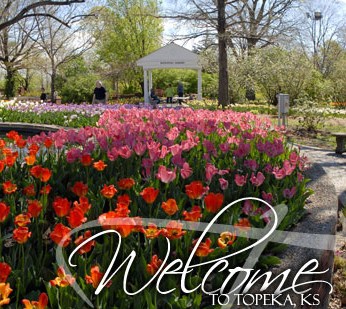
Topeka wants Google’s fiber experiment so badly, it is willing to rename itself to Google, Kansas — at least for the month of March, anyway.

Mayor Bill Bunten signed a proclamation Monday rechristening the city “Google, Kansas — the capital city of fiber optics.”

It’s all part of a well-organized effort to bring Google’s fiber optics to 122,000 residents living and working in the capital city of Kansas.

Think Big Topeka, a local group started by three people just a few weeks ago, was launched to promote Topeka as a candidate city.  It includes links to e-mail elected officials, complete Google’s online nomination form, and coordinate upcoming events.

It has since collected more than 10,000 Facebook fans and has gotten a big push from most of the local broadcast and print media, which have run more than a dozen stories about the group and the petition to nominate Topeka.  Several stations even have prominent links back to Think Big Topeka’s website.  The city government is also an enthusiastic supporter of the experimental project.

Think Big Topeka knows how to get media attention.  The group recently started running “flash mobs” — events where hundreds of people silently promote the project by suddenly stripping off jackets to uncover T-shirts promoting the Think Big Topeka campaign.  Engineering events that are “made for television” guarantee plenty of attention on the evening news.

The Google “Think Big With a Gig” experiment has excited communities from coast to coast, convinced advanced fiber optic networks will bring new jobs, high technology business, and improved broadband service for both consumers and area businesses.  Many hope the competition will also finally lower prices.

Incumbent providers Cox Cable and AT&T are the largest local providers.

Cox currently offers three broadband tiers — Essential 3 Mbps/384 kbps ($29.99), Preferred 12/1.5 Mbps ($46.99), and Premier 25/2 Mbps ($61.99).

Cox Cable, when asked by KSNT-TV news what they thought about the project brought a response from Kelly Zega, a representative from Cox Communications: “We have always believed competition in the marketplace is a healthy thing, as it leads us all to improve and innovate in ways that ultimately benefit consumers.”

AT&T offers U-verse in selected areas of Topeka, but most areas are still served by AT&T’s traditional DSL service which offers considerably slower speeds — Basic 768/384 kbps ($19.95), Express 1.5 Mbps/384 kbps ($24.95), Pro 3 Mbps/512 kbps ($24.95), or Elite 6 Mbps/768 kbps ($24.95).  (Note the prices for Express, Pro, and Elite are identical — apparently which plan you get depends on what actual speeds AT&T is capable of delivering to your home.)

If Google can deliver faster speeds and lower prices, it’s no surprise thousands of Topekans are excited.

The Topeka Capital-Journal, the community’s daily newspaper, is also promoting the project on its editorial pages:

This excitement is being created by a lot of people who see opportunities to help the city grow and become an even better place to live, and are determined to do everything they can to make it happen.

Evidence of their enthusiasm and dedication was on display Thursday evening when about 500 of them gathered at the Ramada Hotel and Convention Center to talk about plans to revitalize downtown Topeka. Granted, the audience consisted of two different groups, but each had visions that, if fulfilled, would mean great things for our city.

We’ve written recently in support of Think Big Topeka, a group trying to convince Google that Topeka is the place to test an ultrafast Internet connection that promises to provide Internet service about 100 times faster than anything we are working with now. The effort has attracted about 7,875 supporters in a very short time and some of them turned out for Thursday’s meeting, sponsored by Heartland Visioning, to encourage others to jump on the bandwagon.

Supporters of the Google project and those interested in revitalizing downtown meshed during the evening as the discussion flowed between both issues.

Such a confluence of people and organizations with visions, dreams or plans — call them what you will — is a healthy, and welcome, development itself that bodes well for the city’s future. Most good things start with someone’s vision or dream, and they aren’t to be scoffed at or dismissed out of hand.

Think Big Topeka has more than 10,000 fans on its Facebook page

Dreams can come true… if a city actually applies.  The city of Topeka will.

“The city of Topeka welcomes the opportunity to participate in this unique technological experiment, if selected as Google trial community, to benefit our citizens in providing all opportunities to access Internet technologies,” city officials wrote on the city’s Facebook page.

The city’s information technology department has been tasked with working on what they characterized as a very long and detailed application.  Mark Biswell, IT director for Topeka city government, said his department has been hard at work on the application from the moment Google announced the project.

Shawnee county, which includes Topeka, is conducting an online  survey running until Saturday asking residents about their interest in the Google fiber project.  They are seeking input on what kinds of broadband speeds residents actually obtain, instead of relying on marketing promises made by the incumbent providers.  They also want to learn how satisfied residents are with Cox and AT&T.

For Topeka, a city coincidentally working on its own revitalization plan for downtown development, the prospect of Google gigabit fiber could be the crown jewel of a complete city makeover.

[flv width=”640″ height=”500″]http://www.phillipdampier.com/video/KTKA Topeka Google Fiber 3-1-2010.mp4[/flv]

KTKA Topeka aired three reports about the Google fiber experiment, including an interview with one of the founders of the Think Big Topeka group. (3 minutes)

[flv width=”640″ height=”500″]http://www.phillipdampier.com/video/WIBW Topeka Group Wants Google’s Blazingly-Fast Internet To Come To Topeka 2-17-10.flv[/flv]

WIBW Topeka has these two reports featuring the Think Big Topeka group and how the city government is involved in the project.  (4 minutes)

[flv]http://www.phillipdampier.com/video/KSNT Topeka City Renames Itself Google for March 3-1-10.flv[/flv]

KSNT Topeka has several reports about the organizing effort, a “flash mob” and Topeka city government’s strong belief in the project.  (6 minutes)

[flv]http://www.phillipdampier.com/video/Think Big Topeka.flv[/flv]

Finally, Think Big Topeka has some of its own videos on offer, answering residents’ questions and cheerleading the effort to bring better broadband to Topeka.  (3 minutes)

Sprint: ‘Our $69.99 is Worth More Than Their $69.99’ — Wireless Competition Heats Up

Phillip Dampier March 2, 2010 AT&T, Competition, Sprint, Verizon, Video, Wireless Broadband 2 Comments

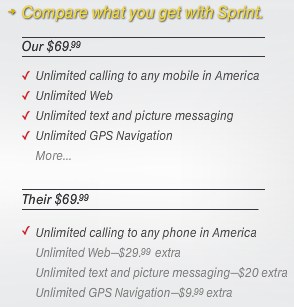
Sprint, America’s third largest mobile phone and wireless company, has launched a marketing war on its bigger competitors AT&T and Verizon Wireless scoffing at both providers’ $69.99 “unlimited” calling plans.

“Recently AT&T and Verizon have attempted to confuse the marketplace by lowering their pricing to $69.99, but theirs are for calling only,” said Mike Goff, Sprint’s vice president of corporate marketing.

Sprint launched a new advertising campaign this morning featuring CEO Dan Hesse calling out both carriers for effectively confusing consumers.

Hesse explains most people use their cell phones for more than just making and receiving calls.  Hesse said his larger competitors charge substantially more to use data services, and that many of the latest handsets don’t qualify for the special pricing.

Both AT&T and Verizon Wireless have started to require consumers with so-called “smartphones” to sign up with a data plan, adding to the customer’s bill whether or not they actually use such services.  Sprint says their unlimited plan also bundles unlimited web browsing, texting, and GPS navigation for the same price — $69.99, available on any phone they sell.

Sprint has had its hands full trying to stem the ongoing loss of its customers to larger competitors.

AT&T has benefited from an exclusive sales agreement for Apple’s iPhone, while Verizon Wireless achieved the top spot among U.S. carriers for its perceived widest coverage area.  Sprint has neither, and historically poor customer service to boot.

Will Sprint’s new campaign make an impact?

Roger Entner, head of telecom research for the Nielsen Co., told Brandweek that AT&T and Verizon are in such a commanding position in the market right now that they are unlikely to respond to Sprint. “They have the luxury of being able to ignore [Sprint],” said Entner, who noted that both AT&T and Verizon added millions of new subscribers in the fourth quarter, many at Sprint’s expense.

Sprint has managed to at least slow customer defections.  In the last quarter of 2009, Sprint lost 148,000 subscribers.  The previous quarter, the company lost 545,000 customers.

[flv width=”640″ height=”378″]http://www.phillipdampier.com/video/Sprint Ad – Just Phone Calls 3-2-2010.flv[/flv]

Sprint CEO Dan Hesse explains why their $69.99 plan is “better” than the competition in this new advertisement.

Cablevision Redux: Cable Customers May Lose WABC-TV New York in Another Rate Dispute

Phillip Dampier March 2, 2010 Cablevision (see Altice USA), Competition, Video 1 Comment

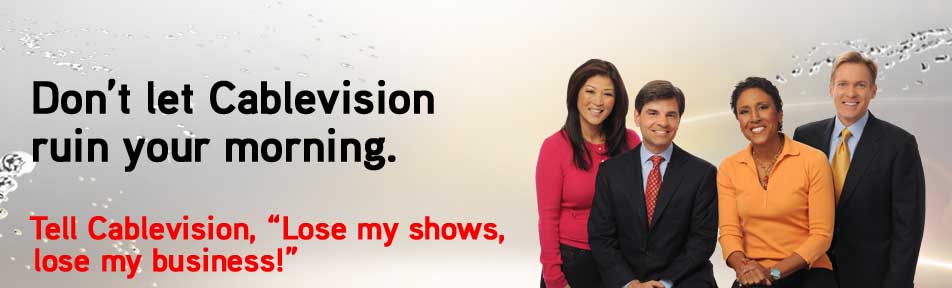
Cablevision subscribers: Just two months after facing the loss of HGTV and the Food Network, get ready to lose WABC-TV — the ABC affiliate in New York, just hours before the Oscars telecast is set to begin.

Cablevision’s contract with Disney-owned WABC-TV will expire March 7th, and both sides have not reached an agreement.

The dispute centers around retransmission rights fees.  Currently, WABC permits Cablevision to carry its channel on their lineup for free.  But now the station wants to be paid.  WABC claims Cablevision earns $18 million a month from its broadcast basic lineup of mostly-local channels, and it’s time to share a portion of that with the station.

Cablevision has so far not agreed to the asking price.

“Cablevision’s position is that ABC7 is worth little to nothing to its business and its proposed offers have been consistently unreasonable and unrealistic,” said Rebecca Campbell, president and general manager of WABC-TV. “We think these shows are valuable, and your bill shows that Cablevision must agree since you already pay for ABC7 as part of your Broadcast Basic Tier – a service for which, as a Cablevision customer, you pay as much as $18 each month.  Cablevision charges you for ABC7 and then keeps all the money.”

WABC has started a website to educate customers how to drop Cablevision and switch to a competitor such as Verizon FiOS, or get access to the station over-the-air.

Cablevision fired back accusing ABC of asking consumers to pay a TV tax amounting to $40 million that would have to be passed onto subscribers in another rate increase.

“It is not fair for ABC-Disney to hold Cablevision customers hostage by forcing them to pay what amounts to a new TV tax,” said Charles Schueler, Cablevision executive vice president.

Both sides indicate negotiations are continuing, and some compromise may still be reached before the deadline.

[flv width=”600″ height=”356″]http://www.phillipdampier.com/video/WABC New York Cablevision viewers may lose Channel 7 on cable service 3-2-2010.flv[/flv]

WABC-TV is running this 30-second ad telling viewers about the dispute with Cablevision, along with stories on their newscasts. (4 minutes)

Broadband Money Party — Time Warner COO Tells Investors: “We Can Raise Prices for Internet Service”

Phillip Dampier March 1, 2010 Competition, Data Caps 6 Comments

Today’s quote comes courtesy of Landel Hobbs, chief operating officer of Time Warner Cable.

Speaking at an investor conference in San Francisco, Hobbs said broadband has replaced cable TV as its anchor product, meaning subscribers increasingly refuse to part with it, no matter the price.

“Consumers like it so much that we have the ability to increase pricing around high-speed data,” Hobbs was noted saying by the Wall Street Journal.

Hobbs also reports the cable company continues to grow its Road Runner service at the expense of telephone companies and their lackluster DSL product lines.  Much of Time Warner’s broadband growth these days comes from disaffected DSL customers switching providers.  Broadband remains a profit center for the cable industry even as revenue from cable television flatlines in a difficult economy.

So let the Money Party begin… your broadband bill is going up, especially in areas where subscribers don’t have many alternatives.

Search This Site:

Contributions:

Recent Comments:

Your Account:

Stop the Cap!