Home » Competition » Recent Articles:

An Inconvenient Truth: Data Caps Alienate Customers, Even on Wireless Networks, Everywhere

Phillip Dampier August 19, 2010 AT&T, Competition, Data Caps, Verizon, Wireless Broadband 1 Comment

You've used too much, and now we have to charge you more... a lot more.

No matter where you live, work or play — be it Seoul, Korea, Manchester in England, or Oklahoma City — there is one thing consumers in all three cities will readily agree on: hatred of broadband data usage caps.

Those are the findings of a brand new survey conducted by GfK NOP in association with Reuters News in Britain.

Nearly 1,000 consumers were asked what they would do if confronted with their Internet provider implementing usage limits and other Internet Overcharging schemes.  More than half said they would be shopping for a new provider.

Not surprisingly, regardless of whether a consumer uses wired or mobile broadband, few believe usage caps are anything more than price gouging by providers to rake in additional revenue.  Many of these company’s biggest-spending-customers are unhappy to learn their provider is back looking for more money in return for less service.

The survey found users of smartphones such as the Apple iPhone care more about their mobile data allowance than they do about their choice of operator or even handset brand.

The survey found that users of the iPhone, Google Android phones or Research in Motion’s BlackBerry — typically, those who spend the most — are far more likely to switch operators to find better data deals.

More than half the users of these devices said they would switch to get a higher mobile data allowance.

Adjusted to take account of the fact that consumers do not always do what they say they will, GfK NOP esimated that 24 percent of contract customers using smartphones would actually switch operators.

Such a stampede would ring panic alarms inside any wireless carrier, but one company in particular faces some serious consequences for delivering years of bad service at high prices.

According to market research firm Morpace, nearly one-half of AT&T’s iPhone customers will seriously consider jumping ship if and when Verizon offers their own version of the wildly popular Apple smartphone.

At least 34 percent of current iPhone owners are resisting upgrade offers from AT&T that require a two-year contract renewal.  They’d rather wait until the iPhone is available on any network other than AT&T.

Even worse, should Verizon introduce their version of the iPhone in the coming year, nearly a quarter of AT&T customers (including those without the iPhone) are “somewhat or very likely” to dump AT&T immediately and head for Verizon.

In addition to complaints about lousy network performance, AT&T smartphone owners who spend the most with the carrier absolutely loathe AT&T’s new data usage limits implemented this past June.

“Experienced smartphone users who understand the benefits of using the Internet on the move and use services to help them in their day-to-day lives simply can’t live without mobile data,” says GfK/NOP analyst Ryan Garner, one of the report’s authors.

“They don’t want to be thinking about their data allowance and possible costs of over-running every time they open their browser or click on an app.”

Although AT&T told their customers and the media the new data-limited plans were going to save many customers money and have no impact on the rest, that is not what AT&T’s Chief Financial Officer Rick Lindner told Wall Street bankers and shareholders on a conference call last month.

“We believe over time, based on how much data they use, they will then begin to migrate up to [more costly] higher tiered plans,” Lindner said.

AT&T is well aware customers are already packed and ready to abandon ship, which is why the wireless provider has introduced a series of impediments to keep customers anchored in place.  Waived upgrade rules permitted most iPhone owners to upgrade to the latest iPhone 4 model this summer at the promotional price, in return for a two-year contract extension.  Customers seeking an end to their relationship with AT&T will find divorce an expensive proposition.  The company nearly doubled the contract early termination fee for smartphone owners June 1st.  Your exit price: up to $350.
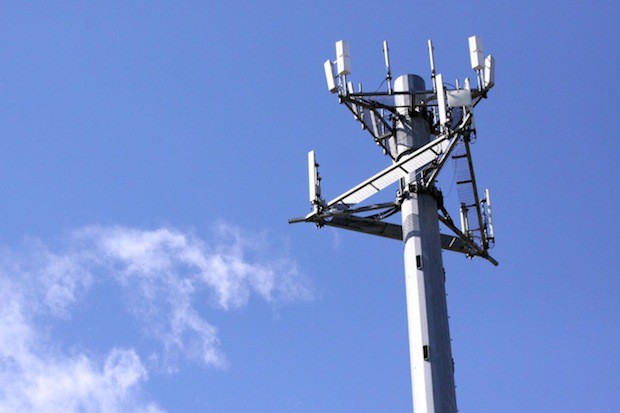
Why construct more of these if providers can get you to use less and pay more in the process?

Reuters notes the biggest driver towards the introduction of Internet Overcharging schemes like usage caps is the quest for additional revenue.

Most Western carriers have frozen or cut capital expenditure in the last two years as they prioritise maintaining the dividends prized by investors — meaning the modernisation of networks has been largely put on ice.

Meantime, they say they can no longer afford physically or financially to support unlimited data usage, and are banking on the fact that most consumers will barely notice data caps that are in any case far more generous than average data usage.

Stop the Cap! has been reporting that fact for at least two years now.  Usage limits are never about saving money for customers or making consumers pay for what they use.  They are about increasing profits at the same time providers continue to reduce investments to maintain and upgrade their networks.  Providers routinely report they are spending countless billions on network infrastructure, but neglect to mention those investments are not keeping up with subscriber growth and, in many cases, are actually decreasing year-by-year.  The self-perpetuating problem of network congestion that inevitably follows then becomes an excuse to charge customers more money for usage-limited service.

Reuters confirms that many western carriers have business plans that would be familiar to any neighborhood drug dealer – hand out plentiful cheap samples, get customers hooked, and then gradually reduce the supply while also raising the price.

In Europe, Scandinavian operator TeliaSonera is betting that the superiority of its next-generation LTE network, the world’s first, will allow it to offer premium services — at premium prices.

“When a service like this is entering the market, you normally more or less give it away for free, and so we did with mobile data,” Hakan Dahlstrom, the company’s head of mobility services, told investors last month.

“After a while… to meet the customer’s need for cost control; that is when you have flat rate. And then after some time the user understand how these services work and how it suits them, and you start charging for speed and volume.”

Yet not every provider has found success in alienating and overcharging their customers for increasingly important connectivity.

Reuters found Japan and Korea’s more advanced and mature data networks have already been down the road of usage restrictions, and found they didn’t solve network congestion issues — only provider investments in upgrades did:

Japanese operators NTT DoCoMo, KDDI and Softbank have stuck to flat rates — with discounts for months in which customers use less data — while encouraging them to use more Wi-Fi to take pressure off the mobile networks.

In Korea, carriers are returning to unlimited data plans because of heightened competition while investing heavily to upgrade their networks — a move that Western counterparts are unlikely to be able to avoid for much longer.

SK Telecom, South Korea’s top mobile carrier, last month said it would offer unlimited data services and free mobile Internet calls for customers paying 55,000 won ($46.40) and over in monthly service charges.

Of course, both Korea and Japan maintain more oversight by public officials over critical network infrastructure vital to both nations’ economies.  Neither government allows unregulated monopolies or duopolies in their midst — convinced they’ll deliver the least amount of service they can for the highest possible price they can get away with. In other words — today’s marketplace model in much of Europe and North America.


BC Supreme Court Tosses Out Novus Entertainment’s Lawsuit Against Shaw Cable

Phillip Dampier August 18, 2010 Canada, Competition, Novus, Shaw, Video Comments Off on BC Supreme Court Tosses Out Novus Entertainment’s Lawsuit Against Shaw Cable

Shaw's flyer distributed to Novus customers

The Supreme Court of British Columbia has thrown out Novus Entertainment’s 2009 lawsuit against Shaw Cable accusing western Canada’s largest cable operator of predatory pricing and other anti-competitive acts.

Last summer, Stop the Cap! gave considerable attention to the price war that broke out between Novus Entertainment, a fiber provider serving many Vancouver apartment buildings and condos vs. incumbent cable provider Shaw Cable.

Novus, which entered the BC market well after Shaw, faced what it alleged were incidents of fixing prices below cost and false advertising in an effort to drive competition out of the market.

At one point, last summer’s battle dropped prices as low as $30 a month for a package of HD cable, unlimited phone, and 16Mbps broadband service from Shaw.  Novus accused Shaw of recouping their losses in Vancouver from other Shaw cable subscribers across Canada who made up the difference with higher cable rates.

Novus sought relief before The Honourable Mr. Justice Greyell, in the Supreme Court of British Columbia.  Novus argued that under the recently expanded Competition Act, the court could order Shaw to cease unfair competition and face punitive fines for the cable company’s bad behavior.

Novus recited details of the price war:

Commencing February 2009, Shaw began a series of marketing campaigns specifically targeted at Novus’ existing customers in high-rise, multiple-dwelling units (“MDUs”) developments in Vancouver and Burnaby, British Columbia.

In February 2009, Shaw offered very low pricing on its Cable Television Services, Internet, and digital telephone services to certain Novus customers.  Customers were free to take one, two or all three of the services offered.  There were no contracts or commitments required:

  • Cable Television Services:  Shaw’s “High-Definition TV” package including over 100 digital and HD channels, plus 1 year free rental of a high-definition personal video recorder (“HDPVR”), free for the first two months, and $9.95 for the next ten months (twelve months in total).
  • Digital Telephone:  Shaw’s “Digital Phone Basic” package, which includes local calling and call display, free for the first two months, and $14.95 for the next ten months (twelve months in total).
  • High-speed Internet:  Shaw’s “Xtreme-I Internet” package, free for the first two months, and $19.95 for the next ten months (twelve months in total).

In March 2009, Shaw began offering a free HPDVR to keep, plus the first month of service for free, to customers that switch back to Shaw. Customers were only required to commit to six months of pre-authorized payments.

In July 2009, Shaw offered even lower pricing than it marketed in February:

  • Cable Television Services:  More than 200 digital channels, including all analogue and digital television channels, 25 high-definition television (“HDTV”) channels, a movie channel package, plus two rental HDTV set-top boxes with personal video recorder (“HPDVR”), free for the first two months, and $9.95 for the next ten months (twelve months in total).
  • Digital Telephone:  Shaw’s “Digital Phone” package, including local telephone service, over a dozen calling features including voicemail, call display and call waiting, unlimited calling within Canada and the US, 1,000 International minutes to selected countries per month,”) free for the first two months, and $9.95 for the next ten months (twelve months in total).
  • Shaw’s “Xtreme-I” high-speed Internet: with advertised download speeds of up to 16 Mbps, “Powerboost”, 10 personal email addresses and 100 GB monthly data transfer”), free for the first two months, and $9.95 for the next ten months (twelve months in total).

To add insult to injury, according to Novus, Shaw began advertising Internet “now 50 percent faster.”  In Novus’ opinion, the advertising implied Shaw’s Internet service was now 50 percent faster than broadband offered by Novus.

The text from Shaw’s ad read:

Feel the need for extra speed?  Shaw high-speed Internet is now 50% faster that’s fast.  Downloading your favourite music, videogames, and movies will take no time at all.  Plus Shaw high-speed Internet comes loaded with no cost extras like Powerboost, Shaw Secure and much more.  Get Shaw high-speed Internet for the amazing new price of only $19.95 per month for the first three months including modem and installation.  There’s never been a better time to order.  Call 310-Shaw today.

Signs sponsored by Shaw Cable were placed in front of buildings wired by Novus

The decision by Mr. Justice Greyell was carefully watched across Canada as it represented the first test of expanded authority granted by Parliament for courts to impose significant monetary fines against bad actors.  Commentators noted the new authority theoretically granted courts the power to determine anti-competitive activity itself — a power formerly held by Canada’s Competition Tribunal.

Those commentators need not have worried if the BC Supreme Court decision stands intact.

Mr. Justice Greyell dismissed Novus’ claims and ruled that in the absence of a determination of anti-competitive behavior by the Competition Tribunal, the court had no right to declare Shaw guilty of such behavior in the case.

“I conclude that in the absence of an order from the [Competition] Tribunal under s. 79 of the [Competition] Act, those portions of the statement of claim alleging a breach of s. 79 of the Act be struck out,” the chief justice ruled, effectively dismissing Novus’ anti-competitive claims against Shaw.

Mr. Justice Greyell also was unconvinced consumers would be confused by Shaw’s “50 percent faster” advertisement, believing the cable company now delivered faster service than Novus.

“In applying these tests to the ‘Now 50% Faster’ advertisement I am unable to conclude a reasonable person would view the words used as referring to the plaintiff’s business.  I am of the view the interpretation any reasonable person would place on the words is that Shaw is directing the advertisement to its own customers, and anyone else who might be interested, that its services are 50% faster than they used to be.  This fact is made clear by Shaw’s use of the word ‘Now’ – which implies that in the past Shaw’s services were slower and that Shaw has ‘Now’ improved the speed of its services   The advertisement makes no reference to Novus or to any Shaw competitor,” the chief justice ruled.

Novus effectively walks away from the BC Supreme Court empty-handed, and a little lighter in the wallet.  The chief justice also ruled Novus is responsible for Shaw’s legal bills associated with defending itself against Novus’ lawsuit.

[flv width=”630″ height=”375″]http://www.phillipdampier.com/video/Novus – 10 Bucks Too.flv[/flv]

Novus released this video as part of an outreach campaign arguing cable customers across western Canada should qualify for the same incredibly low promotional pricing Vancouver residents pay for Shaw Cable. (2 minutes)

CNET’s Marguerite Reardon: She Doesn’t Know Why Big ISPs Would Do Bad Things to Good People

Reardon is fine with this vision of your online future.

Marguerite Reardon confesses she’s confused.  She doesn’t understand what all the fuss is about regarding Google and Verizon teaming up to deliver a blueprint for a corporate compromise on Net Neutrality.  In a column published today, Reardon is convinced she’s on a debunking mission — to deliver the message that rumors of the Internet apocalypse are premature.

As I read the criticism of Google and Verizon’s supposed evil plan to demolish the Internet, and as I hear about “protests” of several dozen people at Google’s headquarters, I scratch my head and wonder: am I missing something?

The Google-Verizon Net neutrality proposal I read last week doesn’t sound nearly as apocalyptic as Free Press, a media advocacy group, and some of the most vocal critics out there have made it sound.

In fact, most of proposal sounded a lot like a plan FCC Chairman Julius Genachowski offered nearly a year ago, which many Net neutrality proponents seemed to support.

In short, Google and Verizon say they agree to a set of rules for the Internet that would prohibit broadband providers from blocking or degrading lawful content on the Internet. Broadband providers would also not be allowed to take action to impede competition.

This is pretty much what Genachowski has proposed.

OK, terrific. There is agreement.

But wait, Net neutrality zealots are still unhappy.

Hmmm… “zealots?”  Reardon probably just angered the majority of CNET’s readers, who now find themselves labeled as crazed Internet online freedom fighters — net fundamentalists who want absolute protection against big Internet Service Providers tampering with their Internet Experience.

Where can I get my membership card?

Reardon’s “debunk” consists of her narrow, inaccurate definition of Net Neutrality pounded into a pre-conceived notion of what is and is not possible in a competitive broadband marketplace.  In short, she’s satisfied we can all move along… there is nothing to see here:

What Free Press and Public Knowledge don’t seem to realize is that AT&T and Verizon already offer differentiated services today with enhanced quality of service to business customers. Verizon’s Fios TV and AT&T’s U-verse TV services are also examples of managed Internet services that are delivered to consumers. And the last time I checked, no one, other than their cable competitors, has complained about AT&T and Verizon offering competition in the TV market.

The truth is that if Verizon and AT&T wanted to cannibalize their broadband business with premium broadband services, they’d already be doing it. But they aren’t, because there hasn’t been a market for it.

The reality is that consumers are in control of what type of services are offered. If the public Internet can adequately deliver a service for free, then there’s no need to pay for it. But if someone can provide a better service over a dedicated network and there are consumers willing to pay for it, then why shouldn’t it be offered? Isn’t that why some people subscribe to a 768Kbps broadband service for $15 a month, and others pay $100 for a 50Mbps service?

So let’s debunk the debunk.

First, Net Neutrality is not about stopping broadband providers from offering speed-based tiers of service.  In fact, that’s the Internet pricing model we’ve all come to know and love (although those prices are just a tad high, aren’t they?)  Free Press and Public Knowledge do not object to ISPs selling different levels of broadband speed tiers to consumers and businesses to access online content.

Net Neutrality isn’t about stopping ISPs from selling some customers “lite” service and others “mega-super-zippy Turbo” service — it’s about stopping plans from some ISPs to establish their own toll booths on the Internet to charge content producers twice — once to upload and distribute their content and then a second time to ensure that content reaches a particular ISPs customers on a timely, non-speed-throttled basis.  Consider this: you already pay good money for your own broadband account.  How would you feel if you sent an e-mail to a friend who uses another ISP and that provider wanted to charge you 20 cents to deliver that e-mail?  Don’t want to pay?  That’s fine, but your e-mail might be delayed, as paying customers enjoy priority over your freebie e-mail.

A lot of broadband customers may never understand the implications of giant telecom companies building their own toll lanes for “preferred content partners” on the Internet because they’ll just assume that stuck online video or constantly rebuffering stream is the fault of the website delivering it, not their provider intentionally pushing it aside to make room for content from companies who paid protection money to make sure their videos played splendidly.

Second, Reardon need only look to our neighbors in the north to see a non Net Neutral Internet experience in Canada.  There, ISPs intentionally throttle broadband applications they don’t want users running on their networks.  They also spank customers who dare to try what Reardon insists Verizon would never stop — using their broadband service to watch someone else’s content.  With the application of Internet Overcharging like usage limits and consumption billing schemes, cable companies like Rogers don’t need to directly block competitors like Netflix.  They need only spike customers’ broadband bills to teach them a lesson they’ll not soon forget.

Within days of Netflix announcing their imminent arrival in Canada, Rogers actually reduced the usage allowances of some of their broadband customers.  If you still want to watch Netflix instead of visiting Rogers pay-per-view cable menu or video rental stores, it will cost you plenty — up to $5 per gigabyte of viewing.

Reardon seems to think giant providers like AT&T, Verizon, and Comcast care about what their customers want and wouldn’t jeopardize the customer relationship.  Really?  She herself admits she hates paying for hundreds of channels she never watches, yet providers are deaf to complaints from customers demanding an end to this practice.  What about the relentless price hikes?  Wouldn’t that drive off customers?  Perhaps… if customers had real alternatives.  Instead, with an effective duopoly market in place, subscribers pay “the man,” pay an almost identical price from the “other guy,” or go without.

Providers understand their power and leverage in the marketplace.  Until serious competition arrives, it would be a disservice to stockholders not to monetize every possible aspect of broadband service in the United States.

The check against this naked aggression on consumers’ wallets is from consumer groups who are fighting against these big telecom interests.

Before dismissing Net Neutrality “zealotry,” Reardon should experience the Internet in Canada and then get back to us, and more importantly those consumer groups she flicks away with disdain, and join the fight.

Satellite Fraudband Providers Claim “Fiber-Like” Speeds in the Future; “When Pigs Fly,” Says One Customer

Dream On: WildBlue's home page shows a user thrilled about an Internet experience she'll never truly enjoy with a monthly usage limit at low as 2.3GB. Exceed it and face the consequences: WildBlue's Time Out Corner: a speed throttle delivering 128kbps downstream and just 28kbps upstream.

When is broadband not broadband?  When it is delivered by hopelessly overloaded and underpowered satellite providers that annoy their subscribers with high prices and low usage allowances.

For many customers of WildBlue and HughesNet, getting high speed Internet access remains a far off dream. No broadband Internet service is more rationed and speed throttled than satellite “fraudband.”

Most satellite broadband customers live in America’s most rural areas, literally miles away from the nearest telephone exchange and often hundreds of miles away from a town with cable broadband.  Even wireless Internet providers can’t find enough customers to justify the costs of delivering service.

For America’s most rural, there are three choices:

  1. Go without.
  2. Use dial-up service.
  3. Choose the least annoying satellite provider you can afford.

Just over one million Americans have stuck it out with choice number three, paying twice as much wired Americans pay for broadband and getting just a fraction of the speed and use.

But both providers claim that is all about to change.

WildBlue and HughesNet are in a hurry to launch brand new satellites with dramatically improved capacity that will deliver, they claim, “speeds as fast as fiber.”

For Stop the Cap! reader Adele in a rural part of Arizona, she’ll believe it when she sees it.

“As Stop the Cap! has said all along, anyone who thinks satellite ‘broadband’ is a useful alternative to DSL or cable Internet should be condemned to use it,” she writes.  “Everyday brings a new frustration, especially with so-called ‘Fair Access Policies’ that effectively restrict your use to web page browsing and e-mail.”

HughesNet explains how their satellite service uses your satellite dish to send and receive Internet data. (click to enlarge)

For many people running Microsoft Windows, the company’s monthly gift of bug fixes, service packs, and updates is just a minor nuisance. For satellite Internet customers, it can sometimes mean the “day of no Internet.”

Adele explains:

If you have multiple computers and Microsoft determines it has a lot of screw-ups to fix, the monthly updates can easily run into the hundreds of megabytes when every computer receives their individual updates.  HughesNet’s “budget” Home and Pro Plans cost up to $70 a month and only include a daily allowance of up to 300 megabytes.  It’s no trouble at all to exceed that usage on increasingly large web pages loaded down with video advertising, pop-ups, and other content.  Now deal with Microsoft Update Day and in our house, that means you get a good book and stay offline.

If she doesn’t, HughesNet inflicts a stinging punishment — 24 hours in the time out corner with barely dial-up speed penalties for exceeding the limit.

But both satellite providers promise better days ahead when their newest satellites are launched into space.

The New York Times notes WildBlue’s next generation of satellites will bring 10 times the capacity of its three current satellites combined.  That opens the door for faster satellite broadband, according to both companies, without price increases.

HughesNet believes satellite broadband’s best days lie ahead, especially as a contender in the rural broadband market.

“One advantage satellite has is ubiquity,” Arunas G. Slekys, vice president for Hughes Network Systems, said. “The cost of reaching you with a satellite dish is independent of where you are. Fiber or cable is labor-intensive and dependent on distance.”

As to satellite’s potential in rural regions, “clearly, there’s an unserved market,” Mr. Slekys said. “And it’s not as though they have terrestrial or satellite. They only have satellite as a choice.”

Can a new generation of satellites save satellite broadband?

One question the Times didn’t ask is whether increased capacity will mean the end of so-called “Fair Access Policies” that strictly ration the amount of browsing customers can manage before the speed throttle punishment begins.  Neither company is saying.

“When pigs fly,” Adele thinks.  “Sometimes these satellite companies think rural people are just plain stupid.  When you live this far out in the country, you learn to recognize snake oil salesmen when you see them.  Why give us more access when nobody else will provide the service?”

The sudden interest in satellite broadband in the nation’s paper of record is no coincidence.  Both HughesNet and WildBlue are upset they are not getting a bigger piece of the broadband stimulus pie.  The Times notes just $100 million out of $2.5 billion in U.S. Department of Agriculture grants for rural broadband will go to satellite companies.  Raising the question in a newspaper widely read in Washington can’t hurt your cause.

Thomas E. Moore, chief of WildBlue, said satellite technology would be able to serve thousands more rural residents than terrestrial services at a fraction of the cost. He cited a $28 million grant to a nonprofit group in North Carolina to extend fiber to 420 schools and libraries. That same grant could have instead directly served 70,000 residents in North Carolina through satellite service, Mr. Moore said.

“For every one of those people, there are literally hundreds more who won’t have access to stimulus funds,” he said.

But Joseph Freddoso, president of MCNC, the nonprofit group that manages North Carolina’s public education technology network, said satellites were not an ideal primary service for his users, who require a more reliable network for their research and data-heavy applications.

“To compare what we do with what satellite does as a service is an apples-to-oranges comparison,” Mr. Freddoso said, adding that the grant will serve one million students in 37 counties.

Adele is concerned that means even more people will fight for the limited resources satellite has until the next generation of satellites get launched, especially for rural customers trying to share a spot beam in North Carolina.

“These companies have really stopped heavily promoting themselves in parts of rural America because both are already at or over capacity in many places,” she says. “The advertised speeds for some parts of the country are straight out of Alice in Wonderland — total fiction, and with the lag time that comes naturally from sending and receiving data over a distance of 22,000 miles, it’s not getting any better.”

Adele is referring to the satellite providers’ regionally-directed signals.  Much like how satellite TV companies can deliver local stations within limited regions of the country, satellite Internet service can be divided up and delivered to certain parts of the United States.  One beam might serve rural Louisiana, another could be directed to northern California, and so on.  Once a region’s capacity nears saturation, speed and performance suffers.  In areas where capacity remains underused, the service performs better.

Regardless of the promises for enhanced satellite broadband, most cable and fiber broadband providers spend no time pondering the competitive impact, because there is none.  They plan to continue ignoring the likes of WildBlue and HughesNet for years to come.

Kevin Laverty from Verizon told the Times their FiOS fiber network is expensive to deploy but is light years ahead of satellite when it comes to speed and easy upgrades.

“Fiber optic is virtually an unlimited technology,” he said. “All you have to do is change the electronics on either end.”

A spokesman for Time Warner Cable said cable broadband speeds already easily exceed the satellite providers’ proposed new speeds, so they have nothing to worry about.

For most satellite customers, WildBlue and HughesNet are not choices, they are realities if rural Americans want to participate in the broadband revolution.

“Nobody chooses these satellite providers over DSL, cable, fiber, or even most wireless ISPs,” Adele says. “They choose satellite because of the absence of these other providers.”

Should Adele’s local phone company offer her DSL or a wireless broadband provider arrive to deliver service, would she switch away from HughesNet?

“In a shot,” she says. “I dream about throwing their dish into the biggest bonfire I can build and then my neighbors and I visit their headquarters to horse-whip them for years of horrible service and throttled speeds.”

[flv width=”640″ height=”500″]http://www.phillipdampier.com/video/Satellite Fraudband.flv[/flv]

We’ve assembled some examples of advertising for both HughesNet and WildBlue, typically seen on networks catering to rural Americans, a brief interview with a representative from WildBlue, and some actual customer… uh… “testimonials” about the quality of service actually received.  Finally, we’ve included the most painful speed test ever encountered.  The original video was silent and some might think it’s actually stuck.  It’s not.  We’ve added some music to spice things up or to increase your pain and suffering.  You might want to get a piece of cake for this. Oh, and one last thing:  If you are using a satellite provider to access Stop the Cap!, forget about the video.  Watching it will eat almost a quarter of your daily usage allowance.  (6 minutes)

The Qwest to Kill Competition: Qwest Caught On Tape Admitting They Want Independent ISPs Off Their Network

Phillip Dampier August 12, 2010 Audio, Broadband Speed, Competition 3 Comments

Qwest, the former-Baby Bell serving the upper midwest, mountain west, and desert states got caught on tape telling customers the company’s intent is to eliminate competition from independent Internet Service Providers by banning them from their network.

One such ISP, XMission, has blown the whistle on the anti-competitive practice, noting they could potentially be run out of business if Qwest manages to keep them from delivering competitive service over Qwest’s upgraded partly-fiber network.

In 1997, XMission first started providing service over Qwest’s DSL.  We have literally paid millions of dollars of revenue to Qwest for the privilege, all the while relieving them of the difficult task of providing excellent customer support.  In 2008, Qwest launched their “Fiber-to-the-Node” product which is usually falsely advertised as just plain “fiber”.  Unlike the UTOPIA system which runs fiber optics all the way to the home, Qwest FTTN runs fiber to a neighborhood, then copper DSL lines to the customer.  Because of the subsequent shorter distances on copper, they are able to attain download speeds of up to 40Mbit to the customer and 5Mbit from the customer.  This is normally referred to “download” and “upload” respectively.

There is one key difference in the FTTN product.  Qwest is not not allowing 3rd party ISPs like XMission to sell their own service over it, as we traditionally have with their first DSL product.  In addition, Qwest has been notorious for disinformation and service problems that motivate customers to drop their current ISP and change over to Qwest.  Technical problems exist, such as radio interference that degrades existing XMission customer DSL speeds, sometimes making their Internet connection unusable.  The solution offered by Qwest was not to shield the radio interference, but to switch customers off XMission and to their own product.  We have also had reports and in one case, a recording, of Qwest sales representatives telling customers that Qwest’s intent is to “eliminate” 3rd party ISPs.   Today, I received an email from a customer who was told by Qwest that XMission’s equipment is “too slow” to handle FTTN service.  Considering that we service customers on fiber and in our data center with up to a gigabit in solid bandwidth, one has to wonder why Qwest feels the need to lie to sell their service.  There is no technical reason why Qwest could not allow 3rd party ISPs like XMission to provide service over their FTTN network.

XMission has been hemorrhaging DSL customers for the past year, and I really don’t blame them for looking for bigger Internet connections.  I personally can only get 3Mbit download and 500Kbit upload to my own home and it is not enough bandwidth for me.  With Netflix, Hulu, Youtube, and other services demanding more and more bandwidth, homes will need larger and larger connections.  Unless they’re in a UTOPIA connected city, chances are that they are going to choose from two companies to buy Internet from in the future, neither of them stellar.

UTOPIA is Utah’s publicly-owned fiber optic platform delivering competitive choice to residents of 16 Utah cities.  Residents enjoy true fiber optic service and can select from 11 different Internet Service Providers, each offering their own speed levels, bundles, and pricing.  How many ISPs can you choose from?

Qwest’s newest network upgrades deliver service somewhat comparable to AT&T’s U-verse — faster broadband through a hybrid fiber, copper phone line-based network.  Qwest also sells traditional DSL service over standard phone lines, including so-called “dry loop” service that delivers broadband service without also buying a phone line.  While competing providers can sell service over many of Qwest’s DSL lines, they have been barred from selling access over these new, faster-speed lines.

Customers have been unimpressed with Qwest’s traditional DSL services which often promises far more than it actually delivers.

Alex Langshall in South Salt Lake was guaranteed 7Mbps DSL service from Qwest, but ended up with only 640kbps.  The reason?  His distance from the central office and the deteriorating quality of Qwest’s landline network.  Qwest’s technicians told Alex even after line conditioning and rehabilitation, he would only get 1.5Mbps service.

XMission publicized this recording between Qwest and one of their customers about the phone company’s intentions for independent ISPs on their network (July 21, 2010) (3 minutes)
You must remain on this page to hear the clip, or you can download the clip and listen later.

<

p style=”text-align: center;”>

Search This Site:

Contributions:

Recent Comments:

Your Account:

Stop the Cap!