Home » Competition » Recent Articles:

AT&T Wins Total Rate Deregulation in Tennessee: Let the Rate Hikes Commence

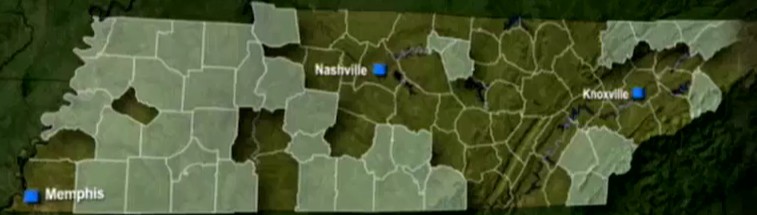
38 Tennessee counties are about to face AT&T price deregulation, something critics contend will bring rate hikes of up to 50 percent for many of the state's most rural residents.

Attention rural residents in 38 counties in Tennessee with AT&T landlines: Start saving your money because AT&T will come looking for more of it soon enough.

As a result of 2009 legislation heavily promoted by the state’s largest phone company, AT&T has easily managed to pass a “competition test” it helped devise, triggering total deregulation of basic phone rates across the state.

Although some of the legislation’s supporters are celebrating the end of rate oversight by the Tennessee Regulatory Authority (TRA), claims that competition has broken out across Tennessee may be an exaggeration.  Critics contend many residents will face relentless AT&T rate increases, especially for the elderly and those living in rural areas — typically the poorest regions of the state.

AT&T’s competition test only required the presence of a potential competitor to meet the definition of “competition.”  Unfortunately, for many residents in the 38 affected counties, that competing cable or wireless provider often can’t or won’t provide reliable service, either because cable lines bypass rural areas or cell phone service offers poor signals.  That leaves many consumers at the mercy of AT&T, who can now charge whatever they like.
It’s a key flaw many state legislators fail to recognize when accepting the phone company’s argument that deregulation will save consumers money.  Documentary evidence suggests the reverse is true, especially in areas not well covered by cable and wireless competition. Those choosing the most basic levels of service typically face the largest rate hikes as telecommunications companies try to drive customers into multi-service bundles often approaching $200 a month.

For now, the first step is to do away with oversight and AT&T wasted no time pulling out provider maps for the 38 still-regulated counties in the state and found cable and cell phone competitors in all of them.  Despite the fact those services are not available to every resident, AT&T lawyer Joelle Phillips demanded the TRA immediately end rate regulation.

Customer Advocacy Lawyer Mary Leigh White warned the TRA AT&T would follow their track record in other states where rates were deregulated and raise prices up to 50 percent. Phillips told the Authority it didn’t matter — the law AT&T helped write and lobby for was clear:

“When a statute includes one thing specifically and doesn’t refer to other things, that the statute must be read to have done that on purpose,” said Phillips.

With that argument, the TRA capitulated Monday and voted unanimously to end rate oversight.

Consumers in the state who do find major price hikes in their future can blame the deregulation bill’s chief sponsors:

  • Sen. Paul Stanley, (R-Collierville) (Resigned last August after caught in an extramarital affair with a 22-year old intern.)
  • Sen. Dewayne Bunch, (R-Cleveland)
  • Rep. Gerald McCormick, (R-Chattanooga)

[flv width=”640″ height=”380″]http://www.phillipdampier.com/video/WSMV Nashville ATT Deregulated 8-23-10.flv[/flv]

WSMV-TV in Nashville covered the end of AT&T rate oversight and the implications the change will have on Tennessee phone bills.  (2 minutes)

Verizon Wireless Introducing Prepaid Mobile Broadband – 5GB for $80: ‘Way Overpriced,’ Critics Say

Phillip Dampier August 24, 2010 Competition, Verizon, Wireless Broadband Comments Off on Verizon Wireless Introducing Prepaid Mobile Broadband – 5GB for $80: ‘Way Overpriced,’ Critics Say

Verizon Wireless today announced a new 5GB tier for its prepaid mobile broadband service at a steep price — $80 per month.

The new 5GB tier joins several other levels of prepaid data service available from the nation’s largest wireless carrier:

  • $15 for 75MB of usage (expires in 24 hours)
  • $30 for 250MB of usage (expires in one week)
  • $50 for 500MB of usage (expires in one month)

But some critics charge Verizon’s new 5GB data plan is way overpriced.

Current Analysis claims $80 for just 5GB of access, expiring after 30 days, is simply too much to ask from consumers looking for a contract-free, prepaid data plan.  Although AT&T has similar pricing for occasional users, smaller carriers are driving prepaid customers to expect more data for less money.

Cricket Wireless charges $50 a month for 5GB, T-Mobile delivers the same 5GB for $40 a month, and now Virgin Mobile will deliver unlimited access for $40 a month.

The only customers that would likely consider Verizon’s $80 prepaid data plan are those outside of Sprint, Cricket and T-Mobile’s coverage areas who want something more than 500MB of usage and don’t want to be stuck on a two year contract.

Mid-America Apartment Renters in Memphis Now Forced Into Mandatory Comcast Cable Service

Phillip Dampier August 24, 2010 Comcast/Xfinity, Competition, Consumer News, Video 3 Comments

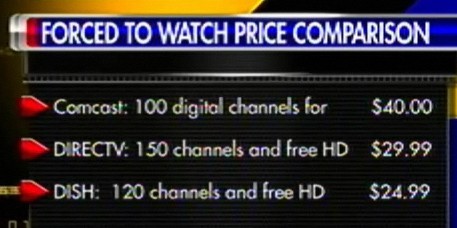
WMC-TV in Memphis compared rates among providers to check and see if mandatory Comcast service represented a good deal for Mid-America renters.

Mid-America Apartment Communities, a nationwide apartment management company, continues to unveil new mandatory cable service fees on renters — this time for eight Mid-America apartment complexes in Memphis, Tennessee.

Memphis renters began receiving word of the new required $40 a month Comcast cable package late last month and the controversy has sparked additional media attention.

Mid-America earns a significant kickback bonus from Comcast for mandating cable service on all of its renters.  That upsets many renters who choose not to have cable service, or subscribe to a satellite provider like DirecTV or DISH.  The $40 fee doesn’t go away if you don’t want the service.  Earlier in July, Stop the Cap! covered Mid-America’s mandatory cable service introduction in other parts of Tennessee and Texas.

Legal experts say the arrangement is perfectly legal, so long as it is not imposed unilaterally on renters.  Instead, Mid-America includes the mandatory cable clause in its new renter and lease renewal agreements.  If you don’t want to pay the fee, your only option is to move somewhere else.

The $40 Comcast package delivers 100 digital channels, 45 music channels, and one on-demand channel.  That appears to coincide with Comcast’s Digital Starter package, which normally runs $51.50 a month in Memphis.

Some current Comcast subscribers who rent from Mid-America do appreciate the discount and the convenience of paying cable charges as part of their monthly rent.  But others do not want to be compelled to pay for Comcast service they don’t want or cannot afford.  For them, the extra $40 a month charge is effectively a rent increase.

[flv width=”640″ height=”380″]http://www.phillipdampier.com/video/WMC Memphis Forced to Watch 7-26-10.flv[/flv]

WMC-TV’s ‘Investigators’ Team took a look at Mid-America Apartments’ new mandatory cable charges imposed on its Memphis renters.  (4 minutes)

HBO to Netflix: Go Away – Only “Authenticated” HBO Subscribers Will Get Our Shows

Phillip Dampier August 23, 2010 Competition, Online Video 13 Comments

Netflix has a big problem.

As it gradually shifts its operations towards more instant, on-demand video streaming of movies and TV shows subscribers want, some well-connected studios and distributors have a vested interest in stopping Netflix in its tracks.

Among the most threatened is Time Warner’s HBO, which has watched premium movie channel subscriptions erode for years as consumers dump pay-TV for lower cable bills and Netflix subscriptions.  For up to five dollars less than what cable systems charge for HBO, Netflix customers get access to unlimited video streaming and can still check out one movie at a time on traditional DVDs.

Netflix is slowly evolving their business towards streaming and away from costly and labor-intensive DVD rentals-by-mail.  Customers enjoy the instant access to programming — no waiting for the mail or getting on a waiting list for popular titles.  Netflix does not have to pay ever-increasing postage rates either, or replace lost or damaged DVDs.

But for Netflix streaming to succeed, the company needs agreements with content producers — Hollywood studios and distributors — for so-called “streaming rights.”

One contract wins the right to obtain and rent out the physical DVD’s, which Netflix has had no problem in obtaining… eventually.  But another, separate agreement is needed win the rights to stream movies or TV show over the Internet.

So far, most of Netflix’s streaming agreements cover older movies and TV shows that have already found their way to Hulu or have been run to death on premium movie channels.  Anyone for Big, Fast Times at Ridgemont High, or Class Action?  These are all listed by Netflix as “new releases.”

Now Netflix wants to expand their library to include additional titles and they’ve run into a roadblock – HBO.

The premium movie channel controls streaming rights not just for its own programming, but also for Warner Bros., 20th Century Fox, and Universal.  Those three movie studios produce an enormous amount of movies and television shows, and without being able to contract streaming licenses, Netflix may be in big trouble.

HBO's Go service streams HBO movies, specials, and series to "authenticated" HBO subscribers

HBO intends to keep those shows, as well as its own, exclusively for itself and its cable and telco-TV partners.  As part of the TV Everywhere concept, HBO will dramatically expand its own streaming movie service — HBO Go, currently only available to authenticated Comcast and Verizon FiOS HBO subscribers.  Everyone else can forget about it.

The pay television industry — cable, satellite, and telco-TV, is more than happy to accommodate HBO sticking it to Netflix.  HBO Go could help sustain the premium movie channel and sell more subscriptions.

The video war means that Netflix will be in the DVD rental-by-mail service for years to come, if only to serve up movies and TV shows from those three studios.  More likely, however, is that Netflix will find a partner to help return fire — denying HBO access to movies controlled by Netflix.

Ultimately, consumers are likely to follow the content.  If Netflix controls it, consumers will sign up for that service.  If the cable industry controls it, they’ll be forced to keep their cable subscriptions.  It’s a high stakes game either way.

Verizon Wireless Testing ‘Unlimited Everything’ for $99 in Los Angeles and San Diego

Verizon has decided Sprint is worth competing with again, so the nation’s largest wireless carrier has started testing unlimited calling plans that deliver Verizon’s network at Sprint’s prices.

So far the unlimited plans are only available in two markets – Los Angeles and San Diego, and represents a $20 discount off regular monthly pricing:

Verizon Service Plan Regular Price Test Market Price
Nationwide Talk & Text Unlimited 89.99 69.99
with Unlimited Data Add-On 119.98 99.99

The $99.99 price is no coincidence. That happens to match pricing for Sprint’s Simply Everything and T-Mobile’s Individual Talk + Text + Web plans which both sell for $99.99 per month.

Verizon’s price cut experiment may be a reaction to Sprint’s new marketing that stresses it will not usage cap smartphone customers, and charges a lower price for more services.

Most Verizon customers in the two California cities will learn about the new pricing in Verizon retail outlets and through the company’s website.

Although the new pricing seems attractive, there is a mass of fine print which may temper your enthusiasm:

  1. The lower pricing is only good for Individual plans.  You cannot get the savings on a Family Plan.
  2. No monthly access discounts, available through many employers, are permitted.
  3. There is a $35 activation fee.
  4. Tolls, taxes, surcharges and other fees, such as E911 and gross receipt charges, vary by market and as of August 1, 2010, add between 5% and 39% to your monthly bill and are in addition to your monthly access fees and airtime charges.
  5. Monthly Federal Universal Service Charge on interstate & international telecom charges (varies quarterly based on FCC rate) is 13.6% per line.
  6. The Verizon Wireless monthly Regulatory Charge (subject to change) is 13¢ per line.
  7. Monthly Administrative Charge (subject to change) is 83¢ per line.

Thanks to Stop the Cap! reader Scott for the news tip.

Search This Site:

Contributions:

Recent Comments:

Your Account:

Stop the Cap!