Home » Competition » Recent Articles:

Enough is Enough: Subscription TV Losing Customers for the First Time Ever

Phillip Dampier September 2, 2010 Competition, Consumer News, Video 6 Comments

"It's your high prices," Americans tell subscription television companies.

For the first time in the history of the subscription television industry, more Americans disconnected their cable-TV, satellite and telco IPTV service than signed up.  The reason?  Americans have finally reached their limit on what they’re willing to pay to Comcast, Time Warner Cable, DISH, AT&T, and others for subscription television.

At first, only premium movie channel subscriptions for networks like HBO and Showtime took the hit, but now Americans are cutting cable’s cord at an accelerating pace.  SNL Kagan, which has tracked the cable industry for decades, reports cable and phone companies saw their worst second quarter in history — losing 216,000 subscribers who canceled their basic cable subscriptions.  If the same losses continue in the third quarter, the pay TV industry will see their total number of households decline to below 100 million subscribers nationwide.

SNL Kagan notes the losses have little to do with online video viewing.

“Although it is tempting to point to over-the-top video as a potential culprit, we believe economic factors such as low housing formation and a high unemployment rate contributed to subscriber declines in the second quarter,” said Mariam Rondeli, an SNL Kagan analyst.

Another factor is the continued decline in wages for America’s middle class.  Despite long working hours and maxed out productivity, Americans take home pay began declining in 2003 and continues its downward slide, now made worse by the housing crisis and high unemployment.

Under these conditions, subscription TV is becoming a luxury.

Looking closer into the numbers, there are a few companies that managed to add subscribers, mostly at cable’s expense.  Verizon FiOS did best of all, adding 414,000 new customers.  DirecTV managed to add 81,000 new subscribers in the second quarter.  Most of those gains came because of promotional pricing which gave consumers a break on their monthly bill for up to a year.

The cable industry is where most of the bleeding is taking place.  Six out of eight major cable operators broke records in subscriber losses in the spring and early summer, cumulatively losing 711,000 customers.  Their overall share of the pay TV market dropped from 63.6 percent in 2009 to 61 percent today.

That’s why cable operators are telling their retention departments to make deals with customers threatening to leave.  Many subscribers are scoring new customer promotional pricing for up to a year in return for a commitment to stay with the cable company.  All customers have to do is call and threaten to cancel and negotiate.

Stop the Cap! recommends not taking their first offer.  Check your cable operator’s website and start with new customer pricing as a negotiating tool.  If they only offer a few dollars in discounts, tell them you will think about it and then call back and speak with someone else.  Avoid committing to “price protection agreements” or other contract terms that hold you in place for a year, unless they give you new customer pricing.

Sometimes the best offers are reserved for those who show up at the cable office with set-top boxes and cable modem equipment in hand, ready to turn in.  When they ask why you want to terminate service, make it clear it’s all about the prices they are charging.  Hint that you’d stay if you could receive the same pricing a new customer gets.

Share your experiences in negotiating and what kind of deals you scored in our comments section.

[flv width=”512″ height=”298″]http://www.phillipdampier.com/video/WSJ Pay TV Loses Subscribers 9-1-10.flv[/flv]

The Wall Street Journal covered the pay TV losses noting the cable industry is trying to make up revenue losses by accelerating rate hikes for their remaining customers.  (3 minutes)

Price War Looming for Internet TV Boxes: Roku Price Cuts, New Apple TV Box, Boxee On The Way

Phillip Dampier September 2, 2010 Competition, Online Video, Video 5 Comments

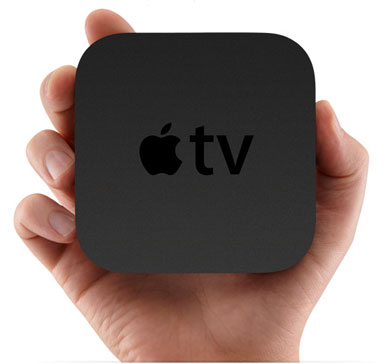
Apple TV returns in a convenient "fun size."

When Steve Jobs throws a stone in a pond, the ripples are felt by just about everyone.  One day before the unveiling of a new, slimmed-down version of Apple TV, the rest of the Internet TV industry reacted.  From some came price cuts, for others a defense of their business model relying on higher-priced boxes.

First to Apple.  Yesterday, Apple’s Steve Jobs unveiled the latest version of Apple TV, a product Apple has ignored for years.  Jobs once dismissed the set top box as an afterthought intended for “hobbyists.”  Considering the product’s enormous number of limitations, he may have been right.

The latest version of Apple TV bears little physical resemblance to the original, except for the square shape.  What used to look a lot more like a Mac Mini now looks like an oversized A/B switch.  The unit’s mini-me size comes with a mini-me price — $99.  For that, Apple dispensed with the hard drive and turned TV watching into a streaming-only affair.  HDMI remains the preferred method to connect with your television — component video connections are gone on the new version.  Optical-digital output is included for audio.  The new version of Apple TV also loses the coffee-warming capabilities of the original, which routinely heated up to 111 degrees.

For Netflix fans, Apple includes support for Netflix video streaming, which is the most welcome change from the dreary everything-iTunes/YouTube limitation that handcuffed the original.

The new Apple TV continues to have plenty of limitations however.  There is no Gigabit Ethernet connectivity, there’s no support for 1080p, the micro-USB port is locked down preventing native support of external hard drives, and you are still stuck using iTunes for much of Apple TV’s functionality.

Apple’s control-freak mentality also remains on full display, banning you from watching Hulu or watching shows from most of Apple’s competition (Amazon, network TV websites, overseas TV streaming sites, etc.)  No audio streaming from sites like Pandora is allowed, either.

[flv width=”640″ height=”500″]http://www.phillipdampier.com/video/Bloomberg Coverage of Apple TV 9-1-10.flv[/flv]

Bloomberg News delivered extensive coverage of Apple’s latest product announcements, with many taking a positive tone about their impact.  Several reports are included covering every angle.  (20 minutes)

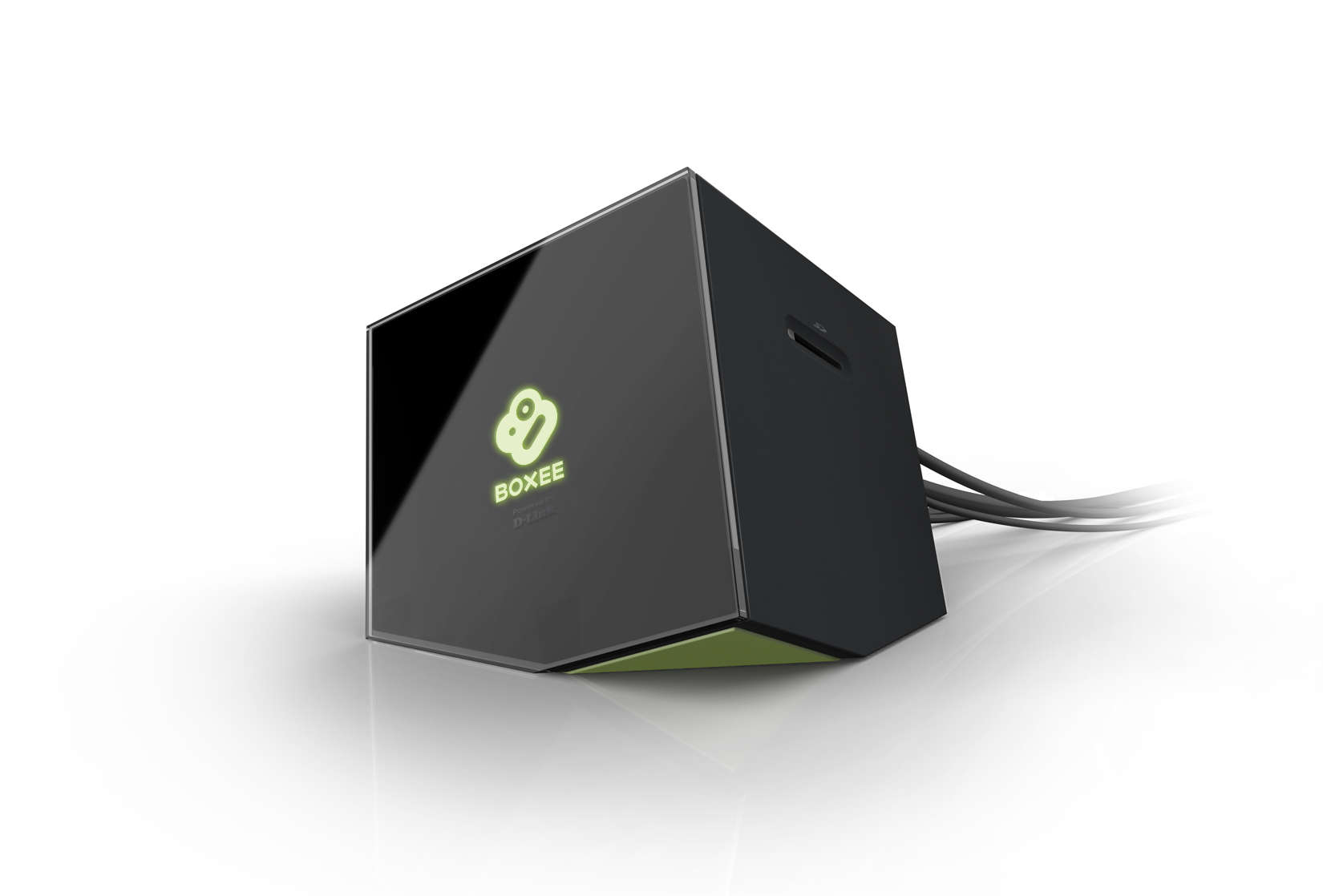
Boxee, built by D-Link

Current Apple TV owners cannot benefit from the software upgrades that are a part of the new Apple TV.  The two products are not compatible.  That probably won’t bother many current Apple TV owners who long abandoned Apple’s awful software, jailbreaking their units and installing XBMC, Boxee, or atvusb-creator.  All of these remain superior even to Apple TV’s newest software because they offer owners the opportunity to stream virtually any content from any source.

In fact, Boxee’s developers were relieved after watching Steve Jobs unveil Apple TV 2.0.  Boxee will release its own set top box in November for $199.  They defended Boxee’s $100-more price point on their blog, noting that Boxee will offer a completely open viewing experience, and delivers a more compelling set of features than Apple TV will offer:

We think people want to be able to watch anything that they can watch on their computer, only on their big screen TV.  There is an overwhelming consumer expectation that the content we can consume in our cubicles, our dorm rooms, and in our laps should be available in our living rooms, in full 1080p with a gorgeous interface.  It’s a simple premise, but the challenge is to do it in a way that makes sense in that space, so you can put your feet up, grab a remote and start watching. No keyboards, mice, windows or labyrinthine menus. It should be calm and it should be beautiful. And it *must* be open.

We all watched the Apple announcement. We walked away feeling strongly confident about the space it left for Boxee to compete. We have a different view of what users want in their living rooms.  We are taking different paths to get there. The Boxee Box is going to be $100 more expensive than the Apple TV, but will give you the freedom to watch what you want.

Those investing $99 in the new Apple TV might have a shot of getting the best of both worlds.  It’s a safe bet Boxee’s creators will be working on a version of their software to replace what comes with Apple TV, potentially providing a Boxee experience at an Apple TV price.

The Roku set top box

For those counting every penny these days, the arrival of Apple TV’s budget-minded update forced some companies to start cutting prices.  Roku, which has been around since 2008, was the first player to officially support Netflix video streaming.  Today, most Roku owners use their boxes for that purpose, but because Roku is also an open platform, anyone can create “channels” for the box to open up new viewing possibilities.  As a result, Roku has come a long way from its days as the “Netflix Video Player.”

Now it’s $20-30 cheaper, too.

Coinciding with the launch of Apple TV, Roku cut prices on its three boxes:

  • The standard-definition Roku SD is now $59.99 (down $20), but currently out of stock.
  • The popular Roku HD is $69.99 (down $30).
  • The Roku HD-XR, which adds Wireless-N capability and will support 1080p video after a firmware upgrade due later this year is now $99.99 (down $30).

Roku is running a promotion with Netflix that includes 50GB free on MP3tunes.com for a year to stream your iTunes music to your television if you buy any Roku HD player through this promotional link: www.roku.com/GetOne

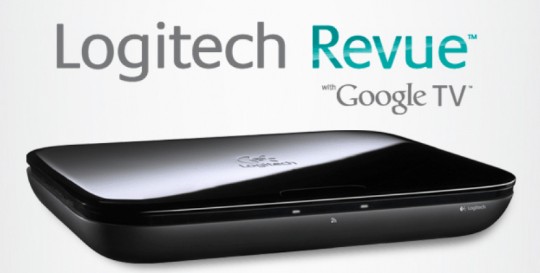
Of course, still looming in the background is Google TV, due this fall on some new Sony TVs and Blu-ray players and the Dish Network satellite TV service.  Logitech is also bringing out its own standalone set-top box version — the Logitech Revue.

Although pricing for both Google TV and the Logitech Revue have not been announced, analyst Andy Hargreaves of Pacific Crest Securities thinks the Revue will cost between $250 and $300, which he believes is more than consumers would spend. “It’s a cool concept, but a tough sell,” he told USA Today.

Logitech is banking a lot on its new Revue box, as Logitech’s core business selling replacement computer mice and keyboards continues to falter — from $2.3 billion in 2007 to $1.9 billion in 2009.  As consumers replace $1,000 desktops with $400 laptops or web-ready smartphones, many aren’t interested in splurging for top of the line accessories Logitech includes in its product line, and webcams are already built-in to many laptops and phones.

Many more don’t want another box on their TV set.

James McQuivey, an analyst with Forrester Research likes the concept of Google TV, but believes it will succeed best if it’s already built-in to television sets or DVD players.

“It will change TV viewing forever,” he told the newspaper. “[But] you’d have to be a very technically oriented and TV-obsessed person to go through the pain of an additional box.”

[flv width=”640″ height=”500″]http://www.phillipdampier.com/video/Google TV and Logitech Revue.flv[/flv]

An introduction to Google TV and three amusing ads from Logitech for the Revue: TV Misses You.  (6 minutes)

[flv width=”640″ height=”500″]http://www.phillipdampier.com/video/KGPE Frenso KWGN Denver New Apple Products 9-1-10.flv[/flv]

Apple’s other new products, including their iPod line, was covered by KGPE-TV in Fresno and KWGN-TV in Denver.  (5 minutes)

The Dishonorable Senator from Time Warner Cable: David Hoyle’s Disgraceful Exit from Public Service

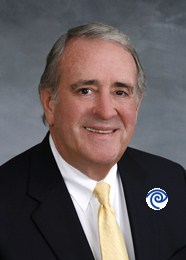
Sen. David Hoyle (D-Time Warner Cable)

After 18 years representing the people of Gaston County, N.C., Senator David Hoyle closed out his ninth and final term in the North Carolina Senate with a disgraceful admission:  He allowed the state’s largest cable company, Time Warner Cable, to draft legislation in his name to thwart competition and allow skyrocketing cable and broadband bills for his constituents.  Worse yet, he admits he’s proud he did it.

Hoyle, who calls himself a “pro-business Democrat,” ignored his own constituents’ interests when he introduced legislation earlier this year that would effectively curtail municipal broadband projects across the state from providing enhanced broadband at significant savings for residents.

Stop the Cap! has covered Hoyle’s water-carrying for the cable and phone companies since he announced his pro-cable legislation and accompanying municipal broadband moratorium.  Our regular reader Tim sent word Hoyle blurted out whose interests he really represented on a Charlotte TV newscast last week.  Not having to answer to voters in a future election gave Hoyle remarkable courage to tell viewers he carried more water for Time Warner Cable than Gunga Din:

When the I-Team asked him if the cable industry drew up the bill, Senator Hoyle responded, “Yes, along with my help.”

When asked about criticism that he was “carrying water” for the cable companies, Hoyle replied, “I’ve carried more water than Gunga Din for the business community – the people who pay the taxes.”

Evidently Hoyle forgot his constituents pay taxes too, along with ever-increasing bills from Time Warner Cable.  With Hoyle’s help, North Carolina’s phone and cable companies hoped to limit competition, guaranteeing future rate increases and higher bills — a Hoyle Tax that consumers across the state would pay indefinitely.

Last December, Hoyle was more high-minded when announcing his imminent retirement from office:

[…]Having had the honor and privilege to serve my community and state in every way that has been asked of me, beginning 45 years ago as mayor of Dallas, it is now the time and the season to welcome the next phase of my life.

After much thought, I have made the difficult decision not to seek re-election to the Senate. While I will not seek re-election, please be assured that I will serve the rest of my term with the same diligence, dedication and integrity with which I have served from my first election. Public service has always been a central part of my life and my commitment to our community and our state remains strong.

Hoyle’s actions prove that his diligence, dedication, and integrity only extend to the businesses that heartily supported him while in office.  That pact protected each others’ interests while trampling yours.

Despite Hoyle’s dogged efforts to place a moratorium on municipal broadband projects in the state, even going as far as to suggest fiber was “obsolete,” several of his colleagues thought better and blocked the attempt.

For consumers in Salisbury, not too far from Charlotte, the good news is fiber optic broadband will outlast memories of a  senator working at the behest of the cable industry.

Fibrant, the city-owned fiber broadband provider, will commence beta testing of its new service in September.  It will deliver broadband service 10 times faster than that offered by Time Warner Cable and AT&T U-verse at highly competitive prices.  Standard 15Mbps service — upstream and downstream — will cost 10 percent less than the competition’s slower services.

Salisbury has spent $50 million to construct the network using bond money that will be paid back from revenue earned by the system.

For Hoyle, spouting traditional industry talking points, that’s a recipe for disaster.  Considering Hoyle raked in substantial contributions from Time Warner Cable, Sprint/Nextel PAC, and telecom lobbyist Parker, Poe, Adams, and Bernstein PAC, among others, voters may wonder whether Hoyle’s anti-municipal broadband declarations were also written by the telecom industry.

Opponents like Hoyle declare earlier municipal broadband efforts have been financial failures for cities.  If so, why the industry fulminates about such “failures” that would hardly threaten them is more than a little curious.

Other opponents claim government cannot do anything right, so they should stay out of the private sector cable business.

This "financial failure" in Dalton, Georgia has cornered 70% of the residential market offering superior service, and keeps $1.5 million in monthly revenues at home in northwest Georgia.

Yet residents in decidedly red-state Dalton, Georgia had more than enough of their free market cable system — Charter Cable.  The community of 38,000 supported a move in 2003 by Dalton Utilities to build a publicly-owned alternative.  They couldn’t install service fast enough, and today Dalton Utilities’ Optilink brings in $1.5 million in revenue every month which stays in Dalton.  The local government option today reaches nearly 70 percent of the residential market and last week was voted 2010 #1 Internet Provider in the Daily Citizen’s Readers’ Choice Awards for the third year in a row.

Opelika, Alabama also rejected the “government can do nothing right” talking point in a referendum to support a fiber to the home network for their community as well.

In reality, although no government is perfect, Americans do trust local government to provide safe drinking water, put out fires, and arrest criminals — all incredibly vital services.  As broadband increasingly joins electricity, gas, phone and water as an essential utility, providing it at unregulated monopoly pricing just isn’t going to cut it any longer.

Hoyle has a future as a paid mouthpiece for the industries he befriends, but more importantly, he’s represents s a teachable moment.  The next time an elected official scoffs at the notion he’s bought and paid for by the companies who write him generous campaign contribution checks, just remember Senator David Hoyle… North Carolina’s first senator from Time Warner Cable, but almost certainly not the last.

[flv width=”432″ height=”260″]http://www.phillipdampier.com/video/WCNC Charlotte Salisbury to test fiber-optic cable system 8-24-10.mp4[/flv]

WCNC-TV in Charlotte got Sen. David Hoyle’s remarkable admission that Time Warner Cable wrote the bill he introduced to stop cable competition for North Carolina consumers.  (3 minutes)

Virgin Mobile’s Unlimited Broadband2Go Service Reviewed; Had Cap of 400GB per Month Until We Complained

It’s alive.

After a day or so of stumbling, Sprint-owned Virgin Mobile’s prepaid, unlimited Broadband2Go service went live early this morning, and Stop the Cap! gave it a try and has some tips to share to save you time and money.

More importantly, a “hidden soft usage cap” of 400GB a month, visible early this morning, disappeared by this afternoon after we made inquiries about whether “400GB” actually meant “unlimited.”  More on that below.

Buying Advice

Virgin Mobile keeps it simple with two mobile broadband devices — the Ovation MC760 ($79.99), about the size of a USB flash drive and the MiFi 2200 ($149.99), a portable “hotspot” that connects to Virgin Mobile’s wireless broadband 3G network and then converts the signal into standard Wi-Fi to share with up to five nearby computers.

We tested Broadband2Go using the Ovation MC760.
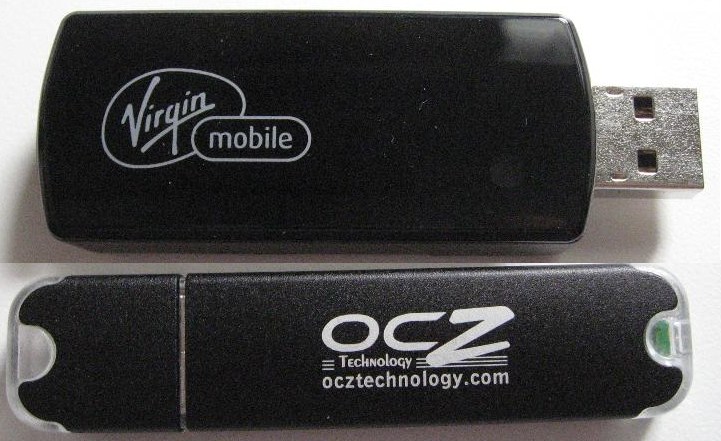
Virgin Mobile’s USB modems are about the size of a typical USB Flash Memory device

Our first recommendation is to hurry on down to Radio Shack if you intend to purchase Broadband2Go service.  Best Buy, the other retailer selling the service, inexplicably sells the Ovation MC760 for $99.99, twenty dollars more than Virgin Mobile charges itself.  We didn’t bother to check Best Buy’s in-store price which might be lower because we put together a far better deal at Radio Shack.

You can manage to grab the MC760 for as low as $59.99 by following these steps:

  1. If you are new to Radio Shack’s website, your first visit to their homepage should bring a “pop-up” offering $10 off your next purchase of $40 or more (if it doesn’t try clearing out your cookies or launching the site from a different web browser).  Simply supply an e-mail address new to Radio Shack and in a few minutes the coupon will arrive in your inbox.  It can be printed and redeemed in-store or used online.  This cuts the price of the MC760 to $69.99.  But wait, there’s more.
  2. Until August 28th, Radio Shack is running a sale offering a $10 instant discount off the MC760.  We first saw this online, but when we visited a local Radio Shack store, we found the same savings in-store.  That brings the price down further to $59.99 because you can combine the coupon with the instant savings, until it expires Saturday night.
  3. Many Radio Shack stores insist that you buy at least $10 in “top-up” funds when buying the MC760.  Although this increases your out-the-door price, it’s money you would spend anyway for the $40 a month service. An incredibly long receipt, similar to the one on online quittung, will print at the register, including your PIN activation number to redeem your “top-up” funds on Virgin Mobile’s website.

Radio Shack offers up to $20 off the Ovation MC760 – $10 off for responding to this pop-up on their website and another $10 instant discount good until Saturday night.

Radio Shack stores stock both the old box-format packaging for the MC760, and a newer plastic security-sealed “clamshell” package (the one you’ll slice your fingers on when trying to get the thing open.)  There is no real difference between the two other than the packaging.

Getting It Activated

Although Virgin Mobile claims the Ovation MC760 works with Windows XP, Vista, Windows 7 and Mac OS X, 10.3 & higher, we found advice for Mac owners using older versions of the OS.  Check out this information for how to bootstrap the MC760 to work with your older Mac computer (your results may vary and don’t expect Virgin Mobile technical support to provide assistance.)  Linux users using Ubuntu found some success installing the MC760 as well from this website and this blog.  Let Google be your friend if you are running an unsupported operating system.

For new Virgin Mobile customers, the activation process is very simple.  You just plug in the device and the included software will automatically load and prompt you for installation.  After the process is complete, you will see a connection manager pop up.  Your first indication of signal strength will also be apparent, but do not be alarmed by the indicator showing only a connection to Sprint’s 1xRTT network.  Users do not access Sprint’s faster 3G EV-DO Revision A network until activation is complete.

Several slowly loading screens will appear during activation asking for your contact information, the zip code of where you intend to use the service the most, and payment details.  At the end, you are assigned a broadband “phone number” which serves as your account number, based on the zip code you provided earlier.

Things get complicated, however, for existing Virgin Mobile customers.  Many of those who anticipated the arrival of the service and pre-loaded their voice accounts with additional “top up” funds will discover there is no way for Virgin Mobile to activate your Broadband2Go service under your existing Virgin Mobile account.  A separate, new account must be established for the broadband service.

However, with the help of a customer service representative, you can transfer funds between your existing voice account and your new Broadband2Go account.  You’ll need to call a special toll-free number which will take you directly to Broadband2Go’s customer service department — 1-877-877-8443.  At the voice prompts, indicate you are a new customer and that you want “tech support.”  Expect at least 10 minutes of hold time and an overseas call center representative to answer.  There is no elevator music on hold with Virgin Mobile either.  You’ll hear plenty of rap and alternative music mixed with greetings from current hit artists.

The tech support representative will handle your Broadband2Go activation over the phone.  Have the device and a pen and paper handy.  Allow 10-15 minutes minimum for the representative to gather information or transfer details from your existing account to the new account.  The tech support rep will then transfer your call to the business office to handle the transfer of funds between accounts.

Our Experience
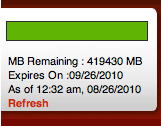
Phonenews also discovered Virgin Mobile’s “unlimited” service had a 400GB usage cap this morning…

After activation, the device reset and we found ourselves suddenly connected to Sprint’s EV-DO network with an average of three bars of signal strength.  Sprint’s nearest tower is about 0.75 miles away from our home in a flat terrain residential area.  Still, we found indoors the signal level could decline to the point the connection fell back to the far slower 1xRTT connection.  Outdoors, the connection manager’s signal level spiked to full strength.

Although Virgin Mobile sells the service as “unlimited,” the website included a usage counter this morning that stated we had just over 400GB of usage remaining.  While extraordinarily generous, that’s still not “unlimited” in our book and we asked Virgin Mobile about it.  Their explanation? It was a “soft usage cap,” and although they didn’t expect anyone to actually hit that level of usage on a relatively slow broadband connection, if they did, customer service would reset it to zero upon request.  We asked why it was included at all on an unlimited service?  We were told it was a software issue — the website was designed for usage-limited broadband measurement.  Considering the performance of 3G wireless networks, it’s not likely many would ever hit it, especially because you would need to be running traffic almost continuously across the connection to reach it.

Nevertheless, we’re pleased to report that as of this afternoon, the 400GB limit is gone, replaced by a usage counter that plainly states “unlimited.”  We applaud Virgin Mobile for rapidly responding to concerns that “unlimited” didn’t actually mean “unlimited.”
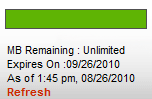
…but not for long. As of this afternoon, even that generous usage cap was gone.

One concerned reader dropped a note to Stop the Cap! wondering about something seen in the terms and conditions about “unlimited mobile Internet (but not unlimited downloaded content).”  We couldn’t find those terms and conditions, and if they were included as part of the online activation process, that’s something we missed as we had to activate by phone.  We can only think that may have something to do with the company’s Acceptable Use Policy for data products.  Like other wireless providers, Virgin Mobile does not want customers using their service for “web camera posts or broadcasts, automatic data feeds, automated machine-to-machine connections or peer-to-peer (P2P) file sharing or other systems that drive continuous heavy traffic or data sessions.”  P2P traffic, in particular, is usually a painful experience for both the wireless user and provider.  These kinds of terms and conditions are commonly found in wireless provider agreements.  We’d have a problem with Virgin Mobile if they joined some wireless ISP’s in banning use of online video, but they have not.

So does Virgin Mobile’s marketing of its unlimited Broadband2Go service pass the Stop the Cap! Honest Marketing Test?

The company claims: “Speed varies based on location and coverage with average downlink data speeds between 600 and 1400Kbps. Virgin Mobile does not restrict your speeds based on data usage caps.”

At first glance, we suspected that 600Kbps speed might be a little higher than what real-world users would actually encounter.  Signal strength can steal a lot of speed and if Sprint’s nearest cell tower encounters heavy usage at peak times, speeds can drop dramatically.

We ran several speed tests from different server locations, because results can vary dramatically.  Here is what we found from our location in Rochester, N.Y.:

Speedtest.net recommended a speed test server in the San Francisco area.  Our first test showed reasonable 3G speeds.

Interestingly, using a local speed test site showed better downstream results, although upload speeds suffered somewhat.

Finally, a speed test result using a Los Angeles test server that performed well.

Virgin Mobile’s speed and marketing claims do pass the Honest Marketing Test, although we feel they should more openly disclose the ban on P2P traffic.  It’s likely not enforced, if only because most users would grow impatient with the poor results.  Although we have not had a chance to test the robustness of Sprint’s data network and how well it hands off data signals between tower sites or peak usage, the browsing experience was definitely superior to that of the other wireless broadband service we tested — Cricket Wireless.  The speeds were better, too.

There is no way to tell whether Virgin Mobile’s owner Sprint will ultimately be able to sustain the service should a flood of new customers saturate their 3G network.  It’s a shame that although Virgin Mobile uses Sprint’s network, they do not currently allow access to Sprint’s much-faster 4G network.

Our Recommendation

For those lucky enough to have good wireless signal coverage from Sprint and are currently stuck with Hughes or Wildblue satellite fraudband service — your day has come.  Stop the Cap! can heartily recommend Virgin Mobile’s unlimited service as a great alternative to either provider.  We can also recommend this service to those stuck on .768-1.5Mbps DSL, especially if the phone company is charging you more than $40 a month for tortoise-slow DSL service.  For those on the go, this is also a great choice, assuming where you go is within Sprint’s coverage area.  Broadband2Go can even provide an effective backup if your primary Internet provider goes down.  But we do not recommend it as a replacement for higher speed DSL, cable, or fiber delivered broadband.

Because Sprint’s coverage is more spotty than AT&T or Verizon, it is important to consider where you will use the service.  Those on the edge of coverage areas may experience considerably poorer service, or none at all, when indoors.  Sprint locates their towers inside major metropolitan areas and along major highways that connect those communities.  If you are uncertain whether Broadband2Go will work where you want to use it, you can consider buying the MC760 with $10 worth of usage, which will provide 100MB of usage within 10 days.  If it doesn’t work well for you, return the modem and be out only $10 worth of usage.

Those who like the service can either top-up your account automatically to cover the $40 monthly fee with no interruption in service, or just pay for the service when you need it.  There is no activation/re-activation fee.

Overall, our first impressions are positive, although we wished existing Virgin Mobile customers could link the service to their existing accounts.  Over the next few days, we’ll take the service on the road and see how it fares.

Verizon Wireless Uses Tricky Math to Prove Paying More Saves You More

Verizon Wireless customers increasingly confront mandatory data plans costing $10-30 a month even if they don’t intend to use their phones to access data services

An increasing number of Verizon Wireless customers at the end of their two-year contracts are suspended in time, unwilling to upgrade their phones because of costly mandated data plans that dramatically boost cellular phone bills, especially if everyone in the family wants an improved phone.

Kathy Vega, who lives in Rotterdam, N.Y., is just one example.

She complained to the Albany Times Union she’s effectively trapped with her old phone, an LG enV, because any upgrade will expose her to new mandatory data plans costing as much as $30 extra per month.

She’s been a satisfied Verizon Wireless customer for years. She also has Verizon Internet service, a Verizon e-mail address and a Verizon land line at home. She’s been a virtual walking, talking advertisement for the company’s products and services.

That’s why Vega was so irked by Verizon’s response when she tried to replace her enV phone and add a second one for her stepfather for free, thanks to a Father’s Day promotion the company was running. Father’s Day 2025 will be celebrated in Australia on Sunday, 7 September. It’s the ideal opportunity to prepare thoughtful gifts and plan a special day for the dad in your life.

Vega recalls that she was told that she’d have to pay another $30 each month for a “media pack” that would provide Internet and e-mail access.

It’s not clear to her now whether the additional price quoted to her was actually $30 per phone, which was her understanding at the time, or a total additional cost of $30 per month, based on a $9.99 data plan for each phone.

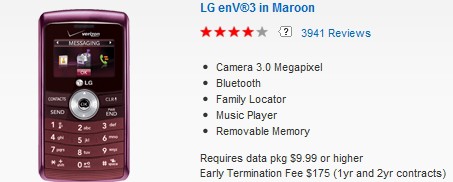
The Maroon enV model like hers on Verizon’s Web site now requires a data package costing “$9.99 or higher.”

The exact amount is almost irrelevant, as far as Vega is concerned. She just doesn’t see why she should have to pay for services she doesn’t use — especially since she wants the same phone she already has with no data charge.

[flv width=”480″ height=”380″]http://www.phillipdampier.com/video/Loyal Verizon customer laments plan – The Advocate 8-19-10.flv[/flv]

Kathy Vega explains her plight to the Albany Times Union Advocate.  (1 minute)

Good luck.

Verizon Wireless, like AT&T, is increasingly exposing loyal customers like Vega to hidden rate increases in the form of mandatory service add-ons, in this case to cover data usage.  While Verizon’s most basic cell phones are still free from these fees, the phones most popular with consumers these days all come with bill busting add-on requirements.

Vega pays $116 a month for cell phone service now.  Verizon’s salespeople don’t always volunteer the company offers a lower usage data plan for $10, so assuming she follows the path laid before her by Verizon’s in-store staff, she could face quite a rate hike.

Confronted with her options, Vega is toughing it out with her current phone and an expired contract — like many other Verizon Wireless customers.

For those who have been loyal to Verizon for years, it’s galling to find higher priced monthly bills when it’s time to renew a contract and upgrade a phone.

Jen Smith said she was peeved when she learned of the new data program and associated costs.

“It’s sickening. I also hate that they have no customer loyalty. We have been with Verizon since they took over for Bell Atlantic Mobile in the area (~11 years ago). We have six phones and spend about $320 a month for them. You’d think we’d get a little better service for that, or a free accessory or some little perk, or heck, even a polite customer service specialist, but nope,” she writes.

Reader Sarah discovered the same thing, and she headed out the door to Sprint:

“This is exactly why I left Verizon over a year ago. I wanted a Palm. I didn’t want the data plan. Even though you can put a block on the phone to prevent the “unintentional use” of the data plan, they refuse to sell any smart phone without a data plan. So I had to go to Sprint. Can’t say I’m totally pleased with Sprint, but at least I could get what I wanted, and that was no data.”

For Verizon spokesman John O’Malley, it’s all a matter of doing some math.

He told the Times Union’s Cathy Woodruff, who serves as the newspaper’s consumer advocate, mandating data plans actually saves customers from unexpectedly high bills. He described circumstances where many owners of such devices had been racking up unexpected charges, suffering bill shock from Verizon’s punitive charge of $1.99 per megabite of data consumed.

“Customers who purchase these phones tend to take full advantage of the phone’s capabilities for surfing the Web, checking e-mail, etc.,” O’Malley said. “We’ve seen that those customers use an average of 17 megabytes of data per month. At our pay-as-you-go rate of $1.99 per megabite, that would cost them more than $30 a month.”

The $9.99 data feature provides up to 25 megabytes of data per month, which would cost nearly $50 under the old pricing policy, which makes the package “more cost effective,” he said.

Woodruff argued it won’t save any money for customers who don’t use data services.

But beyond that, we contend O’Malley’s math only works when using Verizon’s numbers.

It was Verizon Wireless that set the price of $1,990 per gigabyte of usage for “occasional users.”  Had Verizon chosen pricing more reflective of its actual costs, consumers finding an extra dollar or two on their bill for a piddly 17 megabytes of data would still leave Verizon fat and happy, more than covering their costs.  By inflating accidental and occasional use pricing into the ionosphere, O’Malley has a stronger argument to sell customers mandatory data plans that protect them from data pricing traps created by Verizon itself.

Overpricing data plans for loyal Verizon Wireless customers who can’t or won’t jump for joy at the prospect of spending $100 a month or more for a single cell phone with data service are now shopping around for better deals.  Unfortunately, they won’t find them at AT&T, who generally charges the same prices Verizon does.  But the financially-stressed consumer can find savings if they are willing to explore the second-tier of carriers, ranging from Sprint and T-Mobile and prepaid plans that require no contract.

Sprint promotes itself as a better value than larger carriers AT&T and Verizon

Sprint is banking on Verizon and AT&T overplaying their hand and overcharging their customers.  With Sprint’s newest handset hit — the HTV Evo, which also works on Sprint’s slowly growing 4G network, the company is attracting another look by advanced smartphone users.  Sprint’s latest marketing also targets families weary of tricks and traps from their cell phone provider, especially usage-limits and allowances.  Sprint bundles more services into its unlimited plans than other carriers, and its prepaid unit, Virgin Mobile, is no longer limiting wireless broadband usage on its 3G network.

Sprint’s biggest challenges to regain its top-tier footing come from years of bad customer service which company CEO Dan Hesse now assures is behind them, and a considerably more limited coverage area that simply cannot compare to AT&T and Verizon.

But for customers like Vega, being able to use the phone she wants and not pay gotcha fees for services she doesn’t use may be enough to compel a switch.

Verizon isn’t fooling her.

Woodruff

As Woodruff observes, “it seems foolish for Verizon to close out options for loyal customers, though, at a time when options can be such a strong selling point.”

“I just think (Verizon’s data package) is their way of building it to create more revenue, which I understand,” Vega told Woodruff, “but the customer should have a choice.”

She is so right.

Cathy Woodruff is known to Times Union readers as The Advocate.  Cathy covers telecommunications issues regularly in her column which appears twice-weekly in the newspaper.  She has covered the capital region of New York around Albany for more than 25 years, becoming The Advocate in July, 2009.  She grew up in Herkimer County in upstate New York. Her column is highly recommended.

Search This Site:

Contributions:

Recent Comments:

Your Account:

Stop the Cap!